

Few dogs turn heads like a big, fluffy one. That cloud of coat makes them look like walking teddy bears, soft, furry, and impossibly cuddly, but the fur is working clothing, bred over centuries to keep these dogs warm while they guarded flocks, pulled sleds, or hauled carts through mountain snow. This guide highlights ten of the best big fluffy dog breeds and explains what life with all that coat really involves.
There is no official register of the fluffiest breeds, so this is a curated list of big fluffy dog breeds you’ll love, large and medium dogs known for thick, plush coats rather than a strict ranking. A couple sit at the smaller end of the scale but earn their place on coat volume alone. What they all share is a dense double coat that looks wonderful and asks for steady grooming in return.
Affiliate Disclosure: K9Sphere is a participant in the Amazon Services LLC Associates Program and other affiliate programs. As an Amazon Associate, and through other affiliate links, K9Sphere earns from qualifying purchases made through links in this article at no additional cost to you. Product recommendations are based on independent research and editorial judgment, not paid placement.
💡 What Makes a Dog Fluffy
Fluffiness comes down to a thick double coat, a soft, dense undercoat under a longer outer coat. That undercoat traps air for insulation, which is why so many fluffy dog breeds come from cold climates. It also gives them their plush, fluffy appearance, and it means most fluffy dog breeds shed heavily, especially when they blow their coat in spring and fall, so fluffy almost always means regular grooming.
10 Big Fluffy Dog Breeds
These ten breeds are among the most popular big fluffy dog breeds in the world. Each was shaped for a particular job, from sled-pulling and herding to livestock guarding, so they differ in build and temperament while sharing a thick, plush coat. They range from medium dogs with huge coats to some of the largest dog breeds alive.
1. Samoyed
The Samoyed is the dog most people picture first when they think of a fluffy white cloud on four legs. Bred by the Samoyedic people of Siberia to herd reindeer and pull sleds, this northern working dog carries a thick white double coat and a famous upturned “Sammy smile.” It sits at the smaller, medium-sized end of this list, but its sheer coat volume makes it the natural place to start.
Friendly, playful, and deeply social, the Samoyed bonds closely with its family and dislikes being left alone. That bright white coat sheds heavily and needs brushing several times a week, more when it blows its coat, so the look comes at a real grooming cost.
2. Newfoundland
The Newfoundland is a true gentle giant, a massive water dog from the Canadian coast with a heavy, water-resistant double coat. Bred to haul nets and pull drowning swimmers to shore, this large dog pairs enormous size with a famously sweet, patient nature.
Calm and devoted, the Newfoundland is one of the breeds most often praised as great with children, though its size means supervision is still wise. That thick coat sheds heavily and needs brushing at least weekly, and the breed is a notable drooler, which is simply part of life with one.
3. Bernese Mountain Dog
The Bernese Mountain Dog is the handsome tricolor of the Swiss Alps, bred on mountain farms to pull carts, drive cattle, and keep families company. Its thick, silky coat in black, brown, and white is one of the most recognizable in the dog world.
Calm, affectionate, and easy to train for its size, the Bernese is a popular family dog that bonds hard with its people. The coat sheds year-round and needs weekly brushing, daily during heavy sheds, and the breed carries a sadly short lifespan, so buying from a health-tested line matters.
4. Great Pyrenees
The Great Pyrenees is a giant white guardian bred to protect flocks in the mountains between France and Spain. Its thick, weatherproof double coat kept it warm through alpine nights, and it remains one of the most recognizable big fluffy breeds.
Calm, gentle, and deeply devoted, the Pyrenees is patient with family but independent and protective by instinct, a legacy of its work among the livestock guardian dog breeds. The coat is surprisingly tangle-resistant but still sheds heavily and needs regular brushing, and the breed is famously vocal at night.
5. Chow Chow
The Chow Chow is one of the oldest breeds in the world, an ancient Chinese dog instantly known for its lion-like mane and blue-black tongue. It is the most compact dog on this list, more medium than giant, but its dense, profuse coat gives it the appearance of a far bigger animal.
Dignified, independent, and reserved, the Chow Chow tends to bond with one person or family and stays aloof with strangers, so early socialization is essential. Its thick coat, whether rough or smooth, needs brushing at least twice a week, and the facial wrinkles need regular cleaning.
6. Leonberger
The Leonberger is a German giant bred as a noble companion, with a thick water-resistant double coat and a lion-like mane that suits its name. Despite weighing up to 170 pounds, it is famously even-tempered and gentle with children.
Stable, social, and eager to please, the Leonberger bonds closely with its family and dislikes long stretches alone. The flowing coat needs brushing several times a week, daily during heavy sheds, and like many giants the breed carries a short average lifespan, so a health-tested line is important.
7. Alaskan Malamute
The Alaskan Malamute is a powerful arctic sled dog with a thick double coat, bred to haul heavy freight across frozen terrain. That dense, coarse coat with a woolly undercoat kept it working in brutal cold, and its plumed tail curls over the back like a waving flag.
Affectionate, playful, and dignified, the Malamute is loyal but strong-willed and independent, which makes it a poor match for first-time owners. It sheds heavily and needs regular brushing, plenty of exercise, and a secure yard, since the breed loves to dig and pull.
8. Tibetan Mastiff
The Tibetan Mastiff is an ancient Himalayan guardian whose thick double coat and heavy mane give it a lion-like look. Bred to guard monasteries and flocks against wolves and leopards, it is one of the most imposing fluffy breeds, especially the males with their full neck ruff.
Independent, territorial, and reserved with strangers, the Tibetan Mastiff thinks for itself and does not always obey quickly, so it needs an experienced owner and a secure yard. Interestingly, it tends to shed less often than other breeds here, usually blowing its coat once a year rather than constantly.
9. Old English Sheepdog
The Old English Sheepdog is the shaggy drover of English farms, bred to move cattle and sheep and instantly known for the profuse coat that hides its eyes. That long, double coat is so abundant the breed is one of the few double-coated dogs groomers will trim to keep it manageable.
Adaptable, intelligent, and playful, the Old English Sheepdog is a fun, family-minded breed among the herding dog breeds. Its coat is high-maintenance, though, needing thorough brushing several times a week to prevent the dense fur from matting down to the skin.
10. Saint Bernard
The Saint Bernard is the classic Alpine rescue dog, famous for finding travelers lost in the snow on the Great St Bernard Pass. The long-haired variety carries a thick, fluffy coat, while both coat types share the breed’s massive frame and gentle expression.
Patient, friendly, and famously good with kids, the Saint Bernard is a true family giant that needs steady guidance for its size. The coat sheds heavily and needs brushing several times a week, and like other heavy breeds it drools and benefits from careful weight management.
Why These Dogs Are So Fluffy
Fluffiness comes down to the double coat. These breeds carry a soft, dense undercoat beneath a longer outer coat, and that undercoat traps a layer of warm air against the skin. It is the same principle as a down jacket, which is why nearly every breed here was developed in a cold climate, from Siberia and the Alps to the Himalayas and the arctic.
That insulation has a cost. A thick undercoat sheds in large amounts, especially when a dog blows its coat in spring and fall to swap winter density for a lighter summer layer. So the plush look and heavy shedding are two sides of the same coat, which is why fluffy breeds almost always need committed grooming.
More Fluffy Breeds Worth Considering
Beyond the main ten, several other large and medium breeds carry wonderfully thick coats and deserve a place in the conversation. The Rough Collie wears the long, flowing coat made famous by Lassie, while the Bearded Collie and Old English share a similarly shaggy herding look. The Akita is a powerful Japanese spitz with a dense double coat and bear-like presence.
A few more spitz-type breeds round out the field. The Eurasier is a calm, family-oriented mix of Chow, Wolfspitz, and Samoyed, the Keeshond is a medium gray-and-cream cloud, and the American Eskimo Dog is a bright white spitz that looks like a smaller Samoyed. The Bouvier des Flandres rounds things out as a large, tousled herding breed. Any of these can suit a home that loves a thick coat, as long as the grooming time is there.
Choosing a Big Fluffy Breed
Match the dog to your life, not just the look. The Newfoundland, Bernese Mountain Dog, and Saint Bernard are calm, family-minded giants often praised as good with children, while the Samoyed and Alaskan Malamute are high-energy working dog breeds that need real daily exercise. The Chow Chow and Tibetan Mastiff are independent guardians, and these strong-willed breeds are rarely great for first-time dog owners, who tend to do better with one of the gentler giants.
Climate is the other big factor. These dogs were built for cold, so they can struggle in heat and need shade, airflow, and cool water in warm weather. Several are also among the bigger large dog breeds and the giant dog breeds, so be honest about your space, and remember that every breed here trades its plush coat for serious grooming time.
Grooming and Coat Care
Veterinary Disclaimer: The information in this article is for educational purposes only and is not a substitute for professional veterinary advice. K9Sphere’s authors are experienced dog owners, not licensed veterinarians. Always consult a qualified DVM regarding any concerns about your pet.
The golden rule with a fluffy double coat is regular brushing. Most breeds here need a thorough brush several times a week, reaching down to the undercoat rather than just smoothing the top, since mats form against the skin where you cannot see them. During heavy sheds, that often becomes a daily job to keep the loose undercoat from building up.
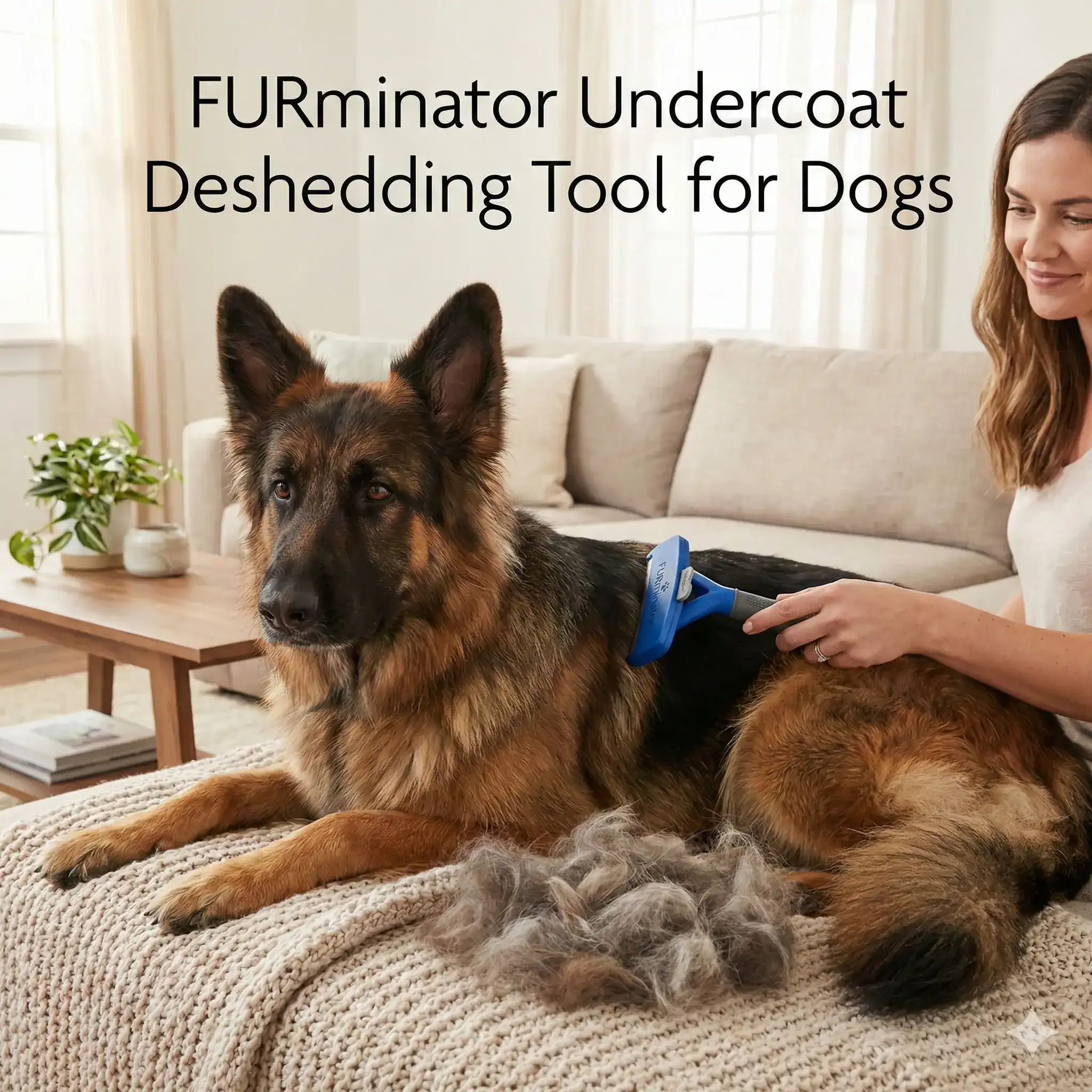
One firm rule for double coats is to avoid shaving them. The coat insulates against both cold and heat and protects the skin from sun, so shaving can do more harm than good and the fur may grow back patchy. Beyond brushing, these dogs need routine bathing, ear checks, and nail trims, and the breeds built for cold need extra care to stay comfortable in summer heat.
A Note From My Own Dogs
💭 Personal Observation
The thing I have learned from living with thick-coated dogs is that grooming is not optional, it is part of the deal. My Labrador Bruno was nowhere near as fluffy as the breeds on this list, yet even his coat blew out in clumps twice a year and left drifts of fur across every floor. A true double-coated breed does that on a far bigger scale.
What made the difference was staying ahead of it. A short brushing session every few days kept the loose undercoat under control and the skin healthy, where skipping a week or two meant mats and a much harder job later. The same lesson holds for any of these breeds. The plush look is wonderful, but it is earned with a brush in hand, week in and week out.
Pros and Cons of Big Fluffy Dog Breeds
Big fluffy breeds share many of the same rewards and trade-offs. The plush coat that makes them so appealing is also the thing that asks the most of an owner, so it helps to weigh both sides before choosing one.
Pros
- Eye-catching, huggable, teddy-bear looks
- Many are calm and gentle in the home
- Several are excellent with children
- Thick coats suit cold climates well
- Deeply loyal and bonded to family
- Often impressive, imposing presence
Cons
- Heavy shedding and serious grooming time
- Coats mat quickly if brushing is skipped
- Many overheat easily in warm weather
- Large breeds bring high food and care costs
- Several are independent or best for experts
- Giant breeds often have shorter lifespans
Quick Questions About Big Fluffy Dogs
What is the fluffiest big dog breed?
The Samoyed is often named among the fluffiest dog breeds, with a thick, bright white double coat that stands off the body. The Chow Chow, Great Pyrenees, and Leonberger are close behind, and the Old English Sheepdog carries one of the most profuse coats of all, even if some of these dogs are medium rather than giant in size.
Do big fluffy dogs shed a lot?
Most do, yes. The dense undercoat that makes many fluffy dog breeds so appealing also sheds heavily, especially when they blow their coat in spring and fall. Regular brushing keeps it manageable, but anyone wanting a low-shedding dog should look elsewhere, since fluffy and low-shedding rarely go together.
Are big fluffy dogs good family pets?
Many are. The Newfoundland, Bernese Mountain Dog, Saint Bernard, and Leonberger are all known for being gentle and patient with children. The main catch is practical rather than temperamental, since their size, grooming needs, and feeding costs are significant, and small children should always be supervised around a large dog.
Can fluffy dogs handle hot weather?
They manage, but they need help. The same coat that insulates against cold also traps heat, so fluffy breeds overheat more easily than short-coated dogs. Give them shade, airflow, and cool water, exercise them in the cooler parts of the day, and never shave the coat, since it actually helps regulate temperature when kept brushed.
Editorial Disclaimer: This article is for informational and educational purposes only. It does not constitute veterinary advice, medical diagnosis, or treatment recommendations. Always consult a licensed veterinarian before making health-related decisions for your pet.
Accuracy Notice: While every effort has been made to ensure the information presented here is accurate and current, breed information evolves and individual dogs vary. This list reflects widely recognized big fluffy breeds and is not a strict ranking. If you spot a factual error or have updated information from a verified source, please contact us so we can review and update.
Product Disclosure: Product recommendations are based on independent research and editorial judgment. Individual results may vary. K9Sphere participates in the Amazon Services LLC Associates Program and other affiliate programs, and earns from qualifying purchases at no additional cost to you.
Last reviewed: June 2026. Article reviewed for accuracy on the date shown above.


