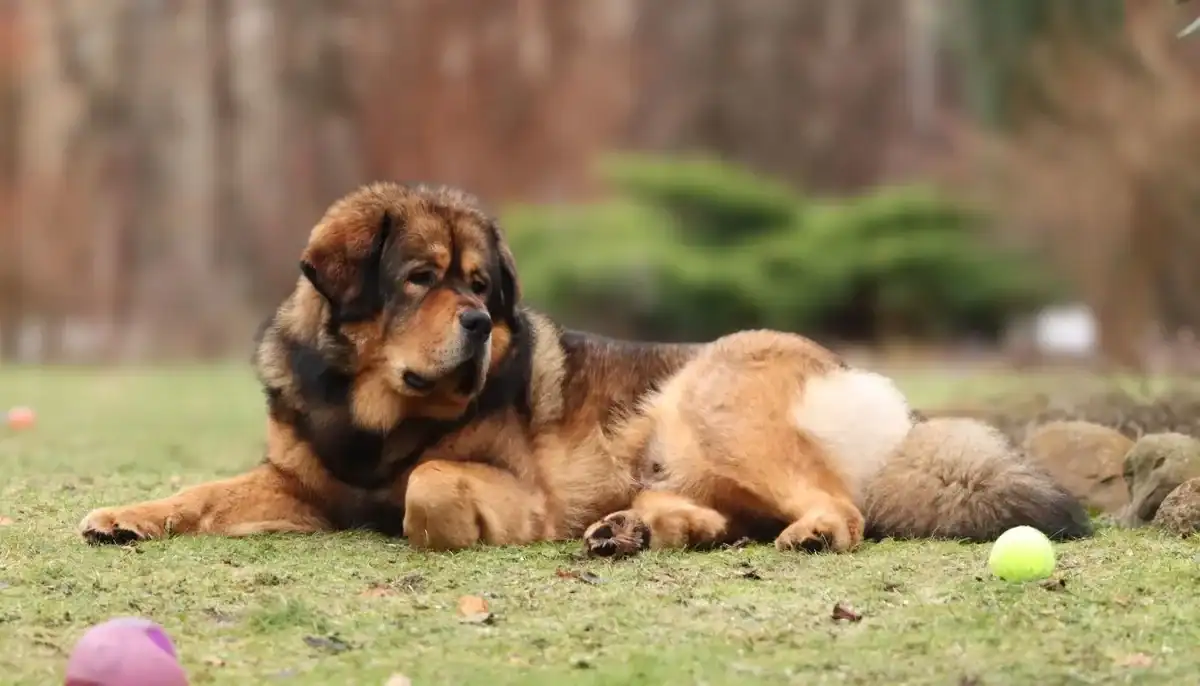
The Tibetan Mastiff dog breed is a giant working dog developed centuries ago in the Himalayas to protect nomadic camps and monasteries from predators. These dogs have immense physical strength and a naturally protective streak.
What makes this dog unique is the combination of a massive coat and an intensely self-reliant nature. Properly socialized adults become devoted household protectors that assess threats on their own. They watch their environment constantly and may act without waiting for handler direction.
This guide draws on the American Kennel Club standard, the American Tibetan Mastiff Association health protocols, and veterinary data to outline what owning this rare breed actually demands. An animal built to survive harsh weather and deter predators needs capable leadership.
Daily commitments include firm obedience boundaries, extensive early socialization, and serious grooming for the thick coat. Households that invest the time and set consistent rules are rewarded with a fiercely loyal partner.
The Tibetan Mastiff is a large dog with uncompromising protective instincts and a tendency toward nighttime barking. Households without a secure yard or experience handling very large breeds should review the demands honestly before deciding. It rewards owners who match its appetite for structure.
Affiliate Disclosure: K9Sphere participates in the Amazon Services LLC Associates Program and other affiliate programs. K9Sphere earns from qualifying purchases made through links in this article at no additional cost to you. Product recommendations are based on independent research and editorial judgment, not paid placement.
Breed Snapshot
📊 Vitals and Lifespan
Height
Males: 26+ in (66+ cm)
Females: 24+ in (61+ cm)
Weight
Males: 90 to 150 lb (41 to 68 kg)
Females: 70 to 120 lb (32 to 54 kg)
Lifespan
10 to 12 years
Breed Group
Working (AKC); FCI Group 2
Origin
Tibet
🏔️
⭐ Personality Traits
Ratings (1 to 5). This giant breed is fiercely loyal to its own household but needs an experienced handler to manage its self-directed nature. A low trainability score reflects an independent, decision-making mind rather than low intelligence, and a low friendliness score reflects its guarding nature, not a flaw.
History and Origin
The history of the Tibetan Mastiff begins thousands of years ago in the Himalayas. Nomadic herders and monks bred these dogs to guard isolated homesteads and livestock from snow leopards and wolves. They remained geographically isolated for centuries because of the harsh mountain terrain.
📌 Ancient Origins
Genetic studies indicate Tibetan Mastiffs retain characteristics associated with some of the oldest dog lineages. They guarded camps at night while smaller dogs handled daytime alert duties. This historical division of labor helps explain their natural tendency to stay awake and patrol during dark hours.
📌 1847: Introduction to the West
Lord Hardinge, the Viceroy of India, sent a large dog named Siring to Queen Victoria. This marked the first documented arrival of the breed in England. Early breeding efforts in the West were slow, partly because females typically come into season only once a year, a trait shared with some ancient breeds.
📌 2006: American Kennel Club Recognition
The AKC officially recognized the breed and placed it in the Working Group. The American Tibetan Mastiff Association, formed in 1974, serves as the parent club and provides health guidelines. Despite growing interest, the breed remains relatively rare outside specialty breeding circles.
Physical Characteristics
The Tibetan Mastiff is built for survival in extreme weather, with a massive head, deep-set eyes, and a sturdy frame. A mature adult moves with surprising agility despite carrying significant weight.
🎨 The Thick Double Coat
The Tibetan Mastiff’s coat is thick and dense with a wooly undercoat. The fur forms a noticeable mane around the neck, giving a lion-like appearance. Standard colors include black, brown, blue or grey, and various shades of gold. This dense layer provides excellent insulation against freezing temperatures.
🏗️ Heavy Bone Structure
They have dense bones and well-muscled legs. The tail is thickly feathered and curls over the back when the dog is alert. This physical power lets them hold their ground against predators in rural environments.
Character and Temperament
This breed relies on its own judgment. A protector may not wait for commands when it senses danger, reacting instead from centuries of hardwired instinct.
🛡️ Fierce Guardian
They are deeply loyal to their own people but tend to be aloof with strangers. They take their protection duties seriously, and many may be cautious around unfamiliar visitors until properly introduced.
🔥 Independent Thinker
They are strong-willed and can be stubborn. A Tibetan Mastiff understands commands quickly but may decide whether compliance fits its own read of the situation. They do best with a handler who sets firm, calm boundaries from day one.
💪 Nighttime Barker
They are naturally more alert at night. Their instinct is to patrol the perimeter and use a deep, booming bark to warn off anything unfamiliar. This can make them challenging neighbors in crowded suburban areas.
🧠 Low Separation Anxiety
Because they were bred to watch over flocks or estates alone for hours, separation anxiety is uncommon. They are usually content to patrol a secure yard while left on their own.
Screening and Conditions
Veterinary Disclaimer: The information in this article is for educational purposes only and is not a substitute for professional veterinary advice, diagnosis, or treatment. K9Sphere’s authors are experienced dog owners, not licensed veterinarians. Always consult a qualified DVM regarding any health concerns about your pet. Never disregard professional veterinary advice or delay seeking it because of something you have read on this site.
Health and Breed Information Sources:
- American Kennel Club for the official breed standard and Working Group classification
- American Tibetan Mastiff Association for parent-club health protocols and breeder guidance
- Orthopedic Foundation for Animals (OFA) for CHIC hip, elbow, eye, and thyroid testing recommendations
Always consult your licensed DVM for personalized medical advice.
The Tibetan Mastiff is generally robust, but its large frame creates vulnerability to orthopedic disease. Responsible breeders screen for orthopedic and metabolic conditions before producing a litter.
Common Health Risks
🔴 Hip and Elbow Dysplasia
What to watch for: Stiffness rising from rest, reluctance to climb stairs, or a bunny-hopping gait. This genetic malformation causes the joint to grind prematurely.
Screening: OFA evaluation of both parents is a standard CHIC recommendation. Keeping the dog lean reduces daily stress on the cartilage.
🔴 Gastric Dilatation-Volvulus (Bloat)
What to watch for: A swollen abdomen, unproductive retching, and pacing. It cuts off blood flow and is a life-threatening emergency without prompt surgery.
Screening: Feed two smaller meals daily instead of one large bowl, and keep activity levels low for an hour after feeding. Seek emergency care immediately if symptoms appear.
🟡 Hypothyroidism
What to watch for: Unexplained weight gain, lethargy, or a dull coat. The thyroid gland fails to produce adequate hormones.
Screening: Annual blood panels detect the condition readily. Daily oral medication manages the symptoms effectively for the dog’s life.
🟡 Entropion and Ectropion
What to watch for: Excessive tearing, squinting, or redness. The eyelids roll inward or droop outward, irritating the eye surface.
Screening: Veterinary eye exams confirm the diagnosis. Surgical correction is often needed to prevent permanent corneal damage.

Nutramax Dasuquin with MSM Soft Chews for Large Dogs
Use for: Joint support in large working breeds prone to hip problems. Combines glucosamine, chondroitin, and MSM to support cartilage in heavy dogs carrying significant weight. Consult your veterinarian before starting any supplement.
Check price on AmazonGrooming and Coat Care
The thick coat takes regular attention. Brush it thoroughly every week to prevent severe matting. An undercoat rake and a slicker are essential tools for reaching through the dense outer layer.
They blow their undercoat once a year in a massive seasonal shed. During this period, daily grooming helps clear the dead hair. The best approach is line-brushing, which separates the fur layer by layer down to the skin. Our guide on the best brushes for shedding dogs details the heavy-duty tools needed for this task.
You only need to bathe them occasionally, since the fur repels dirt naturally. If skin issues arise under the dense layer, a quality dog shampoo for itchy skin helps soothe irritation. Trim their thick nails monthly to maintain proper foot structure.
Exercise and Living Needs
This breed does not require hours of running. They have a moderate energy level and prefer to walk the perimeter of their territory to monitor for threats. A solid daily walk satisfies their physical needs.
They do best with a large, securely fenced yard. They are territorial and may expand their patrol area if the boundaries are weak. An electronic fence is often a poor fit for a dog with this much drive and territorial instinct.
They thrive in the cold and may prefer to remain outdoors during winter storms. They struggle in extreme heat, however, and need significant heat precautions such as shade and cool indoor space through the summer. A supportive orthopedic bed gives this large breed a healthier place to rest after a day of patrolling.

FurHaven Orthopedic Dog Bed (Jumbo)
Use for: Heavy-duty support for large dogs. The medical-grade foam supports the weight of a 120-pound adult and helps protect aging joints and prevent elbow calluses.
Check price on AmazonNutrition & Diet
Large breeds grow rapidly, which places extreme stress on their growing skeleton. A large-breed puppy formula controls calcium and phosphorus levels to slow bone growth safely. Keep the dog lean throughout its life.
Adults do best on a meat-first diet rich in protein to maintain their muscle mass. Divide their daily food into two meals to lower the risk of bloat. Adding hip and joint supplements for dogs provides long-term cartilage support for their large frame.
Training
This breed responds poorly to force-based training. They do best with firm, fair, and highly consistent leadership. When clear boundaries are established, they are more likely to comply consistently. If they sense inconsistency, they tend to ignore commands.
Early socialization is the most critical task for any handler. Introduce the puppy to many strangers and varied environments before sixteen weeks of age. A poorly socialized adult can become difficult to manage, as their default reaction to anything unfamiliar is suspicion.
Basic obedience commands give you control when the dog reaches 120 pounds. Keep training sessions brief, as repetition bores them quickly. Positive reinforcement works best, paired with clear and consistent boundaries.
Tibetan Mastiff vs Caucasian Shepherd Dog vs Kangal vs Great Pyrenees
Prospective owners evaluating a giant protection breed often look at these four breeds. The Tibetan Mastiff offers a different protection style compared to the Caucasian Shepherd Dog, which tends to react more sharply to perceived threats. The Kangal Shepherd Dog is faster and covers more ground, while the Great Pyrenees offers a softer temperament suited to family life.
| Attribute | Tibetan Mastiff | Caucasian Shepherd Dog | Kangal Shepherd Dog | Great Pyrenees |
|---|---|---|---|---|
| Weight | 70 to 150 lb | 99 to 170 lb | 90 to 145 lb | 85 to 100+ lb |
| Original Purpose | Property and flock guardian | Estate and flock guardian | Flock guardian | Flock guardian |
| Energy Type | Low-moderate, patrolling | Low, explosive bursts | Moderate, wide-ranging | Low, patrolling |
| Trainability | Independent, self-directed | Independent, dominant | Independent thinker | Independent thinker |
| Grooming | Heavy seasonal shed | Heavy seasonal shed | Moderate seasonal shed | Heavy shedding, weekly brush |
| Threat Response | Intimidating bark, physical block | Confronts and defends | Physical pursuit | Barking, physical blocking |
| First-Time Owner? | No | No, experienced only | No | No |
| Common Health Risks | Hip dysplasia, entropion | Hip dysplasia, heart issues | Hip dysplasia, lipomas | Hip dysplasia, bloat, patellar luxation |
| Living Space | Large securely fenced yard | Large securely fenced yard | Rural acreage | Large fenced yard or farm |
If you want a breed focused more closely on the family unit, the Cane Corso offers a more handler-attached style. Choose the Himalayan giant only if you have the physical space, the tolerance for serious shedding, and the assertive leadership required to manage a serious property protector.
Common Questions about the Tibetan Mastiff
Are Tibetan Mastiffs aggressive?
Direct Answer: They are deeply protective rather than aggressive by default, but poor socialization can let that protectiveness tip into reactivity.
Context: They were bred to deter wolves and snow leopards, and a dog with this instinct will challenge anyone entering the property uninvited. Without extensive socialization, they may struggle to tell a mail carrier from a genuine threat.
Management: Commit to daily obedience work and secure perimeter fencing. Socialize the dog broadly during the first year to build a stable threat-assessment response.
How much does a Tibetan Mastiff cost?
Direct Answer: As an approximate, time-sensitive guide, the price often ranges from USD 2,000 to 5,000 or more from a reputable US breeder. Pricing varies by country, with UK, Canada, and Australia rates differing.
Context: A historic sale in China once saw a red mastiff reportedly change hands for around two million dollars during a status-symbol craze, but standard pricing is a tiny fraction of that figure. The initial purchase is only the first expense, since food and veterinary care for a large breed cost thousands annually.
Management: Budget for large-breed food and pet insurance from day one. Joint surgeries and bloat emergencies are expensive for dogs over 100 pounds.
Do they make good family dogs?
Direct Answer: They are devoted to and protective of their own family, but they are often a poor fit around visiting children unless supervised and well managed.
Context: This breed may read rough play or shouting among kids as a threat and step in to stop it, which can create a risky situation for neighborhood friends.
Management: As a precaution, do not assume safe unsupervised interaction with visiting children; supervise closely and provide a quiet, secure space when hosting busy playdates.
Are they dangerous?
Direct Answer: Any large dog with a guarding instinct can pose a serious risk in the hands of an inexperienced handler.
Context: They are physically powerful, so a poorly trained dog that decides to act on its own terms is difficult for an owner to physically manage.
Management: Establish clear boundaries early. Use positive reinforcement and a firm routine so the dog reliably respects your leadership.
Is the Tibetan Mastiff legal in the US?
Direct Answer: Yes federally, but local breed-specific legislation may regulate or restrict ownership in certain municipalities.
Context: Some cities and counties restrict ownership of giant guardian breeds, and some homeowner insurance policies may restrict or exclude coverage for households with mastiff-type dogs.
Management: Check your local city ordinances and verify your insurance coverage before bringing a puppy home, since laws change frequently.
What is their lifespan?
Direct Answer: They generally live between 10 and 12 years.
Context: For a giant breed, this is a relatively strong lifespan. Weight management plays a crucial role in extending their healthy years and protecting their joints.
Management: Keep them lean, provide preventive joint care, and schedule annual senior wellness exams starting around age seven.
Do they need a lot of exercise?
Direct Answer: No, they need only moderate exercise, mainly daily walks and yard patrol.
Context: They are not built for running or retrieving and tend to conserve energy for property defense. Over-exercising a growing puppy can cause serious joint damage.
Management: Provide a steady walk of around 45 minutes daily and allow ample time to patrol a securely fenced yard at their own pace.
Can they live outside in the cold?
Direct Answer: Yes, they thrive in cold weather and often prefer sleeping outdoors in winter.
Context: The heavy double coat provides excellent insulation. A companion dog still needs interaction with its family, however, and should not be isolated entirely.
Management: Provide a sheltered area, but expect the dog to choose the snow over a warm bed. Ensure deep shade and air conditioning during hot summer months.
How bad is the shedding?
Direct Answer: They shed moderately year-round and drop a massive amount of fur once a year, usually in spring.
Context: When they blow their coat, the hair comes out in large clumps and covers floors, furniture, and clothing.
Management: Commit to daily brushing during the shedding season. Invest in a heavy-duty vacuum cleaner and a quality undercoat rake.
Are male Tibetan Mastiffs harder to handle?
Direct Answer: Intact males tend to test boundaries during adolescence and are generally more dominant.
Context: Males are noticeably larger and carry a heavier mane. They mature slowly, keeping puppy behaviors while growing into a frame that can challenge even experienced owners.
Management: Both sexes need firm training, but males reward unrelenting consistency. Keep training sessions short and clear.
Finding a Puppy
Finding a responsible breeder takes diligence. Avoid anyone pushing oversized dogs for status, since this works against the healthy structure of the breed. Start training your puppy on arrival, and socialize broadly to build a stable adult character.
🏠 Responsible Breeders
Start your search through the American Tibetan Mastiff Association. A reputable breeder provides OFA hip and elbow certifications for both parents. They will ask detailed questions about your fencing and your experience with protective breeds. Look for litters raised indoors with constant human interaction.
🐾 Rescue and Adoption
Adopting an adult lets you see the fully formed personality. Many rescue dogs enter the system because owners underestimated the nighttime barking or the grooming effort. A rescue group will usually screen your home thoroughly before approving an adoption.
🚩 Red Flags to Watch For
- No OFA health testing results provided for the parents.
- Breeders marketing Tibetan Mastiff puppies as safe for any family.
- Parents showing fear aggression or extreme shyness.
- Breeders demanding a premium price solely for a rare coat color.
Personal Observation
💭 Personal Observation
The clearest lesson from years with territorial dogs is how much they rely on a handler who sets clear rules early. My rescue Chun Chun has a strong vocal alert instinct, sounding off at anything unfamiliar near the gate, and a Tibetan Mastiff carries that same guarding wiring at several times the size. A dog that assesses threats on its own needs absolute clarity from its owner to stay balanced.
A guardian that makes its own calls is not being difficult; it is doing the job it was shaped for. My senior rescue Rusty shows that same self-directed streak, settling outside to watch the yard rather than waiting for instructions.
Having watched my dogs cope with year-round warm weather, I would also stress that a heavy double coat needs real management outside cold climates. If you are not ready for that, this is not the breed to start with.
Conclusion
The Tibetan Mastiff is an uncompromising working dog that offers steady protection to handlers who understand its self-guided nature. In our view, the clear pro is a deeply devoted protector that watches over its home with little prompting.
The main con is managing a huge, headstrong dog that barks a great deal at night and needs significant grooming. This is a serious working animal. If you want a powerful guardian with a more easygoing, social temperament, the Great Pyrenees may suit you better, though it still needs secure fencing of its own.
📋 Before bringing one home, run this 4-step pre-buying check
- Secure containment. Do you have a tall, solid fence to safely contain a territorial dog?
- Grooming reality. Are you willing to brush a profusely shedding double coat every week?
- Handler experience. Have you successfully trained independent, strong-willed guardian dogs before?
- Living space fit. Can you accept that this dog will bark at night and is a poor fit for apartment life?
If any answer is no, reconsider the breed.
Editorial Disclaimer: This article is for informational and educational purposes only. It does not constitute veterinary advice, medical diagnosis, or treatment recommendations. Always consult a licensed veterinarian before making health-related decisions for your pet.
Accuracy Notice: While every effort has been made to ensure the information presented here is accurate and current, breed information evolves and individual dogs vary. If you spot a factual error or have updated information from a verified source, please contact us so we can review and update.
Product Disclosure: Product recommendations are based on independent research and editorial judgment. Individual results may vary. K9Sphere participates in the Amazon Services LLC Associates Program and other affiliate programs, and earns from qualifying purchases at no additional cost to you.
Last reviewed: June 2026. Article reviewed for accuracy on the date shown above.