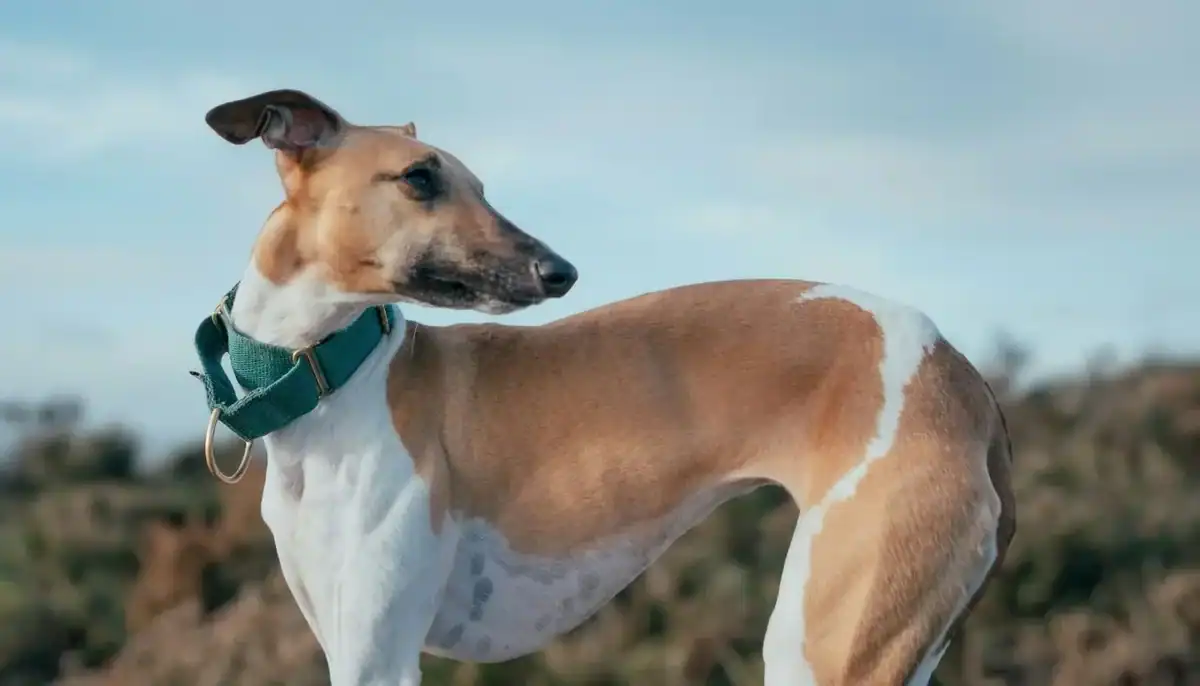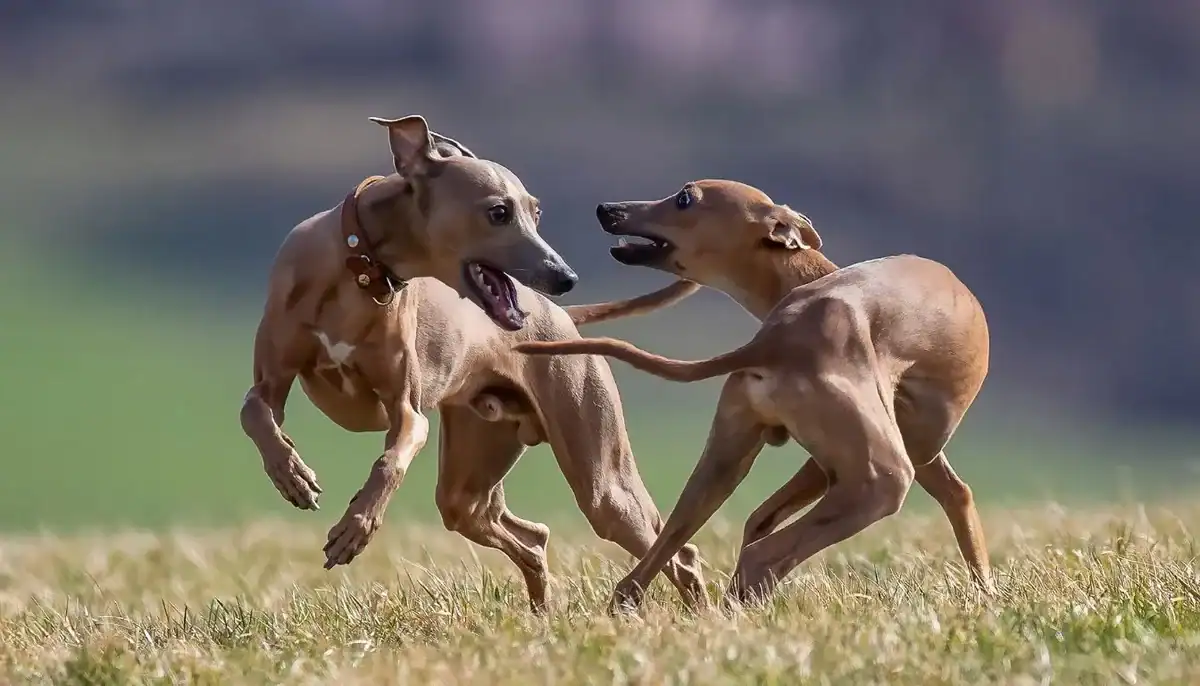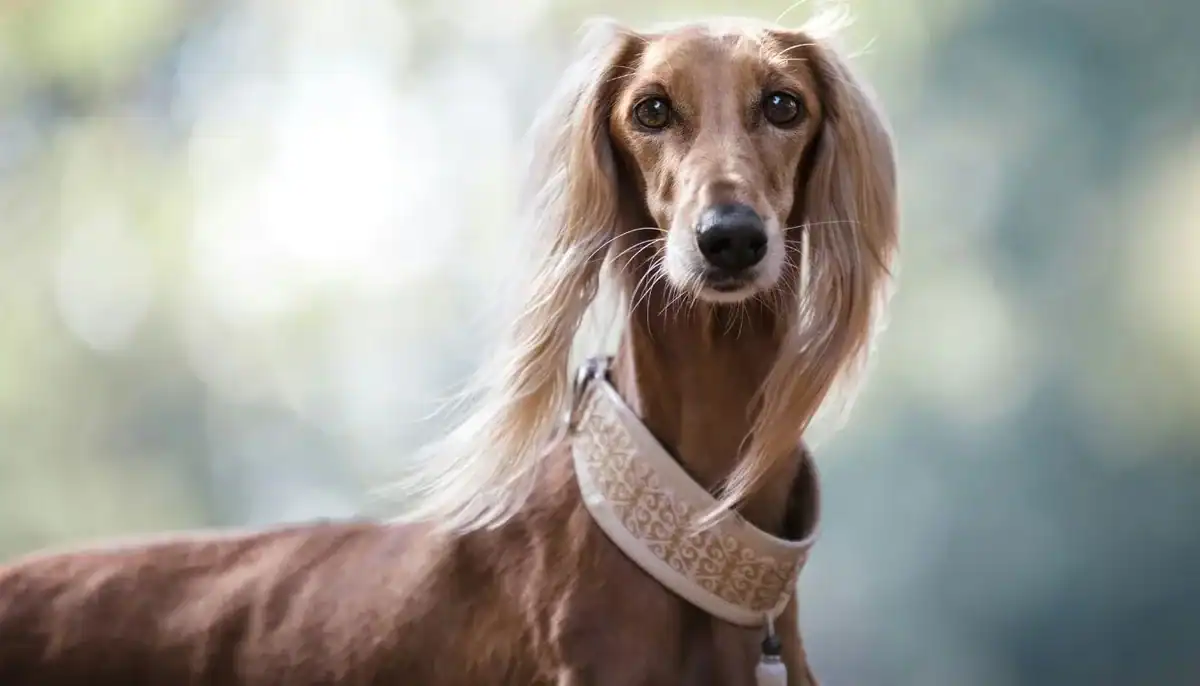
The Saluki is one of the oldest dog types in the world, a desert sighthound built to run down gazelle across open ground and still be sound the next morning.
Arab tribes called it el Hor, the Noble One, and gave it a status closer to the Arabian horse and the hunting falcon than to other dogs. Salukis were sometimes presented as valuable gifts rather than traded.
This guide draws on the AKC breed standard and the Saluki Club of America’s health guidance, including the breed’s CHIC testing protocol.
It is also long-lived for its size, commonly reaching the early to mid-teens. Daily life is quieter than the racing outline suggests. The breed is calm indoors, needs very little grooming, and asks mainly for a safe place to run.
The two things to understand before buying are the temperament, which is reserved rather than demonstrative, and the breed-specific health screening a responsible breeder should be able to discuss with you.
Affiliate Disclosure: K9Sphere participates in the Amazon Services LLC Associates Program and other affiliate programs. K9Sphere earns from qualifying purchases made through links in this article at no additional cost to you. Product recommendations are based on independent research and editorial judgment, not paid placement.
Breed Snapshot
📊 Vitals and Lifespan
Height
Males 23 to 28 in (58 to 71 cm)
Females often noticeably smaller
Weight
About 40 to 65 lb (18 to 29 kg)
Lifespan
About 10 to 17 years
Breed Group
AKC Hound Group
Origin
Middle East
🌍
⭐ Personality Traits
K9Sphere editorial ratings (1 to 5). A reserved, independent hound that is gentle at home and serious about running.
History and Origin
The Saluki is often known as the royal dog of Egypt. That is an old nickname rather than a statement of origin. Egyptian art does show sighthound-shaped dogs, but the Saluki breed traces through the wider Middle East rather than any single country.
It belongs to the oldest group of hound breeds, and dogs of this type appear across the ancient Middle East. It remains uncommon in the West, and sits among the genuinely rare breeds you are unlikely to meet in a park.
📌 The Desert Hunter
The Saluki was used across the Middle East to course gazelle and hare, often working alongside a falcon and a horse on horseback hunts. It was selected for speed, stamina and the ability to pursue quarry across deep sand and rocky ground.
📌 Given, Not Sold
The Saluki held a status other dogs did not, and was sometimes given as a valuable gift or taken as tribute. Breeding and lineage were maintained by knowledgeable families long before modern pedigree systems existed.
📌 Arriving in the West
British travelers and officers brought Salukis home in the nineteenth and early twentieth centuries. The breed was recognized in Britain in the 1920s.
📌 1927. AKC Recognition
The American Kennel Club recognized the Saluki in November 1927, the same year the Saluki Club of America was founded, and placed it in the Hound Group. The standard adopted then has never been changed. It has stayed a minority breed ever since, which has kept the population small and the gene pool closely watched.
Physical Characteristics
The Saluki is a large, lightly built hound made for distance rather than a single burst. The Greyhound is the fastest sighthound over a short sprint, and the Saluki is lighter in frame than one, with long legs, a deep narrow chest and a marked tuck-up, and the whole outline reads as endurance.
🎨 Two Coat Varieties
Salukis come feathered or smooth. The feathered kind carries longer hair on the ears, tail and backs of the legs, while the smooth has none of it. Both appear in the same litters and both are correct under the standard.
🏜️ Built for Heat and Distance
Strong, supple feet suit the dog to running over difficult terrain. The lean build and fine coat give little insulation, so some Salukis need extra protection in cold weather.
Character and Temperament
Salukis are often affectionate with their families while staying reserved with unfamiliar people. Personalities vary, and some are more openly friendly than others, but many will not rush to greet a visitor at the door.
🤍 Devoted but Undemonstrative
They bond deeply and quietly. A Saluki tends to settle near you rather than on you, and often shows attachment by choosing the same room instead of asking for attention. Despite that independence, many do not cope well when left alone for long periods, and separation anxiety is worth guarding against from the start.
🐇 Serious Prey Drive
This is a hunting dog first. Small animals that run trigger a chase that recall rarely interrupts, so secure fencing and a leash are the baseline rather than a precaution.
🧠 Independent Thinker
Salukis worked at a distance from the hunter and made their own decisions. They understand what you ask and then decide whether it is worth doing, which is a different thing from being slow to learn.
😟 Sensitive to Pressure
Salukis are sensitive to handling and generally do better with calm, reward-based training than with correction. The breed club specifically recommends kindness and patience.
Screening and Conditions
Veterinary Disclaimer: The information in this article is for educational purposes only and is not a substitute for professional veterinary advice, diagnosis, or treatment. K9Sphere’s authors are experienced dog owners, not licensed veterinarians. Always consult a qualified DVM regarding any health concerns about your pet. Never disregard professional veterinary advice or delay seeking it because of something you have read on this site.
Health Information Sources: Data compiled from:
- Saluki Club of America health guidance for the breed’s cardiac, thyroid and dental advice
- American Kennel Club breed page for the standard and general breed guidance
Always consult your licensed DVM for personalized medical advice.
Salukis now take part in the OFA CHIC program. Current breed guidance puts the emphasis on cardiac and thyroid evaluation, while breed-specific DNA testing covers neuronal ceroid lipofuscinosis type 8 and SSADH deficiency. An eye exam may be done as an additional test.
Protocols change, so check the current OFA and breed club requirements before judging a breeding pair.
Beyond the panel, the breed club stresses two things owners control directly. Regular dental care, and knowing that a Saluki’s normal blood and thyroid values are not the same as other breeds. It also flags delayed bleeding after surgery as something to discuss with your vet.
Common Health Concerns
🔴 Heart Disease
What to watch for: Tiring easily, coughing, or fainting. The breed club names cardiology as a concern and lists dilated cardiomyopathy specifically. Older dogs may also develop mitral valve problems.
Screening: An echocardiogram by a board-certified cardiologist is the central test. Salukis have their own echocardiographic reference values, so results should be read by someone working from breed or sighthound ranges. Ask when each parent was last examined rather than whether they ever were.
🔴 Normal Results That Look Abnormal
What to watch for: A vet telling you the blood work or the thyroid panel is off. Salukis can run a relatively high hematocrit and lower platelets than a standard chart expects, and the breed club notes they function well on thyroid levels that would look low in another breed.
What to do: Say the dog is a Saluki before any blood test. Ranges differ even between sighthound breeds, so Greyhound figures are not a substitute, and a thyroid result means little without the dog’s symptoms alongside it.
🟡 Anesthesia Sensitivity
What to watch for: A slow or rough recovery after a procedure. Very little body fat and differences in drug handling mean sighthounds can take longer to come round from some anesthetic drugs.
What to do: Raise it before any planned procedure, including a dental. Ask whether the clinic has used sighthound protocols for drug choice, dosing and recovery monitoring.
🟡 Delayed Bleeding After Surgery
What to watch for: Bruising, swelling or bleeding a day or two after an operation that seemed to go well. The breed club lists delayed postoperative bleeding among the health matters to raise with a vet.
What to do: Mention the breed and any previous bleeding history before any surgery, and ask about monitoring over the following days rather than just the first evening.
🟡 Cancer
What to watch for: New lumps, sudden weakness, or unexplained weight loss. Cancers reported in the breed include hemangiosarcoma, osteosarcoma and lymphoma.
What to do: There is no screening test. Ask about causes and ages of death in the pedigree, which tells you more than any single certificate.
🟡 Dental Disease
What to watch for: Bad breath, red gums and tartar. The breed club gives dental care unusual prominence, noting that gum infection can reach beyond the mouth.
What to do: Brush regularly and have the mouth checked at every visit. Good home care is also the best way to avoid a dental under anesthesia later.
Grooming and Coat Care
Both varieties are easy. A weekly brush keeps the coat clean, and the smooth variety needs little more than a rubber mitt now and then.
Feathered dogs need the ear and leg fringes checked for tangles, especially behind the ears. Our guide to the best brushes for shedding dogs covers soft tools that suit fine feathering.
Bathe only when the dog is genuinely dirty. Teeth are the real job here, given how strongly the breed club emphasizes them, and nails plus a weekly check of the long ears finish the routine.

Oxyfresh Premium Pet Dental Care Water Additive
A tasteless water additive used by owners whose dogs resist a toothbrush. It supplements brushing and veterinary dental care rather than replacing either, which matters in a breed where a dental cleaning means anesthesia.
Check price on AmazonExercise and Living Needs
Salukis have real stamina and need more than a stroll. Around an hour a day suits most healthy adults, adjusted for age and condition, with the chance to gallop properly a few times a week.
That running has to happen inside a fence. A Saluki in pursuit is gone before you have finished calling.
Lure coursing suits them well and gives the chase instinct a safe outlet. Indoors they are quiet and spend a lot of the day lying down, which is why an apartment can work if the running happens elsewhere.
They feel the cold, so a coat is sensible in winter. A soft bed matters too, since there is little padding over the hips and elbows, and an orthopedic bed is a common choice.
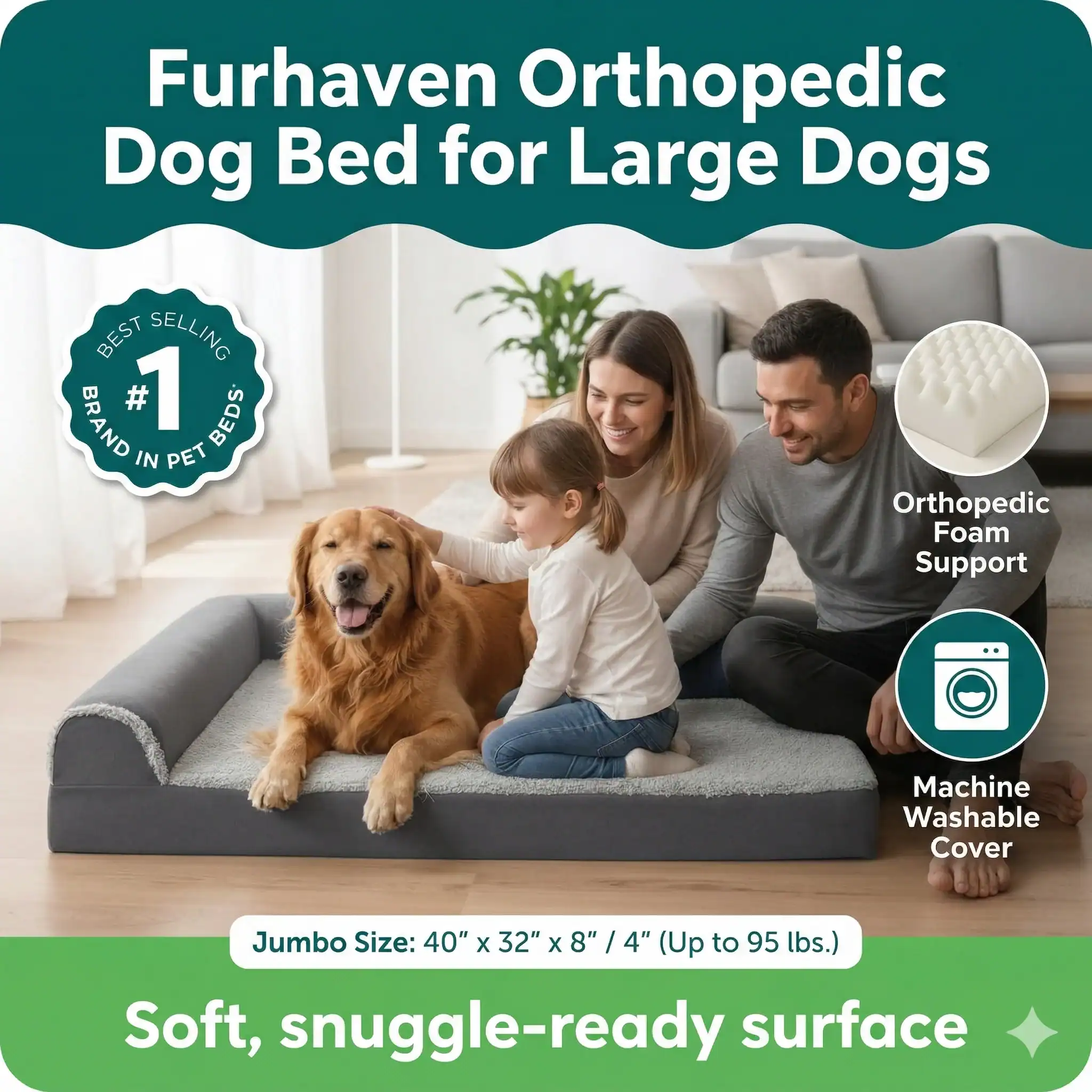
FurHaven Orthopedic Dog Bed
A padded bed spreads the weight of a lean dog rather than concentrating it on hips and elbows, which is why sighthound owners tend to buy one early. It is a comfort measure rather than a treatment for any joint condition.
Check price on AmazonNutrition & Diet
Feed a complete, balanced dog food suited to an active animal, with enough protein to hold lean muscle. The breed club advises talking to your breeder and vet about what food suits the individual dog rather than following a fixed formula.
Keep the dog lean. Visible ribs and a deep tuck are normal for a Saluki and are not a sign of underfeeding, so resist the urge to feed toward a rounder outline.
Many owners split the daily ration into two meals. This is a deep-chested breed, so bloat is a risk, and hard running straight after a meal is the thing to avoid.
Joint dysplasia is not among this breed’s common problems, but owners of older dogs sometimes raise joint supplements with their vet. The evidence for them varies.
Training
Training a Saluki works best when you accept that it learns quickly and complies selectively. Reward-based methods work, repetition bores them, and pressure makes things worse. Many do well in obedience and lure coursing once the handler stops fighting the temperament.
Keep sessions short and make it worth the dog’s while. A Saluki may lose interest when an exercise becomes repetitive or seems pointless, which owners often read as stubbornness.
Do not build a routine that depends on recall near open ground. Train a good everyday recall and still use a fence or a long line. A crate gives a Saluki puppy somewhere of its own and helps with house-training.
Saluki vs Greyhound vs Whippet vs Afghan Hound
All four are athletic sighthounds, but their historical work and terrain differed. The Saluki was selected for pursuing quarry across desert and mountain, while the Greyhound and Whippet became closely associated with coursing and racing. The table shows typical tendencies, and individual dogs vary.
| Attribute | Saluki | Greyhound | Whippet | Afghan Hound |
|---|---|---|---|---|
| Weight | 40 to 65 lb | 60 to 70 lb | 25 to 40 lb | 50 to 60 lb |
| Original Purpose | Coursing game over distance | Coursing and hunting, later track racing | Rabbit coursing and racing | Hunting in mountain country |
| Running Style | Speed and endurance | Sprint | Sprint | Endurance over rough ground |
| Coat | Feathered or smooth | Very short | Very short | Long and fine |
| Grooming | Low to moderate | Low | Low | High |
| Manner with Strangers | Reserved | Often sociable | Often sociable | Aloof |
| Availability | Uncommon | Widely available through adoption | Reasonably available | Uncommon |
| Management Considerations | Secure fencing, cardiac screening | Secure fencing, sighthound blood work | Secure fencing, thin skin | Secure fencing, heavy coat care |
| Space and Activity Needs | Regular exercise, secure running space | Calm indoors, needs regular exercise and sprint space | Calm indoors, needs secure sprint space | Regular exercise, secure space |
The Saluki combines strong attachment to its own people with an unusually independent and reserved style of interaction. What you get is a quiet, dignified companion and one of the most striking dogs you will ever walk.
Common Questions about the Saluki
How much does a Saluki cost?
Direct Answer: As an approximate, time-sensitive guide (as of 2026), reputable breeder prices in the US often run into the low thousands of dollars.
Context: Prices vary by breeder, location, pedigree, and availability. The breed is uncommon, so expect a waiting list and possibly travel.
Management: Budget for a winter coat and a padded bed, which this breed genuinely uses.
Are Salukis good family dogs?
Direct Answer: Yes, in calm homes with older children. They are gentle but dislike rough handling and noise.
Context: They bond closely with their own family and stay reserved with visitors. This is not a breed that tolerates being grabbed or climbed on.
Management: Teach a kid to let the dog come to them, supervise your Saluki around young children, and give it a quiet place to retreat to.
Are Salukis affectionate?
Direct Answer: Yes, but quietly. They show attachment by staying near you rather than by demanding attention.
Context: Owners new to the breed often mistake reserve for indifference in the first months. The bond is there and it tends to deepen slowly.
Management: Let the dog set the pace of contact rather than pushing for it.
How much exercise does a Saluki need?
Direct Answer: Around an hour a day for most healthy adults, plus the chance to gallop in a securely fenced space.
Context: They were bred for speed and endurance over difficult terrain, so they need regular exercise and real opportunities to run.
Management: Lure coursing is a good outlet, and a long line works where fencing is not available.
Can a Saluki be trusted off leash?
Direct Answer: Not in open ground. The chase instinct can override recall, so an open area is not the place to rely on it.
Context: A Saluki can be out of sight quickly and will not respond mid-chase. Distance and speed together make it hard to recover.
Management: Use securely fenced space, or a long line in open areas.
Do Salukis shed?
Direct Answer: Lightly. Neither variety sheds heavily, and there is little coat odor.
Context: Feathered dogs need their fringes checked for tangles, but neither type needs much brushing.
Management: A weekly brush handles it, with more attention behind the ears on feathered dogs.
What is the difference between smooth and feathered Salukis?
Direct Answer: Only the coat. The feathered variety has longer hair on the ears, tail and legs, the smooth has none.
Context: Both are the same breed and both can appear in one litter. Neither is rarer or more correct than the other.
Management: Choose on grooming preference, since everything else about the two is the same.
What health tests should the parents have?
Direct Answer: A cardiac evaluation and a thyroid evaluation, plus DNA tests for NCL8 and SSADH deficiency.
Context: Those are the tests current breed guidance emphasizes, with an eye exam sometimes added. Check the current OFA and breed club requirements, since protocols change.
Management: Ask to see the certificates, and ask about cancer in the line while you are there.
Why does my vet say my Saluki’s blood work is abnormal?
Direct Answer: Sighthound values differ, so a standard chart can misread a healthy Saluki.
Context: Salukis run a high hematocrit and low platelets like a Greyhound, and the breed club notes they function well on thyroid levels that look low elsewhere.
Management: Ask for sighthound reference ranges rather than the standard chart.
Are Salukis hard to train?
Direct Answer: They learn easily but comply selectively, which is different from being slow.
Context: The breed worked at a distance from the hunter and made its own decisions. Repetition and pressure both backfire.
Management: Keep sessions short, use rewards, and accept that a Saluki will always weigh up whether it is worth doing.
Are Salukis rare?
Direct Answer: Yes, in the West. They are registered in small numbers and you will rarely meet one by chance.
Context: That means fewer breeders, longer waits and more travel, but also a community that tends to know its lines well.
Management: Start with the national breed club rather than a general puppy listing site.
Are Salukis good for first-time owners?
Direct Answer: They suit an owner who wants a calm, independent dog and does not need constant affection back.
Context: This is not an especially easy beginner breed. The challenges are the independent temperament, the prey drive, the secure exercise and the breed-specific health points rather than grooming or feeding.
Management: Meet adult Salukis before deciding, since the temperament is the part people misjudge.
Finding a Puppy
Expect a wait. Litters are few in the USA, most breeders place through the national club, and puppies are rarely offered for sale in the usual places.
🏠 Reputable Breeders
A good breeder shows a recent echocardiogram for both parents along with the NCL8 and SSADH results, talks openly about cancer in the line, and asks about your fencing. Most will want to stay in contact for the dog’s life.
🐾 Rescue and Adoption
Saluki rescues exist but take in few dogs, since the breed is uncommon and breeders usually take their own back. An adult lets you judge the temperament rather than guess at it.
🚩 Red Flags to Watch For
- No recent echocardiogram for either parent.
- No NCL8 or SSADH DNA results on request.
- A seller who presents the breed as uniformly biddable and eager to please.
- No discussion of the chase instinct or fencing.
- No written contract or return policy.
- A seller who will not let you meet the mother.
❓ Questions to Ask the Breeder
- When was each parent’s last echocardiogram, and who performed it?
- May I see the NCL8 and SSADH results?
- What have dogs in this line died of, and at what ages?
- Are the puppies feathered, smooth, or both?
- How are they raised and socialized?
- What does your health guarantee cover?
🔍 Questions a Good Breeder Asks You
- How is your yard fenced, and how tall?
- Do you have cats or small animals?
- Have you owned an independent breed before?
- Where will the dog get to run safely?
- What is your plan if it does not work out?
A responsible breeder will usually want to know about your fencing, other pets, exercise plans and ability to care for the dog long term.
Personal Observation
💭 Personal Observation
Rusty is the oldest of my rescues and the most independent. He sleeps outside by choice and spends his day watching the gate. He does not follow me from room to room the way some of the others do.
That is easy to read as a dog who is less attached, and it is not. He simply does not need to be in the same room to be content, and he decides when he wants company.
That is one reason the Saluki can be misunderstood. The breed is generally independent and reserved, so affection may be quieter than it is with a more demonstrative dog. If you are comfortable with a dog that chooses when to seek company rather than constantly asking for attention, that temperament can fit very well into the right home.
Conclusion
The Saluki is an ancient, dignified hound that is quiet at home, easy to groom and striking to look at. For an owner prepared for its exercise, fencing and independent temperament, it is a rewarding companion.
What it asks for is a fence it cannot get past, a cardiologist’s report before you buy, and an owner who does not need to be adored out loud.
Meet adult Salukis before you decide. The temperament is the part buyers misjudge most often, and half an hour with a grown one tells you more than any article can.
📋 Before bringing one home, run this 4-step pre-buying check
- Secure space. Do you have a fenced yard or access to a safely fenced field where the dog can run?
- Temperament fit. Are you happy with a reserved dog that shows affection quietly?
- Health paperwork. Have you seen a recent echocardiogram plus NCL8 and SSADH results for both parents?
- Patience. Are you prepared to wait for a litter and possibly travel for it?
If any answer is no, reconsider the breed.
Editorial Disclaimer: This article is for informational and educational purposes only. It does not constitute veterinary advice, medical diagnosis, or treatment recommendations. Always consult a licensed veterinarian before making health-related decisions for your pet.
Accuracy Notice: While every effort has been made to ensure the information presented here is accurate and current, breed information evolves and individual dogs vary. If you spot a factual error or have updated information from a verified source, please contact us so we can review and update.
Product Disclosure: Product recommendations are based on independent research and editorial judgment. Individual results may vary. K9Sphere participates in the Amazon Services LLC Associates Program and other affiliate programs, and earns from qualifying purchases at no additional cost to you.
Last reviewed: September 2026. Article reviewed for accuracy on the date shown above.