
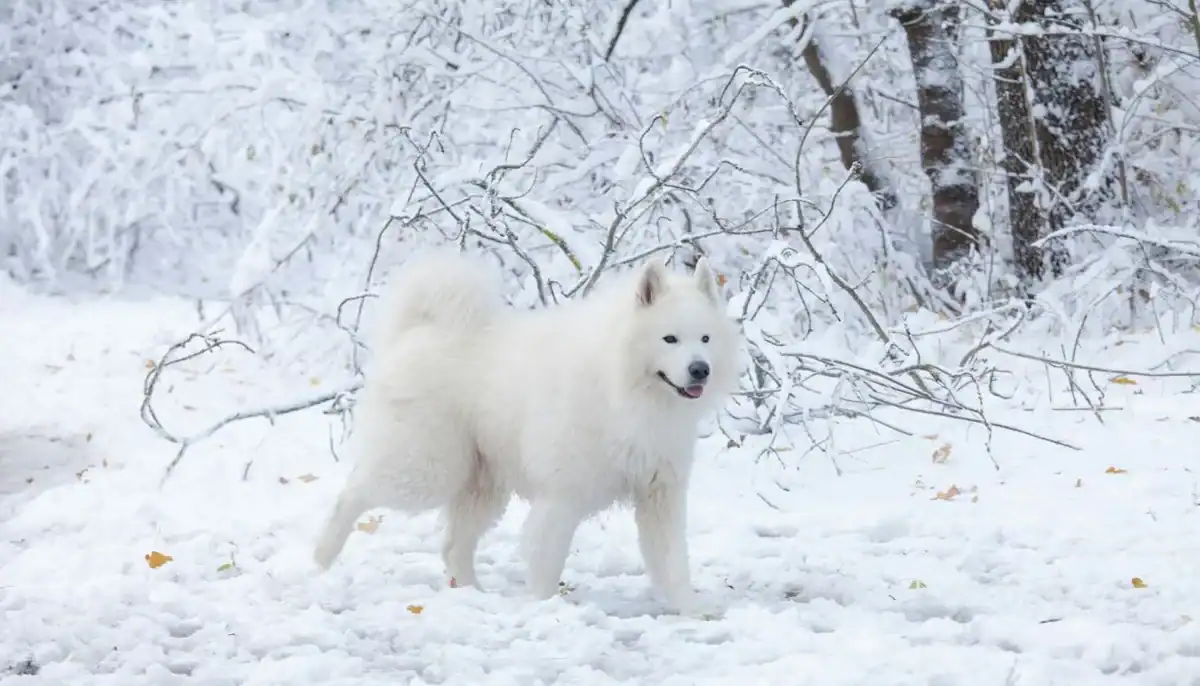
The Samoyed is a Russian Arctic working dog developed by the nomadic Samoyedic people of Siberia for sledding, herding reindeer, and providing warmth inside the family tent.
Beneath the famous “Sammy smile” and white double coat is a serious, talkative worker built to survive some of the harshest weather on earth. Their appeal goes well beyond appearance. Properly socialized, they become deeply attached partners that bring a lot of personality to an active home and want to be involved in everything the family does.
This guide draws on the American Kennel Club reference data, the Samoyed Club of America wellness protocols, and veterinary literature to present an accurate picture of ownership.
A Samoyed shapes your routine around daily exercise, training, and coat care. The shedding is real. The vocal habit is real. The need to be part of the household every single day is real. None of it is exaggerated by long-time owners.
For active handlers who can meet those needs, you get a deeply loyal companion with the endurance to hike all day and the warmth to settle on the couch afterwards. Households without the time for daily brushing, secure cooling for warm months, or tolerance for a vocal alert dog should review the commitments honestly before deciding.
Affiliate Disclosure: K9Sphere is a participant in the Amazon Services LLC Associates Program. As an Amazon Associate, K9Sphere earns from qualifying purchases made through links in this article at no additional cost to you. Product recommendations are based on independent research and editorial judgment, not paid placement.
Breed Snapshot
📊 Vitals and Lifespan
Height
Males: 21–23.5 in (53–60 cm)
Females: 19–21 in (48–53 cm)
Weight
Males: 45–65 lb (20–29 kg)
Females: 35–50 lb (16–23 kg)
Lifespan
12–14 years
Breed Group
Working Group
Origin
Russia (Siberia)
🇷🇺
⭐ Personality Traits
Ratings (1 to 5). The Samoyed is a medium-sized dog that balances high friendliness and endurance against intense shedding and vocal tendencies.
History and Origin
Historically, Samoyeds are a basal breed developed by the nomadic Samoyedic people of Siberia. Sleeping close together to survive the cold shaped the breed’s social nature, which remains a core part of their identity today.
📌 Pre-1800s: Siberian Origins
The nomadic tribes of the tundra bred them for survival in one of the harshest environments on earth. Unlike some sled dogs kept entirely separate from humans, Samoyeds were invited into the tents at night to provide warmth, giving us a dog with a deep reliance on human interaction over centuries.
📌 1889: English Introduction
Explorer Ernest Kilburn Scott spent time with the Samoyedic people and brought a brown male pup back to England. He later imported a cream-colored female and a snowy white male. These imports formed the foundation of modern Western lines, shifting the focus primarily toward the solid white coat.
📌 1906: AKC Recognition
The American Kennel Club officially recognized the breed as a member of the Working Group. Around this time, they gained immense fame among polar explorers. Fridtjof Nansen and Ernest Shackleton relied heavily on them during early polar expeditions to haul gear across the ice.
📌 Today: Active Companionship
While still capable of light sledding, the modern Samoyed is primarily kept as an active family companion. The Samoyed Club of America maintains the breed standard and emphasizes protecting their functional working structure alongside their welcoming character.
Physical Characteristics
A defining characteristic of the breed is the famous “Sammy smile,” which consists of dark lips curving upward at the corners. This feature evolved for practical reasons to prevent drool from forming and freezing on the face in sub-zero temperatures.
🎨 The Thick Double Coat
The thick coat is built in two layers. A harsh, straight outer layer stands out from the body, while a soft undercoat provides intense insulation. The color is usually white, with biscuit or cream also accepted by the standard. This coat protects against freezing wind but creates genuine vulnerability in warm weather.
🏗️ Working Structure
The body is slightly longer than it is tall, providing the mechanical advantage needed to pull weight over long distances. The plumed tail is carried rolled forward over the back or side when the dog is alert, and drops when relaxed. Deep chests support endurance.
Character and Personality
Because the breed developed alongside people, Samoyeds thrive on family inclusion. A dog left isolated in a backyard may develop destructive habits or separation anxiety. Most Samoyeds seem convinced they should be involved in absolutely everything happening in the house.
🗣️ Expressive and Talkative
They communicate through barks, yips, howls, and a low grumble. They are excellent watchdogs because they will reliably alert you to anyone approaching the property, but their eager warmth means they will greet an intruder with enthusiasm rather than suspicion. They do not make good guard dogs.
🏃 High Energy
A bored Samoyed finds creative and often expensive ways to entertain itself. They possess a strong drive to work and run. While they enjoy physical contact, they need an active daily outlet before they are willing to settle down calmly indoors. Digging is a common behavioral outlet if they don’t get enough running time.
🧠 Independent Thinkers
They are intelligent but retain an independent streak common to Arctic types. They learn quickly but may decide whether or not to comply based on the situation. Training requires patience and consistency to keep them engaged.
🐕 Pack Mentality
Their heritage makes them generally excellent with children and eager to participate in home life. They typically get along well with other dogs, especially when socialized early. However, their herding background means they may occasionally try to herd movement through chasing or excited actions.
Screening and Conditions
Veterinary Disclaimer: The information in this article is for educational purposes only and is not a substitute for professional veterinary advice, diagnosis, or treatment. K9Sphere’s authors are experienced dog owners, not licensed veterinarians. Always consult a qualified DVM regarding any health concerns about your pet. Never disregard professional veterinary advice or delay seeking it because of something you have read on this site.
Health Information Sources: Data compiled from:
- Samoyed Club of America: CHIC-required screening protocols and breed-specific health tracking
- American Kennel Club: Breed reference and parent-club guidance
- Veterinary Literature: Published research on Samoyed hereditary glomerulopathy
Always consult your licensed DVM for personalized medical advice.
The Samoyed is generally a robust companion with a good lifespan reaching up to 14 years, but they are genetically prone to several specific inherited medical conditions. Ethical kennels utilize DNA testing and clinical evaluations to minimize the occurrence of these issues in their litters.
Common Health Risks
🔴 Samoyed Hereditary Glomerulopathy (SHG)
What to watch for: Increased thirst and urination, weight loss, lethargy, and decreased appetite are early indicators. This severe, sex-linked genetic kidney condition primarily affects males, often leading to renal failure by age five. Female carriers usually show milder symptoms or remain asymptomatic.
Screening: A DNA test is available. Never purchase a pup without seeing clear genetic test results for both parents.
🟡 Hip Dysplasia
What to watch for: Stiffness after rest, reluctance to climb stairs, and pain during exercise are common signs. As an active, medium-sized dog, they are susceptible to this joint malformation.
Screening: OFA or PennHIP joint evaluation of both parents is a required CHIC test. Keeping the dog lean and adding a hip and joint supplement can help maintain cartilage integrity.
🟡 Progressive Retinal Atrophy (PRA)
What to watch for: Night blindness is usually the first sign, with dogs hesitating to enter dark rooms. This degenerative eye disease eventually leads to complete blindness.
Screening: Annual exams by a veterinary ophthalmologist and specific DNA testing help identify the risk.
🟡 Diabetes Mellitus
What to watch for: Excessive thirst, frequent urination, and increased appetite paired with weight loss. Samoyeds have a higher occurrence of diabetes compared to many other breeds, typically emerging in middle age.
Screening: Routine blood panels help monitor glucose levels. Management requires a strict diet and often daily insulin.

Nutramax Dasuquin with MSM Soft Chews for Large Dogs
Use for: Joint support in active working breeds prone to hip dysplasia. The combination of glucosamine, chondroitin, and MSM supports cartilage health in dogs carrying moderate weight over long distances.
Check price on AmazonGrooming and Coat Care
When caring for a Samoyed, owners must understand that the maintenance workload is heavy and non-negotiable. The stunning white coat requires frequent upkeep to prevent painful matting close to the skin. They shed year-round, and twice a year they drop their dense undercoat in massive clumps.
Most owners brush them daily during shedding season using a slicker tool and a metal comb. You must use a technique called “line-combing” to part the outer hair and comb directly from the skin outward, ensuring the undercoat is free of tangles. During shedding season, a high-velocity dryer helps push out the dead hair. Investing in one of the best brushes for shedding dogs makes a significant difference.
Bathing one at home eats up an entire afternoon, mostly because of the blow-drying. Never let a double-coated dog air dry completely, as trapped moisture near the skin leads to hot spots. Use whitening shampoo sparingly, and stick to gentle formulas for routine washing. For dogs that develop sensitive skin from environmental allergies, switching to a dog shampoo for itchy skin helps prevent dryness and irritation after a wash. Nail trimming every three weeks and frequent teeth cleaning complete the physical upkeep.
Exercise and Living Needs
Plan on at least 60 to 90 minutes of dedicated activity every day, split between morning and evening sessions. They enjoy brisk walks, jogging, hiking, and pulling activities like skijoring. Without an adequate physical outlet, their drive redirects into destructive chewing and nuisance barking.
While an apartment might work if you are exceptionally dedicated to being outdoors, the noisy nature of the dog makes shared walls problematic. A home with a securely fenced yard is a much better fit.
Climate is a critical factor. During warm months, outdoor running must be restricted to early mornings and late evenings. They require access to air conditioning and shade throughout the day. Never shave a Samoyed to cool them down. The coat insulates against heat and helps protect the skin from sunburn. Adding marine omega-3 support like Zesty Paws Salmon Oil can also help maintain coat health through seasonal weather changes.

Furbo 360° Dog Camera
Use for: Monitoring a highly vocal, separation-sensitive companion when left alone. The two-way audio allows you to interrupt barking early, helping manage their alert tendencies when you are out of the house.
Check price on AmazonNutrition & Diet
You might expect a sled dog to eat massive amounts of food, but many actually have an efficient, moderate metabolism. Keeping them lean is essential to reduce the load on their joints. Feed a high-quality, protein-rich food divided into two meals per day.
Monitor their body condition by feeling for their ribs through the dense coat. You should be able to feel the ribs without pressing firmly. Because they are prone to skin allergies, diets rich in omega-3 fatty acids help keep the coat healthy and bright. Adjust portions based on their routine activity volume, providing smaller meals during summer months when daily walks slow down.
Training
Training a Samoyed is not inherently hard, but it requires patience. Getting them to understand a command is relatively easy, but getting them to obey consistently takes work. Crate training is highly recommended early on. Keep educational sessions short, engaging, and heavily reward-based.
Early socialization is critical. Expose pups to various people, environments, sounds, and other dogs to build confidence. Because they are vocal dogs, “quiet” is a mandatory early command. Reward them for settling calmly and redirect alert barking quickly.
Leash walking can be a challenge. They were raised to pull, and a harness often engages their instinct to lean in and tow you down the street. Use positive reinforcement to teach loose-leash walking, and consider using a front-clip harness to redirect momentum.
Samoyed vs Siberian Husky vs Alaskan Malamute vs American Eskimo Dog
If you like the northern sled dog look, you are probably deciding between the Samoyed, the Siberian Husky, and the Alaskan Malamute. The American Eskimo Dog is another option for buyers who want a smaller white spitz-type dog.
| Attribute | Samoyed | Siberian Husky | Alaskan Malamute | American Eskimo Dog |
|---|---|---|---|---|
| Weight | 35–65 lb (16–29 kg) | 35–60 lb (16–27 kg) | 75–85+ lb (34–38+ kg) | 25–35 lb (11–16 kg) |
| Original Purpose | Sledding and herding | Light sled racing | Heavy freight drafting | Watchdog and companion |
| Energy Type | High, endurance worker | High, sustained runner | Moderate, powerful worker | High, playful bursts |
| Trainability | Smart but stubborn | Independent, easily bored | Willful, requires authority | Highly trainable, eager |
| Grooming | Daily, intense seasonal | Weekly, intense seasonal | Weekly, intense seasonal | Frequent, seasonal shed |
| Threat Response | Friendly alert barker | Friendly, poor guard | Intimidating size, quiet | Vocal watchdog |
| First-Time Owner? | With strong dedication | No, escape artists | No, expert handlers | Yes, with active lifestyle |
| Common Health Risks | Hereditary glomerulopathy, hip dysplasia, diabetes | Cataracts, corneal dystrophy, progressive retinal atrophy | Day blindness, polyneuropathy, chondrodysplasia | Progressive retinal atrophy, luxating patella, Legg-Calve-Perthes |
| Living Space | House with yard preferred | Secure 6-foot fence needed | House with large secure yard | Adaptable to apartments |
Compared to the independent Siberian Husky or the massive Alaskan Malamute, the Samoyed is much more openly affectionate and attached to their family. The Siberian is notorious for its escape-artist tendencies, while the Malamute requires serious physical management. Choose the Samoyed if you want a deeply attached household companion and are prepared for the frequent alert barking and heavy coat care schedule.
Common Questions about the Samoyed
What is a Samoyed dog?
Direct Answer: A medium-to-large spitz from Siberia, recognized by a thick white coat and an upturned “smiling” mouth.
Context: Because they were bred to herd reindeer and pull sleds in freezing temperatures alongside humans, they are intensely social.
Management: Keep them inside with the family to prevent severe behavioral issues.
Are Samoyed dogs hypoallergenic?
Direct Answer: No dog is truly hypoallergenic. However, some allergy sufferers do better with them because they lack typical “dog odor.”
Context: The sheer volume of fur drifting through the house still carries dust and other environmental allergens. You might react to the dander, or to what the coat tracks inside.
Management: Spend a few hours with an adult dog before committing. A HEPA filter and a strong vacuum help immensely.
Do Samoyed dogs shed?
Direct Answer: Yes. They drop hair constantly and blow their entire undercoat twice a year.
Context: During seasonal changes, the shedding is extreme. Expect to fill several shopping bags with loose fur over just a few weeks.
Management: Use a high-velocity dryer outdoors and brush frequently with an undercoat rake.
How much does a Samoyed puppy cost?
Direct Answer: In the US, expect to pay between USD 1,500 and USD 3,000 for a well-bred pup from health-tested parents. Pricing varies by country, with UK, Canada, and Australia rates differing.
Context: The initial purchase is only the beginning. High-quality food, professional grooming, and veterinary care add up quickly over a 14-year lifespan.
Management: Budget for professional grooming every six to eight weeks and secure pet insurance early.
Should I get a Samoyed puppy or an adult rescue?
Direct Answer: Puppies let you control early socialization, but adopting an adult lets you skip the destructive teething phase.
Context: Adult dogs often end up in shelters when previous owners underestimate the grooming workload or vocal habits.
Management: If you lack the time for intensive housebreaking, look for a dog aged three or older through a breed-specific rescue network.
Are Samoyed dogs aggressive?
Direct Answer: No, they are inherently friendly dogs.
Context: They were bred to sleep huddled with families for warmth, which required a stable temperament. While any dog can develop issues if poorly raised, true aggression goes completely against their nature.
Management: Focus on positive socialization. Redirect their herding instinct early so they don’t chase moving objects.
How big is a Samoyed?
Direct Answer: Males stand 21 to 23.5 inches tall and weigh 45 to 65 pounds. Females are slightly smaller.
Context: Their immense coat makes them look significantly larger and bulkier than they actually are. Beneath the fur, they have a lean, athletic frame.
Management: Base their meals on their actual body condition rather than their visual size.
How do you care for a Samoyed?
Direct Answer: They need daily brushing, vigorous running, strict summer temperature management, and consistent training.
Context: Between their high energy, independent minds, and mat-prone coats, they demand a lot of time.
Management: Routine is everything. Lock in a morning walk, do your brushing while watching TV, and never leave them isolated.
Are Samoyeds good family dogs?
Direct Answer: Yes, they form deep bonds and thrive in a busy home environment.
Context: Their pack-oriented nature makes them gentle. However, they are bouncy and energetic, which means they can accidentally knock over toddlers during play.
Management: Supervise them around very young children. Older kids can easily help out with the brushing routine.
Can Samoyeds live in hot weather?
Direct Answer: Yes, but they struggle in severe heat and humidity.
Context: The coat insulates against heat, but extreme summer temperatures pose a real risk of heatstroke if they overexert themselves.
Management: Keep them indoors with the AC running during the hottest hours, limit outdoor exercise to early mornings, and never shave the coat.
Finding a Puppy
Acquiring a pup requires careful screening to avoid the heartbreaking consequences of genetic kidney disease or joint issues. Because their striking appearance makes them popular, many careless breeders produce litters without performing the necessary medical checks.
🏠 Reputable Breeders
Look for breeders registered with the Samoyed Club of America who follow CHIC testing protocols. A reputable kennel will provide clear OFA certifications for hips and cardiac health, current eye clearances, and crucial DNA test results for Samoyed Hereditary Glomerulopathy and PRA. They will ask you detailed questions about your yard, your activity habits, and your plan for managing the intense coat-care requirements.
🐾 Rescue and Adoption
Breed-specific shelters often have adult dogs available. Many enter the shelter system not because of conduct problems, but because previous families underestimated the vocal nature or the immense shedding. Adopting an adult allows you to skip the destructive early phase and clearly see the dog’s established personality and stamina.
🚩 Red Flags to Watch For
- Red Flag 1: No DNA test results for Samoyed Hereditary Glomerulopathy. This is non-negotiable given the severity of the disease.
- Red Flag 2: Puppies offered for sale without a contract requiring you to return the dog to the breeder if you can no longer keep it.
- Red Flag 3: Sellers who downplay the maintenance workload or suggest the dogs do not drop hair heavily.
- Red Flag 4: Litters raised entirely outdoors without household socialization and exposure to normal home noises.
- Red Flag 5: Parents showing extreme shyness or aggression, since temperament is highly heritable.
Personal Observation
💭 Personal Observation
Chun Chun (10-year-old rescue mix) is one of the most vocal dogs I have lived with, and the Samoyed has that exact same tendency to bark, just at a much higher volume across the whole day. Bruno (Labrador Retriever, passed 2021) greeted every stranger like an old friend, and the Samoyed shares that friendly nature toward visitors.
Bruno struggled with warm weather as a short-coated 45 kg Lab. A Samoyed faces an even steeper challenge with their thick double coat in summer months. I have learned with all my rescue dogs that grooming routines you skip in the first year become impossible by year three. If you are used to a quiet couch-potato dog, expect a massive adjustment. If you already know how to handle an active, talkative companion, this breed will feel very familiar.
Conclusion
The Samoyed is a joyful, affectionate working dog that brings immense personality and beauty into a home. They offer active handlers a deeply loyal companion that loves to be involved in everyday life, paired with the endurance to handle long hikes and outdoor adventures.
The biggest pro of ownership is their loyal companionship, while the main con is managing their demanding upkeep needs and noisy nature. If the loose hair and noise are too intense, the Golden Retriever offers similar friendliness with less barking, while the Siberian Husky offers a similar northern look with a slightly less demanding coat care schedule.
📋 Before bringing one home, run this 4-step pre-buying check
- Upkeep reality. Can you commit to frequent brushing and managing heavy seasonal shedding without frustration?
- Activity commitment. Are you prepared to provide at least an hour of vigorous outdoor activity every day regardless of the weather?
- Vocal tolerance. Will your living situation and neighbors tolerate a highly vocal dog that barks and howls to communicate?
- Climate match. Does your home have adequate cooling to keep an Arctic breed comfortable during summer months?
If any answer is no, reconsider the breed.
Editorial Disclaimer: This article is for informational and educational purposes only. It does not constitute veterinary advice, medical diagnosis, or treatment recommendations. Always consult a licensed veterinarian before making health-related decisions for your pet.
Accuracy Notice: While every effort has been made to ensure the information presented here is accurate and current, breed information evolves and individual dogs vary. If you spot a factual error or have updated information from a verified source, please contact us so we can review and update.
Product Disclosure: Product recommendations are based on independent research and editorial judgment. Individual results may vary. As an Amazon Associate, K9Sphere earns from qualifying purchases at no additional cost to you.
Last reviewed: May 2026. Article reviewed for accuracy on the date shown above.


