

Giant dog breeds turn heads with their size, strength, and surprisingly calm presence. They serve as family companions, working partners, and watchful guardians in homes around the world, and many people wonder what life with such a big dog really involves. This guide highlights ten of the biggest dog breeds and explains what sets each one apart.
There is no single official register of the largest breeds, so this list is arranged as a rough guide to size rather than an exact ranking, starting with some of the biggest and heaviest dogs on earth. Most reach well over 100 pounds full-grown, and a few of the tallest stand eye to eye with an adult when they rise on their back legs. Many have a calm, affectionate personality at home, though the guardian breeds among them tend to be more reserved with strangers.
Affiliate Disclosure: K9Sphere is a participant in the Amazon Services LLC Associates Program and other affiliate programs. As an Amazon Associate, and through other affiliate links, K9Sphere earns from qualifying purchases made through links in this article at no additional cost to you. Product recommendations are based on independent research and editorial judgment, not paid placement.
💡 What Counts as a Giant Breed
There is no strict rule, but most experts class a dog as a giant breed once it tops about 100 pounds full-grown or stands far above the average dog at the shoulder. A big dog breed at this size also grows more slowly than a typical large breed, often not reaching full size until two years old, which shapes how it should be fed and exercised.
10 Impressive Giant Dog Breeds
These ten breeds are among the most recognized giants in the world. Each was shaped for a particular job, from guarding and hauling to water rescue, so they differ in build and coat while sharing enormous size and a generally steady nature.
Several other breeds sit right on the edge of this group and are worth knowing if you are drawn to a bigger dog. The Newfoundland and Bernese Mountain Dog are heavy working dogs prized as gentle family companions, the Anatolian Shepherd and Great Pyrenees are powerful livestock guardians, the Cane Corso is a muscular Italian mastiff, and the Scottish Deerhound is the second-tallest breed of all. Any of these can feel oversized in a small home, so each deserves its own research before you commit.
1. English Mastiff
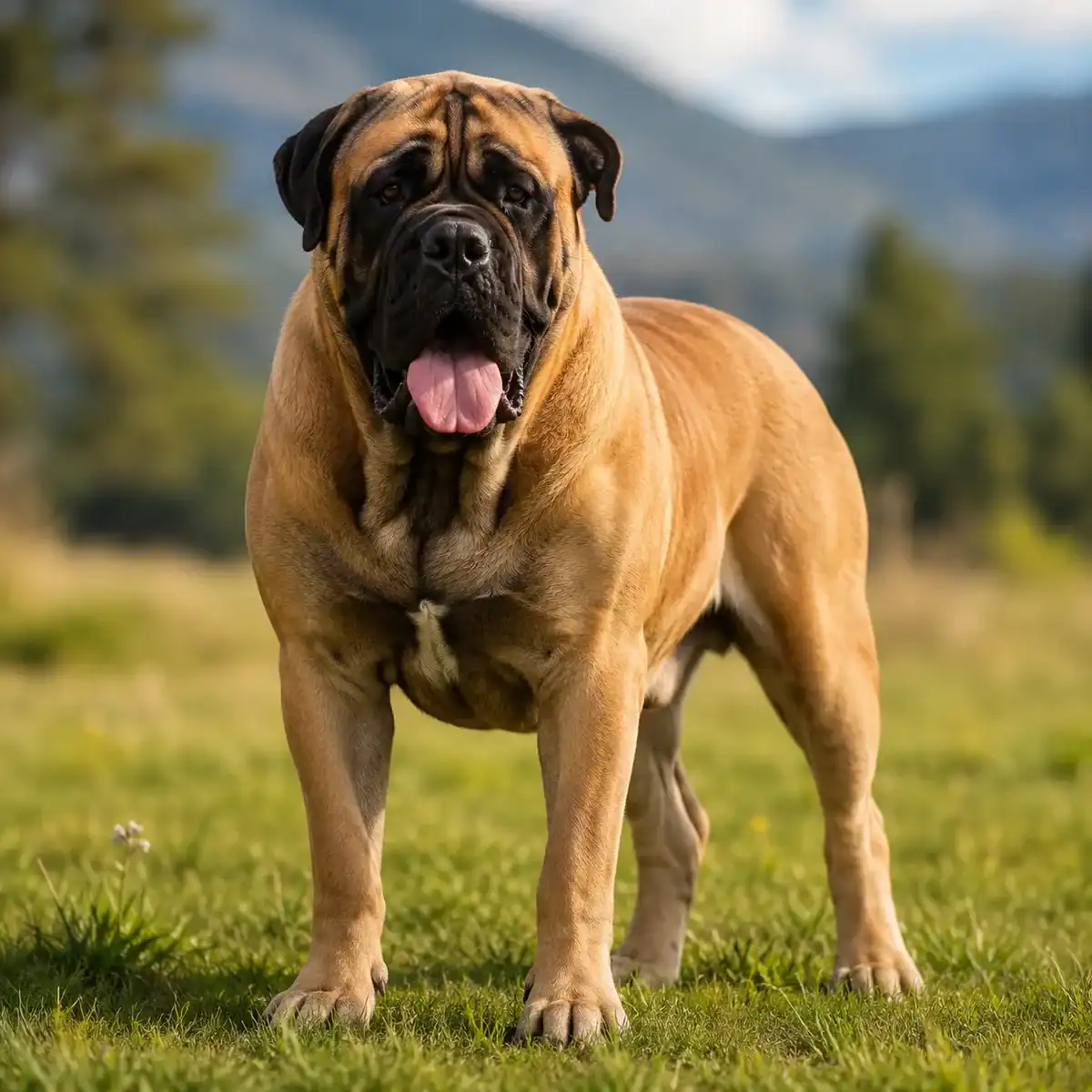
The English Mastiff is widely regarded as the heaviest dog breed in the world, with large males regularly topping 150 to 200 pounds and a record holder reported at 343 pounds. It carries an ancient lineage as a war dog and estate guardian, yet the modern Mastiff is a calm, dignified companion that often seems unaware of its own bulk.
Loyal, patient, and quietly protective, the Mastiff is gentle indoors but wary of strangers. It needs space, experienced handling, and early training, since a dog this size cannot be allowed to learn bad habits. Careful portion control matters too, as extra weight strains the joints and shortens an already brief lifespan, a point the AKC breed profile echoes.
2. Spanish Mastiff
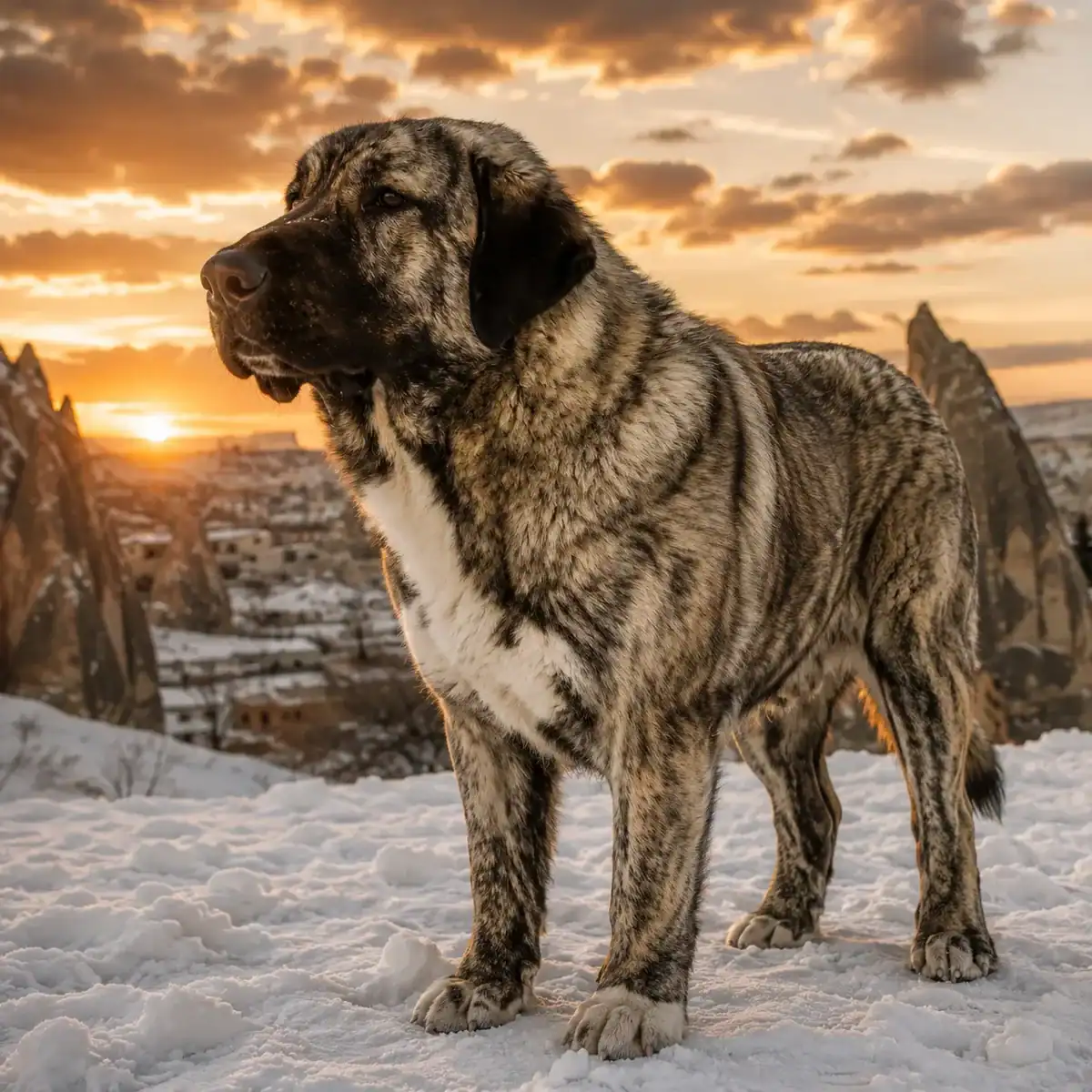
The Spanish Mastiff is one of the heaviest dogs in the world, with large males approaching 220 pounds. This ancient breed guarded flocks on the long seasonal migrations across the Iberian Peninsula and relies on its great bulk and a deep, booming bark to deter predators.
Despite its bulk, the Spanish Mastiff is calm, self-assured, and devoted to its family. It is slow to anger but immovable once it decides a threat is real. Like other giants, it needs space, a moderate amount of exercise, and an owner who understands a serious working temperament.
3. Caucasian Shepherd Dog
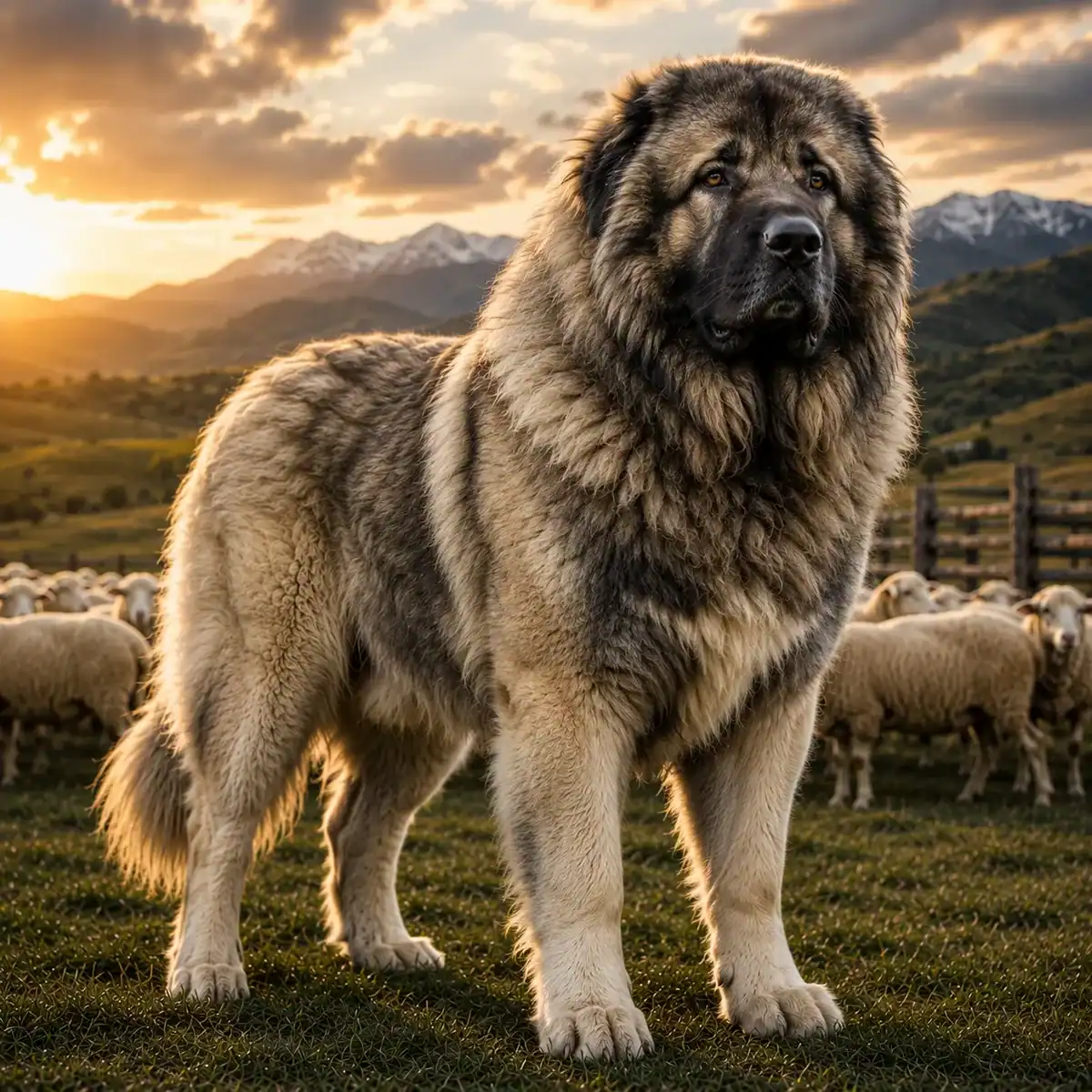
Sometimes called the Russian Bear Dog, the Caucasian Shepherd Dog is among the largest breeds on earth, with powerful males reaching up to 170 pounds or more. It comes from the Caucasus Mountains, where it was bred to face down wolves and guard flocks across rugged country.
Powerful, strong-willed, and intensely territorial, this livestock guardian bonds closely with its family but treats strangers with deep suspicion and can become aggressive toward perceived threats without proper handling. Its great size and guarding drive demand an experienced owner, early socialization, and firm, consistent training, which makes it entirely unsuited to first-time owners.
4. Saint Bernard
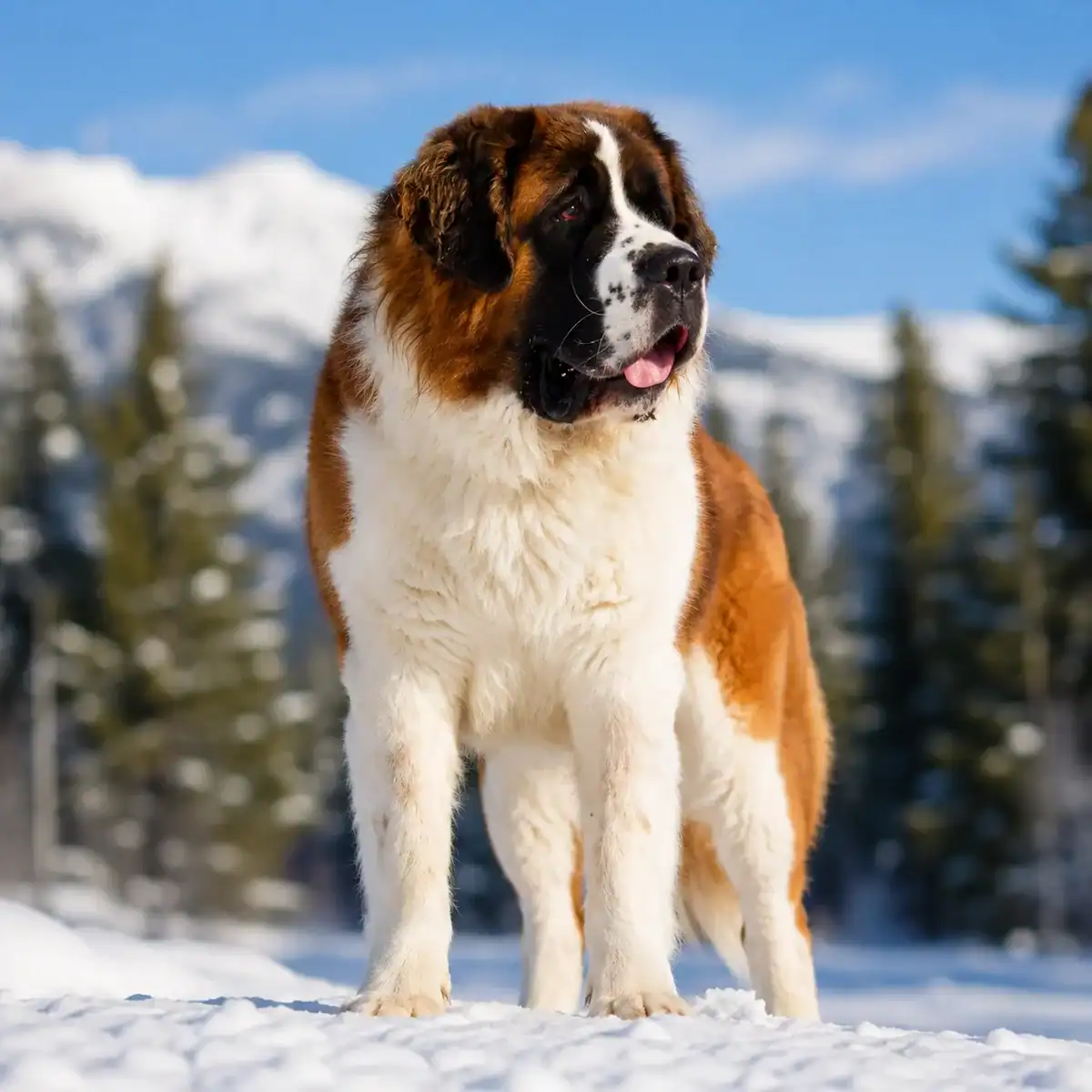
The Saint Bernard is the breed many people picture when they hear “giant dog.” It earned its fame as an Alpine rescue dog at the hospice on the Great St Bernard Pass, where it located and warmed travelers lost in the snow.
Gentle, patient, and famously good with kids, the Saint Bernard is a true family dog that needs steady guidance because of its size and strength, and small children should always be supervised around a dog this heavy. Its thick coat sheds heavily, so owners should groom it several times a week to keep it healthy. The breed also drools, which is simply part of life with one.
5. Great Dane
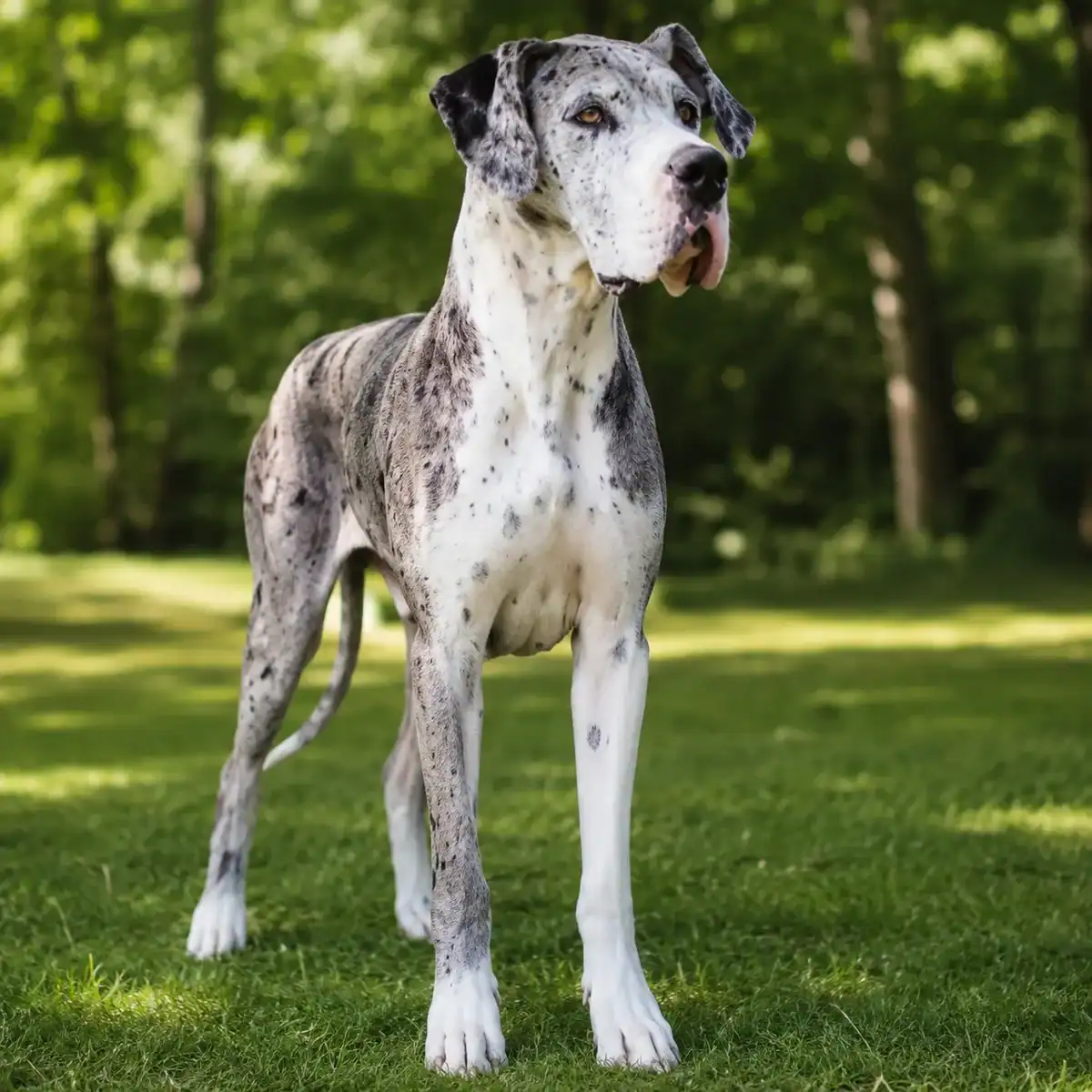
Nicknamed the “Apollo of dogs,” the Great Dane is widely seen as the tallest breed, with the record holder measuring over seven feet on his hind legs. It was developed in Germany to hunt wild boar before becoming a noble estate companion.
Despite its towering frame, the Great Dane is a true gentle giant, friendly and deeply attached to its people, often trying to behave like a lap dog. The breed has produced several of the tallest and longest dogs ever recorded, including past holders of the world’s tallest dog title. It needs daily walks and room to stretch out, and owners should feed measured meals and avoid hard exercise right after eating, since the breed is prone to bloat.
6. Irish Wolfhound
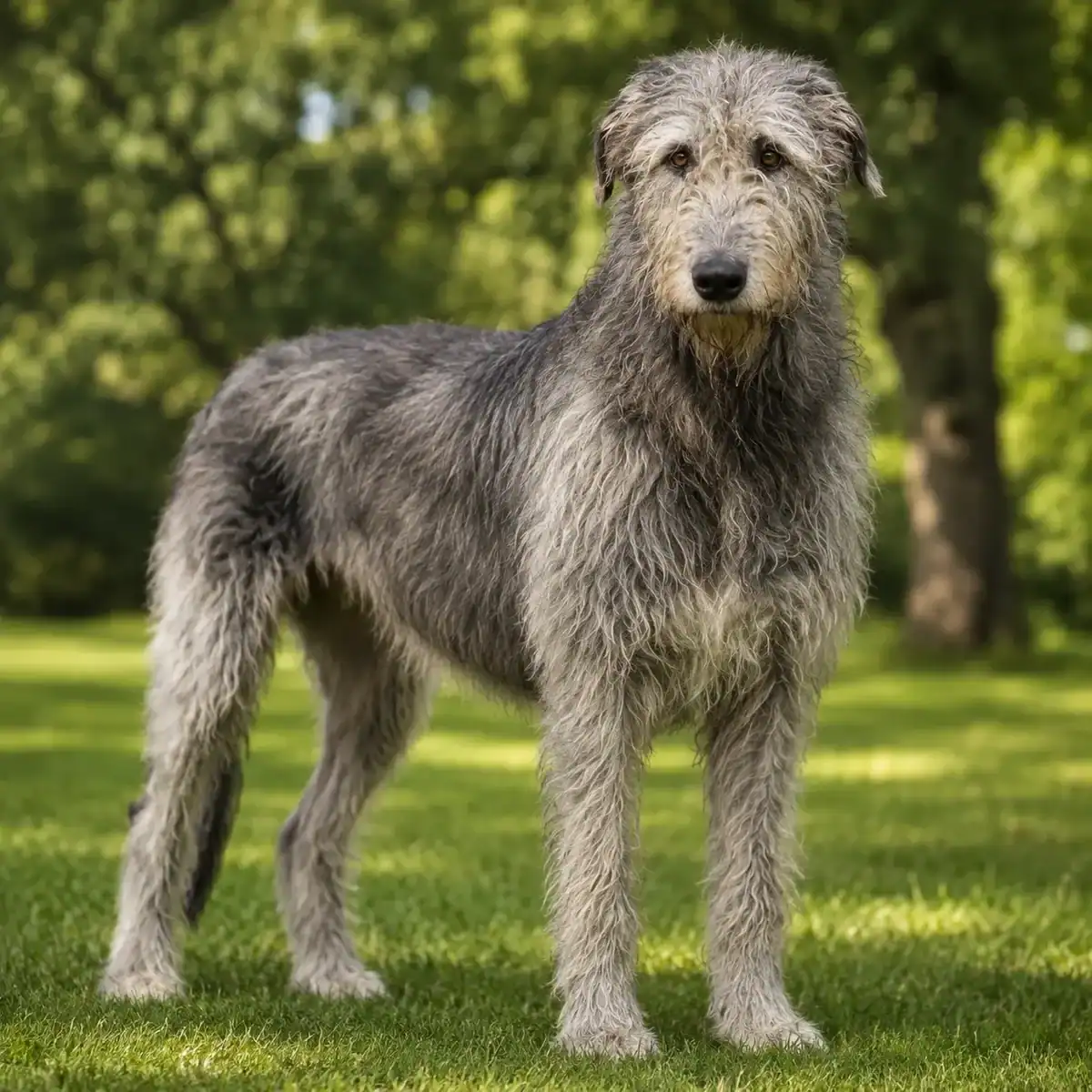
The Irish Wolfhound is the tallest breed recognized by the American Kennel Club, bred in Ireland to hunt wolves and large game. Tall and rangy rather than heavy, it has a noble, shaggy-coated look and a famously gentle, quiet manner at home.
This is a calm, patient companion that bonds closely with its family and rarely shows aggression. Its great size comes at a cost, since the Irish Wolfhound has one of the shortest lifespans of any breed. Owners should protect growing joints by avoiding hard exercise during the long puppy stage.
7. Boerboel
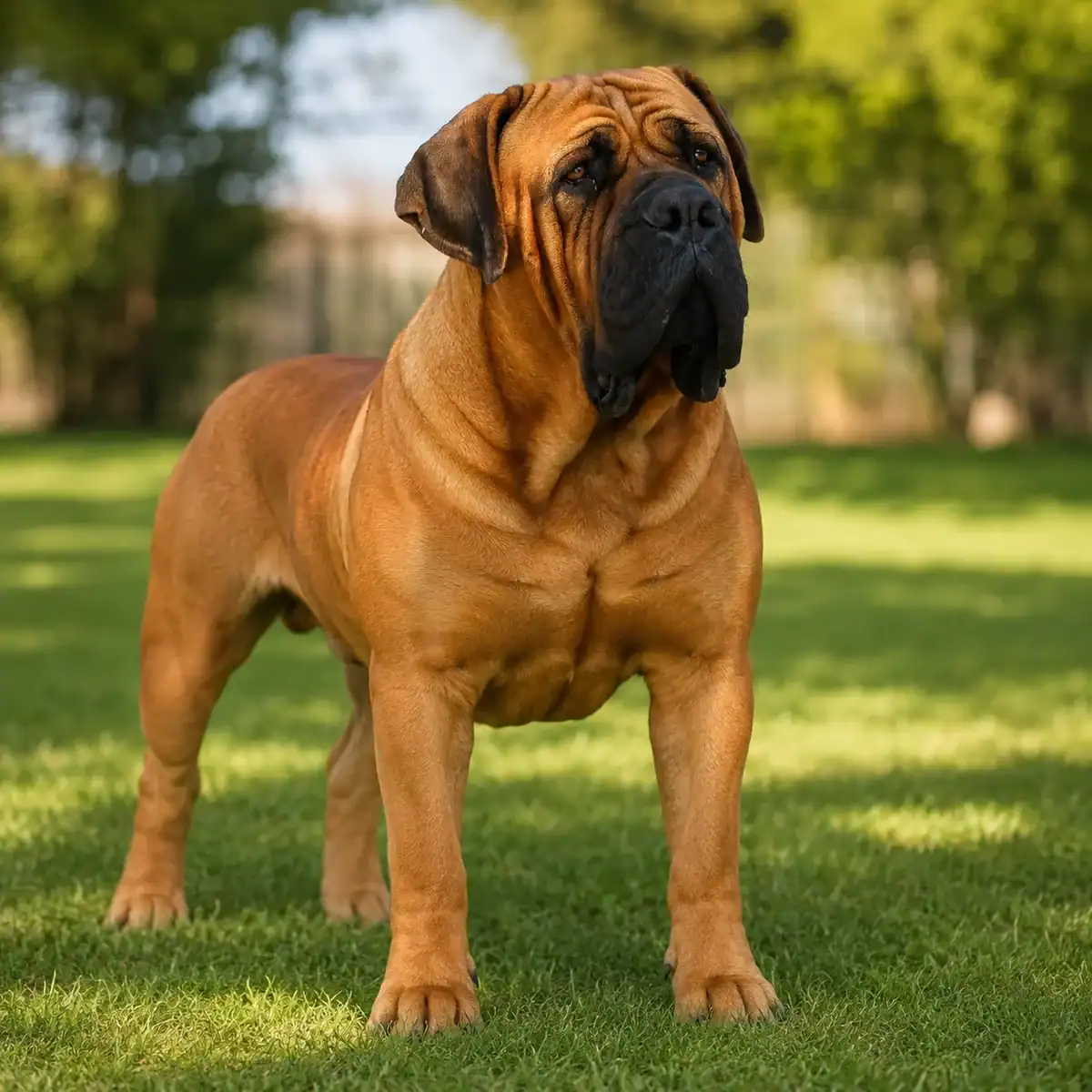
The Boerboel, also called the South African Mastiff, is a powerful farm guardian bred to protect homesteads from predators as large as lions and hyenas. Heavily muscled and weighing up to 200 pounds, it has a shorter, more athletic build than most mastiffs, since it developed in a hot climate and needed to move quickly.
Confident, intelligent, and intensely loyal, the Boerboel is calm and affectionate with its family yet a serious protector by instinct. It needs firm, consistent handling and thorough socialization from puppyhood, which makes it a poor match for first-time owners.
8. Neapolitan Mastiff
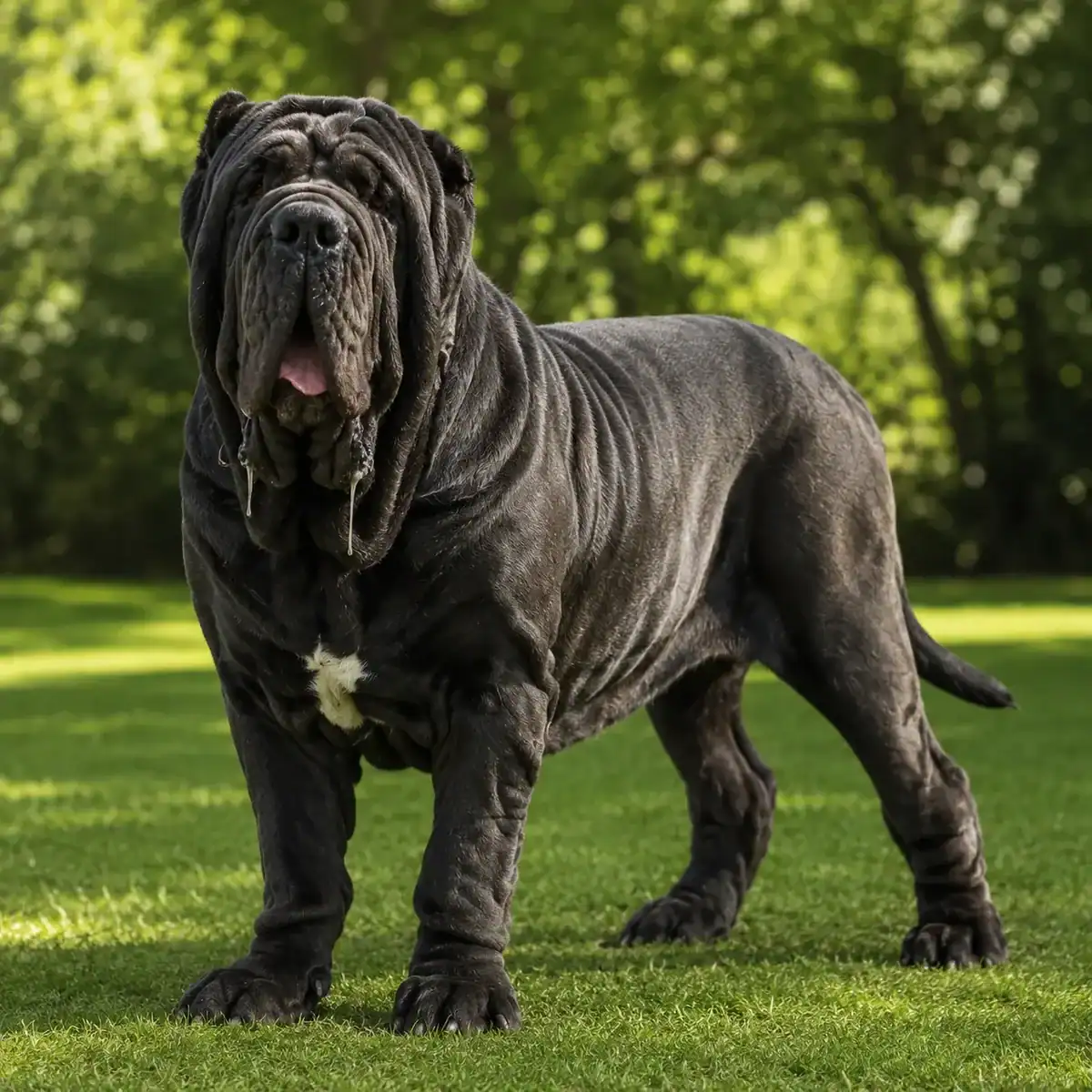
The Neapolitan Mastiff is an Italian guardian instantly known for its massive frame and deep folds of loose skin. Descended from ancient war and guard dogs, it was bred to defend home and family, and its sheer appearance alone deters most intruders.
Steady and devoted to its family, the Neapolitan acts as a quiet, watchful guardian that suits experienced owners with space. Those skin folds need regular cleaning and drying to prevent infection, and like other heavy breeds it benefits from careful weight management.
9. Tibetan Mastiff
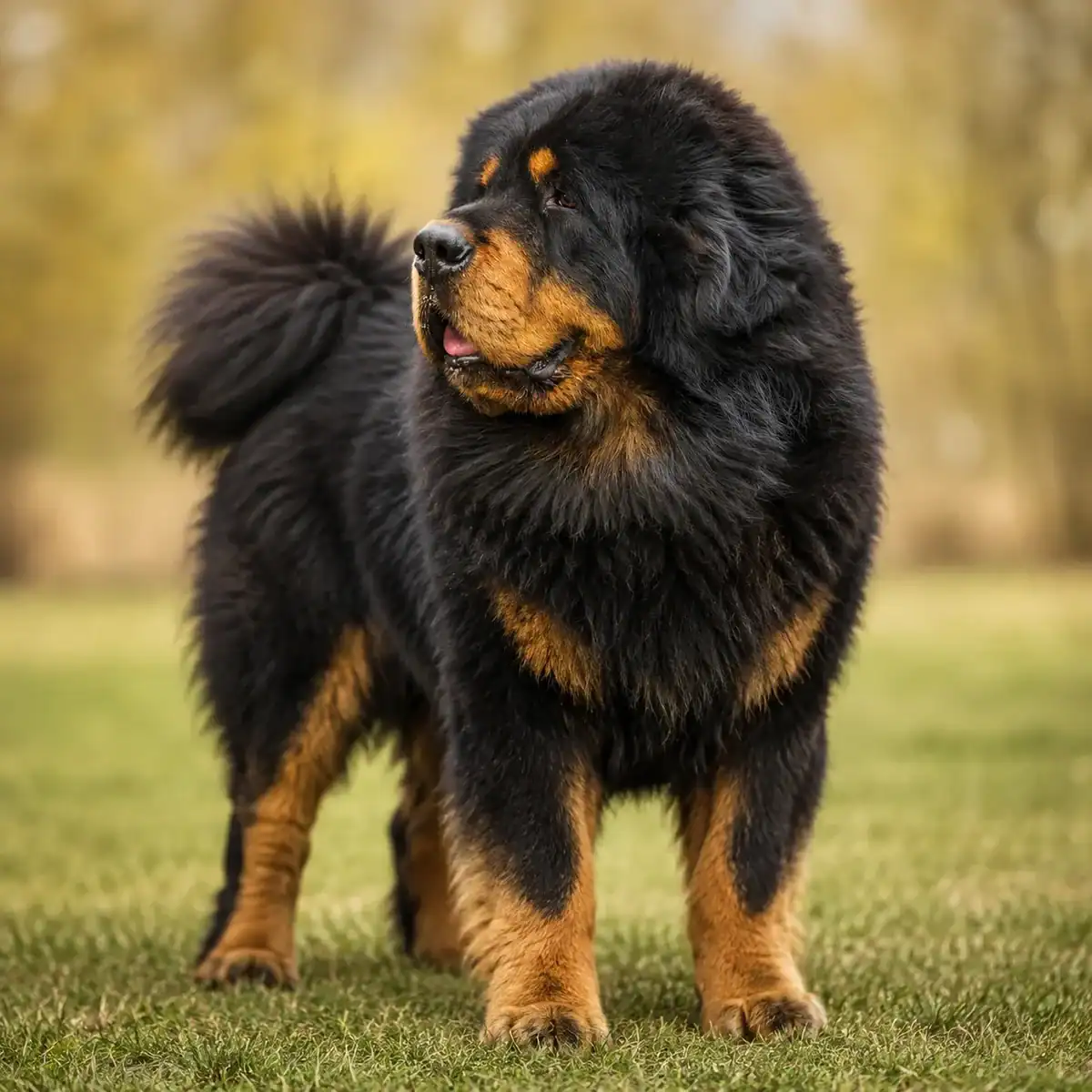
The Tibetan Mastiff is an ancient giant from the Himalayan region, where it guarded monasteries and flocks against wolves and other predators. Its thick double coat and heavy mane give it a lion-like look suited to harsh mountain cold.
Independent and strongly protective, the Tibetan Mastiff bonds with its family but stays reserved and watchful around strangers. It thinks for itself and does not always obey quickly, so it needs an experienced owner, a secure yard, and patient training from puppyhood.
10. Leonberger
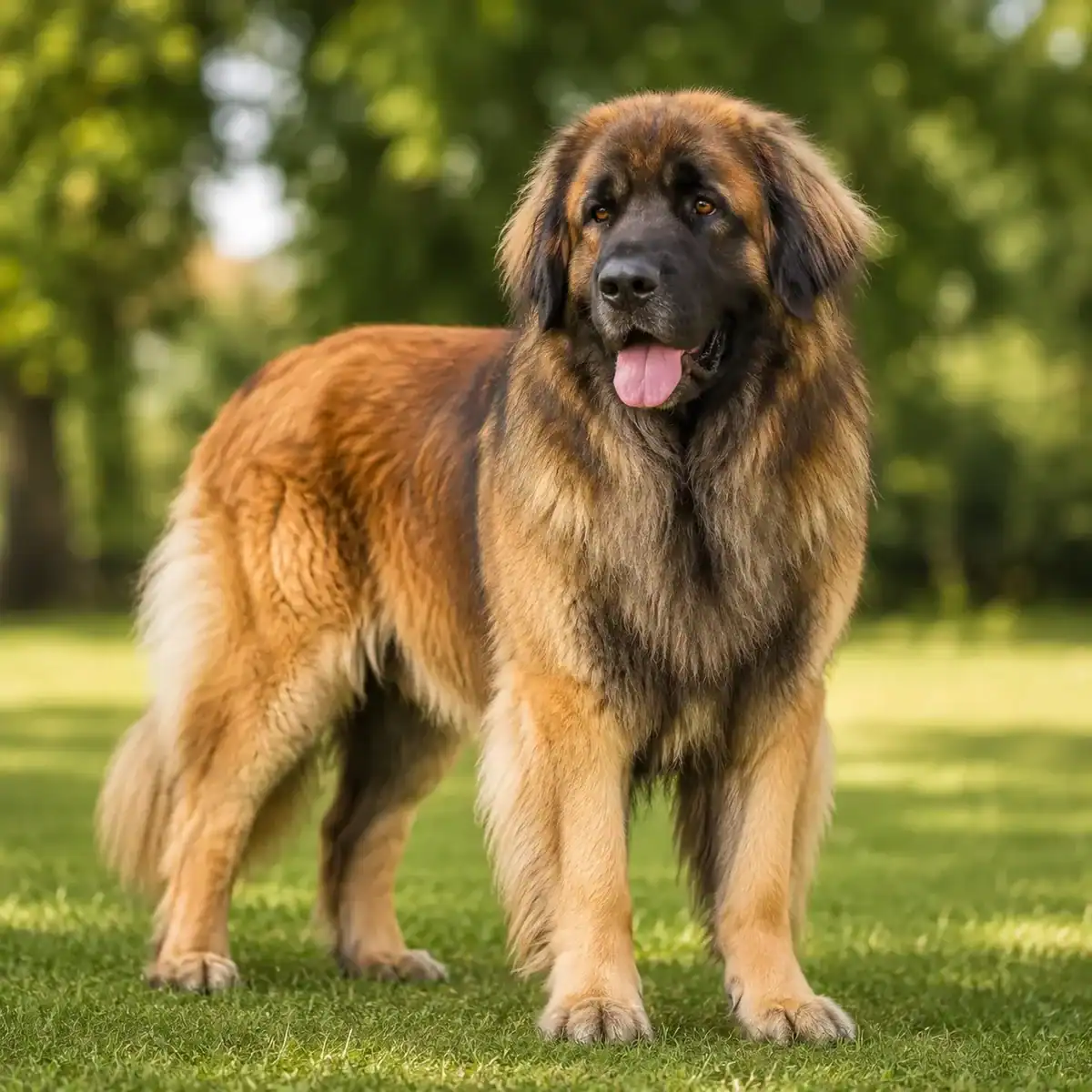
The Leonberger is a German giant bred as a companion for European nobility, with a lion-like mane that suits its name. Even-tempered and social, it is often described as an excellent family giant and was historically valued as both a watchdog and a working farm dog.
Stable and gentle with children, the Leonberger bonds closely with its family and dislikes long stretches alone. Its thick double coat needs brushing at least twice a week to prevent mats. Like many giants, it carries a short average lifespan, so screening from a responsible breeder matters.
Why Giant Breeds Live Shorter Lives
One of the hardest truths about giant breeds is that most live only six to ten years, well short of the lifespan of small dogs. The reason ties back to their size. Large bodies age faster at the cellular level, and researchers believe the rapid growth that builds such a big frame may also raise the long-term risk of cancer.
That extra mass places constant strain on the heart, joints, and other organs, and any added weight makes it worse. None of this means a short life has to be a low-quality one. Good breeding, a careful diet during the growth years, weight control, and regular veterinary care all help a giant breed live as fully as possible.
Caring for a Giant Breed
Owning a big dog is a major commitment of space, time, and money. With a dog this huge, everything costs more, from food and bedding to medication dosed by body weight, and the upkeep and maintenance of a giant add up over its life. The daily routine also has to account for a dog whose size makes training and handling non-negotiable.
Exercise and Growth
Most adult giants do well with 45 to 90 minutes of steady, low-impact exercise a day, such as long leash walks, controlled yard play, or swimming. The growth years need special care, though. Puppies should avoid stairs, hard runs, and jumping until their growth plates close, often around 18 to 24 months, since high-impact activity can damage developing joints.
Feeding and Nutrition
Giant breeds grow fast, and feeding them correctly while young protects their bones and joints for life. Large-breed puppy formulas control calcium and calorie levels to slow that growth to a healthy pace, which protects a giant-breed dog through its first two years. With any large dog breed, owners should measure every meal rather than free-feed, split food into two or three servings a day, and judge condition by feel, since the ribs should be easy to touch without pressing hard.
Space and Home Setup
A giant breed needs room to move without crashing into furniture, durable flooring for traction, and a large orthopedic bed to cushion heavy joints. Fencing should be tall and secure. Climate matters too, since many giants overheat easily and need shade, airflow, and cool water in warm weather.
Health and Longevity Factors
Veterinary Disclaimer: The information in this article is for educational purposes only and is not a substitute for professional veterinary advice. K9Sphere’s authors are experienced dog owners, not licensed veterinarians. Always consult a qualified DVM regarding any concerns about your pet.
Giant breeds face health risks tied directly to their size and fast growth. Joint and bone problems are common, including hip and elbow dysplasia and arthritis, and the strain of a heavy frame only adds to the load. Many giants are also at increased risk of bloat, a life-threatening twisting of the stomach that needs emergency surgery.
Other concerns include heart disease such as dilated cardiomyopathy, bone cancer, and thyroid disorders, while obesity worsens nearly all of them. Regular veterinary checkups, careful monitoring during the first two years, and a large-breed puppy diet all support healthier development and earlier detection of problems.

Because giant breeds carry so much weight on their joints, many owners ask their veterinarian about joint support early in life. A green-lipped mussel supplement like Super Snouts Joint Power is one option worth raising at a checkup, alongside weight control and sensible exercise during the growth years.
A Note From My Own Dogs
💭 Personal Observation
The hardest part of living with a big dog, in my experience, is weight. My Labrador Bruno was a heavy-boned dog who once tipped past 50 kg. That extra load was hard on his joints, so I walked him every day and tightened up his meals, and over a few months we brought him down to about 45 kg. He moved better and seemed more comfortable for it. A heavy frame is already a lot for a dog to carry, and every extra kilo makes it worse.
It does not stop at the giant breeds either. My rescue Moti is around 27 kg and tall for his build, and now that he is over ten years old I have to watch his weight closely. As dogs age and carry extra weight they slow down, and the stiffness shows. For him I use joint supplements alongside steady, gentle exercise.
The lesson is the same whatever the dog weighs. Learn your breed’s ideal weight range, keep your dog close to it from early on, keep them moving, and support the joints before problems set in.
Pros and Cons of Giant Dog Breeds
Giant breeds share many of the same rewards and challenges. Individual temperament varies by breed and dog, but the points below hold true across most of them.
Pros
- Calm, steady temperament in the home
- Deeply loyal and devoted to family
- Often gentle and patient with children
- Naturally protective and imposing to intruders
- Generally quiet and low-strung indoors
- Striking, memorable presence
Cons
- Short average lifespan of six to ten years
- High food, bedding, and veterinary costs
- Prone to joint problems and bloat
- Need space and secure, durable surroundings
- Drooling and heavy shedding in many breeds
- Strength that demands early, consistent training
Quick Questions About Giant Breeds
What is the largest dog breed?
It depends on how you measure. The English Mastiff is the heaviest breed by weight, with large males topping 200 pounds, while the Great Dane and Irish Wolfhound compete for tallest by height. The Great Dane has often produced record-holding individuals for height, while the Irish Wolfhound is generally the tallest breed on average.
Do giant dog breeds make good family pets?
Many do, and several giants like the Saint Bernard and Leonberger are famous for being gentle with children. The catch is practical rather than temperamental. They need space, cost a lot to feed and treat, and their size means they can knock over a small child by accident, so supervision and training matter.
Why do giant breeds have such short lives?
Most giant breeds live six to ten years, mainly because large bodies age faster and carry a higher cancer risk. Good breeding, weight control, and regular veterinary care can help a dog reach the upper end of that range.
Are giant dogs good for apartments?
It can work, but it is rarely ideal. A few giants are surprisingly calm indoors and can adapt to an apartment with enough daily outdoor time, yet tight spaces add stress, and stairs are hard on growing or aging joints. If you don’t have room to move and easy outdoor access, a home with a yard suits these breeds far better.
Editorial Disclaimer: This article is for informational and educational purposes only. It does not constitute veterinary advice, medical diagnosis, or treatment recommendations. Always consult a licensed veterinarian before making health-related decisions for your pet.
Accuracy Notice: While every effort has been made to ensure the information presented here is accurate and current, breed information evolves and individual dogs vary. This list reflects widely recognized giant breeds ordered roughly by size. If you spot a factual error or have updated information from a verified source, please contact us so we can review and update.
Product Disclosure: Product recommendations are based on independent research and editorial judgment. Individual results may vary. K9Sphere participates in the Amazon Services LLC Associates Program and other affiliate programs, and earns from qualifying purchases at no additional cost to you.
Last reviewed: June 2026. Article reviewed for accuracy on the date shown above.


