
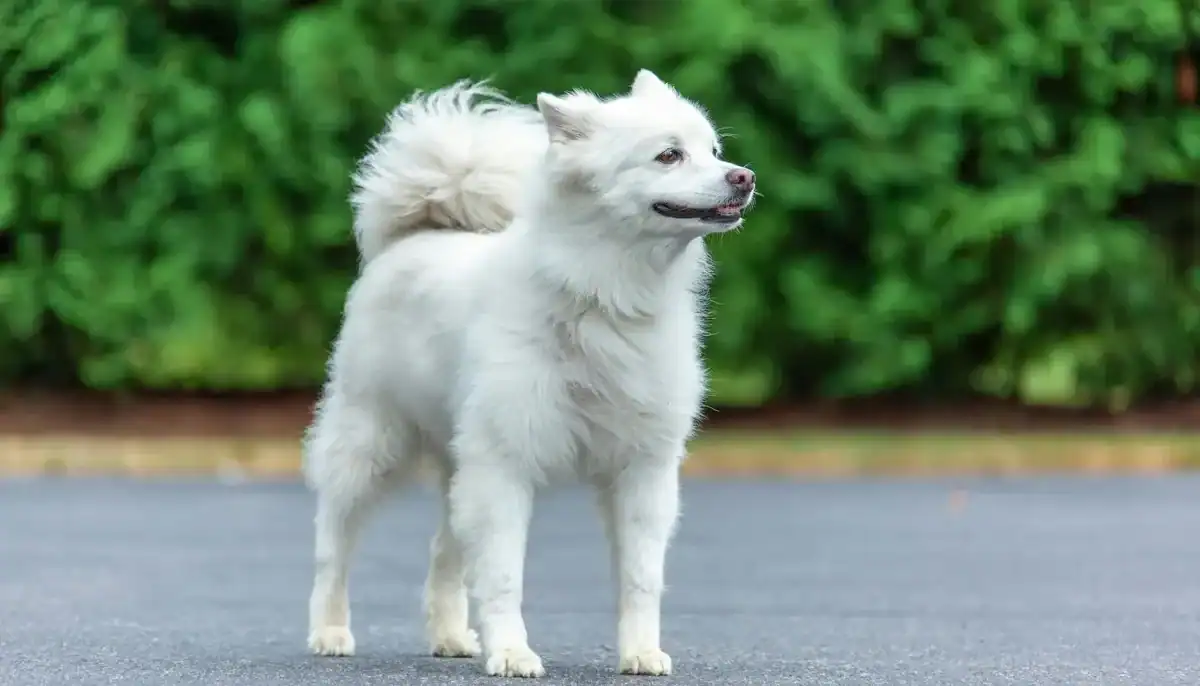
The American Eskimo Dog is a United States origin spitz-type farm and companion dog that looks like a tiny fluffy white dog. Behind the thick fur is one of the most intelligent, vocal canines you can own.
Originally descended from German Spitz canines, they later became famous through circus performance across the country. What makes this striking animal stand out is a combination of exceptional agility, sharp problem-solving skills, and a deeply affectionate nature toward its people. A well-socialized american eskimo puppy bonds intensely with its household and picks up complex routines with surprising speed, making them excellent family dogs.
This article draws on protocols from the American Kennel Club, health data from the American Eskimo Dog Club of America (often referred to as the Eskimo Dog Club of America), and peer-reviewed veterinary literature to provide an accurate picture of ownership. Our recommendations align with established breed standard guidelines to give prospective homes a clear view of everyday life.
Living with this companion involves plenty of mental stimulation, regular physical activity, and consistent combing to maintain that dense two-layer fur. The companion tends to become deeply loyal in homes that meet its requirements consistently, always ready to join in on the fun.
Households without the hours to instruct a vocal animal or those prone to leaving a pet alone for extended periods should review the demands honestly before deciding. Know what you are committing to regarding a lot of regular upkeep and managing separation anxiety and isolation-related distress.
Affiliate Disclosure: K9Sphere is a participant in the Amazon Services LLC Associates Program. As an Amazon Associate, K9Sphere earns from qualifying purchases made through links in this article at no additional cost to you. Product recommendations are based on independent research and editorial judgment, not paid placement.
Breed Snapshot
📊 Vitals and Lifespan
Height
Toy: 9–12 in
Miniature: 12–15 in
Standard: 15–19 in
Weight
Toy: 6–10 lb
Miniature: 10–20 lb
Standard: 25–35 lb
Lifespan
13–15 years
Breed Group
Non-Sporting Group
Origin
United States
🇺🇸
⭐ Personality Traits
Ratings (1 to 5). This energetic companion balances sharp intelligence and trainability against a strong tendency to vocalize and demanding maintenance requirements.
History and Origin
The story of the American Eskimo Dog begins with European immigrants bringing various Nordic canines to the United States during the nineteenth century. These early farm workers were prized for their versatility, serving as sentinels, herders, and loyal home companions.
📌 Late 1800s: The German Spitz Heritage
German immigrants arriving in the USA brought their native German Spitz canines to agricultural communities across the Midwest. These quick learners adapted easily to farm life. They were known locally as the American Spitz and became a common sight on rural properties due to their striking white fur and sharp alert-vocalizing skills.
📌 Early 1900s: The Circus Era
This canine gained nationwide fame when traveling circuses adopted them as performers. Their incredible agility, combined with a striking white appearance that showed up well under early stage lighting, made them perfect entertainers. Barnum and Bailey popularized the companion heavily during the 1910s and 1920s. The most famous circus performer of that era, Stout’s Pal Pierre, walked a tightrope, a feat documented in AKC historical records, cementing the animal’s reputation for trainability.
📌 1917: A Name Change
During WWI, anti-German sentiment swept the US. The name American Spitz became a liability for kennels. The title was officially changed to the American Eskimo Dog, though the line has no genetic connection to actual arctic cultures or northern sled pulling canines. The name stuck permanently.
📌 1995: AKC Recognition
Despite a long history in the USA, the registry did not formally recognize the group until 1995. The parent club played a crucial role in standardizing the three distinct size variations we see today, ensuring the standard remained consistent across Toy, Miniature, and Standard categories.
Physical Characteristics
These animals stand out immediately due to their brilliant white dense fur and classic arctic-type features. These animals possess erect triangular ears, black lips, a distinct black nose, and a heavily plumed tail carried gracefully over the back.
🎨 The White Dual-Layer Fur
The plush fleece is the hallmark of the companion. It consists of a dense under-layer for insulation and a longer guard-hair top-layer that stands off the body. While pure white is the standard, many american eskimo dogs exhibit a slight biscuit cream tint around the ears and body. This fur drops constantly and requires diligent maintenance.
📏 Three Size Varieties
Uniquely, the variety comes in three established sizes. The Toy size reaches up to 12 inches at the shoulder, the Miniature ranges from 12 to 15 inches, and the Standard stands between 15 and 19 inches. All three sizes generally share similar baseline traits and standard requirements, differing only in their final height and weight.
Character and Temperament
To truly learn about the american eskimo, you must understand the animal’s disposition before committing to a youngster. This is a brilliant, energetic animal that forms powerful bonds with its household. They thrive on human interaction and do not do well when isolated or ignored.
🚨 The Alert Watch Dog
Like most spitz dogs, this animal is naturally inclined to protect its territory. They make an excellent watch dog because they will announce the arrival of strangers with sharp, persistent vocalization. This alert nature requires early socialization and education to ensure the animal understands when to cease making noise once you acknowledge the visitor.
🧠 Sharp Intelligence
The american eskimo dog also excels at complex problem-solving. This sharp mind means they learn tricks and commands easily, but it also means they get bored fast. A bored companion will invent its own jobs, which usually involves destructive chewing or excessive vocalization. They require routine mental challenges alongside their physical movement.
👥 Isolation Distress
Bred as a companion, this animal is prone to isolation-related distress. They want to be exactly where their people are at all times. Leaving them alone for extended work hours frequently results in behavioral issues. They do best in households where someone works from home or where the animal can accompany the loved ones.
🐕 Interaction with Others
When properly socialized, they are generally good with other dogs and can adapt well to multi-animal homes. However, their high energy can overwhelm older or less active companions. They tend to be reserved around strangers initially but warm up quickly once introduced properly by their trusted handler.
Screening and Conditions
Veterinary Disclaimer: The information in this article is for educational purposes only and is not a substitute for professional veterinary advice, diagnosis, or treatment. K9Sphere’s authors are experienced dog owners, not licensed veterinarians. Always consult a qualified DVM regarding any health concerns about your pet. Never disregard professional veterinary advice or delay seeking it because of something you have read on this site.
Health Information Sources: Data compiled from:
- American Eskimo Dog Club of America: Required health screening protocols
- Orthopedic Foundation for Animals (OFA): Joint and eye certification standards
- American Kennel Club: Parent-club guidance and breed health statistics
Always consult your licensed DVM for personalized medical advice.
The American Eskimo Dog is generally a hardy animal with a robust life expectancy often reaching 15 years. However, trusted sources still run extensive medical tests to prevent the transmission of inherited conditions common to the lineage.
Common Health Risks
🔴 Progressive Retinal Atrophy (PRA)
What to watch for: Night blindness is usually the initial sign, followed by a gradual loss of daytime vision. Dogs may bump into furniture in dim light or hesitate to go outside at night. PRA is a degenerative eye disorder that eventually leads to complete blindness.
Screening: An ethical seller will provide documentation of recent eye exams from a veterinary ophthalmologist for both parents. An OptiGen DNA test is available specifically to identify carriers of the PRA gene in this line.
🟡 Hip Dysplasia
What to watch for: Stiffness when rising, a reluctance to jump, or a noticeable limp in the hind legs after exercise. While more common in the Standard size variety, miniature and toy sizes can also suffer from malformed hip joints that lead to painful arthritis.
Screening: Both parents should have OFA or PennHIP joint evaluations before breeding. Maintaining a lean body weight throughout the lifespan minimizes stress on the joints. Providing a quality hip and joint supplement helps support cartilage vitality as the animal ages.
🟡 Legg-Calve-Perthes Disease
What to watch for: This condition primarily affects the Toy and Miniature sizes. It involves the spontaneous degeneration of the femoral head in the hip joint, causing severe pain and lameness. Symptoms usually appear when the juvenile is between four and six months old.
Veterinary Care: Diagnosis requires X-rays. Treatment often involves surgical removal of the affected bone, after which the pet can usually lead a normal, pain-free life with dedicated physical rehabilitation.
🟡 Dental Disease
What to watch for: Bad breath, red or bleeding gums, and difficulty chewing. Small varieties with crowded teeth, like the Toy and Miniature sizes, are particularly prone to rapid tartar buildup, which leads to periodontal issues and tooth loss if ignored.
Veterinary Care: Routine teeth cleaning is the top standard. Professional oral cleanings under anesthesia at the clinic are often required every one to two years. Using a quality water additive helps reduce plaque bacteria between scrubbings.

Oxyfresh Premium Pet Dental Water Additive
Use for: Managing dental hygiene in Toy and Miniature sizes prone to rapid tartar buildup. Simply add to their water bowl to help fight plaque and freshen breath between formal brushings.
Check price on AmazonGrooming and Coat Care
The beautiful plush fur demands a significant hour commitment. A juvenile requires early introduction to maintenance tools to ensure they tolerate the necessary handling as an adult. They have a dense two-layer pelt that drops continuously throughout the year, with heavy seasonal blowouts occurring twice annually.
You must comb the companion at least three times a week using a slicker tool and a metal comb to prevent painful mats from forming in the dense under-layer. During molting season, frequent combing becomes necessary to keep the loose hair under control in your home. Finding the right tools makes this process manageable, so many people invest in the best brushes for shedding dogs to effectively reach the under-layer.
Despite being a white canine, they are surprisingly easy to keep clean. The hair contains natural oils that repel dirt effectively. Once mud dries, it usually falls right out. Bathing is only required every couple of months unless the animal gets particularly filthy. Because they can develop sensitive skin, using a gentle dog shampoo for itchy skin helps prevent dryness and irritation after a wash.
Exercise and Living Needs
These canines require moderate to high amounts of physical exertion to stay fit and well-behaved. They are not couch potatoes. Plan for at least 45 to 60 minutes of movement, split between brisk walks, interactive indoor play, and off-leash running in a securely fenced area.
Their agility and intelligence make them superb candidates for competitive dog sports such as obedience trials, rally, and agility courses. Engaging them in these events burns off physical stamina while providing the mental stimulation they crave.
While the Standard size does better with a yard, the Miniature and Toy varieties adapt to flat living perfectly well, provided you meet their exertion requirements outside. However, their tendency to vocalize must be managed closely in shared housing to prevent noise complaints from neighbors.

Furbo 360° Dog Camera
Use for: Monitoring a pet prone to isolation distress. The two-way audio allows you to soothe a stressed animal or interrupt persistent alert sounds while you are away from the apartment.
Check price on AmazonNutrition & Diet
A high-quality diet formulated for the animal’s specific size and life stage provides the foundation for their long expectancy. The Standard variety requires a standard adult formula, while Toy and Miniature sizes thrive with small-variety kibble designed for their smaller jaws and faster metabolisms.
Feeding should be measured strictly according to the animal’s ideal weight. These canines possess a strong appetite drive and will overeat given the chance, leading to obesity. Extra weight places severe strain on their joints and exacerbates any underlying hip or knee issues. Divide their daily allowance into two measured meals rather than leaving kibble out all day.
Training
This companion is eager to please and learns incredibly fast. They rank among the most trainable of all nordic varieties due to their history in circus performance. However, their sharp mind means they require an instructor who is consistent, positive, and capable of keeping the lessons engaging.
Dog training should begin the week the newcomer arrives. Focus heavily on positive reinforcement techniques using high-value treats and enthusiastic praise. Harsh corrections backfire with this sensitive animal, causing them to shut down or become fearful. Short, fun sessions work highly efficiently compared to protracted repetitive drills.
To manage their vocal nature, teach the “quiet” command early. Because they naturally announce visitors, trying to stop them from sounding off entirely is a hard task. Instead, educate them to bark once or twice to alert you, and then reward them for silence on command. Crate training is also highly recommended to provide a safe space and help mitigate isolation distress when they must be left alone.
American Eskimo Dog vs Pomeranian vs Samoyed vs Siberian Husky
Prospective families comparing nordic dog breed companions often look at this group alongside the Pomeranian, the Samoyed, and the Siberian Husky. Understanding the differences in size, trainability, and stamina amounts ensures the ideal fit for your lifestyle.
| Attribute | American Eskimo Dog | Pomeranian | Samoyed | Siberian Husky |
|---|---|---|---|---|
| Weight | 6–35 lb (depending on size) | 3–7 lb | 35–65 lb | 35–60 lb |
| Original Purpose | Farm work and companion | Companion | Herding and sledding | Sled pulling |
| Energy Type | High, agile bursts | Moderate, playful | High, sustained endurance | Very high, relentless runner |
| Trainability | Highly eager to please | Smart but independent | Stubborn thinker | Highly independent |
| Grooming | Heavy daily/weekly brushing | Heavy daily/weekly brushing | Intense daily brushing | Heavy seasonal shedding |
| Threat Response | Vocal alert barker | Vocal alert barker | Friendly greeting | Friendly greeting |
| First-Time Owner? | Yes, with dedication | Yes | Challenging | No |
| Common Health Risks | Hip dysplasia, PRA, dental issues | Luxating patella, tracheal collapse, dental | Hip dysplasia, glaucoma, diabetes | Hip dysplasia, cataracts, epilepsy |
| Living Space | Adaptable to apartments | Ideal for apartments | House with yard preferred | Secure yard required |
The american eskimo breed is among the easiest to instruct in this comparison, making them a great choice for families interested in compliance or trick learning. The Pomeranian fits strictly into the toy companion category with less intense exertion requirements. The Samoyed offers a similar white plush appearance but comes with a much larger frame and a more stubborn sled-pulling mindset. The Siberian Husky requires the most extreme workout commitment and has the highest escape-artist tendencies of the four.
Common Questions about the American Eskimo Dog
How much does an American Eskimo Dog cost?
Direct Answer: Expect to pay USD 1,000 to USD 2,500 for a youngster from a reputable breeder. Pricing varies by country, with UK, Canada, and Australia rates differing.
Context: You are paying for the extensive medical testing required for the parents, including OFA joint certifications and PRA eye clearances. Toy and Miniature sizes often trend toward the higher end of the spectrum due to demand. In the UK, expect £800 to £1,500, while Canadian sources charge CAD 1,500 to CAD 2,500, and Australian fees often exceed AUD 2,000. Shelter groups usually place adult companions for adoption fees ranging from USD 150 to USD 400.
Management: Budget for lifetime care beyond the purchase expense. Quality meals, regular upkeep supplies, and annual clinic visits add up quickly. Secure animal insurance early to cover potential hereditary issues later in life.
Do american eskimos bark a lot?
Direct Answer: Yes. This is a highly vocal animal that sounds off at almost any change in their environment.
Context: Their farm history means they feel an intense urge to announce visitors, passing animals, and strange noises. They call out to notify you that something is happening, not necessarily out of aggression.
Management: Do not try to train the instinct out of them entirely. It will not work. Teach a “quiet” command early so they learn to cease after you acknowledge the alert.
Are male or female pups superior?
Direct Answer: Both sexes make excellent companions, but males tend to be slightly more affectionate and demanding of attention, while females are often more independent.
Context: Males are generally larger and carry a slightly denser, more pronounced fleece with a thicker ruff around the neck. Females are often quicker to mature and house-train, but they can be more territorial regarding their favorite spaces in the home.
Management: Choose based on personality rather than sex. Spaying or neutering resolves most hormonal behaviors, leaving individual disposition as the most important factor in your decision.
Is the American Eskimo Dog good with kids?
Direct Answer: They are generally excellent family dogs with children within their own home, provided they are socialized together from a young age.
Context: The Standard size is sturdy enough to handle typical play with older children. The Miniature and Toy sizes are delicate and can easily be injured by toddlers who do not handle small animals gently.
Management: Always supervise interactions between young children and canines of any size. Teach children how to approach and touch the animal respectfully. Give the companion a quiet crate or room where it can retreat when it needs a break.
Can this variety reside in apartments?
Direct Answer: Yes, especially the Toy and Miniature varieties. But their exertion requirements and vocal habits require active work on your part.
Context: Despite their vigor, they settle down nicely indoors if their physical and mental requirements are met outside. The biggest hurdle to flat living is their tendency to sound off at hallway noises, which frustrates neighbors quickly.
Management: Commit to multiple daily walks and park visits. Use white noise machines near the front door to mask hallway sounds, and diligently practice the “quiet” command.
Are they suitable for novice handlers?
Direct Answer: Yes, they are appropriate for dedicated novice handlers willing to invest effort in manners education and upkeep.
Context: Their sharp minds and eagerness to please make them easier to guide than many other nordic varieties. However, their desire for constant companionship and heavy dropping fur can overwhelm an unprepared novice.
Management: Enroll in puppy kindergarten and basic manners classes immediately. Stick to a firm brushing routine early to prevent matting issues from spiraling out of control.
What is the ideal food for this group?
Direct Answer: The ideal diet is a high-quality commercial dog food matched to their specific size variety, such as Purina formulas, Royal Canin, or Hill’s Science Diet.
Context: Because the group spans three size varieties, their caloric needs differ dramatically. A Toy requires small-breed formulas with smaller pieces to prevent choking and support their faster metabolism, while a Standard thrives on regular adult maintenance formulas.
Management: Measure portions strictly using a kitchen scale rather than a measuring cup to prevent obesity, which places unnecessary strain on their joints.
Do they experience isolation distress?
Direct Answer: Yes, the animal is prone to isolation-related distress and does not tolerate being left alone for lengthy periods.
Context: They bond intensely with their human family. When left isolated for a full work day, they frequently become stressed. This results in destructive chewing, crying, or endless howling.
Management: Practice leaving them alone for short increments from early on. Provide engaging puzzle toys when you leave, and consider a animal walker if you work extended hours away from the home.
What are the pro and con aspects of the animal?
Direct Answer: Pros include sharp intelligence, strong loyalty, and beautiful appearance. Cons include heavy dropping hair, vocal tendencies, and a high desire for attention.
Context: They are brilliant performers that learn tricks easily and bond deeply. The trade-off is the significant hours commitment required to brush their two-layer fur, manage their noise, and ensure they receive enough exertion.
Management: Weigh these factors honestly against your lifestyle. If you enjoy interactive teaching and do not mind vacuuming frequently, the pro easily outweighs the con.
How much daily movement do they require?
Direct Answer: They require 45 to 60 minutes of movement to stay physically and mentally balanced.
Context: A quick walk around the block falls short. They require brisk walks, running, or engaging games of fetch. Without adequate physical outlets, their pent-up stamina turns into a behavioral problem.
Management: Incorporate them into your active lifestyle through hiking or jogging. Participate in agility or discipline clubs to provide a structured outlet for both their body and their active mind.
Are they friendly with other canines?
Direct Answer: Yes, they usually get along very well with other canines when properly introduced.
Context: They are social animals that often enjoy the company of another canine playmate. However, their high-spirited play style can annoy older, less tolerant animals.
Management: Socialize your pup with a wide variety of vaccinated adult animals early on. Introduce new animals on neutral ground and monitor their initial interactions closely.
How do I halt the constant noise?
Direct Answer: You cannot silence them entirely, but you can manage it through consistent guidance and adequate exertion.
Context: Alerting is an ingrained genetic trait. Yelling at the animal only validates their belief that there is something to make noise about.
Management: Acknowledge what they are looking at, thank them calmly, and command them to be quiet. Reward silence instantly with a high-value treat. Ensure they are not vocalizing simply out of boredom.
Finding a Puppy
Locating a healthy pup requires vetting the breeder carefully. The popularity of small, plush white canines makes this variety a frequent target for irresponsible backyard sellers who prioritize profit over medical testing.
🏠 Reputable Breeders
A reputable breeder will be registered with the national registry and actively involved in the parent club. They will gladly show you the OFA joint certifications and recent eye exam results for both the sire and dam. They will ask you detailed questions about your lifestyle, work schedule, and experience with vocal animals to ensure their youngster is going to an appropriate home.
🐾 Rescue and Adoption
Many american eskimo dogs end up in shelters simply because their previous homes underestimated the dropping fur and noise. Specific adoption organizations like Eskie Rescuers United and regional AKC affiliates are excellent places to find adult companions. Adopting an older animal allows you to skip the demanding juvenile phase and often provides a companion whose size and personality are already fully developed.
🚩 Red Flags to Watch For
- No documented proof of OFA or PRA eye clearance for the parents.
- Youngsters offered for sale without an initial vet check or vaccination record.
- Sources who always have litters available year-round, indicating high-volume commercial operations.
- Refusal to let you see the mother or the environment where the litter is raised.
- Promises of a completely “hypoallergenic” animal. This canine drops fur heavily and is not suited for severe allergy sufferers.
Personal Observation
💭 Personal Observation
Chun Chun (my adult adopted mix) is one of the most vocal animals I have shared a home with, and that alert trait shows up the exact same way in this American variety. Where my late companion, Bruno (a Labrador Retriever who passed in 2021), would sleep quietly through a delivery driver approaching the door, an Eskie treats every footstep as a reportable event. This variety shares the exertion demand of Rambo (my young rescue mix), but they tackle it with a different style of focused agility. I have learned with all my rescue mixes that upkeep routines you skip in the initial year become completely impossible by year three. If you have raised an active vocal animal before, this canine will feel very familiar. If your last companion was a silent couch potato, expect a massive daily adjustment.
Conclusion
The American Eskimo Dog is a brilliant, agile companion that brings intense loyalty and a cheerful disposition to an active home. They thrive on inclusion and learn new tasks with an enthusiasm that makes learning a genuine pleasure.
You get a highly adaptable partner that doubles as a reliable sentinel and an affectionate family member. The trade-off requires a serious hours commitment to comb their thick fur and mitigate isolation-related distress. The greatest outcomes happen in homes where the animal is rarely left alone and receives regular mental challenges.
Before bringing one home, run this 4-step pre-buying check: (1) Can you commit to 60 minutes of regular exertion? (2) Are you prepared for consistent grooming to manage the heavy shedding fur? (3) Can you tolerate a vocal alert sentinel in your living space? (4) Do you have the availability to guide an active companion? If any answer is no, reconsider the breed.
Editorial Disclaimer: This article is for informational and educational purposes only. It does not constitute veterinary advice, medical diagnosis, or treatment recommendations. Always consult a licensed veterinarian before making health-related decisions for your pet.
Accuracy Notice: While every effort has been made to ensure the information presented here is accurate and current, breed information evolves and individual dogs vary. If you spot a factual error or have updated information from a verified source, please contact us so we can review and update.
Product Disclosure: Product recommendations are based on independent research and editorial judgment. Individual results may vary. As an Amazon Associate, K9Sphere earns from qualifying purchases at no additional cost to you.
Last reviewed: May 2026. Article reviewed for accuracy on the date shown above.


