
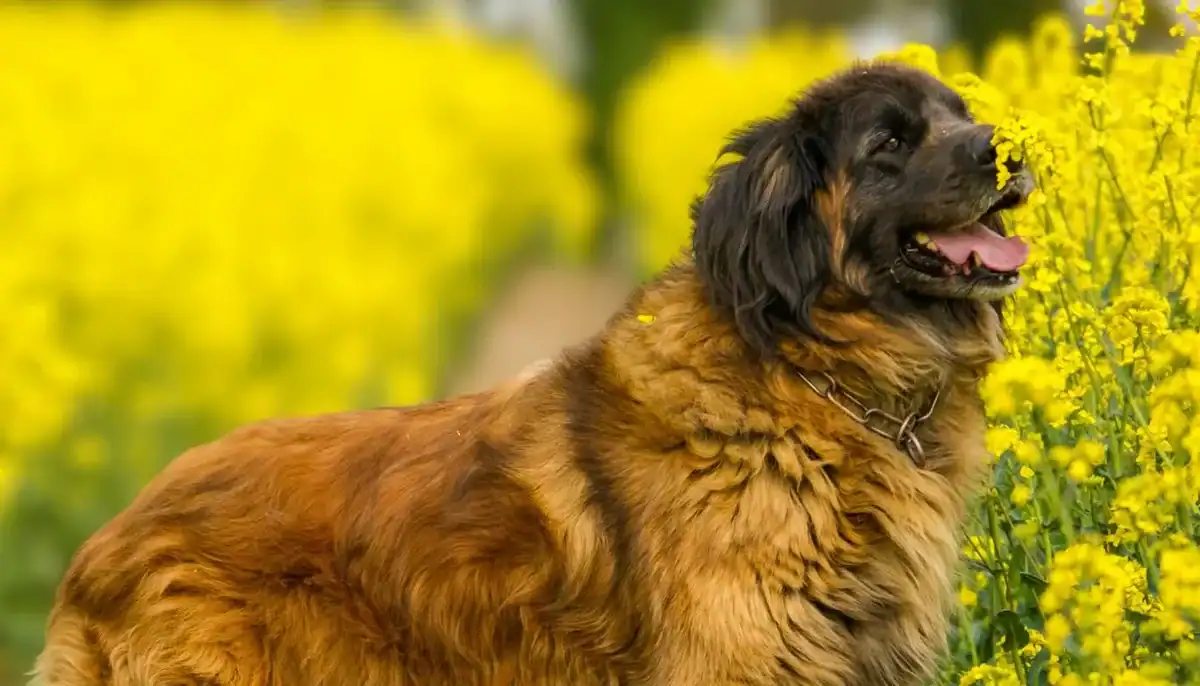
The Leonberger is a giant German breed developed in the 1840s as a versatile working dog and devoted estate companion. It represents a unique combination of strength and stability.
What makes this impressive animal stand out is its combination of massive size, a weatherproof coat, and an incredibly gentle nature. They are often described by enthusiasts as dogs that look like lions but act like the most patient family members. A well-bred Leonberger guards its household without showing unwarranted aggression.
This guide draws on breed standards from the American Kennel Club, health protocols from the Leonberger Club of America, and veterinary orthopedic data to explain what ownership actually involves. As one of the largest dog breeds, it can easily reach 170 pounds, so you will want accurate leonberger dog breed information to raise one properly.
Households that provide structured obedience routines, consistent grooming, and active inclusion in home life are rewarded with a remarkably stable and affectionate partner. They thrive when they are treated as full members of the household rather than outside guard dogs.
The sheer scale and grooming demands of this dog present real logistical challenges. Those without large-dog experience should review the physical and financial demands honestly before deciding to bring one home.
Affiliate Disclosure: K9Sphere participates in the Amazon Services LLC Associates Program and other affiliate programs. K9Sphere earns from qualifying purchases made through links in this article at no additional cost to you. Product recommendations are based on independent research and editorial judgment, not paid placement.
Breed Snapshot
The Leonberger is a large dog requiring significant space and commitment. Understanding the basic vitals helps set the right expectations.
📊 Vitals and Lifespan
Height
Males 28 to 31.5 in (71 to 80 cm)
Females 25.5 to 29.5 in (65 to 75 cm)
Weight
Males about 110 to 170 lb (50 to 77 kg)
Females about 90 to 140 lb (41 to 64 kg)
Lifespan
About 8 to 10 years
Breed Group
Working Group (AKC)
Origin
Germany
🇩🇪
⭐ Personality Traits
Ratings (1 to 5). The Leonberger balances a calm household demeanor with high grooming and training demands. A high grooming score reflects the heavy double coat, not a flaw in the breed.
History and Origin
The history of the Leonberger begins in the 1840s with Heinrich Essig. He was a town councilor in Leonberg, Germany. His goal was to breed a dog that resembled the lion on the town crest. He is traditionally credited with developing the breed using large dogs including the Newfoundland Dog and the Saint Bernard, with the Great Pyrenees also reported as part of the foundation.
📌 1846. The First Leonberger Litter
Essig bred what is generally regarded as the first Leonberger litter in 1846. They quickly became popular among European royalty and nobility. These impressive dogs were frequently gifted to monarchs across the continent to elevate the town’s prestige.
📌 1914 to 1945. Near Extinction
The two World Wars devastated the population. After World War I, only a handful of dogs suitable for breeding remained, and a dedicated group formed a Leonberger club to rebuild it. World War II hit hard again, requiring a second major recovery effort from enthusiasts.
📌 2010. AKC Full Recognition
The breed gradually gained popularity in the USA throughout the late 20th century. The American Kennel Club fully recognized the Leonberger in 2010, placing it in the Working Group. Today, they excel at water work and therapy roles. Today the Leonberger works in water rescue, carting and therapy roles as well as living as a family companion.
Physical Characteristics
The Leonberger is known for its majestic appearance. Males are significantly larger and more robust than females. They carry themselves with an elegant and proud posture.
🎨 The Double Coat
They have a thick double coat that protects them from cold and water. Colors range from lion-yellow to red and sandy-brown. The breed standard calls for a black mask over the muzzle and eyes, and a complete lack of mask is a disqualifying fault. The fur forms a distinct mane around the neck and chest, especially on males. The fluffy puppy fur changes dramatically as they mature into adults.
🏗️ The Large Size
A fully grown male can weigh up to around 170 pounds at the top of the standard range. Their bulk is supported by heavy bone structure and a deep chest. Their slightly webbed feet and water-resistant coat contribute to strong swimming ability. Despite their bulk, they move with a surprisingly fluid and powerful gait.
Character and Temperament
This is a true family dog, known for gentleness and patience. The breed standard asks for a dog that is friendly and obedient, and a well-bred Leonberger is self-assured. In most situations the Leonberger is a calm presence rather than a reactive one. Where that goes wrong it is usually a socialization problem rather than a temperament one.
🛡️ Protective Yet Calm
They are watchful and protective of their family, but they are not typically aggressive. They tend to use their massive size to deter threats rather than resorting to immediate action. They are discerning and usually friendly with invited guests.
🔥 Companionship Needs
They bond deeply with their people and must be included in everyday activities. They can be prone to separation anxiety if isolated outdoors or left alone for extended periods. They want to be leaning against your feet.
💪 Good With Kids
They are well known for their patient behavior around children. A socialized kid and a trained dog can make a great pair. However, their sheer size means interactions with toddlers should be supervised to prevent accidental knock-overs.
🧠 Intelligence
They are highly intelligent and capable of learning complex tasks. Their intelligence makes them strong candidates for therapy work, lifesaving water tasks, and advanced obedience training.
Screening and Conditions
Veterinary Disclaimer: The information in this article is for educational purposes only and is not a substitute for professional veterinary advice, diagnosis, or treatment. K9Sphere’s authors are experienced dog owners, not licensed veterinarians. Always consult a qualified DVM regarding any health concerns about your pet. Never disregard professional veterinary advice or delay seeking it because of something you have read on this site.
Health and Breed Information Sources:
- American Kennel Club for breed information and the official standard
- Leonberger Club of America for parent-club health guidance
- Orthopedic Foundation for Animals (OFA) for CHIC testing requirements
Always consult your licensed DVM for personalized medical advice.
Like many giant breeds, the Leonberger faces specific health challenges. Responsible programs screen their breeding stock thoroughly to minimize these risks.
Common Inherited Conditions
🔴 Gastric Dilatation-Volvulus (Bloat)
What to watch for: A visibly swollen abdomen, unproductive vomiting, and extreme restlessness. This is a life-threatening emergency where the stomach fills with gas and twists.
Risk reduction: Commonly discussed measures include dividing food into multiple measured meals, slowing rapid eating, and avoiding vigorous exercise around mealtimes. Discuss your individual dog’s risk, including whether a preventive gastropexy is appropriate, with your veterinarian.
🔴 Polyneuropathy (LPN1, LPN2, LPPN3)
What to watch for: Weakness in the hind legs, changes in gait, or noisy breathing. This is a progressive neurological disease associated with the breed.
Screening: DNA testing is available for several of these genetic mutations. Conscientious programs test their dogs to reduce the risk of passing the disease to puppies.
🟡 Hip and Elbow Dysplasia
What to watch for: Limping, difficulty rising from the floor, or reluctance to run. This condition involves malformation of the joints, leading to painful arthritis.
Screening: OFA joint evaluation of both parents is a CHIC requirement. Keeping the dog lean reduces daily stress on their joints.
🟡 Leukoencephalomyelopathy (LEMP)
What to watch for: Progressive weakness and lack of coordination. It is another neurological disorder that affects the central nervous system.
Screening: DNA testing identifies the LEMP-associated variant and helps breeders avoid high-risk pairings. The variant is incompletely penetrant, so genotype does not perfectly predict whether a dog will develop clinical disease.
🟡 Cancer
What to watch for: New lumps, unexplained weight loss, lameness that does not resolve, or a drop in energy. Cancer is an important health concern in the breed, and bone cancer is among the cancers reported in Leonbergers.
Risk reduction: There is no DNA test. Ask a breeder directly about cancer in the line and about the ages and causes of death in the pedigree, which tells you more than any single certificate.
Grooming and Coat Care
The coat is a major commitment. Most owners should expect to brush this dog several times each week to prevent severe matting. They shed heavily year-round and shed more heavily at certain times of year, when the dense undercoat comes out in quantity.
During shedding season, you will need to do this every day. A long-pinned slicker brush and a sturdy undercoat rake are essential tools. Focus on the areas behind the ears and under the legs where friction causes tight mats to form. Our guide on the best brushes for shedding dogs covers the heavy-duty equipment a thick double coat needs.
Bathe your dog occasionally to keep the skin healthy, but dry the dense fur thoroughly to prevent hotspots. Trim their nails regularly to maintain proper foot structure for their heavy frame.
Exercise and Living Needs
This breed takes regular, moderate exercise. A simple walk will not tire them out completely. Most healthy adult Leonbergers benefit from around an hour of moderate movement each day, although individual needs vary.
Apartment living can be challenging for a Leonberger because of their size and exercise needs. Their bulk and active nature call for a securely fenced yard. Many Leonbergers enjoy water and swimming, although individual preferences vary. Keep a towel near the door. A supportive orthopedic bed gives this heavy breed a healthier place to rest after a day of activity.

FurHaven Orthopedic Dog Bed (Jumbo)
A large supportive bed spreads the weight of a heavy frame rather than concentrating it on hips and elbows, which is why it is commonly recommended for giant breeds. It is a comfort measure rather than a treatment for joint disease.
Check price on AmazonNutrition & Diet
Feeding a giant-breed puppy requires careful attention. Puppies should be fed a complete large-breed puppy food formulated to manage the growth rate, since rapid bone growth stresses developing joints and raises dysplasia risk. Adults need enough protein to hold muscle over a frame of this large size.
Feed an appropriately formulated complete diet and keep the dog lean, which reduces strain on the heart and joints. Because they are deep-chested, dividing the daily ration into two or three measured meals is a commonly discussed risk-reduction measure.
Some owners use joint supplements as part of a broader approach to joint care, although evidence of benefit varies and it is a conversation for your vet.

Nutramax Dasuquin with MSM Soft Chews for Large Dogs
A glucosamine and chondroitin supplement commonly used in heavy breeds. Evidence of benefit varies and it does not maintain or rebuild cartilage on its own. It is not a treatment or cure for joint disease, so consult your veterinarian before starting any supplement.
Check price on AmazonTraining
You must start training early. A pup grows rapidly and soon becomes difficult to physically manage. You need to establish control before they are strong enough to pull you over. Early crate training gives them a secure space and simplifies housebreaking.
They are eager to please, and a Leonberger does not respond well to harsh corrections. Reward-based methods get further, and they hold up better once the dog is strong enough to argue. Socialization is critical. Expose your puppy to many different people, environments, and other animals to build their confidence.
They excel in obedience classes and thrive when given a job to do. Their instinct for water work remains strong, and many handlers pursue specific swim-training activities.
Leonberger vs Newfoundland Dog vs Saint Bernard vs Bernese Mountain Dog
Prospective buyers often compare the Leonberger to other giant working breeds. This comparison helps clarify which dog fits your lifestyle best. The Newfoundland Dog shares the water-working heritage but tends to drool significantly more. The Saint Bernard is heavier and generally less active, while the Berner is smaller and shorter-lived on average.
| Attribute | Leonberger | Newfoundland Dog | Saint Bernard | Bernese Mountain Dog |
|---|---|---|---|---|
| Weight | 90 to 170 lb | 100 to 150 lb | 120 to 180+ lb | 70 to 115 lb |
| Original Purpose | Multipurpose family, farm and draft work | Water rescue, drafting | Alpine rescue, guarding | Drafting, farm work |
| Activity Level | Moderate, active | Low to moderate, steady | Low, calm | Moderate, steady |
| Trainability | Eager to please | Eager to please | Willing but stubborn | Eager to please |
| Grooming | Heavy shedding, daily brush | Heavy shedding, daily brush | Heavy shedding, frequent brush | Heavy shedding, frequent brush |
| Temperament | Watchful, deterrent bark | Protective physical block | Imposing deterrent | Alert bark, generally friendly |
| Owner Experience | With dedication | With dedication | With dedication | Yes, with dedication |
| Common Health Risks | LPN, bloat, bone cancer, hip dysplasia | SAS, cystinuria, hip dysplasia | Bloat, hip dysplasia, eye conditions | Cancer, bloat, hip dysplasia |
| Space and Activity Needs | House with large yard | House with yard | House with yard | House with yard |
If you want a highly active giant that loves water and agility work, the Leonberger is a strong choice. The Bernese Mountain Dog is worth comparing if a slightly smaller size and farm-dog heritage matter to you.
Common Questions about the Leonberger
Are Leonbergers good family dogs?
Direct Answer: Yes. They are incredibly patient and affectionate with their families.
Context: Their gentle nature makes them wonderful companions for households with children. They actively seek out human interaction and want to participate in everything the family does.
Management: You should supervise interactions with small children due to the dog’s massive size, as accidental bumps happen easily.
How much does a Leonberger cost?
Direct Answer: As an approximate, time-sensitive guide (as of 2026), prices vary widely and are best quoted by breeders directly.
Context: Prices vary by breeder, location, pedigree, and availability, and rates in the UK, Canada, and Australia differ. The purchase price is the smaller number for a dog this size.
Context: The purchase price is only the beginning. Giant breed veterinary care is expensive, food bills are substantial, and parasite prevention costs scale with weight.
Management: Budget carefully for premium dog food and secure pet insurance early to help cover potential orthopedic or bloat emergencies.
Do Leonbergers shed a lot?
Direct Answer: Yes. They shed year-round and blow their coat twice a year.
Context: Managing a giant, long-haired dog takes time. You will find loose hair on your furniture, floors, and clothing every day.
Management: Commit to brushing them at least three times a week, and invest in a heavy-duty vacuum cleaner.
What is the lifespan of a Leonberger?
Direct Answer: They commonly live roughly 8 to 10 years, though individual dogs vary considerably.
Context: Very large dogs generally live shorter lives than smaller dogs. Cancer and heart conditions can significantly affect their longevity.
Management: Keep them at a healthy weight to reduce joint stress, and schedule comprehensive senior vet exams annually after age five.
Are Leonbergers aggressive?
Direct Answer: They are generally described as calm, friendly and vigilant rather than aggressive, though individual temperament varies.
Context: They are alert watchdogs that will bark at strangers, but they generally rely on their imposing size to deter threats. Unprovoked aggression is a fault in the breed standard.
Management: Socialize your puppy extensively from an early age so they learn to distinguish normal situations from actual threats.
Can a Leonberger live in an apartment?
Direct Answer: It can be challenging. Their size and activity needs make apartment living very difficult.
Context: They want room to move comfortably, and they have a loud bark that can disturb close neighbors.
Management: The Leonberger does best in a house with a securely fenced yard.
How much exercise does a Leonberger need?
Direct Answer: Most healthy adults do well with around an hour of moderate daily activity, though individual needs vary.
Context: While they are calm indoors, they are active working dogs outside. They enjoy long walks, hiking, and swimming.
Management: Provide consistent activity to help prevent boredom and destructive behavior.
Are Leonbergers hard to train?
Direct Answer: No, they are generally eager to please, but their size makes early training essential.
Context: They are intelligent and learn quickly. However, a very large dog that pulls on the leash or jumps on people is hard to manage.
Management: Start obedience classes early. Use positive reinforcement and remain consistent with your rules.
Do Leonbergers drool a lot?
Direct Answer: They drool less than Newfoundlands or Mastiffs, but they still produce some drool, especially after drinking.
Context: Their lips are tighter than those of some other giants, which keeps drooling to a minimum under normal conditions. They will drool when hot or anticipating food.
Management: Keep a towel handy near their water bowl to wipe their muzzle.
Do Leonbergers like to swim?
Direct Answer: Many Leonbergers enjoy water and can be strong swimmers.
Context: Their webbed feet and water-resistant fur make them natural swimmers. They were bred for water work and lifesaving.
Management: Give them safe opportunities to swim. Rinse and dry their fur thoroughly afterward to help prevent skin infections.
Are Leonbergers good for first-time owners?
Direct Answer: Only for a first-time owner who has honestly costed a giant breed.
Context: The temperament is forgiving and they are eager to please, which helps. The coat, the drool, the food bill, and the sheer physical scale are what catch people out.
Management: Meet adult Leonbergers before committing, and schedule a groomer before the puppy arrives.
What health tests should the parents have?
Direct Answer: Hip, elbow, eye and autoimmune thyroiditis evaluations, plus DNA tests for LPN1, LPN2, LPPN3 and LEMP.
Context: Those are the tests the AKC records from the national breed club. Club guidance on which are core and which are additional has shifted over time, so ask the breeder which they ran. A CHIC number means the tests were done and published, not that every result was normal.
Management: Ask to see the certificates themselves rather than accepting that the parents were tested.
Finding a Puppy
Finding a puppy for sale requires patience. Because the Leonberger breed remains uncommon, you will likely encounter waitlists. Do your research, and start from a reputable source rather than a listing.
🏠 Responsible Breeders
Start your search with the Leonberger Club of America. A responsible breeder will provide hip, elbow, eye and autoimmune thyroiditis evaluations, along with LPN1, LPN2, LPPN3 and LEMP DNA results. A CHIC number means those tests were completed and published, not that every result was normal. A good breeder will also interview you in detail to be sure their Leonberger puppies go to capable homes.
🐾 Rescue and Adoption
You can adopt through breed-specific rescue networks. Taking on an adult lets you see a fully formed personality and bypasses the demanding puppy phase, and these organizations screen potential homes carefully.
🚩 Red Flags to Watch For
- Breeders offering puppies without complete health testing results.
- Breeders who push the dogs as easy-care pets for any family.
- Parents that appear extremely shy or behave aggressively during your visit, which can be a warning sign.
- Refusal to let you visit the whelping area.
❓ Questions to Ask the Breeder
- May I see the polyneuropathy and LEMP DNA results for both parents?
- What are the hip and elbow evaluations?
- When were the parents’ eyes and hearts last examined?
- Has bloat occurred anywhere in this line?
- How are the puppies raised and socialized?
- What does your health guarantee actually cover?
🔍 Questions a Good Breeder Asks You
- Have you owned a giant breed before?
- Have you budgeted for food, grooming, and veterinary care at this size?
- Who will groom the coat, and how often?
- Is your home and vehicle set up for a dog this large?
- What is your plan if the placement does not work out?
A seller who asks nothing at all about your household is unusual among giant-breed breeders, and worth a second look before you commit.
Personal Observation
💭 Personal Observation
Two of my rescues could not be more different about water. Rambo, the youngest, jumps into any puddle or stream he can find. Mun Mun, one of the older ones, will not go outside at all when it is raining.
You cannot train this out of a dog. Rambo likes water and Mun Mun does not. Nothing I do changes either of them, and nothing you do will change your dog either. It is just how they are.
A Leonberger is like Rambo. It will want to get wet, and it has a thick double coat that holds a lot of water. So you will be drying a very large wet dog, often, for years. If that sounds like a problem in your home, pick a different breed.
Conclusion
The Leonberger is a magnificent, loyal companion for families equipped to handle its immense size. In our view, the biggest pro is acquiring a deeply devoted companion that blends watchful instincts with gentle patience.
The main con is managing the sheer volume of hair and the high costs associated with giant-breed care. If you want a similar personality in a smaller, slightly less demanding package, the Bernese Mountain Dog is a worthwhile alternative. To learn more about the Leonberger before committing, contact the national breed club and arrange to meet adult dogs in person.
📋 Before bringing one home, run this 4-step pre-buying check
- Living space fit. Do you have a house with a big yard to accommodate a very large dog?
- Grooming reality. Are you prepared to brush a massive double-layered coat multiple times a week?
- Time and training. Can you commit to early obedience classes before the dog outweighs you?
- Health budget. Are you financially prepared for giant-breed food bills and expensive veterinary care?
If any answer is no, reconsider the breed.
Editorial Disclaimer: This article is for informational and educational purposes only. It does not constitute veterinary advice, medical diagnosis, or treatment recommendations. Always consult a licensed veterinarian before making health-related decisions for your pet.
Accuracy Notice: While every effort has been made to ensure the information presented here is accurate and current, breed information evolves and individual dogs vary. If you spot a factual error or have updated information from a verified source, please contact us so we can review and update.
Product Disclosure: Product recommendations are based on independent research and editorial judgment. Individual results may vary. K9Sphere participates in the Amazon Services LLC Associates Program and other affiliate programs, and earns from qualifying purchases at no additional cost to you.
Last reviewed: September 2026. Article reviewed for accuracy on the date shown above.


