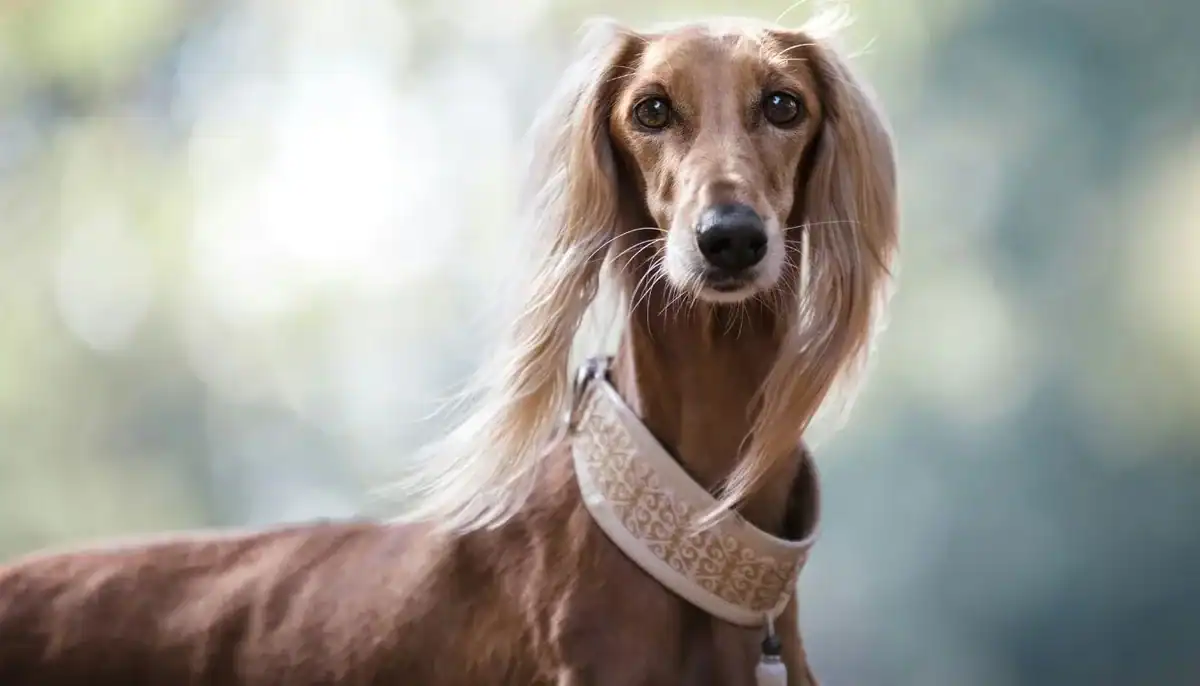
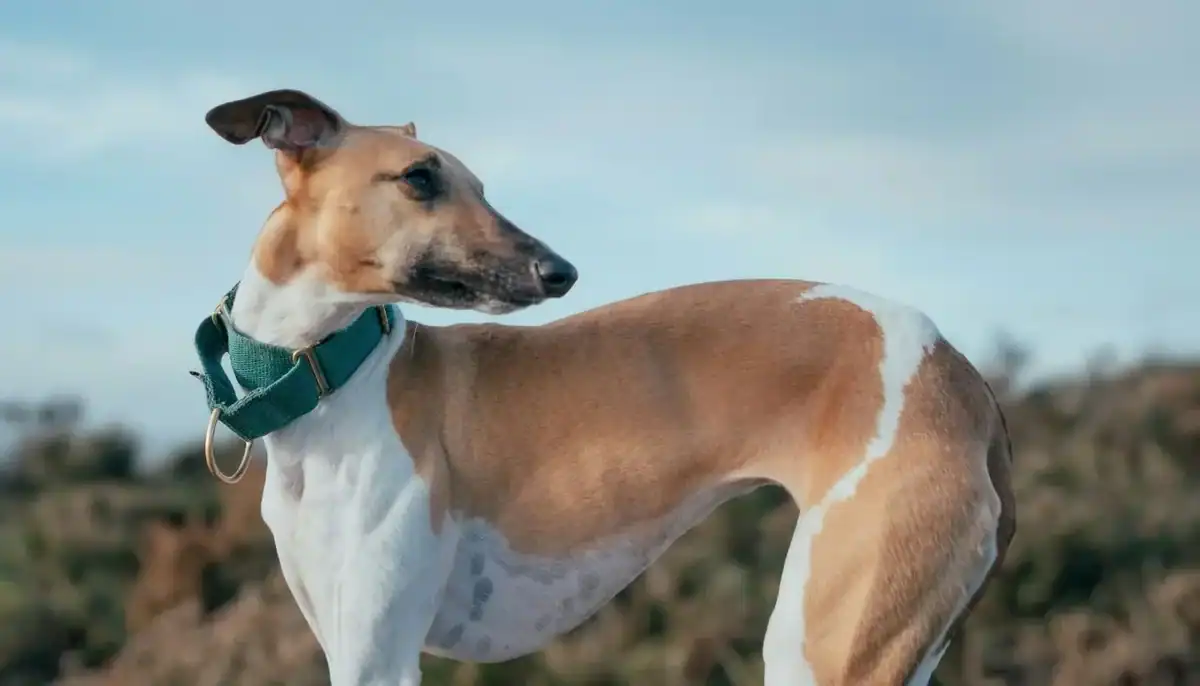
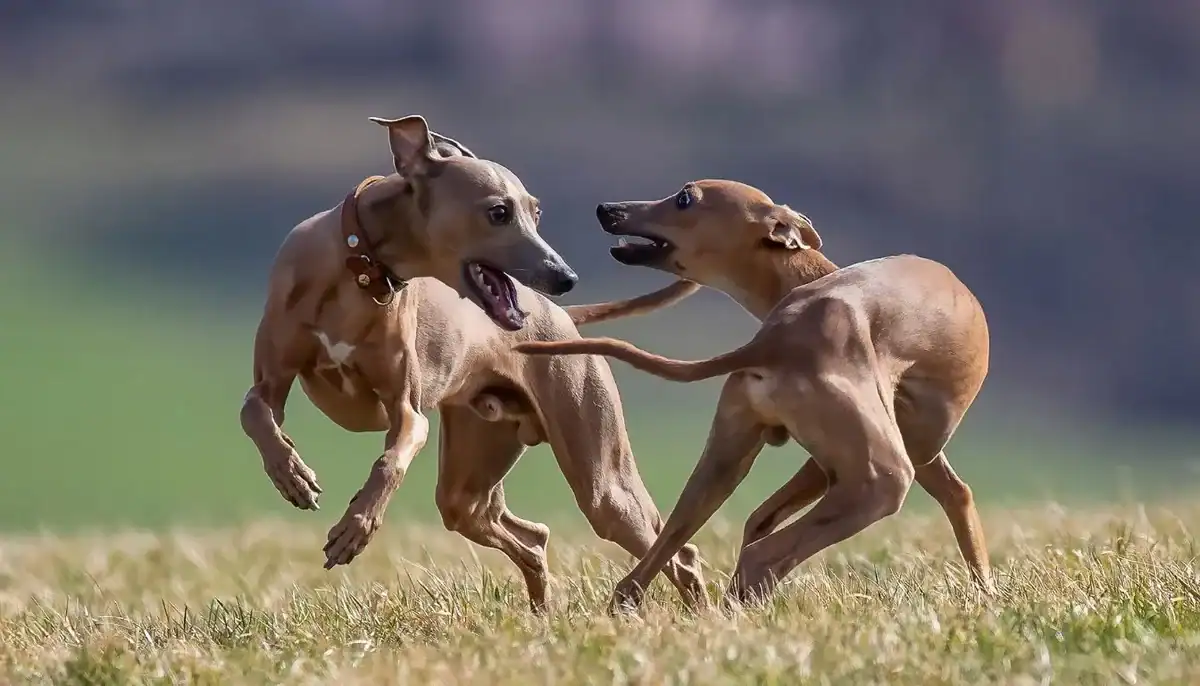
If you are comparing an Italian Greyhound vs Whippet, the honest starting point is that these are not the same dog at two sizes. One sits in the AKC Toy Group and the other in the Hound Group, and that distinction shapes almost everything about daily life with them.
The Italian Greyhound weighs 7 to 14 pounds and is the smallest recognized sighthound breed. The Whippet weighs 25 to 40 pounds, roughly three times as much. Both share a similar appearance in outline, a strong visual pursuit instinct, and the same love of a warm blanket.
What separates them is what each asks of you. The Italian Greyhound asks you to manage fine bone, daily dental care and a house-training process that is one of the most frequently reported difficulties with the breed. The Whippet generally asks for more structured daily activity and secure fencing, in a sturdier package.
This guide compares them across the areas that decide the match, from size and fragility to exercise, health screening, and cost. Each section ends with a clear round verdict so you can see which breed fits your stated use case.
Read it as a decision tool rather than a ranking. By the final verdict you should know whether you want a toy companion that needs protecting or a small hound that needs running.
Affiliate Disclosure: K9Sphere is a participant in the Amazon Services LLC Associates Program. As an Amazon Associate, K9Sphere earns from qualifying purchases made through links in this article at no additional cost to you. Product recommendations are based on independent research and editorial judgment, not paid placement.
Quick Answer and Who Each Round Favors
⚡ The 30-Second Answer
Choose the Italian Greyhound if you want a true sighthound small enough to sit on your lap, and you will adapt the house around fine bone, brush its teeth daily, and stay patient through house-training. Choose the Whippet if you want a sturdier small hound and can provide more daily exercise and securely fenced running.
Each is quiet indoors, affectionate, poorly insulated against cold, and serious about chasing. The real decision is whether you want a toy companion to protect or a hound to exercise.
| Category | Favors |
|---|---|
| Size and portability | Italian Greyhound |
| Physical robustness | Whippet |
| Temperament | Roughly even |
| Exercise demand | Higher for the Whippet |
| Chase instinct | Strong in both |
| Ease of house-training | Whippet |
| Dental workload | Whippet |
| Cold tolerance | Low in both, lowest in the Italian Greyhound |
| Published lifespan | Long in both, ranges overlap |
| Availability | Whippet |
Italian Greyhound vs Whippet at a Glance
Whether you search for Italian Greyhound vs Whippet or Whippet vs Italian Greyhound, this comparison table lays out the core differences in size, care routine, health screening, and lifestyle fit. Scan the rows that matter most to you, then read the detailed sections below.
| Attribute | Italian Greyhound | Whippet |
|---|---|---|
| Height | 13–15 in (33–38 cm) | 19–22 in male, 18–21 in female |
| Weight | 7–14 lb (3–6 kg) | 25–40 lb (11–18 kg) |
| Lifespan | About 14 to 15 years | About 12 to 15 years |
| Origin | Italy | Northern England |
| AKC group | Toy Group, registered 1886 | Hound Group, recognized 1888 |
| Top speed reported | Around 25 mph | Around 35 mph |
| Bone structure | Very fine, fracture-prone | Fine but considerably sturdier |
| Coat | Short, fine, very low shedding | Short, close, sheds lightly |
| Cold tolerance | Very low | Low |
| Exercise | Modest, short walks plus sprints | Around one to two hours of activity |
| House-training | Commonly reported as difficult | Generally straightforward |
| Signature care point | Teeth and fragile legs | Secure fencing |
| Club screening focus | Patella, thyroid, eyes plus DNA tests | Eyes, heart, BAER hearing |
| Availability | Uncommon, waiting lists normal | More widely available |
📜 A Quick Origin Story
The two breeds were shaped for very different lives. The Italian Greyhound’s early ancestry is not settled, though small sighthound types appear in Mediterranean art going back thousands of years, and the breed takes its name from Italy, where it became a favourite of the nobility and appears often in Renaissance paintings.
Royal owners across Europe included Anne of Denmark, Frederick the Great of Prussia, Catherine the Great of Russia and Queen Victoria. The breed club describes it as a true greyhound whose small size is the result of selective breeding, and the AKC first registered it in the United States in 1886.
The Whippet’s history starts at the opposite end of society. Miners and mill workers in northern England wanted a sighthound small enough to feed on a working wage, raced their dogs toward a waved rag, and used them to catch rabbits. English mill workers moving to New England brought the dogs and the racing with them, and the AKC recognized the Whippet in 1888.
Who Should Choose the Italian Greyhound
🐕 The Italian Greyhound may suit you if:
- You want a real sighthound small enough to pick up and travel with.
- You will block off high furniture and add ramps while the dog is young.
- You are ready to brush a small dog’s teeth for its whole life.
- You have patience for house-training that often takes longer than expected.
- You live in a quiet home, ideally with older children rather than toddlers.
Who Should Choose the Whippet
🐕 The Whippet may suit you if:
- You want a sturdier dog that generally needs less household modification around furniture and heights.
- You can provide roughly one to two hours of daily activity.
- You have access to securely fenced space for safe sprinting.
- You want a breed that is easier to find and less likely to need a waiting list.
- You would rather manage fencing than fragility.
Size and Build
The weight gap is the headline. An Italian Greyhound weighs 7 to 14 pounds and stands 13 to 15 inches, while a Whippet weighs 25 to 40 pounds and stands 18 to 22 inches. The Whippet is roughly three times heavier, which is a much bigger gap than the similar outlines suggest.
Each looks like a Greyhound seen from a distance, with a deep chest, tucked waist, arched back and fine legs. The Italian Greyhound is more slender in proportion as well as smaller, and it moves with the same galloping stride in miniature.
Speed follows size. The Italian Greyhound is reported at around 25 miles per hour and the Whippet at around 35, so each is genuinely athletic for its size. Neither is the fastest of the sighthounds, since that is the Greyhound at above 40 miles per hour.
If you are trying to identify a dog in a photograph, look for a reference object. Without one, the two are easy to confuse, and the Italian Greyhound is often mistaken for a Whippet puppy.
🎯 Verdict: The Italian Greyhound is the clear choice if portability matters, since it can be picked up and carried easily. The Whippet is the sturdier build, and the difference is larger than the shared outline implies.
Fragility and Handling
This is one of the biggest practical differences between them. The Italian Greyhound has very fine bone, and accidental fractures are a recognized management concern in the breed, particularly in young dogs.
The forelegs are the usual site, and the situations to manage are familiar ones. Falls, awkward landings, jumping down from furniture and rough play with larger dogs can all create risk. Some Italian Greyhound limb fractures require surgical stabilization depending on the fracture, so this is a real veterinary cost rather than a minor scare.
Many owners adapt the house to the dog rather than the other way round. Block access to high furniture and stairs while the dog is young, use ramps so it can reach a sofa without jumping down, and supervise play with bigger dogs. The breed club specifically advises watching young Italian Greyhounds during activity.
The Whippet is fine-boned by most standards but considerably sturdier, and it generally does not need the house rearranged. Its own physical vulnerability is different, since thin skin over a lean build makes cuts and scrapes more consequential, so checking the ground before a sprint matters more than managing furniture heights.
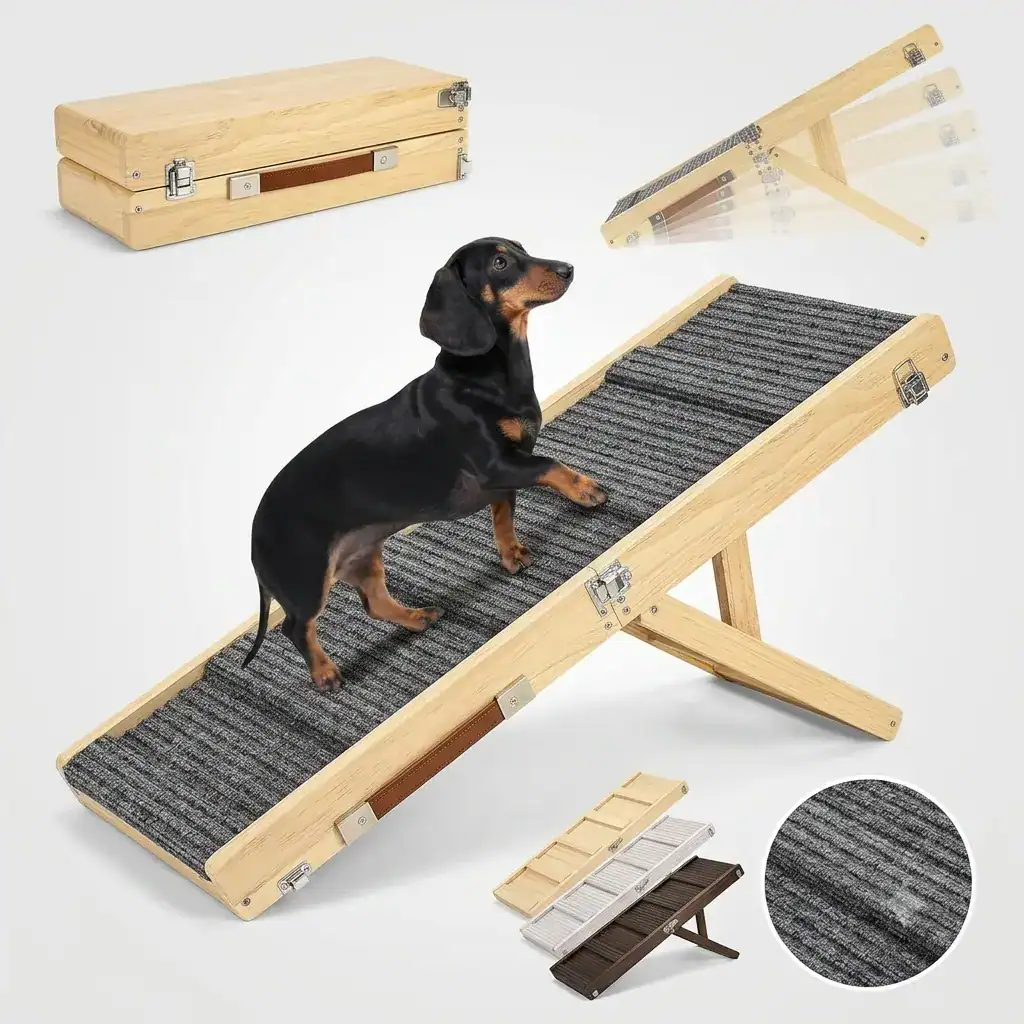
Pawaboo 2026 Upgraded Small Dog Ramp for Couch Foldable
Use for: Letting a fine-boned dog reach the sofa or bed without jumping down, which is the situation most often behind a broken leg in the Italian Greyhound. It folds away when not in use. A ramp only helps if the dog is taught to use it, and if jumping down is blocked while it learns.
Check price on Amazon🎯 Verdict: The Whippet has the clear advantage on robustness, and fine bone is the Italian Greyhound‘s main physical disadvantage. An Italian Greyhound generally asks for more management around heights and play than the Whippet does, and that commitment lasts through the whole puppy stage.
Temperament and Personality
Indoors these two are very alike. Each is affectionate, quiet, strongly attached to its people, and content to sleep for much of the day. Each is a famously cuddly blanket dog that seeks out warmth and burrows under cushions, so checking before you sit down is genuine advice with either.
Each can be reserved with strangers and startle at sudden noise, and both respond badly to harsh handling. Early, gentle socialization matters in each, and pressure produces a nervous adult rather than an obedient one.
Italian Greyhounds are often described as particularly sensitive and clingy with their owners, so gentle handling and early socialization matter. A dog left alone too long may bark, chew or toilet indoors. Many hide when overwhelmed rather than protesting.
Neither breed was developed as a dedicated guard dog. Both may alert to unfamiliar sounds, but their historical roles were companionship, coursing, hunting and racing rather than guarding.
🎯 Verdict: Roughly even, and closer than the size gap suggests. Each is affectionate, quiet and sensitive. The Italian Greyhound needs a calmer household simply because it is smaller and more easily overwhelmed.
Exercise and Fencing
The Whippet generally requires more structured daily activity, and current AKC guidance places it at roughly one to two hours of physical activity a day.
Italian Greyhounds are an active breed too and need regular exercise and play, often met with a couple of walks or a short hike plus the chance to run in a safely fenced space. The daily requirement varies with age, health and energy level in the individual dog.
Neither is built for endurance. Each is made for short bursts, and a sprint will tire either one faster than a long walk. Each is also calmer indoors than its outline suggests, and both suit apartments well.
Both are sighthounds with a strong visual pursuit instinct, although prey drive varies considerably between individual dogs. Neither should be assumed reliable off leash in open ground, because the pursuit response overrides a trained recall. A small dog moving fast is also harder to see and harder to catch.
Secure equipment matters for each, since both have narrow heads that slip a flat collar. A properly fitted martingale collar or harness is standard for either breed, and securely fenced space is more useful than any amount of recall practice.
🎯 Verdict: The Whippet generally asks for more structured daily activity, though the Italian Greyhound is an active breed in its own right rather than a low-demand one. Both benefit from safe enclosed space for sprinting.
Training and House-Training
Each is intelligent, and both can be independent when the chase instinct takes over, and both do well with reward-based methods and badly under pressure. Many of each compete successfully in obedience, agility and other sports, so learning ability is not the dividing line.
House-training is, and it is a real problem rather than a myth. It is one of the most frequently reported difficulties with the Italian Greyhound. A small bladder, a strong dislike of cold and wet weather, and a habit of slipping away quietly all work against you, and many simply refuse to go outside in the rain.
The fix is preparation rather than persistence. Keep a strict routine, reward outdoors every time, and have an indoor option or a covered patch of ground ready before the puppy arrives. Many owners crate an Italian Greyhound puppy when unsupervised, which also keeps it off the furniture while the bones are still developing.
Whippet house-training is generally straightforward by comparison. The breed is larger, less deterred by weather, and does not carry the same reputation, so most owners find it an ordinary puppy task rather than a defining challenge.
🎯 Verdict: The Whippet wins this round clearly. Trainability is comparable, but house-training an Italian Greyhound is a genuine project that catches out owners who were not warned about it.
Family Fit
These two suit calm households and are affectionate with their own people. Neither is a rough-and-tumble dog, and both do better with children who have been taught to sit on the floor to handle a dog rather than pick it up and carry it around.
The caution is sharper for the Italian Greyhound, and it is physical rather than temperamental. A dropped or trodden-on Italian Greyhound can break a leg, and many breeders are cautious about placing puppies in homes with a crawling baby or a boisterous young child.
The Whippet is more forgiving of ordinary household chaos, though it startles when woken suddenly and appreciates a retreat space of its own. Each benefits from a bed the children are taught to leave alone.
Small pets need care with each, since the chase instinct is strong in both. A dog raised alongside a cat usually does better than one meeting cats as an adult, but neither is a safe default and supervision matters in a multi-pet home.
🎯 Verdict: The Whippet is generally more physically forgiving in a busy household, while the Italian Greyhound benefits from especially careful handling around young children. The Italian Greyhound suits a calmer home or one with older children.
Coat, Grooming and Cold
Coat care is minimal for both, and this is one of the easiest rounds in the comparison. A weekly wipe with a soft cloth or rubber mitt is enough for either, neither coat mats or needs trimming, and both carry almost no coat odour, so bathing is occasional rather than routine.
The Italian Greyhound sheds very little and is among the lowest-shedding breeds of any size, though it is not hypoallergenic. The Whippet sheds lightly but continuously, and those short hairs work into fabric.
Cold is a shared weakness and the Italian Greyhound has it worse. Very little body fat under a thin coat means many shiver easily and need a sweater or coat outdoors in winter, and a warm bed away from drafts indoors. Whippets also need a coat in cold weather, but the margin is less tight.
Dental care is where the two genuinely separate. Daily brushing does more for an Italian Greyhound than anything you do to its coat, and the breed is known for losing teeth early without it. Start in puppyhood so the dog accepts handling around its mouth.

Oxyfresh Premium Pet Dental Care Water Additive
Use for: Daily dental support in a small-mouthed breed prone to crowding and early tooth loss. A tasteless water additive is useful for dogs that resist a toothbrush, though it supplements brushing and veterinary dental care rather than replacing either.
Check price on Amazon🎯 Verdict: Roughly even on coat, with the Italian Greyhound shedding slightly less and feeling the cold slightly more. Dental care is the real workload difference, and it falls on the Italian Greyhound owner.
Health and Screening
Published lifespans are long for both, with the Italian Greyhound commonly given as about 14 to 15 years and the Whippet as 12 to 15, ranges that overlap substantially. These are generally healthy breeds, and in each case the screening framework tells you more than the breed label does.
The Italian Greyhound Club of America recommends three ongoing evaluations. A patella evaluation once after twelve months, thyroid testing annually from ages two through four and then every two years until eight, and an eye exam by a specialist annually until age ten.
On top of those, the club recommends DNA tests for susceptibility to progressive retinal atrophy, primary closed angle glaucoma, and familial enamel hypoplasia, which is an inherited enamel fault, along with canine genetic diversity testing. The enamel test is worth understanding, because dental disease is not purely a care issue in this breed.
The Whippet Health Foundation’s current pre-breeding screening framework lists three required screenings, namely a yearly CAER eye exam, an echocardiogram by a board-certified cardiologist every two years, and a one-time BAER hearing test. Thyroid testing every two years, a one-time myostatin deficiency test, and a one-time OFA hip or PennHIP evaluation are also recommended.
Each breed has its own named concerns beyond the panels. Broken legs and dental disease dominate day-to-day veterinary visits for the Italian Greyhound, while myxomatous mitral valve disease is an important cardiac concern studied in Whippets and congenital deafness is what the BAER test exists to catch.
Each is a sighthound, so both may require sighthound-specific anesthetic considerations, and delayed bleeding after surgery is a documented sighthound-associated risk. Raise the breed with your veterinarian before any planned procedure, including a dental cleaning.
Veterinary Disclaimer: This article is for educational purposes only and is not a substitute for professional veterinary advice, diagnosis, or treatment. K9Sphere’s authors are experienced dog owners, not licensed veterinarians. Always consult a qualified DVM regarding any health concerns about your dog.
Always consult your licensed DVM for personalized medical advice.
Health Information Sources. Data compiled from the following references.
- Italian Greyhound Club of America health testing recommendations
- American Kennel Club Italian Greyhound breed reference
- American Kennel Club Whippet breed reference
- Whippet Health Foundation current pre-breeding screening framework
- American Whippet Club health statement and screening tests
Always consult your licensed DVM for personalized medical advice.
🎯 Verdict: Neither is straightforwardly the healthier breed and both have long published lifespans. The screening lists differ almost entirely, so the practical advice is the same for each: ask for the certificates and check their dates.
Cost and Availability
Availability differs more than price. In the United States the Italian Greyhound is an uncommon breed, so few puppies are offered at any one time, waiting lists are normal, and travel costs are worth budgeting for. Whippets are generally easier to find through breeders, though availability varies by region, and both breeds have active rescues placing adults.
Quoted breeder prices overlap and vary with breeder, location, pedigree and availability. Any figure is a snapshot, so verify current pricing with breeders in your own country rather than relying on a published range.
The running costs diverge in a specific way. Dental care across an Italian Greyhound’s life is the expense owners most often underestimate, and fracture repair is a real possibility rather than a remote one. Whippet costs skew toward ordinary care for a medium dog plus the occasional skin injury.
Food costs are modest for two small dogs, though portions are small enough that a little overfeeding goes a long way, so a measured diet matters more than the calorie total. Budget beyond the purchase either way. A well-fitted winter coat is worth budgeting for in both breeds, and for an Italian Greyhound so are ramps and whatever it takes to block access to heights while the dog is young.
🎯 Verdict: The Whippet is generally easier to find in the United States and more predictable to budget for. The Italian Greyhound asks for patience on a waiting list and a realistic allowance for dental work and possible fracture repair.
First-Time Owners
Each can work for a prepared beginner, and neither is physically demanding to handle. Each is quiet indoors, affectionate, and easy on grooming time, which covers most of daily life.
The learning curve is different in each case. For the Italian Greyhound it is fragility and toileting rather than temperament, and a newcomer who has read about both before the puppy arrives usually manages well. For the Whippet it is the exercise commitment and the fencing.
Adoption of an adult from a breed rescue is a sensible route into either breed, and it skips the most demanding stage. Each is long-lived, so a senior dog can still have years of good life ahead. That is particularly true for the Italian Greyhound, where the fragile puppy months are the hardest part, though an adult can still break a leg.
🎯 Verdict: Roughly even, and each is more beginner-friendly than it looks. Choose based on whether you would rather manage a fragile puppy and house-training or a daily exercise requirement.
Head-to-Head Scorecard
These are editorial ratings, not standardized breed measurements, and individual dogs vary. Ratings are K9Sphere’s editorial comparison based on the breed characteristics discussed in this guide, scored from 1 to 5 stars for a typical home. A high Portability score means the dog is easier to lift, carry and travel with.
Italian Greyhound
Whippet
Reading the scores: Each is calm indoors and equally easy to groom, which is the shared half of the picture. The Italian Greyhound leads on Portability, while the Whippet leads on Physical Robustness and Ease of House-Training. Low Cold Tolerance on both sides means a winter coat either way.
Common Questions about Italian Greyhound vs Whippet
These are the frequently asked questions buyers raise when comparing the two sighthounds.
What is the difference between an Italian Greyhound and a Whippet?
Direct Answer: Size and group, mostly. The Italian Greyhound weighs 7 to 14 pounds and sits in the AKC Toy Group, while the Whippet weighs 25 to 40 pounds and sits in the Hound Group.
Context: These two are sighthounds with a similar outline and temperament, but the Whippet is roughly three times heavier. Daily care differs too, with fragile bone and dental care dominating Italian Greyhound ownership.
Management: Choose based on whether you would rather manage fragility and house-training or a larger daily exercise requirement.
Is an Italian Greyhound just a small Whippet?
Direct Answer: No. They are separate breeds from different traditions and different AKC groups.
Context: The Italian Greyhound is an old companion breed associated with Italian and European nobility, registered by the AKC in 1886. The Whippet was developed by miners and mill workers in northern England and recognized in 1888.
Management: Research each breed’s own health screening, since the recommended tests barely overlap.
Which breed is more fragile?
Direct Answer: The Italian Greyhound, by a clear margin.
Context: Its very fine bone makes accidental fractures a recognized management issue, especially in puppyhood, and the forelegs are the usual site. Many such fractures need surgical repair. The Whippet is fine-boned but considerably sturdier.
Management: Block high furniture and stairs while an Italian Greyhound is young, use ramps, and supervise play with larger dogs.
Are Italian Greyhounds hard to house-train?
Direct Answer: Often, yes. It is one of the most frequently reported difficulties with the breed.
Context: A small bladder, a strong dislike of cold and wet weather, and a habit of slipping away quietly all work against you. Whippet house-training is generally more straightforward.
Management: Keep a strict routine, reward outdoors every time, and have a covered or indoor option ready before the puppy arrives.
Which one needs more exercise?
Direct Answer: The Whippet.
Context: Current AKC guidance places the Whippet at roughly one to two hours of physical activity a day. Italian Greyhounds are also an active breed and need regular exercise and play, often met with a couple of walks plus a chance to sprint safely.
Management: Arrange access to securely fenced space for either breed, since a sprint tires both faster than a long walk.
Can either breed be trusted off leash?
Direct Answer: Neither should be assumed reliable off leash in open, unfenced areas.
Context: Both retain a strong chase instinct that overrides a trained recall. A small dog moving at speed is also harder to see and harder to catch than a larger one.
Management: Use secure fencing or a long line, and fit a properly fitted martingale collar or harness, since both have narrow heads that slip a flat collar.
Which breed lives longer?
Direct Answer: Both are long-lived breeds, and published estimates overlap substantially.
Context: The Italian Greyhound is commonly given as about 14 to 15 years and the Whippet as 12 to 15, so the ranges overlap across most of their span. Breed-level figures are estimates rather than a prediction for any individual dog.
Management: Keep either dog lean, follow the recommended screening, and stay on top of dental care, particularly with an Italian Greyhound.
Do both breeds get cold easily?
Direct Answer: Yes, and the Italian Greyhound has it worse.
Context: Each carries very little body fat under a thin coat. Italian Greyhounds shiver easily and many need a sweater or coat outdoors in winter, though shivering can also signal excitement or anxiety rather than temperature.
Management: Use a fitted coat in cold weather and provide a warm bed away from drafts for either breed. Persistent shivering in a warm room is worth a vet visit.
Which is better for an apartment?
Direct Answer: Both adapt well, and the Italian Greyhound is the simpler fit on size alone.
Context: Each is quiet, undemanding indoors and content to sleep much of the day. For an Italian Greyhound the bigger consideration is not floor space but height, since furniture a larger dog steps off is a jump this breed can injure itself on.
Management: Find a safely fenced space nearby for occasional sprinting, and manage access to heights for an Italian Greyhound.
What health tests should the parents have?
Direct Answer: The two clubs ask for different things, so check the right list for the breed.
Context: The Italian Greyhound Club of America recommends a patella evaluation, thyroid testing and an annual specialist eye exam, plus DNA tests for progressive retinal atrophy susceptibility, primary closed angle glaucoma, familial enamel hypoplasia and genetic diversity. The Whippet Health Foundation’s pre-breeding framework lists a yearly eye exam, an echocardiogram every two years and a one-time BAER hearing test as required, and also recommends thyroid, myostatin and hip evaluations.
Management: Ask to see the certificates rather than a description, and check the dates on eye and heart exams.
Do Italian Greyhounds and Whippets need special anesthesia considerations?
Direct Answer: They may. Both are sighthounds and can differ from other breeds in anesthetic drug handling and recovery.
Context: Delayed bleeding a day or two after surgery is also a documented sighthound-associated risk. The mechanism and genetic predictors are still being studied.
Management: Raise the breed with your veterinarian before any planned procedure, including a dental cleaning, rather than inferring risk from a genetic result alone.
Are they good with cats and small pets?
Direct Answer: Neither breed should be assumed automatically compatible with cats, because individual prey drive varies.
Context: A dog raised alongside a cat usually does better than one meeting cats as an adult. Current AKC guidance notes that many Whippets can live successfully with cats and small dogs after appropriate introductions, while the Italian Greyhound’s small size makes supervision around a confident cat worth planning too.
Management: Introduce slowly, supervise early meetings, and avoid assuming a settled arrangement is permanent.
Which breed is easier to find?
Direct Answer: The Whippet.
Context: In the United States the Italian Greyhound is an uncommon breed, so few puppies are available at any one time and waiting lists are normal, though availability varies by region. Both breeds have active rescues placing adults.
Management: Budget travel costs if you are set on an Italian Greyhound, and consider a rescue adult if you would rather skip the fragile puppy stage.
The Quick Decision Shortcut
Deciding between an Italian Greyhound and a Whippet comes down to a few honest questions, so use this self-check before the full verdict. Each comes with its own trade-offs.
🐕 Choose the Italian Greyhound if
- You want a sighthound small enough to pick up and travel with.
- You will adapt the house around fine bone while the dog is young.
- You are ready for daily dental care for the dog’s whole life.
- You have patience for house-training that takes longer than expected.
🐕 Choose the Whippet if
- You want a sturdier dog that generally needs less modification around furniture and heights.
- You can provide roughly one to two hours of daily activity.
- You want easier house-training and a lighter dental routine.
- You would rather not wait on a breeder list.
Final Verdict
There is no universal winner here, because the two are aimed at different households despite the shared outline. These two are quiet, affectionate, low-shedding sighthounds that feel the cold and want to chase things.
The underlying decision is what you would rather manage. The Italian Greyhound gives you a genuine sighthound you can carry, and asks you to adapt your home around fine bone, brush its teeth daily, and stay patient through house-training.
The Whippet gives you a sturdier dog that generally needs less modification around furniture and heights, and asks for more daily exercise and securely fenced space to run. Match the breed to the work you are prepared to do.
🏆 Bottom line: The Italian Greyhound is the toy companion that needs protecting; the Whippet is the small hound that needs running. Both often benefit from cold-weather clothing, secure fencing and a soft bed, and both reward a calm household.
Personal Observation
💭 From my own experience
All of my rescues are street dogs. They are medium sized and tough. I have never once had to think about how high my sofa is.
That is the part people miss with a very small sighthound. An Italian Greyhound weighs 7 to 14 pounds. An average house cat weighs about 8 to 12 pounds. They are in the same range, and the dog’s legs are very fine. A bad jump or fall from furniture can result in a leg fracture.
A Whippet is roughly three times heavier and generally does not require the same level of household modification around furniture and heights. So ask yourself one simple question before you choose. Are you willing to change your house for the dog? For an Italian Greyhound, that can be part of the puppy-stage management. For a Whippet, it is generally much less of an issue.
Read More. For the full individual guides, see our Italian Greyhound guide and our Whippet guide.
For the largest member of the family, see our Greyhound guide, and our Greyhound vs Whippet comparison covers the other pairing buyers ask about most.
For the wider groups, see our guides to toy dog breeds and hound dog breeds, and a gentle shampoo suits the fine coat on either breed.
Editorial Disclaimer: This article is for informational and educational purposes only. It does not constitute veterinary advice, medical diagnosis, or treatment recommendations. Always consult a licensed veterinarian before making health-related decisions for your pet.
Accuracy Notice: While every effort has been made to ensure the information presented here is accurate and current, breed information evolves and individual dogs vary. If you spot a factual error or have updated information from a verified source, please contact us so we can review and update.
Product Disclosure: Product recommendations are based on independent research and editorial judgment. Individual results may vary. K9Sphere participates in the Amazon Services LLC Associates Program and other affiliate programs, and earns from qualifying purchases at no additional cost to you.
Last reviewed: September 2026. Article reviewed for accuracy on the date shown above.