
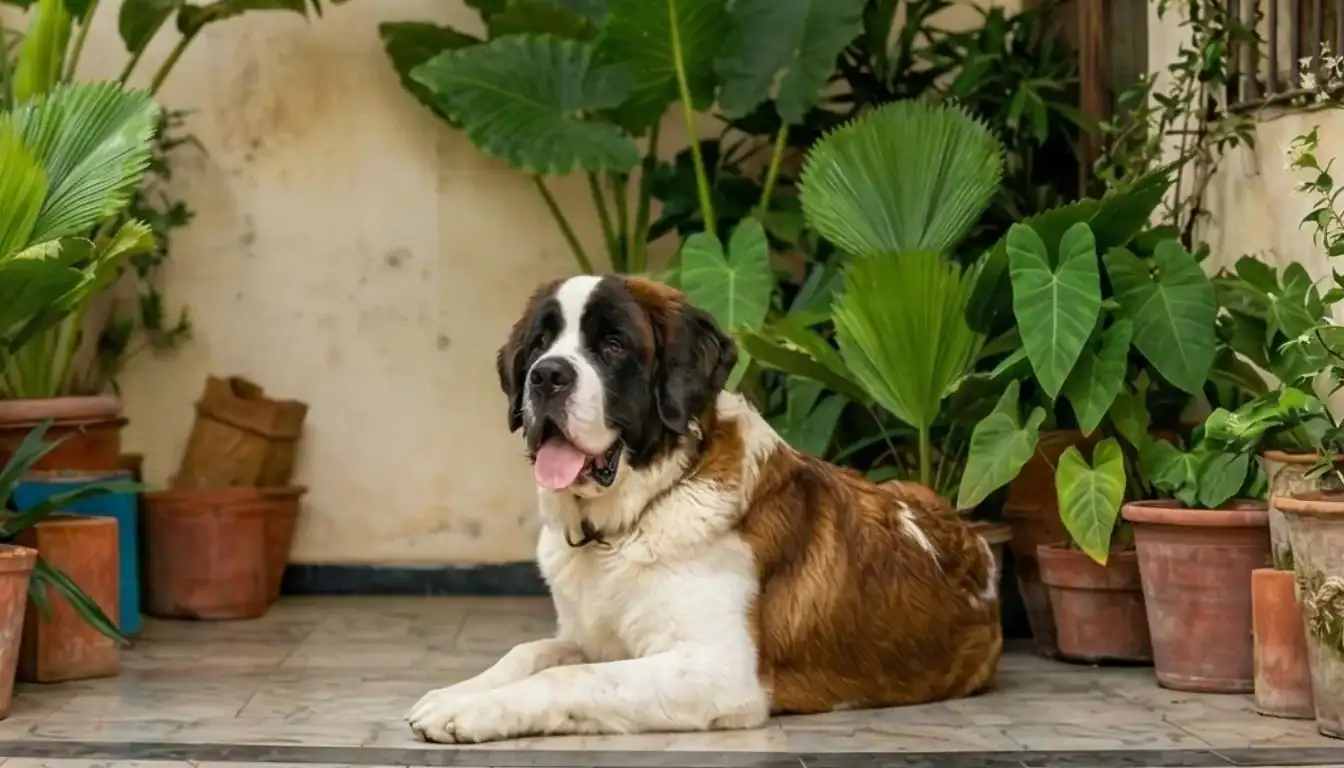
There is nothing quite like the image of a big mountain rescue dog barreling through the snow, an icon of gentle strength and heroism. What you rarely see pictured, however, is the staggering volume of drool on your ceiling, the immense physical space required to house them safely, and their heartbreakingly short years.
This evaluation combines practical large-breed ownership experience with orthopedic data and Swiss working standards. The Saint Bernard is famously family-friendly and patient with children, but their care requirements are frequently underestimated by well-meaning households who are unprepared for the logistics of sharing space with a 150-pound roommate you own for less than a decade.
While their unwavering loyalty and gentle disposition are legendary, managing their skeletal vulnerabilities, temperature sensitivity, and sheer mass takes serious dedication and deep pockets. Every issue compounds when the dog weighs 160 pounds.
OFA orthopedic statistics, Saint Bernard Club of America breeder standards, and large-breed veterinary protocols shape the screening and care guidance throughout this article.
Affiliate Disclosure: K9Sphere is a participant in the Amazon Services LLC Associates Program. As an Amazon Associate, K9Sphere earns from qualifying purchases made through links in this article at no extra cost to you.
Breed Snapshot
📊 Vitals and Lifespan
Height
Males: 28-30 inches (71-76 cm)
Females: 26-28 inches (66-71 cm)
Weight
Males: 140-180 lb (64-82 kg)
Females: 120-140 lb (54-64 kg)
Lifespan
8-10 years
AKC Group
Working Group
Origin
Switzerland
🇨🇭
⭐ Personality Traits
Ratings (1 to 5). This massive companion balances profound patience with immense physical care requirements. They thrive indoors with their households but struggle significantly in heat.
Mountain Heritage
The story of the Saint Bernard begins in the treacherous, snow-covered Alps between Switzerland and Italy. Monks at the Great St. Bernard Pass monastery developed these powerful dogs to assist travelers crossing the dangerous 8,000-foot elevation.
📌 The Monastery Origins (1660s)
The monks began utilizing large mastiff-type dogs to guard the pass and accompany travelers. Over generations, these dogs developed extraordinary pathfinding abilities, capable of breaking trails through deep snow and detecting incoming avalanches before they struck.
📌 The Legendary Barry (1800-1814)
The most famous monastery dog, Barry der Menschenretter, reportedly saved more than 40 people during his lifetime near the pass. Barry’s fame cemented the breed’s reputation worldwide as the ultimate rescuer. Interestingly, the original dogs had shorter, smoother coats to prevent snow and ice from weighing them down.
📌 The Newfoundland Cross (1830s)
Severe winters decimated the monastery breeding stock. To save the lines, the monks crossed the remaining dogs with the Newfoundland (a distant relative of the Bernese Mountain Dog’s Swiss working lineage). This crossbreeding introduced the longhaired (rough) coat variation seen frequently today.
📌 Modern Era (Present)
Today, helicopters and radar have replaced dogs for actual mountain rescues. The modern Saint Bernard is primarily kept as a beloved companion, bred for an even temper and massive build rather than outdoor endurance.
While the myth of the brandy barrel tied to their collar persists in popular culture, it is entirely fictional. The dogs never carried alcohol to freezing victims, but their massive body heat did save countless lives in the snow.
Physical Characteristics
The modern Saint Bernard is massive among dogs. Males routinely surpass 160 pounds, and their heavy bone structure demands a lot of respect. They are powerful, imposing, and undeniably heavy.
🦴 Giant Structure
Everything about this breed is supersized. They possess a massive, broad head, deep chest, and heavily muscled shoulders. This sheer mass places incredible load on their skeleton from puppyhood through their senior years, making orthopedic problem prevention the central theme of their physical care.
🎨 Two Coat Types
The breed comes in two varieties: Shorthaired (Smooth) and Longhaired (Rough). The smooth coat is dense and lies flat, while the rough coat features medium-length hair that is slightly wavy. Both types have a heavy undercoat and feature the classic red and white or brindle and white markings.
The heavy, pendulous jowls that give them their sad, soulful expression are also responsible for their legendary drooling. A quick head shake will easily launch saliva onto your walls, ceiling, and television screen.
Temperament and Household Life
Despite their intimidating build, a well-bred Saint Bernard is famously placid, patient, and gentle. Aggression is virtually absent in properly socialized dogs, and they often show profound tolerance for the chaotic energy of children.
👨👩👧 Profoundly Patient
They bond deeply with their households and prefer to lean their massive weight directly against your legs. They are indoor dogs that want to be included in routines, observing household activity from a central location on the floor.
🚨 Alert but Not Aggressive
Their size alone is usually enough to deter intruders. While they will unleash a deep, booming bark to announce strangers, they are typically friendly and welcoming once properly introduced. They are watchdogs, not attack dogs.
🛋️ Low Indoors, Playful Outdoors
Inside the house, mature dogs are remarkably lazy and low-energy. Outdoors, particularly in the snow or cool weather, they suddenly discover their playful, puppy-like side and will happily romp through drifts for hours.
⛔ The Stubborn Streak
Because they are so large, they quickly learn that if they simply lie down and refuse to move, you cannot physically force them to. They have an independent streak that requires consistent, positive motivation from the start rather than physical coercion.
Screening and Conditions
Veterinary Disclaimer: The information provided in this article is for educational purposes only and is not intended as a substitute for professional veterinary advice, diagnosis, or treatment. Always consult a licensed veterinarian for any health concerns about your pet.
Health Information Sources: Health data compiled from:
- OFA: Large-breed orthopedic statistics
- Saint Bernard Club of America: Breed-specific guidelines
Always consult your licensed DVM for personalized medical advice.
⏳ Lifespan Reality
The typical lifespan is only 8 to 10 years. Like many massive breeds built for cold environments, they often face a sharp physical decline after age 6 or 7 due to mounting skeletal and cardiac stress. Managing their body condition from day one is the single most effective way to extend their healthy years.
🔴 Hip and Elbow Dysplasia
What to watch for: A massive frame places extreme stress on their joints. Hip dysplasia and elbow dysplasia are rampant in poorly bred lines. Malformed joints grind bone against bone, leading to crippling arthritis well before their senior years.
Screening: Demand passing OFA or PennHIP scores from both parents. Starting a proven hip and joint supplement early can help maintain cartilage before visible symptoms appear.

Nutramax Cosequin for Dogs Joint Health Supplement
Use for: Supporting skeletal integrity in massive breeds prone to hip and elbow dysplasia. Contains glucosamine and chondroitin to help maintain cartilage when bearing 150+ pounds of structural load.
View on Amazon🔴 Gastric Dilatation-Volvulus (Bloat)
What to watch for: As a deep-chested giant, they are highly susceptible to bloat. The stomach fills with gas and twists on its axis, cutting off blood flow.
This is a medical emergency. Do not attempt home treatment. Seek immediate veterinary care.
🟡 Cardiac Disease (DCM)
What to watch for: Dilated Cardiomyopathy (DCM), an enlargement of the heart muscle, affects many giant breeds, and Saint Bernards have a known genetic predisposition to it. Symptoms include lethargy, coughing, and sudden collapse.
Screening: Annual veterinary heart exams are critically important.
Grooming and Drool
Whether you choose a smooth or rough coat, you are committing to a heavy shedding breed. They blow their dense undercoat twice a year, resulting in tumbleweeds of fur drifting across your floors.
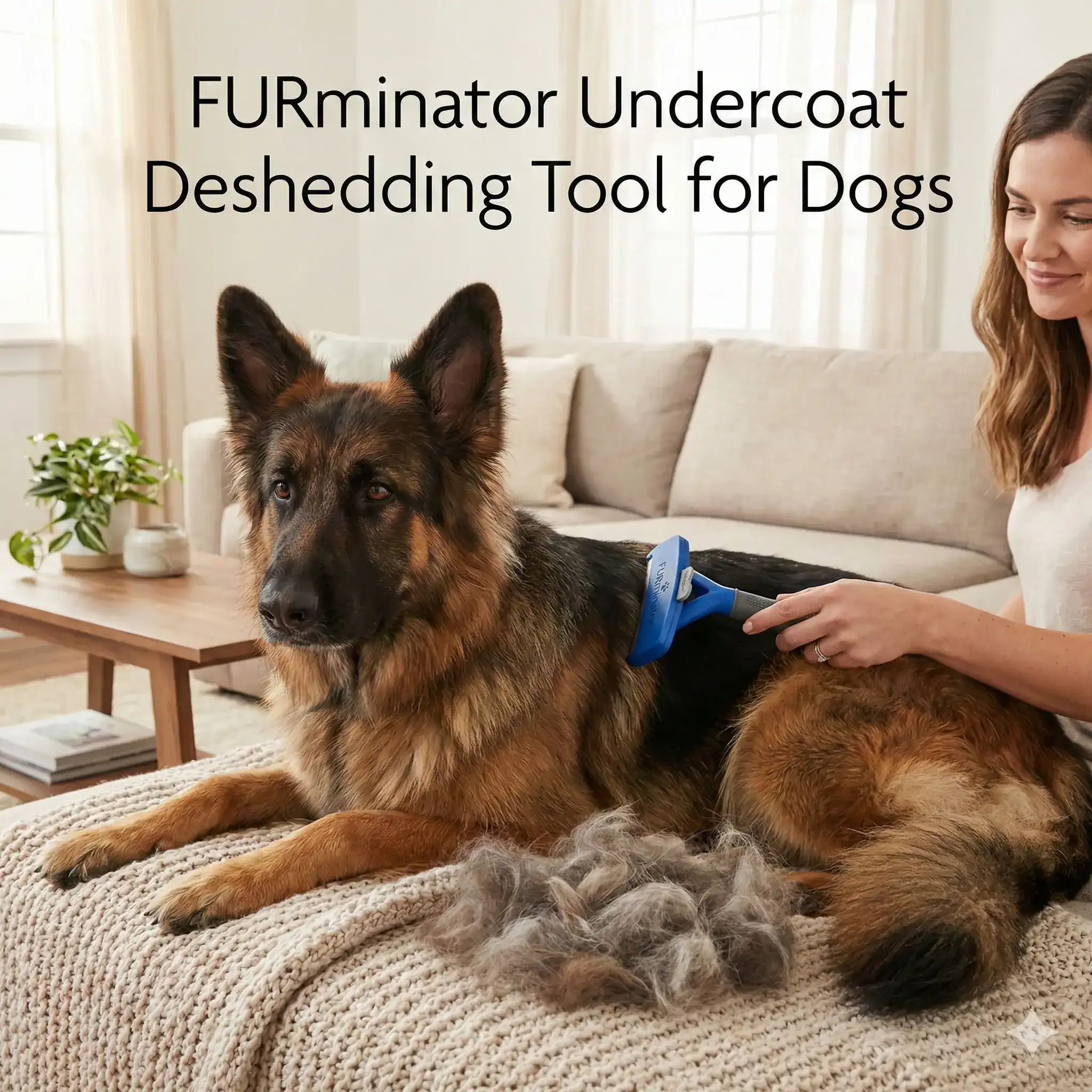
FURminator Undercoat Deshedding Tool for Dogs
Use for: Removing loose undercoat hair before it covers your furniture, reducing shedding by up to 90%, and keeping double-coated mountain breeds comfortable during heavy seasonal coat blowouts.
View on AmazonRegular brushing with an appropriate grooming tool helps remove dead hair and reduces the amount of shedding inside the home. Double-coated breeds like the Saint Bernard benefit from tools designed specifically for heavy undercoats rather than standard surface brushes.
Beyond hair, you must manage the saliva. Owners typically keep “drool rags” stashed in every room of the house to wipe their dog’s face after eating, drinking, or moving around. If you are fastidious about a spotless home, the reality of this breed will seriously challenge your cleaning routine.
Space and Activity
They do not require miles of running, but they do benefit from moderate, consistent movement to prevent obesity. A leisurely walk and some playtime in a secure yard on a regular schedule is typically sufficient.
A practical tip: this breed was developed to survive in freezing mountain snow. If you live in a warm region, air conditioning is mandatory. They must be kept indoors during the heat of the day and only taken out during cool mornings to prevent fatal heatstroke. Their suitability drops sharply in any location where temperatures routinely exceed 80F (27C).
They also take up an enormous amount of space. A 160-pound dog lying across a hallway effectively blocks traffic for the entire house. They do not do well in cramped apartments with multiple flights of stairs. Ground-floor accommodation with spacious rooms and a yard is the minimum viable arrangement.
Given the immense strain their body mass places on hips and skeleton, providing a supportive sleeping surface is important for recovery. Massive breeds benefit from an orthopedic dog bed that distributes their load evenly and cushions pressure points throughout the night.

FurHaven Orthopedic Dog Bed for Large Dogs
Use for: Providing egg-crate orthopedic foam support that distributes body mass evenly, reducing pressure on hips and skeleton in massive breeds carrying 140+ pounds. Removable, machine-washable cover handles heavy shedding and drool.
View on AmazonNutrition and Slow Growth
Feeding a massive breed is expensive, but feeding them incorrectly costs far more in veterinary bills. This is not an area where a beginner should improvise. Their metabolism and nutritional demands shift significantly across their stages of growth.
🐶 Puppy Stage
Growth must be strictly regulated. A large-breed specific puppy formula ensures the correct ratio of calcium and phosphorus, preventing their bones from growing faster than their skeleton can support. Rapid development in massive dogs dramatically increases the risk of structural disease. Feed measured meals three to four times and monitor growth rate closely with your veterinarian.
🐕 Adult Stage
They actually have a relatively slow metabolism for their size. Measure their food carefully and split their allowance into two or three smaller meals. Feeding one massive meal increases the risk of bloat, which is a leading cause of death in this breed.
🐕🦺 Senior Stage
By age 6 to 7, transition to a senior formula with skeletal support compounds including glucosamine and chondroitin. Reduce portions slightly and split meals into three smaller feedings to ease digestion. Keeping them lean is the single most impactful thing you can do for their longevity. Increase veterinary checkups to twice yearly to catch cardiac or structural decline.
Training
Training a Saint Bernard requires patience, consistency, and a head start. Every obedience lesson learned at 30 pounds vs 160 pounds is exponentially easier to enforce. Start immediately.
🐕 Leash Manners First
Start leash conditioning immediately. A large-breed puppy that learns to walk calmly beside you at 8 weeks will save you from being dragged across the sidewalk when they reach full mass. Use a front-clip harness to redirect pulling momentum rather than relying on collar corrections.
🧠 Positive Motivation
They respond well to food rewards and calm praise but will shut down completely if confronted with harsh corrections. Physical force is pointless against a dog this heavy. Build cooperation through positive reinforcement and short, structured sessions rather than lengthy repetitive drills.
👥 Puppy Socialization
Expose them to many different people, places, sounds, and animals during their critical puppy window. A confident, well-socialized Saint Bernard is a joy. An unsocialized 160-pound dog that panics around strangers is a liability that creates dangerous situations through sheer momentum alone. Any reputable sale will include socialization records as proof the puppy was exposed to varied environments before leaving.
Breed Comparison
| Attribute | Saint Bernard | Newfoundland | Great Pyrenees | Alaskan Malamute |
|---|---|---|---|---|
| Weight | 120-180 lb (54-82 kg) | 100-150 lb (45-68 kg) | 85-160 lb (39-73 kg) | 75-85 lb (34-39 kg) |
| Primary Role | Mountain Rescue / Companion | Water Rescue / Companion | Livestock Guardian | Heavy Sledding |
| Energy Level | Low to Moderate | Low to Moderate | Low (but patrols at night) | High (needs heavy output) |
| Barking | Moderate (alert barker) | Low to Moderate | High (nocturnal barker) | Vocal (howls, “talks”) |
| Stranger Tolerance | High (friendly when introduced) | Very High (famously sweet) | Low (suspicious of outsiders) | High (loves everyone) |
| Drool Level | Very high | High | Low to Moderate | Low |
The Newfoundland shares their massive build and sweet disposition but was bred for water rescue rather than mountain work. The Great Pyrenees is a serious flock guardian with a significantly higher tendency to patrol and bark defensively at night. The Alaskan Malamute is considerably smaller but possesses relentless stamina that requires heavy output. The Saint Bernard is the largest of the group, but ironically, the most content to snooze quietly indoors.
FAQ
Do they really carry brandy kegs around their necks?
Direct Answer: No. This is a persistent cultural myth.
Context: The famous image originated from an 1820 painting by Edwin Landseer called “Alpine Mastiffs Reanimating a Distressed Traveler.” The artist added the barrel for dramatic effect, and the public loved it so much that it became permanently associated with the breed.
Management: While they never carried alcohol, modern owners often buy decorative collars with mini-kegs for fun photos in the snow.
How much do they drool?
Direct Answer: Copiously and constantly.
Context: Because of the shape of their heavy jowls, they cannot contain their saliva. They drool when they eat, when they drink, when they are hot, and when they are excited. When they shake their heads, the drool flings in a wide radius.
Management: Keep hand towels in every room. Wipe their mouths after they drink water. If you require a pristine home, do not choose this breed.
Can they survive in an apartment?
Direct Answer: Generally, no. They simply take up too much physical space.
Context: While their indoor energy level is low enough for apartment life, navigating a 160-pound dog through a small kitchen or narrow hallway is exhausting. More importantly, massive breeds should avoid navigating multiple flights of stairs to protect their skeleton.
Management: They require ground-floor living, spacious rooms, and a yard for stretching their massive legs.
Are they aggressive?
Direct Answer: No, a well-bred Saint Bernard is famously gentle.
Context: They are alert watchdogs who will bark to announce visitors, but they are bred to rescue humans, not attack them. However, any 150-pound dog can become dangerous if they are completely unsocialized or abused.
Management: Expose them to many different people, places, and other animals during their puppy socialization window to ensure they grow into confident, friendly adults.
How long do they typically live?
Direct Answer: Only 8 to 10 years on average.
Context: The tragic trade-off for their massive build is a brutally short life. Their bodies age rapidly, and they are prone to several limiting conditions including bone cancer, cardiac disease, and severe arthritis.
Management: Keep them lean. Excess body mass destroys their skeleton and strains their cardiovascular system, shortening an already brief life.
Smooth coat or rough coat?
Direct Answer: It depends on your climate and grooming tolerance.
Context: The original hospice dogs were smooth-coated because ice does not clump to short hair as easily. Rough coats require significantly more brushing to prevent painful mats behind the ears and legs.
Management: Both types shed heavily. If you live in a snowy area where the dog will spend time outside, the smooth coat is actually more practical.
Do they require intense regular activity?
Direct Answer: No, moderate regular movement is sufficient.
Context: They are heavy, lumbering dogs that do not make good jogging partners. While they benefit from a walk to maintain cardiovascular function and prevent obesity, intense or prolonged forced output can quickly lead to exhaustion or skeletal injuries.
Management: Stick to leisurely walks and avoid taking them out during the heat of the day.
Are they expensive to maintain?
Direct Answer: Yes, the ongoing costs are substantially higher than average breeds.
Context: Everything is more with a massive breed. They consume large volumes of premium food. Preventative medications are dosed by body mass. Veterinary surgeries require more anesthesia, and oversized beds and crates carry a premium price tag. No breed organization sugarcoats the financial reality of maintaining a 160-pound dog.
Management: Secure a robust insurance policy immediately. Expect the monthly outlay to run 2 to 3 times what a medium-sized dog would require. Emergency veterinary bills with this breed can exceed the original puppy price.
Finding a Healthy Puppy
Because their massive skeleton and cardiovascular system are so vulnerable, choosing a bargain puppy usually leads to thousands in veterinary heartbreak later. Seek out sources who prioritize longevity and structural soundness over sheer, exaggerated build.
🏠 Responsible Source
A responsible source will proudly show you passing OFA or PennHIP scores for both parents’ hips and elbows, along with cardiac clearances from a veterinary cardiologist. They will ask detailed questions about your home environment, air conditioning access, and financial readiness for large-breed care.
🐾 Rescue and Adoption
Many people acquire a cute, fluffy puppy without realizing it will soon weigh 150 pounds and consume enormous amounts of food. Large-breed rescues frequently have adults available. Adopting an adult allows you to skip the destructive oversized-puppy phase and clearly assess their mature temperament.
🚩 Red Flags to Watch For
- No OFA or equivalent screening documentation on parent dogs
- Sources advertising “biggest puppies” as a selling point without structural clearances
- Puppies available immediately with no interview, application, or waitlist
- No cardiac screening documentation for either parent
- No questions asked about your temperature zone, accommodation, or financial preparedness
Personal Observation
💭 Personal Observation
Bruno, my Labrador who lived with me from 2012 until his passing in 2021, weighed roughly 45 kg (99 lb). Managing his chronic kidney disease in his later years taught me how dramatically veterinary costs escalate once a large dog develops a serious condition. Specialized renal diets, frequent blood panels, and ongoing monitoring consumed a budget I had not planned for when he was young and healthy. A Saint Bernard weighs double what Bruno did, and everything from the volume of food to the dosage of medication to the cost of diagnostic imaging scales upward with that mass. If you are bringing a 160-pound dog into your home, you cannot afford to think about veterinary budgets reactively. You must plan for supplements, orthopedic support, and emergency reserves from day one, because the financial reality of a serious condition in an 80 kg dog will dwarf anything a 45 kg dog generates.
Conclusion
The Saint Bernard is a dog of extraordinary presence and patience. For the household equipped to handle their massive footprint, copious drool, and tragically brief years, they offer a depth of quiet devotion that few other breeds can match.
However, bringing a mountain rescue dog into your home is an immense physical and financial commitment. You must be prepared to support their skeleton from puppyhood, keep them safe and cool in warm weather, and embrace a home that is never quite free of fur or saliva. The biggest pro is their unshakeable gentleness with households. The biggest con is the devastatingly short life combined with staggering ongoing expenses. For the right person, sharing a home with one of the mountain’s greatest legends is truly transformative.
Disclaimer: This article is for informational purposes only and does not constitute veterinary or professional breeding advice. All health information is based on publicly available breed data and should not replace a physical examination or treatment plan from a licensed veterinarian. Product recommendations contain affiliate links. K9Sphere earns from qualifying purchases at no additional cost to you.


