
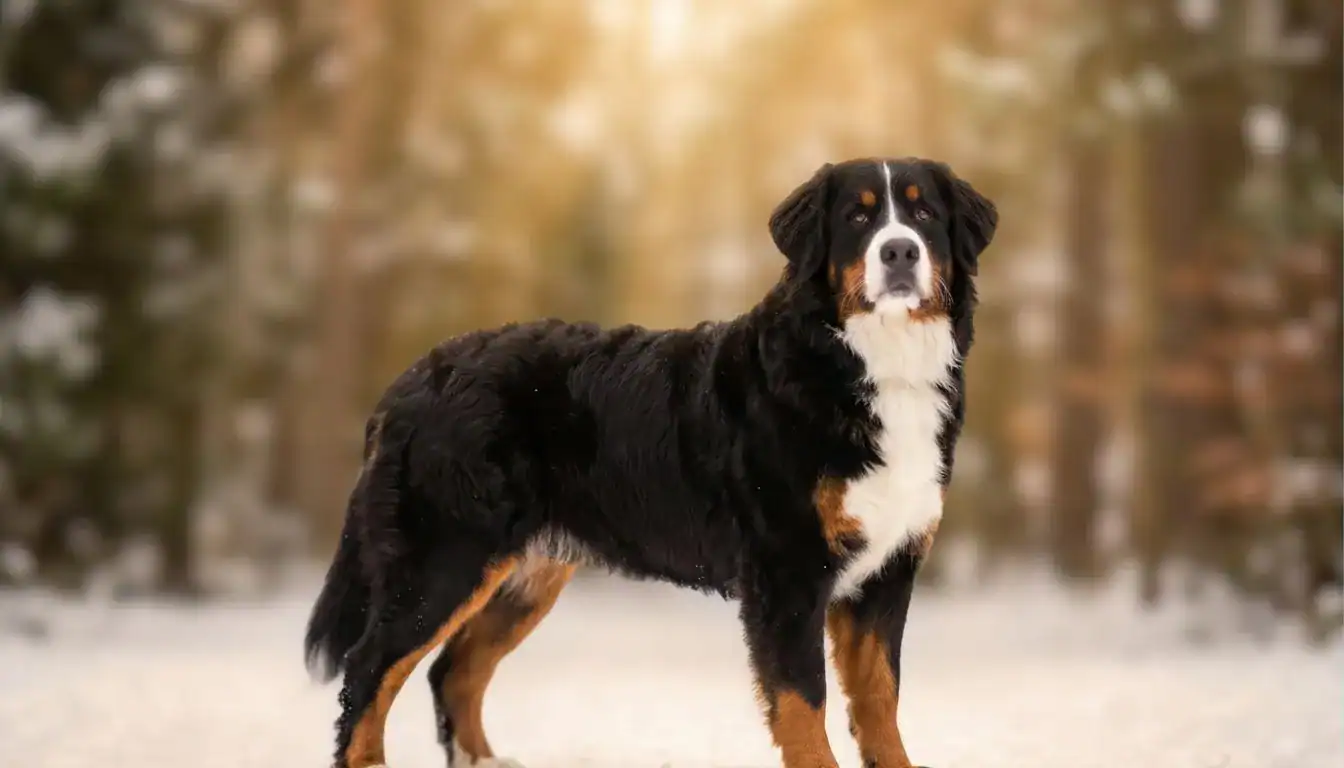
The Bernese Mountain Dog is widely regarded as one of the most affectionate giant breeds on earth. Their striking tricolor pattern and perpetually smiling expression make them an immediate favorite for family households seeking a calm companion.
The reality of owning one, however, often involves navigating a notoriously brief expected life and steep veterinary bills. While their sweet nature is undeniable, their structural and medical requirements demand serious commitment from day one.
CHIC testing protocols, BMDCA breed guidelines, and the Berner-Garde Foundation’s open genetic database shape the screening and care guidance throughout this article.
Affiliate Disclosure: K9Sphere is a participant in the Amazon Services LLC Associates Program. As an Amazon Associate, K9Sphere earns from qualifying purchases made through links in this article at no extra cost to you.
Breed Snapshot
📊 Vitals and Lifespan
Height
Males: 25-27.5 in (64-70 cm)
Females: 23-26 in (58-66 cm)
Weight
Males: 80-115 lb (36-52 kg)
Females: 70-95 lb (32-43 kg)
Lifespan
6-10 years
AKC Group
Working Group
Origin
Switzerland
🇨🇭
⭐ Personality Traits
Ratings (1 to 5). A devoted household companion with heavy grooming demands and deep intolerance for hot weather.
Origin and Heritage
The Bernese Mountain Dog (or Sennenhund) has its origin in the agricultural regions of Switzerland, specifically around the canton of Bern. Before industrialization changed the landscape forever, these dogs were the essential multi-tool of the Swiss farm.
They served three primary functions: driving dairy cattle to alpine pastures as a herd dog, acting as a watchdog for the property, and pulling small carts loaded with milk cans or woven goods to local markets. This drafting background explains their incredibly sturdy build and powerful hindquarters.
As transportation modernized, the breed faced near extinction. Dedicated Swiss enthusiasts resurrected the bloodlines, shifting the dog’s focus from heavy work to a loyal companion role. Today, their heritage remains visible in their strength and stubborn willingness to pull, but their primary job is providing a lot of steady affection to their households.
Physical Characteristics
The Berner is an imposing but friendly presence. They possess a thick, moderately long double layer designed to repel snow and freezing alpine wind. The standard requires a specific tricolor pattern: a jet-black ground color, rich rust markings over the eyes and legs, and bright white chest, muzzle, and tail tip. Their fluffy appearance draws immediate attention, but that volume of hair carries a serious maintenance burden.
This dense covering is a serious barrier to heat dissipation. They are biologically engineered for freezing temperatures. If you live in an area that regularly exceeds 80F (26C), the dog will spend most of the year seeking out air-conditioning or cool tile floors just to survive comfortably.
Temperament
Few large dogs match the Bernese Mountain Dog’s reputation as a calm, patient house companion. They are famously sweet-natured, making them excellent partners for homes with children.
🫂 The Velcro Dog
Berners thrive on physical proximity. They are not independent yard dogs. If you are in the kitchen, they will lie on your feet. If you are on the couch, they will attempt to sit in your lap despite weighing 100 pounds. They demand to be fully integrated into household activities.
🛡️ Alert but Polite
They possess a deep, booming bark that effectively deters intruders, but they are rarely aggressive. A properly socialized Berner will alert you to a stranger at the door and then happily accept a petting session once you signal that the guest is welcome.
🏃 Slow Maturation
They take a long time to grow up mentally. You can expect goofy, clumsy puppy behavior well into their third year. This extended adolescence requires patience, as a 90-pound dog jumping in excitement can cause accidental damage.
💔 Sensitivity
They are deeply sensitive dogs who read human emotions carefully. Harsh scolding or chaotic household dynamics will cause a Berner to shut down or become anxious. They respond to calm, encouraging leadership.
Screening and Conditions
Veterinary Disclaimer: The information provided in this article is for educational purposes only and is not intended as a substitute for professional veterinary advice, diagnosis, or treatment. Always consult a licensed veterinarian for any concerns about your dog.
Sources: Data compiled from:
- CHIC: Required testing protocols for the breed
- BMDCA: Bernese Mountain Dog Club of America alerts
- Berner-Garde Foundation: Open database tracking genetic diseases
Always consult your licensed DVM for personalized medical advice.
The hardest truth about this breed is their medical profile. Anyone bringing a Bernese Mountain Dog home must budget for significant veterinary care. The average expected years are just 6 to 8, with a maximum range rarely extending past 10. You must emotionally prepare for a shorter time together than you would with smaller companion breeds.
🔴 Histiocytic Sarcoma
What to watch for: A fast-acting malignancy that is the leading cause of death in this breed. Symptoms include sudden lethargy, unexplained weight loss, limping, or visible lumps.
Screening: While genetic testing exists to show susceptibility, there is no guarantee. Perform regular physical checks and schedule bi-annual veterinary exams for detection. A practical tip: get into the habit of running your hands over the dog’s entire body weekly to check for new lumps or changes in texture.
🔴 Gastric Dilatation-Volvulus (Bloat)
What to watch for: Their deep chest puts them at high risk for GDV. The stomach fills with gas and twists, cutting off blood circulation. Symptoms include pacing, a distended abdomen, and unproductive retching.
This is a medical emergency. Do not attempt home treatment. Seek immediate veterinary care.
🟡 Hip and Elbow Dysplasia
What to watch for: Their heavy frame places immense stress on structure. Hip dysplasia causes the socket to fit loosely, leading to arthritis and pain when standing or climbing stairs.
Screening: Both parents must have clear OFA or PennHIP scores before breeding. Starting a proven hip and joint supplement can help manage cartilage integrity over time.
Because their skeleton deteriorates under excess weight, keeping a Berner lean is critically important. Providing an orthopedic dog bed can help relieve pressure on their hips and elbows as they age.
Consult your veterinarian before starting any supplement regimen for your dog.

Nutramax Cosequin for Dogs Joint Health Supplement
Use for: Supporting structural integrity in heavy-framed breeds prone to hip and elbow dysplasia. Helps maintain cartilage and mobility as your Berner carries significant mass into their senior years.
View on AmazonGrooming
The beautiful tricolor covering comes with a heavy maintenance tag. Berners drop hair consistently year-round, and they “blow” their dense undercoat twice a year as seasons change.
You must brush them at least three times a week to prevent severe matting, especially behind the ears, under the legs, and around the tail. During seasonal blowouts, brushing becomes a requirement every single day.
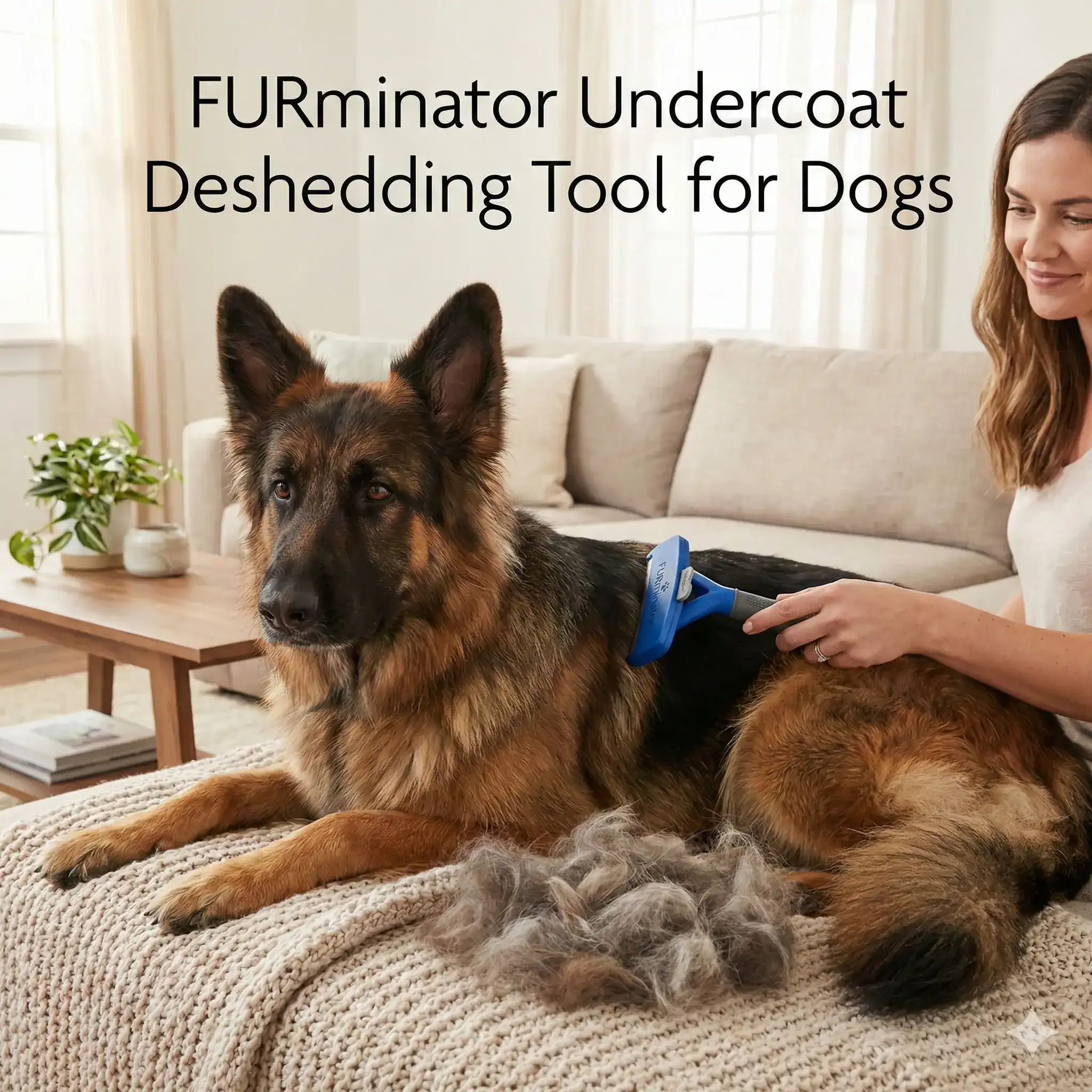
FURminator Undercoat Deshedding Tool for Dogs
Use for: Removing loose undercoat before it covers your furniture, reducing hair volume by up to 90%, and keeping double-layered breeds comfortable during heavy seasonal blowouts.
View on AmazonRegular brushing with an appropriate grooming tool helps remove dead hair and reduces the amount of loose fur inside the home. Heavy double-layered breeds like the Bernese benefit from tools designed specifically for reaching the dense underlayer rather than standard surface brushes.
Activity and Space
Despite their heritage, the Bernese Mountain Dog requires only moderate daily activity. A 30 to 45-minute walk, coupled with some playtime in a securely fenced yard, is typically enough to keep them physically fit and mentally satisfied.
You must rigorously protect their growing skeleton from early on. Young dogs should never be forced to run on hard surfaces, climb steep stairs repeatedly, or jump out of high vehicles. Wait until their growth plates fully close around two years of age before attempting any strenuous hike or cart-pulling activities.
Activity must be scheduled around the weather. Like the Siberian Husky, the Berner will overheat rapidly in high temperatures. During summer months, limit walks to the cool morning or late evening hours. India and other tropical regions present a greater challenge for this breed than northern climates do, requiring indoor air conditioning as a baseline rather than a luxury.
Nutrition
Feeding a heavy-framed breed correctly is critical. Their metabolism and nutritional demands shift across their stages of growth.
🐶 Puppy Stage
Growth must be carefully regulated. A large-breed specific puppy formula ensures the correct ratio of calcium and phosphorus, preventing bones from developing faster than their structure can support. Feed measured meals three to four times and adjust portions based on body condition scoring. Overfeeding a Berner puppy accelerates skeletal problems that compound for the rest of their life.
🐕 Adult Stage
Split their feeding into two or three smaller meals rather than one large serving to reduce bloat risk. A premium, large-breed formula with appropriate protein and fat ratios supports muscle mass without encouraging excess weight gain. Body condition scoring is the simplest way to monitor fitness: you should be able to feel their ribs but not see them prominently.
🐕🦺 Senior Stage
By age 5 to 6 (earlier than most breeds), transition to a senior formula with glucosamine and chondroitin for structural support. Reduce caloric intake as their output naturally decreases. Increase veterinary checkups to twice yearly. Keeping them lean during their final years is the single most impactful thing you can do for their comfort and mobility.
Conditioning
Bernese Mountain Dogs want to please, which makes basic obedience highly rewarding. They respond exceptionally well to positive reinforcement using food and praise.
🐕 Socialization Window
Because they grow into powerful 100-pound adults, socialization is not optional. Introduce them to a wide variety of people, sounds, surfaces, and other animals before they reach 16 weeks of age. A poorly socialized Berner may become timid and anxious, which is difficult to handle in a dog of this size.
🐕 Leash Manners
Leash conditioning must start immediately. A 20-pound puppy pulling is manageable. A 110-pound adult dog lunging toward a squirrel will pull an unprepared person straight to the ground. Teach loose-leash walking while you still have the physical advantage.
Breed Comparison
All of these are massive, cold-weather breeds, but their management and specific purposes vary significantly.
| Attribute | Bernese Mountain Dog | Saint Bernard | Great Pyrenees | Newfoundland |
|---|---|---|---|---|
| Weight | 70-115 lb (32-52 kg) | 120-180 lb (54-82 kg) | 85-160 lb (39-73 kg) | 100-150 lb (45-68 kg) |
| Purpose | Drafting, general work | Mountain rescue, guarding | Livestock guardian | Water rescue, draft |
| Temperament | Affectionate, eager to please | Placid, stubborn | Independent, nocturnal guard | Sweet, patient, devoted |
| Drool Level | Low to moderate | Very high | Low | Very high |
| Lifespan | 6-10 years | 8-10 years | 10-12 years | 9-10 years |
The Berner is the most eager to please and trainable of the group vs the others. The Saint Bernard carries far greater bulk and drools significantly more. The Great Pyrenees is an independent flock protector that barks heavily at night and makes its own decisions regarding territory. The Newfoundland is a water-oriented draft dog with a similarly sweet disposition but even heavier drool output. Among these four, the Bernese offers the most golden combination of trainability and affection, but pays for it with the shortest expected years.
FAQ
Are they suitable for households with children?
Direct Answer: Yes, they are widely considered one of the most child-friendly large breeds.
Context: They are deeply patient and accepting with kids. However, a clumsy young Berner can accidentally knock over a toddler. Their suitability is highest in homes where children are old enough to understand boundaries around big dogs.
Management: Always supervise interactions between large dogs and small children, and teach children not to ride or pull on the dog.
How much do they shed?
Direct Answer: Profusely, year-round.
Context: Their thick double layer drops hair constantly, and they go through two major “blowouts” per year where the undercoat comes out in massive clumps.
Management: You will need a robust vacuum, regular brushing during seasonal changes, and an acceptance of dog hair on your clothing and furniture.
Can they survive in an apartment?
Direct Answer: Challenging and usually not ideal.
Context: While their indoor activity level is relatively low, their large size makes maneuvering in tight spaces difficult. More importantly, they require a cool environment and regular outdoor access to stretch their legs.
Management: They do well in a home with a fenced yard. If kept in an apartment, the person must be dedicated to multiple outdoor walks and robust climate control.
Are they aggressive guard dogs?
Direct Answer: No. They are alert watchdogs, not aggressive protectors.
Context: They may look intimidating due to their build, but a properly socialized Berner will not attack an intruder. They prefer to stand their ground and bark.
Management: If you want a dog for serious personal protection, this is the wrong breed. They are lovers, not fighters.
Can they handle hot weather?
Direct Answer: No, they tolerate heat very poorly.
Context: With their black, double-thick layers, they are highly susceptible to heatstroke. They thrive in winter and struggle visibly when temperatures exceed 75F (24C).
Management: They must live indoors with air-conditioning during the summer. Restrict all walks to the coolest parts of the day.
How do they compare to a Golden Retriever?
Direct Answer: The Berner is larger, heavier, and generally lower in stamina.
Context: While both are excellent household dogs, the Golden Retriever has higher stamina for retrieving and swimming. The Berner prefers shorter walks and has a much briefer expected lifespan. The Labrador Retriever is another common comparison, offering even greater versatility for active lifestyles.
Management: Choose a retriever breed for an athletic, outdoor lifestyle. Choose the Berner for a calm, cold-weather companion.
Are they good for first-time dog people?
Direct Answer: Yes, if the person is prepared for the size, hair volume, and potential heartbreak.
Context: Their eager-to-please nature makes them relatively easy to condition. The challenges lie in handling their physical bulk and navigating complex medical issues.
Management: A first-time handler should enroll in obedience classes to establish control before the dog reaches 100 pounds.
Are they expensive to maintain?
Direct Answer: Yes, substantially more than average breeds.
Context: Everything scales with their size: premium large-breed feeding formulas, weight-based preventative medications, and surgical doses of anesthesia. The con that most people underestimate is the medical bill. Due to the severe malignancy risk and dysplasia rates, comprehensive insurance is essentially mandatory, and premiums for this breed are among the highest.
Management: Budget for ongoing veterinary monitoring from the start. Emergency bills for sale-priced puppies from unscreened sources typically exceed the savings within the first year.
Finding a Puppy
Because their medical profile is so severe, sourcing a Bernese Mountain Dog requires extreme diligence. A responsible source will openly discuss the expected longevity and malignancy risks in their lines, and will get your commitment to screening before placing a puppy.
🏠 Responsible Source
A responsible source will provide verifiable OFA or PennHIP certifications for both parents’ hips and elbows, along with cardiac clearances. They will ask detailed questions about your home environment, climate zone, and financial readiness for a high-maintenance breed. If a source brushes off concerns or promises a “problem-free line,” walk away.
🐾 Rescue and Adoption
In most markets, adopting a Berner through a breed-specific organization is an excellent option. Rescues often place adult dogs whose temperaments are already established, allowing you to bypass the clumsy, high-output puppy phase entirely.
🚩 Red Flags When Sourcing
- No OFA, PennHIP, or CHIC documentation on parent dogs
- Source advertising “biggest puppies” without structural clearances
- Puppies available immediately with no interview, application, or waitlist
- No cardiac screening documentation for either parent
- Claims of a “guaranteed problem-free” or “long-lived” line without data to support it
Personal Observation
💭 Personal Observation
When Mun Mun, one of my rescued street dogs, developed an unusual growth in her mammary area between September 2023 and January 2024, it required intense monitoring and a complete dietary overhaul. I tracked her progress alongside my vet until the issue resolved through a supportive protocol without surgery. That experience taught me the non-negotiable value of catching physical changes before they escalate. The Bernese Mountain Dog demands this same hyper-vigilant approach, but with far higher stakes. Their predisposition to aggressive malignancies means that a lump you dismiss today could become a life-threatening emergency within weeks. If you are not the type of person who will run your hands over your dog’s body weekly and act immediately when something feels wrong, this breed will break your heart faster than most.
Conclusion
The Bernese Mountain Dog offers a level of affection and devotion that few breeds can match. Their striking appearance and famously sweet disposition make them deeply rewarding companions.
The biggest pro is an incredible, intuitive household member who bonds with every person in the home. The biggest con is the devastatingly brief years combined with a medical profile that demands constant vigilance and significant financial reserves. For those willing to accept the heartbreak, the time spent with a Berner is truly unforgettable.
Disclaimer: This article is for informational purposes only and does not constitute veterinary or professional breeding advice. All information is based on publicly available breed data and should not replace a physical examination or treatment plan from a licensed veterinarian. Product recommendations contain affiliate links. K9Sphere earns from qualifying purchases at no additional cost to you.


