

For dog lovers who are allergic to dogs and sneeze, itch, or wheeze around most of them, a large companion can feel out of reach. The good news is that certain big breeds are far easier on allergies than others, mostly because they release less of the dander that actually triggers symptoms. This guide highlights ten of the best large hypoallergenic dog breeds for people with allergies and explains why each one tends to be kinder to allergy sufferers.
One honest point up front. No dog is truly, completely hypoallergenic, since every dog produces some allergens in its dander, saliva, and urine. What the breeds below share is a coat that sheds little and tends to trap dander rather than scatter it around the home, which can mean fewer symptoms for some allergy sufferers. Reactions still vary from person to person and even from dog to dog, but these breeds are large, low-shedding, and worth a close look if allergies have held you back.
Affiliate Disclosure: K9Sphere is a participant in the Amazon Services LLC Associates Program and other affiliate programs. As an Amazon Associate, and through other affiliate links, K9Sphere earns from qualifying purchases made through links in this article at no additional cost to you. Product recommendations are based on independent research and editorial judgment, not paid placement.
💡 No Dog Is 100% Hypoallergenic
It is worth saying clearly, since the word gets used loosely. The American Kennel Club and veterinary resources such as PetMD both state plainly that there is no fully hypoallergenic dog. Allergies are usually triggered by a protein in dander and saliva, not by hair itself, so even a low-shedding dog produces some allergen. The breeds here are better tolerated by many allergy sufferers, but they are lower-allergen, not allergen-free.
10 Large Hypoallergenic Dog Breeds
These ten breeds are among the best hypoallergenic dog breeds for people who want a bigger companion. Each carries a coat type, curly, wiry, or single-layered, that holds onto dander and sheds very little, which is what tends to make a big hypoallergenic dog easier to live with. None is allergen-free, but all are worth meeting if you want a bigger dog and react to most others.
1. Standard Poodle
The Standard Poodle is the breed most people name first for allergies, and for good reason. Its dense, curly coat sheds very little and tends to hold loose hair and dander in the coat until it is brushed or bathed out, rather than dropping it around the house. That curly coat is why so many low-allergen crossbreeds are bred from Poodles in the first place.
Beyond the coat, the Standard Poodle is one of the most intelligent and trainable dogs there is, athletic, friendly, and eager to work. The trade-off is grooming. That coat needs brushing several times a week and a professional clip every few weeks to stay healthy and matt-free, which is part of keeping dander down.
2. Giant Schnauzer
The Giant Schnauzer is often called the largest of the commonly listed hypoallergenic breeds. Its dense, wiry double coat sheds minimally, and the harsh outer texture tends to hold dander rather than release it, which is what puts the breed on so many allergy-friendly lists. Regular grooming is still essential to keep that coat, and the dander it traps, under control.
This is a powerful, intelligent working dog bred to drive cattle and guard property, so it is loyal, bold, and highly trainable. It needs a lot of exercise and a real job to stay balanced, which makes it a better fit for active, experienced owners than for a quiet first-time home.
3. Portuguese Water Dog
The Portuguese Water Dog sits at the medium-to-large end of the scale and is a long-standing favorite for allergy-prone homes. Its single-layer, curly or wavy coat sheds very little and holds dander close, so it tends to leave less allergen around the house than a typical double-coated dog. The Obama family famously chose the breed for the White House in part because of one daughter’s allergies, as the AKC breed profile notes.
Bred to help fishermen herd fish and retrieve gear, this is an energetic, water-loving, highly trainable companion that thrives on exercise and time with its people. The coat needs regular brushing and clipping, and a bored Portuguese Water Dog can be destructive, so it suits an active household best.
4. Airedale Terrier
Known as the “King of Terriers,” the Airedale is widely described as the largest of the terrier breeds and a regular on big hypoallergenic lists. Its hard, wiry coat sheds only lightly and tends to hold loose hair until it is brushed or hand-stripped out, which keeps airborne allergen lower than with a heavy-shedding dog. Owners who keep up the grooming usually find it manageable.
Bred to hunt and work, the Airedale is clever, energetic, and brave, a fun family dog that is also protective and good with children when socialized early. It carries a strong independent streak typical of terriers, so it does best with consistent training and plenty to do.
5. Bouvier des Flandres
The Bouvier des Flandres is a big, powerful Belgian herding dog with a thick, tousled double coat. Despite all that hair, it sheds minimally, and the dense coat tends to hold dander and loose hair until grooming removes it, which is why it lands on hypoallergenic lists despite its size. That same coat needs frequent brushing and trimming to do its job.
Calm, loyal, and intelligent, the Bouvier is a devoted family guardian that bonds closely with its people and can be reserved with strangers. It is strong-willed and needs confident, consistent training, so it rewards an experienced owner with steady, dependable companionship.
6. Irish Water Spaniel
The tallest of the spaniels, the Irish Water Spaniel wears a dense coat of tight, crisp curls and a famously smooth “rat tail.” That curly, low-shedding coat holds dander much like a Poodle’s, so it is a regular pick for allergy sufferers who want a sporting dog. The curls do need regular brushing and trimming to stay healthy.
Bred as a water retriever, this is an energetic, intelligent, and playful companion with a clownish streak and a strong love of swimming. It bonds closely with its family and needs plenty of exercise and mental work, which makes it best for an active home that enjoys an outdoorsy dog.
7. Standard Schnauzer
The Standard Schnauzer is the original, mid-sized member of the schnauzer family and shares the same wiry, low-shedding coat that makes its giant cousin allergy-friendly. It sits at the smaller end of this list, but its harsh double coat holds dander well and sheds little, so it earns a place for medium-to-large seekers.
Spirited, smart, and affectionate, the Standard Schnauzer is a versatile working dog that bonds strongly with its family and makes an alert watchdog. It is lively and a little stubborn, so it does best with early training and a household that enjoys an active, involved companion.
8. Lagotto Romagnolo
The Lagotto Romagnolo is the Italian truffle-hunting dog, and at the medium size it is the most compact breed here, included for its genuinely low-allergen coat rather than its bulk. Its dense, woolly curls sit close to a Poodle in texture, shed very little, and trap dander in the coat, which is exactly why allergy sufferers seek it out.
Affectionate, keen, and highly trainable, the Lagotto is an easygoing family dog with a strong nose and a love of searching games. Those tight curls mat easily, so they need regular brushing and a periodic trim, which doubles as a way to keep dander down.
9. Afghan Hound
The Afghan Hound’s flowing, silky coat looks high-maintenance, and it is, but the breed is genuinely low-shedding and lands on many hypoallergenic lists. Its fine, hair-like coat sheds little and tends to hold loose hair rather than scatter it, so it can suit allergy sufferers willing to commit to the grooming the coat demands.
This is an ancient sighthound, elegant, aloof, and famously independent, with a dignified personality all its own. The long coat needs frequent, thorough brushing and bathing to prevent mats, so the Afghan rewards an owner who genuinely enjoys coat care as part of daily life.
10. Black Russian Terrier
The Black Russian Terrier is the largest breed on this particular list, a powerful guardian developed by the Soviet military in the mid-twentieth century. Despite its size, its coarse, dense double coat sheds little and holds dander well, which earns it a spot among the larger low-allergen breeds. That heavy coat needs serious, regular grooming to stay clean and matt-free.
Confident, calm, and deeply loyal, the Black Russian Terrier is a protective family dog that bonds hard with its people and is naturally wary of strangers. Its size and guarding drive call for early socialization and experienced handling, so it suits a committed owner rather than a first-time home.
What “Hypoallergenic” Really Means
The word “hypoallergenic” suggests a dog that causes no allergic reaction, but that is not quite how it works. The real triggers are proteins found mainly in a dog’s dander, the tiny flakes of dead skin it sheds, along with its saliva and urine. Hair itself is not the allergen, but hair carries dander, so a dog that sheds heavily spreads more allergen around the home.
That is why low-shedding breeds get called hypoallergenic. A curly, wiry, or single-layer coat holds onto loose hair and dander until grooming removes it, rather than scattering it across floors and furniture. The dog still produces allergen, but less of it ends up airborne, which is what often makes these breeds easier to live with.
Reactions are also deeply individual. Allergy levels vary from dog to dog even within a breed, and from person to person, so the only reliable test is time spent with a specific dog before bringing it home. No breed guarantees a reaction-free home, but the breeds above give allergy sufferers the best odds among large dogs.
More Lower-Allergen Breeds Worth Considering
Beyond the main ten, a few other breeds come up often for allergy-prone homes and deserve a place in the conversation. The Komondor is a large livestock guardian whose corded white coat sheds very little, while the Soft Coated Wheaten Terrier carries a single, silky coat that many allergy sufferers tolerate well. The wiry-coated Miniature Schnauzer brings the same low-shedding schnauzer coat in a smaller package, a good small hypoallergenic dog for those who do not want a big dog.
A handful of less common breeds round out the field. The curly-coated Barbet is a French water dog with a coat much like a Poodle’s, while the Wirehaired Pointing Griffon wears a harsh, low-shedding wire coat. The shaggy Briard is a large French herding shepherd breed whose long coat sheds little, and the corded Bergamasco is another shaggy farm herder with a distinctive flocked coat. All need real grooming to keep that coat doing its job.
It is worth noting the hairless breeds too, since less hair can mean less dander spread around the home. The Xoloitzcuintli, the ancient Mexican hairless dog, and the Peruvian Inca Orchid both come in hairless varieties that some allergy sufferers find easier to live with, though they still produce allergen in their skin and saliva.
It is also worth a fair word on the popular “doodle” crosses, such as the Labradoodle and Goldendoodle. They are a mix bred from Poodles for a low-shedding coat, but because they are crossbreeds, the coat they inherit varies from dog to dog, so a low-allergen result is never guaranteed. Some short-haired breeds like the Vizsla are sometimes suggested too, but a smooth coat still sheds and carries dander, so it is not a reliable shortcut.
If you specifically need a lower-allergen dog, the choice of a predictable purebred vs a less predictable crossbreed matters, and a purebred with a known coat is the safer bet. For more options, our guide to large dogs that don’t shed covers related dogs that don’t shed in detail.
Choosing a Dog When You Have Allergies
The single most useful step is to spend real time around the exact dog or breed before you commit. Visit a breeder, a rescue, or an owner, and sit with the dog for a while to see how your body responds, since reactions vary so much between individual dogs. Reputable breeders and shelters expect this and will usually welcome it.
Match the breed to your lifestyle as well as your allergies. Many of the dogs here are intelligent, high-energy working dog breeds and sporting dog breeds that need a lot of exercise and grooming, and that grooming commitment is part of keeping allergens down. Most are too big and active for apartment life without serious daily exercise, and households with a young kid should always supervise time with a large dog. A low-allergen coat you cannot keep up with will not stay low-allergen for long.
Finally, talk to a doctor about your allergies before adopting, especially if anyone in the home has asthma. An allergist can help you understand your triggers and how severe they are, which is information no breed list can give you. Going in informed protects both you and the dog from a heartbreaking return later.
Living With a Dog When You’re Allergic
Veterinary Disclaimer: The information in this article is for educational purposes only and is not a substitute for professional veterinary or medical advice. K9Sphere’s authors are experienced dog owners, not licensed veterinarians or physicians. Always consult a qualified DVM or allergist regarding any concerns about your pet or your health.
Choosing a lower-allergen breed is only half the job. Regular grooming does the most to keep allergens down, since brushing and bathing remove the loose hair and dander the coat has trapped before it can spread. Many owners find a routine of frequent brushing plus a bath every few weeks keeps symptoms more manageable, ideally done by someone without the allergy.
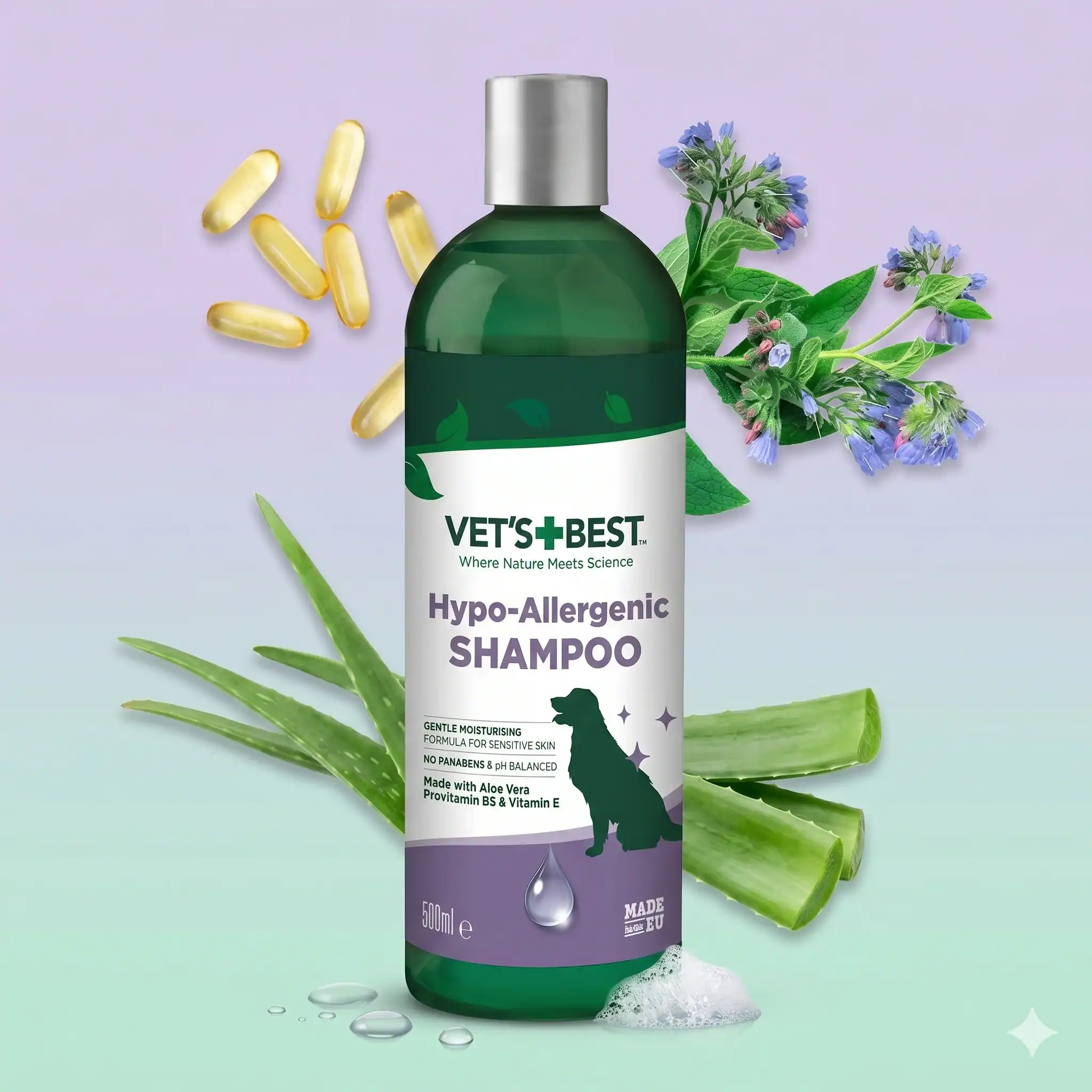
The home environment matters just as much. Many allergy sufferers find it helps to keep the dog out of the bedroom, use a vacuum and air purifier with a HEPA filter, wash dog bedding often, and wash their own hands after petting. None of this removes allergen completely, but together these habits can make life with a dog far more comfortable for a sensitive household.
A Note From My Own Dogs
💭 Personal Observation
I have always lived with heavy-shedding dogs rather than the low-allergen breeds on this list, and the difference in dander is something you really notice. My Labrador Bruno left a fine layer of hair and skin flakes on every surface, and a visitor with dog allergies could tell within minutes of walking in the door.
What it taught me is how much grooming changes the picture. On the days I brushed Bruno well and kept his bedding clean, the house felt noticeably less dusty, and guests reacted less. A curly or wiry coat that traps that same dander instead of scattering it would have made an even bigger difference. The coat type matters, but the grooming routine behind it matters just as much.
Pros and Cons of Hypoallergenic Dog Breeds
Large hypoallergenic breeds share many of the same rewards and trade-offs. The low-shedding coat that helps with allergies is also the thing that asks the most of an owner, so it helps to weigh both sides.
Pros
- Lower dander and shedding than most large dogs
- Often easier on allergy-prone households
- Less hair around the home and on furniture
- Many are highly intelligent and trainable
- A range of sizes and temperaments to choose from
- Several are loyal, protective family companions
Cons
- No dog is fully allergen-free
- High grooming needs, often professional
- Coats mat quickly if brushing is skipped
- Many are high-energy and need real exercise
- Reactions still vary by individual dog and person
- Several are best for experienced owners
Quick Questions About Hypoallergenic Dogs
Are any large dogs truly hypoallergenic?
No dog is completely hypoallergenic, large or small, since every dog produces allergens in its dander, saliva, and urine. What breeds like the Standard Poodle, Giant Schnauzer, and Portuguese Water Dog offer is a low-shedding coat that releases less dander into the home, which often means fewer symptoms for allergy sufferers. They are lower-allergen, not allergen-free.
What is the largest hypoallergenic dog breed?
The Black Russian Terrier and Giant Schnauzer are among the largest commonly listed hypoallergenic breeds, both big, powerful guardians with low-shedding coats. The Bouvier des Flandres and Standard Poodle are close behind. All need committed grooming to keep their dander-trapping coats doing their job.
Why do hypoallergenic dogs still cause some reactions?
Because the allergen is in dander and saliva, not just hair. Even a dog that does not shed much produces dander and licks its coat, leaving allergen behind, so a sensitive person can still react. The breeds that shed the least simply spread less of it around, which reduces but does not remove the trigger.
Do hypoallergenic dogs need more grooming?
Usually yes. The curly, wiry, and single-layer coats that make these breeds low-shedding also mat easily and need frequent brushing plus regular professional trims. That grooming is not just cosmetic, since it removes the trapped dander and loose hair, so keeping up with it is part of how these dogs stay easier on allergies.
Editorial Disclaimer: This article is for informational and educational purposes only. It does not constitute veterinary or medical advice, diagnosis, or treatment recommendations. Always consult a licensed veterinarian or allergist before making decisions about your pet or your health.
Accuracy Notice: No dog breed is fully hypoallergenic, and individual reactions vary. This list reflects breeds widely recognized as lower-allergen and is not a strict ranking. If you spot a factual error or have updated information from a verified source, please contact us so we can review and update.
Product Disclosure: Product recommendations are based on independent research and editorial judgment. Individual results may vary. K9Sphere participates in the Amazon Services LLC Associates Program and other affiliate programs, and earns from qualifying purchases at no additional cost to you.
Last reviewed: June 2026. Article reviewed for accuracy on the date shown above.


