

Plenty of people want a big dog without the drifts of fur on the furniture, and a handful of big dogs that don’t shed much come close to delivering it. Where heavy-coated breeds shed a lot and leave dog hair across the house, these breeds carry curly, wiry, or single-layered coats that drop very little hair, which makes them favorites with allergy sufferers and tidy households alike. This guide highlights ten large dog breeds that don’t shed much and explains what life with each one is really like.
One honest point up front. No dog is truly non-shedding, since every dog loses some hair and skin dander. What these breeds share is a coat that sheds so little it ends up on your floors much less often, usually in exchange for regular grooming and coat maintenance. For the right owner, that can mean minimal loose hair around the home, even if the dog itself is not low-maintenance. This list is ordered roughly by how clean a coat each breed keeps, not as a strict ranking.
💡 Low-Shedding Does Not Mean Low-Maintenance
The breeds that shed the least almost always need the most grooming. Curly and wiry coats trap loose hair instead of dropping it, so that hair has to be brushed and clipped out instead. Expect regular brushing at home and a trip to a professional groomer every few weeks for most dogs on this list.
10 Large Dog Breeds That Don’t Shed Much
There is no official ranking, so this is a curated list of well-known big dogs that keep a clean coat, not a strict order. These are among the breeds that lose the least hair at the larger end of the size scale.
Each one trades heavy shedding for grooming, and they differ widely in energy and temperament, so none is truly low-maintenance.
1. Standard Poodle
The Standard Poodle is the breed most people picture first when they think of a large dog that does not shed much. Its dense, curly single coat sheds very little, since loose hairs are caught in the curls rather than dropped, which is why Poodles sit behind so many of today’s popular crossbreeds.
Beyond the coat, the Standard Poodle is one of the most intelligent dog breeds there is, athletic and eager to work. That coat needs regular brushing and a salon clip every four to six weeks, and the dog itself needs real daily exercise and mental challenge.
2. Giant Schnauzer
The Giant Schnauzer is often called the biggest dog that does not shed much, a powerful working breed with a harsh, wiry coat that sheds lightly when properly maintained. Originally bred in Germany to drive cattle and guard property, it pairs that low-shedding coat with serious size and presence.
This is a bold, loyal, and highly trainable dog, but its guarding drive and high energy demand an experienced owner. It is the largest of the three schnauzer breeds, above the Standard Schnauzer and the smaller Miniature Schnauzer, and like them its coat needs regular brushing and hand-stripping or clipping, with plenty of daily exercise and a job to stay balanced.
3. Airedale Terrier
Known as the King of Terriers, the Airedale is the largest terrier breed of all, one of the terrier dog breeds with a dense, wiry coat that sheds very lightly. Bred in Yorkshire to hunt and work, it combines terrier boldness with a size that makes it a capable all-round companion and watchdog.
Airedales are energetic, clever, and a little headstrong, so they do best with active owners and consistent training. Their coat sheds little but needs regular brushing and hand-stripping or clipping to keep its texture and stay tidy.
4. Afghan Hound
The Afghan Hound surprises people, since that long, flowing, silky coat actually sheds very little. An ancient sighthound built for speed across rough country, it pairs an elegant look with an aloof, independent personality.
The trade-off is upkeep. That glamorous coat needs frequent bathing and careful brushing to prevent mats, so the Afghan sheds little but asks for real grooming time. As one of the sighthounds among the hound dog breeds, it also needs secure space to run and a soft, patient approach to training.
5. Saluki
One of the oldest breeds in the world, the Saluki is a tall, elegant sighthound once prized by nomadic tribes across the Fertile Crescent. Its smooth, silky coat is short and fine, sheds very little, and needs only occasional brushing, which makes it one of the lowest-maintenance coats on this list.
Salukis are gentle, reserved, and deeply attached to their family, with a quiet dignity that sets them apart. As a sighthound built for speed, the Saluki needs secure space to run and a soft, patient approach to training, and it tends to do best with calmer, older children.
6. Komondor
The Komondor is the most distinctive dog on this list, a large Hungarian livestock guardian famous for its long, white, corded coat that looks like dreadlocks. That coat drops very little loose hair, since the dead hairs lock into the cords rather than falling out, which is why the breed is often listed among large dogs that shed little.
The trade-off is unusually demanding care. The cords must be separated by hand rather than brushed, and the breed is slow to dry after bathing, so this is low shedding paired with high upkeep. The Komondor is also not considered hypoallergenic, and as a powerful, independent guardian it suits experienced owners with space rather than first-time homes.
7. Bouvier des Flandres
The Bouvier des Flandres is a large, powerfully built breed from the farmlands of Belgium and France, one of the bigger herding dog breeds still kept as a guardian. Its thick, tousled double coat sheds minimally but is dense enough that it mats easily, so the low shedding comes at the cost of steady upkeep.
Calm, loyal, and protective, the Bouvier is an even-tempered family dog that still needs early training and firm guidance for its size. Plan on thorough brushing several times a week and regular salon visits to keep that coat in order.
8. Portuguese Water Dog
The Portuguese Water Dog was bred to work alongside fishermen, herding fish into nets and retrieving gear from the water. It sits at the smaller, medium-to-large end of this list rather than being a true giant, but it earns its place on coat alone. Its waterproof, low-shedding coat comes in tight curls or loose waves, and like the Poodle it keeps most loose hair in the coat rather than on your floor.
Athletic, smart, and affectionate, this is an active mid-to-large breed that loves swimming and needs a lot of exercise, with roots among the water-retrieving sporting dog breeds. Its coat does not shed much but grows continuously, so regular brushing and clipping are part of the routine.
9. Irish Water Spaniel
The tallest of the spaniels, the Irish Water Spaniel wears a coat of dense, waterproof curls with a distinctive smooth “rat tail.” That curly single coat sheds little and needs less clipping than a Poodle, which makes it a lower-fuss low-shedding option among the larger breeds.
Bred as a water retriever, this is a playful, clever, and energetic dog that loves swimming and active play. Brushing a few times a week keeps the curls free of mats, with occasional trimming to maintain its shape.
10. Black Russian Terrier
The Black Russian Terrier is one of the largest breeds on this list, a powerful guardian developed by the Soviet military in the mid-twentieth century. Its coarse, slightly tousled double coat is low-shedding and weatherproof, built for hard work in cold conditions, though it can still shed a little, especially seasonally, so it is best thought of as low-shedding rather than non-shedding.
Confident, calm, and intensely loyal to its family, this breed is protective by nature and needs early socialization and an experienced owner. The dense coat needs regular brushing and grooming to prevent matting.
Why Some Big Dogs Shed So Little
Shedding comes down to the coat. Heavy shedders tend to have a thick undercoat that they blow out in clumps, while the breeds here are mostly single-coated with no heavy undercoat, or curly and wiry types that hold loose hairs until they are brushed out. The hair still falls out, it just stays in the coat instead of on your sofa, which is what gives these dogs their low-shedding reputation.
It is worth separating two ideas that often get mixed up. Low-shedding describes how much loose hair a dog drops, while hypoallergenic refers to how much allergy-triggering dander and saliva protein it spreads. Many people start their search with the phrase hypoallergenic dog breed, but every dog still produces some dander, so anyone sensitive should spend time around a breed before committing.
More Low-Shedding Breeds Worth Considering
Beyond the main ten, a few other large and medium breeds also keep a notably clean coat and deserve a place in the conversation. The Briard is a large French herding dog with a long, low-shedding coat, while the Bergamasco Sheepdog is a medium-to-large Italian sheepdog whose unusual flocked coat sheds very little once it matures.
The Spanish Water Dog, sometimes called the perro de agua español, and the Barbet are curly-coated water breeds in a similar mould to the Portuguese Water Dog, and the Soft Coated Wheaten Terrier is a medium relative with a soft, low-shedding coat.
On the smaller end, the Lagotto Romagnolo and the Wirehaired Pointing Griffon both carry low-shedding coats and often appear on hypoallergenic lists, even if they sit just under the large-breed mark. The hairless Xoloitzcuintli is another allergy-friendly option for people who want the least coat possible. Some of these are large fluffy dogs that don’t shed in the visual sense, while others are sleek, but any can suit an allergy-friendly home, and as always, no coat is completely shed-free.
Choosing a Low-Shedding Large Breed
Match the dog to your life, not just your floors. The Standard Poodle is among the most intelligent and trainable of these breeds, while the Giant Schnauzer, Komondor, and Black Russian Terrier work as guardians for experienced homes. As powerful working dog breeds, the Portuguese Water Dog and Bouvier des Flandres bring serious energy, and the calmer Afghan Hound and Saluki sit at the independent sighthound end.
Family fit matters too. Several make good choices for families, with the Poodle and Portuguese Water Dog often cited as reliable around kids and more family-friendly in the right home. First-time owners should lean toward the more biddable breeds, since the guardians here are powerful and strong-willed. None suits apartment life without plenty of daily exercise.
Then be honest about grooming. Every breed here trades shedding for coat care, so factor in regular brushing at home plus a groomer every few weeks, and the time or budget that takes. If you have allergies, arrange to spend time with the breed first, since reactions vary from person to person and dog to dog.
Grooming and Coat Care
Veterinary Disclaimer: The information in this article is for educational purposes only and is not a substitute for professional veterinary advice. K9Sphere’s authors are experienced dog owners, not licensed veterinarians. Always consult a qualified DVM regarding any concerns about your pet.
The large dog grooming requirements for these breeds come down to one golden rule, that low shedding means high grooming. The large dog coat types here, curly, wiry, corded, and silky, all hold loose hair instead of dropping it, so that hair has to be brushed out regularly or it forms mats against the skin. In other words, the coat may leave only a minimal mess around the house, but the maintenance still has to happen somewhere.
Frequency varies a lot by coat type, from the simple weekly brushing a smooth-coated Saluki needs to the painstaking hand-cording of a Komondor. Many breeds here need brushing several times a week and a professional groom every few weeks, and the right brush makes the home routine far easier. Our guide to the best brushes for shedding dogs covers tools that suit these coat types.
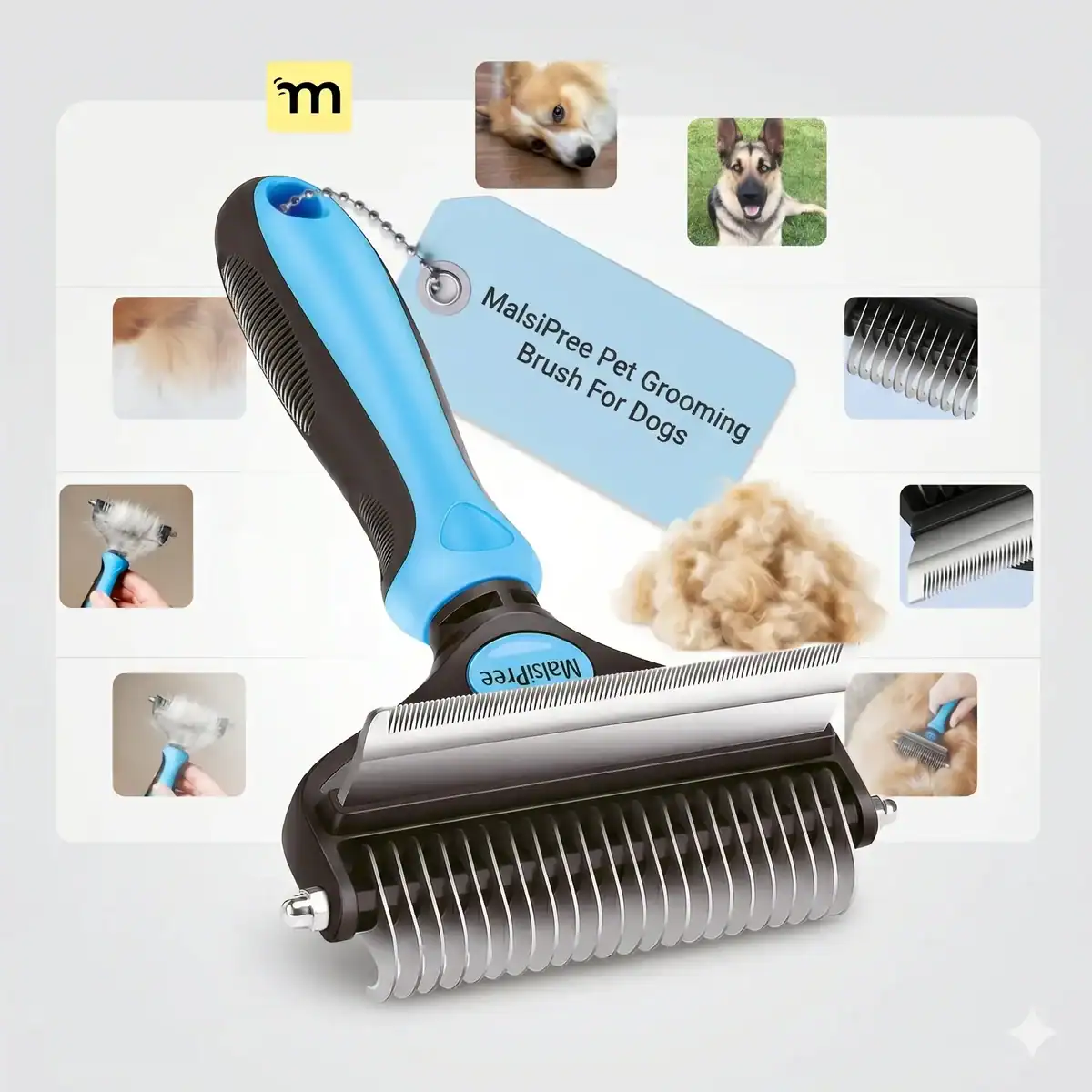
Beyond brushing, these breeds need routine bathing to keep the coat clean and free of doggy smell, plus ear checks and nail trims like any dog, and the single-coated breeds feel the cold more than heavy double-coated dogs. Health varies by breed, since several of these dogs have their own known concerns, such as hip dysplasia and bloat in the larger breeds and heart and thyroid issues in the Saluki. Ask breeders about health testing for the issues common to each breed, and keep up regular veterinary care.
A Note From My Own Dogs
💭 Personal Observation
I have always lived with heavy shedders, so I know the daily reality these breeds let you avoid. My Labrador Bruno drops so much hair that brushing him is a near-daily job, and during a heavy shed the loose undercoat seems to find every corner of the house. A low-shedding coat genuinely changes that, but I always tell people it swaps one chore for another.
The hair that does not land on your floor is still being produced. It stays in the coat, which is exactly why these breeds need such steady brushing and clipping. If you skip it, a low-shedding curly coat mats quickly and tightly, and that is harder on the dog than a bit of shed hair ever was. The trade is real, just not the trade most people expect.
Pros and Cons of Low-Shedding Large Breeds
These breeds vary widely in size and temperament, but they share a familiar set of upsides and trade-offs. The key thing to understand is that low shedding does not mean low effort. Because the loose hair stays in the coat instead of dropping, you brush and clip it out yourself, so the floors stay clean but the grooming work goes up.
Pros
- Very little loose hair around the home
- Often a good fit for allergy sufferers
- Many are highly intelligent and trainable
- A big-dog presence without the fur
- Several double as alert watchdogs
- Long lifespans in several of these breeds
Cons
- Low shedding is traded for higher grooming and clipping time
- Coats mat quickly if brushing is skipped
- Many are large, high-energy working breeds
- No dog is truly non-shedding or fully allergen-free
- Some are best suited to experienced owners
- Rarer breeds can be harder to find and pricier
Quick Questions About Low-Shedding Dogs
What is the largest dog breed that doesn’t shed?
The Giant Schnauzer and Black Russian Terrier are among the largest low-shedding dog breeds, both topping out well over 80 pounds. The Standard Poodle and Bouvier des Flandres are close behind, and all four are widely available in many areas.
Do any dogs truly not shed at all?
No. Every dog sheds some hair and produces dander, so no breed is completely non-shedding or allergen-free. The breeds on this list shed so little that the hair mostly stays in the coat, which is very different from never shedding at all.
Are low-shedding dogs good for allergies?
They often help, since less loose hair usually means fewer airborne allergens, which is why these breeds appeal to allergy sufferers. How much they affect each person still varies, though. Allergies respond to dander and saliva proteins as well as hair, so anyone sensitive should spend time around a specific dog before bringing one home.
Which large dog sheds the least?
The Standard Poodle and Portuguese Water Dog are often named near the top, since their curly single coats trap most of the loose hair. Both are also intelligent and easy to train, and many adults weigh around 50 pounds or more depending on sex and build. Even so, neither is low-maintenance, since the clean coat is traded for steady grooming.
Do low-shedding dogs need more grooming?
Usually yes. The same coats that hold loose hair instead of dropping it also mat easily, so they need regular brushing at home and a groomer every few weeks. Low shedding almost always trades floor cleanup for coat maintenance.
Affiliate Disclosure: K9Sphere is a participant in the Amazon Services LLC Associates Program and other affiliate programs. As an Amazon Associate, and through other affiliate links, K9Sphere earns from qualifying purchases made through links in this article at no additional cost to you. Product recommendations are based on independent research and editorial judgment, not paid placement.
Editorial Disclaimer: This article is for informational and educational purposes only. It does not constitute veterinary advice, medical diagnosis, or treatment recommendations. Always consult a licensed veterinarian before making health-related decisions for your pet.
Accuracy Notice: While every effort has been made to ensure the information presented here is accurate and current, breed information evolves and individual dogs vary, and no dog is fully non-shedding or allergen-free. If you spot a factual error or have updated information from a verified source, please contact us so we can review and update.
Product Disclosure: Product recommendations are based on independent research and editorial judgment. Individual results may vary. K9Sphere participates in the Amazon Services LLC Associates Program and other affiliate programs, and earns from qualifying purchases at no additional cost to you.
Last reviewed: June 2026. Article reviewed for accuracy on the date shown above.


