
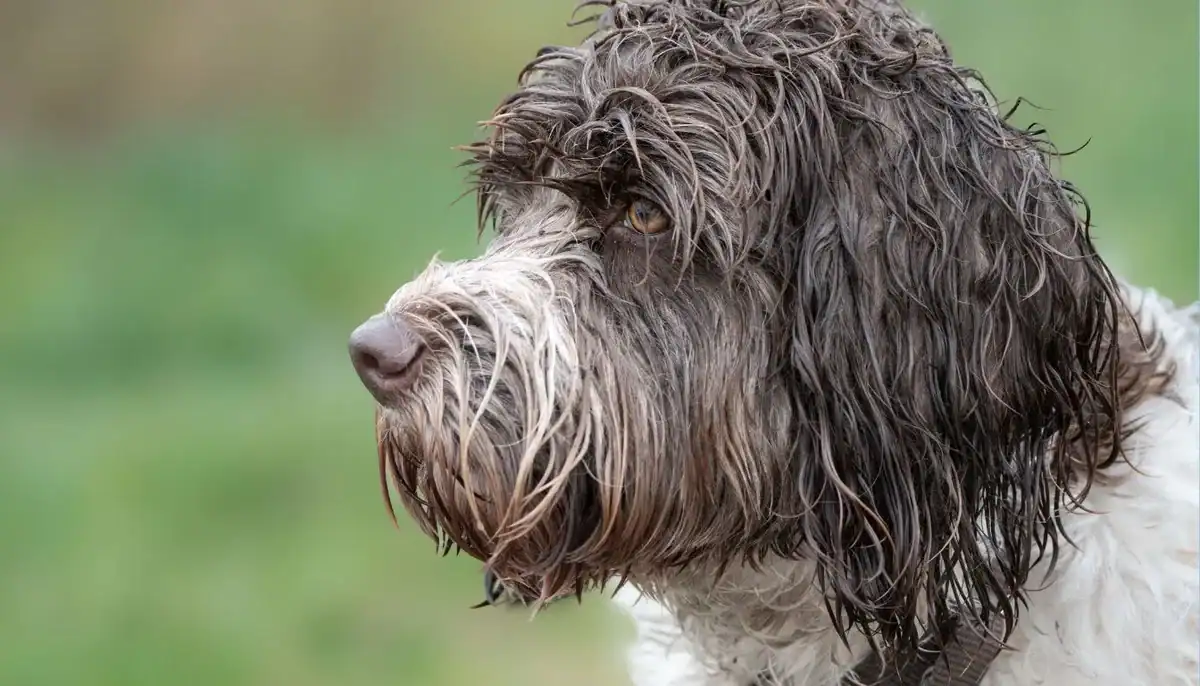
The Portuguese Water Dog is an energetic working breed developed centuries ago along the coast of Portugal to assist local fishing crews. According to breed tradition, these dogs helped guide fish toward nets and carried items between boats and shore.
What makes this seafaring companion stand out is the combination of an athletic medium frame and a keenly intelligent personality. A healthy adult dog has webbed feet and a thick waterproof coat that makes it a capable, willing swimmer. They form tight bonds with their family and thrive when given complex jobs to perform.
This article draws on breed standards from the American Kennel Club and health data from the Portuguese Water Dog Club of America. Reviewing accurate dog breed information is the best way to prepare for the reality of living with a vigorous canine athlete.
Everyday commitments include rigorous workouts, structured obedience work, and consistent grooming routines. The breed rewards owners who match its energy with a deeply loyal partner that loves to join in every household activity.
Households without time for a very active dog should review these demands honestly before deciding. A dog bred to spend its days working on a boat needs an owner ready to provide serious mental and physical work on land.
Affiliate Disclosure: K9Sphere participates in the Amazon Services LLC Associates Program and other affiliate programs. K9Sphere earns from qualifying purchases made through links in this article at no additional cost to you. Product recommendations are based on independent research and editorial judgment, not paid placement.
Breed Snapshot
📊 Vitals and Lifespan
Height
Males: 20 to 23 in (51 to 58 cm)
Females: 17 to 21 in (43 to 53 cm)
Weight
Males: 42 to 60 lb (19 to 27 kg)
Females: 35 to 50 lb (16 to 23 kg)
Lifespan
11 to 13 years
Breed Group
Working Group (AKC)
Origin
Portugal
🇵🇹
⭐ Personality Traits
Ratings (1 to 5). This water-loving athlete balances deep affection with serious workout and grooming demands. A top grooming score reflects the demanding coat, not a flaw.
History and Origin
The history of the Portuguese Water Dog reflects a remarkable survival story. The breed dates back centuries to the rugged coastline of Portugal. These robust animals served as essential crew members on fishing boats.
📌 1500s: The Fishermen’s Companion
Historical records note these dogs working alongside Portuguese fishermen to push fish toward nets and retrieve lost tackle. They were prized working dogs that helped guard the catch when the boats returned to port.
📌 1970s: Nearing Extinction
Modern fishing technology replaced traditional methods, and the breed nearly vanished. A small group of breed enthusiasts in Portugal and the US worked diligently to save the remaining dogs and rebuild the population slowly.
📌 1983 onward: Recognition and Fame
The AKC recognized the breed in 1983, and it joined the Working Group the following year. Popularity grew further in 2009 when President Obama brought home a puppy named Bo, a gift from Senator Ted Kennedy. A second dog, Sunny, joined in 2013.
Physical Characteristics
The Portuguese Water Dog breed is defined by an athletic medium frame. They carry themselves with strength and a proud posture. The broad head features dark eyes and heart-shaped ears that hang flat.
🎨 The Wavy or Curly Coat
The coat is profuse and lacks an undercoat. It grows continuously and can be either loosely wavy or tightly curly. Many people consider the breed a good option for allergy sufferers because it has a single, low-shedding coat that drops very little loose hair, which is why some describe it as non-shedding. Colors include black, brown, and white, usually with white markings on the chest and paws.
🏗️ Built for Water
They are robust and well-boned for their size. Their webbed feet help make them agile, capable swimmers. The tail acts as a rudder in the water and curls over the back when the dog is alert on land.
Character and Temperament
One thing to know about Portuguese Water Dogs is their intense desire to be involved in everything you do, a defining part of their character. The typical Portuguese Water Dog temperament features keen intelligence and a strong willingness to work.
🛡️ Alert Companion
They are deeply loyal to their family and make capable watchdogs. They will announce strangers with a loud bark but usually warm up quickly once formally introduced. They tend to be quite social when properly conditioned.
🔥 Lively and Spirited
They have a playful, spirited nature that lasts well into their senior years. A bored dog may invent a job, which can mean chewing or digging. They tend to demand real participation from their owner.
💪 Separation Issues
Because they bond so closely with their people, separation anxiety can be a common problem. They prefer to stay near you and may struggle if left isolated outdoors or alone for long hours.
🧠 Quick to Learn
They learn commands rapidly and excel in obedience and agility. They have a moderate chase instinct and tend to coexist peacefully with other pets when raised together, though this varies by dog.
Screening and Conditions
Veterinary Disclaimer: The information in this article is for educational purposes only and is not a substitute for professional veterinary advice, diagnosis, or treatment. K9Sphere’s authors are experienced dog owners, not licensed veterinarians. Always consult a qualified DVM regarding any concerns about your pet. Never disregard professional veterinary advice or delay seeking it because of something you have read on this site.
Health and Breed Information Sources:
- American Kennel Club for breed information and the official standard
- Portuguese Water Dog Club of America for parent-club health guidance
- Orthopedic Foundation for Animals (OFA) for CHIC testing requirements
Always consult your licensed DVM for personalized medical advice.
Good dog health requires annual vet visits plus awareness of specific genetic risks. Reputable breeding programs use DNA testing to avoid producing puppies affected by severe inherited conditions. The parent club maintains an extensive CHIC testing protocol for the breed.
Common Health Risks
🔴 Progressive Retinal Atrophy (PRA)
What to watch for: Night blindness, reluctance to enter dark rooms, and dilated pupils. This group of genetic conditions causes the retina to degenerate and can lead to permanent blindness. The breed has both a prcd-PRA form and an early-onset form (EOPRA).
Screening: DNA tests exist for both prcd-PRA and EOPRA. Breeders should test parent dogs so they do not pair two carriers and risk affected litters.
🔴 GM1 Gangliosidosis
What to watch for: Tremors, loss of coordination, and vision loss in young dogs, typically from around 5 to 6 months of age. This is a fatal inherited storage disease that affects the nervous system.
Screening: A DNA test identifies carriers. Testing breeding stock allows breeders to avoid carrier-to-carrier pairings, which prevents producing affected puppies. Ask to see results for both parents before buying.
🟡 Hip Dysplasia
What to watch for: Stiffness rising from the floor, a bunny-hopping gait, or a noticeable limp after heavy exercise. The hip joint can malform and wear prematurely.
Screening: OFA joint evaluation of both parents is standard practice. Keeping the dog lean reduces ongoing stress on the joints.
🟡 Juvenile Dilated Cardiomyopathy (JDCM)
What to watch for: Lethargy, weakness, or sudden collapse in young puppies. This fatal inherited heart condition usually strikes between about 5 weeks and 7 months of age.
Screening: A linked-marker DNA test, available through PennGen, helps breeders identify carriers and avoid risky pairings.

Nutramax Dasuquin with MSM Soft Chews
Use for: Ongoing joint support in working dogs. Some owners choose glucosamine and chondroitin supplements to support the joints. Evidence of benefit varies, it is not a treatment or cure for joint disease, so discuss supplementation with your veterinarian.
Check price on AmazonGrooming and Coat Care
The coat needs extensive upkeep. You should comb the hair down to the skin several times a week to prevent painful mats. Because they are a low-shedding breed, dead hair becomes trapped in the curls and can felt into dense mats if ignored.
You need to bathe the dog roughly monthly or whenever they get muddy. A common haircut is the retriever clip, where the hair is cut to an even length all over. The traditional lion clip leaves the front long and trims the hindquarters short, a style that comes from the breed’s fishing heritage.
Professional grooming is usually needed every six to eight weeks. Trim their fast-growing nails regularly and check their ears weekly. The ears can trap moisture after a swim, which creates an environment where infections develop more easily.
Exercise and Living Needs
Many Portuguese Water Dogs love to swim and will jump in at any opportunity, though individual preferences vary. This dog needs genuine daily exertion, and most adults benefit from at least an hour of vigorous running and play. A slow walk around the neighborhood is rarely enough, so provide chances to run, fetch, and engage their minds.
They adapt to different living situations but tend to struggle in small homes unless the owner commits to substantial daily outdoor activity. A securely fenced yard is one of the best environments for them to burn off energy safely.

FurHaven Orthopedic Dog Bed
Use for: Supportive rest for a water-loving athlete. The orthopedic foam cushions hard-working joints after long sessions of swimming and running, giving a busy dog a comfortable place to recover.
Check price on AmazonNutrition & Diet
Feed a quality dog food formulated for working breeds. The diet should contain enough protein to support their muscle mass. Measure the food carefully, since an overweight dog places extra stress on its joints.
Sensible feeding routines may help lower the risk of gastric torsion (bloat). Some owners divide the daily ration into two smaller meals and avoid strenuous movement right after eating, though no single measure fully prevents the condition. Treats are useful training tools but should stay under about ten percent of total calories.
Training
A Portuguese Water Dog puppy tends to learn quickly. Their intelligence means they tend to pick up basic obedience commands quickly, although individual learning speed varies. That same intelligence also means they will notice inconsistencies in your rules right away.
Early socialization is critical. Introduce the puppy to diverse environments, children, and unfamiliar dogs to build a stable adult. Crate training provides a secure resting place and helps with housebreaking.
They respond poorly to harsh physical corrections. Positive reinforcement using tasty treats or toys keeps them engaged. They thrive on variety and can master advanced tricks or agility courses with practice.
Portuguese Water Dog vs Poodle vs Irish Water Spaniel vs Lagotto Romagnolo
Prospective owners evaluating a curly-haired companion often look at these four breeds. A direct comparison helps clarify which dog fits your lifestyle best. Another similar option occasionally considered is the American Water Spaniel.
| Attribute | Portuguese Water Dog | Standard Poodle | Irish Water Spaniel | Lagotto Romagnolo |
|---|---|---|---|---|
| Weight | 35 to 60 lb | 40 to 70 lb | 45 to 68 lb | 24 to 35 lb |
| Original Purpose | Fisherman’s helper | Water retriever | Water retriever | Truffle hunter |
| Energy Type | High, sustained drive | Moderate to high, agile | High, enthusiastic | Moderate to high, busy |
| Trainability | Highly intelligent | Exceptionally sharp | Smart but independent | Eager to please |
| Grooming | High maintenance, clipping | High maintenance, clipping | High maintenance, clipping | High maintenance, clipping |
| Threat Response | Alert watchdog | Alert bark | Alert bark | Alert bark |
| First-Time Owner? | With dedication | Yes | With dedication | Yes |
| Common Health Risks | PRA, GM1, JDCM, hip dysplasia | Bloat, hip dysplasia, eye issues | Hip dysplasia, ear infections | Epilepsy, hip dysplasia, eye issues |
| Living Space | House with yard | House with yard | House with yard | Flexible with exercise |
If you want a dog heavily focused on retrieving and water work, the Irish Water Spaniel is a strong candidate. The Lagotto is significantly smaller and excels in scent work. The Poodle offers exceptional trainability, while the Portuguese breed provides a robust, athletic frame suited to active outdoor families.
Common Questions about the Portuguese Water Dog
Are they good family dogs?
Direct Answer: Yes, they form deep bonds with their family and thrive in active households.
Context: They are playful and generally do well with a kid in the home. However, their exuberance means they can accidentally knock over toddlers during rough play.
Management: Teach children appropriate interaction rules. Make sure the dog is well exercised before expecting it to relax indoors.
How much does a Portuguese Water Dog cost?
Direct Answer: As an approximate, time-sensitive guide, expect a price between USD 2,500 and 4,000 for a well-bred puppy. Prices vary by breeder, location, pedigree, and availability, and rates in the UK, Canada, and Australia differ.
Context: The price reflects the extensive DNA testing required to produce healthy litters. You should also budget for professional grooming every six to eight weeks.
Management: Be cautious of bargain puppies online, since unscreened genetics can lead to serious diseases like GM1 or JDCM.
Do they shed a lot?
Direct Answer: No, they are considered a low-shedding breed.
Context: Instead of dropping hair all over your furniture, the dead hair tends to get caught in the curls. If you do not brush them regularly, the coat can turn into dense felted mats.
Management: Commit to brushing them thoroughly several times a week to keep the skin and coat in good condition.
Are they truly hypoallergenic?
Direct Answer: No dog is completely hypoallergenic, but they are usually tolerated well by allergy sufferers.
Context: Allergies are triggered by dander and saliva, not just hair. Because this breed sheds less, it tends to release less loose, dander-carrying hair into the environment.
Management: Spend time with an adult dog of the breed before bringing a puppy home to test your own allergic response.
Can they live in an apartment?
Direct Answer: It is possible but difficult without a large daily outdoor commitment.
Context: Their abundant energy calls for open space to run, and a bored dog in a small space can develop destructive chewing habits.
Management: This dog does best with an owner who commits to vigorous outdoor exercise regardless of the living space size.
What is their lifespan?
Direct Answer: They typically live between 11 and 13 years.
Context: This is a solid lifespan for a medium working dog. Their senior years depend heavily on keeping them lean and providing steady physical conditioning.
Management: Schedule senior vet exams annually after about age eight to catch emerging issues early.
Are they good for first-time owners?
Direct Answer: They can be, but their sharp intelligence and stamina require real dedication.
Context: A novice owner can feel overwhelmed by the dog’s need for constant mental stimulation and grooming, and these dogs will exploit inconsistent rules.
Management: Enroll in puppy training classes early and establish a consistent routine.
Do they bark a lot?
Direct Answer: They are moderate barkers that alert their owners to changes in the environment.
Context: They will bark at couriers and strange noises, and separation distress can also trigger prolonged vocalization.
Management: Train a “quiet” command early, and make sure they are sufficiently tired to limit boredom-induced nuisance barking.
Do they like other dogs?
Direct Answer: Generally yes, when introduced properly.
Context: Their working background asks them to focus on their handler, but they enjoy playing with other lively dogs. Early socialization shapes their adult behavior.
Management: Expose the puppy to friendly adult dogs in controlled settings regularly during the first year.
Is adopting a Portuguese Water Dog difficult?
Direct Answer: Often yes, since finding one in a shelter is rare.
Context: Dogs that enter the rescue system are often adopted quickly. You will likely need to join a waiting list and go through a thorough vetting process.
Management: Contact the national breed club’s rescue network and be prepared to show that you lead an outdoor lifestyle.
Finding a Puppy
Locating a purebred dog for sale requires patience. Demand remains steady in the USA, and ethical breeding programs prioritize soundness over volume.
🏠 Reputable Breeders
Check the website of the Portuguese Water Dog Club of America to find verified members offering litters. A responsible breeder provides OFA clearances for hips and eyes plus DNA results for prcd-PRA, GM1, and JDCM. They will interview you in detail to ensure you understand the grooming demands.
🐾 Rescue and Adoption
Contact a Portuguese Water Dog adoption group to find adult companions. Taking on an adult lets you bypass the demanding puppy phase and see the fully developed personality. Be prepared to prove you have a training plan and a secure yard.
🚩 Red Flags to Watch For
- No DNA test results provided for the parents.
- Breeders pushing puppies as “easygoing apartment pets.”
- Parents that appear extremely fearful or shy, which can point to temperament concerns.
- Refusal to let you inspect the whelping environment.
Personal Observation
💭 Personal Observation
My rescues split sharply on water. Rambo, my four-year-old, throws himself into any puddle or stream he can find, while Chun Chun avoids water entirely and skirts the edge of a wet yard. A Portuguese Water Dog sits firmly at Rambo’s end of that range, bred for a job that meant spending all day in the sea.
The other thing I have learned is that grooming routines you skip early become almost impossible later. With a heavy, continuously growing coat like this breed’s, the habit you build in year one is the one you live with for a decade. If your last dog was a couch potato, expect a real adjustment.
Conclusion
The Portuguese Water Dog offers remarkable enthusiasm and loyalty to handlers capable of managing its intensity. In our view, the clear pro is gaining a brilliant partner ready for almost any physical or mental challenge.
The con is managing a dog that can turn destructive if its outlet needs are ignored, combined with demanding grooming. If you lack the time for extensive training or prefer a relaxed house pet, consider a calmer breed. For energetic owners seeking a water-loving athlete, this one delivers.
📋 Before bringing one home, run this 4-step pre-buying check
- Exercise commitment. Can you provide an hour of vigorous running or swimming every day?
- Grooming reality. Are you prepared to pay for professional clipping and groom the coat frequently?
- Time and training. Do you have the schedule to manage a dog prone to separation distress?
- Living space fit. Do you have access to secure outdoor space for off-leash play?
If any answer is no, reconsider the breed.
Editorial Disclaimer: This article is for informational and educational purposes only. It does not constitute veterinary advice, medical diagnosis, or treatment recommendations. Always consult a licensed veterinarian before making health-related decisions for your pet.
Accuracy Notice: While every effort has been made to ensure the information presented here is accurate and current, breed information evolves and individual dogs vary. If you spot a factual error or have updated information from a verified source, please contact us so we can review and update.
Product Disclosure: Product recommendations are based on independent research and editorial judgment. Individual results may vary. K9Sphere participates in the Amazon Services LLC Associates Program and other affiliate programs, and earns from qualifying purchases at no additional cost to you.
Last reviewed: June 2026. Article reviewed for accuracy on the date shown above.


