
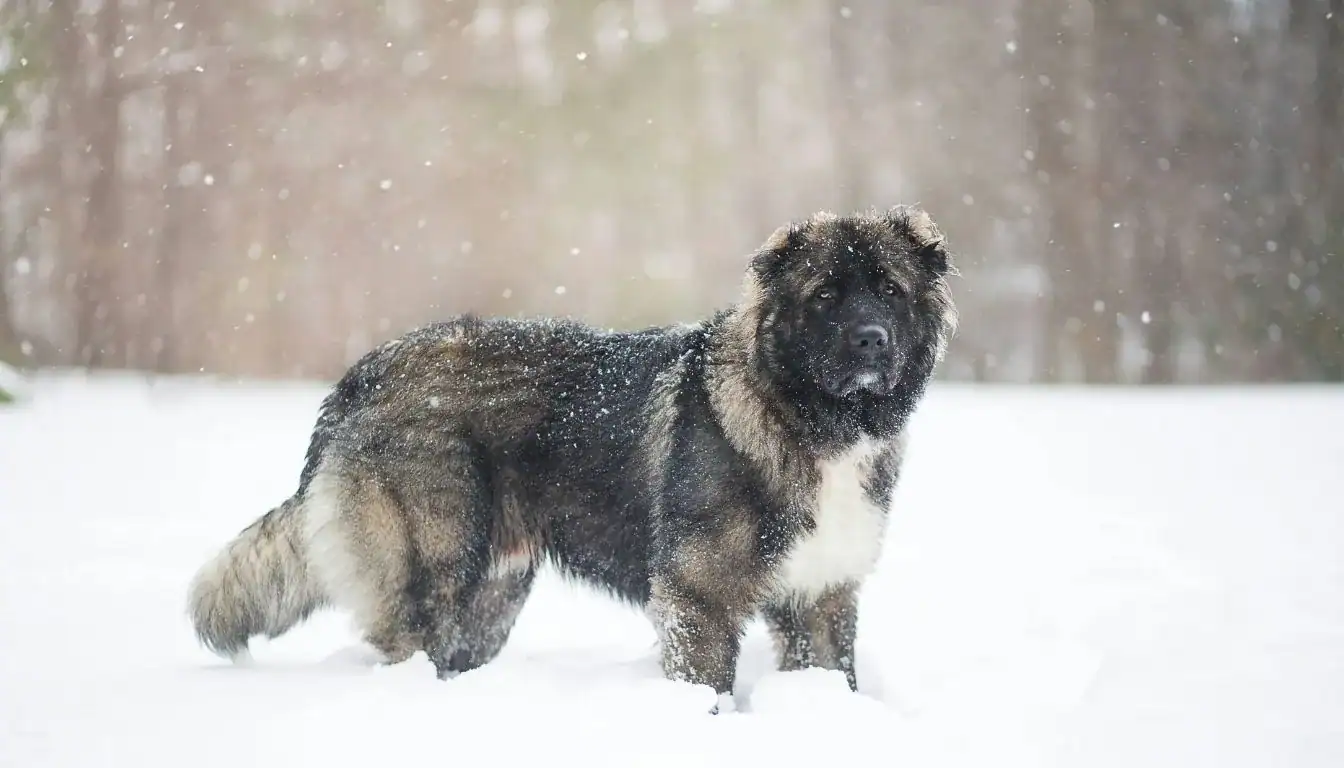
Everything about coexisting with a Caucasian Shepherd Dog, one of the largest livestock guardian breeds still in active use (also called the Caucasian Mountain Dog, Russian Bear Dog, or simply Ovcharka), must be measured in square footage, fence height, and veterinary emergency budgets.
From doorways too narrow for their frame to furniture that buckles under 150 pounds of sleeping muscle, this big dog physically reshapes your home. It ranks among the most imposing guard dog breeds in existence.
Developed over centuries to guard livestock in the predator-heavy Caucasus mountains, they carry a suspicion of strangers that runs deep and tends to persist even with dedicated socialization. They tolerate unfamiliar people at best. They rarely welcome them.
This guide draws on orthopedic data from the OFA and standards from the FCI to shape the screening, temperament, and care guidance throughout. The goal is an honest picture of what owning one actually involves, not a sales pitch.
The Caucasian Shepherd is also written as the Caucasian Ovcharka or Caucasian Ovtcharka in FCI countries, and is sometimes called the Caucasian Sheepdog. It remains in the AKC Foundation Stock Service program rather than full recognition, which means finding a responsible source with documented screening results takes extra diligence compared with mainstream working lines.
While their devotion to the household is absolute, their extreme territorial drive and sheer physical power are routinely underestimated by people who have only owned standard companion dogs. This is a guardian dog that rewards seasoned handlers and punishes the unprepared.
Affiliate Disclosure: K9Sphere participates in the Amazon Services LLC Associates Program and other affiliate programs. K9Sphere earns from qualifying purchases made through links in this article at no additional cost to you. Product recommendations are based on independent research and editorial judgment, not paid placement.
Breed Snapshot
📊 Vitals and Lifespan
Height
26 to 30 in (66 to 76 cm)
Weight
100 to 170 lb (45 to 77 kg)
Lifespan
10 to 12 years
Breed Group
Guardian (FCI Group 2; AKC FSS)
Origin
Caucasus Region
🇬🇪 🇷🇺 🇦🇲
⭐ Personality Traits
Ratings (1 to 5). This giant combines immense physical power with a deeply independent mind. A low trainability or friendliness score does not mean a bad dog; it reflects an animal built to think and act on its own, not to please strangers.
History and Origin
The Caucasian Shepherd Dog is one of the oldest livestock guardian breeds still in active use. Its roots trace back over 2,000 years to the mountainous regions spanning modern-day Georgia, Armenia, Azerbaijan, and southern Russia.
📌 Ancient Origins (2,000+ Years Ago)
Shepherds across the Caucasus mountains developed large, powerful guardians to protect flocks from wolves, bears, and human raiders. Natural selection in freezing, high-altitude terrain produced a dog with extreme cold tolerance, thick protective skin around the neck, and an instinct to make independent threat-assessment decisions.
📌 Soviet Era (1920s to 1980s)
The Soviet state recognized the breed’s guarding potential and began a formal program. These dogs were used as prison and facility guards, border patrol animals, and military sentries. That breeding focus emphasized size, boldness, and cold tolerance above most other traits.
📌 FCI Recognition (1984)
The Fédération Cynologique Internationale recognized the breed under Group 2 (Molossoid and mountain types). This established the first international standard for type, temperament, and structure.
📌 Western Expansion (2000s to Present)
The breed reached North America and Western Europe mainly through imports from Russia and Georgia. The AKC placed it in the Foundation Stock Service, the first step toward possible full recognition, though responsible sources remain limited outside Eastern Europe.
That history explains the character. These were not dogs bred to follow commands and please people. They were bred to patrol vast territory alone, weigh threats independently, and confront predators without waiting for permission. Many historians count them among the most formidable protectors ever developed.
Physical Characteristics
🏗️ Size and Build
A male frequently reaches 30 inches (76 cm) at the shoulder and weighs between 110 and 170 pounds (50 to 77 kg). Females are slightly smaller but still massive. The frame is heavy-boned and muscular, built for raw power rather than speed: a wide chest for lung capacity at altitude, thick limbs for stability on uneven ground, and a low center of gravity for grappling with predators.
🎨 Coat and Color
They carry a remarkably thick double coat designed to repel snow and freezing rain, rivaling the weather protection seen on breeds like the Alaskan Malamute. The standard allows several colors including gray, fawn, brindle, and white, often with a dark facial mask. The head is massive, with powerful jaws and dark, deeply set eyes that constantly scan the surroundings.
📏 Built for Battle
The thick skin and heavy ruff around the neck historically shielded these dogs from the bites of wolves during territorial clashes. In some working regions, ears were traditionally cropped for the same protective reason, though this is a regional practice rather than a breed trait, and its legality varies by country.
Character and Temperament
The Caucasian Shepherd is a serious, uncompromising protector. They bond fiercely with their immediate family but view outsiders with intense suspicion. They are not aggressive dogs looking for confrontation; they are defensive by nature and prefer to warn off a threat with a deep, resonating bark before escalating. Without proper handling, though, that defensiveness can turn genuinely dangerous.
🛡️ Territorial Instinct
If you have frequent visitors or a busy household with regular foot traffic, this breed will struggle. They naturally assume that anyone outside the core group is a potential threat that needs monitoring.
⚖️ Independent Decision-Making
Unlike herding breeds that look to their owner for instructions, livestock guardians make their own tactical calls. If they perceive danger, they act on their own assessment rather than waiting for a command.
👨👩👧 Family Loyalty
With their own people they can be surprisingly gentle and affectionate, and many do well as companions in the right home. They often form especially close bonds with the children they live with, positioning themselves between the child and any perceived outside threat.
🌙 Nocturnal Alertness
Their guarding instinct peaks at night. They grow more vigilant and vocal after dark, which makes them a very different dog after sunset and can create real noise issues in suburban or semi-rural settings.
A well-socialized dog exposed to structured environments from puppyhood is a very different animal from one raised in isolation. This breed is not suited to everyone, and living with one responsibly means accepting that socialization is a lifelong commitment, not a phase that ends at twelve months.
Screening and Conditions
Veterinary Disclaimer: The information in this article is for educational purposes only and is not a substitute for professional veterinary advice, diagnosis, or treatment. K9Sphere’s authors are experienced dog owners, not licensed veterinarians. Always consult a qualified DVM for any concerns about your dog.
Health and Breed Information Sources:
- OFA (Orthopedic Foundation for Animals) for recommended screening protocols for giant breeds
- FCI for the official breed standard and structure guidance
- AKC for Foundation Stock Service breed information
Always consult your licensed DVM for personalized medical advice.
Overall health in the Caucasian Shepherd is shaped heavily by skeletal load. Moving a 150-pound frame places immense stress on the joints, and the largest breeds carry distinct medical risks to budget for from day one.
Common Health Risks
🔴 Hip and Elbow Dysplasia
What to watch for: Hip and elbow dysplasia are primary concerns. When the joint forms improperly, the resulting bone-on-bone friction causes painful arthritis and severely limits mobility. Surgical correction for advanced cases can run into thousands of dollars. Starting a quality hip and joint supplement early can help support cartilage before visible symptoms appear.
Screening: Strict OFA evaluation of both parents before breeding is the most effective prevention.
🔴 Gastric Dilatation-Volvulus (Bloat)
What to watch for: Like many deep-chested breeds, they are highly susceptible to bloat, where the stomach fills with gas and twists on its axis, cutting off blood supply to vital organs.
Management: This is a life-threatening emergency that calls for immediate veterinary care. Feed two or three smaller meals rather than one large bowl, and avoid hard activity for an hour before and after eating.
🟡 Obesity and Cardiac Stress
What to watch for: Even ten extra pounds put unnecessary strain on already vulnerable joints and on the cardiac system. Giant breeds tend to have shorter lifespans partly because the heart works harder to supply a larger body.
Management: Strict weight control is not optional with this breed; keep them lean their whole life.
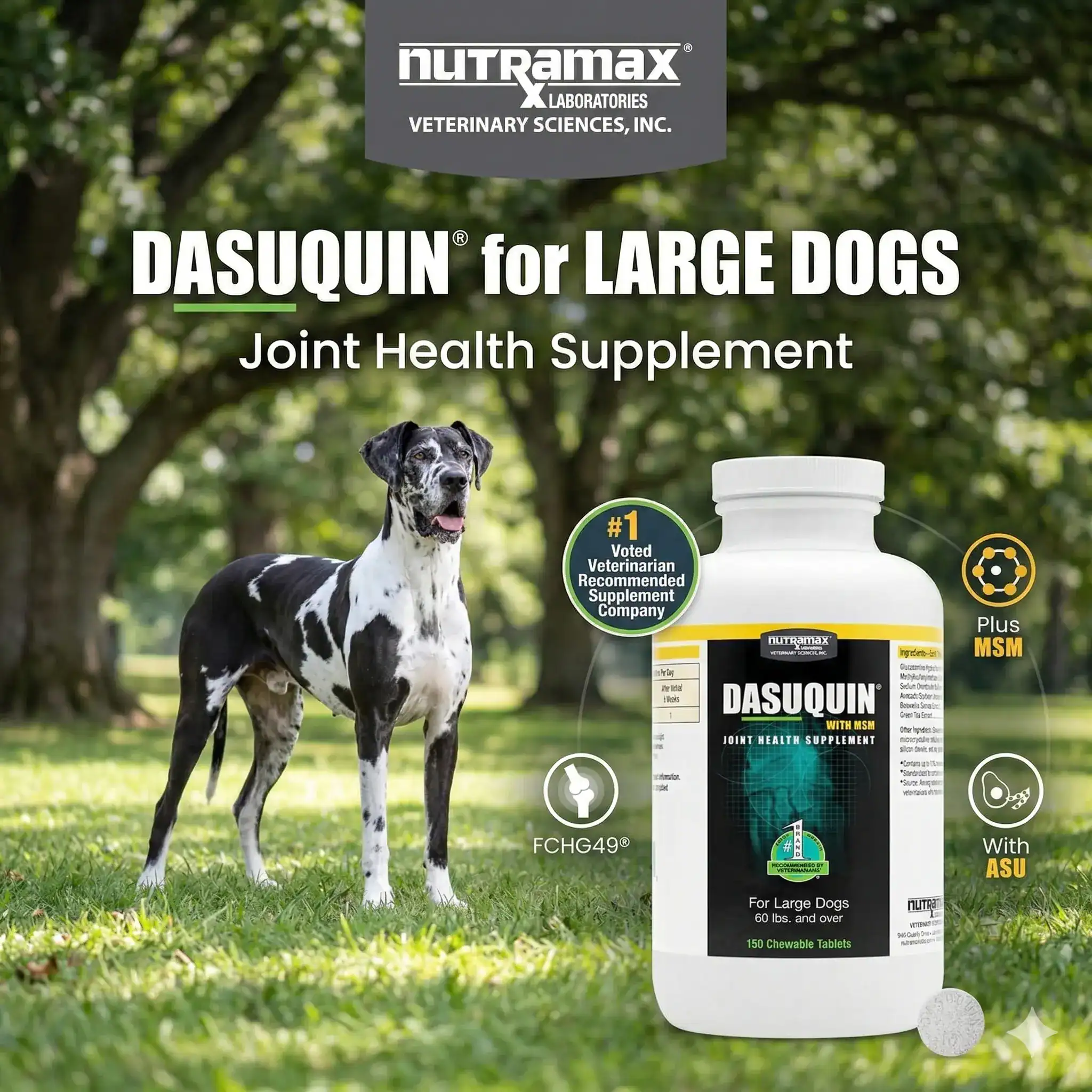
Nutramax Dasuquin with MSM Soft Chews for Large Dogs
Use for: Supporting skeletal health in a large breed prone to hip and elbow dysplasia. Glucosamine, chondroitin, and MSM supply cartilage building blocks that help heavy-boned dogs carrying significant structural load stay mobile. Consult your veterinarian before starting any supplement.
Check price on AmazonA supportive resting surface matters at this size. An orthopedic dog bed helps spread their weight evenly, reducing pressure sores and the overnight stiffness that worsens arthritis over time.
Grooming and Coat Care
The coat on a Caucasian Shepherd is a high-maintenance commitment. They shed steadily throughout the year and blow their coat heavily twice annually. During those seasonal transitions, clumps of undercoat come out in handfuls.
Plan on brushing at least twice a week to keep the dense undercoat from matting into solid pads against the skin. During a blowout, daily sessions become mandatory. Pairing weekly upkeep with one of the best brushes for shedding dogs keeps the loose fur under control.
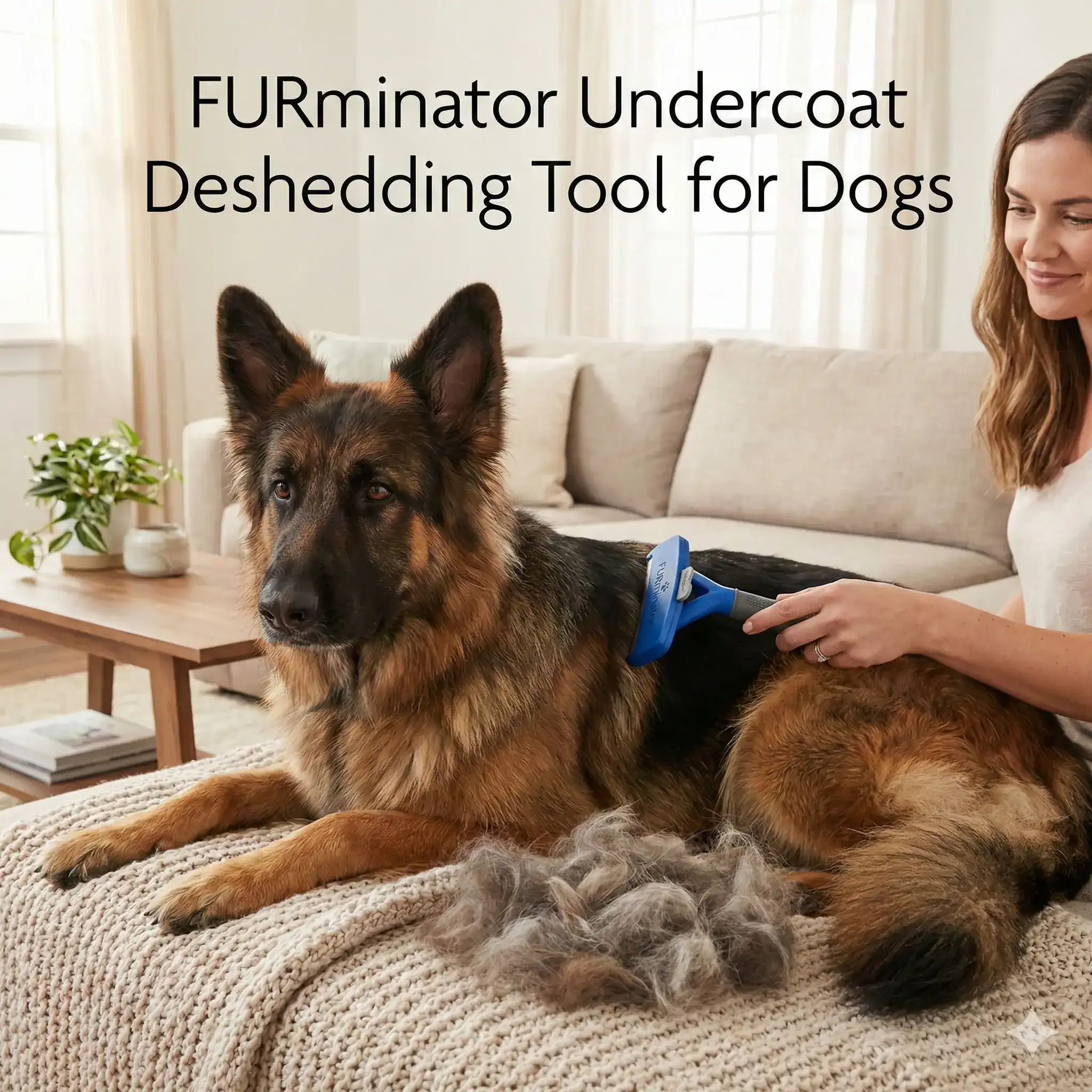
FURminator Undercoat Deshedding Tool for Dogs
Use for: Pulling loose undercoat and dead hair before it covers every surface in your home. Built for heavy double-coated breeds, it reaches through the topcoat to lift the dense undercoat during seasonal blowouts without damaging the guard hairs.
Check price on AmazonBathe them only occasionally, since the weatherproof coat sheds dirt on its own and frequent washing strips its protective oils. Keeping the ears clean and dry takes attention at least once a week, because the heavy fur around the head traps moisture and creates a warm environment where yeast infections develop quickly if neglected.
Exercise and Living Needs
They are not hyperactive dogs that crave hours of running. They operate on bursts of vigilance, conserving energy until there is something to patrol or respond to. They are not high-endurance athletes like herding breeds, but they still need regular daily exercise and mental engagement: a solid daily walk plus secure space to roam their territory is usually enough.
A tall, robust fence is essential. Most owners and breeders recommend a solid fence of at least six feet. An invisible or electronic fence will not stop a determined Caucasian Shepherd from charging a perceived threat at the property line; they tend to absorb the correction and keep moving.
Apartment living is a poor fit. Confining one to a small space without patrol access tends to trigger serious behavioral problems. They do best with a secure outdoor area to watch over and often decline without access to that natural guarding routine.
Unlike velcro companion breeds, they are generally less prone to separation anxiety when left alone, though individual dogs vary. What most need is a job near home; boredom and confinement, more than solitude itself, are what tend to unravel them.
Nutrition & Diet
Feeding one correctly is more involved than filling a big bowl. A Caucasian Shepherd does best on quality food formulated for giant breeds, with calorie intake carefully managed at every life stage to protect a frame that is already under heavy structural load.
🐶 Puppy Stage
Growth must be strictly controlled. A giant-breed puppy formula that regulates calcium and phosphorus ratios helps prevent the rapid bone growth that leads to developmental skeletal disease. Free-feeding at this stage is one of the fastest ways to create lifelong joint damage.
🐕 Adult Stage
Despite their size, they are not high-output dogs, so overfeeding is a constant risk. Serve measured portions of a quality, protein-rich food twice daily rather than leaving food down. Check body condition often; you should be able to feel the ribs beneath the coat without pressing hard, and see a waistline from above.
🐕🦺 Senior Stage
The largest breeds age faster than smaller dogs. By around seven or eight, they should move to a senior formula with cartilage-support compounds such as glucosamine and chondroitin. Reduce portions slightly and split meals into two or three smaller servings to ease digestion and cut bloat risk.
Training
Training and socialization are the single most important investments you can make in this breed. A poorly socialized adult of this size is a genuine risk to public safety.
🧱 Setting Firm Boundaries
They respond to fair, confident leadership. You cannot physically force a 150-pound dog to do anything, so psychological authority has to be established while they are still a manageable puppy. Structured obedience using positive reinforcement paired with calm, consistent corrections works far better than dominance-based methods, which usually trigger resistance in this breed.
🌐 Socialization Window
Introduce a young dog to hundreds of neutral people and safe environments before six months of age. That exposure teaches the difference between normal neighborhood movement and a genuine threat. Once the window closes, the default shifts permanently toward suspicion, and novices almost always miss this critical period.
🚶 Leash Manners
Every dog of this size needs leash training before it can physically overpower its handler. A 40-pound pup that pulls is an inconvenience; a 150-pound adult that lunges at a passing stranger is a lawsuit. Invest in professional guidance early if you have any doubt about managing their strength on a lead.
Caucasian Shepherd vs Kangal vs Central Asian Shepherd vs Tibetan Mastiff
All four are ancient livestock guardians bred to work independently and shield flocks from large predators. They share the same core traits: territorial suspicion, independent thinking, and deep loyalty at home. Setting the Caucasian beside the Kangal, the Central Asian Shepherd, and the Tibetan Mastiff shows where the differences lie: size, climate adaptation, and how each one handles a threat.
| Attribute | Caucasian Shepherd | Kangal | Central Asian Shepherd | Tibetan Mastiff |
|---|---|---|---|---|
| Weight | 100 to 170 lb (45 to 77 kg) | 90 to 145 lb (41 to 66 kg) | 88 to 170 lb (40 to 77 kg) | 70 to 150 lb (32 to 68 kg) |
| Original Purpose | Flock and property guardian | Flock guardian | Flock and property guardian | Monastery and flock guardian |
| Origin | Caucasus (Georgia, Russia) | Turkey (Sivas) | Central Asia | Tibet / Himalayas |
| Energy Type | Low, burst vigilance | Moderate, patrolling | Low to moderate | Low, watchful |
| Threat Response | Confrontational, physical | Patrol and intimidate first | Alert, decisive if pushed | Bark-first, engage last |
| Threat Response to Strangers | Very low tolerance | Low to moderate | Low | Low, aloof |
| First-Time Owner? | No, expert handlers only | No, needs experience | No, needs experience | No, needs experience |
| Common Health Risks | Hip/elbow dysplasia, bloat | Hip dysplasia, bloat | Hip dysplasia, bloat | Hip dysplasia, thyroid, eye issues |
| Living Space | Cold climate, secure acreage | Warm continental, acreage | Adaptable, secure acreage | Cold, high altitude, secure yard |
The Kangal is generally the more agile of the group, with a leaner frame suited to hot Turkish summers. The Central Asian Shepherd is the most climate-adaptable, handling both heat and cold better than the others. The Tibetan Mastiff is the most aloof, preferring to bark and patrol rather than physically engage.
The Caucasian sits at the confrontational end, more willing than the others to escalate to physical contact once it decides a threat is real. Indoors, all of them remain relatively calm compared with herding breeds, even though their territorial behavior outdoors can be intense.
Common Questions about the Caucasian Shepherd
Are Caucasian Shepherds dangerous?
Direct Answer: They are highly protective and can be dangerous if placed with inexperienced handlers or left unsocialized.
Context: They were bred to confront large predators, so their instinct is to meet a perceived threat head-on. A dog never taught to accept neutral visitors can become difficult to manage in public.
Management: Only seasoned handlers who commit to intensive, ongoing socialization should take one on.
Do they make good family dogs?
Direct Answer: Yes, but only for very specific households that understand livestock guardian temperaments.
Context: They are gentle and loyal with their own people, including children, but may misread roughhousing between your kids and visiting friends as a threat that needs intervention.
Management: Supervise all interactions with visiting children, and secure the dog when unfamiliar guests are present.
Are they banned or restricted in the United States?
Direct Answer: They are not federally banned, but some local municipalities and insurance companies restrict them.
Context: Rules are highly jurisdiction-dependent. Because of their size and guarding instincts, they sometimes appear on local breed-specific legislation lists or homeowner insurance exclusion lists alongside other powerful guarding breeds, but this varies widely from place to place.
Management: Check your local city ordinances and consult your insurance provider before bringing one home.
Can they live in warm climates?
Direct Answer: They struggle in hot, humid weather and clearly prefer cooler environments.
Context: Originating in cold mountain terrain, their dense double coat traps body heat. Keeping them outdoors for extended periods during hot summer weather increases the risk of overheating.
Management: Air-conditioned indoor space during summer is essential, and physical activity should be limited to early morning or late evening.
How much does a Caucasian Shepherd cost?
Direct Answer: A health-tested puppy from a reputable breeder typically runs about USD 1,500 to 3,500.
Context: That is a small part of the real outlay. Reinforced fencing, giant-breed food, and potential orthopedic care add up quickly over a lifetime. Pricing varies by country, with UK, Canada, and Australia rates differing.
Management: Prioritize OFA-screened parents over a bargain; a cheap, untested litter often means far higher veterinary bills later.
How much do they shed?
Direct Answer: They shed heavily year-round and drop enormous amounts of fur during two seasonal blowouts.
Context: The weather-resistant fur demands constant upkeep. Coarse guard hairs and soft undercoat will cover furniture, floors, and clothing throughout the home.
Management: Invest in heavy-duty grooming rakes and a strong vacuum built for pet hair, and brush more often during blowouts.
How large do they get?
Direct Answer: Males frequently reach 30 inches at the shoulder and weigh 110 to 170 pounds, with some exceptional individuals heavier still.
Context: That size combined with the guarding instinct means an owner must be physically able to manage the dog on a lead and able to maintain calm authority.
Management: Train leash manners while the dog is young and small enough to handle, since physical correction becomes impossible at full size.
Can a first-time owner handle this breed?
Direct Answer: No. Most breed experts advise strongly against it for novice handlers.
Context: Training mistakes with a friendly breed create bad habits; the same mistakes with a Caucasian Shepherd can create a dangerous animal. The margin for error is narrow with a dog this powerful and independent.
Management: This is not a first-time dog. Build real experience with other large, independent breeds first; a powerful working breed like the Cane Corso or a guardian like the Akbash has a slightly more forgiving threshold for newer handlers.
Do they get along with other dogs?
Direct Answer: Same-sex aggression is common, and they generally treat unfamiliar dogs entering their territory as intruders.
Context: They can coexist with other household animals if raised together from a young age, but introducing a new adult dog into an established one’s territory takes careful, supervised management over weeks.
Management: Never allow unsupervised contact with unfamiliar dogs, and use separate feeding and sleeping areas to reduce resource-guarding conflict.
What is the lifespan of a Caucasian Shepherd?
Direct Answer: They usually live 10 to 12 years.
Context: That is a normal range for a dog this big, where greater body size generally means a shorter life than smaller dogs.
Management: Keeping the dog lean, screening for joint disease, and staying current on veterinary care help them reach the upper end of that range.
Finding a Puppy
Locating a reputable breeder for a Caucasian Shepherd takes serious diligence. Pups are not commonly available through mainstream channels, and in most Western markets the number of screened, health-tested litters produced each year is very small.
🏠 Responsible Breeder
Demand proof of OFA scoring for hips and elbows before placing a deposit. A responsible source also provides cardiac results and confirms both parents have stable temperaments. Expect a detailed application, a home assessment, and a waitlist past twelve months. Ask for full dog breed information and screening paperwork directly. Sources who skip these steps produce pups that often develop early arthritis or unmanageable aggression.
🐾 Rescue and Adoption
Many of these dogs are surrendered because their original owners underestimated the guarding behavior. Ask the shelter detailed questions about bite history, resource guarding, and reactions around strangers and other animals. A poorly socialized adult of this breed is not a project for a casual adopter; it needs professional behavioral assessment before placement.
🚩 Red Flags to Watch For
- No OFA scoring documentation for hips or elbows on the parent dogs.
- Sources who push “maximum aggression” or “extreme protection” as selling points.
- Puppies offered for immediate sale with no interview, application, or waitlist.
- No questions about your property, fencing, experience level, or household.
- Imported puppies with no verifiable pedigree or screening history from the country of origin.
Personal Observation
💭 Personal Observation
My dog Rambo is confident and territorial, and even at his manageable size it took months of steady work to teach him to settle when someone new approached. Calm corrections, consistent rules, and rewarding the quiet moments did far more than trying to overpower him. My senior dog Rusty is naturally watchful and reserved, the same wiring this breed carries, only dialed to an extreme.
That is what makes me cautious about the Caucasian Shepherd. Take the watchfulness I see in my own dogs, put it in a 150-pound frame built to face down wolves, and the margin for error shrinks fast. Establish calm authority before one reaches adult size, because afterward physical strength alone cannot make up for it. A giant that ignores your leadership is a responsibility, not a pet.
Conclusion
The Caucasian Shepherd is a magnificent, ancient guardian that offers unmatched protection to families willing to meet its demanding behavioral and spatial needs. Caucasian Shepherd puppies are charming, but they grow into 150-pound protectors. The right household, one with a secure property, prior large-breed experience, and the budget to manage a giant dog’s medical costs, gets a fiercely loyal partner.
For the average suburban family that has only owned retrievers or other companion breeds, it is simply too much dog, and a Caucasian Shepherd may quickly overwhelm a home that is not ready for it. Underestimating its power and independence can have lasting consequences.
Before you bring home a Caucasian Shepherd, weigh that size and territorial intensity honestly. Learn more about the Caucasian guardian temperament from breed clubs and experienced owners before committing to a decade-long partnership with a dog built to fight predators.
📋 Before bringing one home, run this 4-step pre-buying check
- Containment. Do you have secure acreage with a tall, solid fence and a dig-proof base?
- Climate. Can you keep a heavy cold-weather coat comfortable, with air conditioning in summer?
- Experience. Have you successfully raised a large, independent, strong-willed breed before?
- Lifestyle. Is your household quiet enough that constant visitors will not keep the dog on alert?
If any answer is no, reconsider the breed.
Editorial Disclaimer: This article is for informational and educational purposes only. It does not constitute veterinary advice, medical diagnosis, or treatment recommendations. Always consult a licensed veterinarian before making health-related decisions for your pet.
Accuracy Notice: While every effort has been made to ensure the information presented here is accurate and current, breed information evolves and individual dogs vary. If you spot a factual error or have updated information from a verified source, please contact us so we can review and update.
Product Disclosure: Product recommendations are based on independent research and editorial judgment. Individual results may vary. K9Sphere participates in the Amazon Services LLC Associates Program and other affiliate programs, and earns from qualifying purchases at no additional cost to you.
Last reviewed: June 2026. Article reviewed for accuracy on the date shown above.


