

People see viral videos of massive dogs effortlessly wearing spiked collars and facing down predators, and they immediately assume they need that level of protection for their suburban home. What those short clips skip is the grueling day-to-day reality of managing a 150-pound apex protector that makes its own executive decisions about who belongs and who is a threat.
Managing the Central Asian Shepherd Dog (often known as the Alabai) requires far more than just a tall fence and a heavy leash. The reality of living with this ancient protector involves navigating deep territorial instincts and an independent mindset forged over thousands of years on the harsh steppe.
The guidance in this article evaluates the raw power and specific care needs of this dog, relying on historical records, field traits, and structural veterinary data.
Because they act as an autonomous outdoor deterrent rather than a command-driven pet, an unprepared owner often finds themselves with a dominant animal they cannot safely control.
While their loyalty to their family and flock is legendary, their space requirements, nocturnal alertness, and self-directed style are frequently underestimated by those accustomed to traditional companion breeds.
Affiliate Disclosure: K9Sphere is a participant in the Amazon Services LLC Associates Program. As an Amazon Associate, K9Sphere earns from qualifying purchases made through links in this article at no extra cost to you.
Breed Snapshot
📊 Vitals and Lifespan
Height
25.5-30+ inches (65-76+ cm)
Weight
88-150+ lb (40-68+ kg)
Lifespan
12-15 years
Registry
AKC Foundation Stock Service
Origin
Central Asia
🌍
⭐ Personality Traits
Ratings (1 to 5). This giant livestock sentinel balances fierce territorial wiring with profound gentleness toward its own flock. Suitability is limited to highly experienced handlers with secure rural land.
History and Purpose
Unlike many modern dogs designed in Victorian drawing rooms, this is an aboriginal type sometimes grouped alongside the Anatolian Shepherd in Western registries. It was shaped by the brutal climate of the steppe and the strict demands of nomadic tribesmen, not by kennel club standards.
📌 Ancient Origins (4,000+ Years)
Spanning an immense territory from the Caspian Sea to China, nomadic herders relied on massive dogs to survive. These animals traveled with the tribes, protecting sheep and goat herds against wolves, bears, and snow leopards. Natural selection favored only the strongest, most resilient, and most fiercely protective dogs.
📌 The Regional Distinction
While the dog has many regional names and slight variations (most notably the Turkmen type), they all share the same core function. They are non-herding protectors. Rather than moving the flock like a Border Collie, they establish a perimeter, assess incoming threats, and physically intercept predators before they reach the herd.
📌 Soviet Era (1930s Onward)
During the Soviet era, Russian military and state kennels began to systematically select these dogs for guarding military installations and factories. They grouped the various regional types under the umbrella name “Central Asian Shepherd Dog.” This period intensified the raw guarding instinct, transitioning some lines from pastoral defense to human-focused property protection.
📌 Modern Recognition
Today, the dog is highly prized in Russia and surrounding nations as an elite estate sentinel and herd defender. The American Kennel Club (AKC) currently maintains it in its Foundation Stock Service (FSS), recognizing its growing presence in North America as an agricultural asset.
Physical Characteristics
The Ovcharka is a heavily boned dog built for endurance and physical combat with apex predators. Their imposing physical presence deters most threats before a single bark is issued.
🏗️ Size and Power
While official standards set minimums at 25.5 inches and 88 pounds (40 kg), many adult males easily clear 30 inches and exceed 150 pounds (68 kg). They possess massive heads, powerful necks, and a slightly longer-than-tall rectangular frame. Their thick skin hangs somewhat loosely, an evolutionary defense mechanism that prevents predators from getting a lethal grip on vital organs during a fight.
🎨 Coat and Climate Resilience
They feature a dense double coat that comes in short and medium lengths, providing near-impenetrable insulation against freezing mountain winters and baking desert summers. Colors vary widely, including white, black, fawn, brindle, and piebald. Historically, nomadic shepherds cropped their ears and docked their tails extremely short to eliminate vulnerabilities that wolves could exploit.
Temperament
Understanding this dog requires acknowledging that they do not think like companion animals. The Ovcharka considers itself a working partner with a specific job: keeping its household and territory safe. They do not look to their owner for permission to defend. They act independently when they perceive a threat.
🛡️ Calm but Fearless
They are surprisingly calm and low-energy when at rest. They prefer to find a high vantage point to observe their domain, conserving energy for when it counts. If an intruder breaches the boundary, that lethargy vanishes instantly, replaced by explosive speed and fearless confrontation.
⛔ Intense Territoriality
Their territorial instinct is profound. They will not accept strange dogs or uninvited humans onto their property. If you host frequent backyard gatherings or have children with friends constantly running in and out of the house, managing a dog of this scale and suspicion level becomes an exhausting liability.
👨👩👧 Profound Family Loyalty
With their own people, they are remarkably gentle, affectionate, and patient. They form deep bonds with children in their household, viewing them as the most vulnerable members of the group that must be protected at all costs.
🌙 Nocturnal Patrol
Like most pastoral protectors, they are highly active at night. They will bark loudly and persistently at perceived threats, making them entirely unsuited for dense suburban neighborhoods with noise ordinances.
Health Considerations
Because they evolved through brutal natural selection rather than selective pairing for physical extremes, this dog is remarkably hardy. A lifespan of 12 to 15 years is excellent for an animal of this weight class.
Veterinary Disclaimer: The information provided in this article is for educational purposes only and is not intended as a substitute for professional veterinary advice, diagnosis, or treatment. Always consult a licensed veterinarian for any health concerns about your pet.
Health Information Sources: Health data compiled from:
- OFA (Orthopedic Foundation for Animals): Orthopedic statistics for oversized dogs
- CHIC (Canine Health Information Center): Recommended screening protocols for pastoral protectors
Always consult your licensed DVM for personalized medical advice.
🔴 Gastric Dilatation-Volvulus (Bloat)
What to watch for: Their massive, deep chest puts them at elevated risk for bloat. The stomach fills with gas and twists, cutting off blood flow. Symptoms include a distended abdomen, unproductive retching, and sudden severe lethargy.
This is a medical emergency. Do not attempt home treatment. Seek immediate veterinary care.
🟡 Hip and Elbow Dysplasia
What to watch for: Carrying 150 pounds places immense stress on their joints. Hip dysplasia occurs when the hip joint develops improperly, leading to grinding, pain, and eventual arthritis. Providing a supportive orthopedic dog bed is important for alleviating pressure on their massive frames during rest. Starting a proven hip and joint supplement early helps maintain cartilage before visible symptoms develop.
Screening: Demand passing OFA or PennHIP scores from the breeder for both parents before purchasing a puppy.
🟡 Heart Conditions
What to watch for: Giant breeds carry a higher baseline risk for cardiac conditions including dilated cardiomyopathy. Early signs often include exercise intolerance, coughing after activity, or unusual fatigue. Because their resting lifestyle can mask early symptoms, proactive screening is important.
Screening: Annual cardiac auscultation and, where possible, echocardiography help catch structural changes early.
Proactive care involves keeping them lean and supplementing their diet to protect cartilage breakdown over a long, active life patrolling uneven terrain.
Consult your veterinarian before starting any supplement regimen for your dog.

Nutramax Cosequin for Dogs Joint Health Supplement
Use for: Supporting joint integrity in massive dogs prone to hip and elbow dysplasia. Helps maintain cartilage for heavy-framed protectors carrying 100+ pounds on daily patrol across rough terrain.
View on AmazonGrooming
Their weather-resistant double coat requires surprisingly little daily maintenance. Dirt and mud often dry and simply fall off the harsh outer guard hairs. A thorough brushing once a week is usually sufficient for most of the year.
They do experience a heavy shedding period once a year, often referred to as a coat blow. During this time, they will lose their dense undercoat in massive clumps, requiring daily attention to prevent matting and to keep your home habitable. Short-coated individuals may shed more consistently throughout the year rather than in one concentrated blow.
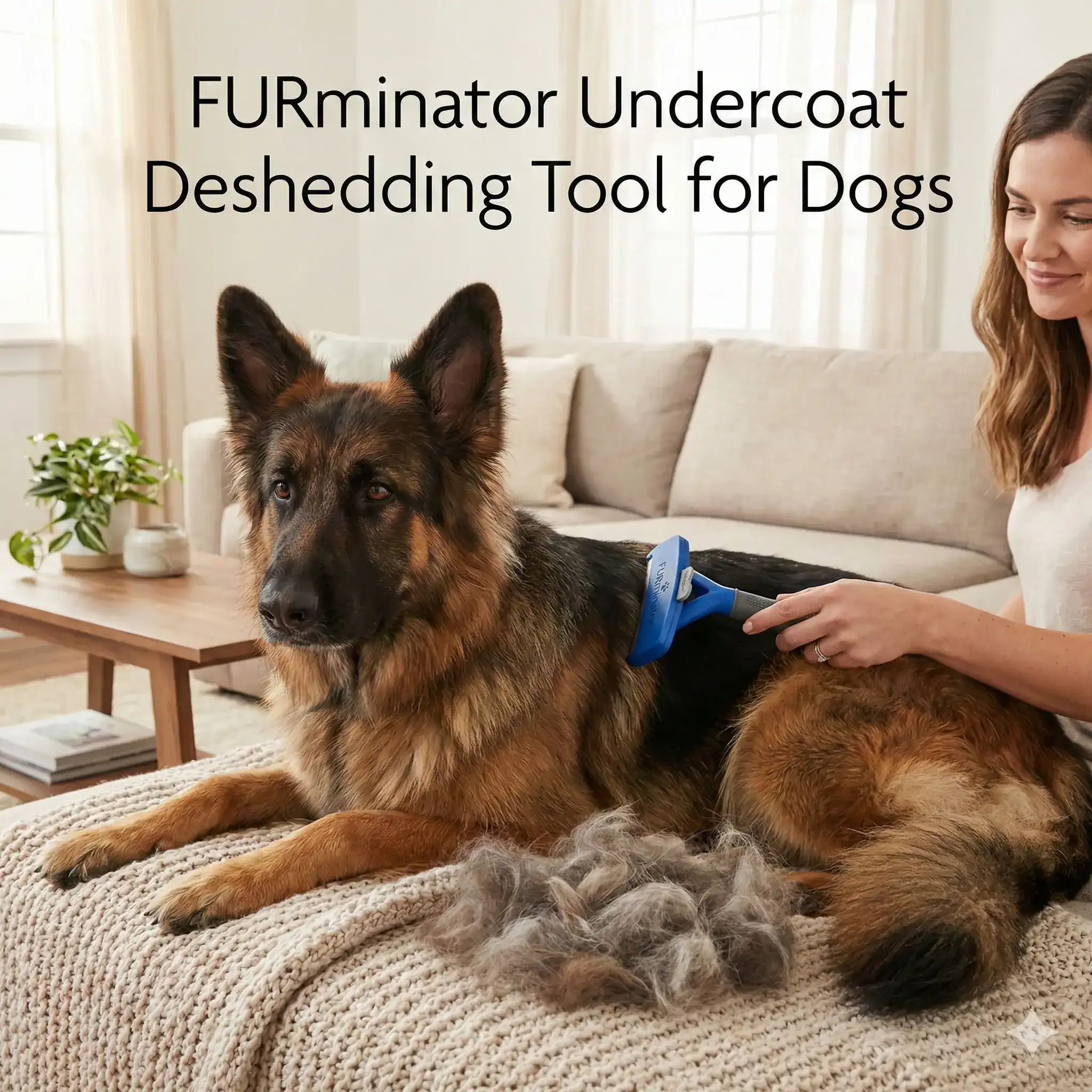
FURminator Undercoat Deshedding Tool for Dogs
Use for: Removing loose undercoat and dead hair before it covers your furniture, reducing shedding by up to 90%, and keeping double-coated dogs comfortable during heavy seasonal coat blows. Reaches the dense underlayer that traps pet hair against the skin.
View on AmazonRegular brushing with an appropriate grooming tool helps remove dead hair and reduces the amount of dog hair accumulating inside the home. Double-coated dogs like the Ovcharka benefit from tools designed specifically for reaching the dense underlayer rather than standard surface brushes.
Exercise
This dog does not require miles of running a day or endless games of fetch. Their energy output on a ranch or farm consists of slow, methodical perimeter patrols punctuated by brief moments of intense, explosive action if a threat is detected.
They are definitively an outdoor, rural dog. A large, securely fenced property is critically important. Even in hot weather they prefer to be outside patrolling. A standard suburban fence will not contain a determined, 150-pound protector seeking to intercept a coyote across the street. Fencing must be strong, tall (minimum 6 feet), and secure at the base, as they will dig under barriers if necessary.
Nutrition & Diet
Feeding a dog of this frame correctly means managing caloric intake carefully at every life stage. Their landrace metabolism is efficient, so overfeeding is a constant risk despite their mass.
🐶 Puppy Stage
Rapid growth is the enemy of stable joint development. A puppy must be fed a precisely balanced large-dog formula that controls calcium and phosphorus ratios to prevent the bones from growing faster than the supporting tissue. Free-feeding an oversized puppy accelerates skeletal damage that becomes permanent.
🐕 Adult Stage
Despite their massive frame, these dogs typically eat less than expected, owing to an efficient metabolism evolved on scarce nomadic resources. Feed measured meals twice daily rather than free-feeding, and never run them immediately before or after meals to mitigate the risk of GDV.
🐕🦺 Senior Stage
By age 9 to 10, transition to a senior formula with cartilage-support compounds including glucosamine and chondroitin. Reduce portions slightly and split meals into two or three smaller feedings to ease digestion and reduce bloat risk. Increase veterinary checkups to twice annually to catch organ or structural decline early.
Training
Training this dog is not about teaching them obedience tricks. It is about establishing mutual respect and clear boundaries with an animal that is fully capable of overriding your commands.
🎓 The Priority of Socialization
Early, intensive exposure to people and environments is non-negotiable. A dog bred to view strangers as a threat must be explicitly taught what constitutes “normal” human activity. If they are not socialized with diverse people, settings, and situations before six months of age, their natural tendency toward suspicion can develop into dangerous, uncontrollable reactivity.
⚖️ Leadership Without Force
You cannot physically force a 150-pound dominant dog to do anything. Training must be based on firm, calm leadership. They must believe that you control the resources and the territory, which allows them to defer the decision-making to you when guests arrive.
Central Asian Shepherd vs Related Guardians
People often weigh the Ovcharka against other massive pastoral protectors. Here is how they differ from similar dogs in key areas.
Guardian Breed Comparison
| Attribute | Central Asian Shepherd | Akbash | Kangal |
|---|---|---|---|
| Size | Massive, thick-boned, up to 150+ lbs | Taller, leaner, more athletic (90-130 lbs) | Lean, muscular, 110-145 lbs |
| Temperament | Calm but confrontational to threats | Vigilant, prefers to patrol and warn first | Alert, faster to escalate, more agile |
| Coat Type | Short to medium, very dense | Medium to long, always white | Short, dense, dun with black mask |
| Best Fit For | Heavy predator deterrence on sprawling land | General pasture guarding | Active wolf and predator confrontation |
The Ovcharka is generally the heaviest and most physically confrontational of the three, with a stronger build than either competitor. They outweigh even a Pitbull by 50 to 80 pounds, operating in an entirely different weight class. The Akbash tends to operate with a longer fuse, preferring vocal deterrence and perimeter patrol before escalating. The Kangal is leaner and faster, built for direct chase-and-confront encounters with wolves on open terrain, while the Ovcharka relies more on sheer mass and intimidation.
FAQ
Are these dogs aggressive?
Direct Answer: They are highly territorial and fiercely protective, which translates to aggression toward unauthorized intruders and strange dogs.
Context: They are not randomly aggressive or malicious. Their aggression is purposeful and defensive. They react when a perceived threat breaches their perimeter. Toward their own household and accepted friends, they are gentle and settled.
Management: Absolute boundary control, locked gates, and extensive early socialization are critically important to ensure they only react to genuine threats.
Can a first-time dog owner handle this dog?
Direct Answer: This dog is generally not viable for beginners.
Context: Mistakes made while raising a companion dog result in nuisance behaviors. Mistakes made raising a massive, dominant protector result in a dangerous liability. They require an owner who understands canine body language, pack dynamics, and proactive threat management.
Management: Prospective owners should gain experience with a Caucasian Shepherd, Akbash, or similar working dogs before stepping up to the Kangal-rivaling power of this pastoral defender.
Do they make good house pets in an apartment?
Direct Answer: Living in an apartment with this dog is challenging and usually not ideal for either the animal or the neighbors.
Context: The problem is not just space. Their primary function is to patrol territory. Without a perimeter to guard, they become stressed. Their nocturnal alarm barking, designed to echo across valleys, will immediately result in noise complaints in an urban environment.
Management: They typically require a rural setting, a farm, or a property with substantial acreage and secure fencing.
Are they safe around children?
Direct Answer: Yes. They are famously gentle with children belonging to their own household.
Context: They view the household’s children as the core group, showing immense patience. Danger arises when your child has friends over. The dog may misinterpret rough play as a genuine attack on your child and intervene forcefully.
Management: Never leave a massive protector unsupervised with visiting children. Secure the dog away from chaotic playdates.
How much activity do they actually need?
Direct Answer: Moderate, low-impact movement.
Context: They are not jogging companions. A long, steady daily walk combined with free access to a large yard for patrolling satisfies their physical needs. Forced running, especially on hard surfaces, damages their heavy joints.
Management: Provide perimeter access. They get their mental and physical fulfillment from simply walking their property line and monitoring the horizon.
Do they get along with other dogs or pets?
Direct Answer: They are generally fine with animals raised within their household, but deeply intolerant of strange dogs.
Context: They will protect the household cat or a smaller resident dog as part of their circle. Same-sex aggression is common, and any unknown dog entering their territory is treated as an invading predator.
Management: Avoid dog parks entirely. When introducing new animals to the household, do so gradually and carefully on neutral ground.
Do they bark a lot?
Direct Answer: Yes. Loud, persistent nocturnal vocalizing is their primary threat-deterrent tool.
Context: If they hear a coyote a mile away, they vocalize. If the wind shifts, they sound off. This is exactly what they were bred to do. It is not a behavioral flaw. It is their primary patrol function.
Management: You cannot train the patrol vocalization out of a pastoral protector. You must have neighbors who are far away or deeply tolerant of rural life.
How much does it cost to own one of these dogs?
Direct Answer: Ownership costs run significantly higher than most standard dogs across every category.
Context: The issue is not the purchase price alone. Veterinary bills scale with body weight, so anesthesia, medications, and surgical procedures for a 150-pound dog can cost two to three times what they would for a 50-pound dog. Food consumption, heavy-duty crates, reinforced fencing, and oversized gear all add up. A single orthopedic surgery for dysplasia can exceed the original purchase price of the puppy.
Management: Secure robust pet insurance immediately upon bringing the puppy home. Budget for monthly maintenance costs that are roughly double to triple what a medium-sized companion dog would require.
Central Asian Shepherd Dog: Quick Reference
| Attribute | Central Asian Shepherd Dog | Best For | Not Ideal For |
|---|---|---|---|
| Exercise | Moderate patrol-paced walking | Rural properties with acreage | Dense urban apartments |
| Protection | Extreme, autonomous deterrence | Experienced, confident handlers | First-time or passive owners |
| Grooming | Low daily, heavy seasonal blow | Those tolerant of shedding | Allergy sufferers |
| Vocalization | Heavy nocturnal barking | Isolated farms and ranches | Suburbs with noise ordinances |
Finding a Puppy
Locating a stable, healthy Central Asian Shepherd requires extreme diligence, as the dog’s imposing reputation unfortunately attracts irresponsible sellers prioritizing aggression or sheer bulk over structural soundness.
🏠 Responsible Breeder
A reputable source will rigorously vet you before agreeing to a sale. They will demand to know about your fencing, your experience with oversized powerful dogs, and your property layout. They should readily provide OFA clearances for hips, elbows, and cardiac screening on both parents. If a seller boasts about “lethal protection” or has puppies immediately available with no questions asked, walk away immediately. Expect a waitlist and a thorough application process.
🐾 Rescue and Adoption
Specialist rescues occasionally have adult dogs of this type available. Many enter the rescue system precisely because well-meaning owners bought a cute, fluffy puppy without preparing for the massive, territorial adult it became. Adopting an adult allows you to assess the dog’s fully matured defensive drive before bringing them onto your land.
🚩 Red Flags to Watch For
- No OFA scoring documentation for hips or elbows on parent dogs
- Sellers advertising “maximum bite force” or “lethal guarding power” as selling points
- Puppies available immediately with no interview, application, or waitlist
- No questions asked about your land area, fencing height, or livestock situation
- Parents displaying extreme human-directed aggression rather than steady territorial awareness
Personal Observation
💭 Personal Observation
Chun Chun, one of my rescued street dogs who weighs roughly 17 kg, is the most committed alarm barker in the household. She stationed herself at the compound entrance years ago and has not abandoned that post since. Every passing motorcycle, every stray cat crossing the road, every unfamiliar voice triggers a sustained, high-pitched alert that can last several minutes. Managing that level of vocal intensity in a 17 kg dog is already a daily negotiation between appreciating the early warning and addressing the noise. Now multiply that volume by a factor of three, add 60 kg of bone and muscle behind it, and schedule it primarily between midnight and 4 AM. That is what nocturnal patrol sounds like from a Central Asian Shepherd. The instinct is identical. The acoustic and physical consequence is not. If Chun Chun’s persistent barking occasionally tests the patience of nearby families, a 150-pound Alabai doing the same thing would test the limits of local noise ordinances and your relationship with every neighbor within earshot.
Conclusion
The Central Asian Shepherd Dog is a magnificent remnant of an ancient world. They are powerful and utterly devoted animals that excel at the exact job they were forged to do over millennia. The biggest pro is their unmatched dedication to perimeter security. The biggest con is the relentless nocturnal vocalizing and aggression toward anything unfamiliar.
For the rural property owner who genuinely needs elite-level predator deterrence and has the experience to guide a dominant mindset, they are an unmatched partner. For anyone else, the reality of managing a massive, independent, night-patrolling sentinel quickly becomes an overwhelming burden.
Disclaimer: This article is for informational purposes only and does not constitute veterinary or professional breeding advice. All health information is based on publicly available breed data and should not replace a physical examination or treatment plan from a licensed veterinarian. Product recommendations contain affiliate links. K9Sphere earns from qualifying purchases at no additional cost to you.


