
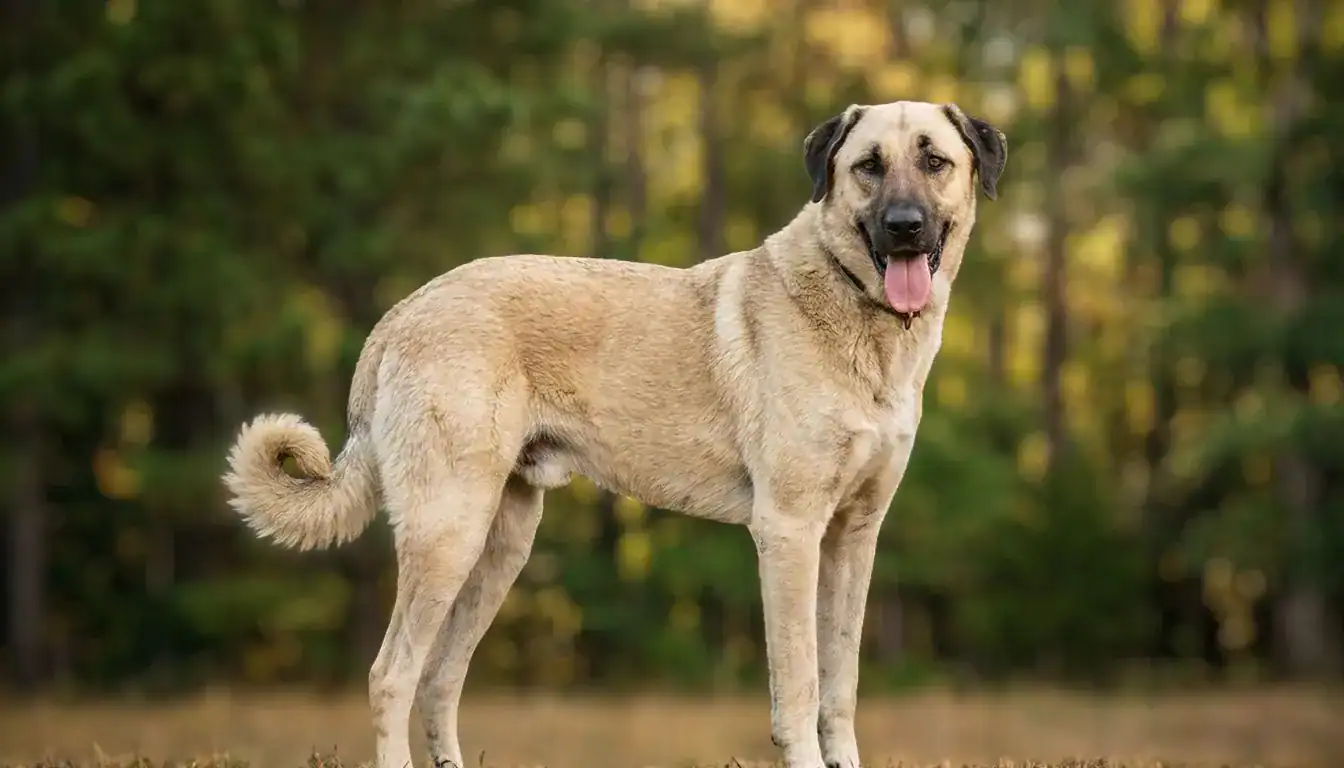
The Kangal Shepherd Dog is a powerful Turkish livestock guardian developed to protect flocks from wolves, bears, and jackals across the Anatolian plateau. What the viral videos of massive dogs in spiked collars skip is the grueling day-to-day reality of managing a 140-pound apex protector that makes its own decisions about who lives and who leaves.
The Kangal Shepherd Dog was not bred to fetch, sit on command, or greet visitors at the door. It was bred to kill wolves on the central steppe, and that drive remains fully intact in every puppy born today.
OFA orthopedic data, UKC breed standards, and government preservation records shape the screening and care guidance throughout this article.
The Kangal is recognized as a distinct breed by the UKC and the Turkish government, though the AKC still classifies it under the broader Shepherd umbrella in the Working Group.
While their unwavering loyalty to their flock is legendary, their space requirements, nocturnal vocalizing, and self-directed style are often heavily underestimated by owners who have only lived with standard companion breeds.
Affiliate Disclosure: K9Sphere is a participant in the Amazon Services LLC Associates Program. As an Amazon Associate, K9Sphere earns from qualifying purchases made through links in this article at no extra cost to you.
Breed Snapshot
📊 Vitals and Lifespan
Height
Males: 28-32 inches (71-81 cm)
Females: 26-30 inches (66-76 cm)
Weight
Males: 110-145 lb (50-66 kg)
Females: 90-130 lb (41-59 kg)
Lifespan
12-15 years
AKC Group
Working Group
Origin
Turkey (Sivas)
🇹🇷
⭐ Personality Traits
Ratings (1 to 5). This giant livestock sentinel balances fierce territorial wiring with profound gentleness toward its own flock. Suitability is limited to experienced handlers with secure rural land.
History and Purpose
The Kangal Shepherd Dog originates from the Sivas province of central Turkey. For centuries, they have served one specific purpose: protecting flocks of sheep and goats from wolves, bears, and jackals across the harsh Anatolian plateau.
📌 Ancient Regional Origins (3,000+ Years)
Shepherds in central Turkey developed powerful protector dogs to live permanently within their flocks. Unlike herding dogs that move livestock, these animals operated as non-herding deterrents, positioning themselves between the flock and incoming predators. Natural selection on the rugged steppe produced a breed with extreme endurance, keen threat assessment, and an escalating defensive protocol.
📌 Regional Isolation
The Kangal developed in relative genetic isolation around the the original Sivas region. This isolation created a remarkably consistent type: pale dun coat, black mask, black ears, and a lean, athletic frame built for covering vast distances on patrol. The Kangal was never a mastiff-type brawler. It was a swift, agile interceptor.
📌 National Treasure (1985 Postal Stamp)
The national government declared the Kangal a national breed and issued a commemorative postal stamp in 1985. Export restrictions have historically limited the breed’s availability outside Turkey, contributing to its rarity and the ongoing confusion with the broader broader Shepherd classification.
📌 Conservation Use (2000s-Present)
Conservation groups in Namibia and South Africa deploy Kangals to protect goat herds from cheetahs, drastically reducing lethal threat control. The United Kennel Club (UKC) recognized the Kangal as a distinct breed separate from the Anatolian Shepherd, while the AKC continues to classify them together.
Their functional ability remains completely intact in modern dogs. This is a serious operational breed, not a suburban accessory. Every behavioral trait that makes them exceptional on a Sivas sheep station also makes them exceptionally difficult in a residential setting.
Physical Characteristics
🏗️ Size and Build
Males stand 30 to 32 inches (76-81 cm) at the shoulder and weigh between 110 and 145 pounds (50-66 kg). Females are slightly smaller but still imposing. Their frame is lean and athletic compared to heavier mastiff-type guardians like the Akbash. They are built for speed and endurance over raw bulk, capable of chasing down a wolf over uneven terrain.
🎨 Coat and Color
The coat is short to medium-length and dense, perfectly adapted to insulate against freezing winters and baking summers on the central plateau. The defining hallmark is their pale dun to steel-gray body color combined with a distinctive black mask and velvety black drop ears. Blue, brindle, or white coats indicate mixed ancestry, not a purebred Kangal.
The Kangal’s jaw power is commonly cited online at 700+ PSI, but veterinary researchers estimate the actual figure closer to 250 to 400 PSI. The higher numbers lack peer-reviewed support. Even at the realistic estimate, their jaw strength is among the strongest of any domestic breed, and it evolved specifically to dispatch wolves and jackals when intimidation alone failed.
Character and Guarding Drive
Understanding the Kangal requires understanding the flock-protector mindset. Out on the pasture, a shepherd might be miles away. The dog must assess threats, choose a response, and execute it without waiting for human input. This autonomous decision-making is their greatest operational asset and their greatest domestic challenge.
🛡️ Escalation Protocol
They do not attack blindly. A patrolling Kangal follows a strict escalation sequence: booming alert to announce presence, physical positioning between flock and threat, roaring charge if the predator advances, and physical engagement only when the boundary is breached. This measured response separates them from reactive aggression.
🌙 Nocturnal Alertness
They are crepuscular and nocturnal by nature. They sleep heavily during the day and become highly active at nighttime, patrolling and vocalizing at distant noises, shifting winds, and shadows. In a residential setting, this translates directly into noise complaints from neighbors.
👨👩👧 Family Gentleness
With their own family, they are remarkably loyal, gentle, and patient. They often display extraordinary tolerance with children in their household, positioning themselves protectively between the child and anything unfamiliar. Visitors, however, are treated with deep suspicion until explicitly introduced.
⛔ Independence Over Obedience
They rank low on traditional obedience scales because obedience was never the point. A Kangal asked to fetch a ball will likely stare at you with genuine confusion. They conserve their energy for real threats and real duty, not parlor tricks.
Screening and Conditions
Veterinary Disclaimer: The information provided in this article is for educational purposes only and is not intended as a substitute for professional veterinary advice, diagnosis, or treatment. Always consult a licensed veterinarian for any concerns about your dog.
Sources Used: Data compiled from:
- OFA (Orthopedic Foundation for Animals): Screening protocols for Kangal-line genetics
- UKC Breed Standard: Kangal-specific screening and structure requirements
Always consult your licensed DVM for personalized medical advice.
For a massive breed, the Kangal is surprisingly healthy and robust. Their landrace origins, free from the common show-ring exaggerations, give them a structural soundness that many modern massive breeds lack. A lifespan of 12 to 15 years is impressive for a dog regularly exceeding 100 pounds.
🔴 Hip and Elbow Dysplasia
What to watch for: Carrying significant weight on a large frame makes them susceptible to hip dysplasia. The joint forms improperly, causing bone-on-bone friction that leads to painful arthritis over time. Starting a proven hip and skeletal supplement early helps maintain cartilage before visible symptoms develop.
Screening: Strict OFA or PennHIP clearance on both parents before any litter is produced is the most effective prevention.
🔴 Gastric Dilatation-Volvulus (Bloat)
What to watch for: Their deep chest places them at elevated risk for bloat. The stomach fills with gas and twists on its axis, cutting off blood supply to vital organs within minutes.
This is a medical emergency. Do not attempt home treatment. Seek immediate veterinary care.
🟡 Entropion
What to watch for: Some Kangal lines carry a predisposition to entropion, a condition where the eyelid rolls inward and irritates the cornea. Mild cases are managed with eye drops. Severe cases require surgical correction.
Screening: Ask about eye screening results when evaluating a litter.
Providing a supportive resting surface is important for any massive frame. An orthopedic dog bed helps distribute their weight evenly, reducing pressure sores and overnight stiffness that worsens arthritis in dogs spending their days patrolling hard ground.
Consult your veterinarian before starting any supplement regimen for your dog.

Nutramax Cosequin for Dogs Cartilage Support Supplement
Use for: Supporting skeletal condition in massive protector breeds prone to hip and elbow dysplasia. Contains glucosamine and chondroitin to help maintain cartilage and cartilage function in dogs carrying significant structural load across uneven terrain.
View on AmazonGrooming and Coat Care
Despite their rugged lifestyle, Kangals have manageable grooming requirements for most of the year. Their short-to-medium double coat naturally repels dirt and debris. A thorough weekly brush is typically enough to keep them clean and comfortable.
Twice a year, they blow their undercoat as the seasons change. During these intense transitions, dead hair detaches in massive clumps. Daily brushing sessions become mandatory to prevent matting and manage the volume of loose fur filling your home.
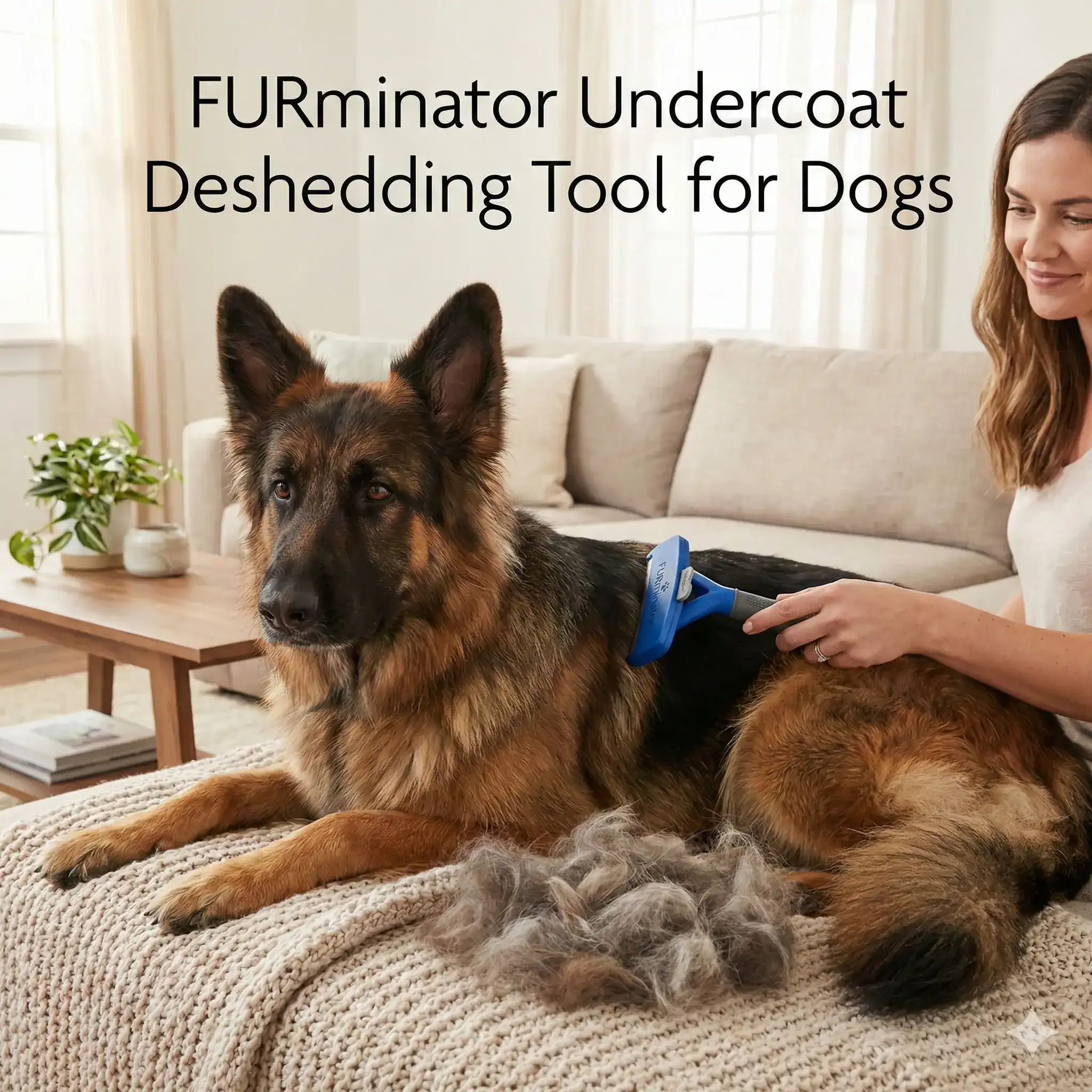
FURminator Undercoat Deshedding Tool for Dogs
Use for: Removing loose undercoat and dead hair before it covers every surface in your home. Helps reduce loose fur by up to 90% and keeps double-coated massive breeds comfortable during seasonal coat blowouts. Reaches through the topcoat to pull pet hair from the dense underlayer without cutting guard hairs.
View on AmazonRegular brushing with an appropriate grooming tool helps remove dead hair and reduces the amount of loose fur inside the home. Heavy double-coated breeds benefit from tools designed specifically for reaching the dense underlayer rather than standard surface brushes.
Exercise and Living Needs
A Kangal cannot survive in an apartment. Even a standard suburban or urban backyard with a wooden privacy fence is rarely enough. They require open space, ideally acreage or a operational ranch, where they can fulfill their genetic drive to patrol and monitor territory.
They are capable of sudden bursts of explosive speed, but they do not need much structured cardio or hours of forced cardio like a Siberian Husky. They prefer to find a high vantage point, settle quietly, and scan their domain for hours. A moderate daily walk and secure outdoor patrol time is typically sufficient. High-intensity activity like forced running is unnecessary and can damage developing skeletal structures.
Fencing must be virtually indestructible. A 140-pound dog fixated on a perceived threat across the road will go over, under, or straight through flimsy chain-link or decorative wood panels. Solid, deep-set, 6-foot agricultural fencing is the minimum standard. Electronic or invisible fencing will not stop this breed.
Nutrition & Diet
Feeding a oversized sentinel breed correctly means managing caloric intake carefully at every life stage. Their landrace metabolism is efficient, so overfeeding is a constant risk despite their size.
🐶 Puppy Stage
Growth must be strictly controlled. A oversized-breed puppy formula that regulates calcium and phosphorus ratios helps prevent the rapid bone development that leads to skeletal disease. Free-feeding a Kangal puppy accelerates skeletal damage that becomes permanent.
🐕 Adult Stage
Despite their size, patrolling Kangals on local farms eat surprisingly modest portions. Feed measured meals twice daily and monitor body condition by checking the ribs. You should feel them easily beneath the coat without pressing hard. Obesity destroys their structural integrity and shortens an already limited oversized-breed lifespan.
🐕🦺 Senior Stage
By age 8 to 9, transition to a senior formula with cartilage-support compounds including glucosamine and chondroitin. Reduce portions slightly and split meals into two or three smaller feedings to ease digestion and reduce bloat risk. One practical tip: increase veterinary checkups to catch organ or structural decline early.
Training
Traditional obedience training is a frustrating experience with any livestock guardian. They do not exist to please you. They exist to protect the flock. Asking a Kangal to sit and shake a paw typically results in a blank stare because the command serves no guarding purpose.
🛑 Socialization Is Non-Negotiable
Early, intense socialization is the single most important factor in raising a safe Kangal. Expose them to every type of person, vehicle, and harmless creature possible during the critical socialization window before six months. A flock protector must clearly understand what is normal before it can accurately identify a genuine threat.
👑 Leadership Through Trust
You cannot physically overpower a dog that wrestles wolves. Harsh corrections will only damage trust and potentially trigger a dangerous defensive response. Training requires absolute consistency, calm authority, and mutual respect. You must convince the dog that you control the territory and you decide who you allow inside, so it does not feel obligated to make executive decisions about who enters your land.
🚶 Leash Training Early
Start leash manners before they physically overpower you. A 40-pound Kangal puppy that pulls is manageable. A 140-pound adult that lunges at a passing stranger is a lawsuit waiting to happen.
Kangal vs Caucasian Shepherd vs Pyr
All three are ancient flock defenders bred to protect flocks from predators and operate independently. They share the same core disposition: territorial suspicion, autonomous thinking, and deep loyalty to family. The differences lie in build, climate adaptation, and how they handle confrontation.
| Attribute | Kangal | Caucasian Shepherd | Pyr |
|---|---|---|---|
| Height | 28-32 in (71-81 cm) | 26-30 in (66-76 cm) | 25-32 in (64-81 cm) |
| Weight | 90-145 lb (41-66 kg) | 100-170+ lb (45-77+ kg) | 85-110 lb (39-50 kg) |
| Origin | Turkey | Caucasus (Georgia, Russia) | France / Spain (Pyrenees) |
| Threat Response | Patrol, intimidate, then engage | Confrontational, physical | Vocal-first, gentle deterrent |
| Stranger Tolerance | Low to moderate | Very low | Moderate |
| Heat Tolerance | Good (continental arid climate) | Poor (mountain cold) | Moderate |
| Build Type | Lean, athletic interceptor | Heavy, muscular brawler | Fluffy, moderate bone |
| First-Time Suitable | No | No | With guidance, possible |
The Kangal is generally the most agile and athletic of the three, with a leaner frame adapted to the hot continental summers. The Caucasian Shepherd is heavier and more willing to escalate to physical contact early. The Pyr has the gentlest character, preferring persistent barking and gentle deterrence over direct confrontation. For hobby ranches with frequent visitors, that breed is often the safest choice. For remote properties with serious predator pressure, the Kangal excels.
FAQ
What is the difference between an Anatolian Shepherd and a Kangal?
Direct Answer: The AKC groups them together under the broader Shepherd category. The UKC and the national government recognize the Kangal as a distinct, isolated breed from central Turkey with a standardized appearance (dun coat, black mask).
Context: “Anatolian Shepherd” is a broader term covering various regional guardian types. A true Kangal traces its lineage specifically to central regional performance lines. Mixed-type regional pastorals may vary significantly in color, build, and character.
Management: If you want a true Kangal, seek sources explicitly preserving original regional bloodlines with UKC registration rather than generalized regional pastoral types.
Are Kangal Shepherds dangerous to people?
Direct Answer: They are not inherently aggressive toward people, but their intense territorial drive makes them dangerous if they are unsocialized or poorly managed.
Context: A stable Kangal will escalate warnings (barking, posturing) long before physical contact. If a stranger ignores these warnings and enters the territory without the handler’s explicit approval, the dog will physically defend the boundary.
Management: Secure, locked gates and visible warning signs are mandatory. All visitors must be properly introduced by the handler.
Can a Kangal survive in an apartment?
Direct Answer: No. Keeping this breed in an apartment is generally not viable.
Context: They are massive animals that require open space to patrol. Their deep, booming vocal alarm, deployed aggressively throughout the night, generates immediate noise complaints in any dense housing arrangement.
Management: Only consider this breed if you own a securely fenced rural acreage or a operational ranch with adequate acreage.
Are they good with children?
Direct Answer: Yes. They are famously gentle and protective with children in their own household.
Context: They view their family’s children as the highest-priority flock members. A 140-pound dog can accidentally knock over a toddler, and they may misinterpret roughhousing between your kid and a visiting friend as a genuine attack requiring their intervention.
Management: Never leave massive protector breeds unsupervised with young children or visiting playmates.
How does their jaw pressure compare to other breeds?
Direct Answer: The Kangal’s bite force is commonly cited online at 700+ PSI, but veterinary researchers estimate the actual figure closer to 250 to 400 PSI. The higher numbers lack peer-reviewed support.
Context: Even at the realistic range, their jaw strength exceeds most other domestic breeds including breeds like the Pitbull. This power evolved to dispatch wolves and jackals when intimidation failed. It is not a party trick. It is a functional tool that requires responsible management.
Management: Guardian breeds with this level of jaw capability must never be encouraged to test their strength on other animals or people. Structured socialization teaches them appropriate threshold control.
Do they bark a lot?
Direct Answer: Yes. Loud, persistent nocturnal vocalizing is their primary threat-deterrent tool.
Context: If they hear a coyote a mile away, they vocalize. If the wind shifts, they sound off. This is exactly what they were bred to do. It is not a behavioral flaw. It is their primary patrol function.
Management: You cannot train the patrol vocalization out of a flock-defense breed. You must have neighbors who are far away or deeply tolerant of rural life.
How do they compare to a the Pyr?
Direct Answer: The Kangal is generally more intense, faster, and less tolerant of strangers than the Pyr.
Context: The Pyr tends to have a softer disposition suited for generalized ranch duties and properties with regular visitor traffic. The Kangal operates with a harder edge, bred specifically for direct combat with dangerous threats on remote terrain.
Management: For hobby ranches or properties with frequent guests, that breed is often safer. For isolated areas with serious threat levels, the Kangal is typically the stronger choice.
Can a first-time owner handle a Kangal?
Direct Answer: No. Most experienced protector-breed handlers advise strongly against this breed for novice owners.
Context: Training mistakes with a friendly companion breed result in bad habits. Training mistakes with a Kangal result in a dangerous, uncontrollable creature capable of inflicting severe injury. The margin for error is extremely narrow.
Management: Gain significant familiarity with other large, self-reliant breeds first. The Akbash is sometimes suggested as a slightly more manageable first protector breed, though it still requires experienced handling.
Kangal Shepherd: Quick Reference
| Attribute | Kangal Shepherd | Suited For | Not Ideal For |
|---|---|---|---|
| Exercise | Low-intensity patrol, large space | Farms, large acreages | Apartments, suburbs |
| Protection | Extreme flock-defense instincts | Experienced handlers | First-time owners |
| Training | Independent, low obedience drive | Patient, consistent leaders | Obedience competitors |
| Vocalization | Heavy nocturnal barker | Rural, isolated properties | Dense neighborhoods |
Finding a Puppy
Because they are rare outside of Turkey and often confused with the broader broader regional type, finding a genuine Kangal from a responsible breeder requires diligent research and patience.
🏠 Responsible Source
Seek sources who explicitly preserve original regional performance lines and hold UKC Kangal registration (not just AKC Anatolian papers). Demand OFA scoring for hips and elbows on both parents, plus eye screening results. A responsible source will ask detailed questions about your land, fencing, livestock situation, and prior familiarity with independent protector breeds. Puppies are rarely available for immediate sale. Expect a waitlist that may stretch to near 12 months or longer.
🐾 Rescue and Adoption
Kangals and regional-type protectors appear in rescue more often than most people realize, typically surrendered by owners who underestimated the nocturnal vocalizing and territorial behavior. Contact protector-breed rescue organizations and ask detailed questions about the dog’s aggression history, resource guarding habits, and behavior around strangers and other animals before committing to adopt.
🚩 Red Flags to Watch For
- No OFA scoring documentation for hips or elbows on parent dogs
- Sources advertising “maximum jaw power” or “lethal guarding power” as selling points
- Puppies available immediately with no interview, application, or waitlist
- No UKC Kangal registration (only generalized regional Shepherd paperwork)
- No questions asked about your land size, fencing height, or livestock situation
Personal Observation
💭 Personal Observation
Rusty, one of my rescued dogs who has been with me since 2013, is a natural guardian. He did not need a single lesson in territorial awareness. From the day he settled in, he decided which animals could enter the compound and which could not, and he enforced that boundary with absolute consistency. The difference between managing Rusty’s guarding impulse at roughly 20 kg and managing the same instinct in a 60 kg (130 lb) Kangal is not just physical. It is legal, financial, and logistical. Rusty’s worst-case scenario is a puncture wound and a vet bill. A Kangal’s worst-case scenario is a lawsuit, a destroyed relationship with your neighbors, and a dog seized by animal control. The impulse itself is identical. The consequences scale with the frame. If you cannot manage a territorial dog at 20 kg without incident, you have no business owning one at 60 kg.
Conclusion
The Kangal Shepherd Dog is a magnificent ancient guardian that earns its reputation through centuries of proven performance against the most dangerous threats on earth. They are not pets in the traditional sense. They are functional partners built for a specific, demanding job.
For the farmer losing livestock to predators, or the rural acreage owner with acreage, secure fencing, and the experience to manage an self-reliant protector, the Kangal is an unparalleled asset. The biggest pro is their unmatched dedication to flock safety. The biggest con is the relentless nocturnal vocalizing and territorial aggression toward anything unfamiliar. For the unprepared suburban household, this breed will quickly become an unmanageable burden of liability, noise complaints, and destroyed perimeters.
Disclaimer: This article is for informational purposes only and does not constitute veterinary or professional breeding advice. All health information is based on publicly available breed data and should not replace a physical examination or treatment plan from a licensed veterinarian. Product recommendations contain affiliate links. K9Sphere earns from qualifying purchases at no additional cost to you.


