
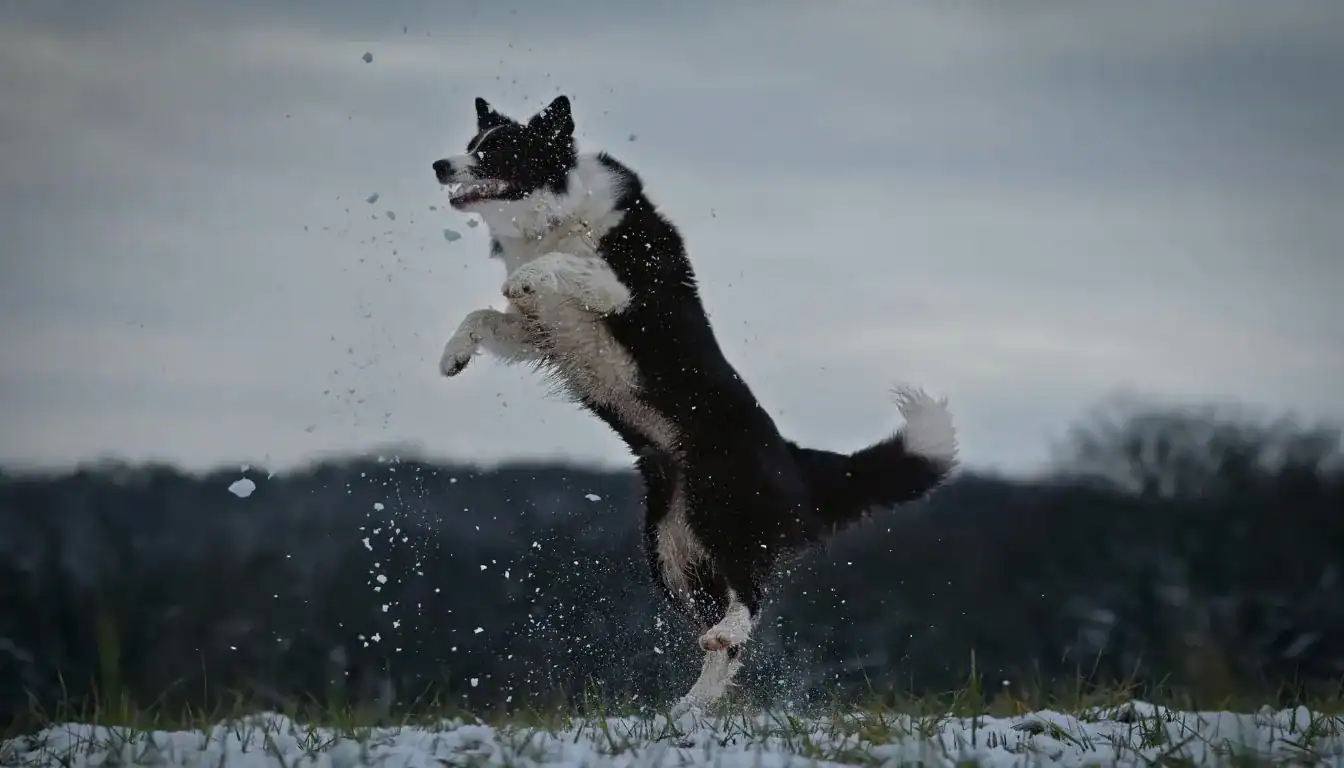
The Border Collie is a sheepdog from the country between Scotland and England, and it consistently tops published rankings of canine trainability. That reputation is earned, and it is also the reason so many end up in rescue.
What draws people in is the agility footage and the blue merle coats. What they do not see is how extremely demanding a brain like that becomes in a household that has not planned for it.
This guide draws on the AKC breed standard, the Border Collie Society of America’s published health list, and peer-reviewed veterinary research on exercise-induced collapse in the breed.
Daily commitments include substantial physical exercise, structured mental work on top of it, and brushing a few times a week. The mental half is the part people underestimate.
Households that can supply both get arguably the finest working partnership available in a dog. Anyone looking for a relaxed family pet should read the temperament section before going further.
Affiliate Disclosure: K9Sphere participates in the Amazon Services LLC Associates Program and other affiliate programs. K9Sphere earns from qualifying purchases made through links in this article at no additional cost to you. Product recommendations are based on independent research and editorial judgment, not paid placement.
Breed Snapshot
📊 Vitals and Lifespan
Height
Males 19 to 22 in, females 18 to 21 in
Weight
Males 35 to 55 lb, females 30 to 45 lb
Lifespan
12 to 15 years
Breed Group
AKC Herding Group
Origin
United Kingdom
🇬🇧
⭐ Personality Traits
K9Sphere editorial ratings (1 to 5). This is a driven herding dog that rarely switches off, and it suits active handlers who can provide structured work.
History and Origin
The breed comes from the farm country along the Scottish and English border in the UK, where shepherds needed a dog that could work huge flocks across open hillside in bad weather with very little direction. Among the herding breeds, this one was selected hardest for brains.
📌 1893. Old Hemp
Old Hemp was born at West Woodburn in Northumberland, a rough-coated tricolor dog with very little white on him, out of a black dam and a tricolor sire. He worked sheep quietly with a piercing stare instead of noise and movement, and that style became the template for the breed. Nearly all modern pedigree lines trace back to him.
📌 1915. The Name
James Reid, secretary of the International Sheep Dog Society, used the term Border Collie to separate these working dogs from the other collie types across the British Isles. The name points at the border country where the type was refined.
📌 1995. AKC Recognition
The American Kennel Club admitted the breed to the Herding Group. Working-line breeders objected, fearing that selection for the show ring would erode field ability, and separate working registries still operate on that basis today.
They remain the standard at sheepdog trials worldwide. The crouching technique and the unblinking stare are instinctive rather than taught, and they are all still there in a pet Border Collie that has never seen a sheep, which is the whole problem in a suburban living room.
Physical Characteristics
These are medium-sized, agile athletes built for endurance and sudden direction changes rather than raw size. The body is slightly longer than tall, lean, and powered by strong hindquarters, and its development followed function rather than fashion.
📏 Build and Movement
They move low to the ground in a smooth creeping gait that lets them change direction at full speed. That low profile is functional. It is how the dog applies pressure to sheep without touching them.
🎨 Coat and Color
A weather-resistant double coat comes in two varieties, rough and smooth. Black and white is the most familiar pattern, with red, blue merle, and tricolor also common. Coat maintenance sits between easy and demanding.
💡 The Stare Is Not Aggression
The reality: A Border Collie will drop its head, freeze, and lock its eyes on something. Handlers call this the eye. It is a herding tool that moves livestock by pressure rather than contact, and it is not necessarily a warning that the dog is about to do anything.
Character and Temperament
Everything about this breed runs on the drive to work. They track everything that moves in the house, and a Border Collie with no job assigned will assign itself one. That job is rarely something you would have chosen.
🧠 Problem-Solving
They pick up commands in a handful of repetitions. Chaser, a Border Collie studied over years, learned the names of 1,022 objects and retrieved them individually. That is the documented ceiling rather than the average, but it shows what the breed is capable of.
⚡ Herding Drive
The instinct arrives fully intact. They may try to herd children, cars, bicycles, other pets, and shadows, circling and using their body to control movement. Chasing is the usual expression and occasional heel nipping happens, though it varies by individual and is less characteristic here than in cattle breeds.
🌲 Sensitivity to Noise
Many are strongly reactive to thunder, fireworks, and sudden noise, and some develop lasting phobias without early desensitization. The same alertness that makes them brilliant at reading sheep makes them harder to settle in a chaotic home.
📢 Vocal When Frustrated
A bored Border Collie barks. The voice is how frustration comes out when the dog is confined without an outlet, and in an apartment that becomes a neighbor problem quickly.
Screening and Conditions
Veterinary Disclaimer: The information in this article is for educational purposes only and is not a substitute for professional veterinary advice, diagnosis, or treatment. K9Sphere’s authors are experienced dog owners, not licensed veterinarians. Always consult a qualified DVM regarding any health concerns about your pet. Never disregard professional veterinary advice or delay seeking it because of something you have read on this site.
Health Information Sources: Data compiled from:
- Border Collie Society of America breed health overview for the parent club’s screening list
- UC Davis Veterinary Genetics Laboratory for the breed’s available DNA tests
- Peer-reviewed research on exercise-induced collapse in Border Collies for what is and is not testable
Always consult your licensed DVM for personalized medical advice.
Border Collies are generally hardy, and the useful thing about this breed is how many of its inherited conditions have available genetic or screening tests. A careful pairing can rule several serious conditions out entirely rather than playing the odds.
Two different lists matter here. The AKC records only two recommended tests from the national breed club, a hip evaluation and an ophthalmologist evaluation, while the Border Collie Society of America’s own health overview runs to a dozen DNA-testable conditions plus physical screening.
A practical starting point for a pet buyer is CEA, TNS, and NCL DNA testing alongside those hip and eye evaluations. Careful breeders often screen further. Note too that the parent club warns some available tests are marker tests not yet proven to identify affected dogs reliably.
Common Health Concerns
🔴 Collie Eye Anomaly
What to watch for: Nothing visible in a mild case. This is an inherited malformation at the back of the eye, present from birth. It is the breed’s signature eye issue and severe cases can progress to retinal atrophy, detachment, and blindness.
Screening: A validated DNA test establishes a dog’s genetic status for the known mutation, and an ophthalmologist can examine puppies directly at around six weeks. Ask for results on both parents, and treat the eye exam as a separate check rather than a duplicate.
🔴 Trapped Neutrophil Syndrome
What to watch for: A puppy that fails to thrive, stays small, and catches infection after infection. The bone marrow cannot release white blood cells properly. Most affected puppies die or are euthanized in the first months of life, though a few have survived longer with intensive care.
Screening: A DNA test exists and this is recessive, so two clear parents cannot produce an affected puppy. There is no reason for a buyer to accept an untested pairing.
🟡 Neuronal Ceroid Lipofuscinosis
What to watch for: A young adult dog that starts losing coordination, vision, or its learned behavior. It is a fatal neurological storage disease and it is rare, but it is on the parent club’s testable list for a reason.
Screening: A DNA test is available and, like TNS, two clear parents remove the risk. Ask for it alongside CEA.
🟡 Border Collie Collapse
What to watch for: A dog that works or chases normally for five to fifteen minutes then becomes disoriented, wobbly, or drags its hind legs. It usually recovers within half an hour.
Screening: There is no validated genetic test for this. Research indicates a complex genetic basis involving many variants rather than the single Labrador collapse mutation, which is why no simple test exists. Treat any breeder offering a BCC clearance with caution, and discuss episodes with your vet.
🟡 Hip Dysplasia and Epilepsy
What to watch for: Stiffness after work or a bunny-hopping gait for the hips. Idiopathic epilepsy shows as unprovoked seizures, often beginning between about six months and five years of age, and is manageable for many dogs with medication.
Screening: Ask for OFA or PennHIP results on both parents. There is no epilepsy test, so ask instead whether seizures have appeared anywhere in the line.
Grooming and Coat Care
The double coat repels dirt and water well and needs a thorough brush two or three times a week. Pay attention behind the ears and on the hindquarters, where the feathering on a rough coat tangles first.
Twice a year the undercoat comes out in quantity and brushing becomes a daily job for a few weeks. Our guide to the best brushes for shedding dogs covers the tools that reach through a double coat.
Bathe only when the dog is genuinely dirty, since frequent washing strips the oils that make the coat weatherproof. Nails, teeth, and a weekly ear check finish the routine.
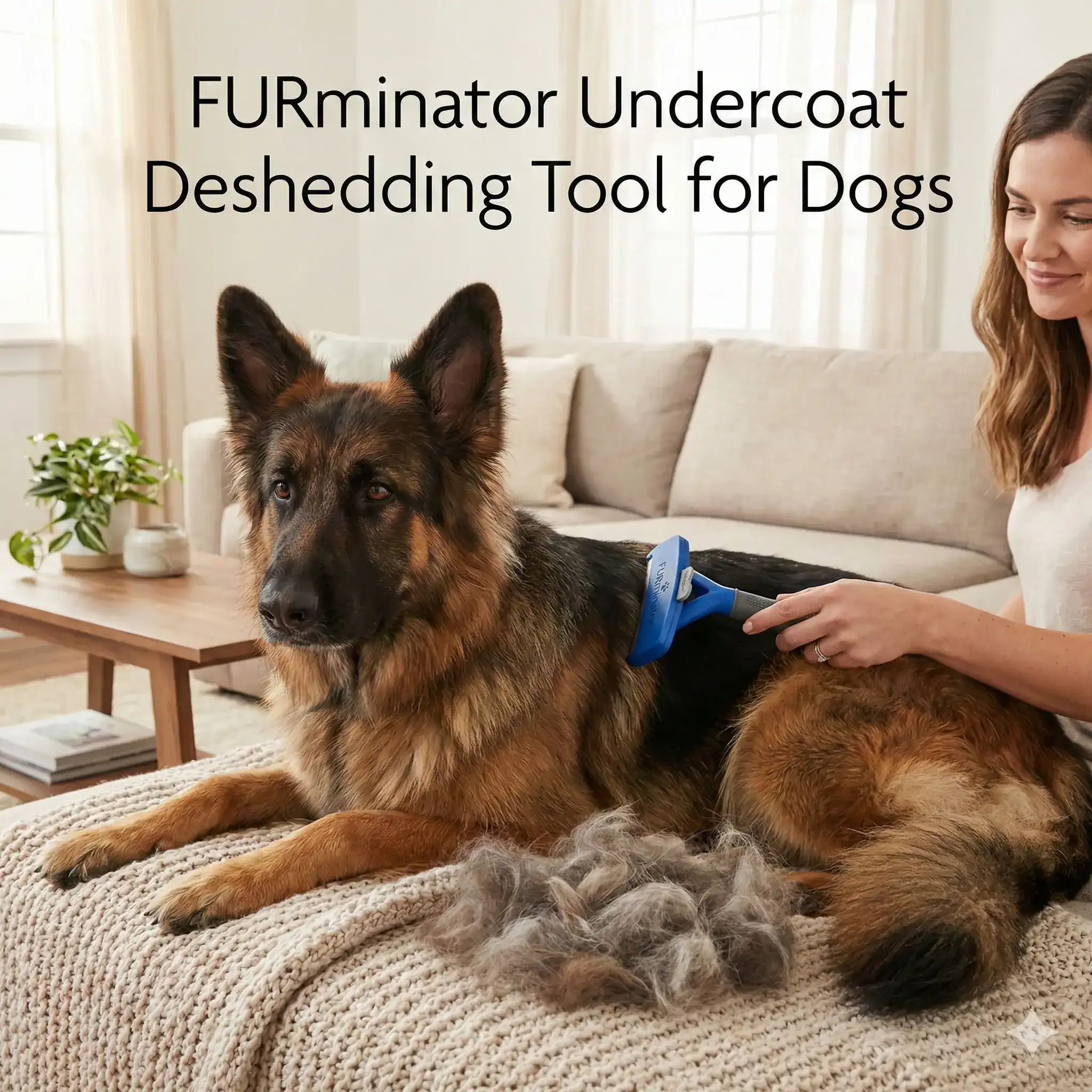
FURminator Undercoat Deshedding Tool for Dogs
A deshedding tool commonly used on double coats during the seasonal shed, reaching through the topcoat to lift loose undercoat. Used sparingly rather than daily, since over-use can thin the coat.
Check price on AmazonExercise and Living Needs
Border Collies need substantial daily physical activity alongside regular mental work, with the exact amount varying by age, health, conditioning, and whether the dog is working or competing. For a fit adult that often looks like one to two hours of vigorous exercise, and a walk around the block barely registers.
Sprinting, direction changes, frisbee, structured fetch, and agility are the outlets that actually work. Off-leash running in secure ground lets the dog move at the speed its body was built for.
Mental work is the half people skip. Scent games, trick chains, and puzzle feeders stimulate the part of the dog that walking leaves untouched, and they often satisfy this breed when simply adding distance does not.
Suitability for city apartment living is poor. It is not the square footage so much as the barking, the reaction to movement outside, and the sheer amount of time you will spend outside making up for the missing yard. An orthopedic bed helps an athletic dog recover between sessions.
Nutrition & Diet
Match the food to the actual workload. A dog running agility several times a week needs considerably more than the same dog waiting out a rainy week, and the portion should move with the season.
Puppies need a complete growth formula and controlled calorie intake rather than fast growth, and calcium supplementation should not be added unless a vet recommends it. Feed measured meals three or four times a day and watch body condition rather than the chart on the bag.
Adults do well on two measured meals of a complete diet with enough protein to hold working muscle. Keep the dog lean, since weight is hard on a frame that makes sharp turns at speed, and owners of older dogs sometimes ask about hip and joint supplements at the annual exam.
Training
Training a Border Collie is unlike training most breeds. They often need fewer than five repetitions to understand a new task, and they frequently work out what you want before you finish asking.
That speed cuts both ways. They learn unwanted habits just as fast, and they find and exploit every loophole in an inconsistent rule. The most useful tip is to keep obedience sessions short, varied, and mentally demanding rather than long and repetitive, since harsh corrections shut this breed down.
A dog sport is the obvious outlet here. Agility, flyball, and herding trials all give the drive somewhere useful to go, and a dog with this much drive generally does better with a job than with more walking.
Deal with chasing and nipping immediately if they appear. Acceptable on sheep, unacceptable on a child, and the fix is redirecting the drive into a controlled outlet rather than trying to switch the instinct off. They are among the most intelligent dog breeds, and that is a responsibility rather than a bonus.
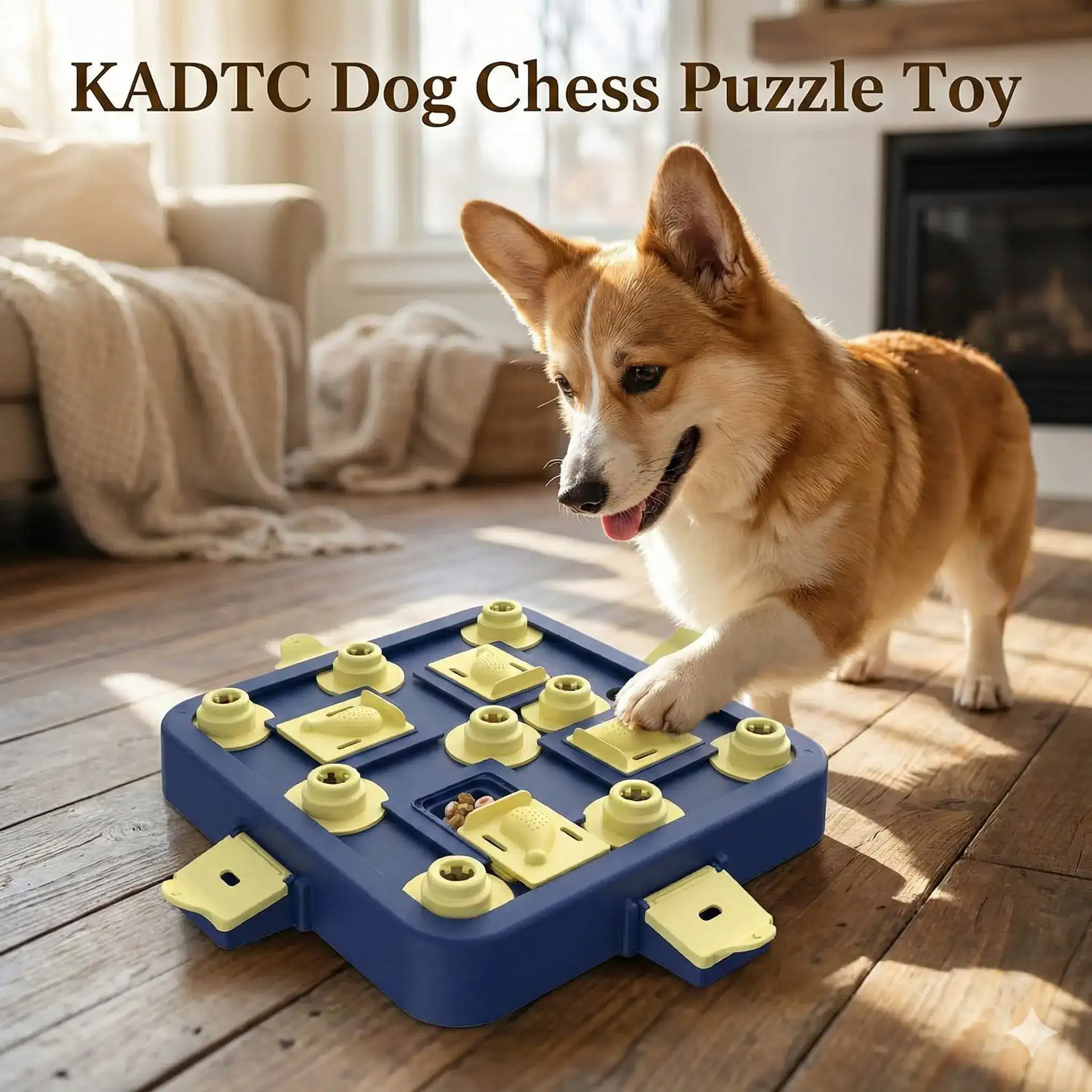
KADTC Dog Chess Puzzle Toy
Sliding-tile puzzles give a fast learner something to solve indoors, which is commonly used to fill the gap on days when the weather cuts a session short. It supplements daily exercise rather than replacing it.
Check price on AmazonBorder Collie vs Australian Shepherd vs Australian Cattle Dog vs Labrador Retriever
The Australian Shepherd is the comparison most buyers are actually making. The Australian Cattle Dog covers the tougher end of herding work, and the Labrador Retriever is what many of these households would be happier with.
| Attribute | Border Collie | Australian Shepherd | Australian Cattle Dog | Labrador Retriever |
|---|---|---|---|---|
| Weight | 30 to 55 lb by sex | 40 to 65 lb | 35 to 50 lb | 55 to 80 lb |
| Original Purpose | Sheep herding | Stock herding | Driving cattle | Retrieving waterfowl |
| Working Style | Silent pressure and the eye | Presence and voice | Physical, heel nipping | Retrieving |
| Mental Demand | Very high | High | High | Moderate |
| Coat Work | Brush 2 to 3 times a week | Brush weekly, heavy shed | Weekly brush | Weekly brush, heavy shed |
| Reaction to Strangers | Reserved | Reserved | Wary | Friendly |
| First-Time Owner? | Only if genuinely active | Only if genuinely active | No | Yes |
| Common Health Risks | CEA, TNS, hip dysplasia, epilepsy | MDR1, hip dysplasia, eye disease | Deafness, hip dysplasia, PRA | Hip and elbow dysplasia, EIC, obesity |
| Space and Activity Needs | Very high, secure running space | Very high | Very high, rural preferred | High, flexible housing |
The honest summary is that the Border Collie asks for more thinking work than any of the others. Choose it for the partnership and the responsiveness. Choose a Labrador or a Golden Retriever if what you actually want is a dog that will happily do nothing on a wet Sunday.
Common Questions about the Border Collie
How much does a Border Collie cost?
Direct Answer: As an approximate, time-sensitive guide (as of 2026), expect roughly USD 1,000 to USD 2,500 from a breeder who performs appropriate health testing.
Context: Prices vary by breeder, location, pedigree, and availability. Proven working or trial lines run higher, and rescue is genuinely common for this breed.
Management: Treat a bargain price as a signal about skipped DNA testing rather than a saving.
Are Border Collies good family dogs?
Direct Answer: Yes for very active households, and a poor choice for anyone else.
Context: They are devoted to their people. The complication is the herding instinct, which sends many of them after running children with a nip at the heels.
Management: Supervise with young children, redirect nipping from the first week, and get the exercise done before the restlessness starts.
How much exercise does a Border Collie need?
Direct Answer: Substantial daily physical activity plus separate mental work, commonly one to two hours of vigorous exercise for a fit adult.
Context: Individual needs vary, but a leash walk rarely makes a dent. The mental side is what most owners underestimate.
Management: Build frisbee, agility, or scent work into the routine rather than simply walking further.
Do Border Collies shed?
Direct Answer: Yes, steadily through the year and heavily twice, whatever the coat type.
Context: Both the rough and smooth varieties carry a dense undercoat, so the smooth coat is not a low-shedding option.
Management: Brush two or three times a week and daily during the seasonal shed.
Do Border Collies bark a lot?
Direct Answer: They may bark from excitement, frustration, boredom, or something they have spotted outside.
Context: They notice and react to movement, so a window onto a busy street gives them plenty to announce. Under-stimulation makes unwanted barking worse, which is why the breed struggles in apartments.
Management: Fix the exercise and enrichment first, then train a quiet cue. Reversing that order rarely works.
Are Border Collies good for first-time owners?
Direct Answer: Usually not, unless the owner is already active and willing to take training seriously.
Context: They learn bad habits as fast as good ones, so an inconsistent first-time handler ends up with a frustrated, reactive dog quickly.
Management: Schedule a training class before the puppy arrives, and be honest about your weekly schedule.
Can a Border Collie live in an apartment?
Direct Answer: It is possible but hard, and it depends entirely on the hours you can put in outside.
Context: The barking and the visual reactivity cause more problems in shared housing than the space does.
Management: Plan around secure off-leash space nearby rather than relying on walks from the front door.
What health tests should the parents have?
Direct Answer: Hip and ophthalmologist evaluations, plus DNA tests for CEA, TNS, and NCL.
Context: The first two are what AKC records from the national breed club. The Border Collie Society of America’s own list is far broader, so what a careful breeder runs varies and there is no single standard panel.
Management: Ask to see the certificates rather than accepting that the parents were tested.
Is there a DNA test for Border Collie Collapse?
Direct Answer: No. Despite what some listings suggest, there is no validated genetic test for it.
Context: Research points to a complex genetic basis rather than the single mutation behind Labrador collapse, so the condition is diagnosed from the clinical picture instead.
Management: Be skeptical of a breeder advertising a BCC clearance, and report episodes to your vet.
What is the Border Collie lifespan?
Direct Answer: Commonly given as 12 to 15 years, which is good for a dog of this size.
Context: They stay active into old age, and many keep wanting work long after the body has slowed.
Management: Keep the dog lean, and scale the work down gradually rather than stopping it.
Are Border Collies really the smartest breed?
Direct Answer: They top most trainability rankings, which measures how fast a dog learns from a handler.
Context: Chaser, a Border Collie, learned 1,022 object names in a long-running study. Other breeds have shown word learning too, so this is a strong claim rather than a settled one.
Management: Treat the intelligence as the reason the breed needs a job, not as a reason to buy one.
What is the difference between a Border Collie and an Australian Shepherd?
Direct Answer: The Border Collie works sheep by silent pressure and the eye. The Aussie uses more body presence and voice.
Context: The Aussie is generally stockier and slightly heavier. Both need serious daily work, but the Border Collie asks for more mental engagement.
Management: Choose on working style and grooming rather than on looks, since the coats are similarly demanding.
Finding a Puppy
The split between working lines and show lines matters more in this breed than in most. A working-bred puppy is a serious athlete, and a buyer who wanted a family dog will find that out the hard way. Ask which you are looking at well in advance rather than at pickup.
🏠 Responsible Breeders
Expect DNA results for CEA, TNS, and NCL on both parents, plus hip and eye evaluations. A serious breeder asks about your fencing, your weekly routine, and whether you have handled a high-drive dog before, and will tell you plainly if the litter is working bred.
🐾 Rescue and Adoption
Border Collie rescue organizations regularly take in dogs whose owners underestimated the breed’s exercise, training, and mental-stimulation needs. Choosing to adopt an adult from a rescue near you lets you see the actual drive level rather than guessing at it, and far fewer of these dogs reach a public sale listing than you might expect.
🚩 Red Flags to Watch For
- No DNA certificates for CEA, TNS, or NCL on either parent.
- A premium charged for blue merle or red coats.
- A breeder advertising a genetic clearance for Border Collie Collapse.
- Puppies sold as easy family dogs with no warning about drive.
- No questions asked about your experience with high-drive breeds.
- Parents showing severe anxiety, spinning, or obsessive behavior.
❓ Questions to Ask the Breeder
- May I see the CEA, TNS, and NCL results for both parents?
- What are the hip evaluations, and when were the eyes examined?
- Is this litter working bred or show bred?
- Has epilepsy or collapse appeared anywhere in the line?
- How are the puppies raised and socialized?
- What does your health guarantee actually cover?
🔍 Questions a Good Breeder Asks You
- What exercise can you provide on an ordinary workday?
- How is your yard fenced?
- Have you owned a high-drive working breed before?
- Do you plan to compete, work stock, or keep the dog as a pet?
- What is your plan if the placement does not work out?
A seller who asks nothing at all about your household is unusual among working-breed breeders, and worth a second look before you commit.
Personal Observation
💭 Personal Observation
Rambo arrived abandoned with a belt still buckled around his neck. He is the youngest of the street dogs I rescued, and he now runs alongside my bicycle without breaking pace, which for a long time I treated as the whole answer.
It was not. A dog can come back from a long run and still be looking for something to do within the hour, and that is the gap most owners never close.
A Border Collie sits at the far end of that problem. Same stamina, plus a brain that keeps working long after the legs have stopped.
Which is why the running is the easy part of this breed. Anyone can walk a dog for two hours. Far fewer people can think of something interesting for it to do afterward, every single day, for fifteen years.
Conclusion
The Border Collie is an extraordinary dog for the right household. Responsive, athletic, highly capable, and for many handlers the closest thing to a genuine working partnership they have had with a dog.
The cost is engagement, every day, for twelve to fifteen years. Not exercise alone, which is the mistake, but structured work that occupies the brain the breed was selected for.
The health side is unusually manageable because so much of it is testable. Ask for the CEA, TNS, and NCL results, read them, and be skeptical of anyone selling a collapse clearance that does not exist.
📋 Before bringing one home, run this 4-step pre-buying check
- Daily output. Can you provide substantial daily exercise plus separate mental work, on workdays too?
- Space requirement. Do you have access to safe off-leash ground where the dog can run at full speed?
- Line type. Do you know whether the litter is working bred or show bred, and which suits you?
- Health paperwork. Have you seen CEA, TNS, and NCL results plus hip and eye evaluations for both parents?
If any answer is no, reconsider the breed.
Editorial Disclaimer: This article is for informational and educational purposes only. It does not constitute veterinary advice, medical diagnosis, or treatment recommendations. Always consult a licensed veterinarian before making health-related decisions for your pet.
Accuracy Notice: While every effort has been made to ensure the information presented here is accurate and current, breed information evolves and individual dogs vary. If you spot a factual error or have updated information from a verified source, please contact us so we can review and update.
Product Disclosure: Product recommendations are based on independent research and editorial judgment. Individual results may vary. K9Sphere participates in the Amazon Services LLC Associates Program and other affiliate programs, and earns from qualifying purchases at no additional cost to you.
Last reviewed: September 2026. Article reviewed for accuracy on the date shown above.


