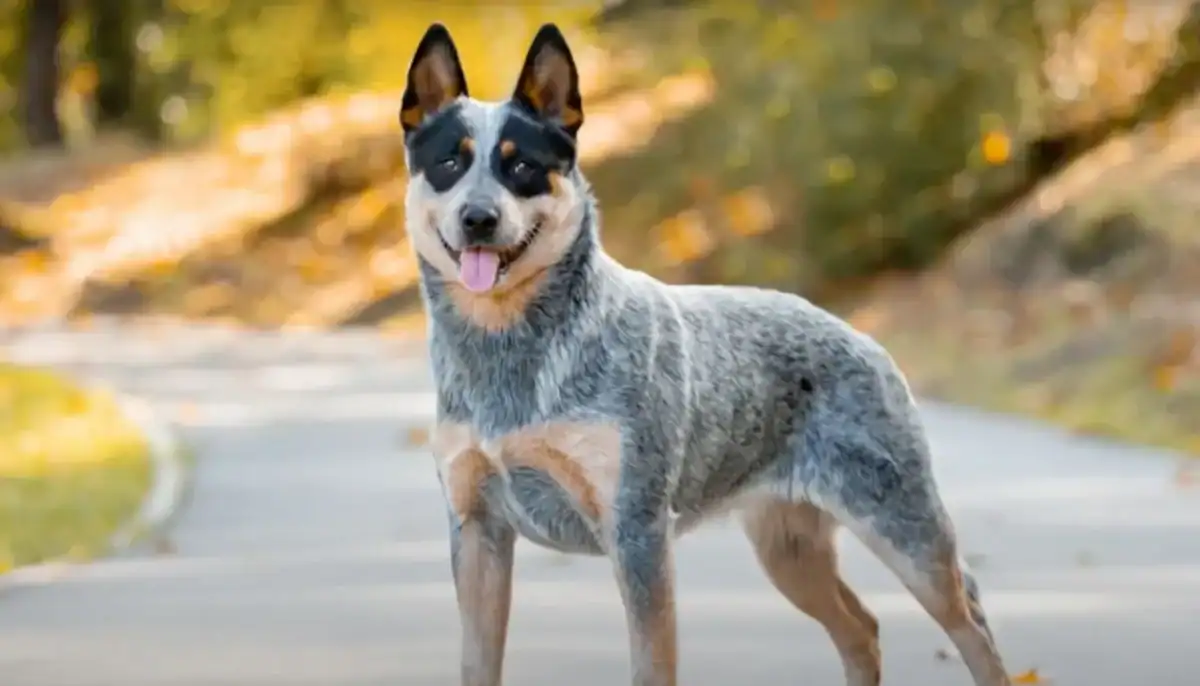
The Australian Cattle Dog was developed in the 19th century to move half-wild cattle across enormous distances in punishing heat. Much of what makes the Australian Cattle Dog breed challenging to live with traces back to that job.
It is tough, clever, and closely attached to its own people. It is also a breed that is sometimes surrendered when owners underestimate the exercise, training and mental work it needs.
This guide draws on the AKC breed standard and the Australian Cattle Dog Club of America’s published CHIC testing requirements.
Daily commitments are real exercise, something for the dog to think about, consistent rules, and a fence it cannot get through.
Two things deserve particular attention. The first is whether you can occupy the mind as well as the body. The second is whether a breeder can provide the breed’s full recommended health-testing results.
Affiliate Disclosure: K9Sphere participates in the Amazon Services LLC Associates Program and other affiliate programs. K9Sphere earns from qualifying purchases made through links in this article at no additional cost to you. Product recommendations are based on independent research and editorial judgment, not paid placement.
Breed Snapshot
📊 Vitals and Lifespan
Height
Males 18 to 20 in (46 to 51 cm)
Females 17 to 19 in (43 to 48 cm)
Weight
About 35 to 50 lb (16 to 23 kg)
Lifespan
About 12 to 16 years
Breed Group
AKC Herding Group
Origin
Australia
🇦🇺
⭐ Personality Traits
K9Sphere editorial ratings (1 to 5). A hard, clever working breed that needs a job and bonds tightly to one household.
History and Origin
Imported British herding dogs could not cope with Australian heat, distance, or cattle that had never seen a person. The Australian Cattle Dog was assembled to fix that, and it sits among the toughest of the herding dog breeds.
📌 The 1840s. Hall’s Heelers
Thomas Hall crossed imported droving dogs with dingoes. He wanted a dog that could work long days in heat and handle stock quietly. The results were known as Hall’s Heelers and stayed largely within his own stations.
📌 After Hall’s Death
The dogs spread beyond the family and others continued the development of the Australian Cattle Dog from there. The Dalmatian and the Australian Kelpie are the usual names given, though the exact recipe is not documented. In time the type became known as the Australian Cattle Dog.
📌 1902 to 1903. Kaleski’s Standard
Robert Kaleski drew up his standard for the breed in 1902. After opposition and revisions it was approved by the Australian kennel authorities in 1903, and much of it survives in the modern standard.
📌 1980. AKC Recognition
The Australian Cattle Dog was accepted by the American Kennel Club in 1980. It went into the Working Group first. It moved to the Herding Group in 1983, when that group was created. It is now well established across the USA.
Physical Characteristics
A male Australian Cattle Dog measures approximately 18 to 20 inches at the shoulder, with females an inch or so shorter. Compact, hard-muscled and slightly longer than tall. Nothing about the build is exaggerated, because an exaggerated dog could not have done the work.
🎨 Blue and Red
The double coat comes as blue speckle, blue mottle, or red speckle, often with tan markings. The cattle dog has been nicknamed the blue heeler for that blue patterning. Blue heelers and red heelers are the same breed in different colors.
🐕 Born White
Cattle dog puppies are born mostly white, with the blue or red coloring appearing over the following weeks. The breed’s pigmentation pattern is associated with congenital deafness, though the genetics behind it are not fully settled.
Character and Temperament
Australian Cattle Dogs are known for loyalty. Many pick one person and follow them from room to room. With everyone else they stay reserved. The working nature is still there, and it shows up on a farm or in a suburb alike.
🐄 It Herds Whatever Moves
The breed’s method is to nip at heels. With no cattle around, some redirect that onto children, joggers, bicycles or cars. It needs managing from the first week rather than waiting to see whether it settles.
🧠 It Thinks for Itself
These dogs were bred to make decisions without a handler nearby. That reads as stubborn when a command seems pointless to them, and they are quick to work out which rules go unenforced.
🚪 Watchful, Not Social
Most are aloof with strangers and alert to anything unfamiliar near the house. Broad early socialization is what makes the difference between watchful and reactive.
🔨 Boredom Is Destructive
A cattle dog with nothing to do will find something to occupy itself, usually chewing, digging or trying to escape. A lack of physical and mental outlets is common in dogs that end up needing new homes.
Screening and Conditions
Veterinary Disclaimer: The information in this article is for educational purposes only and is not a substitute for professional veterinary advice, diagnosis, or treatment. K9Sphere’s authors are experienced dog owners, not licensed veterinarians. Always consult a qualified DVM regarding any health concerns about your pet. Never disregard professional veterinary advice or delay seeking it because of something you have read on this site.
Health Information Sources: Data compiled from:
- Australian Cattle Dog Club of America CHIC requirements for the breed’s testing panel
- American Kennel Club breed page for the standard and general breed guidance
Always consult your licensed DVM for personalized medical advice.
The breed club’s recommended panel covers six items. These are hip and elbow evaluations, an eye exam by a board-certified ophthalmologist, a BAER hearing test, and DNA tests for prcd-PRA and primary lens luxation.
All six are worth asking for, since partial paperwork is common. OFA hip and elbow checks generally need the dog to be two years old. A PennHIP hip evaluation can be done from one year.
A CHIC number means the required tests were completed and published, not that every result was normal. Read the certificates themselves.
Common Health Concerns
🔴 Congenital Deafness
What to watch for: A puppy that does not startle at noise or fails to turn toward a voice. It can affect one ear or both, and a dog deaf in one ear often seems entirely normal. Puppies are clever enough to copy their littermates, which hides it further.
Screening: A BAER test is the only reliable answer and it is part of the CHIC panel. Ask for the individual puppy’s result, not a statement about the litter.
🔴 Progressive Retinal Atrophy
What to watch for: Hesitation in low light, bumping into things at night, then daytime vision loss. It usually appears between about five and eight years old. The breed club has reported that prcd-PRA once blinded about a quarter of the cattle dogs that lived long enough to develop it. That was before the DNA test existed. It is a historical figure, not a current rate.
Screening: A prcd-PRA DNA test gives a clear answer and two carriers should never be bred together. The eye exam by an ophthalmologist covers other inherited eye disease and is a separate requirement.
🟡 Primary Lens Luxation
What to watch for: A suddenly red, weeping or squinting eye. It usually shows up in adulthood, often around three to eight years old. The lens slips out of position, which is painful and can cost the eye.
Screening: A DNA test identifies clear, carrier and at-risk dogs, and it is part of the panel. Sudden eye pain in this breed is an emergency, not a wait-and-see.
🟡 Hip and Elbow Dysplasia
What to watch for: Stiffness getting up, a bunny-hopping run, or reluctance on stairs. Both joints are covered by the panel, and elbows are the one people forget to ask about.
Screening: OFA or PennHIP for hips and an OFA elbow evaluation, both on parents rather than puppies. Keeping the dog lean does more across a lifetime than anything else you control.
🟡 Why Deafness Is on the Panel
What to watch for: Nothing you can see. This is background rather than a symptom.
Screening: Coat pigmentation in this breed is associated with congenital deafness, which is why BAER testing sits on the panel. Research has linked pigmentation and hearing loss, but the specific gene in cattle dogs has not been pinned down.
Grooming and Coat Care
Easy for most of the year. The hard outer coat sheds dirt on its own and a weekly brush keeps it in order.
Then the undercoat comes out, usually twice a year, and it comes out in handfuls. Daily brushing through those weeks saves your house. Our guide to the best brushes for shedding dogs covers undercoat rakes made for a double coat.
Bathe rarely, since frequent washing strips the oils that make the coat weather-resistant. Check ears after dusty days, and keep nails short because long nails change how the foot lands.
Exercise and Living Needs
Plan for plenty of daily activity. Adjust it for the dog’s age, health and fitness. For many healthy adults that means an hour or more of real work. A short walk on its own is not likely to be enough.
Exercise is only half of it. A cattle dog can run for an hour and still be a problem at home if its mind was idle. That is why herding, agility, scent work and obedience suit the breed so well.
Fencing needs to be solid. These dogs climb, dig and test gates, and a bored one treats the boundary as a puzzle rather than a wall.
An apartment can be difficult for this breed, particularly when an owner cannot deliver substantial daily physical and mental activity.
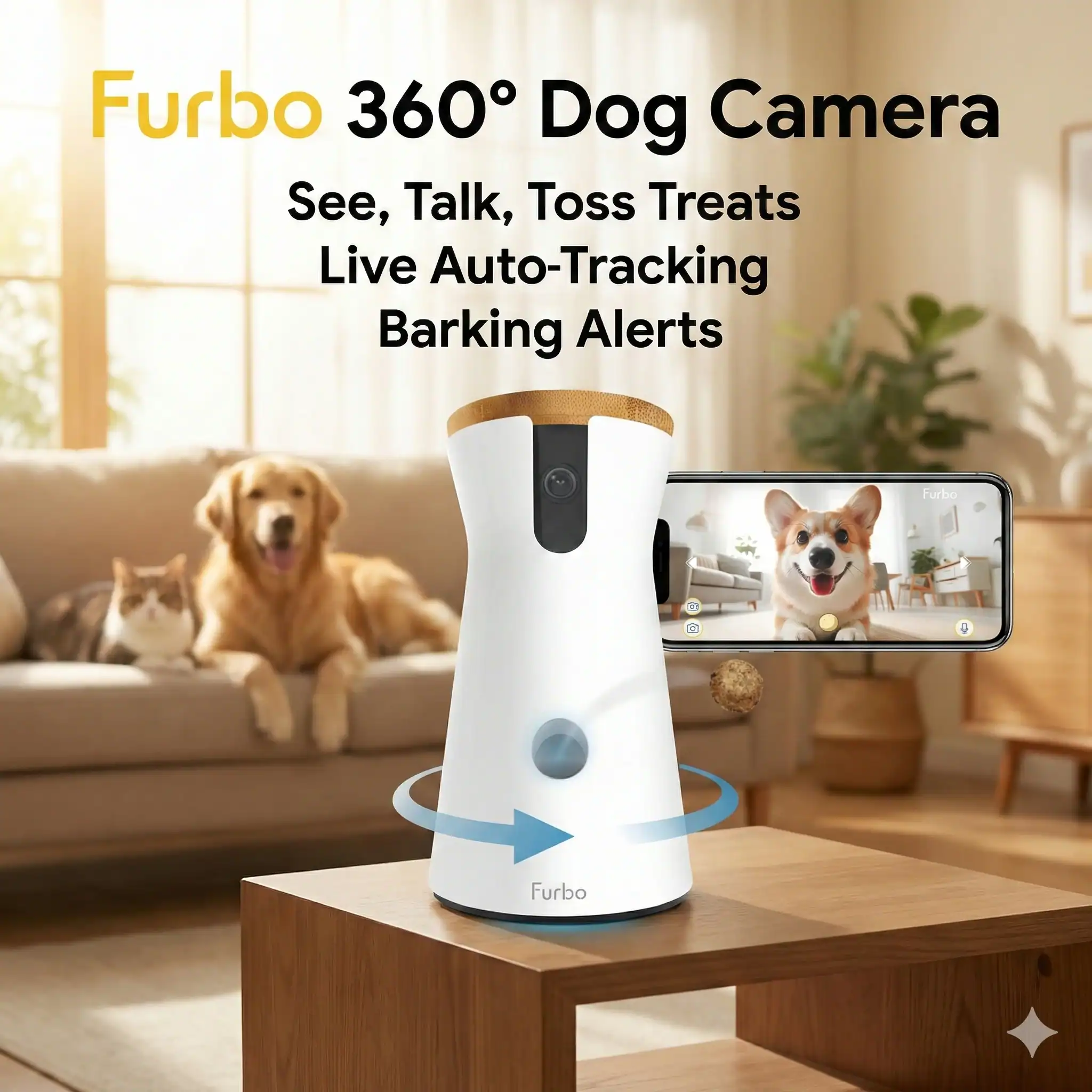
Furbo 360 Dog Camera
A camera with two-way audio shows what an Australian Cattle Dog’s day alone really looks like. That beats guessing. Some dogs of this breed develop separation anxiety, and a camera is a monitoring tool rather than a treatment for it.
Check price on AmazonNutrition & Diet
Feed a complete, balanced food with enough protein to hold working muscle. Puppies need a growth formula suited to their size, moving to adult food around maturity, often near twelve months depending on growth.
Measure portions and judge by body condition rather than by eye. Keeping a cattle dog’s weight down reduces the load on the joints that breeders already screen for. That matters more than any feeding schedule.
Keep treats to a small share of the daily total, since training uses a lot of them. Owners of older dogs sometimes raise joint supplements with their vet, though the evidence for them varies.
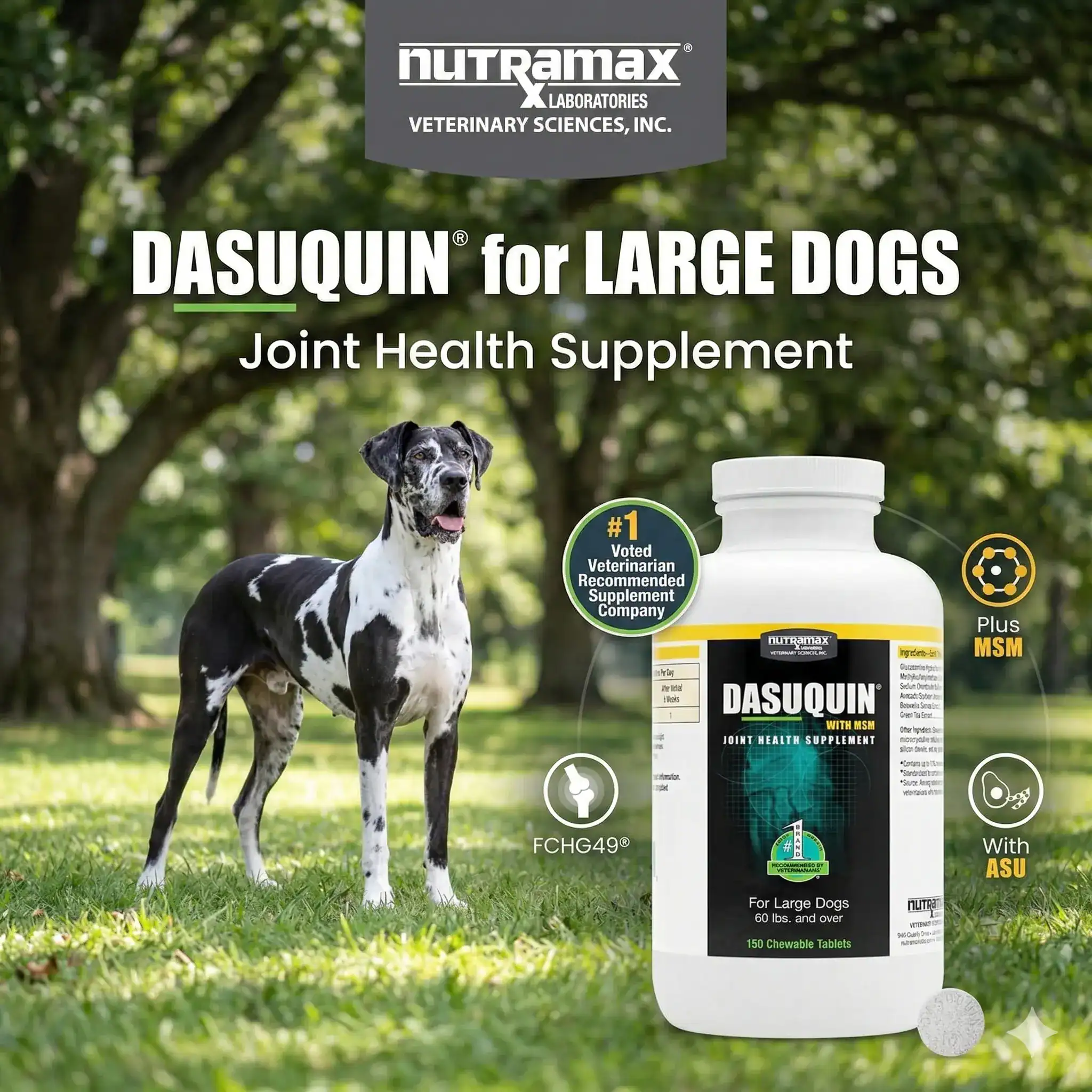
Nutramax Dasuquin with MSM Soft Chews
A glucosamine and chondroitin supplement commonly used in hard-working dogs and older ones. Evidence of benefit varies and it is not a treatment for joint disease, so check with your vet before starting.
Check price on AmazonTraining
Start the day the puppy arrives. Consistent rules matter, because this breed learns fast and will repeat whatever has been rewarded or allowed.
Reward-based methods work best. Harsh correction tends to produce a defensive dog rather than a compliant one, and this breed will argue.
Keep sessions short and varied, because repetition bores them and a bored cattle dog stops participating. Crate training gives a busy dog somewhere to switch off.
Deal with heel-nipping the first time it happens. Redirect the mouth onto a toy every single time rather than letting it become a game with people.
Australian Cattle Dog vs Border Collie vs Australian Shepherd vs Stumpy Tail Cattle Dog
The Border Collie and Australian Shepherd work sheep with eye, movement and steady pressure. The cattle dogs use heel work and body pressure to move cattle. The Australian Stumpy Tail Cattle Dog is a separate breed, not a docked version of this one. The table shows typical tendencies, and individual dogs vary.
| Attribute | Australian Cattle Dog | Border Collie | Australian Shepherd | Stumpy Tail Cattle Dog |
|---|---|---|---|---|
| Weight | 35 to 50 lb | 30 to 55 lb | 40 to 65 lb | 32 to 45 lb |
| Original Purpose | Driving cattle | Sheep herding | Stock work on ranches | Driving cattle |
| Herding Style | Heeling, forceful | Eye and movement | Eye and movement | Heeling, forceful |
| Coat | Short double coat | Rough or smooth double coat | Medium double coat | Short double coat |
| Grooming | Weekly, heavy seasonal shed | Weekly, heavy seasonal shed | More than weekly, heavy shed | Weekly, heavy seasonal shed |
| Manner with Strangers | Aloof and watchful | Reserved | Reserved but sociable | Aloof and watchful |
| Selected Breed Club Screening | BAER, eyes, hips, elbows, PRA, PLL | Eyes, hips, and DNA panel | Eyes, hips, elbows, MDR1 | Hips, eyes, deafness |
| Management Considerations | Heeling instinct, secure fencing | Mental workload | Mental workload | Heeling instinct, secure fencing |
| Space and Activity Needs | High, secure yard preferred | High, secure yard preferred | High, secure yard preferred | High, secure yard preferred |
The cattle dogs were developed for direct, physical stock control on animals that do not want to move. That confidence and drive stay in the breed whether or not there is stock to work.
Common Questions about the Australian Cattle Dog
How much does an Australian Cattle Dog cost?
Direct Answer: As an approximate, time-sensitive guide (as of 2026), expect roughly USD 800 to USD 2,000 from a reputable breeder.
Context: Prices vary by breeder, location, pedigree, and availability. Working and sport lines often sit at the top of the range, and responsible breeders incur real costs completing the recommended health testing.
Management: Breed rescues also place adults, often young dogs whose owners underestimated them.
Are Australian Cattle Dogs good family dogs?
Direct Answer: In active homes with older children, yes. They bond hard and are loyal to the point of shadowing one person.
Context: The complication is the heeling instinct, which can target running children. It is a herding behavior rather than aggression, but it can still cause an injury or frighten a child.
Management: Redirect nipping onto a toy every time, and teach a kid not to run and shriek around the dog.
How much exercise does an Australian Cattle Dog need?
Direct Answer: Substantial daily activity, roughly an hour or more for many healthy adults, plus something to think about.
Context: Needs vary with age and condition. A dog that is physically tired but mentally idle will still find trouble.
Management: Mix running with training, scent games, or a dog sport rather than adding more distance.
Are Australian Cattle Dogs aggressive?
Direct Answer: Not inherently. They are protective and aloof with strangers, and the heeling instinct can read as aggression when it is not.
Context: A dog that nips a jogger is herding, not attacking. That distinction matters for training it out, though not much to the jogger.
Management: Socialize broadly and early, and manage the nipping from the start.
What is the difference between a blue heeler and a red heeler?
Direct Answer: Only the color. They are the same breed, from the same litters, with no difference in temperament.
Context: Heeler refers to the way the breed works, by nipping at the heels of cattle. The coat comes in blue or red patterning.
Management: Choose on health testing and temperament, not color.
Why are Australian Cattle Dog puppies born white?
Direct Answer: The white puppy coat is part of the breed’s pigmentation pattern, and the adult color develops over the following weeks.
Context: That pigmentation is associated with congenital deafness in the breed, which is why BAER testing matters here. The exact genetics are still not fully established.
Management: Ask for the individual puppy’s BAER result regardless of how it looks.
Do Australian Cattle Dogs shed a lot?
Direct Answer: Moderately most of the year, then heavily when the undercoat blows, usually twice a year.
Context: The hard outer coat is easy. It is the dense undercoat underneath that fills the house.
Management: Weekly brushing normally, daily with an undercoat rake through a shed.
What health tests should the parents have?
Direct Answer: Hips, elbows, an ophthalmologist eye exam, a BAER hearing test, and DNA tests for prcd-PRA and primary lens luxation.
Context: That is the full breed club panel. Elbows and the eye exam are the two most often missing when a breeder shows partial paperwork.
Management: Ask to see the certificates, and check each evaluation meets the minimum age for the method used, since PennHIP starts younger than OFA.
Can an Australian Cattle Dog live in an apartment?
Direct Answer: It is difficult, though possible for an owner who genuinely delivers the daily exercise and mental work.
Context: Space matters less than what you do with the day. Close neighbors and a territorial dog is the other complication.
Management: Be honest about your schedule before committing, not after.
Are Australian Cattle Dogs good with cats?
Direct Answer: Possible when raised together, though a running cat can trigger a chase and a nip.
Context: The instinct is to control movement rather than to hunt, but the cat cannot tell the difference.
Management: Supervise, and give the cat high places the dog cannot reach.
How long do Australian Cattle Dogs live?
Direct Answer: Commonly 12 to 16 years, which is long for a dog of this size.
Context: An Australian cattle dog named Bluey is reported to have lived to 29, a record that is often quoted and rarely matched.
Management: Keep the dog lean, which helps protect the joints and supports long-term health.
Are Australian Cattle Dogs good for first-time owners?
Direct Answer: Generally not. The mix of drive, independence and heeling instinct is a lot for a first-time owner to manage.
Context: They train easily, which misleads people. The difficulty is living with the drive for fourteen years, not teaching a sit.
Management: If the type appeals, spend time with adult cattle dogs before deciding.
Finding a Puppy
Decide first whether you want a working line or a companion line. They are not the same dog to live with. Then ask for the full panel.
🏠 Reputable Breeders
A good breeder shows all six results for both parents. They raise puppies in the house and BAER test every puppy before it leaves. Expect questions about your fencing, your schedule and your experience with working breeds.
🐾 Rescue and Adoption
Cattle dog rescues are busy. Most of those dogs are there because a household did not expect the drive, not because anything is wrong with them. Choosing to adopt an adult, rather than looking for a puppy for sale, lets you see the energy level you are taking on.
🚩 Red Flags to Watch For
- Hip results but no elbow results, or no ophthalmologist eye exam.
- No BAER result for the individual puppy.
- No prcd-PRA or PLL DNA results on request.
- Joint results that do not meet the minimum age for the registry used.
- A seller marketing on color rather than health and temperament.
- No discussion of the heeling instinct or fencing.
❓ Questions to Ask the Breeder
- May I see hip and elbow results for both parents?
- When was each parent’s last eye exam?
- What are the prcd-PRA and PLL results?
- May I see this puppy’s own BAER certificate?
- Is this a working line or a companion line?
- What does your health guarantee cover?
🔍 Questions a Good Breeder Asks You
- How is your yard fenced, and how tall?
- How many hours a day will the dog be alone?
- Are there young children or other pets?
- What will the dog actually do each day?
- What is your plan if it does not work out?
A breeder who asks nothing about your daily routine is unusual for a breed so often placed in homes that underestimate its needs.
Personal Observation
💭 Personal Observation
Street dogs stay sharp because the street keeps handing them problems. Rambo, the youngest of my rescues, deals with other dogs every day. He has worked out when to get out of the way and when to stand his ground. Nobody in my household taught him any of that.
A cattle dog in a quiet house has no such work to occupy its mind. An hour of running tires the body and leaves the brain looking for something to do. This is a breed built to make its own decisions around livestock.
That is the kind of gap that can turn into unwanted behavior at home. If you take one on, plan for the thinking as carefully as the running. Training, scent games, a sport, a job of some kind. Physical exercise alone may not be enough for this breed.
Conclusion
The Australian Cattle Dog is one of the most capable dogs you can own. Hardy, clever, long-lived and completely devoted to its own household.
It is also a working animal that was never softened for suburban life. It does not settle quietly into a home with nothing for it to do.
Ask for all six health results, plan the mental work alongside the exercise, and be honest about your fencing. Those three things make a major difference to how ownership goes.
📋 Before bringing one home, run this 4-step pre-buying check
- Daily work. Can you give an hour or more of real exercise plus mental work, every day, for years?
- Heeling instinct. Are you ready to manage a dog that nips at heels around children, bikes and cars?
- Containment. Is your fencing solid enough for a dog that climbs, digs and tests gates?
- Health paperwork. Have you seen hips, elbows, eyes, BAER, prcd-PRA and PLL for both parents?
If any answer is no, reconsider the breed.
Editorial Disclaimer: This article is for informational and educational purposes only. It does not constitute veterinary advice, medical diagnosis, or treatment recommendations. Always consult a licensed veterinarian before making health-related decisions for your pet.
Accuracy Notice: While every effort has been made to ensure the information presented here is accurate and current, breed information evolves and individual dogs vary. If you spot a factual error or have updated information from a verified source, please contact us so we can review and update.
Product Disclosure: Product recommendations are based on independent research and editorial judgment. Individual results may vary. K9Sphere participates in the Amazon Services LLC Associates Program and other affiliate programs, and earns from qualifying purchases at no additional cost to you.
Last reviewed: September 2026. Article reviewed for accuracy on the date shown above.