
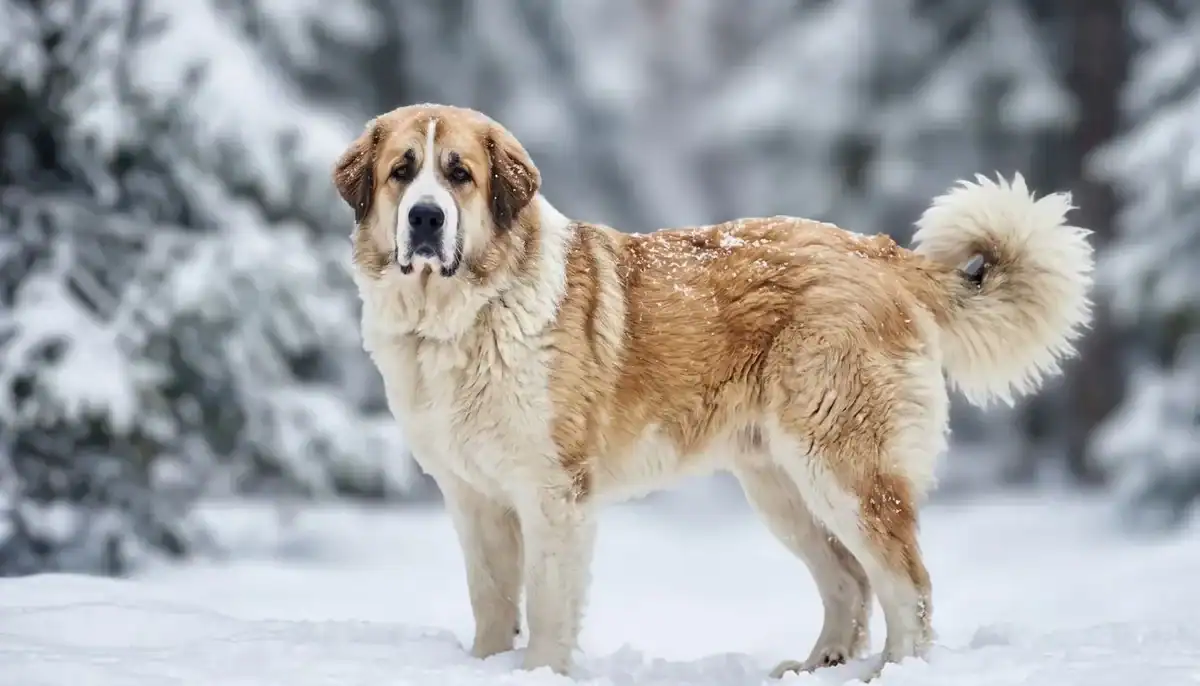
The Pyrenean Mastiff is a giant Spanish working breed developed centuries ago in the Aragon region of the Pyrenees Mountains to protect flocks from predators. This is a dog originally bred to survive harsh weather and confront dangerous threats without hesitation.
What makes this livestock guardian breed compelling is its balanced nature. Historically tasked with confronting predators such as wolf and bear, they pair that imposing size with a calm, gentle personality that integrates smoothly into modern family environments. They possess the intelligence to assess a situation and only escalate their response if a threat ignores their initial deep warning bark.
This guide draws on the official breed standards from the American Kennel Club, the Pyrenean Mastiff Association of America, and the Club del Mastín del Pirineo, then translates them into practical advice you can actually use. Below we break down the specific physical demands and Pyrenean Mastiff care requirements for managing a dog of this scale.
Daily commitments include structured obedience routines, careful joint management during early growth phases, and regular grooming for the thick double coat. Households that meet these needs gain a deeply loyal and calm companion that watches over the property instinctively.
The Pyrenean Mastiff needs a household that matches its requirements, and it challenges those that do not. Owners without a secure yard or experience handling giant dogs should review the physical and financial demands honestly before bringing one home.
Affiliate Disclosure: K9Sphere participates in the Amazon Services LLC Associates Program and other affiliate programs. K9Sphere earns from qualifying purchases made through links in this article at no additional cost to you. Product recommendations are based on independent research and editorial judgment, not paid placement.
Breed Snapshot
📊 Vitals and Lifespan
Height
Males: 30+ in (77+ cm)
Females: 28+ in (71+ cm)
No upper limit
Weight
Roughly 130 to 200 lb (60 to 90 kg)
Lifespan
10 to 12 years
Breed Group
AKC Miscellaneous Class; FCI Group 2
Origin
Spain
🇪🇸
⭐ Personality Traits
Ratings (1 to 5). This dog balances a calm household demeanor with uncompromising protective instincts when a threat appears. A low trainability score reflects an independent, decision-making mind rather than low intelligence.
History and Origin
The Pyrenean Mastiff breed originated in the historical Kingdom of Aragon in northeastern Spain. Shepherds needed powerful dogs to accompany their sheep during transhumance, the seasonal movement of animals between mountain pastures and lowland valleys.
📌 Centuries of Guardian Work
These dogs worked as independent protectors of sheep. A single guardian needed enough bulk and bravery to confront predators directly. They often wore spiked iron collars called carlancas to protect their throats during clashes with wolves.
📌 Decline in the 20th Century
The Spanish Civil War and the subsequent economic hardship nearly eliminated the breed. Large dogs were too expensive to feed during times of severe scarcity. As predators disappeared from the region, the traditional working role faded.
📌 1954: FCI Recognition
The Fédération Cynologique Internationale formally accepted the Pyrenean Mastiff in 1954. International recognition helped document the breed at a time when its numbers in Spain had fallen sharply.
📌 1977: Breed Revival
A group of breed enthusiasts founded the Club del Mastín del Pirineo de España in 1977. They gathered the few remaining dogs from rural estates to build a formal breeding program and established the breed standards recognized today.
Physical Characteristics
The Pyrenean Mastiff dog breed is defined by a massive frame and thick weather-resistant fur. This is a type of dog that commands respect entirely through sheer physical presence.
🎨 The Thick Coat
They have a dense double coat that provides insulation against freezing mountain temperatures. The base color is white with well-defined patches over the body, and the standard calls for darker markings on the ears and face. They shed moderately year-round and drop substantial amounts of undercoat during seasonal changes.
🏗️ Massive Size
They are substantial in size with heavy bone density and a broad chest. The head is large but proportionate, with a slight stop and ears that hang flat against the cheeks. Despite carrying up to 200 pounds of bulk, they move with a steady trot that conserves energy during long mountain patrols.
Character and Temperament
The Pyrenean Mastiff reflects centuries of autonomous decision-making. Such dogs operate on a different behavioral spectrum than sporting breeds that seek constant handler direction.
🛡️ Protective Guardian
They are deeply loyal to their family and naturally reserved with strangers. It will often place itself between its owners and an unfamiliar person to assess the situation. They tend to prefer intimidation over immediate action and rely on a booming bark to deter intruders.
🔥 Low Prey Drive
Because they were bred to live peacefully among vulnerable livestock, their prey drive is typically low. Many properly socialized individuals coexist well with cats, smaller dogs, and livestock, although temperament varies by dog.
💪 Independent Thinker
They tend to evaluate commands before deciding to comply. It understands basic obedience but may ignore a recall if it feels patrol duties take precedence. They do best with a handler who enforces consistent rules.
🧠 Gentle Giant
Inside the home, they are usually calm and affectionate. They show a calm, affectionate side that tends to make them tolerant of children within their own household. They conserve their energy for outdoor guard work.
Screening and Conditions
Veterinary Disclaimer: The information in this article is for educational purposes only and is not a substitute for professional veterinary advice, diagnosis, or treatment. K9Sphere’s authors are experienced dog owners, not licensed veterinarians. Always consult a qualified DVM regarding any health concerns about your pet. Never disregard professional veterinary advice or delay seeking it because of something you have read on this site.
Health and Breed Information Sources:
- American Kennel Club for breed information and the official standard
- Pyrenean Mastiff Association of America for parent-club guidance and the breed standard
- Orthopedic Foundation for Animals (OFA) for joint screening protocols
Always consult your licensed DVM for personalized medical advice.
Like all giant dogs, the sheer weight of the animal creates specific vulnerabilities. Responsible lines prioritize structural integrity to produce long-lived working dogs.
Common Health Risks
🔴 Gastric Dilatation-Volvulus (Bloat)
What to watch for: A swollen abdomen, pacing, excessive drooling, and unproductive retching. Bloat is a life-threatening emergency where the stomach fills with gas and twists. Immediate veterinary surgery is the only treatment.
Screening: Preventive care includes feeding two smaller meals daily instead of one large bowl and restricting hard activity for an hour after feeding.
🔴 Hip Dysplasia and Elbow Dysplasia
What to watch for: Stiffness rising from rest, reluctance to climb stairs, or a noticeable limp. This genetic malformation causes the hip or elbow joint to grind prematurely.
Screening: Responsible programs screen both Pyrenean Mastiff parents for joint integrity using OFA or PennHIP evaluations before producing a litter.
🟡 Entropion and Ectropion
What to watch for: Excessive tearing, squinting, or visible irritation on the surface of the eye. The eyelids roll inward or droop outward improperly.
Screening: Routine veterinary eye exams identify these structural issues early. Surgical correction is often needed to prevent permanent damage to the cornea.
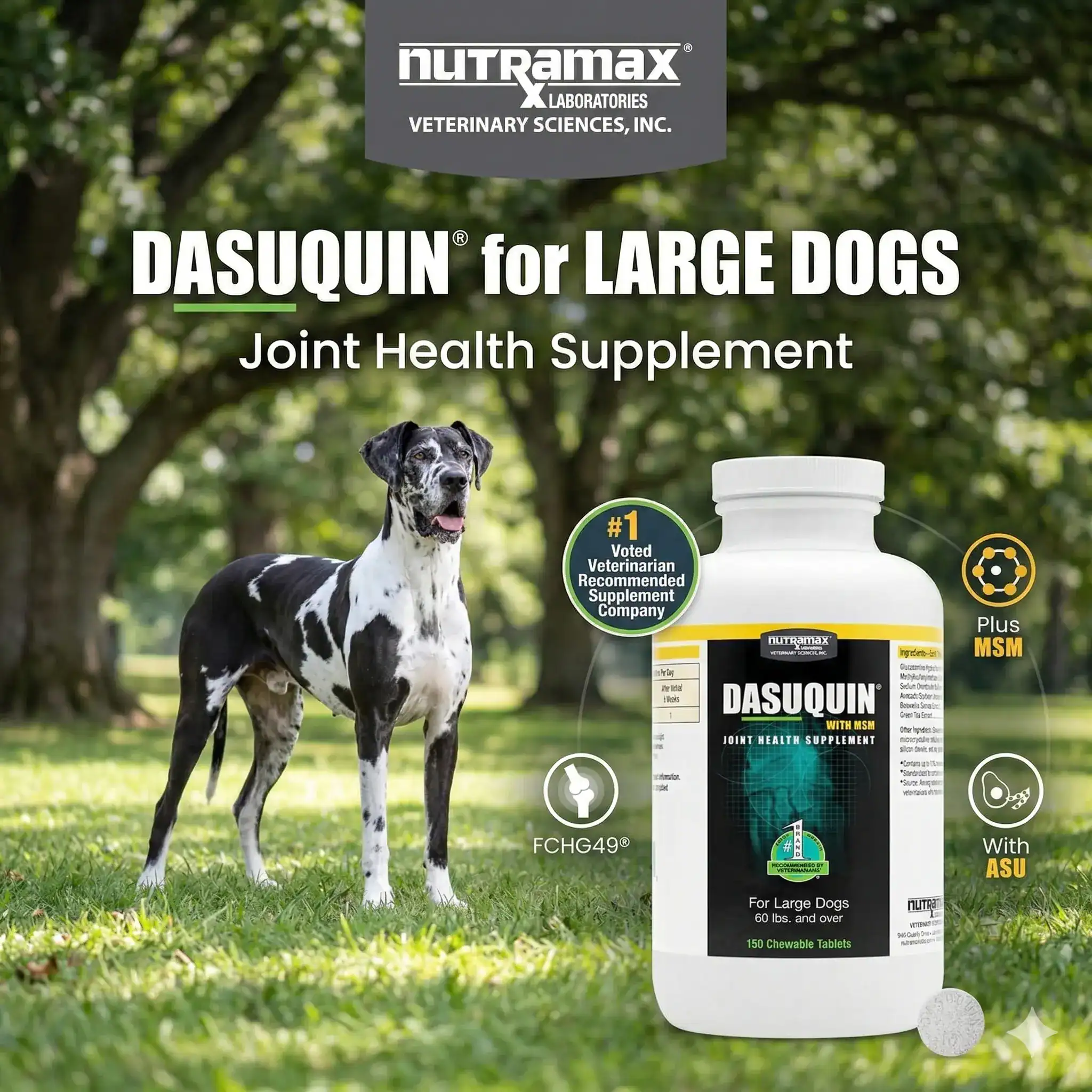
Nutramax Dasuquin with MSM Soft Chews for Large Dogs
Use for: Joint support in large working breeds prone to hip dysplasia. Combines glucosamine, chondroitin, and MSM to support cartilage in heavy dogs carrying significant weight. Consult your veterinarian before starting any supplement.
Check price on AmazonGrooming and Coat Care
The weather-resistant coat needs weekly attention. They shed steadily and blow their undercoat heavily during seasonal transitions. Work through the fur thoroughly down to the skin to prevent the dense underlayer from matting.
Using the right tools makes this process manageable. An undercoat rake and a long-pinned slicker are essential for maintaining the fur. Our guide on the best brushes for shedding dogs highlights the heavy-duty equipment needed for a giant double coat. You only need to bathe them occasionally, since the coarse outer guard hairs repel dirt naturally once mud dries.
Regular nail trimming is important. Overgrown nails force a large dog to alter its gait, which places extra stress on the joints.
Exercise and Living Needs
This is not a high-energy dog built for fetching tennis balls or running miles. They need moderate exercise focused on steady movement. A 45-minute daily walk paired with time spent observing their territory usually satisfies their physical needs.
Their large size shapes their living space. A securely fenced yard is strongly recommended to accommodate their patrolling instinct. They are a poor fit for apartment living because of their booming guard bark and immense footprint.
They thrive in cold weather and require reliable cooling, shade, fresh water, and careful heat management during hot summer months. A supportive orthopedic bed gives this heavy breed a healthier place to rest after a day of patrolling.

FurHaven Orthopedic Dog Bed (Jumbo)
Use for: Heavy-duty joint relief for giant dogs. The medical-grade foam supports the weight of a 150-pound adult and helps protect aging joints and prevent elbow calluses.
Check price on AmazonNutrition & Diet
Growing a giant puppy requires precise nutritional balance. Use a high-quality dog food formulated specifically for large breeds, which helps support balanced calcium intake. Rapid growth can permanently damage developing bones.
Adult dogs are prone to weight gain because their metabolism is relatively slow for their size. Divide their daily food intake into two meals to lower the risk of bloat. Adding hip and joint supplements for dogs provides long-term support for a skeletal frame carrying significant weight.
Training
Training one is about earning cooperation rather than forcing submission. Flock guardian breeds are independent thinkers. They learn commands quickly but tend to evaluate whether compliance is necessary in any given moment.
Early socialization is the single most important task for an owner. Expose the puppy to many strangers, children, and novel environments during the critical early socialization period, under guidance from your veterinarian. A poorly socialized adult can become difficult to manage. Keep training sessions short, use positive reinforcement, and maintain consistent household rules.
Pyrenean Mastiff vs Great Pyrenees vs Spanish Mastiff vs Caucasian Shepherd Dog
Comparing the Great Pyrenees and Pyrenean Mastiff reveals distinct historical paths. The French-side dog developed on the northern slopes, while the Pyrenean Mastiff developed on the Spanish side. The Spanish Mastiff shares the regional origin but is generally more aloof and heavier. The Caucasian Shepherd Dog tends to react more sharply to perceived threats compared to the calmer nature of the Pyrenean Mastiff.
| Attribute | Pyrenean Mastiff | Great Pyrenees | Spanish Mastiff | Caucasian Shepherd Dog |
|---|---|---|---|---|
| Weight | 120 to 200 lb | 85 to 100+ lb | 140 to 200 lb | 99 to 170 lb |
| Original Purpose | Flock guardian | Flock guardian | Flock guardian | Estate and flock guardian |
| Energy Type | Low, steady patrol | Low, patrolling | Low, steady patrol | Low, explosive bursts |
| Trainability | Independent thinker | Independent thinker | Independent, self-directed | Independent, dominant |
| Grooming | Heavy shedding, weekly brush | Heavy shedding, weekly brush | Moderate shed, weekly brush | Heavy seasonal shed |
| Threat Response | Barking, physical blocking | Barking, physical blocking | Barking, physical blocking | Confronts and defends |
| First-Time Owner? | No | No | No | No, experienced only |
| Common Health Risks | Hip dysplasia, bloat, entropion | Hip dysplasia, bloat, patellar luxation | Hip dysplasia, bloat, entropion | Hip dysplasia, heart issues |
| Living Space | House with large secure yard | Large fenced yard or farm | Large fenced yard or farm | Large securely fenced yard |
Prospective owners evaluating giant dog breeds may choose the Pyrenean Mastiff when seeking a devoted family dog that offers a reliable deterrent with a calmer, less reactive temperament than some other guarding lines.
Common Questions about the Pyrenean Mastiff
Are Pyrenean Mastiff dogs aggressive?
Direct Answer: They are not generally aggressive without cause, but they are protective when their family is threatened.
Context: They are a guardian breed designed to assess threats independently. A properly socialized dog will usually warn strangers with a deep bark rather than attack unprovoked. Poor socialization can lead to fear-based reactivity.
Management: Commit to extensive socialization from puppyhood. Ensure the dog interacts with diverse environments and people to build confidence.
How much do Pyrenean Mastiff puppies cost?
Direct Answer: As an approximate, time-sensitive guide, expect roughly USD 2,000 to 3,500 from reputable breeders in the USA. Prices vary by breeder, location, pedigree, and availability, and rates in the UK, Canada, and Australia differ.
Context: This is a rare dog breed with limited breeding stock globally. The purchase price is only the initial expense, since feeding a large dog and securing giant-breed veterinary care costs thousands annually.
Management: Budget for premium dog food and pet insurance from day one. Giant-breed orthopedic surgeries are expensive.
What is the difference between Great Pyrenees and Pyrenean Mastiff?
Direct Answer: The Pyrenean Mastiff is generally larger and heavier and features a distinct mask and body patches, whereas the Great Pyrenees is mostly solid white and somewhat smaller.
Context: Both guard sheep in the same mountain range but developed on opposite sides of the French-Spanish border. The Great Pyrenees, also called the Pyrenean Mountain Dog, is the lighter of the two, while the Spanish dog carries true mastiff bulk.
Management: If you want the guarding instinct but cannot accommodate a dog of this size, the French-side Great Pyrenees is the more practical option.
Do they make a good family dog or service dog?
Direct Answer: They are exceptional household companions but generally less suited to traditional service work than breeds specifically selected for handler-focused tasks.
Context: They are gentle and tolerant with their own household children. Their independent guardian nature, however, means they lack the constant handler focus required for service tasks in public spaces.
Management: Enjoy them as loyal home guardians. Do not expect them to perform repetitive tasks or easily ignore strangers approaching you in public.
Do Pyrenean Mastiffs shed a lot?
Direct Answer: Yes, they shed continuously and drop their dense undercoat heavily twice a year.
Context: A giant dog produces a large volume of loose fur. You will find white hair on furniture, clothing, and floors regularly.
Management: Establish a routine of weekly grooming with an undercoat rake to catch dead hair before it covers the house.
Are they a rare dog breed?
Direct Answer: Yes, they are uncommon outside of Spain and a few dedicated enthusiast circles in the US.
Context: The AKC advanced the breed to its Miscellaneous Class in 2024, a step toward fuller recognition. Finding a litter often requires joining a waitlist for months or longer.
Management: Contact the Pyrenean Mastiff Association of America to find verified breeders rather than relying on general classified ads.
Are Pyrenean Mastiffs available for adoption or rescue?
Direct Answer: Rescue is possible but rare, so most people who want this breed end up going through a breeder waitlist instead.
Context: Because so few of these dogs exist outside Spain, very few enter rescue at any given time. When one does, it is usually an adult rehomed after owners underestimated the size, cost, and exercise needs.
Management: If you are set on adopting, register with the national breed club and with livestock guardian dog rescues, then be prepared to wait. Treat rescue as a possibility, not a reliable shortcut to skipping a breeder.
What are their exercise needs?
Direct Answer: They need moderate, steady daily activity rather than intense running.
Context: A working guardian conserves energy. They tend to prefer walking the perimeter of their property slowly to monitor for threats.
Management: Provide a solid 45-minute daily walk to keep their joints moving and help prevent obesity.
Do they bark a lot?
Direct Answer: Yes, vocal deterrence is their primary method of protection.
Context: They will bark at unfamiliar noises, passing animals, and visitors. Their bark is deep and carries long distances.
Management: Train a “quiet” command early, but accept that you cannot train the alert instinct out of a guardian breed.
Should I crate train my puppy?
Direct Answer: Yes, early crate training provides a secure den and helps prevent destructive behavior.
Context: A giant-breed puppy can damage furniture quickly. Crate training also simplifies veterinary visits and safe transport.
Management: Use positive reinforcement to introduce the crate, and upgrade to a giant-sized heavy-duty crate as they grow.
Finding a Puppy
Sourcing this uncommon Spanish dog breed requires patience and careful verification. You will likely interact directly with breed enthusiasts dedicated to preserving the bloodline rather than commercial kennels.
🏠 Responsible Breeders
Start your search with the Pyrenean Mastiff Association of America or the Pyrenean Mastiff Club of America. Reputable Pyrenean Mastiff breeders provide OFA hip and elbow certifications for the sire and dam. They will interview you in detail about your fencing and your experience with giant breeds. Look for litters raised with constant human interaction.
🐾 Rescue and Adoption
While rare, adult dogs sometimes enter rescue networks. Adopting an adult lets you bypass the destructive puppy phase and clearly assess the dog’s temperament and ultimate size. Giant-breed rescues are the best point of contact.
🚩 Red Flags to Watch For
- Breeders offering puppies without OFA health testing results for joint dysplasia.
- Breeders who push the dogs as “perfect for any apartment.”
- Parents showing marked shyness or unprovoked reactivity toward visitors.
- Refusal to let you see where the litter is being raised.
Personal Observation
💭 Personal Observation
My rescue Chun Chun uses her voice to alert us to every delivery driver, and a giant Spanish guardian like this relies on the same vocal warning, only backed by a far larger frame. Where a friendly companion dog greets everyone as a potential friend, a livestock breed tends to assess each new person carefully before deciding they belong.
My senior rescue Moti moves with a slow, deliberate pace around the yard, and that same low-energy patrol style is exactly what this breed shows. Living with big dogs has taught me to establish clear boundaries early, because you cannot simply move a dog this heavy once it decides to plant its feet. The best approach involves patience, firm routines, and an understanding of independent working traits.
Conclusion
The Pyrenean Mastiff is a magnificent protector that offers steady loyalty and a calm indoor presence for experienced handlers who can manage its immense size. In our view, the clear pro is acquiring an effective property protector that remains exceptionally gentle with its own family.
The main con is managing a very large animal that sheds heavily, barks at threats, and carries significant costs for food and veterinary care. If you lack a securely fenced yard or the budget to support a giant breed, an easygoing companion like the Labrador Retriever may suit you better.
📋 Before bringing one home, run this 4-step pre-buying check
- Secure containment. Do you have a large, solidly fenced yard to accommodate their patrol instinct safely?
- Grooming reality. Are you prepared to brush a heavily shedding double coat every week?
- Financial budget. Can you afford premium large-breed food and elevated veterinary costs for a giant dog?
- Handler experience. Can you consistently manage an independent, very large dog that tests boundaries?
If any answer is no, reconsider the breed.
Editorial Disclaimer: This article is for informational and educational purposes only. It does not constitute veterinary advice, medical diagnosis, or treatment recommendations. Always consult a licensed veterinarian before making health-related decisions for your pet.
Accuracy Notice: While every effort has been made to ensure the information presented here is accurate and current, breed information evolves and individual dogs vary. If you spot a factual error or have updated information from a verified source, please contact us so we can review and update.
Product Disclosure: Product recommendations are based on independent research and editorial judgment. Individual results may vary. K9Sphere participates in the Amazon Services LLC Associates Program and other affiliate programs, and earns from qualifying purchases at no additional cost to you.
Last reviewed: June 2026. Article reviewed for accuracy on the date shown above.


