
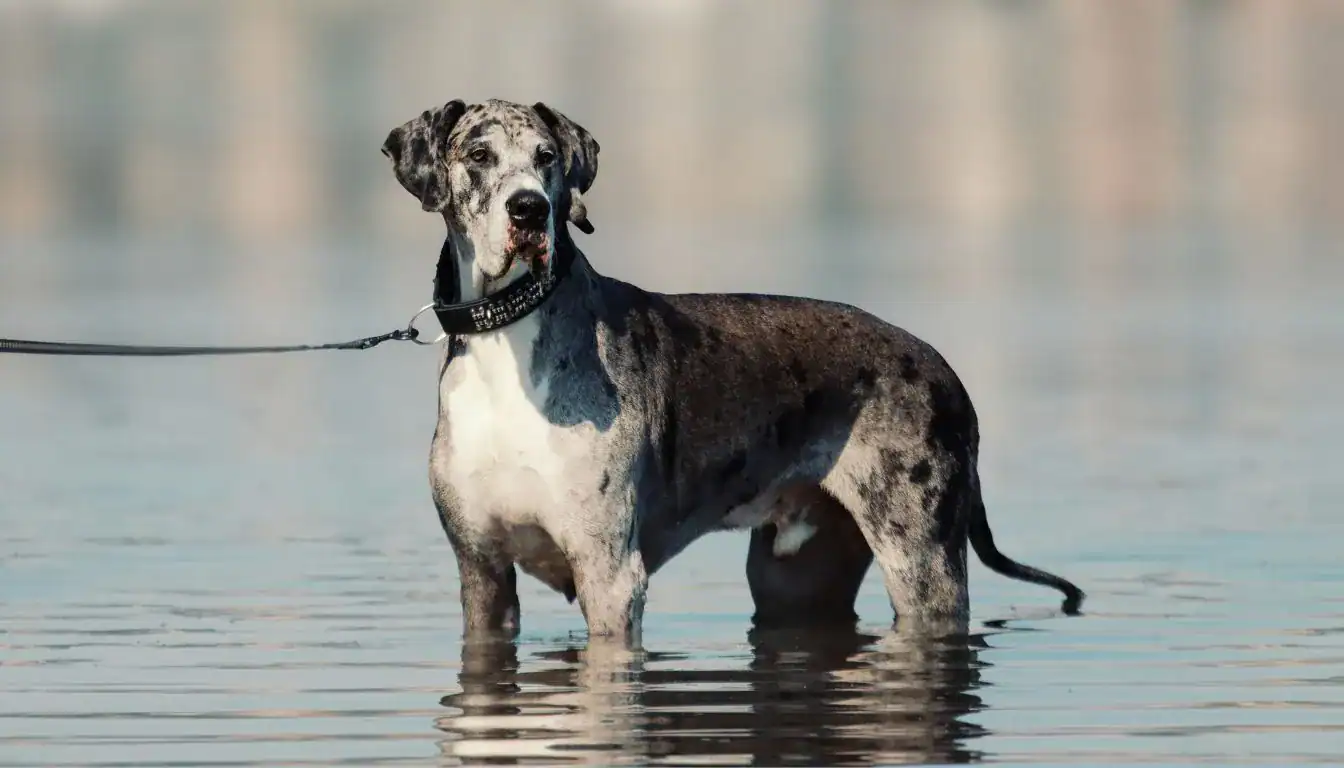
The Great Dane is a German working dog breed with a history stretching back to 16th-century boarhunting estates. Over centuries of selective breeding, the raw power of that original hunter was refined into one of the most affectionate and steady dispositions in the canine world, packaged inside a commanding physical presence that few other breeds can match.
Few breeds carry the visual presence of a well-bred Great Dane. The combination of refined proportions, deep devotion toward their household, and a remarkably calm indoor demeanor explains why the breed has been a steady fixture in family homes for over a century. They are loyal without being clingy, alert without being reactive, and gentle enough that the AKC standard explicitly requires a friendly and dependable character.
This guide draws on AKC and GDCA parent-club references, OFA orthopedic and cardiac screening protocols, and AVMA large-breed clinical research to lay out exactly what owning this dog demands from pickup to senior care.
Danes reward owners who come prepared. Routine commitments include 30 to 60 minutes of low-impact activity, structured feeding to support the large frame, weekly coat brushing, and consistent training started early. These are manageable habits when built in from day one, and they form the foundation of a thriving Great Dane household.
The one area that deserves honest attention before committing is the compressed life expectancy. Great Danes average 7 to 10 years, which is significantly briefer than medium and small dogs. For owners who understand this going in, the years are deeply rewarding. For those who discover it after bonding, the timeline can feel like it ends far too soon.
Affiliate Disclosure: K9Sphere is a participant in the Amazon Services LLC Associates Program. As an Amazon Associate, K9Sphere earns from qualifying purchases made through links in this article at no extra charge to you.
Breed Snapshot
📊 Vitals and Lifespan
Height
Males: 30-32 inches (76-81 cm)
Females: 28-30 inches (71-76 cm)
Weight
Males: 140-175 lb (64-79 kg)
Females: 110-140 lb (50-64 kg)
Lifespan
7-10 years
Breed Group
Working Group
Origin
Germany
🇩🇪
⭐ Personality Traits
Ratings (1 to 5). The Great Dane is known as the gentle giant, balancing calm household devotion with the inherent demands of a large working dog breed.
History and Origin
The origins of the Great Dane breed trace to the Germanic principalities of the 16th century, when nobility needed a powerful working dog to bring down wild boar weighing several hundred pounds. The foundation crosses combined English Mastiff bulk with sighthound speed, producing the original boarhound known as the Englische Dogge in early German records.
📌 16th Century: The Boarhound Foundation
German hunters crossed English Mastiff with tall sighthound stock to produce a large dog with the strength to pin wild boar and the speed to chase deer. This early type stood tall and far more aggressive than the modern disposition. Recent DNA work also suggests Boxer ancestry.
📌 1876: National Dog of Germany
The Great Dane was declared the national dog breed of Germany. Statesman Otto von Bismarck kept Danes as personal bodyguards. In 1878 a Berlin committee renamed the Englische Dogge as Deutsche Dogge, formalizing the German heritage that the English-language name continues to obscure.
📌 1880-1881: First Breed Standards
A meeting of fanciers in Berlin in 1880 declared the Great Dane a distinct breed and produced the first written standard in 1881. The standard prioritized balanced proportions and a friendly disposition, deliberately moving away from the savage boarhound type.
📌 1887: AKC Recognition
The American Kennel Club officially recognized the Great Dane in 1887, placing the breed in the Working Group. The GDCA parent club formed in 1889. US fanciers refined the breed further, eliminating hound coarseness and selecting for the gentle character that defines the modern Great Dane dog.
Physical Characteristics
The Great Dane is built on a square frame where height at the withers equals the length of the body. The breed is one of the tallest dog breeds in the world, with mature males commonly reaching 32 to 34 inches at the shoulder. The tallest dog records have frequently been held by Great Danes in the USA. Zeus, a black Great Dane, stood 44 inches at the shoulder before his death in 2014, briefly the largest dog by height ever recorded. Size-wise, this dog is not the heaviest. English Mastiffs commonly outweigh Danes by 50 or more pounds.
📏 The Great Dane’s Size
Males stand a minimum of 30 inches at the shoulder per the AKC standard, with 32 inches preferred. Females start at 28 inches and 30 inches preferred. Adult males weigh 140 to 175 pounds, females 110 to 140 pounds. The Great Dane is the tallest dog breed but not the heaviest, ranking behind the English Mastiff in overall body mass.
🎨 Coat and Color
The Great Dane wears a sleek, smooth, glossy coat that lies close to the body. The AKC standard recognizes seven show-acceptable colors including fawn, brindle, blue, black, harlequin, mantle, and merle. Harlequin coats are known to be the rarest, requiring two specific genes to produce the torn black patches on a pure white base.
The “Apollo of Dogs” Reputation
The Great Dane has earned the nickname Apollo of dogs for its regal carriage, balanced proportions, and dignified expression. This is not just romantic marketing. The official AKC standard explicitly calls for the breed to combine dignity, strength, and elegance with great size, and judges actively penalize dogs that look clumsy or coarse. The combination of towering size and refined elegance is a defining feature that separates the Great Dane from heavier mastiff-type breeds.
Character and Temperament
The Great Dane disposition is the breed’s defining strength. Calm, affectionate, deeply loyal to the household, and surprisingly low-energy indoors, this dog suits home life in a way few large breeds can match. Danes have been deliberately bred away from the aggressive boarhound roots, and modern lines pass through extensive character selection to produce a dependable, steady companion. People often say Great Danes are gentle giants, and the description fits adult dogs raised with consistent socialization and a kid in the home.
👨👩👧 Devoted Family Dog
Great Danes form intense bonds with their household and prefer to be in physical contact with their people whenever possible. They lean against legs, drape across laps despite their massive size, and follow people from room to room throughout the daily routine. Great Danes also display classic Velcro behavior, which makes them exceptional emotional companions but also predisposes them to separation anxiety when left alone for extended hours.
🛡️ Watchdog Without Aggression
This dog serves as a powerful natural deterrent simply by appearance. A Great Dane will alert bark at unfamiliar visitors and stand its ground if it perceives a threat to its people, but well-socialized Danes are not inherently aggressive toward humans. The AKC standard explicitly requires a friendly and dependable disposition. Aggressive or timid character is faulted in the show ring.
🐾 Moderate Prey Drive
Centuries of boarhound heritage left a residual prey drive that varies considerably between individuals. Most modern Great Danes coexist well with cats and small dogs raised alongside them, but unfamiliar small animals can still trigger chase behavior. Off-leash work in unfenced areas is risky given the breed’s size and reach when a sprint instinct fires.
🧒 Reliable with Children
Properly raised Great Danes are remarkably patient with kids, tolerating clumsy handling that would provoke many smaller breeds. The catch is sheer size. A friendly tail swipe can knock a toddler flat, and a sudden lean can crush small fingers. Supervision is mandatory until both the child and the dog have learned to read each other’s body language reliably.
Screening and Conditions
Veterinary Disclaimer: The information provided in this article is for educational purposes only and is not intended as a substitute for professional veterinary advice, diagnosis, or treatment. Always consult a licensed veterinarian for any health concerns about your pet.
Health Information Sources: Data compiled from:
- OFA (Orthopedic Foundation for Animals): CHIC required testing protocols for the Great Dane
- Great Dane Club of America: Parent-club health monograph and four-test recommendation
- AVMA: Clinical research on large-breed orthopedic and cardiac medicine
Always consult your licensed DVM for personalized medical advice.
The compressed Great Dane life expectancy of 7 to 10 years is the harsh reality of large-breed genetics. Great Danes have a brief window of life by canine standards, which is why the breed carries such a painful reputation among longtime owners. Strict screening through the four health tests recommended by the parent club is the primary defense against the inherited conditions that drive most premature deaths.
Common Inherited Conditions
🔴 Bloat (Gastric Dilatation-Volvulus)
What to watch for: Gastric dilatation-volvulus, commonly called GDV, is the number one killer of the Great Dane. The stomach fills with gas and twists on its axis, cutting off blood supply. Symptoms include unproductive retching, a visibly distended abdomen, restlessness, drooling, and rapid collapse. Without emergency surgery within hours, GDV is fatal. The lifetime risk in this breed is approximately 37 percent, the highest of any dog breed.
Prevention: Feed two to three smaller meals rather than one large meal, avoid vigorous activity for one hour before and after eating, and discuss prophylactic gastropexy surgery with your veterinarian at the time of spay or neuter. Gastropexy tacks the stomach to the body wall and is the single best step you can take to prevent the volvulus component of GDV.
🔴 Dilated Cardiomyopathy (DCM)
What to watch for: DCM causes the heart muscle to thin and weaken, leading to enlargement and progressive heart failure. The breed has a strong genetic predisposition. Symptoms include exercise intolerance, coughing, fainting, and lethargy, but many dogs show no signs until the disease is advanced.
Screening: Annual cardiac evaluation by a veterinary cardiologist starting at age 2, including echocardiogram and Holter monitor. OFA cardiac certification is part of the GDCA-required screening protocol for responsible breeding.
🟡 Hip Dysplasia
What to watch for: Approximately 12 percent of Great Danes develop this orthopedic condition, where the cartilage forms abnormally and leads to arthritis. Signs include stiffness after rest, reluctance to climb stairs, bunny-hopping gait, and visible lameness. Managed growth and lean adult body weight reduce severity.
Screening: OFA evaluation or PennHIP after 24 months of age before breeding. A quality hip and joint supplement with glucosamine and chondroitin supports cartilage health from young adulthood onward.
🟡 Wobbler Syndrome (Cervical Vertebral Instability)
What to watch for: The breed’s massive head and long neck place mechanical stress on the cervical spine, producing instability that pinches the spinal cord. Affected dogs develop neck pain, an unsteady wobbly gait, and progressive rear-leg weakness. Onset commonly occurs between 3 and 9 years of age.
Management: Feed a quality large-breed growth formula until 18 months to slow development. Use a chest harness rather than a neck collar. Diagnosis requires MRI. Treatment ranges from anti-inflammatory medication to spinal surgery depending on severity.
🟡 Osteosarcoma (Bone Cancer)
What to watch for: Bone cancer is among the three leading causes of death in tall, deep-chested breeds. Early signs include a sudden lameness in one leg with no obvious injury, swelling on a long bone, and persistent localized pain that worsens at night. The cancer spreads aggressively to the lungs.
Management: No effective screening exists. Maintain lean body weight throughout life and seek immediate veterinary imaging for any persistent lameness. Treatment combines amputation with chemotherapy in selected cases.
🟡 Hypothyroidism and Skin Allergies
What to watch for: The breed shows higher-than-average rates of hypothyroidism, presenting as weight gain, lethargy, hair loss, and recurring skin or ear infections. Allergic skin disease also appears commonly, producing chronic itching and secondary bacterial infections.
Management: Annual thyroid panels from age 4 onward. Marine-source omega-3 supplementation supports skin barrier function. Zesty Paws Salmon Oil provides EPA and DHA at therapeutic ratios suitable for the breed.
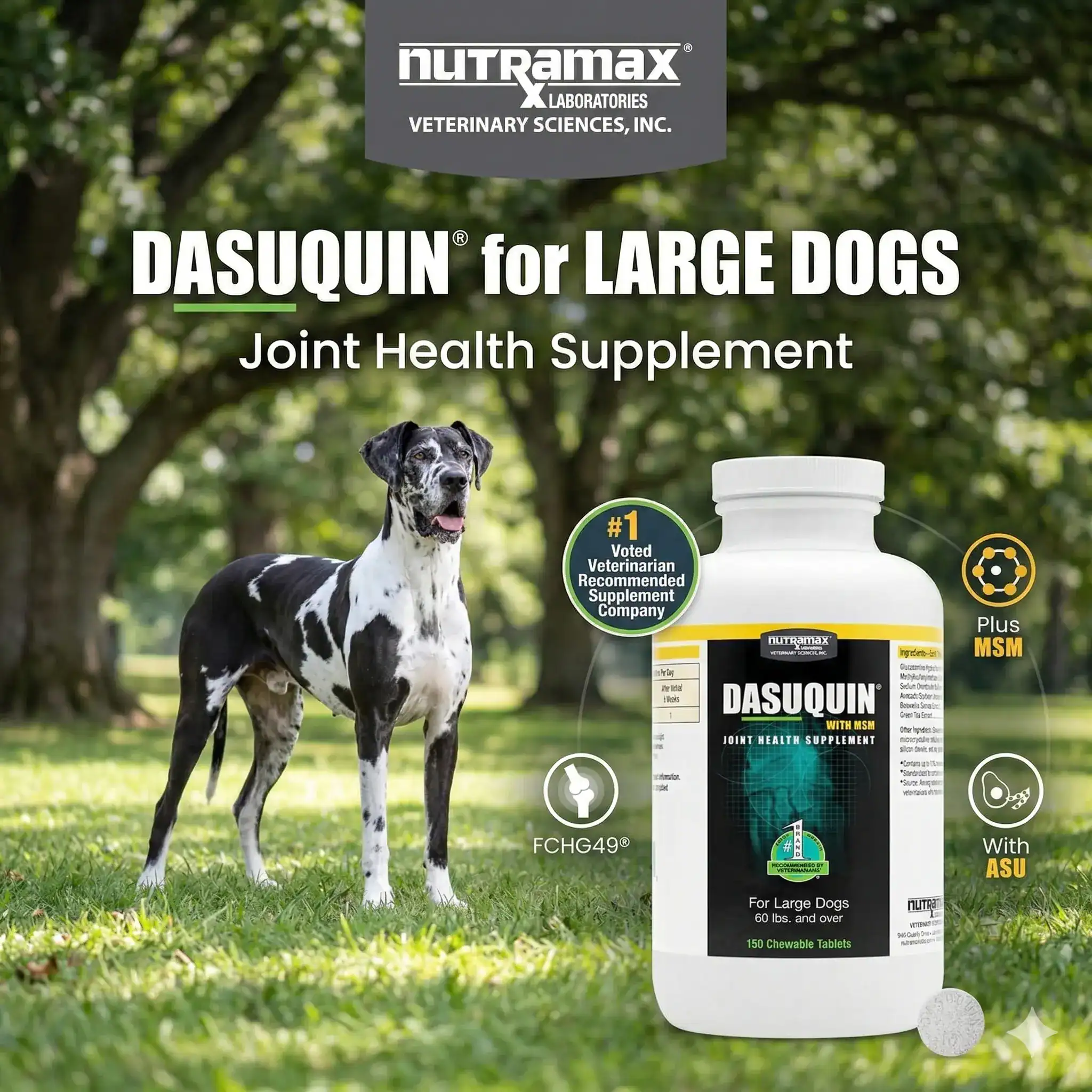
Nutramax Dasuquin for Large Dogs
Use for: Joint maintenance for large breeds prone to dysplasia and early-onset arthritis. Glucosamine, chondroitin, and ASU support cartilage health through the rapid growth years and into senior life.
Check price on AmazonGrooming and Coat Care
The Great Dane wears a short single-layer coat that demands less effort than most breeds. Grooming needs sit at the low end of the maintenance scale, but the size of the dog still creates real logistical challenges that surprise many first-time owners when they groom an adult for the first time.
Weekly brushing with a rubber curry brush or hound mitt removes loose hair and distributes skin oils across the sleek coat. Danes shed steadily year-round and undergo heavier seasonal shed in spring and autumn. Using an appropriate brush for shedding during these peak weeks keeps loose hair off the furniture.
Bathe the Great Dane every 6 to 8 weeks. The challenge is purely logistical. Bathing a 150-pound dog in a standard tub is nearly impossible, and most owners find a self-service dog wash facility or mobile groomer far more practical. Nail trimming every 3 to 4 weeks is essential because the breed’s heavy frame magnifies pressure issues from overgrown nails. Weekly ear checks and routine toothbrushing complete the schedule.
Exercise and Living Needs
The activity paradox of the Great Dane catches many new owners off guard. Adults need surprisingly modest movement, typically 30 to 60 minutes total, but young dogs require strict impact control during their long growth phase to protect developing skeletons. This breed is not a jogging or hiking partner.
Adult Great Danes thrive on two easy walks per day on flat terrain plus opportunities to stretch out and trot in a securely fenced yard. Avoid forced running on hard surfaces, repetitive jumping, and stair climbing during the first 18 to 24 months while growth plates close. Most veterinarians recommend free play on grass over structured leash walks for young dogs under one year.
Indoor space requirements are a real consideration. A Great Dane needs room to turn around without knocking over furniture, a bed sized to support 150 pounds without bottoming out, and clear pathways for the breed’s wide turning radius. Apartment housing is technically possible if the household commits to dedicated walks, but many owners find a house with a yard far more practical.
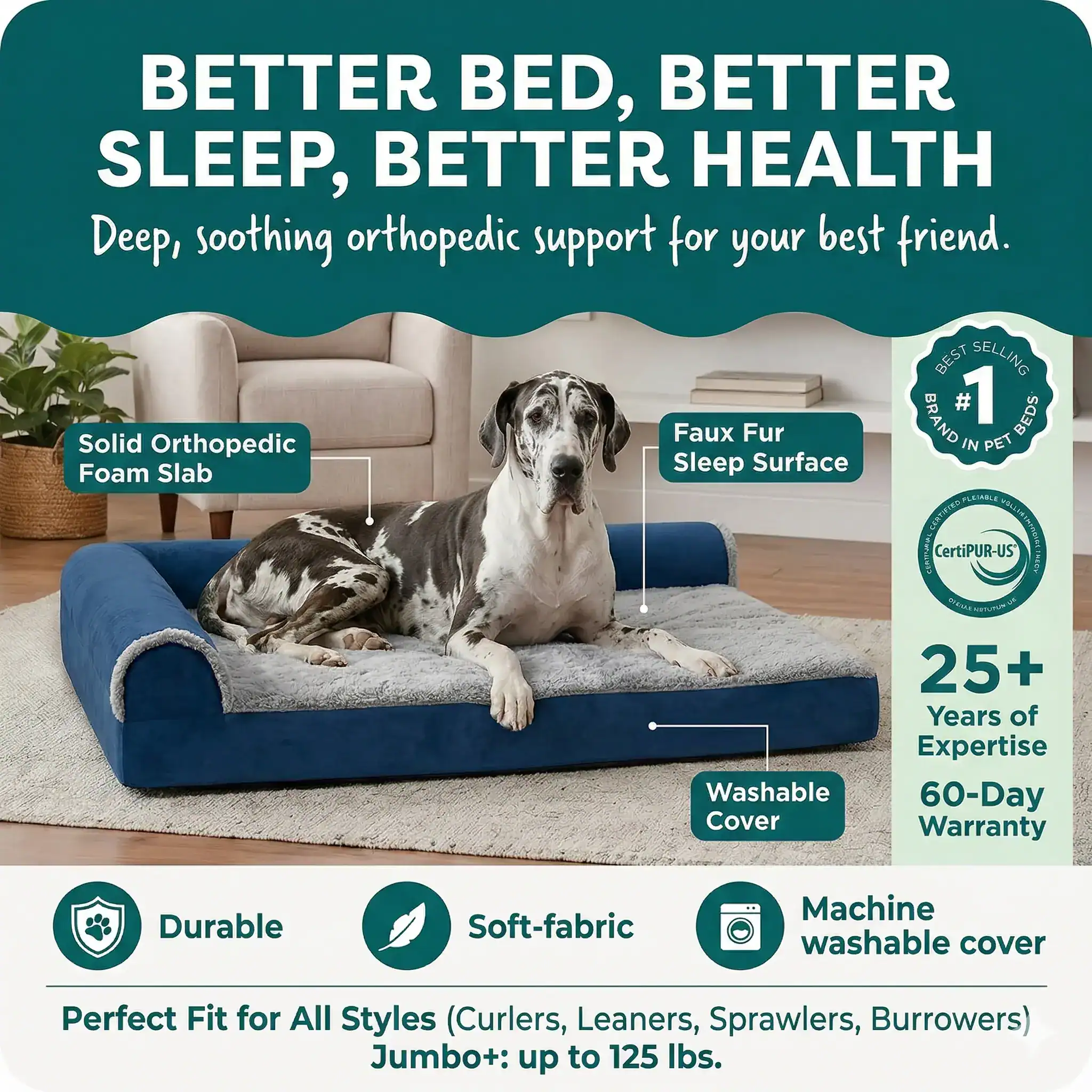
FurHaven Orthopedic Memory Foam Dog Bed
Use for: Supporting the skeletal structure of large breeds prone to dysplasia and arthritis. The orthopedic memory foam distributes weight evenly across the bed and reduces pressure on the limbs during long rest periods, which Great Danes spend most of the day in.
Check price on AmazonNutrition & Diet
Feeding the Great Dane is more complex than nourishing any other dog breed because of GDV risk and the need to manage growth rate during the developmental window. Getting nutrition wrong does not just produce an overweight dog. It produces orthopedic disease, premature skeletal failure, and elevated stomach-twist risk.
🐶 Puppy Stage
Feed a large-breed growth formula from weaning through 18 to 24 months of age. These foods regulate calcium and phosphorus levels and produce slower, steadier development that protects forming cartilage. Standard puppy food and adult food are both inappropriate for this breed during this window. Most reputable kennels recommend three to four measured meals through 6 months, then two to three meals until growth completes. Free-bowl access is strongly discouraged because it accelerates development and increases stomach-twist risk.
🐕 Adult Stage
Adult Great Danes typically need 6 to 10 cups of high-quality large-breed dry food per day, divided into two to three meals. The exact amount depends on body condition, activity level, and the calorie density of the food. Maintain a visible waist and easily-felt ribs throughout adulthood. Excess weight magnifies every orthopedic and cardiac concern this breed faces. Avoid raised bowls during meals, since current research suggests they may slightly increase GDV risk rather than reduce it.
🐕🦺 Senior Stage
From age 5 onward, the Great Dane enters early senior life. Transition to a senior large-breed formula with managed calories, cartilage support ingredients, and lean protein. Annual blood panels become essential for catching kidney disease, hypothyroidism, and early cardiac changes. Continue split meals to manage GDV risk lifelong. Keep this senior dog comfortable on orthopedic surfaces and avoid stairs and slick floors that can cause sudden falls.
Training
Training the Great Dane is non-negotiable, not optional. A poorly trained 30-pound dog is annoying. A poorly trained 150-pound dog is genuinely dangerous to small children, elderly visitors, and the household furniture. The good news is that this breed is intelligent and responds well to positive reinforcement methods.
🛑 Early Socialization
Begin socialization the moment the dog comes home, ideally between 8 and 16 weeks of age. Expose the young Dane to varied surfaces, indoor appliances, traffic sounds, friendly strangers, and well-vaccinated calm dogs. A poorly socialized Great Dane becomes a fearful adult, a serious problem given the dog’s size and reach.
👑 Loose-Leash Walking and Polite Greetings
Teach polite leash walking before the dog hits 50 pounds. Once a Great Dane realizes it can drag a handler, the lesson takes far longer to undo. Front-clip harnesses and consistent stop-and-restart protocols build a dog that walks calmly beside you for life. Polite greetings matter equally. A friendly Great Dane jumping up to lick a face can knock down a small child or an elderly visitor instantly.
🎯 Reliable Recall and Stay
A reliable recall and a rock-solid stay are the two most important behaviors to install in a Dane. Reward generously with high-value treats. Avoid harsh corrections, which damage trust and produce a fearful or shutdown dog. Mental enrichment through puzzle feeders, scent games, and trick training tires the dog efficiently, especially valuable given the impact-activity limits for this breed.
Great Dane vs Irish Wolfhound vs Saint Bernard vs English Mastiff
Understanding how the Great Dane compares to other oversized breeds clarifies what owning a giant dog actually entails. Many households considering a tall companion also evaluate the sighthound for its rustic build, the Saint Bernard for cold-weather suitability, or the English Mastiff for sheer mass. Each occupies a distinct niche, and the Great Dane sits at the elegant athletic end of that range. The Newfoundland is another large alternative worth weighing if water work and a heavier coat appeal.
| Attribute | Great Dane | Irish Wolfhound | Saint Bernard | English Mastiff |
|---|---|---|---|---|
| Weight | 110-175 lb (50-79 kg) | 105-180 lb (48-82 kg) | 120-180 lb (55-82 kg) | 120-230 lb (54-104 kg) |
| Original Purpose | Boar hunting / estate guard | Wolf and elk coursing | Alpine rescue and draft | Estate guardian / war dog |
| Energy Type | Calm indoors, mid-range outdoors | Bursts of speed, then rest | Low and steady | Low and steady |
| Trainability | Eager and biddable | Independent and aloof | Willing but slow | Stubborn but loyal |
| Grooming | Weekly brush, low effort | Weekly hand-stripping | Heavy seasonal shed | Weekly brush plus drool care |
| Threat Response | Alert bark plus presence | Reserved, rarely aggressive | Vocal warning | Calm but formidable presence |
| First-Time Owner? | With large-breed prep | Not recommended | With large-breed prep | Not recommended |
| Common Health Risks | Bloat, DCM, hip dysplasia, osteosarcoma | DCM, osteosarcoma, GDV, liver shunt | Skeletal dysplasia, GDV, entropion, bone cancer | Skeletal and elbow dysplasia, GDV, cardiomyopathy |
| Living Space | House preferred, apartment workable | House with yard preferred | House with yard required | House with yard required |
The Great Dane offers the best combination of trainability, indoor calm, and apartment compatibility among the major oversized breeds. The taller sighthound parent stock is more independent and harder for a first-time handler. The Saint suits cold climates but sheds heavily and produces formidable drool. The English Mastiff is heavier and more stubborn. Choose the Great Dane when you want a dignified dog that bonds tightly with the household and accepts apartment life with regular walks. Choose another breed if specific working traits or weather tolerances are deal-breakers.
Common Questions about the Great Dane
How tall is a Great Dane?
Direct Answer: Adult males stand 30 to 32 inches at the shoulder per the AKC standard, with many reaching 34 inches. Females stand 28 to 30 inches. The tallest Great Dane on record was Zeus at 44 inches.
Context: Standing on hind legs, an adult male commonly reaches 6 feet 5 inches or taller, capable of resting front paws on a tall human’s shoulders or browsing kitchen counters with ease.
Management: Plan household logistics around the height. Counter surfaces and kitchen tables are within easy reach. Counter-surfing prevention training matters more in this breed than in any smaller dog.
How much does a Great Dane weigh?
Direct Answer: Adult males weigh 140 to 175 pounds. Adult females weigh 110 to 140 pounds. The breed is the tallest dog breed but not the heaviest, with English Mastiffs commonly outweighing Danes.
Context: Weight increases dramatically during the first 18 to 24 months. A 12-week-old pup may already weigh 30 pounds. By 6 months, many young dogs exceed 80 pounds. Growth plate closure does not complete until around 24 months.
Management: Maintain a visible waist and easily-felt ribs across the entire life of the dog. Excess weight on a tall, lean frame accelerates orthopedic breakdown.
How long does a Great Dane live?
Direct Answer: The average Great Dane life span is 7 to 10 years, with some individuals reaching 11. The breed has one of the briefest life ranges of any dog, which has earned it a painful reputation among devoted owners.
Context: Large-breed genetics drive accelerated aging. Great Danes have a short average run compared to most dogs because cancers, cardiac disease, and stomach torsion are the leading causes of death, and they tend to arrive earlier than most owners expect. Even well-bred and well-cared-for individuals rarely reach the ages that medium and small dogs routinely hit.
Management: Choose a kennel that screens both parents through the full GDCA health protocol, feed correctly through the growth window, maintain lean adult weight, and book annual cardiac and orthopedic checks from age 2 onward to maximize the years you have.
How much does a Great Dane cost?
Direct Answer: Expect to pay USD 1,500 to USD 3,000 for a Great Dane pup from a reputable kennel in the US, with show-quality bloodlines and rare colors like harlequin reaching USD 3,500 to USD 6,000. Costs vary by country, with UK, Canada, and Australia rates differing.
Context: If you adopt from an adoption network near you, the fee typically runs USD 200 to USD 600 and often includes vaccinations, spay or neuter, and a basic veterinary workup. Lifetime ownership runs significantly higher than smaller breeds. Food alone can run USD 100 to USD 150 per month, and emergency surgery for stomach torsion or orthopedic injury commonly runs USD 5,000 to USD 10,000. Total ownership over 7 to 10 years typically falls between USD 21,000 and USD 33,000.
Management: Budget for pet insurance starting at pickup and avoid kennels listed under USD 800, which usually signals unscreened parents or commercial breeding operations.
What are the common health issues of Great Danes?
Direct Answer: The most documented Great Dane health concerns are GDV, dilated cardiomyopathy, dysplasia of the hindquarter joints, wobbler syndrome, and osteosarcoma. Hypothyroidism and skin allergies also appear at elevated rates.
Context: GDV carries the highest lifetime risk of any breed and is covered in depth in the health section above. DCM and bone cancer drive most middle-age deaths. The parent club recommends four health tests for breeding stock, covering orthopedic evaluation, cardiac examination, thyroid panel, and eye examination.
Management: Choose a kennel that provides verified health screening documentation for both parents, feed correctly to manage growth rate, schedule prophylactic gastropexy at spay or neuter, and book annual cardiac screening from age 2 onward.
What are the training considerations for a Great Dane?
Direct Answer: Train early, train consistently, and complete foundation obedience before the dog reaches 50 pounds. The size of the adult Dane leaves zero margin for poorly installed manners.
Context: The breed is intelligent and biddable but stubborn when bored or pushed too hard. Positive reinforcement with high-value treats works far better than corrections, which damage trust and produce shutdown behavior. Mental enrichment is critical given the activity restrictions for growing young dogs.
Management: Enroll in a structured young-dog class by 12 weeks. Prioritize loose-leash walking, polite greetings, recall, stay, and counter-surfing prevention. Continue training through adolescence, since 12-to-24-month Great Danes commonly test boundaries as they grow into adult bodies.
Why is the Great Dane called the heartbreak breed?
Direct Answer: The nickname reflects a brief life expectancy in a breed that attaches completely to the people it lives with. The combination produces an acute loss when it comes.
Context: Bloat, DCM, and bone cancer drive most premature deaths. Owners commonly describe the absence as particularly noticeable. A 150-pound shadow that followed them everywhere, gone in under a decade.
Management: Go in with eyes open. Most longtime Great Dane owners choose the breed again despite this.
What is the downside to owning a Great Dane?
Direct Answer: The honest downsides are a compressed lifespan, high lifetime ownership expense, GDV risk requiring strict meal routines, susceptibility to cardiac and orthopedic disease, and the practical logistics of housing and transporting a 150-pound dog.
Context: Medical bills scale with body weight. Travel becomes harder because hotels and airlines impose size limits. Furniture, vehicles, and crates often require upgrades from standard equipment.
Management: Build a budget that accommodates large-breed expenses before purchase. Identify a vet experienced with Danes. Plan a lifestyle that does not rely on frequent boarding.
How fast can a Great Dane run?
Direct Answer: A healthy adult Great Dane can hit roughly 30 miles per hour in brief sprints, though sustained running is neither common nor recommended.
Context: The sighthound and hound ancestry contributes real speed in brief bursts, but the breed is not built for endurance running. Repetitive impact on hard surfaces damages the large-breed skeleton quickly. Most owners observe a Great Dane sprinting only during play in a yard, not as a structured exercise activity.
Management: Do not jog with a Great Dane on pavement. Allow free play on grass or soft surfaces and accept that the breed prefers a calm walk over a run.
Are Great Danes good house dogs?
Direct Answer: Yes. The breed is one of the calmest and nicest large dogs indoors and adapts well to home life when activity needs are met.
Context: Great Danes are deeply attached to their household and genuinely prefer to be inside with their people rather than alone in a yard. They often pick a favorite spot and lounge there for hours. The challenge is physical scale, not energy. The dog needs room to move without crashing into walls or furniture.
Management: Provide a large orthopedic bed in a quiet corner, clear pathways through common areas, and a consistent walking routine. This dog will repay this with calm, devoted companionship inside the home.
Finding a Puppy
Great Dane puppies are bred through a mix of dedicated kennels affiliated with the parent club, regional breed clubs, and a substantial volume of commercial breeding operations that ignore health screening. Choosing the right source matters more in this breed than most because the inherited disease load is heavy and a poorly bred dog may not see its fifth birthday.
🏠 Responsible Breeders
Seek a breeder who provides current OFA certification for both parents on all four GDCA-recommended tests, covering orthopedic, heart, thyroid, and eye evaluation. They should interview you extensively about your home environment, your prior large-breed experience, and your plans for nutrition and activity. Litters should be raised inside the home with consistent human handling. Expect a wait list of six months or longer for litters from the most respected kennels.
🐾 Rescue and Adoption
Adopting through Great Dane adoption networks lets you bypass the chaotic young-dog phase and meet adults with established personalities. Many rehomed Danes enter the system through divorce, owner illness, or financial hardship rather than behavioral problems. Adult adoption fees typically run USD 200 to USD 600 and frequently include current vaccinations and a basic health workup.
🚩 Red Flags to Watch For
- Inability to provide current OFA health certification for both parents. No documentation means no screening.
- Marketing pups as “Euro,” “Mantle Merle,” or “rare color” at inflated rates without health backing.
- Sale rates significantly below the regional USD 1,500 to USD 3,000 average, frequently indicating unscreened parents or commercial mills.
- Parents showing aggression, extreme timidity, lameness, or labored breathing during your visit.
- Litters raised in outdoor kennel runs without exposure to household sounds and human handling.
- Refusal to allow you to see the environment where the litter was raised or to meet the mother.
- Pups leaving the seller before 8 weeks of age, which is a serious developmental and behavioral red flag.
Before bringing home a Great Dane puppy, run this 4-step pre-buying check: (1) Can you commit to the large-breed nutrition, training, and movement restrictions for the full span of this breed’s life, knowing the years are fewer than most dogs? (2) Is your household budget prepared for monthly food and supply expenses plus potential emergency surgery in the USD 5,000 to USD 10,000 range? (3) Does your home provide enough room, with reinforced furniture and clear pathways, to accommodate a 150-pound dog comfortably? (4) Are you emotionally prepared to lose a beloved companion before age 11 and to accept that GDV, cardiac disease, or bone cancer may shorten that further? If any answer is no, reconsider the breed.
Personal Observation
💭 Personal Observation
Working with large dogs across decades teaches one lesson that applies directly to anyone considering this breed: the timeline is shorter than it feels on day one. Many handlers face senior-stage decisions in the dog’s sixth or seventh year, when friends with smaller breeds are still in their prime. Owners who go in clear-eyed about this tend to invest properly in early-life screening, growth-stage nutrition, and orthopedic surfaces from the start. Those who treat the breed like any other big dog tend to be blindsided when cardiac signs or sudden GDV episodes arrive earlier than expected. The Great Dane is a deeply rewarding companion, but the household that thrives with one is the household that prepared for the goodbye on day one.
Conclusion
The Great Dane has earned the Apollo of dogs title for good reason. This is a towering breed that combines majestic stature with a calm, affectionate demeanor that few other oversized dogs match. They offer profound household loyalty, a dignified guardian presence, and years of devoted companionship for handlers prepared to meet the breed’s specific demands.
On the pro side, this breed delivers a calm, devoted temperament indoors, a powerful natural deterrent without active aggression, and a depth of household loyalty that few other dogs match. On the con side, the years are few, GDV risk is the highest of any breed, and lifetime expenses run high for food, medical care, and household accommodations. Committed handlers willing to manage proper nutrition, growth-controlled young-dog activity, structured training, and emotional preparation for the painful goodbye that brief life expectancy brings will find one of the most loving companions in the canine world. For households expecting a long-lived pet or a budget-friendly alternative, a Labrador Retriever or Golden Retriever will lead to a happier outcome for everyone involved.
Disclaimer: This article is for informational and educational purposes only. It does not constitute veterinary advice, medical diagnosis, or treatment recommendations. Always consult a licensed veterinarian before making health-related decisions for your pet. While every effort has been made to ensure accuracy, breed information evolves and individual dogs vary. If you spot a factual error, please contact us so we can review and update. Product recommendations are based on independent research, and individual results may vary. As an Amazon Associate, K9Sphere earns from qualifying purchases at no additional cost to you.


