
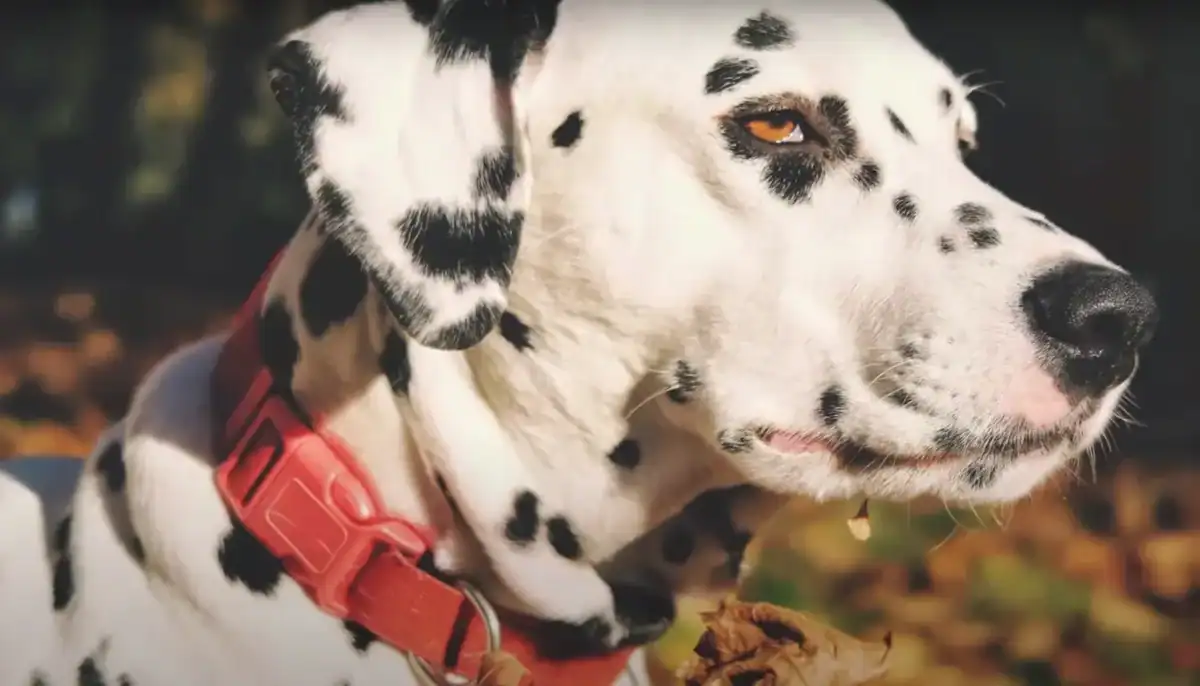
The Dalmatian is one of the most recognized dogs in the world, but behind those famous spots is a high-energy endurance breed with unusual health needs that catch many first-time owners off guard. This Croatian breed was built to run for miles alongside horse-drawn coaches and carries that stamina into every household it joins.
What makes the Dalmatian stand out is the combination of a striking spotted coat, athletic endurance, sharp intelligence, and a people-focused personality that forms intense bonds with the right household. Dals excelled as carriage escorts and firehouse companions because they could run for miles, stay focused, and work alongside humans all day.
This guide draws its dog breed information from the American Kennel Club breed profile, Dalmatian Club of America health protocols, peer-reviewed deafness prevalence data, and veterinary literature on the breed’s unique uric acid metabolism.
Daily commitments include at minimum 60 to 90 minutes of vigorous outdoor activity, consistent obedience work from the first week home, early and broad socialization, and a carefully managed low-purine diet for life. Households that invest in this structure are rewarded with an affectionate, athletic companion.
Households without adequate time for sustained daily activity, or those expecting a quiet, low-maintenance companion, should review the demands honestly before deciding. The breed rewards those who match its pace and challenges those who do not.
Affiliate Disclosure: K9Sphere is a participant in the Amazon Services LLC Associates Program. As an Amazon Associate, K9Sphere earns from qualifying purchases made through links in this article at no additional cost to you. Product recommendations are based on independent research and editorial judgment, not paid placement.
Breed Snapshot
📊 Vitals and Lifespan
Height
19 to 24 in (48 to 61 cm)
Weight
45 to 70 lb (20 to 32 kg)
Lifespan
11 to 13 years
Breed Group
Non-Sporting Group
Origin
Croatia (Dalmatia)
🇭🇷
⭐ Personality Traits
Ratings (1 to 5). This active, people-loving breed balances family loyalty and endurance against serious exercise demands, a unique dietary requirement, and a known deafness risk.
History and Origin
The origin of the Dalmatian is one of the most debated questions in canine history. Dogs resembling Dalmatians appear in ancient Egyptian art and Greek frescos, though direct ancestry to those images remains unverified. What is documented is that the breed’s name comes from Dalmatia, a coastal region of what is now Croatia, where spotted dogs appear in church records from the 14th century onward.
📌 1375 Onward: First Written Records
An early written reference appears in the archives of the Diocese of Dakovo in Croatia, where Bishop Petar Horvat described white dogs with black round spots used as hunting companions. Church records from 1719 by Bishop Petar Bakic further document the “Canis Dalmaticus” as a Croatian working dog.
📌 1700s to 1800s: The Carriage and Firehouse Era
The modern breed took shape in England, where wealthy travellers prized these dogs as carriage companions. Their natural affinity for horses, tireless endurance, and striking appearance made them status symbols. That role led to their adoption as firehouse dogs when horse-drawn engines needed reliable escorts through crowded city streets.
📌 1888: American Kennel Club Recognition
The American Kennel Club recognised the Dalmatian in 1888, placing it in the Non-Sporting Group. The Dalmatian Club of England published the first formal written standard in 1890, codifying the spotted coat, muscular build, and endurance gait of the working carriage dog.
📌 1961 and 1996: The 101 Dalmatians Effect
Walt Disney’s 1961 animated film drove a spike in registrations. The 1996 live-action remake triggered a second surge, followed by a sharp decline as unprepared families surrendered dogs they could not manage. Rescues across the US reported increased relinquishment in the years that followed. The episode remains the clearest example of what happens when a breed’s media image is mistaken for the reality of daily ownership.
Physical Characteristics
The Dalmatian is a medium to large, symmetrically built dog with clean muscular lines, a deep chest, and a smooth short coat. Every structural feature traces back to sustained endurance work. The breed was built to trot for miles without tiring, so the body is athletic rather than bulky, with strong hindquarters driving an effortless ground-covering gait.
🎨 The Spotted Coat
Dalmatian puppies are born entirely white. The spots develop within the first 10 days after birth and continue to clarify through the first year. The AKC standard recognises black-spotted and liver-spotted varieties only. Spots should be round, well-defined, and evenly distributed. The same pigmentation gene responsible for the spots is linked to the breed’s inherited deafness risk.
🏗️ Athletic Build
The body is slightly longer than it is tall. The neck is fairly long and arched, the chest deep and broad, the topline level. Eyes are brown or blue, with darker brown preferred in black-spotted dogs. Some carry one eye of each colour, which is not disqualifying but is associated with increased deafness risk. Feet are round and compact with thick pads suited to long-distance road work.
Spots, Patches, and What the Standard Says
A genuine patch is a dense, solidly pigmented area present at birth, visible on the skin before any hairs develop. It differs from a spot, which emerges over days and weeks as the coat grows. Patches are a standard fault, so patched dogs are not eligible for AKC conformation. A patched dog with verified BAER hearing results can still make an excellent household companion. The absence of a patch does not guarantee normal hearing, which is why BAER testing every individual puppy is the only reliable confirmation.
Character and Temperament
Dalmatian temperament was shaped by centuries of working alongside humans in demanding conditions. The AKC standard describes the ideal character as stable and outgoing, with shyness listed as a major fault. These dogs are people-focused to a degree that makes them sensitive to household dynamics, and they do not thrive when left alone for long stretches.
❤️ People-Bonded and Sensitive
Dals thrive on human contact and are not independent dogs content to occupy themselves in the yard. Left alone too long, they develop separation anxiety, become destructive, or bark persistently. Well-socialised Dals are affectionate with the whole family and good with children, though their energy and size can overwhelm toddlers. Owners who are calm, consistent, and fair build lasting trust.
⚡ Sustained Drive, All Day
This is not a breed that runs hard for 20 minutes and then settles. Dals carry high, sustained intensity through extended activity, and a short walk around the block leaves the tank full. Owners who run, hike, cycle, or swim find them exceptional partners. Couch-heavy households find the mismatch exhausting within weeks.
🧠 Intelligent and Trainable
These dogs pick up commands quickly when motivated and handled consistently, and they excel at obedience, agility, flyball, and scent work. That intelligence also means they read their handler’s consistency carefully. A Dal that learns commands intermittently will apply them intermittently. Positive reinforcement with clear expectations produces well-mannered adults.
🐕 Stranger Wariness and Dog Reactivity
A Dalmatian is an alert watchdog rather than a true guard dog, and will announce a visitor without much interest in confronting one. Some are reserved with strangers, others outgoing with everyone. The difference usually traces back to socialisation quality in the first 16 weeks. Dog-to-dog reactivity is documented in some lines, particularly toward unfamiliar dogs. Early socialisation and controlled introductions manage this well for most individuals, but off-leash parks carry real risk for poorly socialised dogs.
Screening and Conditions
Veterinary Disclaimer: The information in this article is for educational purposes only and is not a substitute for professional veterinary advice, diagnosis, or treatment. K9Sphere’s authors are experienced dog owners, not licensed veterinarians. Always consult a qualified DVM regarding any health concerns about your pet. Never disregard professional veterinary advice or delay seeking it because of something you have read on this site.
Health Information Sources: Data compiled from:
- Dalmatian Club of America (DCA): Hearing protocols and BAER testing requirements
- American Kennel Club: Breed reference and parent-club health guidance
- Orthopedic Foundation for Animals (OFA): Hip and ophthalmic screening protocols
- Cornell University College of Veterinary Medicine: Hyperuricosuria and urinary stone management
Always consult your licensed DVM for personalized medical advice.
The Dalmatian carries two inherited conditions that are unusual in both severity and management. Congenital deafness and the inability to metabolise uric acid are both elevated in this breed. Neither is a reason to avoid the Dalmatian. Both are reasons to source carefully, test thoroughly, and manage diet for life.
Common Inherited Conditions
🔴 Congenital Deafness
What to watch for: A puppy that does not respond to sound, startles when touched from behind, or shows inconsistent response to verbal commands. Deafness may affect one ear (unilateral) or both (bilateral). Unilaterally deaf dogs often appear normal in daily life, which is why testing matters.
Screening: A 2020 peer-reviewed study of 8,955 UK Kennel Club Dalmatians found roughly 17.8 percent affected by some degree of deafness, with 13.4 percent unilateral and 4.4 percent bilateral. DCA research across 5,333 tested dogs reported up to 30 percent affected. Blue-eyed dogs carry higher risk and dogs with a pigmented head patch carry lower risk. Selective breeding from BAER-tested parents has reduced prevalence considerably over the past 30 years. Insist on a BAER result for your individual puppy.
👀 Living With a Deaf Dalmatian
A bilaterally deaf dog can live a full life with an owner who adapts how they communicate. Three practical adjustments cover most of it.
- Visual signals. Build a consistent set of hand cues, such as a flat open palm for stay and a thumbs-up for yes, and use a torch or porch light to call the dog in after dark.
- Vibration cues. A firm stamp on a wooden floor travels well indoors and gets attention without startling the dog the way a touch from behind can.
- Safety. Use a vibrating collar, never a shock collar, and keep a deaf dog leashed unless the area is fully enclosed, since it cannot hear traffic or a recall.
🔴 Urate Bladder Stones (Hyperuricosuria)
What to watch for: Straining to urinate, frequent small urinations, blood in the urine, or abdominal discomfort. In males, a stone blocking the bladder is a medical emergency. Nearly all purebred Dalmatians carry a mutation in the SLC2A9 gene that prevents conversion of uric acid to allantoin, so uric acid accumulates and crystallises in the urine.
Management: A low-purine diet throughout life is the primary tool for reducing stone risk. Avoid organ meats, red meats, sardines, and yeast-based treats. Eggs, cottage cheese, and most vegetables are low in purines. Hydration is critical, since dilute urine reduces crystallisation. Cornell Veterinary Medicine notes recurrence after stone removal runs 33 to 50 percent, which makes lifelong dietary management non-negotiable.
🧬 LUA Dalmatians: The Genetic Fix
Hyperuricosuria is inherited as a simple autosomal recessive, and every standard Dalmatian ever tested has been homozygous for it. In 1973 the geneticist Dr Robert Schaible crossed an AKC champion Dalmatian with a Pointer to reintroduce the normal gene, then backcrossed the line to restore breed type. The result is the Low Uric Acid, or LUA, Dalmatian.
Breeder opposition kept these dogs out of the AKC Stud Book from 1981 to 2011, though they were registered with the UKC throughout. After a UC Davis team led by Dr Danika Bannasch identified the SLC2A9 mutation and made DNA testing possible, the AKC Board voted unanimously in July 2011 to admit Backcross Project descendants. A Dalmatian with two normal copies of the gene excretes uric acid normally, so if stone risk is your main concern, ask breeders whether their dogs are LUA and request the DNA result.
🟡 Hip Dysplasia
What to watch for: Limping, reluctance to climb stairs or jump, a bunny-hopping gait at speed, and stiffness on rising from rest. Signs may emerge during growth or only as joint wear progresses in adulthood.
Screening: OFA joint evaluation of both parents is standard in responsible breeding programmes, so ask for the documentation. Keep your dog lean from puppyhood onward, since excess weight adds mechanical stress to developing and ageing joints alike.
🟡 Primary Glaucoma
What to watch for: Squinting or keeping an eye partially closed, redness, cloudiness, or apparent pain around the eye. Glaucoma involves elevated pressure within the eye that leads to vision loss if untreated.
Management: Annual ophthalmic exams from age three allow early detection. Early-stage glaucoma is manageable with medication, while advanced cases may require surgery. Never dismiss changes in eye appearance in an adult Dalmatian.
🟡 Skin Sensitivity and Dalmatian Bronzing Syndrome
What to watch for: Small raised bumps on the head or along the spine that scab and shed hair, leaving white fur with a pinkish-bronze cast. Owners and breeders call this Dalmatian bronzing syndrome, or “Dal crud.” The bronze colour itself comes from porphyrin pigments in serum that seep out of inflamed follicles and stain the white hairs.
Management: The underlying problem is folliculitis with secondary bacterial infection, treated with antibiotics and antiseptic shampoos under veterinary direction. A link to uric acid metabolism has been proposed but is still debated, and not every Dalmatian develops it despite all of them excreting excess uric acid. Persistent irritation warrants a proper work-up rather than repeated changes of shampoo.
Grooming and Coat Care
The coat is one of the nicest parts of caring for a Dalmatian, since the short, dense fur needs no professional grooming at any life stage. It is deceptive about shedding, though. Dals shed year-round, and the hairs are close-lying, fine, and stiff, so they work into upholstery, carpet, and clothing and resist vacuuming more stubbornly than longer coats. This matters for households with light-coloured furniture.
Weekly brushing with a rubber hound mitt removes loose fur and distributes skin oils. For households managing heavier shed periods, our guide to the best brushes for shedding dogs covers tools that work on dense, fine fur. Dogs with sensitive skin may also do better on a gentler shampoo, though persistent irritation needs a vet.
Bathe every three to four weeks or after muddy outings. Dalmatians produce little coat oil and lack the heavy dog odour of many breeds, so frequent bathing is rarely necessary. Trim nails every three to four weeks, check ears weekly, and brush teeth at least three times a week.
Exercise and Living Needs
This is a dog built to run alongside horse-drawn coaches for hours across varied terrain. One short leash walk falls far short of the daily requirement. Plan a minimum of 60 to 90 minutes of vigorous activity split across two sessions. Brisk jogging, cycling, swimming, fetch in a large fenced yard, or structured dog sports all deliver the fatigue that produces a settled dog at home.
A securely fenced yard is strongly recommended. Dalmatians have escape-artist tendencies and a focused pursuit instinct once something catches their attention. A minimum five-foot fence with no easy footholds and secure gate latches is the standard recommendation from experienced owners and the DCA alike.
Apartment living is possible for a well-exercised, well-trained Dalmatian but challenging in practice. The stamina output, separation sensitivity, and barking under boredom all create friction in multi-unit housing. A house with outdoor space is the better long-term setup.
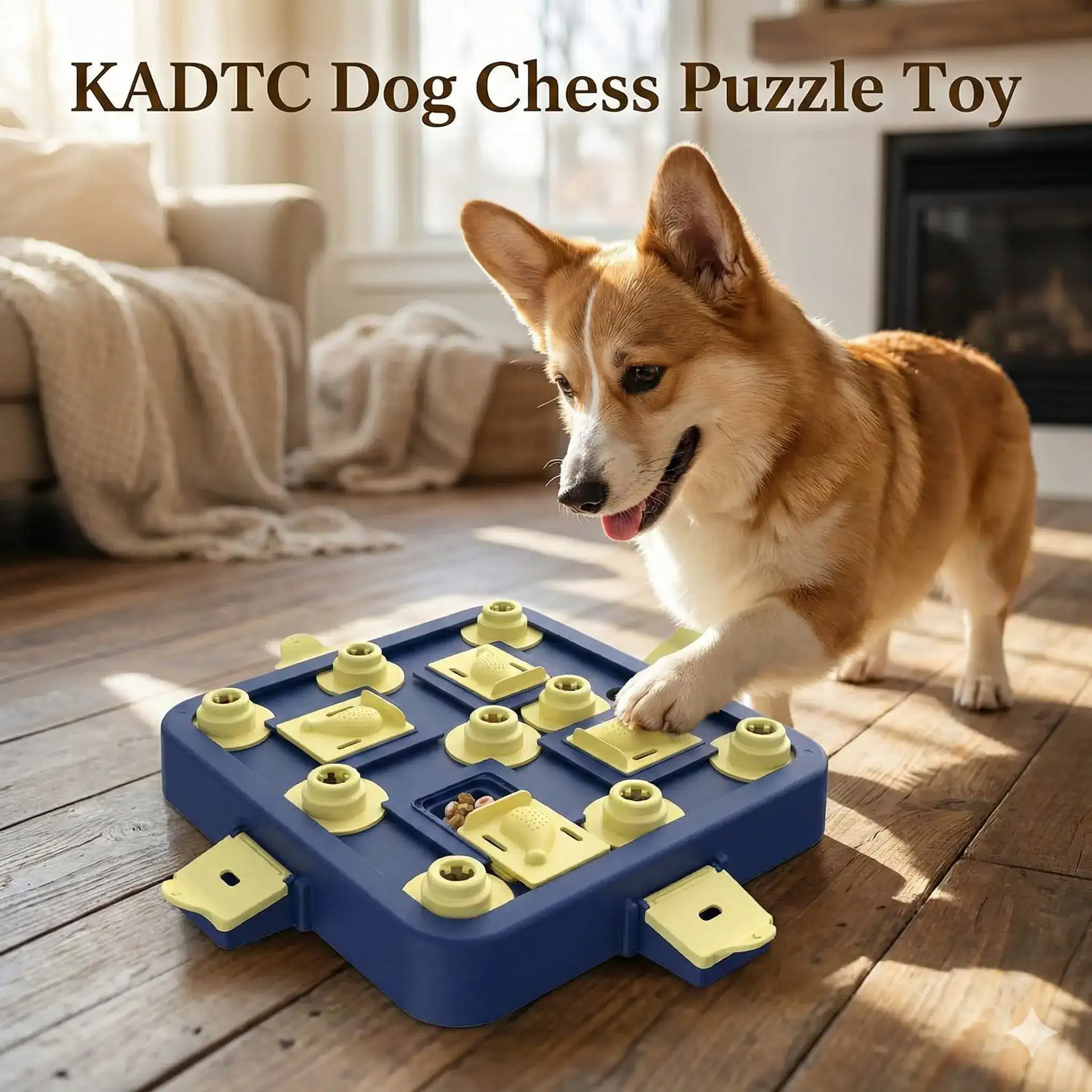
KADTC Dog Chess Puzzle Toy
Use for: Occupying a clever, people-dependent dog during the indoor hours between exercise sessions. Rotating puzzle games absorb the problem-solving drive that otherwise turns into chewing and pacing.
Check price on AmazonNutrition & Diet
Dalmatian nutrition carries a requirement no other popular breed shares at the same severity. The genetic inability to process uric acid means what you feed strongly influences whether a dog develops bladder stones. This is a lifelong obligation that starts the day a puppy arrives home.
🍽️ Purine Content at a Glance
- Avoid: organ meats such as liver and kidney, game and venison, sardines, mackerel, anchovies, and brewer’s yeast.
- Moderate, feed measured: beef, pork, poultry, most white fish, oats and other whole grains.
- Low, the safest base: eggs, cottage cheese, white rice, most vegetables such as carrots and cucumber, and fruits such as apple and blueberry.
Use this as orientation, not a prescription. Confirm any diet plan with your veterinarian, especially for a dog with a stone history.
🐶 Puppy Stage
Feed a large-breed puppy formula from a reputable manufacturer with verifiable ingredient sourcing. Avoid foods listing organ meats or yeast as primary protein sources, since both are high in purines. Three measured meals daily through six months supports steady skeletal development without the rapid growth bursts that raise dysplasia risk.
🐕 Adult Stage
Use a quality formula built on moderate-purine proteins such as chicken, turkey, or fish rather than organ and red meats. The diet should be moderate in protein, higher in complex carbohydrates, and low in fat and salt. Hydration matters as much as food choice, and many owners add water to dry kibble. Feed two measured meals daily and adjust portions to body condition rather than bag guidelines.
🐕 Senior Stage
From age seven, move to a senior formula that controls calorie density, supports joint cartilage, and maintains urinary health. The low-purine commitment does not ease with age. Annual blood panels and urinalyses let your vet monitor uric acid, kidney function, and thyroid status before anything progresses silently. Many owners of hard-running dogs also add a daily hip and joint supplement after discussing dosage with their vet.

Nutramax Dasuquin with MSM Soft Chews
Use for: A commonly used joint supplement for active medium-large dogs. Supplements do not replace weight management, appropriate exercise, or veterinary diagnosis of lameness, so discuss use and dosage with your vet.
Check price on AmazonTraining
Dalmatians are trainable when handlers are consistent, patient, and willing to make sessions engaging. They respond well to positive reinforcement with high-value rewards and clear expectations. They do not respond well to repetitive drilling or harsh corrections, which produce a dog that complies when supervised and ignores commands when not.
🛑 Socialisation Is Non-Negotiable
Broad exposure to different people, children, other dogs, traffic, and varied environments before 16 weeks shapes an adult that processes novelty calmly. A dog that missed this window becomes reactive, anxious, and difficult to manage in public. Poor socialisation remains a leading reason adult Dalmatians reach rescue networks.
👑 Obedience and Recall
Core obedience covering sit, stay, down, heel, and reliable recall must be established before adolescence. Recall is the most critical command for this breed, because a Dalmatian in pursuit will not stop for a cue it has not fully learned, and will run into traffic without hesitation. Train recall inside a securely fenced area until the response is completely reliable.
🎯 Crate Training and Alone Time
Crate training from puppyhood gives Dalmatians a structured rest space, prevents destructive behaviour when left alone, and supports house training. Start with short durations and build gradually so the crate reads as a safe place rather than a punishment. Combine crate time with puzzle feeders and chew items to keep the mind occupied.
Dalmatian vs Weimaraner vs Pointer vs Labrador Retriever
Prospective owners who want an active, athletic medium-large dog often weigh the Dalmatian against other high-stamina breeds. Comparing it to the Labrador Retriever, the Weimaraner, and the Pointer clarifies where it actually sits. All four are active, but they differ in energy type, trainability, and care demands.
| Attribute | Dalmatian | Weimaraner | Pointer | Labrador Retriever |
|---|---|---|---|---|
| Weight | 45 to 70 lb | 55 to 90 lb | 45 to 75 lb | 55 to 80 lb |
| Original Purpose | Coach dog and firehouse escort | All-purpose gun dog | Bird-pointing companion | Retriever and waterfowl dog |
| Energy Type | High, sustained endurance | Very high, intense bursts | High, focused field drive | Moderate-high, adaptable |
| Trainability | Smart, needs consistency | Intelligent but wilful | Responsive, field-focused | Highly trainable |
| Grooming | Weekly brush, sheds year-round | Weekly brush, low shed | Weekly brush, minimal shed | Weekly brush, seasonal heavy shed |
| Threat Response | Alert watchdog, can be reserved | Protective, territorial | Non-guardian, friendly | Friendly alert, low guard drive |
| First-Time Owner? | With dedication | No, experienced handlers | With active lifestyle | Yes, most forgiving |
| Common Health Risks | Deafness, urate stones, hip dysplasia | Hip dysplasia, bloat, hypothyroidism | Hip dysplasia, bloat, skin allergies | Hip and elbow dysplasia, obesity |
| Living Space | House with secure yard | House with yard required | House with yard required | Flexible with exercise |
The Dalmatian sits between the highly trainable Labrador and the more demanding Weimaraner. Choose the Dalmatian when the spotted coat, endurance profile, and people-bond are what you specifically want. Choose the Labrador when first-time suitability and adaptability matter most. All four need real daily exercise, but only the Labrador genuinely tolerates inconsistency in that commitment.
Common Questions about the Dalmatian
How much does a Dalmatian cost?
Direct Answer: As an approximate, time-sensitive guide (as of 2026), expect roughly USD 800 to 2,000 from a responsible breeder.
Context: Prices vary by breeder, location, and pedigree. Rescue adoption typically runs USD 50 to 250. Lifetime cost is the bigger figure, since food, insurance, and annual urinary monitoring add up.
Management: Secure pet insurance from day one rather than after a diagnosis, and treat the diet as a fixed monthly cost.
Are Dalmatians aggressive?
Direct Answer: Well-bred, well-socialised Dalmatians are not inherently aggressive.
Context: The AKC standard lists shyness as a major fault, so temperament stability is a breeding criterion. Reactivity here almost always traces back to poor socialisation in the first 16 weeks.
Management: Source from breeders who prioritise stable temperament, and socialise from day one through the first two years.
How fast can a Dalmatian run?
Direct Answer: Dalmatians can reach roughly 35 to 37 miles per hour at a sprint, but endurance is their real strength.
Context: The breed was built to hold a road trot alongside horse-drawn coaches for miles. That endurance profile means they tire far later than most companion breeds during extended movement.
Management: Distance running, cycling, and hiking suit them better than short bursts of fetch. Build distance gradually before 18 months to protect developing joints.
Are Dalmatians good with kids?
Direct Answer: Yes for households with children around seven and older who know how to handle a large, energetic dog.
Context: They are affectionate and playful with children they are raised with. The size and energy can knock over toddlers through enthusiasm rather than aggression.
Management: Exercise the dog before family interaction, teach gentle-handling rules early, and never leave very young children unsupervised with a large dog.
Are Dalmatians good for first-time owners?
Direct Answer: Only for genuinely active first-time owners prepared for daily structured exercise and lifelong diet management.
Context: The breed is trainable and people-focused, which forgives handling mistakes, but the exercise and diet demands are unforgiving of an inconsistent routine.
Management: Be honest about your week before committing. If you run, hike, or cycle daily, this can work. If not, choose a more adaptable breed.
Why are Dalmatians deaf?
Direct Answer: Congenital deafness in Dalmatians is linked to the piebald gene responsible for the white coat.
Context: The pathway that produces the spotted pattern can reduce pigment cells in the inner ear, which are essential for hearing. It is present at birth rather than developing with age.
Management: Ask for a BAER result on your individual puppy, not a parental clearance. Many deaf Dalmatians live full lives with owners who train using hand signals.
Can Dalmatians live in an apartment?
Direct Answer: It is possible but difficult without total commitment to daily vigorous exercise outside the home.
Context: Exercise demand, people-dependency, and barking under boredom create friction in multi-unit housing. Dogs given long structured runs and crate training from puppyhood can settle.
Management: Have a detailed daily exercise plan in place before the dog arrives. A dog sport such as agility or tracking helps structure the week.
What health problems are common in Dalmatians?
Direct Answer: Congenital deafness, urate bladder stones, hip dysplasia, and primary glaucoma.
Context: Deafness and urate stones are elevated in this breed specifically and need managing from day one. The other two are screened as in any medium-large breed.
Management: Use breeders who provide individual BAER results and OFA parent documentation, and book annual blood panels and urinalyses from year one.
Are Dalmatians easy to train?
Direct Answer: They are intelligent and trainable but need consistent, engaging methods rather than repetition.
Context: They learn quickly, which means bad habits stick as fast as good ones. Dogs that find training boring disengage, while those that enjoy it excel at agility and scent work.
Management: Start obedience at home from day one and treat training as a lifelong activity rather than a puppyhood phase.
Do Dalmatians shed a lot?
Direct Answer: Yes, they shed year-round despite the short coat.
Context: The hairs are fine, stiff, and close-lying, so they embed in fabric and resist vacuuming. Short-coated does not mean low-shedding.
Management: Brush weekly with a rubber hound mitt to catch loose hair before it reaches the furniture.
What is the lifespan of a Dalmatian?
Direct Answer: Most live 11 to 13 years.
Context: Lifespan depends on weight management, joint care, and how consistently the diet and urinary monitoring are kept up.
Management: Keep the dog lean, book annual blood panels and urinalyses, and stay on the dietary plan rather than relaxing it in later years.
Finding a Puppy
Finding a responsible Dalmatian breeder takes more research than most breeds, because two serious inherited conditions vary across bloodlines and thorough screening determines what a buyer actually gets. The 101 Dalmatians demand wave left behind a generation of poorly bred dogs, and careless breeding continues in parts of the market.
🏠 Responsible Breeders
Seek breeders affiliated with the Dalmatian Club of America who provide an individual BAER result for every puppy in the litter, not a general statement about the parents. OFA hip evaluation for both parents is standard. Good breeders ask about your living situation, exercise capacity, and daily schedule. Litters should be raised inside the household with consistent handling from birth.
🐾 Rescue and Adoption
Dalmatian-specific rescue networks operate across the US and assess both dog and household. Many Dalmatians enter rescue through owner lifestyle changes or the dog proving too active for an unprepared home, not because of behavioural problems. An adult with a known temperament is often lower risk than a puppy for a first-time owner.
🚩 Red Flags to Watch For
- No individual BAER result for your specific puppy. A parental clearance is not a substitute.
- No OFA hip documentation for both parents.
- Marketing the breed as easy or low-maintenance without asking about your exercise capacity.
- Litters raised in outdoor kennel runs with no household exposure.
- Refusal to show you both parents or the whelping environment.
- Puppies released before seven weeks of age, or advertised for immediate sale with no health paperwork.
Personal Observation
💭 Personal Observation
Among my rescued street dogs, Rambo is the closest thing I have to this level of drive. He is high-drive and needs serious running, often alongside my bicycle, before he will settle indoors. A Dalmatian was bred to hold that pace for miles at a time, day after day, which is a different order of need again.
Mun Mun shows me the other half of the picture. She shadows me room to room and shows real separation distress when left alone. Dalmatians are described the same way, and that people-dependency is the part prospective owners tend to underestimate next to the exercise.
The lesson is simple. This breed asks for daily physical work, company rather than isolation, and a diet you manage for its whole life. Get those three right and you have a remarkable dog. Miss any of them and the drive turns into damage.
Conclusion
The Dalmatian is a Croatian-origin carriage and firehouse dog that offers energetic households a striking spotted coat, endurance athletics, sharp intelligence, and genuine loyalty. Few breeds carry as much visual history or working heritage in a medium-large package.
The pro side is clear. Active owners get a devoted, iconic partner that excels at distance work and dog sports. The con side is equally clear, since every year demands sustained exercise, consistent training, strict dietary management, and BAER verification before purchase. For households wanting something calmer, a Golden Retriever will produce a better outcome for both sides.
📋 Before bringing one home, run this 4-step pre-buying check
- Exercise commitment. Can you provide 60 to 90 minutes of vigorous daily activity for the next 11 to 13 years?
- Secure containment. Is your property fenced to at least five feet with no easy escape routes?
- Dietary management. Are you prepared to maintain a low-purine diet for the dog’s entire life and monitor urinary health annually?
- Health verification. Have you confirmed an individual BAER result for your puppy and OFA documentation for both parents?
If any answer is no, reconsider the breed.
Editorial Disclaimer: This article is for informational and educational purposes only. It does not constitute veterinary advice, medical diagnosis, or treatment recommendations. Always consult a licensed veterinarian before making health-related decisions for your pet.
Accuracy Notice: While every effort has been made to ensure the information presented here is accurate and current, breed information evolves and individual dogs vary. If you spot a factual error or have updated information from a verified source, please contact us so we can review and update.
Product Disclosure: Product recommendations are based on independent research and editorial judgment. Individual results may vary. As an Amazon Associate, K9Sphere earns from qualifying purchases at no additional cost to you.
Last reviewed: September 2026. Article reviewed for accuracy on the date shown above.


