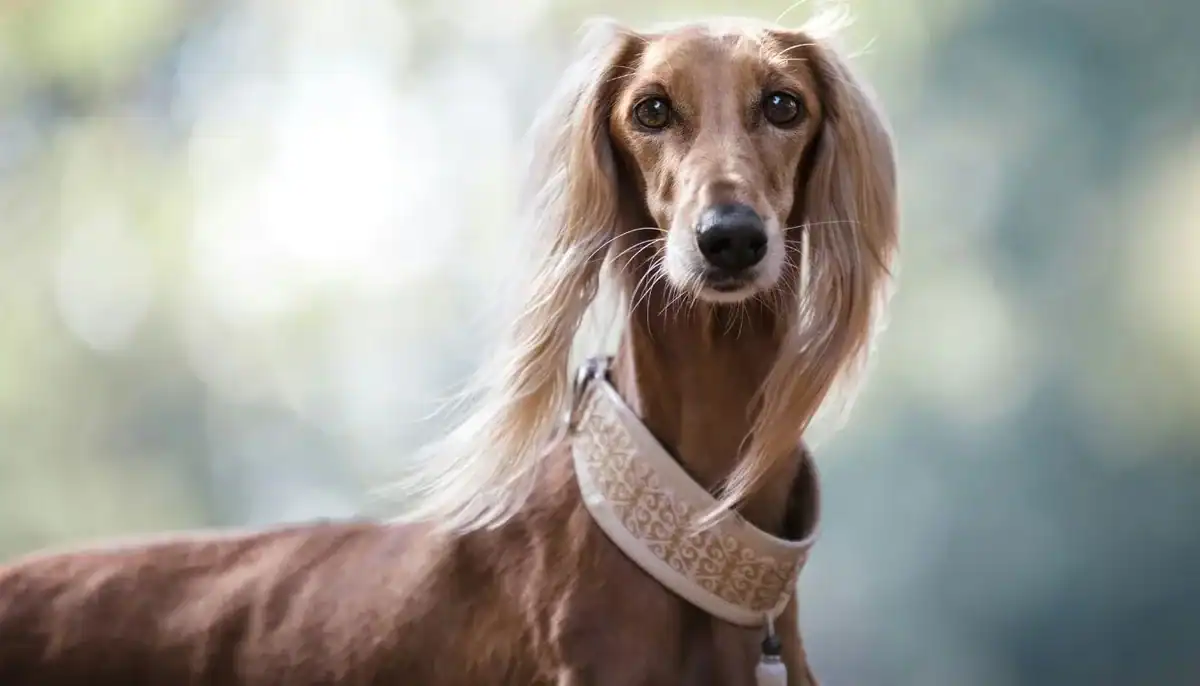
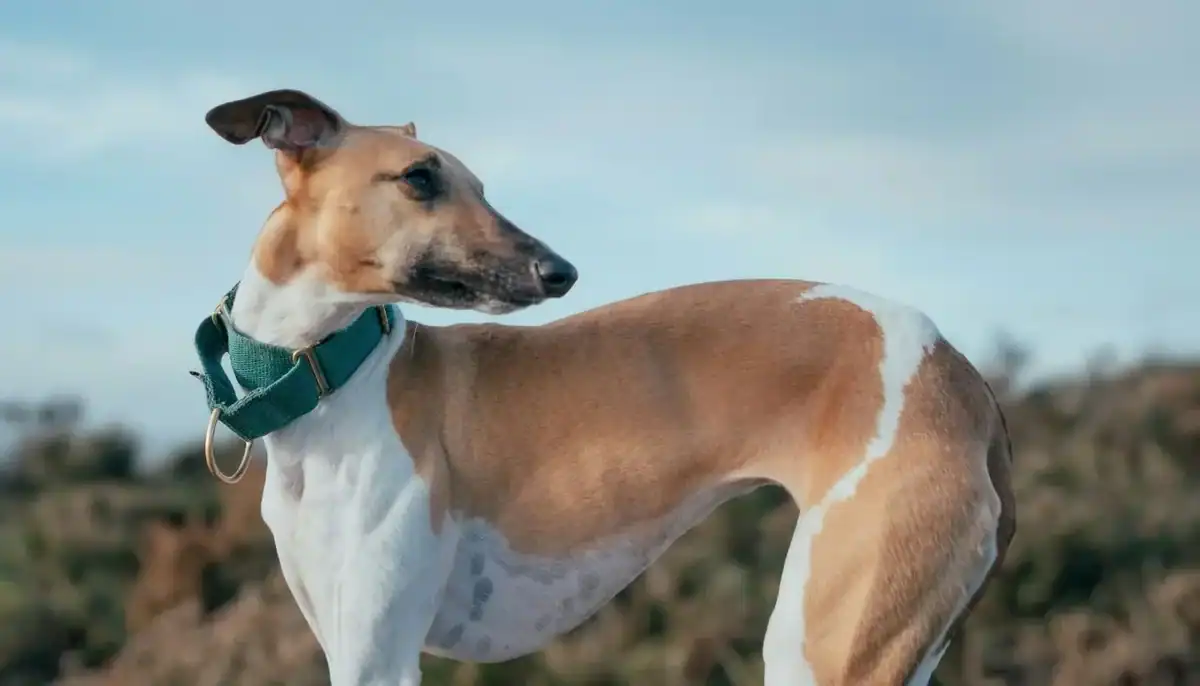
If you are comparing a Greyhound vs Whippet, you are looking at the same sighthound design at two different scales. The Whippet is built on the Greyhound plan, scaled down, and the similarity in appearance is close enough that people mix them up constantly.
Both are British-developed sighthounds bred to pursue game by sight, each is quiet and gentle indoors, and both carry a chase instinct that training improves but does not remove. Both are poorly insulated against cold, both can require sighthound-specific anesthetic considerations, and neither is suited to guard work.
The real differences are practical rather than dramatic. Size and weight, published lifespan, the health screening each parent club asks for, and most of all how you actually get one, since many Greyhounds in the United States arrive as adopted retired racers while Whippets more often come from a breeder as puppies.
This guide compares them across the areas that decide the match, from telling them apart to exercise, health screening, and cost. Each section ends with a clear round verdict so you can see which breed fits your stated use case.
Read it as a decision tool rather than a ranking. By the final verdict you should know which size, which route to ownership, and which screening paperwork suits your household.
Affiliate Disclosure: K9Sphere is a participant in the Amazon Services LLC Associates Program. As an Amazon Associate, K9Sphere earns from qualifying purchases made through links in this article at no additional cost to you. Product recommendations are based on independent research and editorial judgment, not paid placement.
Quick Answer and Who Each Round Favors
⚡ The 30-Second Answer
Choose the Greyhound if you want the larger dog and are open to adopting an adult retired racer whose temperament you can assess before committing. Choose the Whippet if you want a smaller, lighter dog, a longer published lifespan, and the option of raising a puppy from a health-tested breeder.
Each is calm indoors, poorly insulated against cold, serious about chasing, and need secure fencing rather than long runs. The real decision is size and how you want to bring the dog home.
| Category | Favors |
|---|---|
| Telling them apart | Size decides it |
| Temperament | Roughly even |
| Exercise demand | Roughly even, both modest |
| Chase instinct | High in both |
| Time alone | Limited in both |
| Apartment living | Roughly even, both suit it |
| Grooming workload | Roughly even, both minimal |
| Published lifespan | Longer for the Whippet |
| Knowing what you get | Greyhound, if adopting an adult |
| First-time owners | Roughly even |
Greyhound vs Whippet at a Glance
Whether you search for Greyhound vs Whippet or Whippet vs Greyhound, this comparison table lays out the core differences in size, lifespan, health screening, and lifestyle fit. Scan the rows that matter most to you, then read the detailed sections below.
| Attribute | Greyhound | Whippet |
|---|---|---|
| Height (male) | 28–30 in (71–76 cm) | 19–22 in (48–56 cm) |
| Weight | Males 65–70 lb, females 60–65 lb | 25–40 lb (11–18 kg) |
| Lifespan | About 10 to 13 years | About 12 to 15 years |
| Origin | Great Britain | Northern England |
| Breed group | AKC Hound | AKC Hound, recognized 1888 |
| Original purpose | Coursing, later track racing | Rabbit coursing and racing |
| Top speed reported | Above 40 mph | Around 35 mph, the slower of the two |
| Coat | Very short, flat | Very short, close and smooth |
| Cold tolerance | Low | Low |
| Usual route to a home | Adopting a retired racer | Breeder, sometimes rescue |
| Club screening focus | Heart, eyes, polyneuropathy DNA | Eyes, heart, BAER hearing |
| Signature care point | Sighthound blood work and anesthesia | Thin skin and secure fencing |
| Guarding instinct | Minimal | Minimal |
| First-time owner? | Workable when prepared | Workable when prepared |
📜 A Quick Origin Story
The two breeds come from opposite ends of British society. The Greyhound was for centuries a hunting dog of the British upper classes, used to course hares across open country, with breeding focused on speed, eyesight, agility, endurance, and the will to chase.
Modern greyhound racing began in 1912, when Owen Patrick Smith developed a mechanical lure for oval-track racing. The first British oval-track meeting was held in 1926, and thousands of dogs were then bred each year for the track rather than the show ring.
The Whippet was made by miners and mill workers in northern England who wanted a sighthound small enough to feed on a working wage. They raced their dogs down straight tracks toward a waved rag and used them to catch rabbits, which earned the breed its old nickname, the poor man’s racehorse.
English mill workers moving to New England brought their dogs and their racing with them, and the American Kennel Club recognized the Whippet in 1888.
Who Should Choose the Greyhound
🐕 The Greyhound may suit you if:
- You are happy to adopt an adult whose temperament has already been assessed.
- You want a larger dog that is still quiet and undemanding indoors.
- You have room for a big dog to stretch out on a well-padded bed.
- You will tell every vet the breed, because its blood results differ.
- You accept teaching stairs, glass doors, and slippery floors from scratch.
Who Should Choose the Whippet
🐕 The Whippet may suit you if:
- You want a smaller dog that is easier to lift, transport, and manage.
- You value the longer published lifespan of 12 to 15 years.
- You want to raise a puppy from a breeder who runs the three health tests.
- You want a sighthound that fits comfortably into a small home.
- You will check the ground before letting a thin-skinned dog run on it.
Telling Them Apart
Size settles this almost every time. A male Greyhound stands 28 to 30 inches and weighs 65 to 70 pounds, while a male Whippet stands 19 to 22 inches and weighs 25 to 40 pounds. The Greyhound is the bigger and heavier of the two by a wide margin, and seen side by side there is no confusion at all.
The difficulty comes from photographs, where scale disappears. Both have the same deep chest, tucked waist, long legs, fine head, and flexible back, and both wear a very short coat in almost any colour or pattern. Neither breed standard restricts colour much, so coat gives you nothing.
If you cannot judge size, look at the setting. A dog filling a sofa is usually a Greyhound, while a dog curled into a lap or under a blanket is more often a Whippet, though Whippets do climb into laps despite their size.
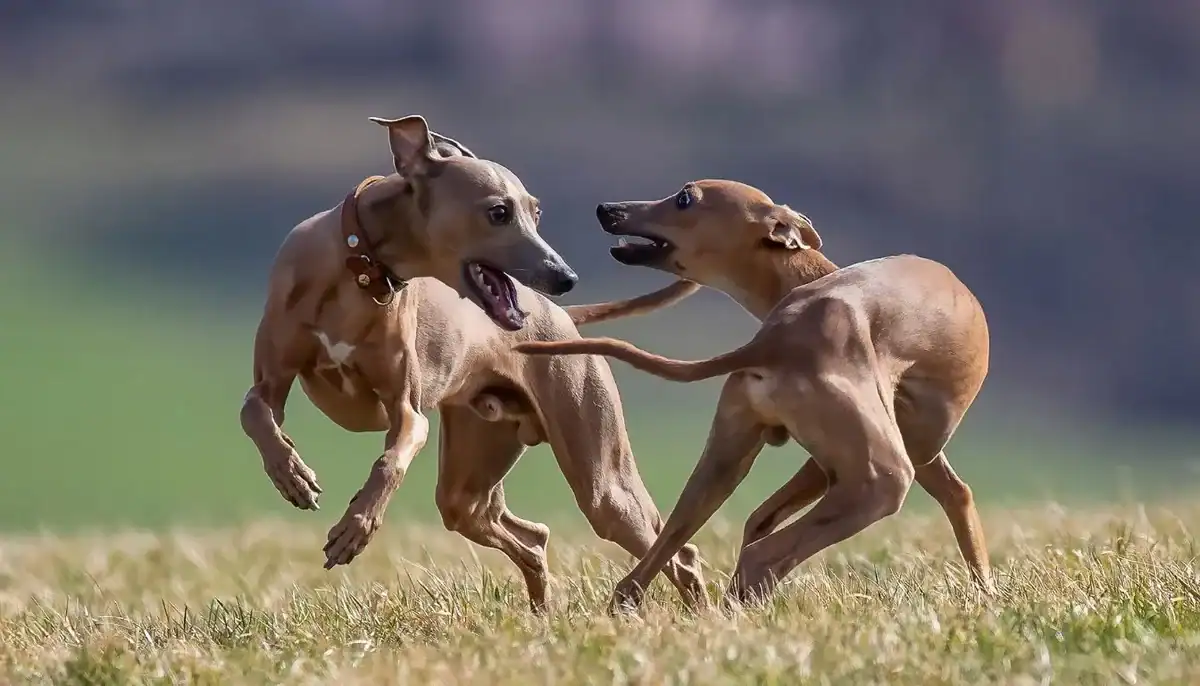
The Italian Greyhound is the third member of this family and is much smaller again at 7 to 14 pounds. If you are looking at a very small sighthound, look at the Italian Greyhound rather than assuming it is a young Whippet.
🎯 Verdict: Judge by size first, since coat and outline are nearly identical. A photograph without a reference object is genuinely hard to call, so ask for the dog’s height and weight rather than guessing.
Temperament and Personality
These two are remarkably alike indoors, and each makes a quiet companion. Each rarely barks, settles easily, and sleeps for a large part of the day, with far less restless energy than the racing outline suggests. The Greyhound is the faster of the two on reported top speeds, yet its nickname, the 40 mile per hour couch potato, applies just as well to the Whippet.
Neither is a guard dog, and neither should be expected to alert you to visitors reliably. Each is affectionate with its own people, and Whippets in particular are famously cuddly, climbing into a lap or burrowing under a blanket. Early socialization makes either breed friendlier with visitors.
Each is sensitive to handling. Each is trainable with a calm voice and reward-based methods, though sighthound trainability is often underrated because independence is mistaken for low intelligence. Each shuts down under harsh correction rather than pushing back. Both also startle if woken suddenly, which matters in a house with small children.
The one temperament note specific to the Greyhound is that a retired racer may arrive having never seen stairs, a mirror, a glass door, or a television. It is not a behaviour problem, just a set of lessons most dogs learn as puppies.
🎯 Verdict: Roughly even, and closer than almost any pair we have compared. Each is calm, quiet, gentle and sensitive, and both are calmer indoors than buyers expect. The Greyhound adds a settling-in period if it comes straight from a racing kennel.
Exercise and Living Needs
Both need regular daily exercise, but neither needs to spend hours running continuously, and that surprises most buyers. Walks, a hike, play, training, and safely controlled sprinting can all contribute, and in hot weather it is worth moving activity to the cooler parts of the day.
Current AKC guidance places the Whippet at roughly one to two hours of physical activity a day, and individual needs vary with age, health, conditioning, and temperament.
Neither is a distance runner. Each is built for short bursts, will run hard for well under a minute, and then sleep for hours. Neither is naturally suited to sustained long-distance running in the way an endurance breed is.
Both suit apartments and city living well because of how little they do indoors. What matters more than floor space is a soft bed, since a well-padded surface is often more comfortable for breeds with little soft tissue over prominent bony areas.
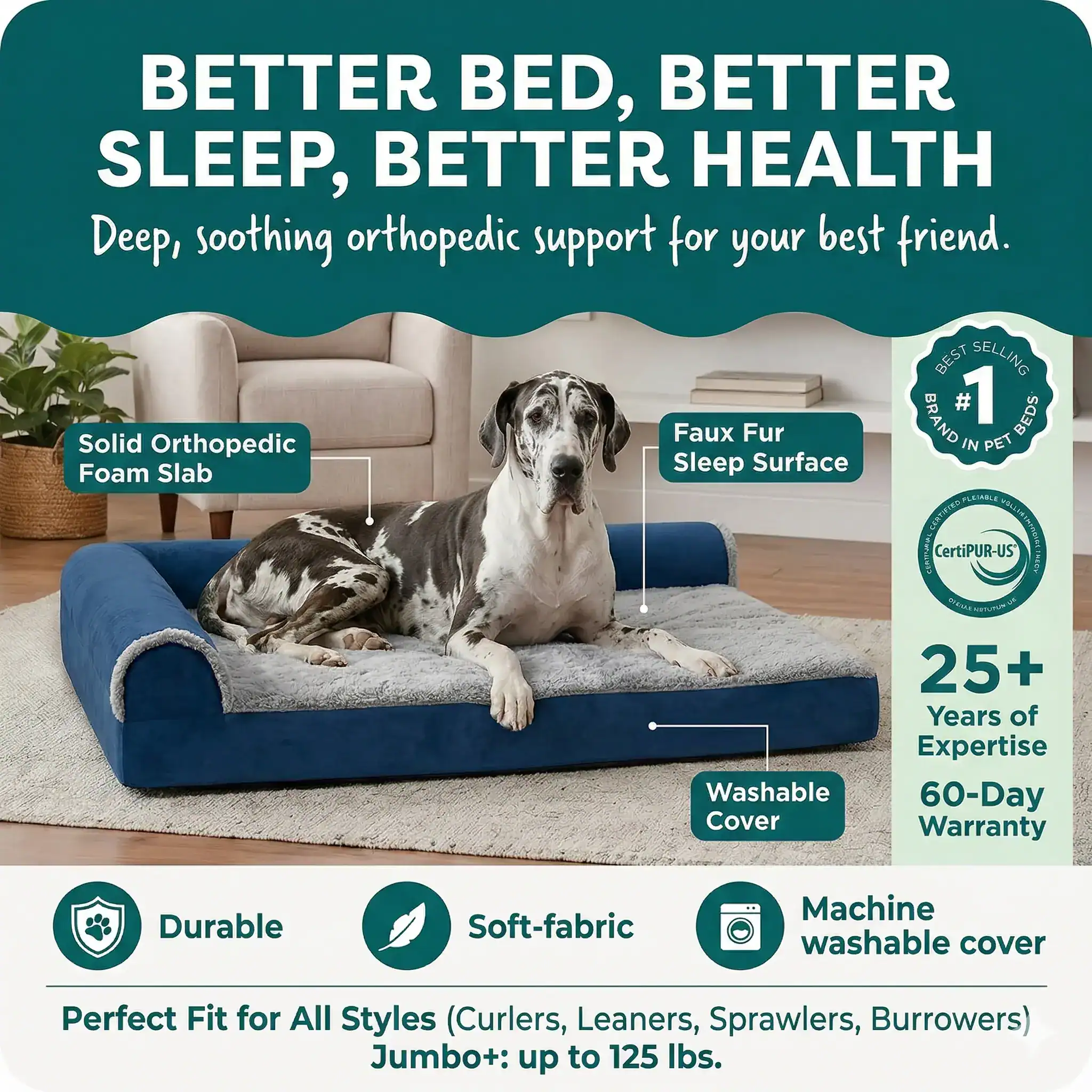
FurHaven Orthopedic Dog Bed for Large Dogs
Use for: A padded bed spreads the weight of a lean dog rather than concentrating it on hips and elbows, which is why sighthound owners tend to buy one early. It is a comfort measure rather than a treatment for any joint condition, and sizing differs between the two breeds.
Check price on Amazon🎯 Verdict: Roughly even, and refreshingly modest on both sides. Each needs daily walks and occasional safe sprinting rather than long runs, and both adapt well to smaller homes.
Chase Instinct and Fencing
This is the shared constraint that decides most placements, and it applies equally to both. Each was bred to chase anything small that runs, and in each the chase response can override a well-trained recall regardless of the dog’s obedience ability.
Neither should be assumed reliable off leash in open, unfenced areas. A Greyhound accelerates fast enough that a failed recall becomes a serious safety problem, and a Whippet can be out of sight in seconds. Training improves recall and impulse control but does not remove the instinct.
Secure equipment matters for both, particularly because of their narrow heads and strong pursuit drive. A narrow head slips a flat collar easily, so most owners of either breed use a properly fitted martingale collar or a harness, and the same applies to securing the dog in a car.
Give the instinct a job instead of fighting it. Lure coursing and sprint events suit either dog, and a securely fenced field is the single most useful thing an owner of either can arrange.
🎯 Verdict: High in both, so secure fencing is more important than relying on recall alone. Neither is a safe off-leash dog in open ground, so plan secure space before choosing either breed.
Time Alone
Both often form close bonds with people, and some individuals struggle with extended periods alone. Alone-time tolerance varies considerably between dogs, so independence is best built gradually rather than assumed.
The Greyhound has a particular version of this. Many retired racers have lived in kennels surrounded by other dogs and have rarely been alone at all, so an empty quiet house is a completely new experience rather than a familiar one.
The approach is the same for both. Build up time alone in short steps from the first week rather than testing it with a full workday, keep departures calm, and arrange a walker or daycare if your day runs long.
🎯 Verdict: Limited in both. Each can struggle with long stretches alone, and both need independence built gradually from the first week rather than assumed.
Family Fit
Both suit calm households well and are gentle, quiet and undemanding indoors. Each is generally good with children who have been taught how to behave around a sleeping dog.
That last point matters more than usual here. Each startles badly if woken suddenly, so the household rule is the same for either dog. Teach every kid in the house to leave a sleeping dog alone and to sit on the floor rather than pick the dog up.
A multi-pet household needs care with both, since the chase instinct is strong in each. Greyhound adoption groups often assess a dog with cats before placement, which gives useful information, though assessment does not guarantee future behaviour. A Whippet raised alongside a cat often does better than one meeting cats as an adult.
🎯 Verdict: Roughly even for calm families. Each is gentle and quiet, both startle when woken, and both need careful management around cats. Adoption groups may provide more individual information about cat compatibility where a Greyhound has been assessed, though that does not guarantee future behaviour.
Coat, Grooming and Cold
Grooming takes almost no time with either breed. A rubber mitt or soft brush once a week lifts loose hair and keeps the coat glossy, and neither coat mats or needs trimming. Both shed lightly and carry very little doggy smell, so bathe only when the dog is genuinely dirty.
Cold is the shared weakness. Both carry very little body fat under a very short coat, so many need a fitted coat in cold weather and a warm bed away from drafts. Both also seek out warmth indoors, which is why so many end up under blankets.
The skin differs in what it demands of you. The Whippet’s thin skin over a lean build makes cuts and scrapes more consequential, so check the ground before letting one run and inspect the skin while brushing. Greyhounds are prone to hard growths on the foot pads called corns, which cause limping and need a vet to assess them.
Teeth deserve particular attention with the Greyhound, since many retired racers arrive with poor teeth and dental disease is one of the most common problems in the breed.
🎯 Verdict: Roughly even, and each is about as easy as coat care gets. Each needs a coat in cold weather. The Whippet asks you to watch the ground, while the Greyhound asks you to watch the feet and teeth.
Health and Screening
These two share two veterinary differences that matter more than anything else in this comparison, and both apply to sighthounds generally. Each can take longer to come round from some anesthetic drugs, so tell your vet the breed before any procedure including a dental cleaning, and ask whether the clinic has used sighthound protocols.
The Greyhound’s blood work is the single most important thing to know. Greyhounds naturally run higher red blood cells and hemoglobin, can have higher normal creatinine, and lower platelets and white cells than other breeds, and low total T4 readings are common. Read against a standard chart, a perfectly healthy Greyhound can look ill on several lines at once.
Tell your vet the dog is a Greyhound before any blood test and ask for sighthound reference ranges. Adoption groups often provide a printed reference sheet to take along.
Whippets can also have blood values that differ from general canine ranges, and delayed bleeding a day or two after surgery is a documented sighthound-associated risk worth raising before any operation. The mechanism and genetic predictors of this in Whippets are still being studied, so it is a discussion to have with your veterinarian rather than something to infer from a genetic result alone.
The screening frameworks barely overlap. The Greyhound Club of America’s CHIC recommendations cover a heart evaluation, an ACVO ophthalmologist eye examination, a DNA test for Greyhound polyneuropathy, and DNA repository participation, with thyroid testing listed as optional.
The Whippet Health Foundation updated its pre-breeding framework in 2026 and requires three tests, namely a yearly CAER eye exam, an echocardiogram by a board-certified cardiologist every two years, and a one-time BAER hearing test. Thyroid testing every two years, a one-time myostatin deficiency test, and a one-time OFA hip or PennHIP evaluation are also recommended.
Each breed also has its own named concerns. Osteosarcoma is reported at elevated rates in the Greyhound and has no screening test, so a limp that persists or worsens is an issue for the vet rather than something to rest off. This matters most in a senior dog, where a limp is easily blamed on age.
In the Whippet, myxomatous mitral valve disease is an important cardiac concern studied in the breed, and congenital deafness is what the BAER test exists to catch.
Veterinary Disclaimer: This article is for educational purposes only and is not a substitute for professional veterinary advice, diagnosis, or treatment. K9Sphere’s authors are experienced dog owners, not licensed veterinarians. Always consult a qualified DVM regarding any health concerns about your dog.
Always consult your licensed DVM for personalized medical advice.
Each is deep-chested, and bloat is an emergency in either. Owners of older or formerly racing dogs sometimes raise joint supplements with their vet, though the evidence for them varies.
Health Information Sources. Data compiled from the following references.
- American Kennel Club Greyhound breed reference
- American Kennel Club Whippet breed reference
- Greyhound Club of America CHIC screening recommendations
- American Whippet Club health statement and screening tests
Always consult your licensed DVM for personalized medical advice.
🎯 Verdict: Neither is straightforwardly the healthier breed, though published lifespan runs longer for the Whippet. The screening lists differ so much that the practical advice is the same for both: ask for the certificates and check their dates.
Cost and How You Get One
This is the biggest practical difference between them, and it is not about money. In the United States, many pet Greyhounds reach homes through adoption groups as retired racers, usually between two and five years old, while Whippets are more commonly obtained from breeders as puppies. Both breeds are also available through rescue, and the picture differs by country.
That changes what you can know before committing. A good adoption group assesses each dog, tests it with cats and small dogs where relevant, and tells you honestly what it is like, so you see the adult temperament rather than guessing at it. Groups usually neuter, vaccinate and treat the teeth before placement.
Buying a Whippet puppy means judging the parents instead. A careful breeder shows the echocardiogram, eye exam and BAER certificates for both parents and asks about your fencing and how long the dog would be alone. Breed rescues also place Whippet adults, which offers the same advantage as Greyhound adoption.
Prices vary by breeder, group, location, pedigree and availability, and an adoption fee may cover veterinary work already done. Budget beyond the purchase either way, because a winter coat and a well-padded bed are genuine needs in each rather than optional extras. Food costs differ with size, and keeping either dog on a measured diet at a lean body condition matters for the joints.
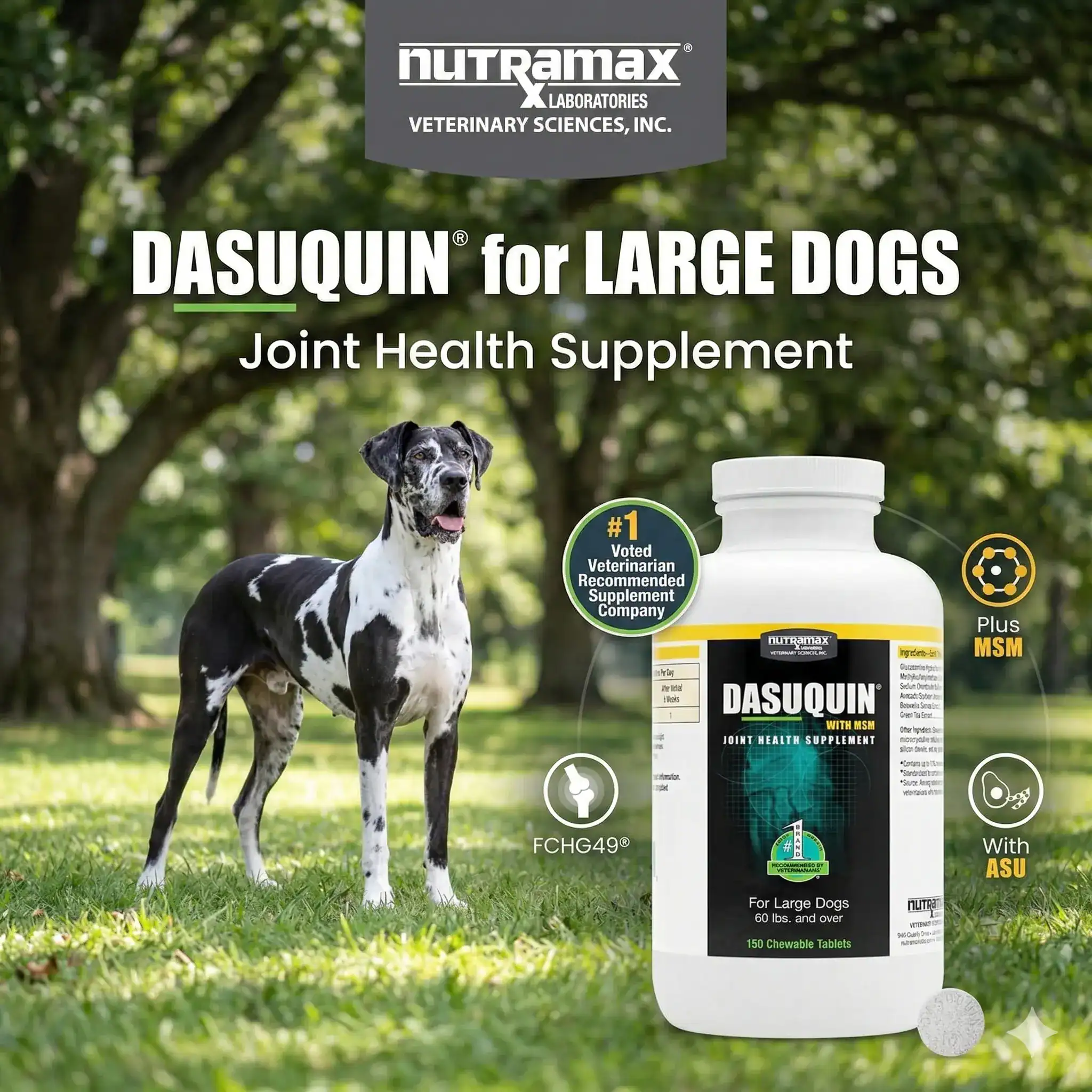
Nutramax Dasuquin with MSM Soft Chews
Use for: A glucosamine and chondroitin supplement commonly used in older and formerly athletic dogs, which is a recurring cost worth budgeting for with a retired racer. The evidence varies and it is not a treatment for joint disease, so check with your vet before starting.
Check price on Amazon🎯 Verdict: Adopting an adult Greyhound lets you observe an established dog’s behaviour and receive information about its known history before committing, while the Whippet route gives you the chance to raise a puppy and to see parent health testing. Total ownership costs vary substantially with location, source, age, health, insurance, and veterinary needs, so neither breed has a universally lower lifetime cost.
First-Time Owners
Both can work for a prepared first-time owner, which is unusual in a pair of athletic hounds. Neither is physically demanding to handle, neither requires hours of continuous running, and each is gentle and easy indoors.
The one clear disadvantage for a newcomer is that the parts needing study are unfamiliar, and they are the same for each. The chase instinct and the fencing that goes with it, the cold sensitivity, and the veterinary differences around blood work and anesthesia. None of those are difficult once you know about them.
Adopting an adult Greyhound through a group that matches dogs to homes and stays available afterwards is a genuinely gentle route into dog ownership. A Whippet puppy asks for more early work in socialization and house-training, but gives you the dog’s whole life from the start.
🎯 Verdict: Roughly even, and each is more beginner-friendly than its racing outline suggests. Choose based on whether you would rather adopt a known adult or raise a puppy.
Head-to-Head Scorecard
These are editorial ratings, not standardized breed measurements, and individual dogs vary. Ratings are K9Sphere’s editorial comparison based on the breed characteristics discussed in this guide, scored from 1 to 5 stars for a typical home. A high Physical Manageability score means the dog is easier to lift, transport, and control on lead.
Greyhound
Whippet
Reading the scores: The two score identically on almost everything, which is the honest result for breeds this similar. Each is calm indoors and easy to groom, and both rate low on cold tolerance and off-leash reliability. The Whippet’s higher Physical Manageability score reflects its lighter frame rather than any difference in character.
Common Questions about Greyhound vs Whippet
These are the frequently asked questions buyers raise when comparing the two sighthounds.
What is the difference between a Greyhound and a Whippet?
Direct Answer: Size, mainly. The Greyhound stands 28 to 30 inches and weighs 60 to 70 pounds, while the Whippet stands 19 to 22 inches and weighs 25 to 40 pounds.
Context: The Whippet is built on the same plan as the Greyhound, scaled down, with the same deep chest, tucked waist and very short coat. Their indoor temperament and pursuit instincts overlap substantially, though exercise needs and individual behaviour still vary.
Management: Ask for the dog’s height and weight rather than judging from a photograph, since scale disappears in pictures.
Is a Whippet just a small Greyhound?
Direct Answer: No. They are separate breeds with different histories, though the resemblance is real.
Context: The Greyhound was a coursing dog of the British upper classes that later became a track racer. The Whippet was developed by miners and mill workers in northern England for rabbit coursing and straight-track racing, and was recognized by the AKC in 1888.
Management: Treat them as distinct breeds when researching, particularly the health screening, which differs substantially.
Which one lives longer?
Direct Answer: The Whippet, by published estimates.
Context: Whippets are commonly given as 12 to 15 years and Greyhounds as 10 to 13. Breed-level figures are estimates rather than a prediction for any individual dog.
Management: Keep either dog lean, keep the teeth clean, and take a lasting limp seriously in either breed.
How much exercise does each one need?
Direct Answer: Far less than the racing shape suggests. Regular daily walks suit most adults of either breed.
Context: Both are primarily sprint-oriented athletes rather than breeds developed for sustained long-distance running. Each will run hard in short bursts and then sleep for hours, so neither is naturally suited to sustained long-distance running in the way an endurance breed is.
Management: Arrange access to a securely fenced field where the dog can sprint safely, and treat that as more important than daily mileage.
Can either breed be trusted off leash?
Direct Answer: Usually not in open, unfenced ground.
Context: Both were bred to chase anything small that runs, and in both the chase response can override a well-trained recall. A Greyhound accelerates very fast, and a Whippet can be out of sight in seconds.
Management: Use securely fenced spaces or a long line, and consider lure coursing to give the instinct a safe outlet.
Do Greyhounds and Whippets get cold?
Direct Answer: Yes. Each is poorly insulated, and many need a coat in cold weather.
Context: Each carries very little body fat under a very short coat. Both also seek out warmth indoors, which is why so many end up under blankets.
Management: Buy a fitted winter coat and a warm, well-padded bed away from drafts for either breed.
How do they compare for apartment living?
Direct Answer: Both can adapt well to apartment living when their exercise needs are met, and the Whippet’s smaller size can make physical management and transport simpler.
Context: Both tend to be relatively calm indoors when their exercise needs are met, so floor space matters less than a soft bed and daily activity.
Management: Check that your building allows the size of dog you are considering, and plan for stairs if there is no elevator.
Why does my vet say my sighthound’s blood work is abnormal?
Direct Answer: Greyhounds have their own reference intervals, so results that look abnormal against a general canine range may be normal for the breed.
Context: Greyhounds run higher red cells and creatinine and lower platelets and white cells than other breeds, and low total T4 readings are common. Whippets can also have values that differ from general canine ranges.
Management: Tell your vet the breed before any blood test and ask for sighthound reference ranges.
Do Greyhounds and Whippets need special anesthesia considerations?
Direct Answer: They may. Sighthounds can have breed-specific differences in anesthetic drug handling and recovery, with prolonged recovery particularly well documented in Greyhounds.
Context: This applies to sighthounds generally, and it reflects how the breeds distribute and break down those drugs rather than just a lean build. Delayed bleeding a day or two after surgery is also a documented sighthound-associated risk.
Management: Raise it before any planned procedure including a dental, and ask whether the clinic has used sighthound protocols.
What health tests should the parents have?
Direct Answer: The two clubs ask for different things, so check the right list for the breed.
Context: The Greyhound Club of America’s CHIC recommendations cover heart, an ophthalmologist eye exam, a polyneuropathy DNA test and DNA repository participation. The Whippet framework requires a yearly eye exam, an echocardiogram every two years, and a one-time BAER hearing test, and also recommends thyroid testing, a myostatin test, and a one-time OFA hip or PennHIP evaluation.
Management: Ask to see the certificates themselves and check the dates, particularly on heart and eye exams.
Are they good with cats?
Direct Answer: Some are, but the chase instinct makes it unpredictable in both.
Context: Greyhound adoption groups often assess a dog with cats before placement, so a dog described as cat-safe has usually been tested. A Whippet raised alongside a cat often does better than one meeting cats as an adult.
Management: Ask the group or breeder directly, supervise early meetings whatever you are told, and never assume a settled arrangement is permanent.
Why do Greyhounds wear muzzles?
Direct Answer: Usually for safety during group play, not because the dog is dangerous.
Context: Racing Greyhounds are muzzled at the track, so most are comfortable wearing one. They have thin skin that tears easily, so muzzles prevent injuries when several run together.
Management: Ask your adoption group what they advise for your dog and your situation.
Which is better for a first-time owner?
Direct Answer: Both can work well for a prepared beginner, and the choice depends on whether you want an adult or a puppy.
Context: Adopting an assessed adult Greyhound means the temperament is known before you commit. A Whippet puppy asks for more early socialization and house-training but gives you the dog from the start.
Management: Whichever you choose, sort the fencing, the winter coat and a vet who knows sighthound protocols before the dog arrives.
The Quick Decision Shortcut
Deciding between a Greyhound and a Whippet comes down to a few honest questions, so use this self-check before the full verdict. Each has one big pro and one obvious con.
🐕 Choose the Greyhound if
- You would rather adopt an adult whose temperament is known.
- You want a larger dog that is still quiet indoors.
- You have room for a big dog and a large padded bed.
- You will tell every vet the breed before tests and procedures.
🐕 Choose the Whippet if
- You want a smaller dog that is easier to lift and transport.
- You value the longer published lifespan.
- You want to raise a puppy from a health-tested breeder.
- You live in a small home and want a sighthound that fits.
Final Verdict
There is no universal winner here, because these two are the same sighthound design at different scales. Calm indoors, quiet, gentle, poorly insulated, and serious about chasing. Almost everything that matters day to day is shared.
The underlying decision is size and route. The Greyhound gives you a larger dog and, through adoption, the chance to meet an adult whose behaviour has been observed, often including around cats.
The Whippet gives you a lighter dog that fits a small home easily, a longer published lifespan, and the option of raising a puppy from a breeder who runs the three health tests. Match the breed to the size you want and the route you prefer.
🏆 Bottom line: The Greyhound is the larger sighthound usually adopted as a known adult; the Whippet is the smaller, longer-lived one usually raised from a puppy. Both need secure running arrangements, protection from cold, regular exercise, and comfortable resting areas, alongside routine training and veterinary care.
Personal Observation
💭 From my own experience
Rusty is my oldest dog. He sleeps for most of the day and watches the gate. He does not ask for much at all.
Greyhounds and Whippets are calm indoors like that too. People see the racing shape and expect them to need hours of running every day. They do not need hours of continuous running, but they still need regular daily exercise and somewhere safe to sprint.
But there is one big difference. These two were bred to chase. A quiet dog in the house can still be gone in seconds if something runs past an open gate. So the fence matters more than trying to turn them into distance runners. Sort that out first, and the rest of the daily routine is much easier.
Read More. For the full individual guides, see our Greyhound guide and our Whippet guide.
For the smallest member of the family, see our Italian Greyhound guide, and for the wider group our guide to hound dog breeds.
Each suits our roundup of the best brushes for shedding dogs, and the Greyhound appears among the larger breeds that shed lightly.
Editorial Disclaimer: This article is for informational and educational purposes only. It does not constitute veterinary advice, medical diagnosis, or treatment recommendations. Always consult a licensed veterinarian before making health-related decisions for your pet.
Accuracy Notice: While every effort has been made to ensure the information presented here is accurate and current, breed information evolves and individual dogs vary. If you spot a factual error or have updated information from a verified source, please contact us so we can review and update.
Product Disclosure: Product recommendations are based on independent research and editorial judgment. Individual results may vary. K9Sphere participates in the Amazon Services LLC Associates Program and other affiliate programs, and earns from qualifying purchases at no additional cost to you.
Last reviewed: September 2026. Article reviewed for accuracy on the date shown above.