
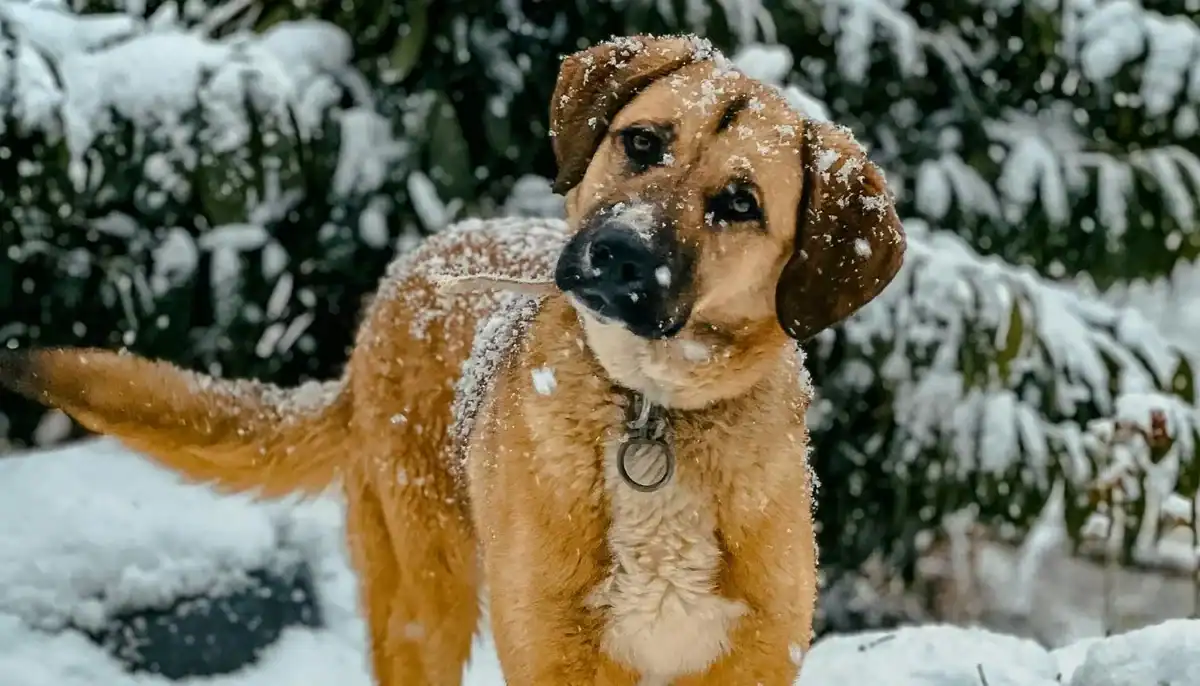
The Anatolian Shepherd Dog is a large Turkish livestock guardian bred to protect flocks from wolves and bears across hard country. This is a working dog built for harsh weather and independent decisions, not a breed of dog that merely happens to be big.
What makes the breed compelling is its self-directed judgment. As a guard dog it works mostly as a visual deterrent, standing and letting itself be seen, which is exactly what made it useful to shepherds who could not supervise every hillside.
This guide draws on the AKC breed standard, the Anatolian Shepherd Dog Club of America’s CHIC screening requirements, and veterinary guidance specific to giant breeds.
Daily commitments include early obedience work, continuous socialization, and a securely fenced property to patrol. Handlers who put that foundation in get a steady, reliable guardian that takes the job seriously.
Anyone without big-dog experience or real outdoor space should read the exercise and training sections before going further. A dog bred to stand between a flock and a wolf needs a handler who can manage a strong-willed animal that thinks for itself.
Affiliate Disclosure: K9Sphere participates in the Amazon Services LLC Associates Program and other affiliate programs. K9Sphere earns from qualifying purchases made through links in this article at no additional cost to you. Product recommendations are based on independent research and editorial judgment, not paid placement.
Breed Snapshot
📊 Vitals and Lifespan
Height
Males 29 in and up, females 27 in and up
Weight
Males 110 to 150 lb, females 80 to 120 lb
Lifespan
11 to 13 years
Breed Group
AKC Working Group
Origin
Turkey
🇹🇷
⭐ Personality Traits
K9Sphere editorial ratings (1 to 5). This is a self-reliant guardian that combines deep loyalty to its own household with strong territorial instinct toward everything else.
History and Origin
The history of Anatolian pastoral life explains the dog. The Anatolian Shepherd Dog originated on high plateaus where flocks moved through extreme weather and predators were a daily fact. Everything about the breed follows from that, and so does a naming dispute that has never been settled.
📌 Ancient Roots in Turkey
Nomadic herders kept these dogs outdoors year-round with sheep and goats, selecting purely for working ability rather than for a consistent look. The black-masked dogs were known as Karabash, meaning black head, and older breed literature often calls the Anatolian Karabash dog by that name.
📌 The 1950s to 1970s. Arrival in America
Anatolians reached America as early as the 1950s but stayed virtually unknown until the 1970s, when the Endangered Species Act drove a search for ways to control predators without killing them.
Lt. Robert C. Ballard imported a breeding pair while stationed in Turkey from 1966 to 1968. His dogs Zorba and Peki produced the first recorded American-bred litter in August 1970, the year the parent club was founded.
📌 1996 to 1999. AKC Recognition
The AKC lists 1996 as the year of recognition, and the parent club records full recognition taking effect in 1999 when the breed entered the Working Group. It was the 144th breed the AKC recognized, and it is still kept on farms and rural land rather than in cities.
Is the Anatolian the Same Dog as a Kangal?
This is the most contested question about the breed, and the parent club’s own answer is worth reading before you buy. The Anatolian Shepherd Dog Club of America states plainly that it will not discuss the differences, or whether the Kangal and the Anatolian are the same.
What it does publish is the registry rule. A Kangal registered with the UKC or the Kangal Club of America can be re-registered as an Anatolian only if the owner gives up the Kangal registration first.
Beyond that the rules are strict. No dog whose three-generation pedigree contains any dog registered as a Kangal or an Akbash can be registered as an Anatolian at all. In Turkey these dogs are commonly called Çoban Köpeği, meaning shepherd’s dog.
Physical Characteristics
The Anatolian Shepherd’s build is described in the standard as large, rugged, and powerful, with substantial bone and muscle. The build is made for covering ground steadily for hours rather than for speed, and it should look capable rather than exaggerated.
🎨 The Double Coat
The Anatolian Shepherd Dog’s thick double coat handles both freezing winters and hot summers. Fawn with a black mask is the coat most people picture, but the standard allows all colors. They shed moderately year-round and drop the undercoat heavily twice a year.
🏗️ Size and Movement
A mature male stands 29 inches or more at the shoulder. The head is broad and strong, and the whole animal is built to physically block a threat. For the bulk, the gait is fluid and efficient rather than heavy.
Character and Temperament
The Anatolian Shepherd personality follows directly from the job. This is not a dog built to play fetch for an hour. It is a smart dog and an independent thinker that watches, decides, and acts, and its intelligence has been selected for centuries to work without being told.
🛡️ Territorial by Design
They are strongly territorial and treat unfamiliar people and animals with suspicion. That is the breed working as intended rather than a fault, but it means visitors, deliveries, and neighboring dogs all need managing rather than hoping for the best.
🐑 Generally Low Chase Drive
Unlike herding breeds, a guardian is selected not to chase what it is protecting. The parent club reports that puppies introduced to other animals under careful supervision usually adapt well and often take them into their protective sphere.
💪 Quiet with Their Own People
Indoors with the family they are calm and undemanding. Affection tends to look like lying in the same room rather than climbing into your lap, and the contrast with their outdoor behavior surprises first-time visitors.
🧠 Independence, Not Stupidity
They can learn commands quickly, but their independence means they may not respond as consistently as a handler-focused breed. A dog bred to make its own calls on a hillside does not default to obedience, and reading that as defiance leads handlers down the wrong road.
Screening and Conditions
Veterinary Disclaimer: The information in this article is for educational purposes only and is not a substitute for professional veterinary advice, diagnosis, or treatment. K9Sphere’s authors are experienced dog owners, not licensed veterinarians. Always consult a qualified DVM regarding any health concerns about your pet. Never disregard professional veterinary advice or delay seeking it because of something you have read on this site.
Health Information Sources: Data compiled from:
- American Kennel Club breed page for the standard and general breed guidance
- Anatolian Shepherd Dog Club of America breed facts for the parent club’s own health, barking, and fencing guidance
- ASDCA registration rules for the Kangal and Akbash pedigree restrictions
- Orthopedic Foundation for Animals CHIC programs for the breed’s required screening
- PetMD veterinary breed health review for anesthesia sensitivity and giant-breed care
Always consult your licensed DVM for personalized medical advice.
Dog health screening here is short and unambiguous. The CHIC panel for this breed requires two evaluations. It requires two evaluations, hips and elbows, and both are needed rather than one or the other. A breeder offering only a DNA swab has not met the breed’s actual screening standard.
The parent club describes hip dysplasia as present in the breed, as it is in most large dogs, but not yet a serious problem. That is encouraging and it is not a reason to skip asking for the paperwork.
Common Health Concerns
🟡 Bloat and Gastric Torsion
What to watch for: A swollen or hard abdomen, restlessness and pacing, heavy drooling, and repeated unproductive retching. The stomach fills with gas and can twist, which is a life-threatening emergency needing immediate veterinary care rather than overnight observation.
Screening: There is no pre-breeding test, and the parent club states there is not a high incidence of bloat in this breed.
Deep chest and large size are associated with risk generally. Many owners feed two or three smaller meals a day and avoid hard exercise around mealtimes as a risk-management measure rather than a guarantee.
Ask your vet whether a preventive gastropexy is worth discussing for your dog.
🔴 Hip and Elbow Dysplasia
What to watch for: Stiffness getting up from rest, reluctance on stairs, or a limp that comes and goes. The joint forms poorly and wears early, which matters more in a dog carrying this much weight.
Screening: Both evaluations are the breed’s CHIC requirement, so ask for OFA or PennHIP hip results and OFA elbow results on both parents. Keeping the dog lean for life does more for its joints than anything you can buy.
🟡 Ear Infections
What to watch for: Head shaking, scratching at an ear, discharge, or a sour smell. The parent club describes ear infections as fairly common in the breed because of the drop ear.
Screening: Nothing to test, only routine to keep. Check weekly and dry the ears after wet weather or swimming, and treat a repeat infection as a reason to see a vet rather than to buy another cleaner.
🟡 Anesthesia Sensitivity
What to watch for: Slower than expected recovery after a procedure. The parent club states that some Anatolians may be sensitive to anesthesia, which affects planning rather than whether a procedure can happen.
Screening: Nothing to test. Raise it with your veterinarian before any planned procedure, including a routine spay or neuter, so protocols and monitoring can be set accordingly. The parent club specifically flags heavy-duty flea collars as a complicating factor. Mention the sensitivity at an emergency visit too, since not every clinic will know the breed.
🟡 Entropion
What to watch for: Squinting, watering, or redness in one or both eyes. The eyelid rolls inward and the lashes rub the cornea, which is painful and damaging if it is left alone.
Screening: A vet diagnoses it on examination. Surgical correction is the usual treatment, and it is worth asking a breeder whether it has appeared in their line.
Grooming and Coat Care
Caring for an Anatolian Shepherd is light on grooming for most of the year and heavy twice. Brush thoroughly once a week normally, and expect much more frequent sessions during the seasonal shed, sometimes daily while the undercoat is coming out in clumps.
An undercoat rake and a slicker brush are the tools that matter, and our guide to the best brushes for shedding dogs covers equipment built for this volume of hair.
Bathing is occasional rather than scheduled. The coarse outer coat sheds dirt reasonably well once mud dries, and over-washing a weatherproof coat works against it. Nails, teeth, and a weekly look at the ears complete the routine.
Exercise and Living Needs
This is not a high-mileage breed. A guardian conserves energy for when it is needed, and a steady daily walk combined with room to patrol a securely contained property suits many healthy adults.
What an Anatolian Shepherd needs is space far more than distance. Apartment living is generally a poor fit, not because of the energy level but because of the size, the voice, and a dog that needs a boundary it can walk. A securely fenced property with real room to move is much more appropriate.
Fencing is the thing to get right before the dog arrives. The parent club describes a large yard with a five or six foot fence and a locked gate as ideal, and the point is as much about liability as about the dog’s own safety.
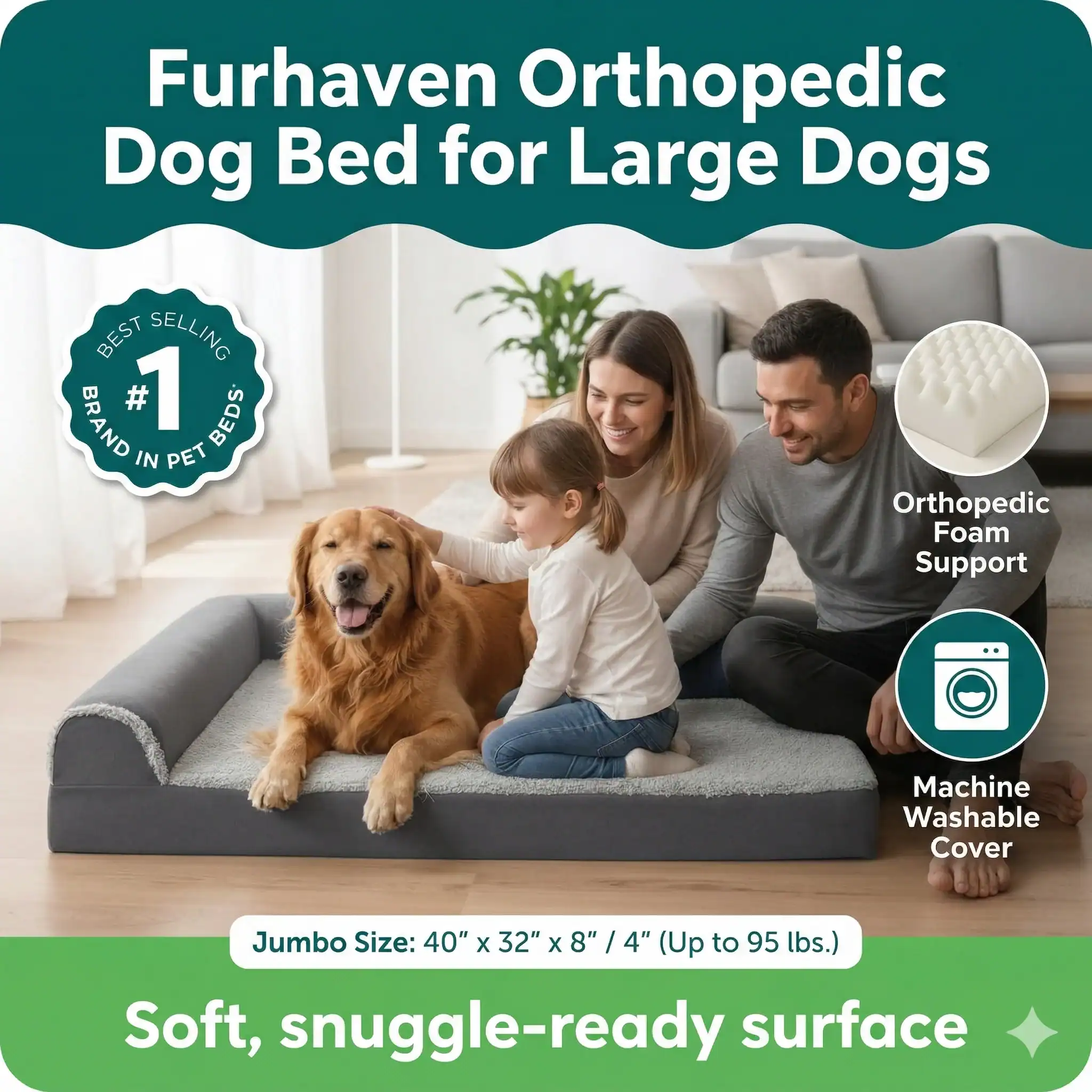
FurHaven Orthopedic Dog Bed for Large Dogs
A guardian spends long hours lying down between rounds, and a large supportive bed spreads the weight of a heavy frame rather than concentrating it on hips and elbows. It is a comfort measure rather than a treatment for joint disease.
Check price on AmazonNutrition & Diet
Growth is where the biggest mistakes happen. A large-breed puppy formula controls calcium and slows the growth rate, which protects a skeleton that has a great deal of frame to build. Overfeeding a giant-breed puppy can contribute to abnormal skeletal development and joint problems, so controlled growth matters.
Adults do well on a complete diet split into two or three meals rather than one large one. The parent club describes the breed as a conservative eater, so portion size often surprises owners expecting a giant appetite. Dogs working outdoors in winter may need more calories than the same dog resting through summer.
Keep the dog lean throughout. Maintaining a lean body condition is one of the most important joint-protection measures an owner controls, and owners of older dogs sometimes discuss hip and joint supplements with their veterinarian.
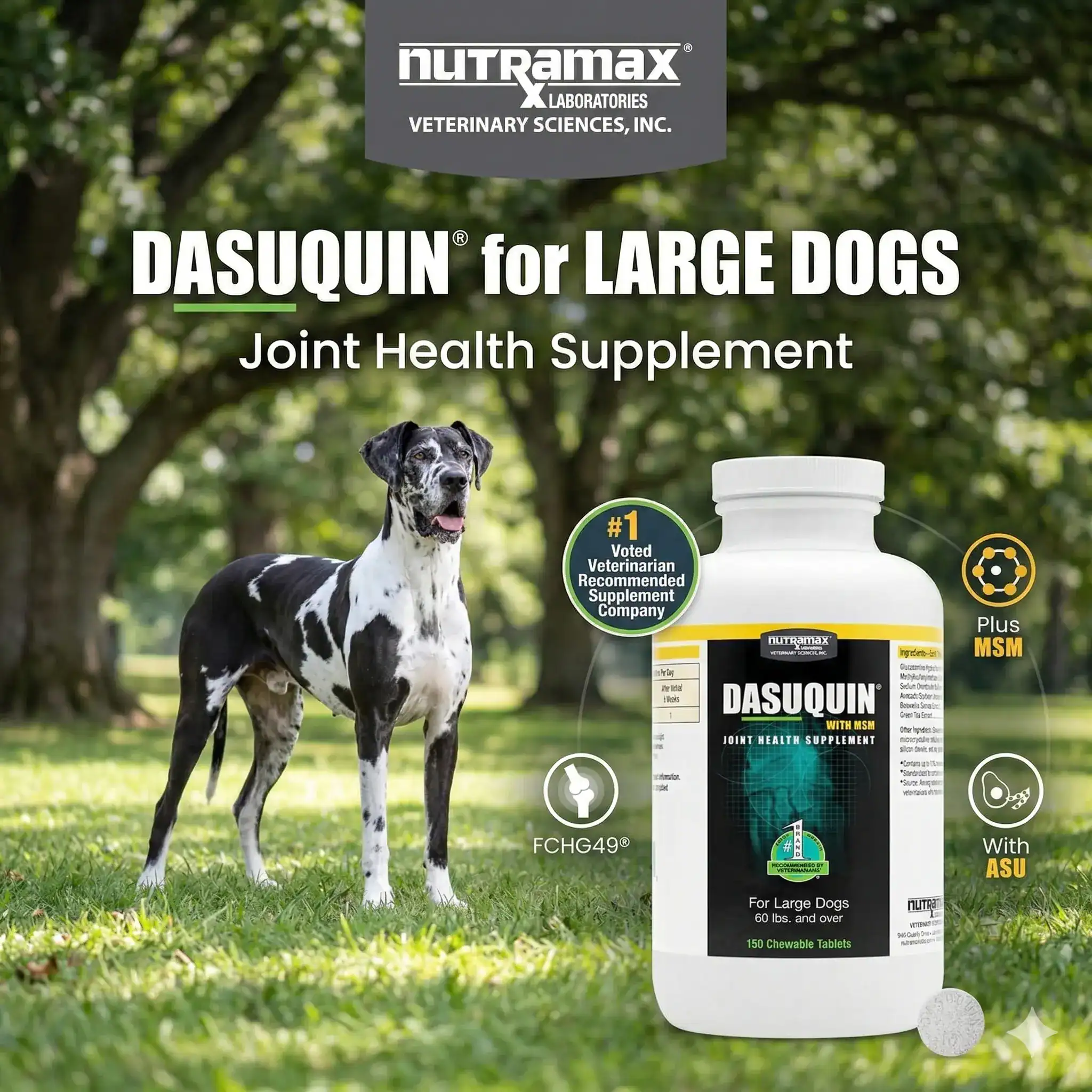
Nutramax Dasuquin with MSM Soft Chews for Large Dogs
A glucosamine and chondroitin supplement commonly used in giant breeds carrying joint risk. Evidence of benefit varies and it is not a treatment for joint disease, so discuss it with your veterinarian before starting.
Check price on AmazonTraining
Training this breed is a negotiation rather than a set of drills. A young Anatolian tends to learn quickly and comply selectively, and repetitive obedience work loses them fast.
Early and ongoing socialization is one of the most important responsibilities an Anatolian owner has. Introduce the puppy to strangers, children, traffic, and unfamiliar places continuously through the first two years rather than ticking it off at sixteen weeks.
A dog this size that has met little of the world tends to treat the unfamiliar as a threat, which is a serious problem in an animal this heavy. Force-based methods make it worse rather than better, and the parent club strongly discourages personal protection or bite work training for this breed precisely because of its independent nature.
Anatolian Shepherd vs Kangal Shepherd Dog vs Caucasian Shepherd Dog vs Great Pyrenees
Choosing among livestock guardians comes down to fine distinctions. The Kangal Shepherd Dog is the close Turkish relative at the center of the registry question. The Caucasian Shepherd Dog and the Great Pyrenees cover the other guardians buyers usually weigh against it.
| Attribute | Anatolian Shepherd | Kangal Shepherd Dog | Caucasian Shepherd Dog | Great Pyrenees |
|---|---|---|---|---|
| Weight | 80 to 150 lb by sex | 90 to 145 lb | 99 to 170 lb | 85 lb and up |
| Original Purpose | Livestock guarding | Livestock guarding | Livestock and property guarding | Livestock guarding |
| Energy Type | Low, steady patrol | Moderate, wide ranging | Low with explosive bursts | Low, patrolling |
| Trainability | Self-directed | Self-directed | Self-directed and dominant | Self-directed |
| Coat Work | Weekly, heavy twice a year | Moderate seasonal shed | Heavy seasonal shed | Weekly, heavy shed |
| Reputation with Strangers | Reserved, alerts then blocks | Reserved, wide-ranging | Reserved, strongly territorial | Reserved, alerts then blocks |
| First-Time Owner? | No | No | No, experienced handlers only | No |
| Screening Required | Hips and elbows | Hips and elbows | Hips, elbows, heart | Hips and patellas, plus one elective test |
| Space and Activity Needs | Large secure yard or acreage | Rural acreage | Large secure yard | Large fenced yard or farm |
If you want a guardian that thinks for itself on a rural property, the Anatolian is a strong choice. The Akbash is another Turkish option in a leaner white-coated dog. Choose on property size and handling experience rather than on looks.
Common Questions about the Anatolian Shepherd
How much does an Anatolian Shepherd cost?
Direct Answer: As an approximate, time-sensitive guide (as of 2026), expect roughly USD 1,500 to USD 3,500 from a breeder who meets the CHIC screening requirements.
Context: Prices vary by breeder, location, pedigree, and availability. The purchase price is the smaller number, since food and veterinary care both scale with a dog this size.
Management: Budget for giant-breed food and insurance from the start, and treat a bargain price as a signal about skipped joint screening.
Are Anatolian Shepherds good family dogs?
Direct Answer: They bond deeply with their own household, but their protectiveness needs active management around visitors.
Context: A guardian may read rough play between children as an attack and step in to stop it. That is the instinct doing its job, and it is a genuine risk with visiting children.
Management: Supervise all contact with children who are not part of the household, and socialize the dog continuously from puppyhood.
Is the Anatolian Shepherd the same as a Kangal?
Direct Answer: The American parent club declines to take a position on whether they are the same breed.
Context: A UKC-registered Kangal can move to Anatolian registration only by giving up the Kangal registration, and pedigrees containing Kangal or Akbash dogs are not registerable as Anatolian.
Management: Ask a breeder what their dogs are registered as and with which registry before you commit to anything.
Do Anatolian Shepherds bark a lot?
Direct Answer: Less than people expect. The parent club describes the adult Anatolian as usually quiet, sounding the alarm only when necessary.
Context: Puppies bark far more and will test an owner by sounding off at any noise. The adult bark is deep and carries a long way, which is what makes it a problem in close housing even when it is occasional.
Management: Teach a quiet cue early, and judge the breed on the adult pattern rather than the puppy one.
Are Anatolian Shepherds aggressive?
Direct Answer: They are not described as hostile without cause, but they are serious about defending their own territory.
Context: The breed relies on presence and warning rather than attack. A poorly socialized guardian of this size is a different matter, which is why socialization is not optional here.
Management: Commit to continuous socialization and secure fencing, and manage visitors deliberately rather than leaving it to the dog.
Can an Anatolian Shepherd live in an apartment?
Direct Answer: Generally no. This is a poor fit for most apartment situations.
Context: The indoor energy level is low, but the size, the territorial behavior, the carrying bark, and the need for secure outdoor space all work against shared housing.
Management: A house with a large securely fenced yard or rural land is the realistic requirement.
Are Anatolian Shepherds good for first-time owners?
Direct Answer: No. This breed needs a handler who has managed a powerful, strong-willed dog before.
Context: The combination of size, independence, and protective instinct is a lot to learn on. Mistakes with a dog of this size and strength carry consequences a smaller breed would not.
Management: If the type appeals, get experience with a livestock guardian through fostering or volunteering first.
What health tests should the parents have?
Direct Answer: Hip and elbow evaluations. Both are required by the breed’s CHIC panel, not one or the other.
Context: Some breeders also run thyroid screening. A DNA swab alone does not meet the breed’s screening standard, whatever a listing calls it.
Management: Ask to see the OFA or PennHIP certificates rather than accepting that the parents were checked.
What is the Anatolian Shepherd lifespan?
Direct Answer: Commonly given as 11 to 13 years, which is good for a dog of this size.
Context: Giant breeds generally live shorter lives than small ones, and this breed does better than many of similar weight.
Management: Keep the dog lean to spare the joints, and move to annual senior exams from around age seven.
Do Anatolian Shepherds shed a lot?
Direct Answer: Yes, moderately year-round and very heavily twice a year.
Context: During the seasonal shed the undercoat comes out in clumps and gets everywhere. The rest of the year is manageable with a weekly brush.
Management: Use an undercoat rake and increase to daily sessions while the coat is coming out.
Should I crate train an Anatolian Shepherd puppy?
Direct Answer: Yes, introduced early and as a good place rather than a containment solution.
Context: A giant puppy can do a lot of damage quickly, and a crate also makes veterinary visits and transport far easier later.
Management: Use rewards to build the association, and size up to a heavy-duty giant crate as the dog grows.
Will an Anatolian Shepherd chase cats or small pets?
Direct Answer: Many live successfully with livestock and household animals when raised and introduced properly.
Context: This is a guardian rather than a herder, so chase drive is generally low. Individual prey drive still varies, and they will move wildlife off the property.
Management: Introduce under careful supervision from puppyhood rather than assuming the instinct sorts itself out.
Finding a Puppy
Well-bred puppies of the Anatolian Shepherd breed are not thick on the ground, and the registry situation makes provenance worth asking about directly. Check any listing against dog breed information from the AKC and the parent club. Expect a wait and expect to be questioned.
🏠 Reputable Breeders
A serious breeder works their dogs or places them into working homes, and can show OFA hip and elbow clearances on both parents. Expect to be interviewed at length about your fencing, your property, and your experience with guardian breeds.
🐾 Rescue and Rehoming
Guardian breed rescues place adults regularly, often from owners who took on more dog than they expected. An adult lets you see the temperament and the size you are actually committing to, and skips the destructive phase.
🚩 Red Flags to Watch For
- No OFA hip or elbow documentation for either parent.
- Health testing described as a DNA panel with no joint evaluations.
- A seller marketing the breed as an easygoing family pet.
- Parents showing extreme fear or unprovoked hostility during your visit.
- A seller willing to place a puppy without asking about your property, your experience, or your plans for the dog.
- No clear answer about what the parents are registered as or where the line came from.
❓ Questions to Ask the Breeder
- May I see the OFA hip and elbow results for both parents?
- What registry are these dogs recorded with?
- Are the parents working, and with what livestock?
- Has entropion or bloat appeared in this line?
- How are the puppies socialized before they leave?
- What does your health guarantee actually cover?
🔍 Questions a Good Breeder Asks You
- How is your property fenced, and how tall?
- How close are your nearest neighbors?
- Have you owned a guardian breed before?
- Will this dog work livestock or live as a companion?
- What is your plan if the placement does not work out?
A seller who asks nothing at all about your fencing is unusual among guardian breeders, and worth a second look before you commit.
Personal Observation
💭 Personal Observation
Nobody gives Rusty a shift. He is the oldest of the street dogs I rescued, he sleeps outside by choice, and at some point in the evening he decides the gate needs attention and goes to watch it. I have never trained any part of that.
Chun Chun, who was with me for years and died in 2026, worked differently. She announced everything, loudly, and left the deciding to me. Two dogs, two entirely different ideas of what a guard job is.
A guardian breed takes that same instinct and expresses it in a far larger, purpose-bred package. The dog is not waiting to be told. That is the appeal and the whole of the problem in one sentence.
Conclusion
The Anatolian Shepherd Dog gives a capable handler a guardian that needs no micromanaging. On the right property, with the right person, it is one of the most capable livestock guardian breeds for the work it was developed to do.
The costs are a dog that barks at night, sheds heavily twice a year, and requires consistent management to stay safe around strangers. None of those are faults. They are the same traits that make the breed work.
Get the fencing right, see the hip and elbow certificates, and ask where the line came from. If you want a more socially outgoing companion breed, a Labrador Retriever may be the better fit.
📋 Before bringing one home, run this 4-step pre-buying check
- Secure containment. Do you have a tall solid fence able to hold a boundary-patrolling dog of this size?
- Handler experience. Have you managed a strong-willed, self-directed dog before?
- Noise tolerance. Can your household and your neighbors live with a deep bark, including at night?
- Health paperwork. Have you seen OFA hip and elbow results for both parents?
If any answer is no, reconsider the breed.
Editorial Disclaimer: This article is for informational and educational purposes only. It does not constitute veterinary advice, medical diagnosis, or treatment recommendations. Always consult a licensed veterinarian before making health-related decisions for your pet.
Accuracy Notice: While every effort has been made to ensure the information presented here is accurate and current, breed information evolves and individual dogs vary. If you spot a factual error or have updated information from a verified source, please contact us so we can review and update.
Product Disclosure: Product recommendations are based on independent research and editorial judgment. Individual results may vary. K9Sphere participates in the Amazon Services LLC Associates Program and other affiliate programs, and earns from qualifying purchases at no additional cost to you.
Last reviewed: September 2026. Article reviewed for accuracy on the date shown above.


