
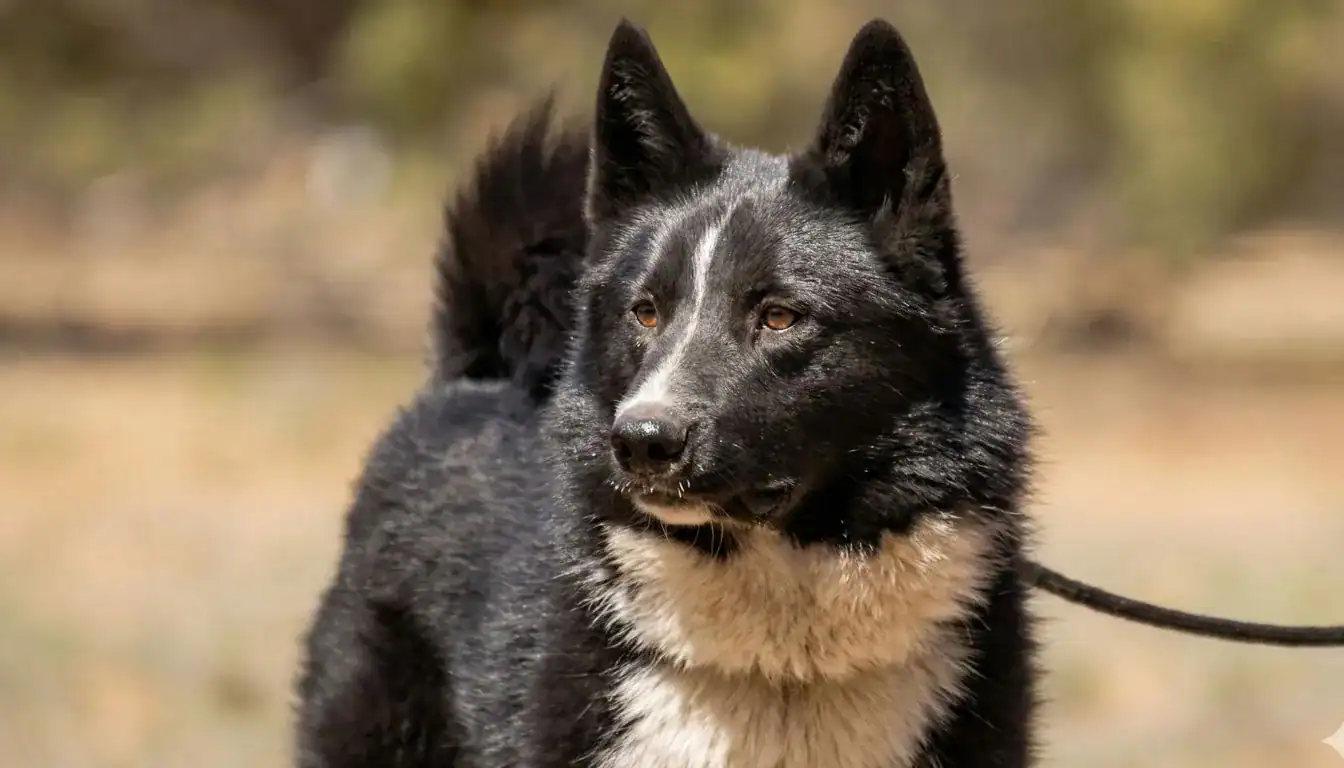
The Karelian Bear Dog is a Finnish spitz-type hunting breed developed across centuries in the Karelia region to track and hold large dangerous game, including brown bear, moose, and lynx.
What sets this working dog apart is a combination of fearless engagement with prey far larger than itself, a deeply loyal disposition toward its handler, and a level of stamina and independence that working dog specialists consistently rate among the highest of any recognized breed. Wildlife agencies across North America now deploy Karelian Bear Dogs in non-lethal bear management programs precisely because no other breed matches this profile.
This guide draws on the American Kennel Club Foundation Stock Service profile, the Finnish Kennel Club breed standard, the Wind River Bear Institute’s published field protocols, OFA CHIC health testing guidelines, and PetMD clinical references to build an accurate ownership picture.
Daily commitments include two or more hours of structured physical work, an unwavering containment setup, consistent socialization maintained from puppyhood through adolescence, and handler confidence sufficient to lead a dog that will not back down from any perceived threat. Households that provide these conditions are rewarded with a fiercely loyal and capable working partner that bonds deeply with its family.
For experienced handlers with the space, the exercise commitment, and the secure property this breed requires, the Karelian Bear Dog delivers loyalty and working capability that few breeds match. Households without a rural or semi-rural property, a high fence perimeter, and prior experience with primitive high-drive breeds should review the ownership demands carefully before deciding. This breed rewards those who match its needs and challenges those who do not.
Affiliate Disclosure: K9Sphere is a participant in the Amazon Services LLC Associates Program. As an Amazon Associate, K9Sphere earns from qualifying purchases made through links in this article at no additional cost to you. Product recommendations are based on independent research and editorial judgment, not paid placement.
Breed Snapshot
📊 Vitals and Lifespan
Height
Males: 21.5–23.5 in (54–60 cm)
Females: 19–21.5 in (48–54 cm)
Weight
44–49 lb (20–22 kg)
Lifespan
11–13 years
Breed Group
Foundation Stock Service (AKC)
Origin
Finland
🇫🇮
⭐ Personality Traits
Ratings (1 to 5). This primitive working breed pairs fearless independence and extreme prey drive against deep loyalty to its handler.
History and Origin
The Karelian Bear Dog traces its roots to the ancient Komi dogs of the Karelia region, a territory spanning what is now northwestern Russia and eastern Finland. These dogs worked alongside hunters across brutal boreal terrain for centuries before systematic breeding efforts shaped them into the recognized breed known today. Finland considers the Karelian Bear Dog a national treasure, and it consistently ranks among the most registered breeds in the country.
📌 Ancient Roots in Karelia
The breed descends from the ancient Komi dog and is closely related to other northern laikas developed across the Uralic region. Hunters in the dense boreal forests of Karelia relied on these dogs to track, locate, and hold large dangerous game until the handler arrived. The working method centered on silent tracking followed by loud, persistent barking to distract and corner prey, a technique that remains the breed’s defining behavioral signature today.
📌 1936: Finnish Kennel Club Recognition
The Finnish Kennel Club officially recognized the Karelian Bear Dog in 1936, establishing the breed standard that defined physical conformation, working temperament, and the characteristic black-and-white coat. Finnish hunters had been selectively breeding for these traits across generations, and formal recognition consolidated the population into a unified registry. The breed rapidly became one of the most commonly owned hunting dogs in the country.
📌 1990s: Bear Country USA
Carrie Hunt of the Wind River Bear Institute introduced Karelian Bear Dogs to North American wildlife management in the 1990s, deploying them in national parks and rural communities to push black and grizzly bears away from human areas through non-lethal aversion conditioning. The program proved highly effective and spread to multiple state wildlife agencies. This work remains the primary profile for the breed in North America outside of specialist hunting households.
📌 AKC Foundation Stock Service
The American Kennel Club tracks the Karelian Bear Dog through its Foundation Stock Service, the registry maintained for rare breeds working toward full recognition. The population in North America remains small and concentrated primarily in working wildlife management contexts rather than the general pet market. Reputable breeders are few, waitlists are long, and demand from specialist handlers consistently outpaces available litters.
Physical Characteristics
The Karelian Bear Dog is a medium-sized spitz-type dog built for agility, endurance, and the demands of working in dense forest at close range with large and dangerous prey. Every structural feature reflects function rather than aesthetic selection, which is why the breed has changed very little in appearance over decades of formal registration.
🎨 The Black-and-White Coat
The signature double coat is predominantly black, often carrying a brownish or matte tint, broken by crisp white markings on the head, neck, chest, and paws. The outer coat is harsh and straight, lying close to the body for protection against brush and cold. A dense, soft undercoat provides insulation through Finnish winters. The coat blows heavily twice yearly during seasonal transitions. This is not a low-maintenance coat, despite its medium length.
🏗️ Build and Structure
The body is slightly longer than it is tall, with a strong, arched neck, a deep chest built for cardiovascular endurance, and well-angulated hindquarters that drive explosive acceleration from a standstill. Small, upright ears and a bushy tail carried in a tight curl or loop over the back are characteristic spitz traits. Eyes are small, dark, and intensely alert. The overall impression is of a compact, powerful athlete rather than a large guardian.
The Fearlessness Factor
Most dogs carry an instinctive threat-assessment response that escalates from alert to bark to retreat when confronted with something significantly larger than themselves. Karelian Bear Dogs were selectively bred to suppress that retreat response entirely. When they perceive a threat, regardless of size, the instinct is to move toward it and engage. This fearlessness is what makes them irreplaceable in bear management programs and a serious liability in any environment where the handler cannot maintain absolute physical control.
Character and Temperament
The Karelian Bear Dog presents a sharp behavioral split between environments. Inside a familiar home with the handler present, these dogs are affectionate, attentive, and deeply bonded. Outside, or when the prey drive activates, that household softness disappears entirely and is replaced by focused, tenacious, independent working behavior that no amount of obedience training fully overrides.
💊 Handler Loyalty
These dogs form deep, exclusive bonds with their primary handler and immediate household. That loyalty translates into attentiveness, responsiveness to the handler’s cues, and genuine desire to work alongside the person they trust. The bond is not easily transferred. A Karelian Bear Dog that bonds to one handler may take months to accept another person as a reliable authority figure, which complicates rehoming situations significantly.
🔥 Extreme Prey Drive
The prey drive in this breed is not a tendency to be managed. It is a deeply hardwired operational mode that activates on movement, scent, and sound. Small animals, including cats, small dogs, livestock, and wildlife, trigger pursuit that the dog cannot reliably interrupt mid-sequence. Off-leash access in any unfenced area is a documented containment failure waiting to occur. Experienced handlers treat this drive as a constant variable, not a training problem to be solved.
🧠 Independent Decision-Making
Hunting dogs bred to work at distance from their handlers develop independent judgment as a functional trait. Karelian Bear Dogs make operational decisions without waiting for instruction, which is exactly what a dog must do when tracking prey through dense forest. That same independence translates into a dog that may choose not to respond to a recall command if a more compelling stimulus is present. Handler authority is respected but it competes constantly with breed-level drive.
📢 Vocal by Design
Barking is not an unwanted behavior in this breed. It is the primary working mechanism, used to locate, distract, and hold large game until the hunter arrives. These dogs bark with purpose and volume, and that behavior does not switch off in a domestic setting. Households in close proximity to neighbors who object to noise will find this trait unmanageable regardless of training intensity. Rural or semi-rural settings are not a preference for this breed. They are a practical requirement.
Screening and Conditions
Veterinary Disclaimer: The information in this article is for educational purposes only and is not a substitute for professional veterinary advice, diagnosis, or treatment. K9Sphere’s authors are experienced dog owners, not licensed veterinarians. Always consult a qualified DVM regarding any health concerns about your pet. Never disregard professional veterinary advice or delay seeking it because of something you have read on this site.
Health Information Sources: Data compiled from:
- American Kennel Club: Foundation Stock Service breed profile and health guidance
- OFA CHIC Program: Recommended health screening protocols for the breed
- Peer-reviewed veterinary literature: Published prevalence data on pituitary dwarfism in northern spitz breeds and inherited eye conditions in laika-type dogs
Always consult your licensed DVM for personalized medical advice.
The Karelian Bear Dog benefits from centuries of functional selection pressure that kept structurally unsound dogs out of the breeding pool. A dog that could not work across brutal terrain was simply not bred from. That history produces a generally robust breed, but specific inherited vulnerabilities tied to the genetic isolation of laika-type populations require proactive screening from responsible breeders and ongoing veterinary attention from owners throughout the dog’s life.
Common Inherited Conditions
🔴 Pituitary Dwarfism
What to watch for: Affected puppies appear normal at birth but fail to grow at the expected rate from around two to three months of age. Classic signs include disproportionately short limbs, a retained puppy coat that fails to transition to adult hair, delayed dental eruption, and progressive deterioration of kidney function and other organ systems as the dog ages. This is not a cosmetic condition.
Screening: Pituitary dwarfism in the Karelian Bear Dog is caused by a recessive mutation that can be identified through DNA testing. Responsible breeders screen all breeding animals and provide written test results confirming clear or carrier status. Never purchase a puppy from a breeder who cannot supply individual DNA results for this specific condition. There is no effective treatment for severely affected dogs, making prevention through screening the only viable management strategy.
🔴 Hip Dysplasia
What to watch for: Reluctance to climb stairs or jump, a swaying or bunny-hopping gait at speed, stiffness after rest, and progressive reduction in activity tolerance. Symptoms may not become clinically obvious until the dog is two to three years old as cartilage wear accumulates.
Screening: OFA or PennHIP joint evaluation of both parents is a required component of responsible breeding for this breed. Owners should add a quality hip and joint supplement to support cartilage health from early adulthood onward in a breed that carries the physical demands of sustained working activity throughout its life.
🟡 Progressive Retinal Atrophy
What to watch for: Night blindness is typically the earliest sign, often appearing between three and five years of age. Affected dogs become hesitant in low-light environments, may bump into objects at dusk or in dimly lit rooms, and progressively lose daytime vision as the condition advances. PRA is painless but irreversible.
Screening: Annual ophthalmic examinations by a board-certified veterinary ophthalmologist are the standard recommendation. Responsible breeders provide current CAER (Companion Animal Eye Registry) certification for both parents. DNA testing for known PRA mutations is also available and should be requested alongside the pituitary dwarfism panel when reviewing breeder health documentation.
🟡 Bloat (Gastric Dilatation-Volvulus)
What to watch for: A distended abdomen, unproductive retching, excessive drooling, restlessness, and rapid deterioration within one to two hours. GDV is a life-threatening emergency that requires immediate surgical intervention. Deep-chested dogs working at high physical intensity are the primary risk population.
Management: Feed two measured meals daily rather than one large meal, avoid vigorous exercise for at least one hour before and after eating, and use a slow-feeder bowl to reduce the rate of food intake. Discuss prophylactic gastropexy with your veterinarian, particularly if your dog is active at a working level.
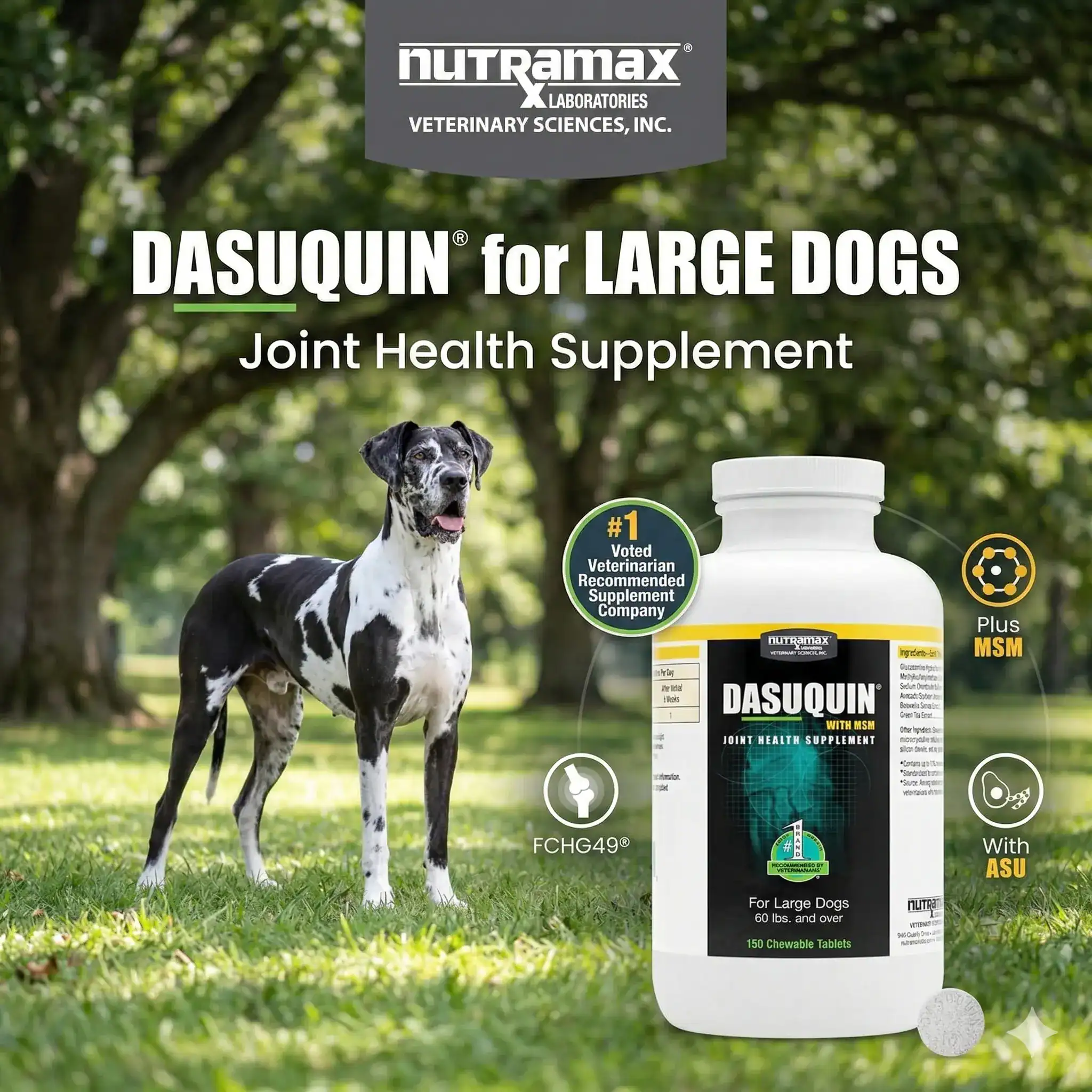
Nutramax Dasuquin with MSM Soft Chews for Large Dogs
Use for: Joint support in active working breeds prone to hip dysplasia and cartilage wear from sustained high-intensity exercise. Combines glucosamine, chondroitin, and MSM to support joint integrity from early adulthood onward.
Check price on AmazonGrooming and Coat Care
The Karelian Bear Dog’s double coat is a working coat designed to shed dirt, repel moisture, and insulate against arctic temperatures. It is not high-maintenance in the sense of requiring professional grooming appointments or specialist equipment, but it demands consistent attention at home, particularly during the two annual seasonal shedding cycles when the undercoat releases in large volumes.
Weekly brushing with a slicker brush or pin brush manages surface debris and prevents the outer coat from trapping dead undercoat against the skin. During the spring and fall coat blows, owners need to increase sessions to three or four times per week using an undercoat rake or deshedding tool to pull out the dense undercoat before it mats or accumulates throughout the home. Owners managing heavy seasonal shedding will find our roundup of the best brushes for shedding dogs covers tools tested specifically for double-coated working breeds. Bathing every six to eight weeks, or after genuinely muddy outings, is sufficient. Use a mild shampoo appropriate for double-coated breeds. For dogs with recurring skin irritation between coats, a dog shampoo for itchy skin provides relief without stripping the coat’s natural weatherproofing oils.
Never shave a Karelian Bear Dog. Clipping the double coat damages the structural integrity of both the outer guard hairs and the insulating undercoat, reducing the coat’s ability to regulate temperature in both cold and hot conditions. The result is a dog that is both less weatherproof in winter and more susceptible to overheating in summer. Nail trimming every three to four weeks, weekly ear checks, and regular teeth brushing complete a home grooming routine that keeps this breed in good condition without specialist intervention.
Exercise and Living Needs
Karelian Bear Dogs were built for full days of sustained hunting in boreal forests. Two hours of vigorous daily exercise is a minimum threshold, not an aspirational target. Structured physical work including extended running, hiking across varied terrain, or organized dog sports that engage the prey-detection instinct provides the level of stimulation this breed requires to remain behaviorally stable at home.
Secure containment is non-negotiable. A six-foot solid fence with a dig-proof base and no footholds or climb points is the baseline standard. These dogs will test perimeter integrity consistently, particularly when prey animals are audible or visible beyond the fence line. Underground electric fencing is not adequate for a breed that will run through a shock if the prey drive has activated. Physical barriers are the only reliable containment method.
Apartment living is incompatible with this breed’s needs. The barking alone creates neighbor conflicts that escalate quickly in shared-wall environments, and the exercise demands cannot be met through street walks or urban dog runs. Rural or semi-rural properties with large, securely fenced outdoor areas are the appropriate living environment. These dogs also do poorly with extended solitary confinement. They were developed to work alongside a handler, and significant time alone without physical and mental outlet produces destructive or compulsive behavior within weeks.
Nutrition & Diet
Karelian Bear Dogs at working intensity burn calories at a rate that surprises owners accustomed to companion breeds of similar size. Feed intake should be calibrated to activity level and monitored through body condition scoring rather than relying on bag guidelines, which typically underestimate the needs of a genuinely active dog.
🐶 Puppy Stage
Feed a large-breed puppy formula that moderates calcium and phosphorus ratios to support steady skeletal development without pushing rapid growth. Three measured meals daily through six months maintains stable energy and supports even physical development. Avoid overfeeding during this stage. A lean puppy builds stronger joints over time than one carrying excess body weight during the growth phase.
🐕 Adult Stage
Active adults doing genuine working or sporting activity thrive on high-protein formulas with real animal protein as the first ingredient, targeting 25 to 30 percent crude protein and adequate fat content for sustained energy output. Semi-active household dogs require meaningfully fewer calories to maintain a healthy body condition. A visible waist and easily felt ribs without pressing are the appropriate targets. Two measured meals daily reduces bloat risk compared to one large feeding. Supplementing with a quality marine omega-3 source such as Zesty Paws Salmon Oil supports coat condition and reduces inflammatory response in a breed doing sustained physical work.
🐕🦮 Senior Stage
From age seven onward, transition to a senior large-breed formula with reduced caloric density, elevated omega-3 content for joint and coat health, and added glucosamine and chondroitin for cartilage support. Annual blood panels from age five onward catch thyroid dysfunction, kidney changes, and early joint deterioration before they progress to symptomatic disease. Dietary adjustments made at the start of the senior phase significantly extend the quality of the remaining lifespan.
Training
Training a Karelian Bear Dog requires a handler who understands the difference between a dog that is domestically obedient and a dog that has an operational working drive that obedience training can channel but cannot suppress. Attempting to train the prey drive out of this breed is not a realistic goal. Managing it through structure, containment, and handler authority is the achievable objective.
⛔ Early Socialization Is Non-Optional
The critical socialization window between eight and sixteen weeks is the only period when this breed can develop reliable neutral responses to unfamiliar people, dogs, and environments through exposure rather than obedience work. Broad, positive socialization during this window does not eliminate wariness of strangers or dog-reactive tendencies, but it creates an adult dog that processes new stimuli with assessment rather than immediate reactivity. Missing this window produces a dog that defaults to suspicion or aggression around anything outside its established household.
👑 Obedience and Foundation Commands
Core commands including sit, stay, down, heel, and a reliable recall must be established before the dog reaches adolescence at six to eight months. Recall training must take place exclusively inside a securely fenced area because off-leash recall in open space is not achievable with certainty once prey drive has activated. Positive reinforcement using high-value food rewards produces better results than compulsion-based methods with this breed. Corrections applied with force damage the handler-dog relationship without producing the compliance they aim for.
📺 Channeling the Working Drive
Handlers who direct the prey and tracking drive into structured activities achieve the most stable behavioral outcomes. Organized dog sports including tracking, nose work, and controlled field work give the breed a legitimate outlet for its most powerful impulses. A Karelian Bear Dog that works consistently is dramatically more manageable at home than one that spends its energy trying to find an outlet independently. The working drive is the asset to be directed, not the problem to be eliminated.
Karelian Bear Dog vs Siberian Husky vs Alaskan Malamute vs Norwegian Elkhound
Prospective owners drawn to northern primitive breeds often compare the Karelian Bear Dog to other high-drive spitz-type dogs when evaluating fit for their household. Understanding how the Karelian differs from the Siberian Husky and the Alaskan Malamute clarifies the specific demands involved. Each breed shares northern heritage but diverges significantly in temperament, working role, and ownership complexity.
| Attribute | Karelian Bear Dog | Siberian Husky | Alaskan Malamute | Norwegian Elkhound |
|---|---|---|---|---|
| Weight | 44–49 lb (20–22 kg) | 35–60 lb (16–27 kg) | 75–85 lb (34–39 kg) | 48–55 lb (22–25 kg) |
| Original Purpose | Big-game bear hunting | Long-distance sled pulling | Heavy freight hauling | Moose and bear hunting |
| Energy Type | Extreme, sustained hunting | High, endurance-focused | High, power-oriented | High, sustained tracking |
| Trainability | Independent, drive-led | Independent, escape-prone | Stubborn, pack-structured | Moderate, responsive |
| Grooming | Weekly brush, heavy seasonal shed | Weekly brush, heavy seasonal shed | Weekly brush, very heavy shed | Weekly brush, heavy seasonal shed |
| Threat Response | Fearless engagement, no retreat | Alert but generally non-aggressive | Dominant guardian instinct | Bold alert, controlled bark |
| First-Time Owner? | No, specialist handlers only | No, experienced owners only | No, experienced owners only | With dedication and research |
| Common Health Risks | Pituitary dwarfism, hip dysplasia, progressive retinal atrophy, bloat | Hip dysplasia, eye conditions, degenerative myelopathy, follicular dysplasia | Hip dysplasia, elbow dysplasia, bloat, polyneuropathy | Hip dysplasia, progressive retinal atrophy, Fanconi syndrome, hypothyroidism |
| Living Space | Rural property with secure fencing required | Active home with secure fencing | Home with yard, strong containment | Active home with yard |
The Karelian Bear Dog is the only breed in this group with a primary purpose of fearlessly engaging dangerous big game at close range rather than hauling loads or working in a pack context. That distinction produces the extreme prey drive and fearless engagement response that separates the Karelian from its northern relatives. The Norwegian Elkhound is the closest functional parallel and offers a somewhat more trainable alternative for households drawn to the hunting heritage but not prepared for the Karelian’s intensity. Choose the Karelian Bear Dog when the specific big-game hunting or wildlife management profile and the working drive are what the household genuinely needs. Choose the Siberian Husky when the primary draw is the northern aesthetic combined with a more sociable disposition toward both people and other dogs.
Common Questions about the Karelian Bear Dog
Are Karelian Bear Dogs good family dogs?
Direct Answer: Yes for experienced, highly active families without small children, cats, or other small pets, but not appropriate for standard households expecting a manageable companion breed.
Context: These dogs form deep, affectionate bonds with their immediate household when properly raised and socialized. The challenge is that their prey drive creates genuine risk around small animals and requires adult supervision in all interactions with young children due to the dog’s size and energy level.
Management: Introduce puppies to children and household routines immediately and consistently. Teach children handling rules from day one. Provide the dog with a quiet space children cannot access. A Karelian Bear Dog raised correctly with an experienced family is loyal and protective. One placed into the wrong household creates an unmanageable situation quickly.
How much does a Karelian Bear Dog cost?
Direct Answer: Expect to pay USD 1,500 to USD 3,000 from a responsible breeder in North America who provides documented health testing for pituitary dwarfism and OFA joint screening. Pricing varies by country, with UK, Canada, and Australia rates differing.
Context: The breed is rare in North America and most litters are produced for wildlife management programs or specialist hunting households rather than the general pet market. Waitlists commonly run one to two years with reputable breeders. Ongoing costs are significant. High-quality food runs USD 60 to USD 100 monthly for an active adult. Annual veterinary care including the recommended health screening panels adds USD 500 to USD 1,000 per year in routine costs, with orthopedic interventions potentially reaching USD 3,000 to USD 6,000 if hip dysplasia requires surgical management.
Management: Secure pet insurance from the day the puppy arrives rather than after a diagnosis becomes apparent. Budget for professional training as a fixed first-year expense. Factor containment infrastructure, including proper fencing, into the initial ownership cost before acquiring.
Do Karelian Bear Dogs bark a lot?
Direct Answer: Yes. Barking is the breed’s primary working mechanism and is genetically hardwired at a level that training can manage but not eliminate.
Context: These dogs were bred to track silently and then bark loudly and persistently to corner and distract large game until the hunter arrived. That bark is powerful, purposeful, and triggered by movement, unfamiliar sounds, and any environmental change the dog considers worth flagging. In a domestic setting, that translates into consistent alert barking that neighbors in close proximity will not tolerate.
Management: Rural or semi-rural properties with distance from neighboring residences are the appropriate setting for this breed. Do not acquire a Karelian Bear Dog in an apartment, a townhouse, or any situation involving shared walls or close neighbors.
What are the common health problems in Karelian Bear Dogs?
Direct Answer: The most documented conditions are pituitary dwarfism (a severe genetic disorder screened through DNA testing), hip dysplasia, progressive retinal atrophy, and bloat risk associated with the breed’s deep chest and active lifestyle.
Context: Pituitary dwarfism is the most breed-specific concern and is unique to the Karelian Bear Dog within this group of northern spitz breeds. It is caused by a recessive genetic mutation identifiable through DNA testing before breeding. Hip dysplasia and PRA are shared risks across most hunting and working breeds. Responsible breeders screen for all three conditions and provide written documentation for each.
Management: Only purchase from breeders supplying individual DNA results for pituitary dwarfism and current OFA and CAER certifications for both parents. Schedule annual ophthalmic exams from year two onward. Full blood panels from age five catch emerging conditions early.
Do Karelian Bear Dogs get along with other dogs?
Direct Answer: Coexistence with other dogs is possible but requires careful management, early socialization, and realistic expectations. Same-sex pairings and dogs of significantly different sizes carry elevated risk.
Context: These dogs were bred to work alone or in very small, well-matched pairs. They do not have the social flexibility of pack-oriented breeds. Dog-to-dog reactivity, particularly with unfamiliar animals, is a documented breed characteristic. Off-leash dog parks with unknown dogs are a high-risk environment.
Management: Introduce any new dog on neutral territory with a trainer or experienced handler present. Never leave dogs of different sizes together unsupervised. This breed is often best kept as the only dog in the household, particularly in homes without prior experience managing multi-dog environments.
Are Karelian Bear Dogs rare?
Direct Answer: Yes, extremely rare outside Finland and specialist wildlife management programs. The AKC maintains the breed in Foundation Stock Service status, and the North American population is small and concentrated in working contexts.
Context: Most Karelian Bear Dogs in North America are bred for wildlife agencies, national park programs, and specialist hunting households rather than the general public. Finding a reputable breeder typically requires contacting the Wind River Bear Institute or Finnish import networks. Waitlists of one to two years are normal with responsible breeders. Pet-market-focused litters from unverified breeders lack the health documentation this breed requires.
Management: Begin your search with parent clubs and verified working programs rather than general breeder directories. Be prepared to wait for a litter from a source that can supply complete health documentation.
Can a Karelian Bear Dog live in a hot climate?
Direct Answer: Keeping a Karelian Bear Dog in a consistently hot climate is strongly discouraged. Their dense arctic double coat makes efficient heat dissipation difficult and significantly elevates the risk of heat stress and heatstroke during exercise.
Context: The breed was developed across Finnish winters with ambient temperatures regularly below freezing. The same coat that provides critical insulation in those conditions becomes a heat-retention liability in warm or humid climates. Exercise must be restricted to early morning or evening hours in any region with sustained warm seasons, limiting the working activity the breed needs for behavioral stability.
Management: Never shave a double-coated dog. Clipping the coat damages the thermoregulation structure of both the guard hairs and undercoat. Provide constant access to shade and fresh water. For households in warm climates, choosing a breed developed for those conditions produces better outcomes for both the dog and the owner.
Are Karelian Bear Dogs aggressive toward people?
Direct Answer: Correctly bred and well-socialized Karelian Bear Dogs are not inherently aggressive toward people. Their natural posture with unfamiliar individuals is deep reserve and watchfulness rather than open aggression, but inadequate socialization produces a dog whose wariness can escalate into defensive reactions around strangers.
Context: This breed’s working purpose required focused aggression toward large game, not toward humans. A properly bred dog from stable lines distinguishes between those contexts reliably. The risk comes from poor breeding, missing socialization, or handler inexperience that allows the dog’s wariness to go unmanaged through the critical developmental windows.
Management: Broad, positive socialization from eight weeks onward is the foundation. Introduce the dog to hundreds of neutral strangers during the critical puppy window. Maintain that exposure consistently through adolescence. Source from breeders who prioritize stable temperament alongside conformation and working ability.
How much exercise does a Karelian Bear Dog need?
Direct Answer: Plan on a minimum of two hours of vigorous daily exercise, significantly more than most companion or sporting breeds of comparable size.
Context: This breed was built for full hunting days across dense boreal terrain. Short leash walks do not approach the physical or mental stimulation threshold required for behavioral stability. A Karelian Bear Dog that does not receive adequate physical work and mental engagement redirects that energy into fence escapes, destructive chewing, compulsive barking, and persistent digging.
Management: Combine vigorous leash work with securely fenced off-leash running, structured tracking or nose work activities, and hiking or field exercises that engage the prey detection instinct. Tracking sports, barn hunt, and similar structured activities provide mental fatigue that meaningfully supplements physical exercise.
What is the Wind River Bear Institute?
Direct Answer: A conservation organization founded by Carrie Hunt that pioneered the use of Karelian Bear Dogs in non-lethal bear management across North American national parks and rural communities.
Context: The institute deploys Karelian Bear Dogs alongside trained handlers to push bears away from human areas through aversion conditioning rather than lethal control. The method has been adopted by multiple state wildlife agencies and has saved both human and bear lives across decades of field operation. The institute’s work is the primary reason the breed has any name recognition in North America outside specialist hunting circles.
Management: Reviewing the institute’s published field protocols gives prospective owners the clearest available picture of what this breed is capable of under expert handling, and equally what the demands on the handler look like in a genuinely working context.
Finding a Puppy
Finding a responsible breeder for this breed requires more diligence than most. The population is small, the working context is specialized, and the consequences of sourcing from an unscreened program are severe. A puppy with pituitary dwarfism from unscreened parents creates a devastating and expensive management situation that no household should face because a breeder skipped a DNA test.
🏠 Responsible Breeders
Seek breeders who supply individual DNA test results for pituitary dwarfism for both parents, current OFA joint certifications, and CAER ophthalmic exam records. Responsible breeders will ask you detailed questions about your fencing, your daily exercise habits, your prior experience with primitive or high-drive breeds, and your living situation before agreeing to place a puppy. If a breeder promises a calm or easy Karelian Bear Dog, or asks no questions about your setup, treat that as a clear disqualifying signal.
🐾 Rescue and Adoption
Finding a Karelian Bear Dog through standard rescue networks is rare. Most dogs that do appear in rescue systems entered because the previous owner underestimated the containment requirements, the exercise demands, or the noise level involved. Breed-specific networks connected to wildlife management programs and Finnish import communities occasionally have adult dogs available. An adult dog that has completed its initial socialization and basic training foundation is often a more predictable starting point than a puppy for first-time owners of the breed.
🚩 Red Flags to Watch For
- No individual DNA test result for pituitary dwarfism. A breeder statement that “parents look healthy” is not a substitute for documented genetic screening.
- No OFA joint or CAER eye certifications for both parents. These are standard responsible breeding requirements, not optional extras.
- Pricing significantly below USD 1,500. Proper health screening and litter care require investment. Underpriced puppies signal shortcuts in the screening process.
- Breeders who describe the dog as “great for any active family” without questioning your specific setup and experience level.
- Litters raised in outdoor kennel runs without regular human handling and indoor exposure from birth onward.
- Refusal to allow you to meet at least one parent or see the environment where puppies are being raised.
Before bringing home a Karelian Bear Dog, run this 4-step pre-buying check: (1) Do you have a rural or semi-rural property with a minimum six-foot solid perimeter fence and no escape routes including dig points or climbable surfaces? (2) Can you commit to a minimum of two hours of vigorous daily exercise and ongoing structured training for the next decade, including during the demanding adolescent period between eight months and two years? (3) Have you verified that no small animals including cats, small dogs, or backyard livestock share the property? (4) Do you have direct experience handling primitive, high-drive breeds, or a confirmed working relationship with a trainer who specializes in this type of dog? If any answer is no, reconsider the breed.
Personal Observation
💭 Personal Observation
Managing multiple dogs across many years teaches you that the gap between a high-drive dog and a very high-drive dog is not incremental. It is categorical. A dog with real working instincts changes the daily math of ownership in ways that no amount of reading fully prepares you for until you are living it. The Karelian Bear Dog sits at the outer edge of that category. Wildlife agencies use them precisely because no softer breed can do what they do. That same capability is what makes them incompatible with standard household expectations. The honest question for any prospective owner is not whether you admire what this breed is capable of, but whether your daily life, your property, your fencing, and your commitment to ongoing training can actually sustain what this dog needs. A decade of caring for dogs across very different temperament profiles has shown me that the households where these partnerships go wrong rarely fail because the owner did not love the dog enough. They fail because the match was wrong from the start and nobody was honest about it early enough. Get the match right and you gain something genuinely extraordinary. Get it wrong and both the dog and the household pay for it.
Conclusion
The Karelian Bear Dog is a purpose-built Finnish hunting breed that offers specialist handlers and wildlife professionals a combination of fearless working drive, handler loyalty, and tracking ability that few breeds can approach. The breed’s documented record in bear management programs across North America is evidence of what this profile delivers when matched to the right handler and environment.
On the pro side, experienced handlers and working households gain a deeply bonded, capable partner with a lifespan of 11 to 13 years and a health profile that, when properly screened, avoids many of the conditions common in heavily commercialized breeds. On the con side, every year of that partnership demands consistent vigorous exercise, unwavering containment, proactive health screening, and a handler capable of providing firm, clear authority to a dog that makes independent decisions and will not retreat from perceived threats. For households expecting a sociable, adaptable companion that tolerates apartment living and off-leash dog parks, a Labrador Retriever or a Golden Retriever will produce a better outcome for both the dog and the family.
Editorial Disclaimer: This article is for informational and educational purposes only. It does not constitute veterinary advice, medical diagnosis, or treatment recommendations. Always consult a licensed veterinarian before making health-related decisions for your pet.
Accuracy Notice: While every effort has been made to ensure the information presented here is accurate and current, breed information evolves and individual dogs vary. If you spot a factual error or have updated information from a verified source, please contact us so we can review and update.
Product Disclosure: Product recommendations are based on independent research and editorial judgment. Individual results may vary. As an Amazon Associate, K9Sphere earns from qualifying purchases at no additional cost to you.
Last reviewed: May 2026. Article reviewed for accuracy on the date shown above.


