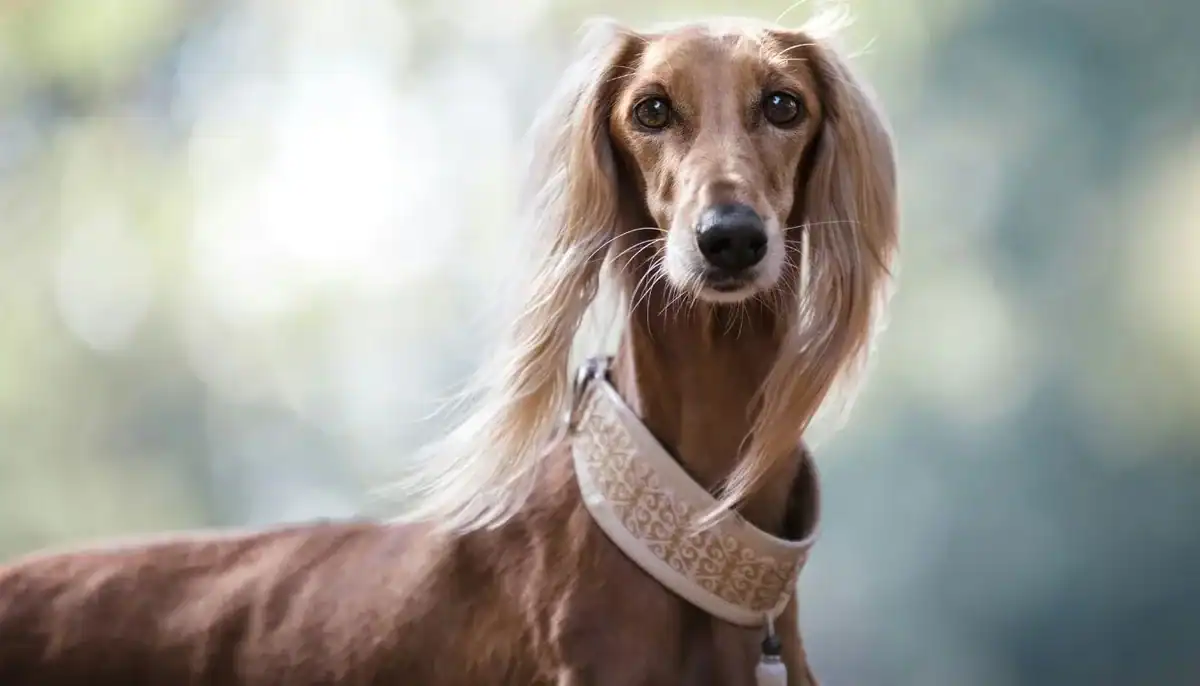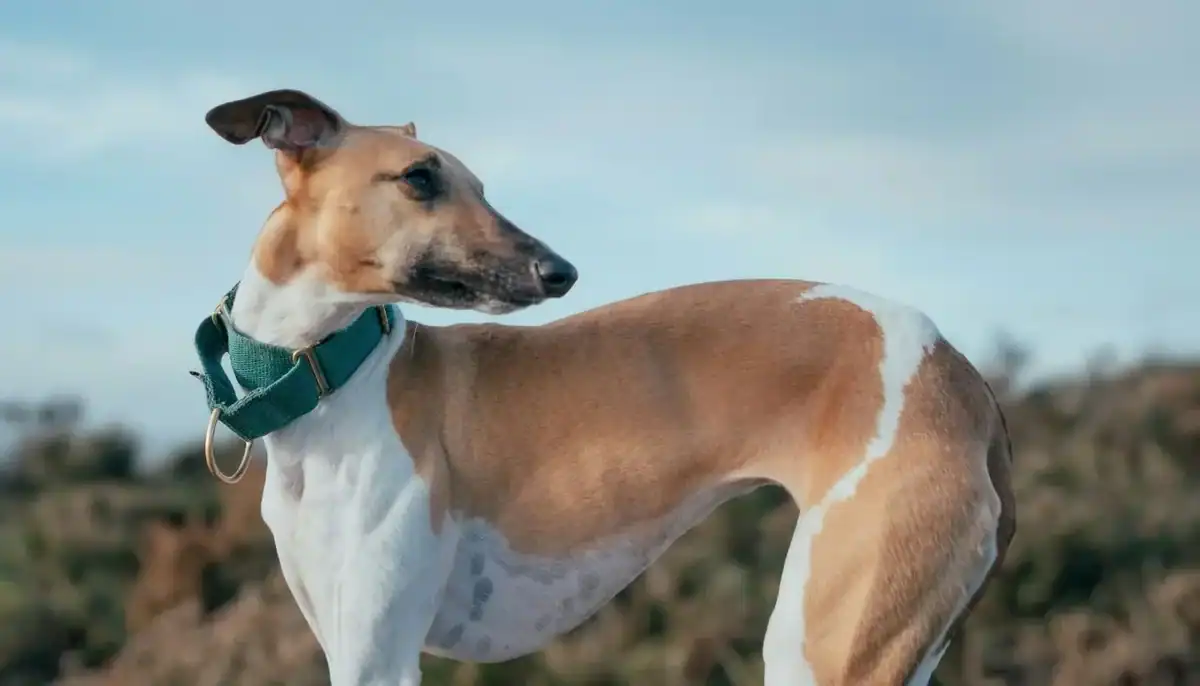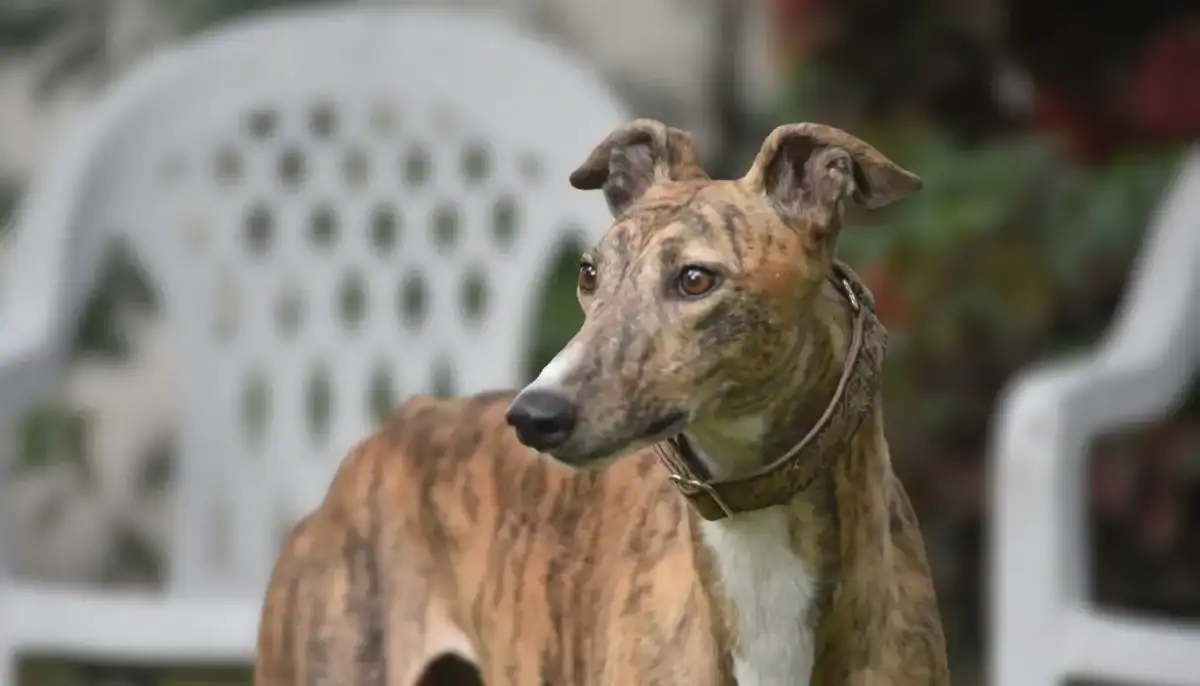
The Greyhound dog breed is the fastest in the world, and one of the calmest to live with. That combination surprises almost everyone who meets one for the first time.
Puppies are available from breeders, but they are uncommon, because most pet Greyhounds are retired racers rehomed as adults. An adopted racer usually picks up house-training quickly, though many have never seen stairs, a glass door, or a slippery floor before.
This guide draws on the AKC breed standard, OFA screening guidance, and veterinary information specific to sighthounds.
Daily needs are lighter than the build suggests. A couple of walks, a safe place to sprint now and then, a warm bed, and company for most of the day.
One thing sets this breed apart at the vet. A Greyhound’s normal blood results look abnormal on a standard chart, and its body handles anesthesia differently. That section is worth reading before anything else.
Affiliate Disclosure: K9Sphere participates in the Amazon Services LLC Associates Program and other affiliate programs. K9Sphere earns from qualifying purchases made through links in this article at no additional cost to you. Product recommendations are based on independent research and editorial judgment, not paid placement.
Breed Snapshot
📊 Vitals and Lifespan
Height
Males 28 to 30 in (71 to 76 cm)
Females 27 to 28 in (68 to 71 cm)
Weight
Males about 65 to 70 lb (29 to 32 kg)
Females about 60 to 65 lb (27 to 29 kg)
Lifespan
About 10 to 13 years
Breed Group
AKC Hound Group
Origin
Great Britain
🇬🇧
⭐ Personality Traits
K9Sphere editorial ratings (1 to 5). This is a quiet, gentle housemate with a short burst of speed and very little interest in doing much else.
History and Origin
Sighthounds are an old type of dog, bred to chase game by sight rather than scent. The Greyhound as we know it took shape in Britain, where it was used for coursing long before it ever saw a racetrack. It sits among the hound breeds.
📌 Ancient Roots
Dogs of sighthound type appear in art across the ancient world, which is why the breed is often called ancient. The modern Greyhound, though, is a British breed shaped over the last few centuries.
📌 Coursing and the Nobility
For centuries the Greyhound was a hunting dog of the British upper classes, used to chase hares across open country. Breeding focused on speed, keen eyesight, agility, endurance, and the will to chase.
📌 1912 to 1926. The Racetrack
Modern greyhound racing began in 1912, when Owen Patrick Smith developed a mechanical lure for oval-track racing. Greyhound racing became a commercial sport across the United States over the following years, and the first British oval-track meeting was held in 1926. Thousands of dogs were then bred each year for the track rather than the show ring.
📌 Today. Adoption
As racing has closed down across most of the United States, adoption groups have rehomed retired racers as pets. That is how most Greyhounds now reach family homes.
Were Greyhounds the Dogs of the Pharaohs?
You will read everywhere that the Greyhound descends from the hunting dogs pictured in Egyptian tombs. It is a good story and it is not that simple.
Sighthound-shaped dogs do appear in ancient art across many regions. But when researchers compared the DNA of 85 breeds in a 2004 study published in Science, the Greyhound did not group with the ancient breeds at all. It grouped with herding-type dogs such as the collie and the Irish Wolfhound, as reported by National Geographic.
The breeds that did cluster with the oldest wolf-like lines were the Saluki, the Afghan Hound, the Basenji and the Akita. So the ancient pictures show a type of dog rather than this breed, and the modern Greyhound was developed in Britain.
Physical Characteristics
Everything about the Greyhound is built for sprinting. A deep chest, a narrow waist, long legs, and a spine that flexes like a spring. No breed of dog is faster over a short distance, and Greyhounds have been recorded above 40 miles per hour. A greyhound race is over in well under a minute.
🎨 Coat and Color
The coat is very short and lies flat. Almost any color or pattern is allowed, including black, fawn, red, blue, and brindle, with or without white. They are among the larger breeds that shed lightly.
🥶 Very Little Body Fat
Greyhounds carry very little body fat compared with most dogs. Their lean build and short coat make them sensitive to cold, so many need extra protection in cold weather, and most are uncomfortable lying on a hard floor.
Character and Temperament
The nickname is the 40 mile per hour couch potato, and it is accurate. Indoors a Greyhound is quiet, gentle, and asleep for a large part of the day.
😴 Calm Indoors
They are undemanding house dogs who rarely bark and settle easily. Many are gentle with children, though a sleeping Greyhound should never be disturbed suddenly, because they can startle badly.
🐇 Serious Prey Drive
They were bred to chase anything small that runs. Many cannot be trusted off leash in an unfenced space, because the chase response can override even a well-trained recall.
🏠 New to Home Life
A Greyhound may reach your home having never seen stairs, a mirror, a glass door, or a television. They learn quickly, but the first few weeks involve teaching things most dogs already know.
👥 Attached to People
Most have lived in kennels with other dogs and are used to constant company. Some struggle when left alone at first, so time alone is worth building up slowly.
Screening and Conditions
Veterinary Disclaimer: The information in this article is for educational purposes only and is not a substitute for professional veterinary advice, diagnosis, or treatment. K9Sphere’s authors are experienced dog owners, not licensed veterinarians. Always consult a qualified DVM regarding any health concerns about your pet. Never disregard professional veterinary advice or delay seeking it because of something you have read on this site.
Health Information Sources: Data compiled from:
- American Kennel Club breed page for the standard and general breed guidance
- Greyhound Club of America CHIC requirements for the breed’s screening recommendations
- Greyhound bloodwork reference guidance for the breed’s distinct normal laboratory values
Always consult your licensed DVM for personalized medical advice.
Most pet Greyhounds are adopted as adults, so the dog’s own veterinary and racing history is usually more immediately useful than its parents’ records. If you are buying a puppy, though, parent testing matters as much as in any breed.
The Greyhound Club of America’s CHIC recommendations cover a heart evaluation, an eye exam by a board-certified ophthalmologist, a DNA test for Greyhound polyneuropathy, and DNA repository participation. Autoimmune thyroiditis testing is recommended but listed as optional. A CHIC number means the required tests were done and published, not that every result was normal.
What matters far more is that your vet knows how a Greyhound differs from other dogs. The first two items below are the ones to raise at your very first appointment.
Common Health Concerns
🔴 Normal Blood Results That Look Abnormal
What to watch for: A vet telling you the blood work is off. Greyhounds naturally run higher red blood cells and hemoglobin, can have higher normal creatinine, and lower platelets and white cells than other breeds. Low total T4 readings are also common. Read against a standard chart, a perfectly healthy Greyhound can look ill on several lines at once.
What to do: Tell your vet the dog is a Greyhound before any blood test, and ask them to use sighthound reference ranges. Adoption groups often provide a printed reference sheet to take along. A low total T4 on its own does not establish hypothyroidism, and should be read against breed-appropriate ranges and the whole clinical picture.
🔴 Anesthesia Sensitivity
What to watch for: Slow or rough recovery after a procedure. Greyhounds can take longer to come round from some anesthetic drugs. Differences in how the breed distributes and breaks down those drugs contribute to this, not just its lean build.
What to do: Raise it before any planned procedure, including a dental cleaning. Ask whether the clinic has used sighthound protocols before, so drug choice, dosing, temperature and recovery monitoring can account for the breed.
🟡 Greyhound Polyneuropathy
What to watch for: A young dog with a bunny-hopping gait, weakness, or muscle wasting in the hind limbs. This is the breed’s own named inherited nerve disease and it appears in puppies rather than adults.
Screening: A DNA test exists and is one of the breed club’s CHIC tests, so a puppy breeder should be able to show results for both parents. Two carriers should never be bred together. It is mainly a juvenile-onset concern, so it matters most when evaluating puppies and breeding decisions rather than a healthy adult retired racer.
🟡 Osteosarcoma
What to watch for: Limping that does not improve, or swelling on a leg. Bone cancer is reported at elevated rates in this breed, usually in middle age or later.
What to do: There is no screening test. Lameness or limb swelling that persists, recurs, or gets worse needs veterinary assessment rather than rest and waiting.
🟡 Bloat and Gastric Torsion
What to watch for: A swollen hard belly, restlessness, drooling, and repeated retching that brings nothing up. The deep chest raises the risk, and this is an emergency.
What to do: Know the signs and go straight to a vet if you see them. Smaller meals and avoiding hard exercise around mealtimes are commonly discussed measures rather than guarantees.
🟡 Dental Disease
What to watch for: Bad breath, red gums, and tartar. Many retired racers arrive with poor teeth, and dental disease is one of the most common problems in the breed.
What to do: Brush regularly and have your vet check the teeth. Remember that any dental procedure means anesthesia, which brings the point above back into play.
Grooming and Coat Care
Grooming takes almost no time. A rubber mitt or soft brush at least once a week removes loose hair and keeps the coat glossy.
They shed lightly and have very little doggy smell, so you only need to bathe them occasionally. Our guide to the best brushes for shedding dogs covers tools that suit a short coat.
Check the feet regularly. Greyhounds are prone to hard growths on the pads called corns, which cause limping and need a vet to look at them. Nails and teeth need routine attention too.

Oxyfresh Premium Pet Dental Care Water Additive
A tasteless water additive commonly used by owners whose dogs will not accept a toothbrush. It supplements brushing and veterinary dental care rather than replacing either, which matters in a breed where dental work means anesthesia.
Check price on AmazonExercise and Living Needs
Far less than people expect. Regular daily walks suit most adults, plus the chance to run flat out in a securely fenced space now and then. Exact needs vary with age, health and conditioning.
They are sprinters, not distance runners. A Greyhound will happily run hard for half a minute and then sleep for hours. They make poor jogging partners for long miles.
Keep them on leash outside a securely fenced area. A Greyhound accelerates fast enough that a failed recall becomes a serious safety problem.
They can do well in apartments, given daily walks and regular access to a safe place to run. They love a well-padded bed, and benefit from one, since their lean bodies give little cushioning over prominent bones. An orthopedic bed is a common choice.
Nutrition & Diet
Feed a complete, balanced food suited to a large dog. Retired racers often arrive underweight and need to put on a little, but they should stay lean and racy rather than filled out.
Some ribs showing is normal for this breed and is not a sign of neglect. Ask your vet what body condition they want to see, because a Greyhound at a healthy weight looks thin next to most dogs.
Many owners split the daily ration into two or more meals rather than feeding one large one, and your vet can advise on what suits your dog. Owners of older dogs sometimes discuss joint supplements with their vet, particularly with a dog that raced.
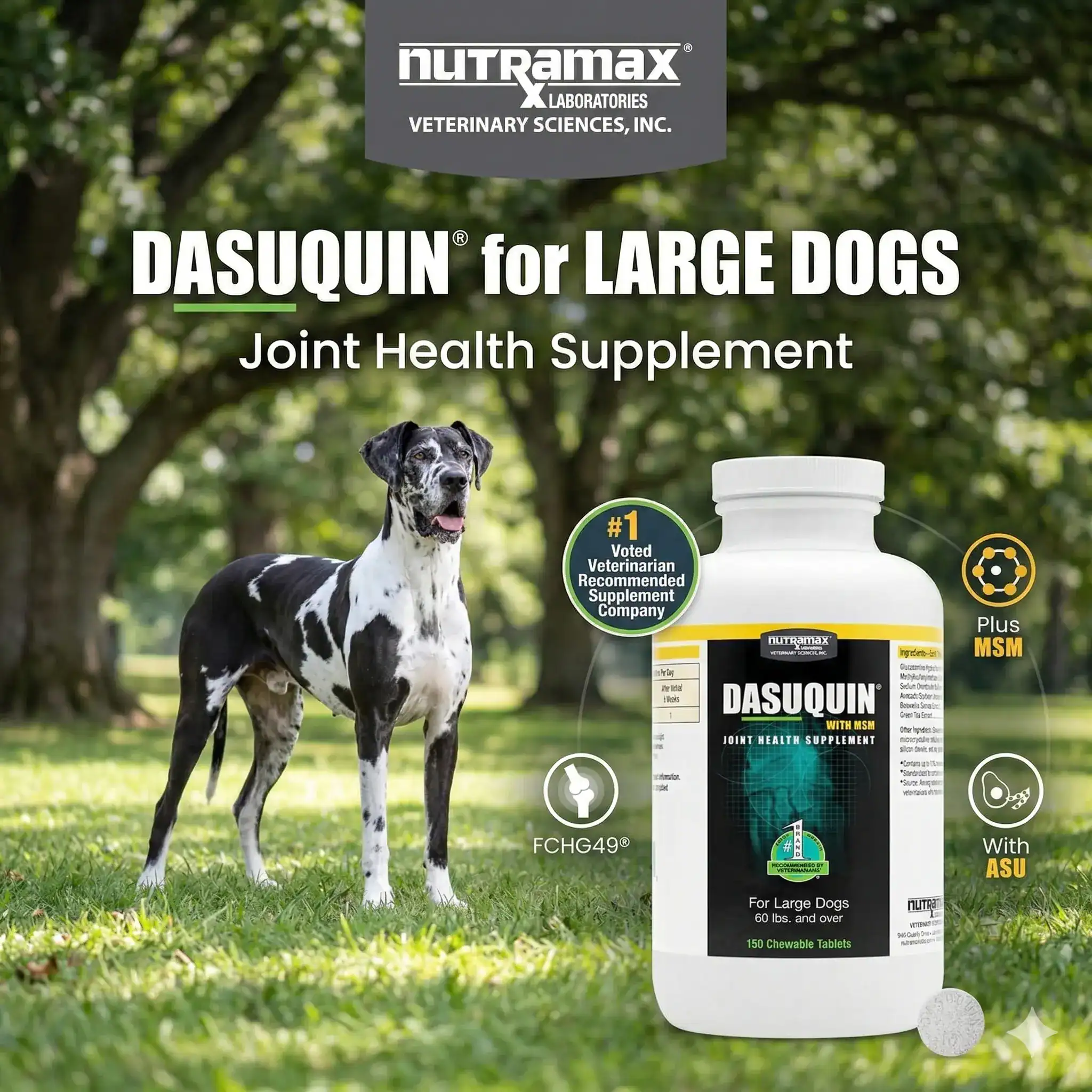
Nutramax Dasuquin with MSM Soft Chews
A glucosamine and chondroitin supplement commonly used in older and formerly athletic dogs. The evidence for it varies and it is not a treatment for joint disease, so check with your vet before starting.
Check price on AmazonTraining
Greyhounds are gentle and sensitive. They respond to calm, reward-based training and shut down under harsh handling. Learning to read their body language helps, because they show discomfort quietly rather than loudly.
A retired racing Greyhound often needs to settle into household life before formal obedience matters. Many take well to a crate, since a kennel space is familiar to them, and it gives a new dog somewhere of its own. Stairs, slippery floors, glass doors, household noise, and being alone are the usual lessons. Many learn them with patient repetition, though the timeline varies by dog.
Do not expect a reliable recall around moving animals. You can train a good one for everyday use and still need a fence, because the chase response is faster than thought.
Greyhound vs Whippet vs Italian Greyhound vs Saluki
People choosing a sighthound are usually weighing size against energy. All four are sighthounds with a strong pursuit instinct, but their size, athletic needs, temperament and coat differ considerably. The table shows typical tendencies, and individual dogs vary.
| Attribute | Greyhound | Whippet | Italian Greyhound | Saluki |
|---|---|---|---|---|
| Weight | 60 to 70 lb | 25 to 40 lb | 7 to 14 lb | 40 to 65 lb |
| Original Purpose | Coursing and hunting, later track racing | Rabbit coursing and racing | Companion and small-game hunting | Hunting and coursing |
| Coat | Very short | Very short | Very short and fine | Short, often feathered |
| Activity Level | Low indoors, sprints outdoors | Low indoors, sprints outdoors | Low to moderate | Moderate, good stamina |
| Cold Tolerance | Low | Low | Very low | Low to moderate |
| Prey Drive | High | High | Moderate to high | High |
| Usual Route to a Home | Adopting a retired racer | Breeder | Breeder | Breeder |
| Apartment Suitability | Often workable with exercise | Often workable with exercise | Often workable with exercise | Usually needs more room to run |
| Space and Activity Needs | Calm indoors, needs secure sprint space | Calm indoors, needs daily activity | Modest, still needs daily exercise | Needs regular exercise and secure space |
The Greyhound is the biggest of the four and, oddly, one of the easiest to live with. The Whippet is the middle size, and at the other end of the scale the Italian Greyhound gives you the same sighthound character in a dog under 15 pounds.
Unlike the Bloodhound and other scent hounds, it hunts with its eyes, which changes what a walk looks like and how far it can be trusted off leash.
Common Questions about the Greyhound
How much does a Greyhound cost?
Direct Answer: As an approximate, time-sensitive guide (as of 2026), adoption fees are often several hundred US dollars.
Context: Prices vary by breeder, location, pedigree, and availability, and older dogs often cost less. Most pet Greyhounds come through adoption groups, and the fee may cover veterinary care such as neutering, vaccinations, and dental work.
Management: Budget for a winter coat and a good bed, which this breed genuinely needs rather than nice to have.
Are Greyhounds good family dogs?
Direct Answer: Yes, for calm households. They are gentle, quiet, and undemanding indoors.
Context: They startle easily when woken suddenly, which matters with young children. Adoption groups assess each dog and will tell you which are suited to kids.
Management: Teach children to leave a sleeping dog alone, and give the dog a bed where it will not be disturbed.
How much exercise does a Greyhound need?
Direct Answer: Regular daily walks suit most adults, plus occasional sprints in a securely fenced space.
Context: They are built for short bursts, not endurance. Many owners are surprised at how little they need.
Management: Find a securely fenced field or yard where the dog can run flat out safely.
Do Greyhounds shed a lot?
Direct Answer: No. The short coat sheds lightly and they carry little odor.
Context: They are not hypoallergenic, but grooming is about as easy as it gets in a large dog.
Management: A rubber mitt once or twice a week is enough.
Can a Greyhound live in an apartment?
Direct Answer: Yes. They are quiet, clean, and sleep most of the day.
Context: Size is not the issue. What they need is a soft bed, daily walks, and somewhere safe to sprint sometimes.
Management: Check the building allows large dogs, and plan for stairs if there is no elevator.
Are Greyhounds good with cats?
Direct Answer: Some are. Many adoption groups assess a dog’s prey drive around cats before placement.
Context: The chase instinct is strong, and it varies a lot between individuals. A dog described as cat-safe has usually been tested with cats.
Management: Ask the adoption group directly, and supervise early meetings whatever they say.
Why do Greyhounds wear muzzles?
Direct Answer: Usually for safety during group play, not because the dog is dangerous.
Context: Racing Greyhounds are muzzled at the track, so most are comfortable wearing one. They have thin skin that tears easily, so muzzles prevent injuries when several run together.
Management: Muzzles are commonly used where several Greyhounds run together at speed. Ask your adoption group what they advise.
Why does my vet say my Greyhound’s blood work is abnormal?
Direct Answer: Greyhounds have their own reference intervals, so results that look abnormal against a general canine range may be normal for the breed.
Context: They run higher red cells and creatinine and lower platelets and white cells than other breeds, and low total T4 readings are common. A healthy dog can look abnormal on several lines at once.
Management: Tell your vet the breed before testing and ask for sighthound reference ranges.
Do Greyhounds have separation anxiety?
Direct Answer: Some do, particularly at first, since many have rarely been alone before.
Context: Racing kennels mean constant company from other dogs. Being alone in a quiet house is a completely new experience.
Management: Build up time alone in short steps from the first week rather than testing it with a full workday.
What is the Greyhound lifespan?
Direct Answer: Commonly given as 10 to 13 years, though individual dogs vary.
Context: They are a fairly healthy breed, and many adopted racers arrive at two to five years old with most of their life ahead.
Management: Keep the dog lean, keep the teeth clean, and take a lasting limp seriously.
What is the 3-3-3 rule for a newly adopted Greyhound?
Direct Answer: A rough guide used by adoption groups. Three days to decompress, three weeks to learn the routine, three months to settle in.
Context: It is a rule of thumb rather than a fixed schedule, and it fits this breed well because a retired racer is changing everything at once. Dogs vary widely.
Management: Keep the first weeks quiet and predictable, and do not judge the dog’s real personality too early.
Are Greyhounds good for first-time owners?
Direct Answer: They can be, for a home prepared for the prey drive, the fencing, and the vet differences.
Context: The parts that need learning are the prey drive, the cold, and the vet differences rather than day-to-day handling.
Management: Adopt through a group that matches dogs to homes and stays available for questions afterward.
Finding a Puppy
The Greyhound breed reaches most homes through adoption rather than a breeder, though puppies from show and coursing lines are available if you are willing to wait. Puppies from a reputable breeder do come up for sale, but a greyhound adoption program near you will usually have retired racers waiting, most of them between two and five years old.
🐾 Adoption Groups
A good group assesses each dog, tests it with cats and small dogs where relevant, and tells you honestly what it is like. They usually neuter, vaccinate and treat the teeth before placement, and stay available for questions afterward.
🏠 Breeders
Show and coursing Greyhounds are bred in small numbers. If you want a puppy, expect a wait and expect to be asked about your fencing, since this is a breed you cannot safely exercise off leash in open ground.
🚩 Red Flags to Watch For
- A group that will not tell you whether the dog is safe with cats or small dogs.
- No dental work or veterinary check before placement.
- A seller who says the dog can be exercised off leash anywhere.
- No mention of the breed’s anesthesia and blood work differences.
- Pressure to decide on the day without meeting the dog properly.
- No support offered after the adoption.
❓ Questions to Ask
- Has this dog been tested with cats and small dogs?
- If buying a puppy, what are the parents’ polyneuropathy DNA results?
- How does it handle stairs and slippery floors?
- Has it been left alone before, and how did it cope?
- What dental work has been done?
- Does it have any corns or old track injuries?
- What support do you offer after adoption?
🔍 Questions They Should Ask You
- Do you have a fenced yard, and how tall is the fence?
- Do you have cats or small pets?
- How many hours a day will the dog be alone?
- Are there stairs in your home?
- What is your plan if it does not work out?
A group that asks you nothing is unusual in Greyhound adoption, and worth a second look before you commit.
Personal Observation
💭 Personal Observation
Rambo is the youngest of my rescues. He is very fast and agile and can jump clean over a fence. He needs a long run before he will settle down. A walk does not do it.
A Greyhound is faster than Rambo, but it does not need nearly as much exercise. That surprises people. What it does need is a fence it cannot get past, and a safe place to run inside it.
So with this breed the work is not wearing the dog out. The work is making sure it can never get loose. A dog that fast is very hard to catch once it is gone, and it will not stop because you called it. Get the fence right and the rest of this breed is easy.
Conclusion
Greyhounds can be remarkably easy to live with indoors once their needs are understood. Quiet, clean, gentle, and content to sleep through much of the day.
The things to plan for are the chase instinct, the cold, and the teeth. None of them are difficult once you know about them.
If you decide to adopt a Greyhound, tell every vet you see what breed it is. Their blood results and their response to anesthesia are genuinely different, and saying so lets both be interpreted properly.
📋 Before bringing one home, run this 4-step pre-buying check
- Secure space. Do you have a fenced yard or access to a safely fenced field where the dog can sprint?
- Small pets. Do you have cats or small dogs, and has this Greyhound been tested with them?
- Comfort. Are you ready to buy a winter coat and a well-padded bed, which many Greyhounds benefit from, especially in cold weather?
- Veterinary care. Does your vet know about sighthound blood values and anesthesia protocols?
If any answer is no, reconsider the breed.
Editorial Disclaimer: This article is for informational and educational purposes only. It does not constitute veterinary advice, medical diagnosis, or treatment recommendations. Always consult a licensed veterinarian before making health-related decisions for your pet.
Accuracy Notice: While every effort has been made to ensure the information presented here is accurate and current, breed information evolves and individual dogs vary. If you spot a factual error or have updated information from a verified source, please contact us so we can review and update.
Product Disclosure: Product recommendations are based on independent research and editorial judgment. Individual results may vary. K9Sphere participates in the Amazon Services LLC Associates Program and other affiliate programs, and earns from qualifying purchases at no additional cost to you.
Last reviewed: September 2026. Article reviewed for accuracy on the date shown above.