
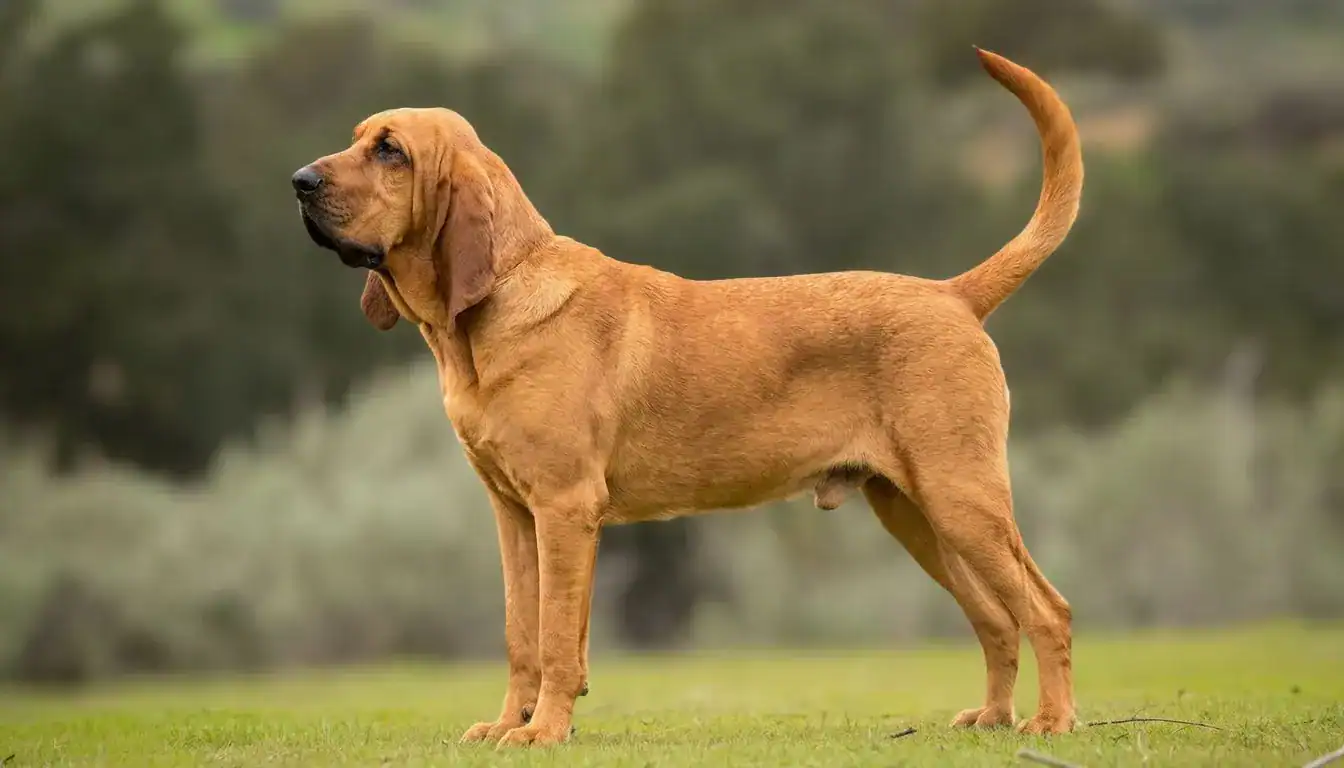
The Bloodhound is universally recognized as the undisputed champion of the canine scent world. You might be drawn to their noble expression, deeply wrinkled face, and those iconic, sweeping ears.
What you haven’t seen is the immense physical and mental maintenance required to keep that massive, highly specialized tracking hound healthy and happy in a standard home.
This guide combines two decades of working-dog experience with established breed standards to give practical information for anyone bringing this powerful breed of hound into their life.
Affiliate Disclosure: K9Sphere is a participant in the Amazon Services LLC Associates Program. As an Amazon Associate, K9Sphere earns from qualifying purchases made through links in this article at no extra cost to you.
Breed Snapshot
📊 Vitals and Life Span
Height
23-27 inches (58-69 cm)
Weight
80-110 lb (36-50 kg)
Life Expectancy
9-11 years
AKC Group
Hound Group
Origin
Belgium / United Kingdom
🇧🇪 🇬🇧
⭐ Personality Traits
Ratings (1 to 5). Bloodhounds are famously affectionate but possess a stubborn tracking drive that requires specialized management.
History and Origins
The history of dogs is filled with specialists, but the Bloodhound stands entirely alone in its category. This ancient breed dates back to medieval times, explicitly bred for an unparalleled ability to track human scent.
The name “Bloodhound” comes from “blooded hound,” meaning a hound of pure aristocratic lineage. According to legend, the breed traces to St. Hubert, the patron saint of hunters, whose monastery in 7th-century Belgium developed these dogs. For centuries, these dogs were the prized possessions of nobility, carefully bred to follow a scent trail over massive distances and through difficult terrain.
📌 8th Century: St. Hubert Hounds
According to legend, the foundation of the modern Bloodhound was established at a monastery in Belgium. The monks of St. Hubert bred massive, black and tan hounds with exceptional noses.
📌 1066: English Arrival
William the Conqueror brought Bloodhounds (then called St. Hubert hounds) to England in 1066. The AKC officially recognized the breed in 1885, coinciding with the rise of dog shows and Westminster Kennel Club shows where Bloodhounds competed alongside coonhounds and other scent breeds.
📌 19th Century: Modern Law Enforcement
Their keen sense of smell made them invaluable to modern law enforcement agencies, eventually leading to their prominent use as highly reliable search and rescue dogs worldwide.
Physical Characteristics
The modern Bloodhound is a large scent hound built entirely around its nasal cavity. Every physical feature you see serves a singular, specialized purpose: trapping and analyzing microscopic odor particles.
Their heavy bone structure, bigger paws, and massive pads propel them steadily over rough ground for hours. Every aspect of their anatomy, from pendulous ears to loose facial folds, is specialized for scent work. A large dog like this requires significant physical space simply to move comfortably around your home without sweeping items off low tables with their heavy tails.
📏 Structural Design
Their loose skin falls into deep folds around the head and neck. As they drop their head to sniff, this skin falls forward, acting like a physical blind that blocks out visual distractions and traps scent near the nose.
🎨 The Sweeping Ears
Those famously long ears act like brooms. As the dog moves forward, the ears sweep along the ground, mechanically stirring up scent particles and directing them upward into the dog’s powerful olfactory receptors.
The accepted breed standard allows for three main coat colors: black and tan, liver and tan, and red. The coat itself is short and relatively firm to the touch, designed to protect the dog while pushing through dense brush.
Temperament
Inside the home, the Bloodhound definition of a perfect afternoon involves sleeping heavily on a soft couch. They are famously docile, deeply affectionate, and gentle with their families.
However, the moment they step outside, that lazy demeanor vanishes. Their temperament is completely dictated by their nose. Bloodhounds are used in tracking because their brain switches off all external communication once they catch a scent. Their legendary ability to follow a trail, even days old, overrides human commands entirely. This is not defiance. It is simply thousands of years of genetics at work.
💡 Gentle Trackers, Not Attackers
The reality: Because they were historically used to track escaped prisoners, pop culture often portrays them as vicious attack dogs at the end of a trail. In reality, they are incredibly friendly. When a Bloodhound finally finds the person they are tracking, their first instinct is usually to offer a wet greeting and ask for affection.
Health Considerations
⚕️ Veterinary Disclaimer: The information provided in this article is for educational purposes only and is not intended as a substitute for professional veterinary advice, diagnosis, or treatment. Always consult a licensed veterinarian for any health concerns about your pet.
📋 Health Information Sources: Health data compiled from:
- CHIC: Recommended breed-specific health testing databases
- American Bloodhound Club: Official parent club health committee statements
Always consult your licensed DVM for personalized medical advice.
While robust in the field, this massive breed requires vigilant preventative care at home. Their unique physical structure makes them highly susceptible to several serious conditions.
🔴 Gastric Dilatation-Volvulus (Bloat)
What it actually is: Because they have massive, deep chests, the stomach can fill with gas and physically twist upon itself, cutting off blood supply. This condition is rapidly fatal without immediate surgical intervention.
Screening & Prevention: You must feed them multiple small meals rather than one large one. Prevent strenuous exercise for at least an hour before and after eating.
This is a medical emergency. Do not attempt home treatment. Seek immediate veterinary care.

Outward Hound Fun Feeder Slo Bowl
Use for: Slowing down fast eaters to reduce bloat (GDV) risk in deep-chested hound breeds like the Bloodhound.
View on Amazon🟡 Skin Fold Dermatitis & Ear Infections
What to watch for: The heavy wrinkles on their face and the long, heavy ear flaps create dark, moist environments that trap moisture, dirt, and bacteria. This rapidly leads to severe yeast and bacterial infections.
Management: You must commit to daily cleaning of their facial folds and weekly cleaning of their heavy ears with vet-approved solutions.
General Care
Living with a Bloodhound means accepting a certain level of mess. Because of their loose lips, they are prodigious droolers. When they shake their heads, saliva will reliably hit your walls and ceiling.
✂️ Managing the Folds
Grooming this breed has very little to do with brushing their coat and everything to do with maintaining their skin architecture. The wrinkles around their face and neck must be wiped clean daily with a damp cloth and then dried completely.
Moisture left in the folds guarantees fungal growth. Their long ears regularly drag through water bowls and food, requiring constant monitoring and wiping to prevent chronic ear canal disease.

Dog Ear Cleaning Finger Wipes with Aloe Vera & Eucalyptus Oil
Use for: Weekly ear cleaning for breeds with heavy, floppy ears that drag on the ground and trap excessive moisture.
View on Amazon🏃 Exercise Requirements
Despite their sleepy indoor nature, they need long daily walks. However, these walks must always be conducted on a strong leash or within a securely fenced area.
If a Bloodhound is allowed off-leash and picks up a scent, they will follow it for miles without looking up, crossing roads and wandering far from home. A physical fence is mandatory. Invisible electronic fences rarely stop a scent hound on a trail.
Nutrition & Diet
Large hound breeds require careful nutritional management to prevent obesity, which places terrible strain on their joints and back. Do not mistake their begging eyes for actual hunger.
Puppy Stage: Because they grow into such heavy adults, their bone structure must develop slowly. Feed a high-quality large-breed puppy formula that carefully controls calcium and phosphorus ratios to prevent crippling growth disorders.
Adult Stage: A standard, high-quality adult diet works well, typically requiring 2,000 to 3,000 calories per day depending on size and activity level. If your dog participates in serious tracking trials or dog sports, you may need to adjust their caloric intake to match their activity level.
Senior Stage: As their activity naturally decreases, their calories must be sharply restricted to prevent sudden weight gain. Joint supplements containing glucosamine and chondroitin are highly recommended during this phase to support aging hips and elbows.
Training
Training a Bloodhound requires infinite patience and a great sense of humor. They are highly intelligent, but their primary sense is smell, not hearing. When their nose is engaged, their ears effectively turn off.
Positive reinforcement is the only effective method. They are surprisingly sensitive dogs, and harsh corrections will simply cause them to shut down and refuse to work. Reward-based training using high-value treats is required to hold their attention.
Participating in organized tracking events through local kennel clubs is an incredible way to bond with this breed. Giving them a structured outlet for their tracking drive makes them much calmer and more compliant inside the house.
FAQ
Are Bloodhounds good for first-time owners?
Direct Answer: No, they are generally not recommended for novice owners.
Context: While they are incredibly sweet and docile, their massive size, immense physical strength, stubborn nature, and high maintenance grooming requirements can easily overwhelm someone without large-breed experience.
Management: If you are committed, work closely with a reputable breeder and enroll in professional obedience classes immediately to establish basic manners before the dog reaches 100 pounds.
Do they smell bad?
Direct Answer: They have a very distinct “hound odor” that can become overpowering if their skin is not properly maintained.
Context: The smell usually originates from trapped moisture and bacteria festering inside their deep facial wrinkles or heavy ear canals, rather than the coat itself.
Management: Daily wiping of the facial folds and regular ear cleaning will dramatically reduce the typical hound smell in your home.
Can they live in an apartment?
Direct Answer: It is highly discouraged due to their massive size and loud vocalizations.
Context: Bloodhound owners know that this breed has a deep, booming bay (a long, drawn-out bark) that carries for incredible distances. They use this voice frequently when tracking or bored.
Management: They require a home with a large, securely fenced yard and neighbors who are tolerant of loud, traditional hound baying.
How much do they drool?
Direct Answer: They are one of the heaviest drooling breeds in the world.
Context: Because of their loose, pendulous lips (flews), they cannot physically contain their saliva. When they drink water or shake their massive heads, drool will fly in all directions.
Management: Keep “drool towels” strategically placed in every room of the house and wipe their mouths after they eat or drink.
Are they aggressive guard dogs?
Direct Answer: No. Despite their imposing size, they make terrible guard dogs.
Context: They are far too affectionate and friendly to be reliable protectors. While their deep bark might intimidate someone at the door, they are more likely to lick an intruder than bite them.
Management: Appreciate them for their tracking abilities and sweet nature, but do not rely on them for home security.
Why do they have such long ears?
Direct Answer: The ears are functional tools used for tracking.
Context: As the dog drops its head to sniff the ground, the long ears sweep forward. This physical motion sweeps microscopic scent particles off the ground and funnels them directly up into the dog’s nose.
Management: Ensure their ears are kept clean, as their length makes them prone to dragging in food bowls and dirt.
How good is their sense of smell?
Direct Answer: Their olfactory system is widely considered the best of any canine breed.
Context: They have roughly 300 million olfactory receptors (compared to a human’s 5 million). They can follow a scent trail that is several days old over incredible distances.
Management: Always walk them on a secure leash. Once they lock onto a scent, they will ignore traffic, commands, and boundaries to follow it.
Do they get along with other pets?
Direct Answer: Yes, they are generally very tolerant pack animals.
Context: Because they were historically bred to hunt in packs alongside other hounds, they usually have excellent social skills with other dogs. They can also live peacefully with cats if raised alongside them.
Management: Ensure early and consistent socialization during puppyhood to build their confidence around smaller animals.
Bloodhound: Quick Reference
| Attribute | Bloodhound | Best For | Not Ideal For |
|---|---|---|---|
| Exercise | Long, leashed walks | Active walkers | Off-leash hikers |
| Grooming | Daily wrinkle cleaning | Diligent owners | Those wanting low maintenance |
| Training | Stubborn, scent-driven | Patient handlers | Obedience competitors |
| Environment | Securely fenced yard | Suburban/Rural homes | Apartment dwellers |
Finding a Puppy
Bloodhounds are rare compared to popular breeds, making reputable bloodhound breeders harder to find. Finding a healthy puppy requires vetting breeders carefully who participate in AKC events and health testing. Because of their massive size and specific health vulnerabilities, purchasing a puppy from an unverified source guarantees expensive veterinary bills down the line.
🔬 The Responsible Breeder
A dedicated breeder conducts OFA screenings for hips and elbows to prevent structural failure in such a heavy dog. They will also screen for cardiac conditions and openly discuss the breed’s high risk for bloat. Expect to wait several months on a list for a well-bred puppy.
🏠 Rescue and Adoption
Many adolescent hounds end up in rescue systems when their owners realize they cannot handle the drooling, the loud baying, or the immense strength required to hold the leash. Breed-specific rescues are excellent places to find adult dogs whose size and tracking drive are already established.
🚩 Red Flags When Buying
- Breeder deliberately breeds for excessive wrinkles that obscure the dog’s vision
- No OFA hip or elbow scores provided for the parent dogs
- Puppies are sold without warnings about bloat (GDV) or ear maintenance
- Breeder claims their dogs can be trained to walk off-leash safely
- Parent dogs show signs of severe eye irritation or chronic ear odor
Personal Observation
💭 Personal Observation
Managing my Labrador Bruno’s ear haematoma years ago taught me what actually happens when long, heavy ear flaps are neglected. He required surgery just once, but the underlying cause, a moist, dark ear canal creating a perfect environment for fungal infections, is the exact same vulnerability every Bloodhound faces, multiplied by ten. During humid seasons, Bruno battled recurring malassezia skin infections simply because he had heavy ears and slightly loose skin. With a Bloodhound, you are dealing with massive facial folds and sweeping ears that drag across the ground daily. If you are not prepared to physically wipe out those wrinkles and clean those ears multiple times a week, the resulting yeast infections will turn your affectionate hound into a chronically miserable and expensive veterinary patient.
Conclusion
The Bloodhound is a magnificent, highly specialized athlete wrapped in the body of a lazy couch potato. Their gentle nature and deep affection for their families make them incredibly endearing companions.
However, owning one requires a serious commitment to preventative maintenance. You must protect their deep chests from bloat, keep their iconic wrinkles free of infection, and manage a tracking drive that has been refined over centuries.
If you have a secure yard, a strong leash arm, and the patience to manage the drool, you will be rewarded with one of the most loyal and noble dogs in the canine world.
Disclaimer: This article is for informational and educational purposes only. It does not constitute veterinary advice, medical diagnosis, or treatment recommendations. Always consult a licensed veterinarian before making health-related decisions for your pet. Product recommendations are based on the author’s research and experience; individual results may vary. As an Amazon Associate, K9Sphere earns from qualifying purchases at no additional cost to you.


