
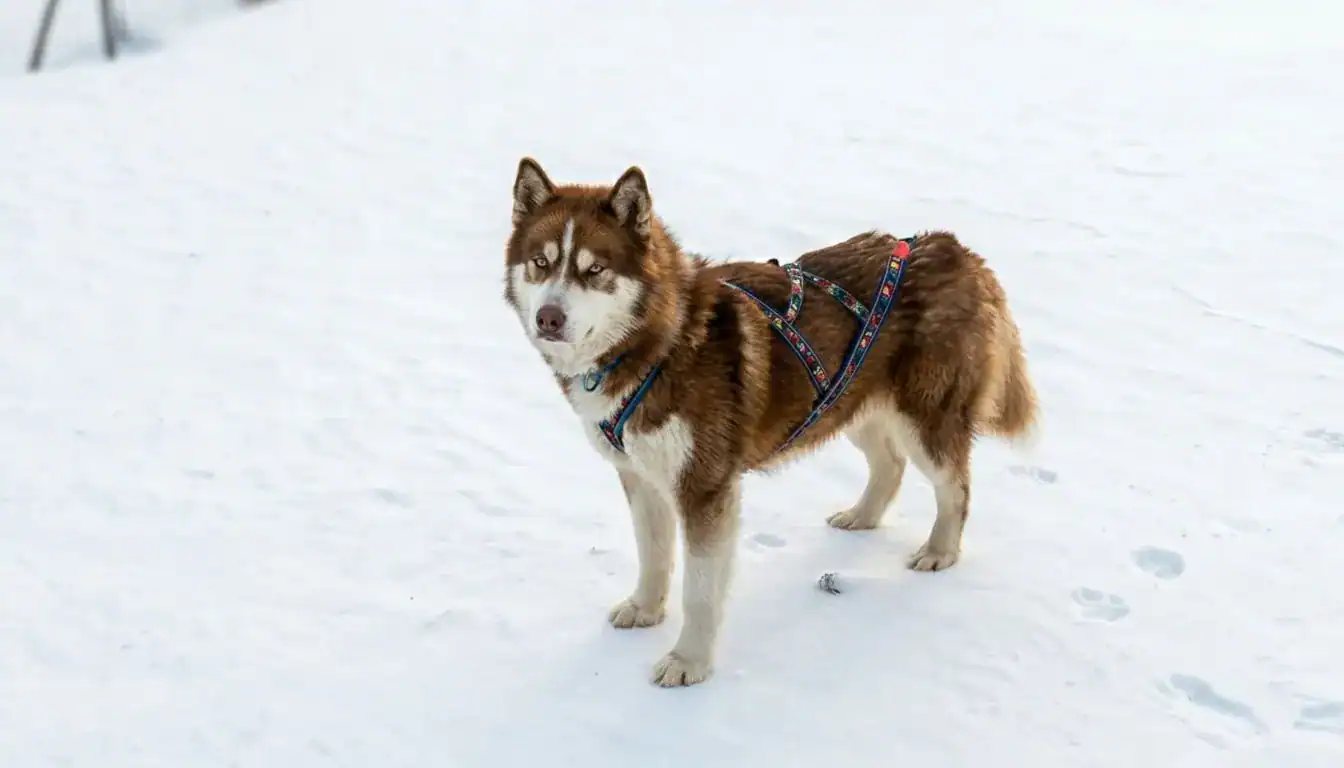
This is not a pet. It is a survival animal with a job. The modern urban world loves the aesthetic of the wolf, but very few households are prepared for the reality of one. A dog bred purely for hauling and survival does not behave like a standard companion.
What you will not find in the picturesque photos of sled teams is the intense social hierarchy and absolute necessity for heavy physical labor. The Greenland Dog is a product of genetics shaped by thousands of years of natural selection, with its origin in the harshest environment on earth.
Expect heavy shedding, raw independence, and zero tolerance for confinement. Owning one without structured pulling work is a recipe for property destruction and noise complaints that will alienate every neighbor within earshot.
Because they are virtually identical genetically to the Canadian Eskimo Dog, both face critical conservation challenges today as snowmobiles replace the traditional sledding culture that sustained these dogs for centuries.
While their long-distance stamina and ancient roots are fascinating, their care requirements are frequently underestimated by people looking for a unique alternative to the Siberian Husky or Alaskan Malamute.
Affiliate Disclosure: K9Sphere is a participant in the Amazon Services LLC Associates Program. As an Amazon Associate, K9Sphere earns from qualifying purchases made through links in this article at no extra cost to you.
Breed Snapshot
📊 Vitals and Lifespan
Height
Males: 23-27 inches (58-68 cm)
Females: 20-24 inches (51-61 cm)
Weight
Males: 66-105 lb (30-48 kg)
Females: 55-88 lb (25-40 kg)
Lifespan
12-14 years
Registry
FCI Group 5 / UKC Northern Breed
Origin
Greenland (Denmark)
🇬🇱
⭐ Personality Traits
Ratings (1 to 5). This powerful sled animal balances extraordinary stamina with intense social instincts. Suitability is limited to experienced mushers and rural environments.
Origins and Purpose
The ancestors of the Greenland Dog crossed the North American Arctic with the Inuit people approximately 1,000 years ago. These early nomadic hunters relied completely on their dogs for survival, using them to haul heavy sledges across sea ice and track bears.
📌 Thule Migration (1,000+ Years Ago)
The Inuit expanded eastward from Alaska and Canada into Greenland, bringing a hardy spitz-type dog with them. Isolation in the harsh environment forged an animal built to survive brutal temperatures on minimal rations.
📌 Danish Colonial Period (1700s)
Danish colonists encountered Greenlandic Inuit relying entirely on their dogs for transportation, hunting, and survival. European records began documenting the breed’s remarkable endurance and ability to navigate treacherous sea ice in total darkness.
📌 Exploration Era (Late 1800s)
During the heroic age of Arctic expedition, figures like Roald Amundsen and Robert Peary utilized these dogs to reach the poles. Their ability to haul heavy loads under duress made them the ultimate transport system, and competitive sledding as a sport grew from this era of discovery.
📌 Modern Decline (1960s-Present)
The introduction of the snowmobile deeply impacted the traditional role of sled dogs. While still used for hunting and tourist expeditions in some regions, their numbers have plummeted, prompting conservation efforts to protect the ancient bloodline.
Unlike dogs bred strictly for racing speed, the Greenland Dog was bred for heavy hauling. They were expected to move significant loads slowly and steadily for days on end. This created a powerful animal with incredible stamina and a distinctly raw, undomesticated mindset.
Physical Characteristics
Everything about their structure prioritizes survival and power over elegance. They are substantially heavier and broader than racing lines, built to throw their mass into a harness.
🏗️ Size and Build
Males stand 23 to 27 inches (58-68 cm) and weigh between 66 and 105 pounds (30-48 kg), with females slightly smaller at 55 to 88 pounds (25-40 kg). They possess a broad chest, muscular back, and heavy bone structure. Their compact triangular ears are heavily furred to prevent frostbite. A practical tip: dogs in active Greenlandic sledding use tend toward the lower end of the scale, while dogs in sedentary environments often reach the upper end.
🎨 Coat and Color
The dense double coat is their armor against sub-zero conditions. A coarse outer guard coat repels moisture and ice, while a thick, wooly undercoat traps body heat. They appear in almost all colors and patterns, from solid white to black, gray, and heavily marked variations.
Character and Instincts
The Greenland Dog operates on instinct and strict social order. They are profoundly group-oriented animals that thrive on clear leadership and structure.
🐺 Independent Mindset
They are not eager-to-please obedience dogs. They assess situations based on survival instinct. If asked to perform a repetitive task that offers no obvious value, they will likely ignore the command. Respect must be earned through fair, consistent leadership.
🦅 Hunting Instinct
Centuries of hunting seals and assisting with bears hardwired an intense chase reflex into the breed. Cats, small dogs, and local wildlife are generally viewed as targets. They should never be trusted off-leash in unsecured areas.
⚠️ Group Dynamics and Aggression
While generally indifferent to humans, they enforce canine ranking strictly. Same-sex aggression is incredibly common, and multi-dog environments require a handler who can confidently control internal conflicts before they escalate to severe violence.
🗣️ Group Vocalization
Like most ancient northern breeds, they do not bark much. Instead, they howl to communicate with the group, announce a change in environment, or signal excitement before a run. This constant vocalization makes them incredibly loud when kept in numbers.
Screening and Conditions
Veterinary Disclaimer: The information provided in this article is for educational purposes only and is not intended as a substitute for professional veterinary advice, diagnosis, or treatment. Always consult a licensed veterinarian for any health concerns about your pet.
Health Information Sources: Health data compiled from:
- OFA: Orthopedic screening protocols for large working breeds
- FCI: Official breed standard and documentation
Always consult your licensed DVM for personalized medical advice.
Natural selection in an unforgiving environment eliminated most genetic weaknesses. The Greenland Dog has remarkably few hereditary issue patterns compared to show-bred dogs, provided their physical demands are met and they are kept at an appropriate body condition.
🔴 Gastric Dilatation-Volvulus (Bloat)
What to watch for: Their deep chest cavity places them at risk for bloat, a rapid and fatal twisting of the stomach. Symptoms include a swollen abdomen, pacing, excessive drooling, and unproductive retching. This is an emergency. Seek veterinary care immediately if you observe these signs.
Screening: Preventive measures include avoiding intense exercise immediately after large meals and splitting daily food into multiple smaller portions. Discuss preventive gastropexy with your veterinarian.
🟡 Hip Dysplasia
What to watch for: Dogs built for hauling heavy loads can develop dysplasia, where the joint fits poorly into the socket. Watch for stiffness after rest, reluctance to climb or jump, bunny-hopping gait, and reduced range of motion in older dogs.
Screening: Ensure breeders provide OFA or PennHIP clearance on parent dogs before considering a puppy. For breeds with documented joint risk, a quality hip and joint supplement can support cartilage as the dog ages.
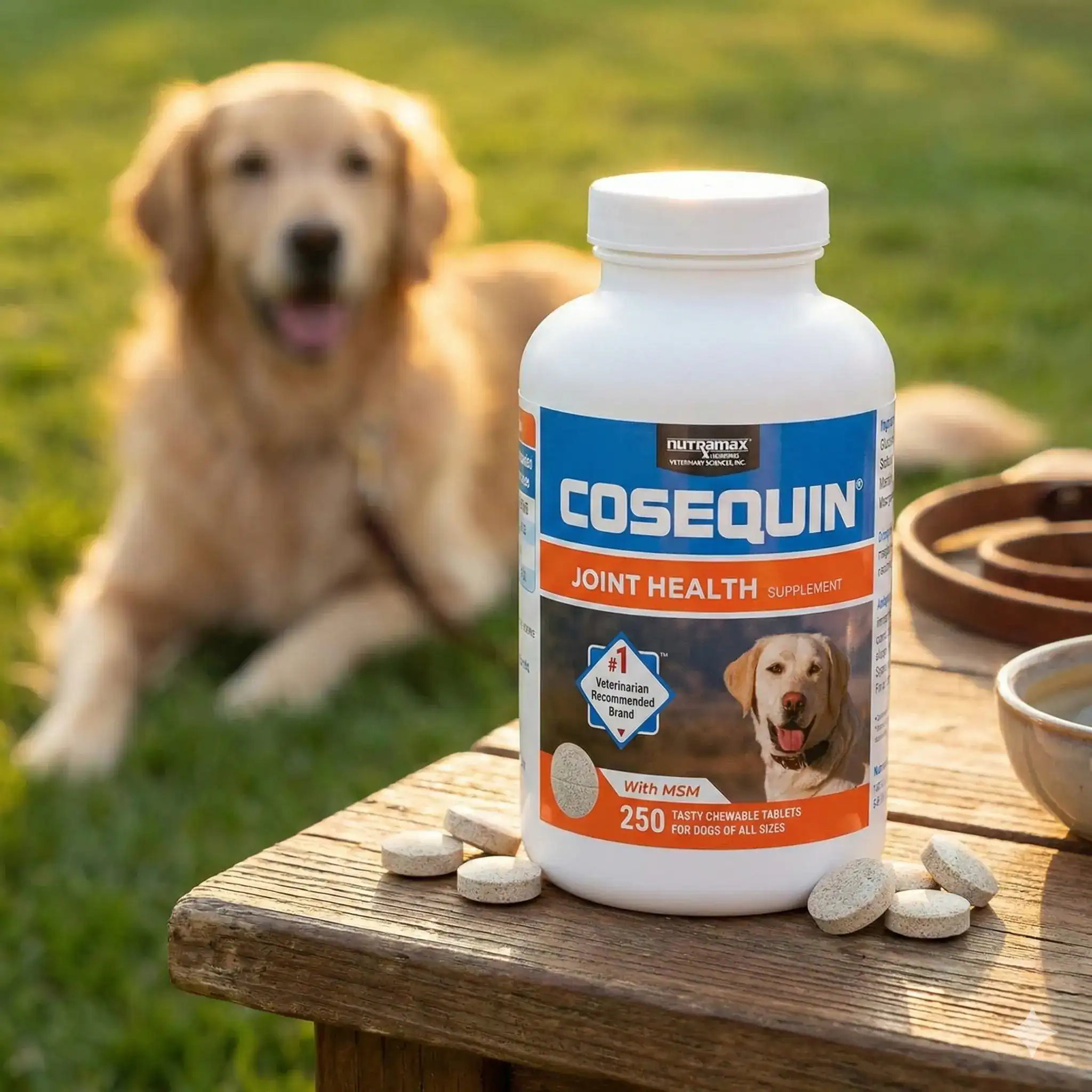
Nutramax Cosequin for Dogs Joint Health Supplement
Use for: Supporting joint integrity in dogs built for heavy hauling. Contains glucosamine and chondroitin to help maintain cartilage function in breeds carrying significant structural load across rough terrain daily.
View on Amazon🟡 Heat Intolerance
What to watch for: This breed is insulated for survival at -40 degrees Fahrenheit. Introducing them to hot or humid conditions is a constant battle against biology. Watch for heavy panting at rest, glazed eyes, excessive drooling, bright red gums, and coordination loss. Fatal heatstroke risk is very high during summer months in temperate zones.
Screening: Monitor rectal temperature during hot weather. Any reading above 104F (40C) requires immediate cooling and veterinary attention. Activity must be strictly limited to the coolest hours of the early morning or late night during summer.
Grooming and Coat Care
A true arctic coat is highly functional. The coarse outer hairs naturally repel dirt, meaning they rarely require baths unless they roll in something foul. However, the sheer volume of shedding is extraordinary.
Twice a year, they “blow” their coat, shedding the dense underlayer in massive clumps over a period of several weeks. Daily, aggressive brushing is mandatory during these transitions to prevent matting and manage the fallout.
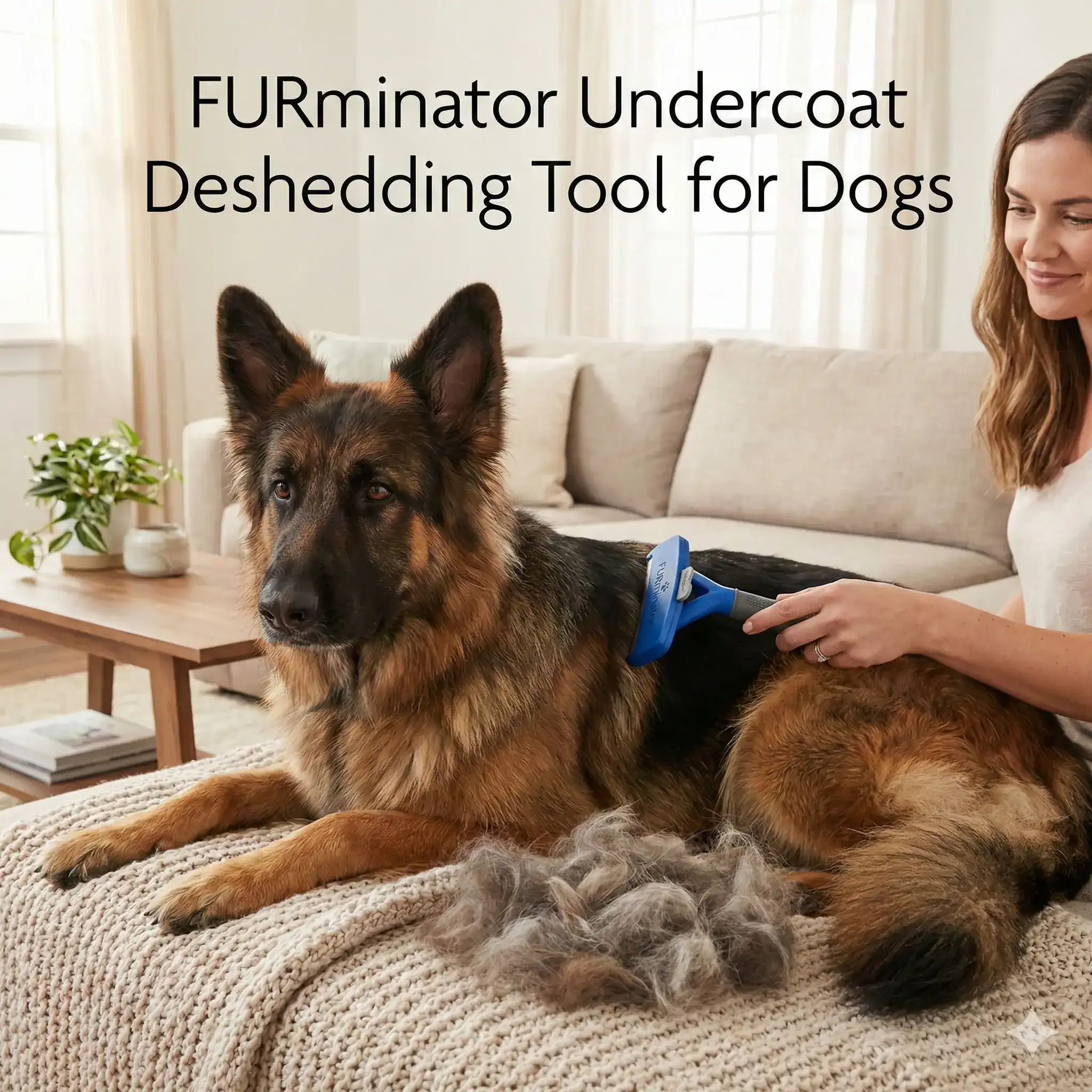
FURminator Undercoat Deshedding Tool for Dogs
Use for: Removing loose undercoat hair before it covers your furniture, reducing shedding by up to 90%, and keeping double-coated breeds comfortable during heavy shedding seasons.
View on AmazonRegular brushing with an appropriate grooming tool helps remove dead hair and reduces the amount of shedding inside the home. Heavy-coated breeds like the Greenland Dog benefit from tools designed specifically for reaching the dense wooly underlayer rather than standard surface brushes.
Activity and Output Requirements
A Greenland Dog without a job is a Greenland Dog destroying your property. Handlers must commit to mushing, dryland carting, bikejoring, or heavily weighted hiking.
During peak season, a Greenland Dog is built to cover 15 to 20 miles (25-32 km) per day while hauling significant loads. If their energy is not directed into this level of kinetic output, they become destructive and highly reactive. They require secure, high fencing, as they are notorious escape artists driven by the urge to explore and hunt. This level of daily output is not optional. It is baseline.
Given the strain that heavy hauling places on joints, providing a supportive sleeping surface is important for recovery. Sled breeds benefit from an orthopedic dog bed that distributes load evenly and cushions pressure points after long sessions.
Nutrition & Diet
Feeding an arctic sled dog correctly means managing dramatic seasonal caloric swings. Their metabolism shifts significantly between the intense hauling season and the quieter off-season months.
🐶 Puppy Stage
Growth must be controlled carefully. A big-breed puppy formula that regulates calcium and phosphorus ratios helps prevent the rapid bone development that leads to skeletal disease. Free-feeding a Greenland Dog puppy accelerates skeletal damage that becomes permanent. Feed measured meals three to four times daily and monitor growth rate closely with your veterinarian.
🐕 Adult Stage
Active sled dogs burn calories at an astonishing rate. During the winter hauling season, their caloric demands skyrocket, requiring diets where more than 60% of calories come from fat. In practice, that means a formula of approximately 30-35% fat by dry weight, paired with 28-30% high-quality protein to sustain energy, muscle repair, and core body heat.
During the off-season or in warmer months, their metabolism plummets. A dog that required 4,000+ calories in January may only require 1,200 calories in July. Handlers must strictly monitor seasonal portion adjustments to prevent obesity. Carrying excess body mass destroys their joints and shortens an already finite lifespan.
🐕🦺 Senior Stage
By age 9 to 10, transition to a senior formula with joint-support compounds including glucosamine and chondroitin. Reduce portions slightly and split meals into two or three smaller feedings to ease digestion and reduce bloat risk. Carrying excess body mass is disastrous for their joints and overall longevity. Increase veterinary checkups to twice yearly to catch organ or structural decline early.
Training
Training a sled dog requires a completely different approach than training a Golden Retriever. They do not work for praise; they work because they understand the group dynamic and the value of the task.
🛑 Social Order Handling
Early socialization is critically important, but it will not erase their strong hunting instinct or dominant tendencies. Handlers must establish themselves as calm, unshakeable leaders. If a Greenland Dog senses weakness, hesitation, or inconsistency, it will instantly assume leadership of the household, leading to uncontrollable and often dangerous behavior.
🛷 Harness Instinct Compared to Obedience
Do not confuse a lack of obedience with a lack of intelligence. You can train a Greenland Dog to execute complex directional commands (Gee and Haw) while in harness, but it may flatly refuse to “sit” or “stay” in the yard. Their intelligence is entirely operational and task-oriented.
🐕 Recall Reality
Off-leash reliability is exceptionally rare. If they spot a squirrel, rabbit, or unfamiliar animal, their hunting instinct overrides all conditioning. A 100-pound dog lunging after a target is a serious liability, making secure leashes and harnesses mandatory outside enclosed areas.
🐾 Multi-Dog Coordination
Same-sex aggression escalates fast and without obvious warning. If running multiple dogs, feed them in separate, rotational stations where no dog can see another eating. Supervised integration during work sessions builds cooperative structure, but unsupervised yard time with unfamiliar dogs invites serious injury. Separate sleeping areas and controlled introductions are mandatory, not optional.
Greenland Dog vs Siberian Husky vs Alaskan Malamute
| Feature | Greenland Dog | Siberian Husky | Alaskan Malamute |
|---|---|---|---|
| Primary Purpose | Heavy hauling, polar survival | Speed over long distance | Heavy load hauling |
| Weight Range | 55-105 lb (25-48 kg) | 35-60 lb (16-27 kg) | 75-85 lb (34-39 kg) |
| Temperament | Primitive, self-reliant | Sociable, mischievous | Affectionate, stubborn |
| Pack Drive | Very high (hierarchical) | High (collaborative) | High (same-sex aggression) |
| Prey Drive | Very high | High | High |
| Heat Tolerance | Very poor | Poor | Poor |
| Pet Suitability | Very low | Moderate | Moderate |
| Availability | Rare | Widely available | Moderately available |
| Ease of Ownership | Very difficult | Moderate (experienced handlers) | Difficult (experienced handlers) |
FAQ
What is the difference between a Greenland Dog and a Canadian Eskimo Dog?
Direct Answer: Genetically and historically, they are essentially the same dog, separated only by geography and registry politics.
Context: Both descend from the original Inuit dogs brought during eastward migration. Some kennel clubs recognize them as separate entities, while others group them together. They are unrelated to the Samoyed despite superficial similarities in arctic function.
Management: If you are deciding between them, the choice is primarily about which registry you can access and which breeder network is available in your region.
Are Greenland Dogs aggressive toward people?
Direct Answer: They are not typically aggressive toward humans, but they are notoriously dog-aggressive outside their established group.
Context: Their raw nature means social ranking is enforced strictly. They often view unfamiliar dogs as a threat or competition, and their intense hunting instinct makes them highly dangerous to cats and smaller animals.
Management: Never take them to off-leash dog parks. Introductions to new animals must be handled by an experienced leader.
Can a Greenland Dog survive in an apartment?
Direct Answer: No. A Greenland Dog cannot be kept in an apartment.
Context: Confinement leads to severe destruction and noise complaints. They were bred to run 20+ miles per day hauling heavy loads. Without that physical outlet, they channel frustration into escaping, digging, and howling. Even a high-energy Eurohound is more apartment-adaptable than this breed.
Management: Only consider this breed if you have secure, high-fenced rural land and the ability to provide daily heavy activity year-round.
Can they survive in hot climates?
Direct Answer: No. If your summers regularly exceed 85F (29C), this dog will physically suffer.
Context: Their double coat is engineered for -40F survival. In warm conditions, they face chronic overheating, and the risk of fatal heatstroke is very high. Air conditioning, shade, and restricted activity help reduce the risk but do not eliminate it.
Management: Do not acquire a Greenland Dog unless you reside in a consistently cold northern region where they can thrive outdoors year-round.
How much physical activity do they actually require?
Direct Answer: A minimum of 2 to 3 hours of intense output daily, with structured hauling or carting being ideal.
Context: A casual walk around the block does not register for this breed. They require mushing, bikejoring, carting, or heavily weighted hiking to burn their energy meaningfully.
Management: If you cannot commit to this level of daily output, choose a breed with lower requirements.
Are they good with children?
Direct Answer: They can coexist with older children who understand dog body language, but they are not naturally suited as family companions.
Context: Their undomesticated temperament means they do not have the patience or tolerance of purpose-bred household dogs. Rough play can trigger a defensive response, and their size makes accidental injuries a constant risk with small children.
Management: Never leave them unsupervised with young children. Teach all family members to respect the dog’s space and recognize warning signals.
Do they shed a lot?
Direct Answer: Yes. The shedding is intense, especially during the twice-yearly coat blow.
Context: During the coat blow, the dense undercoat comes out in massive clumps over several weeks. Daily brushing is mandatory during this period. Outside of coat blow, they shed moderately year-round.
Management: Invest in a quality deshedding tool and accept that fur management is a permanent lifestyle commitment.
Can a first-time handler cope with a Greenland Dog?
Direct Answer: No. This is one of the most challenging domestic breeds to handle and is strongly unsuitable for novices.
Context: You cannot learn social leadership on a 70-pound undomesticated sled dog with intense hunting instinct and same-sex aggression. Conditioning mistakes with a companion breed result in bad habits. Conditioning mistakes with a Greenland Dog result in an animal that is dangerous to other dogs, wildlife, and potentially people.
Management: Gain significant hands-on time with other northern breeds first. The Siberian Husky is a more accessible starting point for aspiring arctic breed handlers.
Finding a Puppy
The Greenland Dog is exceptionally rare outside of Greenland and Scandinavia. Finding a reputable source requires significant effort, networking through arctic breed clubs, and often importing a dog internationally. Puppies are almost never available for sale through general channels.
🏠 Responsible Source
Seek sources who explicitly preserve functional bloodlines and hold FCI or national breed club registration. Demand OFA scoring for hips on both parents. A responsible source will ask detailed questions about your temperature zone, property size, fencing, activity plan, and prior hands-on time with northern breeds. Expect long waitlists and the possibility of international import from Greenland, Denmark, or Scandinavia.
🐾 Rescue and Adoption
Greenland Dogs rarely appear in rescue outside Scandinavia. However, northern breed adoption organizations that rehome Malamutes and Huskies occasionally receive raw sled-type dogs. Ask detailed questions about the dog’s chase behavior, dog-aggression background, and escape tendencies before committing. An adult rescue may already have established behavioral patterns that are very difficult to modify.
🚩 Red Flags to Watch For
- No OFA or equivalent screening documentation on parent dogs
- Sources advertising them as “family companions” or “great with kids” without qualification
- Puppies available immediately with no interview, application, or waitlist
- No questions asked about your temperature zone, fencing, or activity plan for the dog
- Breeding stock with no verifiable functional or sled background
Personal Observation
💭 Personal Observation
Living with Bruno, my Labrador gifted to me by a cousin, taught me exactly how much a heavy-coated breed struggles when the temperature rises. Bruno needed fans and eventually air-conditioning just to breathe comfortably indoors during the peak summer heat. Meanwhile, my rescued street dogs, like Rusty, have slept outside through every blistering 104F (40C) summer since 2013 without breaking stride. A Greenland Dog in those same conditions would be in genuine, life-threatening medical danger. The lesson from watching Bruno overheat during an ordinary summer is that temperature compatibility is not a preference. It is a medical requirement. If you live anywhere that regularly hits 85F (29C) or above, you are fighting this breed’s biology every single day. Do not acquire an arctic hauler unless you live somewhere they can actually thrive outdoors.
Conclusion
The Greenland Dog is a living piece of arctic heritage. They are powerful, resilient, and utterly unapologetic about what they are. They demand a lifestyle centered around heavy outdoor labor, unshakeable social leadership, and sub-zero temperatures.
For the serious musher or winter expedition enthusiast in a cold northern region, they are an unparalleled partner. The biggest pro is their extraordinary endurance and raw, unfiltered operational instinct. The biggest con is their near-total unsuitability as a household companion, combined with severe heat intolerance and intense same-sex aggression. For everyone else, respecting the breed means acknowledging exactly what they were built to do, and leaving them to those who can fulfill that ancient purpose. This is not a companion. It is a system built to survive.
Disclaimer: This article is for informational purposes only and does not constitute veterinary or professional breeding advice. All health information is based on publicly available breed data and should not replace a physical examination or treatment plan from a licensed veterinarian. Product recommendations contain affiliate links. K9Sphere earns from qualifying purchases at no additional cost to you.


