

If you are comparing a Doberman Pinscher vs German Shepherd, you are weighing two highly versatile German working breeds, and the parallels run deep. Both took shape in Germany in the late 19th century, with the German Shepherd formally established in 1899 and the Doberman developing through the 1890s, and the American Kennel Club recognized both in the same year, 1908.
The Doberman began as a personal protection dog for a tax collector named Louis Dobermann, who wanted a companion able to guard him on his rounds. The German Shepherd began as a herding dog, standardized by Captain Max von Stephanitz, and was steered toward police and military work within a few decades.
They share a great deal in daily life. Each is loyal, alert, reserved with strangers, sensitive to harsh handling, and happiest close to its people. The clearest differences are appearance and coat type, climate tolerance, build, working background, and two very different signature health risks.
This guide compares them across the areas that decide the match, from protection style and temperament to grooming, health screening, and cost. Each section ends with a clear round verdict so you can see which breed fits your stated use case.
Read it as a decision tool rather than a ranking. By the final verdict you should know which coat, which health screening, and which kind of working partner suits your household.
Affiliate Disclosure: K9Sphere is a participant in the Amazon Services LLC Associates Program. As an Amazon Associate, K9Sphere earns from qualifying purchases made through links in this article at no additional cost to you. Product recommendations are based on independent research and editorial judgment, not paid placement.
Quick Answer and Who Each Round Favors
⚡ The 30-Second Answer
Choose the Doberman Pinscher if you want a lean, fast companion with a light-shedding coat and you are prepared to prioritize heart screening. Choose the German Shepherd if you want a versatile working dog with a weatherproof double coat and you can manage heavy shedding and joint screening.
Both are loyal, protective, intelligent dogs that need daily exercise, steady training, and plenty of company. The real decision rests on coat, climate, and which health profile you are better prepared to manage.
| Category | Favors |
|---|---|
| Protection style | Depends on the role |
| Temperament | Roughly even |
| Trainability | Roughly even |
| Exercise demand | Roughly even, both high |
| Time alone | Limited in both |
| Family fit | Roughly even |
| Grooming workload | Doberman |
| Cold climates | German Shepherd |
| Health screening focus | Heart for Doberman, hips and elbows for GSD |
| First-time owners | Roughly even |
Doberman Pinscher vs German Shepherd at a Glance
Whether you search for Doberman Pinscher vs German Shepherd or German Shepherd vs Doberman, this comparison table lays out the core differences in size, coat, health screening, and lifestyle fit. Scan the rows that matter most to you, then read the detailed sections below.
| Attribute | Doberman Pinscher | German Shepherd |
|---|---|---|
| Height (male) | 26–28 in (66–71 cm) | 24–26 in (61–66 cm) |
| Weight | About 60–100 lb, males larger | 65–90 lb male, 50–70 lb female |
| Lifespan | About 10 years | 9–13 years |
| Origin | Germany, 1890s | Germany, 1899 |
| AKC group and year | Working, 1908 | Herding, 1908 |
| Original purpose | Personal protection | Herding, then police work |
| Build | Lean, fast, streamlined | Athletic, longer body |
| Coat | Short, smooth, close-lying | Dense double coat |
| Shedding | Light, year-round | Heavy, with seasonal blows |
| Cold tolerance | Low | Good |
| Signature health risk | Dilated cardiomyopathy | Hip and elbow dysplasia |
| Parent club heart screening | Core CHIC requirement | In Health Award of Merit, not CHIC |
| With strangers | Reserved, watchful | Reserved, watchful |
| First-time owner? | Possible with commitment | Possible with commitment |
📜 A Quick Origin Story
The two took shape in Germany at almost the same moment. Louis Dobermann, a tax collector in Apolda, began breeding a protective dog to travel with him in the 1890s. Early Dobermans were described as sharp and hard to handle, and later breeders such as Otto Goeller worked toward a steadier dog while keeping its protective instinct.
The German Shepherd traces to 1899, when Captain Max von Stephanitz bought a dog named Horand and founded the breed society the same year. As flock work declined, he steered the breed toward police and military service, and it served widely in the First World War.
The American Kennel Club recognized both breeds in 1908. The Doberman Pinscher Club of America formed in 1921, and the UK Kennel Club recognized the Doberman in 1948.
Who Should Choose the Doberman Pinscher
🐕 The Doberman Pinscher is the right pick if:
- You want a lean, fast dog with a coat that sheds lightly.
- You live somewhere mild, or will provide a coat in cold weather.
- You will insist on recent heart results for both parents.
- You want a close, affectionate companion that follows you around.
- You can provide daily exercise, training, and company.
Who Should Choose the German Shepherd
🐕 The German Shepherd is the right pick if:
- You want a versatile working dog with a weatherproof double coat.
- You live in a cold climate or spend a lot of time outdoors.
- You can handle heavy shedding and regular brushing.
- You will insist on hip and elbow results for both parents.
- You want a dog that can form a strong working bond with its handler.
Protection Style and Working Role
Both have strong protective and guardian roles today, but they reached those roles from different working backgrounds. The Doberman was built for personal protection from the start, bred to stay close to one person and guard them. It tends to be highly aware of its owner and quick to notice changes around them.
The German Shepherd was developed as a versatile herding and working dog, and its intelligence, trainability, and guardian instincts later made it highly suitable for police, military, and protection work. It remains one of the most widely used police, military, and service dogs in the world.
Neither breed should be encouraged toward aggression. A stable, well-socialized dog of either breed watches, takes cues from its handler, and settles once it understands there is no threat. Early socialization and reward-based training shape that steadiness far more than breed label does.
Local rules also matter. Restrictions on protection breeds vary by city, state, province, insurer, and housing provider, so always verify the current rules in your area before bringing either dog home.
🎯 Verdict: This depends on the role you have in mind. The Doberman suits someone who wants a close personal companion with a watchful edge, while the German Shepherd suits someone who wants a versatile working partner for structured tasks.
Temperament and Personality
These two are more alike than different. Each is loyal, intelligent, reserved with strangers, and strongly attached to its household. Each also reads its people closely and responds badly to rough handling.
The Doberman is often described as a velcro dog, following its owners from room to room and wanting to be part of whatever is happening. That clinginess is a sign of deep affection rather than a behavior problem. It is alert without being frantic when properly raised, and sensitive enough that calm, consistent handling works best.
German Shepherds can form especially strong working relationships with individual handlers while remaining devoted to the wider family. It carries a watchful, focused nature, and without enough structure that attention can turn into pacing or barking.
🎯 Verdict: Call it roughly even. Both are strongly people-oriented. Dobermans are particularly known for staying close to their families, while German Shepherds can develop especially strong working bonds with individual handlers.
Trainability
Each is highly trainable, and this round is close to a dead heat. Each learns quickly, wants to work with its handler, and does well in obedience, tracking, agility, and other dog sports.
Speed of learning cuts both ways, since both pick up bad habits as fast as good ones when rules change from day to day. Consistency matters more than any single technique.
Each is sensitive, so harsh corrections tend to create anxiety or defensiveness rather than obedience. Short, upbeat, reward-based sessions work best, progress comes faster with consistency than with long drills, and a good trainer is worth finding early with either dog.
🎯 Verdict: Call it even. Each is a quick, willing learner that do best with calm, consistent, reward-based training. Neither suits an owner who relies on harsh correction.
Exercise and Energy Needs
Both need real daily exercise, and neither is satisfied by a short walk around the block. Both need substantial daily physical and mental activity, and both bring real athleticism and endurance to the job. The amount varies with age, health, conditioning, line, and the dog’s working or sport workload.
Mental stimulation matters as much as physical effort. Training games, scent work, puzzle toys, and dog sports help either dog settle, a well-exercised dog is noticeably calmer indoors, and a bored dog of either breed can become destructive, chewing, digging, or barking.
Avoid repetitive, high-impact running while either dog is still growing, and ask your veterinarian when sustained running is appropriate. Either can make a good companion for a runner or a regular hiker, though a Doberman on a cold-weather hike may need a coat. A securely fenced yard suits both, though an active owner can make other homes work.
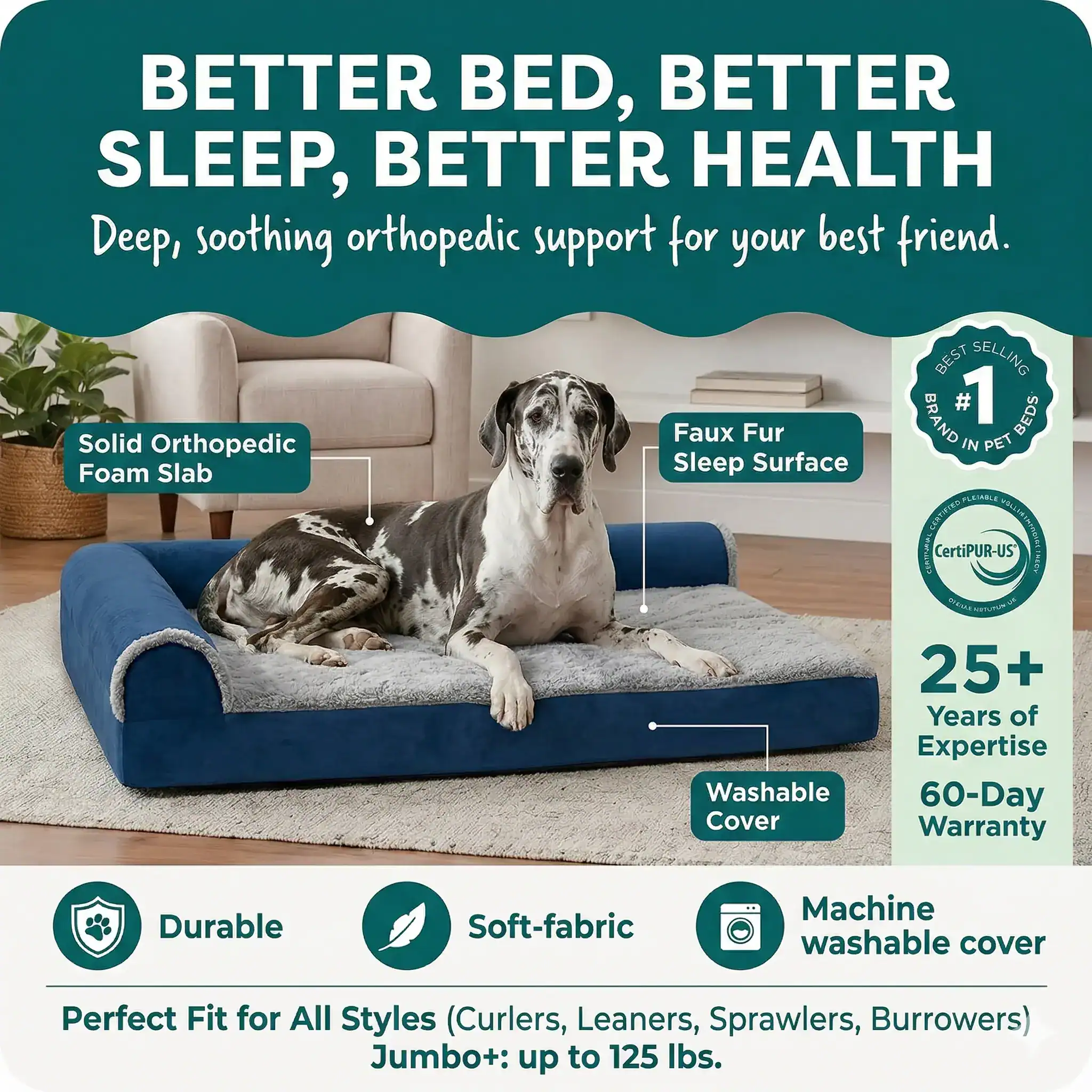
FurHaven Orthopedic Dog Bed for Large Dogs
Use for: Pressure relief for large working dogs carrying hip dysplasia risk. The egg-crate orthopedic foam supports joints and helps an active adult rest properly after hard exercise. Check the sizing chart for your dog.
Check price on Amazon🎯 Verdict: Roughly even. Both need substantial daily physical and mental work, and neither is an ideal choice for a sedentary household.
Time Alone
The two are strongly people-focused, and this is one of the most commonly underestimated parts of owning either one. Each was developed to work closely with a person, and that need for company carries over into home life.
A dog of either breed left alone for too long may bark, chew, or pace. Individual tolerance varies, so there is no single number of hours that suits every dog.
The fix is the same for both. Build time alone gradually from puppyhood, keep departures calm, and arrange a walker or daycare if your workday is long.
🎯 Verdict: Limited in both. Each can be challenging in a household where it would routinely be left alone for the entire workday, and both need independence training built in from the first weeks.
Family Fit
Each can be an excellent family dog in an active home, and each is often good with children it is raised with. The main caution is size and energy, since a young, bouncy dog of either breed can knock over a small child without meaning to.
Supervise young children closely with either breed, and teach children to give the dog space when it is resting or eating. Each benefits from a quiet spot of its own.
Either can live with a cat when raised together and introduced carefully, though individual prey drive varies. Visitors need structured introductions with both, because each is naturally reserved with strangers. Broad early socialization helps either dog stay steady rather than suspicious when new people come to the house.
🎯 Verdict: Roughly even for active families. Each is devoted to its own household, and both need supervision around small children and careful introductions to visitors.
Coat, Grooming and Climate
This is the clearest practical difference between them. The Doberman has a short, smooth, close-lying coat that sheds lightly all year. A quick brush several times a week keeps it tidy, it never mats, and the lighter shedding makes household cleanliness easier to maintain. Neither breed is known to drool heavily.
The German Shepherd has a dense double coat and is often nicknamed the German Shedder. It sheds year-round and typically has heavier seasonal shedding periods, when daily brushing with an undercoat tool becomes necessary.
Climate follows the coat. The Doberman’s short coat gives little protection from cold, so many need a dog coat in winter, while the German Shepherd copes well in cold weather. In hot weather, both do better with exercise moved to the cooler parts of the day.
Bathe either breed only when needed, trim nails regularly, check ears, and brush teeth. Routine shaving is not recommended for the German Shepherd’s double coat.
🎯 Verdict: The Doberman has the lighter grooming workload by a clear margin, while the German Shepherd has substantially greater natural cold protection. Choose based on your climate and your tolerance for dog hair.
Health and Screening
The two breeds carry very different signature risks, which is the most important part of this comparison. For the Doberman, the main concern is dilated cardiomyopathy, a condition where the heart muscle weakens and the heart enlarges. Many affected dogs show no signs before a serious problem.
A European long-term study of 412 Dobermans reported a cumulative cardiomyopathy prevalence of 58.2 percent in its study population, with risk rising with age. That is why the Doberman Pinscher Club of America screening includes an advanced heart exam using both an echocardiogram and a 24-hour Holter monitor.
The Doberman parent club’s health-screening framework also includes hip evaluation, thyroid testing, von Willebrand disease DNA testing, and eye examination. The club places particular emphasis on regular cardiac screening, recommending annual testing, because the heart condition can appear after a normal exam.
For German Shepherds, important concerns include hip and elbow dysplasia, degenerative myelopathy, bloat, which is formally called gastric dilatation volvulus, and pancreatic disease. The German Shepherd Dog Club of America’s CHIC requirements are hip and elbow screening plus its temperament test, while its broader Health Award of Merit adds cardiac and thyroid testing.
A DNA test identifies a known degenerative myelopathy risk variant, but the result does not by itself predict with certainty whether an individual German Shepherd will develop the disease. For that reason the club requires the test to be published but does not disqualify a dog on the result.
Neither breed is straightforwardly the healthier one. For the Doberman, heart screening is the priority, while for the German Shepherd, hip and elbow screening is central, with broader testing for other conditions. Request the actual certificates, and check the dates on any Doberman heart results. As either dog ages, regular checkups also matter, since cancer becomes a more common issue in any breed with age.
Veterinary Disclaimer: This article is for educational purposes only and is not a substitute for professional veterinary advice, diagnosis, or treatment. K9Sphere’s authors are experienced dog owners, not licensed veterinarians. Always consult a qualified DVM regarding any health concerns about your dog.
Always consult your licensed DVM for personalized medical advice.
Because hip dysplasia appears in both breeds, keeping the dog lean matters more than anything bought in a bottle. Owners of ageing dogs often ask their veterinarian about hip and joint supplements as part of a wider care plan.
Health Information Sources. Data compiled from the following references.
- Doberman Pinscher Club of America health information and CHIC screening
- American Kennel Club Doberman Pinscher reference
- American Kennel Club German Shepherd Dog reference
- German Shepherd Dog Club of America CHIC and Health Award of Merit requirements
- OFA CHIC Program recommended screening protocols
Always consult your licensed DVM for personalized medical advice.
🎯 Verdict: This round is about which health profile you prefer to manage rather than which breed is healthier. The Doberman’s screening centers on the heart, while the German Shepherd’s CHIC framework centers on hips, elbows, and temperament.
Cost and Ownership
Purchase prices overlap, and both vary substantially by breeder, pedigree, location, and demand. Responsible breeding programs incur significant costs for health screening, but puppy prices also vary with pedigree, location, demand, breeder practices, and other factors.
Running costs are often similar for two dogs of comparable size, though they vary with the individual dog and your location. Diet is a real line item for two active dogs with high daily calorie needs, and weight-based medication, training, and insurance all add up. Discuss feeding and portion sizes with your veterinarian, and expect prices to differ across the US, UK, Canada, and Australia.
Very low prices warrant closer questions about health testing and what is included in the sale. Breed-specific rescue adoption is also worth considering, and an adult dog lets you see its real temperament and energy first. For a Doberman in particular, a puppy offered without recent heart results for both parents is a reason to pause.
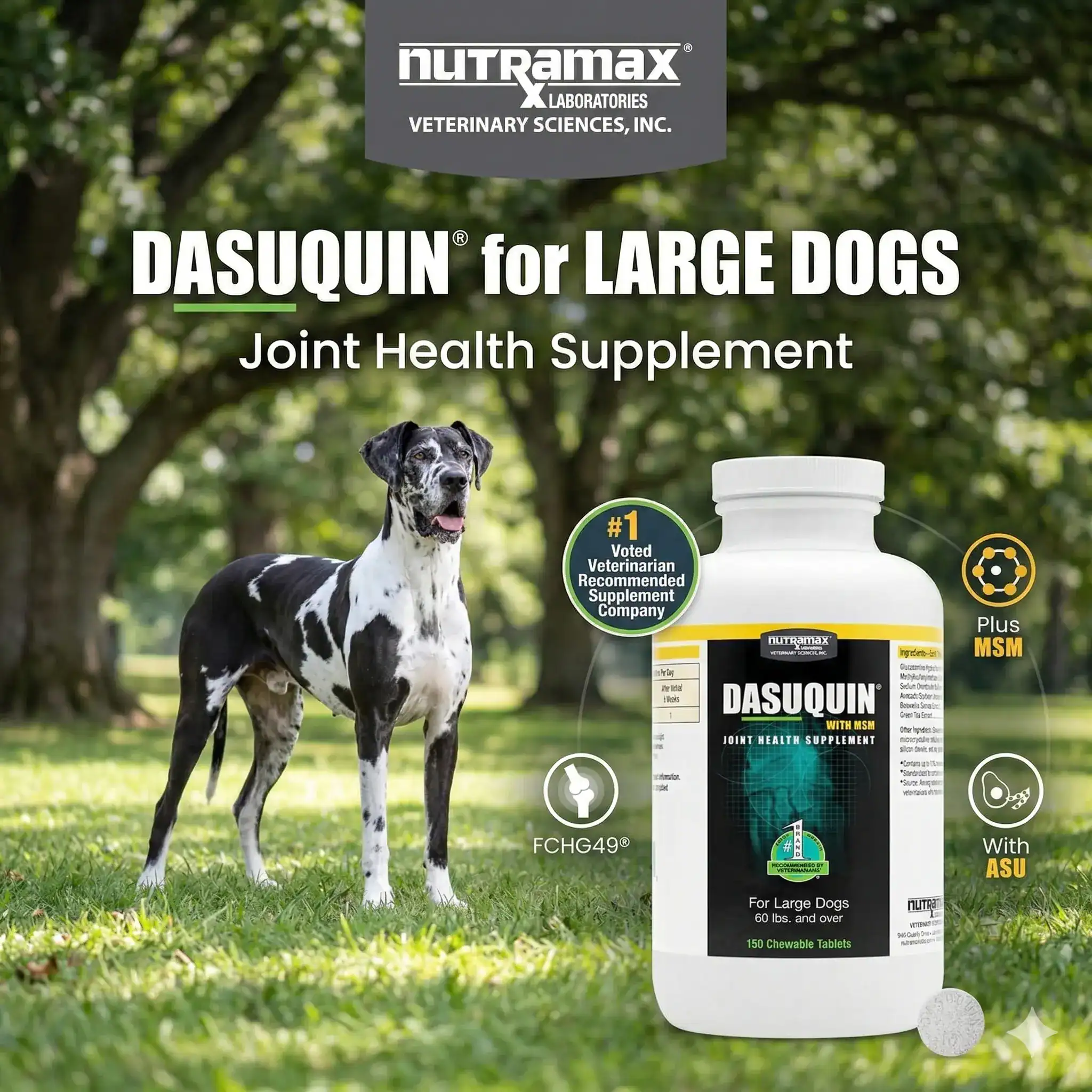
Nutramax Dasuquin with MSM Soft Chews for Dogs
Use for: Joint support is a recurring cost worth budgeting for, since hip dysplasia appears in both breeds. The evidence for joint supplements varies, so check with your veterinarian before starting.
Check price on Amazon🎯 Verdict: Roughly even overall. Neither is a low-cost dog to own well, and a higher price is not a guarantee of better health testing, so ask to see the results.
First-Time Owners
Neither is the easiest possible first dog, but a prepared beginner can succeed with either. Each is highly trainable, although sensitivity, working drive, and individual temperament vary. What new owners most often underestimate is the daily exercise, the need for company, and the health screening.
These are large, strong, and protective dogs, so early socialization and a good training class matter from the first weeks. Arrange that support before the puppy arrives rather than after a problem appears.
The practical difference is care routine, and each breed has its own disadvantage for a newcomer. A Doberman owner must learn about heart screening, while a German Shepherd owner must budget time for heavy shedding and learn about joint screening.
🎯 Verdict: Roughly even. Both suit a committed beginner who is active, patient, and willing to train. Choose based on which health focus and which grooming routine you can manage.
Head-to-Head Scorecard
These are editorial ratings, not standardized breed measurements, and individual dogs vary. Ratings are K9Sphere’s editorial comparison based on the breed characteristics discussed in this guide, scored from 1 to 5 stars for a typical active home. A high Grooming Ease score means less coat work, and a high Cold Tolerance score means the dog copes better in cold weather without a coat.
Doberman Pinscher
German Shepherd
Reading the scores: Both max out on Trainability and Exercise Demand, which is part of why each is so widely used in working roles. The Doberman leads on Grooming Ease, while the German Shepherd leads on Cold Tolerance. Low Tolerance of Time Alone on both sides is the shared constraint that decides most placements.
Common Questions about Doberman Pinscher vs German Shepherd
These are the frequently asked questions buyers raise when comparing the two breeds.
What is the difference between a Doberman and a German Shepherd?
Direct Answer: Coat, build, and health focus. The Doberman is lean with a short, light-shedding coat, while the German Shepherd has a dense double coat that sheds heavily.
Context: The two are German working breeds recognized by the AKC in 1908. The Doberman was bred for personal protection, while the German Shepherd was developed from herding work and later became widely used in police and military roles. Their signature health risks also differ, with the heart for the Doberman and the joints for the German Shepherd.
Management: Choose based on your climate, your tolerance for shedding, and which health screening you are prepared to follow.
Which breed is better for protection?
Direct Answer: Each is a capable protection breed, and the better fit depends on the role.
Context: The Doberman was built as a close personal protection dog, while the German Shepherd is one of the most widely used police and military breeds. A stable, well-trained dog of either breed watches and takes cues from its handler.
Management: Shape either dog’s instincts through early socialization and professional, reward-based training, never by encouraging aggression.
Are Dobermans or German Shepherds aggressive?
Direct Answer: Neither breed should be assumed to be dangerous solely because of its breed label. Temperament is influenced by genetics, breeding quality, socialization, training, environment, and individual personality.
Context: Each is naturally watchful and reserved with strangers. A well-bred, well-raised dog of either breed is generally alert and protective rather than aggressive.
Management: Meet the parents, socialize early and broadly, and train consistently with reward-based methods.
Which breed sheds more?
Direct Answer: The German Shepherd, by a wide margin.
Context: The Doberman’s short coat sheds lightly all year and never mats. The German Shepherd’s double coat sheds year-round with heavier seasonal shedding periods, which earned it the nickname German Shedder.
Management: Brush a Doberman several times a week. Brush a German Shepherd at least twice a week, and daily during heavier seasonal shedding, using an undercoat tool.
What is dilated cardiomyopathy in Dobermans?
Direct Answer: A heart disease where the heart muscle weakens and the heart enlarges. It is a major concern in the Doberman.
Context: Many dogs show no signs before a serious problem. A European study of 412 Dobermans reported a cumulative prevalence of 58.2 percent in its study population, with risk rising with age.
Management: Ask breeders for recent echocardiogram and Holter results on both parents, and ask your veterinarian about regular heart screening as your dog gets older.
Which breed lives longer?
Direct Answer: Published lifespan estimates overlap substantially for both breeds.
Context: Figures vary by source and methodology, and breed-level estimates are not a prediction for any individual dog.
Management: Keep either dog lean, follow the recommended screening, and schedule regular veterinary checkups as your dog ages.
Which breed is better in cold weather?
Direct Answer: The German Shepherd.
Context: Its dense double coat gives good protection from cold. The Doberman’s short coat gives little protection, and many Dobermans need a dog coat in winter.
Management: Provide a coat and limit cold exposure for a Doberman. In hot weather, move exercise to cooler times of day for either breed.
Which is easier to train?
Direct Answer: Each is highly trainable, and neither has a clear advantage.
Context: Each learns quickly and wants to work with its handler. Each is sensitive, so harsh corrections can create anxiety or defensiveness.
Management: Use short, consistent, reward-based sessions and start a training class early with either breed.
Can either breed live in an apartment?
Direct Answer: Either can work with a very active owner, but neither is an easy apartment dog.
Context: Space matters less than daily exercise and company. Each is large, energetic, and people-focused.
Management: Plan for daily runs or park time, build alone-time tolerance gradually, and arrange company on long workdays.
Which breed is stronger?
Direct Answer: Each is a strong, athletic dog, and there is no scientifically verified bite-force test that settles the question.
Context: Temperament, training, and control matter far more than raw strength in daily life. Individual size and build vary within each breed.
Management: Focus on leash manners and impulse control from puppyhood with either dog.
Why do some Dobermans have cropped ears and docked tails?
Direct Answer: It is a traditional practice in some countries, but it is optional and not required for the breed.
Context: Ear cropping and tail docking are common in the United States but restricted or banned in many other countries. Natural drop ears and natural tails are also common where cropping and docking are restricted or prohibited.
Management: Rules differ by country, so check local law. A Doberman with natural ears and tail is every bit as much a Doberman.
Are Dobermans or German Shepherds good family dogs?
Direct Answer: Both can be excellent family dogs in active homes.
Context: Each is loyal and often good with children it is raised with. Their size and energy mean supervision matters with small children.
Management: Supervise young children, teach kids to give the dog space, and socialize the dog broadly from puppyhood.
Which breed is better for a first-time owner?
Direct Answer: Neither has a clear edge, and both suit a prepared, committed beginner.
Context: Each is highly trainable, though individual temperament varies. Doberman owners need to learn about heart screening, while German Shepherd owners need to manage heavy shedding and joint screening.
Management: Join a training class early and choose a breeder who explains the health testing clearly.
The Quick Decision Shortcut
Deciding between a Doberman and a German Shepherd comes down to a few honest questions, so use this self-check before the full verdict. Each has one big pro and one obvious con.
🐕 Choose the Doberman if
- You want a lean dog with a light-shedding coat.
- You live somewhere mild, or will use a winter coat.
- You will insist on recent heart results for both parents.
- You want a close companion that follows you everywhere.
🐕 Choose the German Shepherd if
- You want a versatile working dog.
- You live in a cold climate or spend a lot of time outdoors.
- You can handle heavy shedding and regular brushing.
- You will insist on hip and elbow results for both parents.
Final Verdict
There is no universal winner here, because these two share so much. The two are German, both took shape in the late 19th century, both were recognized by the AKC in 1908, and both are loyal, protective, and highly trainable.
The underlying decision is coat and health focus. The Doberman gives you a lean, light-shedding companion, and asks you to take heart screening seriously for the life of the dog.
The German Shepherd gives you a weatherproof, versatile working dog, and asks you to live with heavy shedding and to prioritize hip and elbow screening alongside broader health testing. Match the breed to your climate and to the health screening you are ready to follow.
🏆 Bottom line: The Doberman Pinscher is the leaner, lighter-shedding option with a heart-focused screening plan; the German Shepherd is the double-coated option with greater cold protection and a screening plan centered on hips and elbows. Both need daily exercise, steady training, and plenty of company.
Personal Observation
💭 From my own experience
Rusty is the oldest of my rescues. Every day he sits by the gate and watches the street. When a stranger walks past, he notices right away. But he does not bark at everyone or rush at the gate. He just watches, calm and steady.
That is what a good guard dog looks like. It is not a wild dog. It is a calm dog that pays attention.
A Doberman and a German Shepherd can both grow up to be like that. But it does not happen by itself. It comes from meeting lots of people and places when the dog is young, and from kind, steady training. If you are ready to put in that work, either breed can be a great guardian.
Read More. For the full individual guides, see our Doberman Pinscher guide and our German Shepherd guide.
If you are weighing other protection breeds, our Rottweiler guide and Cane Corso guide cover heavier options, and our German Shepherd vs Rottweiler comparison covers another popular pairing.
For the wider group, see our guide to working dog breeds, and German Shepherd owners in particular will find our roundup of the best brushes for shedding dogs useful.
Editorial Disclaimer: This article is for informational and educational purposes only. It does not constitute veterinary advice, medical diagnosis, or treatment recommendations. Always consult a licensed veterinarian before making health-related decisions for your pet.
Accuracy Notice: While every effort has been made to ensure the information presented here is accurate and current, breed information evolves and individual dogs vary. If you spot a factual error or have updated information from a verified source, please contact us so we can review and update.
Product Disclosure: Product recommendations are based on independent research and editorial judgment. Individual results may vary. K9Sphere participates in the Amazon Services LLC Associates Program and other affiliate programs, and earns from qualifying purchases at no additional cost to you.
Last reviewed: September 2026. Article reviewed for accuracy on the date shown above.


