
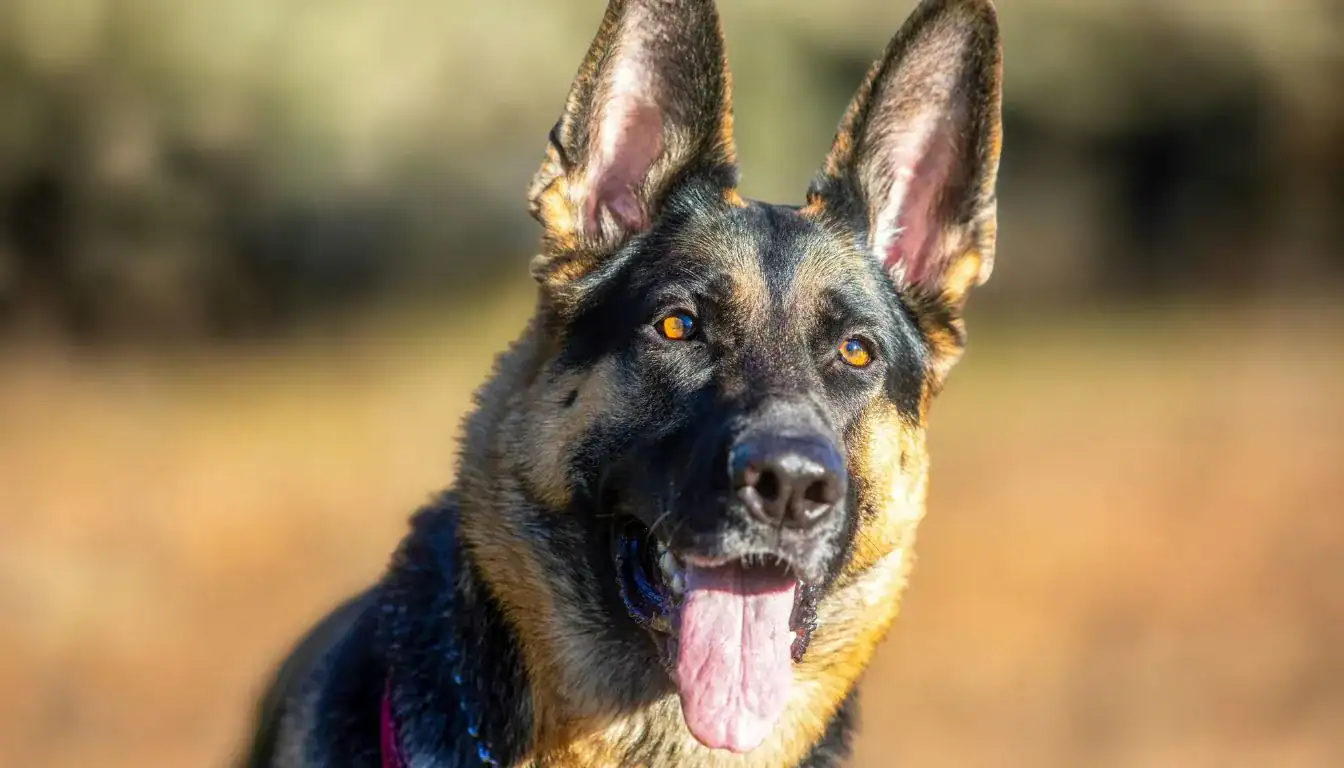
The German Shepherd is a large German herding and working breed developed to tend flocks and protect property across vast distances, now best known for police, military, and service roles worldwide. While widely regarded as one of the most capable working dogs ever created, their high-arousal drive makes them one of the most commonly mismanaged breeds by first-time families.
Through decades of selective breeding, the German Shepherd shifted from rural pastures to structured police and security operations. Suitability for a particular household comes down to honest self-assessment of exercise time, training experience, and tolerance for a strong-willed companion. The main con is the sheer workload.
The German Shepherd (often shortened to GSD) consistently ranks among the top five most registered dogs with the AKC in the United States. This popularity has produced outstanding working lines alongside poorly bred examples that struggle with neurological and skeletal conditions throughout their lives. Lifespan typically runs 9-13 years, though medium-quality sources frequently cut that short.
This guide combines working-dog experience with established breed standards from Germany, OFA screening protocols, and AKC Canine Health Foundation research to outline the reality of owning a powerful pastoral dog. The goal is practical suitability assessment, not marketing.
While devotion to the household is a significant pro, heavy shedding and intense exercise requirements are often severely underestimated by prospective handlers. Food costs, indoor space needs, and the mental stimulation they demand add up faster than most first-time owners expect. A properly raised GSD becomes one of the most capable house dogs and K9 working partners available, but only if the handler is ready for the workload.
Affiliate Disclosure: K9Sphere is a participant in the Amazon Services LLC Associates Program. As an Amazon Associate, K9Sphere earns from qualifying purchases made through links in this article at no extra cost to you.
Breed Snapshot
📊 Vitals and Lifespan
Height
Males: 24-26 inches (61-66 cm)
Females: 22-24 inches (56-61 cm)
Weight
Males: 65-90 lb (29-41 kg)
Females: 50-70 lb (23-32 kg)
Lifespan
9-13 years
AKC Group
Herding Group
Origin
Germany
🇩🇪
⭐ Personality Traits
Ratings (1 to 5). This versatile working breed balances intense drive with deep household loyalty, making them demanding but highly rewarding companions.
History and Origin
The lineage traces back to a singular vision. Before the turn of the 20th century, regional pastoral dogs varied wildly across German states. A cavalry officer set out to standardize the ultimate working breed.
📌 1899: The Foundation
Captain Max von Stephanitz purchased a dog named Horand von Grafrath at a dog show. He immediately founded the Verein für Deutsche Schäferhunde (Society for the German Shepherd Dog). Horand became the genetic template for the entire modern lineage, prized for his intelligence and utility.
📌 1908: AKC Recognition
The American Kennel Club officially recognized the breed, placing it in the Herding Group. Early imports quickly gained favor on farms and estates across the United States.
📌 1914: The Military Transition
As industrialization reduced the need for traditional flock management, von Stephanitz aggressively pivoted the breed toward police and military service. During World War I, they served as military messenger dogs, sentry workers, and casualty locators under heavy fire.
📌 1920s: Hollywood Stardom
Returning soldiers brought tales of the breed’s bravery. Dogs like Rin Tin Tin and Strongheart became international film stars, rocketing the German Shepherd to global popularity and sealing their status as protective, highly capable companions.
Today, they remain heavily utilized in search operations, narcotics detection, and personal protection, carrying the intense work ethic established over a century ago. The American Kennel Club continues to recognize the German Shepherd in the Herding Group, and the breed’s average lifespan of 9 to 13 years gives owners over a decade to develop the deep partnership the breed is famous for.
Physical Characteristics
This is a well-muscled, agile breed designed for trotting vast distances without fatigue. Adult males typically stand 24 to 26 inches tall and weigh 65 to 90 pounds, while females stand 22 to 24 inches and weigh 50 to 70 pounds. The structural difference between working lines and conformation lines remains a point of heavy debate among enthusiasts.
🏗️ Sloping vs Straight Back
Working variants maintain a straighter, more level topline optimized for physical endurance and jumping power. Conformation lines, bred specifically for the show ring, often feature an extreme downward slope toward the hindquarters, a structural shift that frequently impacts hip stability.
🎨 The Dense Double Coat
They possess a harsh, medium-length outer layer over a thick, insulating undercoat. The classic black and tan saddle pattern is most recognized, but sable, solid black, and bi-color variations are common, particularly in European working lines.
Character and Temperament
They thrive on having a specific job to perform. Without clear direction, their high intelligence often channels into neurotic behavior, pacing, or vocal frustration.
🧠 The Scholar
They process new commands rapidly. This cognitive speed means they learn good behaviors quickly, but they learn bad habits just as fast if the handler is inconsistent with rules.
🛡️ Guardian Instinct
They are naturally suspicious of strangers. A stable Shepherd will observe quietly and take cues from the handler. An under-socialized one may act preemptively, viewing every delivery person or passing cyclist as an active threat.
👨👩👧 Household Bonding
They are often described as a “one-person” dog. While they love the entire household, they frequently select a single primary handler, shadowing that person from room to room with intense, unbroken focus.
⛔ High Arousal
Their heritage requires them to react instantly to sudden movement. This translates into high arousal levels. They need a handler who remains calm under pressure, teaching them how to switch off once a perceived threat has passed.
Screening and Conditions
Veterinary Disclaimer: The information provided in this article is for educational purposes only and is not intended as a substitute for professional veterinary advice, diagnosis, or treatment. Always consult a licensed veterinarian for any medical concerns about your pet.
Medical Information Sources: Data compiled from:
- OFA (Orthopedic Foundation for Animals): Required skeletal screening protocols
- AKC Canine Health Foundation: Research on neurological and gastric conditions
Always consult your licensed DVM for personalized medical advice.
Their immense popularity has led to widespread irresponsible breeding, significantly increasing susceptibility to debilitating structural issues. Strict parental screening is your primary defense against future heartache. Expect ongoing vet costs to run meaningfully higher than small-breed averages, with emergency procedures like bloat surgery ranking among the most expensive canine operations anywhere.
Common Inherited Conditions
🔴 Hip and Elbow Dysplasia
What to watch for: The hip socket develops abnormally, causing the bones to grind rather than glide. This painful friction leads to severe arthritis and eventual mobility loss in the hind legs.
Screening: OFA or PennHIP evaluation on both parents is mandatory. Providing a supportive orthopedic dog bed helps distribute weight and ease stiffness during their senior years.
🔴 Gastric Dilatation-Volvulus (Bloat)
What to watch for: A deep chest cavity places them at acute risk. The stomach fills with gas and twists, trapping blood flow. Symptoms include a distended abdomen, unproductive retching, and sudden, severe distress.
This is a medical emergency. Do not attempt home treatment. Seek immediate veterinary care.
🟡 Degenerative Myelopathy (DM)
What to watch for: A progressive neurological disease that impacts the spinal cord, slowly causing paralysis in the rear legs. It typically presents in older dogs as dragging paws or wobbling.
Screening: Clear DNA test results from parent lines significantly reduce the risk.
Consult your veterinarian before starting any supplement regimen for your dog.
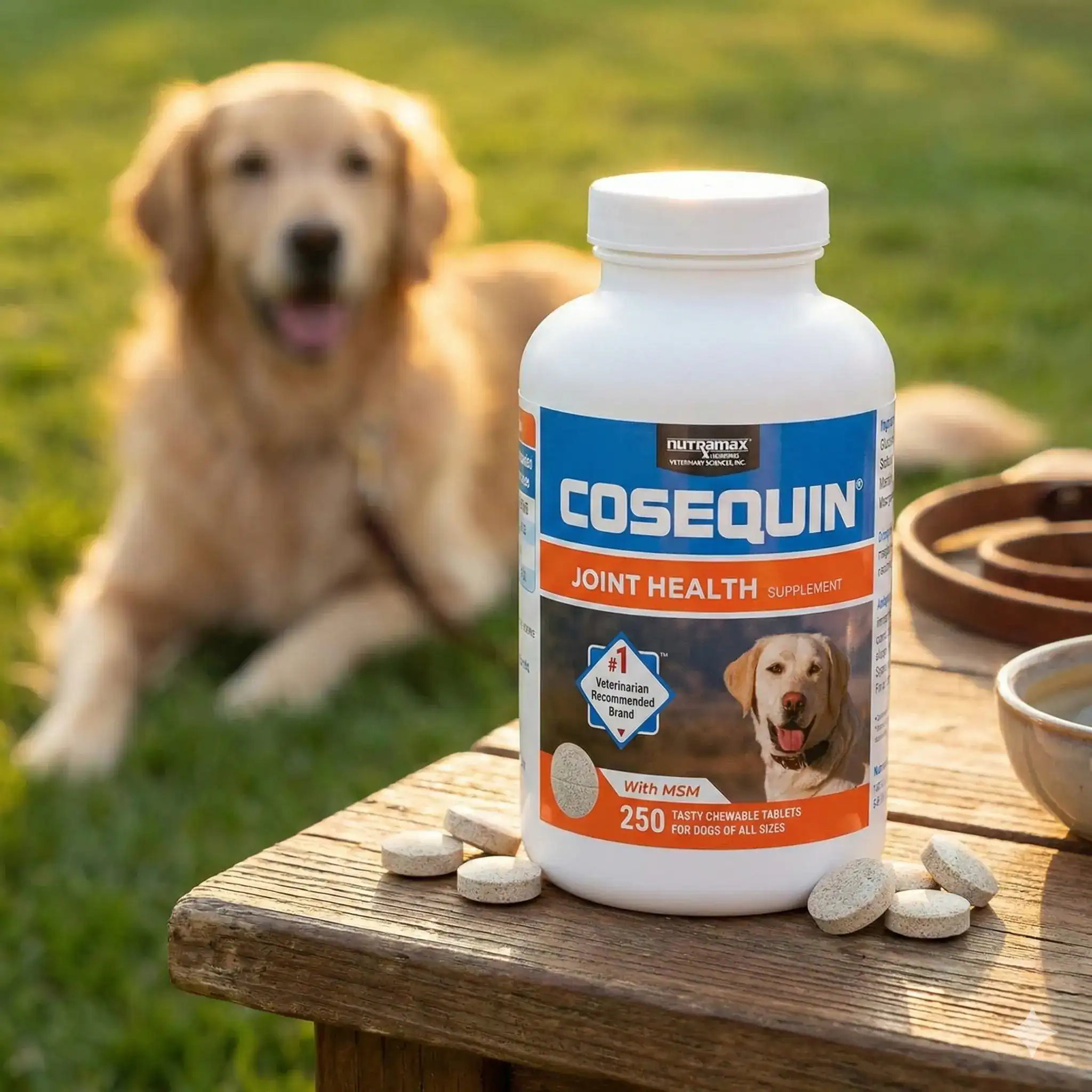
Nutramax Cosequin for Dogs Joint Health Supplement
Use for: Supporting joint health in large breeds prone to hip and elbow dysplasia. Contains glucosamine and chondroitin to help maintain mobility and protect cartilage function against routine wear.
Check price on AmazonGrooming and Coat Care
They are frequently referred to as “German Shedders” for a reason. They shed moderately year-round and experience a massive coat blowout twice a year when the seasons transition. The volume of loose fur they drop is staggering.
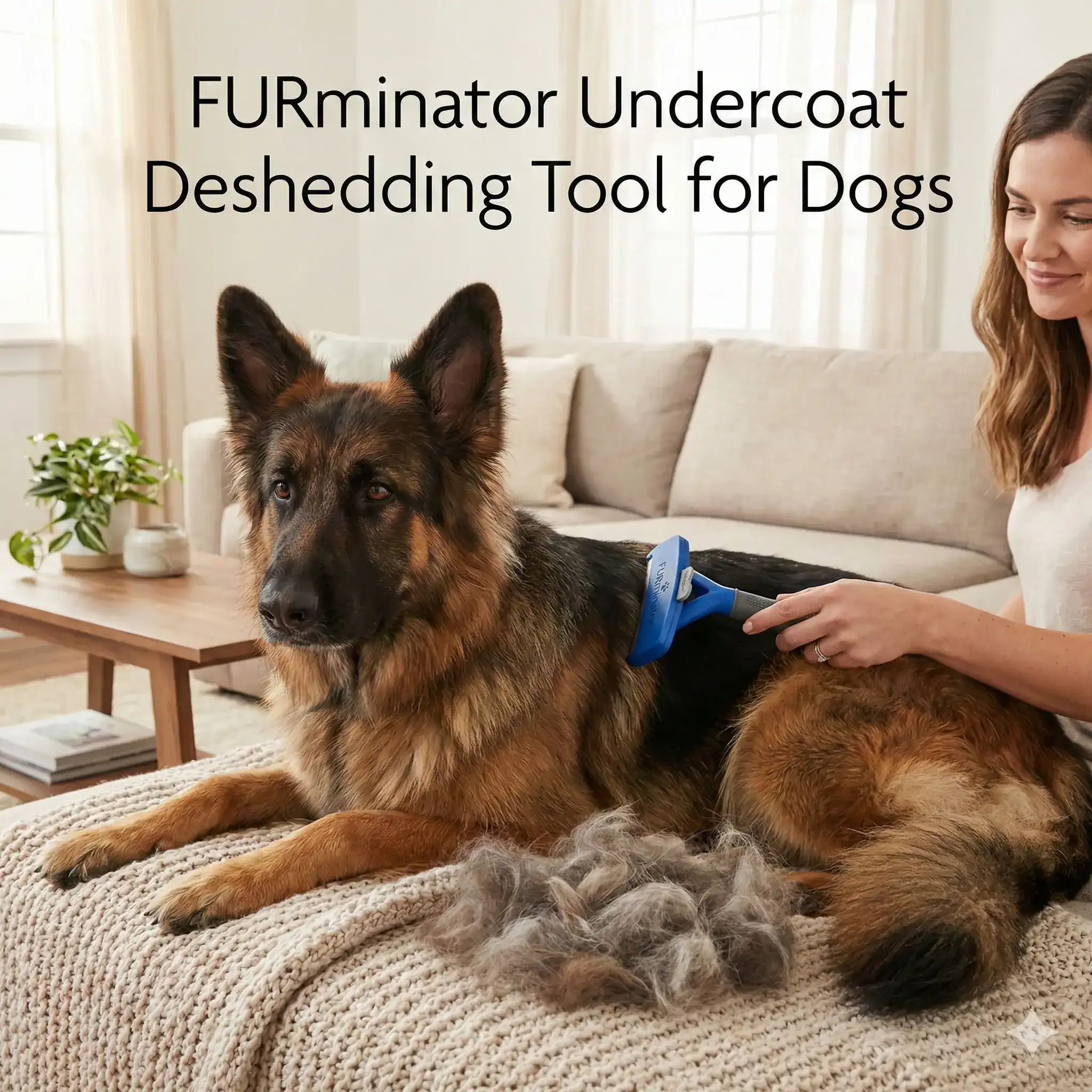
FURminator Undercoat Deshedding Tool for Dogs
Use for: Removing loose undercoat hair before it covers your furniture, reducing heavy shedding by up to 90%, and keeping double-coated breeds comfortable during intense seasonal transitions.
Check price on AmazonRegular brushing with an appropriate grooming tool helps remove dead hair and reduces the amount of shedding inside the home. Double-coated breeds benefit from tools designed specifically for reaching the dense underlayer rather than standard surface brushes.
Bathing should be done sparingly, no more than once every few months, to preserve the natural oils that waterproof their harsh outer layer.
Exercise and Living Needs
For most working-line Shepherds, a short walk around the block is rarely enough. They typically require up to two hours of vigorous exercise each day to maintain physical and psychological balance.
Physical exhaustion alone will not settle them. They need tasks that engage their advanced cognition. Scent work, advanced agility courses, and structured fetch drills help satisfy their innate desire to track and retrieve. Proper mental stimulation reduces the risk of frustration-driven aggression and prevents the destructive boredom patterns that land many in rescue.
They can technically survive in an apartment if the handler is deeply committed to extensive outdoor activity. However, a secure, fenced area near the home offers a safer environment for off-leash sprinting. They thrive best when living indoors closely integrated with the household unit, with clear boundaries for personal security work and visitor reception.
Nutrition & Diet
Proper feeding protocols are essential to protect their vulnerable skeletal structure, starting from the day they arrive home.
🐶 Puppy Stage
Growth must be strictly regulated. A specialized large-breed puppy formula controls calcium and phosphorus ratios, preventing the rapid bone expansion that triggers permanent skeletal damage. Free-feeding is strongly discouraged.
🐕 Adult Stage
Maintain a lean physique. You should easily feel the ribs beneath the thick coat. The fact that excess weight places catastrophic stress on hip and elbow structures is well-documented in veterinary literature. To minimize the risk of gastric torsion, divide each day’s caloric intake into two separate meals of a safe, high-protein large-breed formula, and prevent rigorous activity immediately after eating.
🐕🦺 Senior Stage
As metabolism slows, transition to a lower-calorie senior diet. This is the optimal time to integrate hip and joint supplements formulated with high-quality glucosamine and chondroitin to combat inevitable arthritis.
Training
They possess an intense desire to please, making them exceptionally trainable. However, their physical power means any lack of structure quickly becomes a liability.
🛑 Socialization Priorities
Intensive socialization between 8 and 16 weeks is critically important. Expose them to diverse environments, loud noises, and unfamiliar people. A well-socialized Shepherd assesses threats accurately, while an isolated one reacts with fear and misplaced aggression.
👑 Leadership Through Trust
They respond poorly to heavy-handed, coercive tactics, which often fracture their trust and provoke defensive snapping. They respect a handler who establishes firm, consistent boundaries using positive reinforcement and clear expectations.
🎯 Focus and Precision Drills
Incorporate impulse-control games. Teach them to sit before doors open, wait for a release command before eating, and maintain a heel position past distractions. Mental discipline tires them out more effectively than endless running.
German Shepherd vs Malinois vs Doberman
Understanding how the German Shepherd stacks up against other high-drive breeds helps clarify exactly what ownership entails near the serious-working-dog end of the spectrum. The three dogs people actually compare the German Shepherd against in search are the Belgian Malinois, the Doberman Pinscher, and the Labrador Retriever. All four share working-dog ancestry and household-pet positioning, but they operate with entirely different intensities and physical requirements.
| Attribute | German Shepherd | Belgian Malinois | Doberman Pinscher | Labrador Retriever |
|---|---|---|---|---|
| Weight | 50-90 lb (23-41 kg) | 40-80 lb (18-36 kg) | 60-100 lb (27-45 kg) | 55-80 lb (25-36 kg) |
| Original Purpose | Sheep herding / patrol | Livestock herding / police | Personal protection | Waterfowl retrieving |
| Energy Type | Calculated, steady drive | Explosive, endless stamina | High-speed, sprinter bursts | Sustained retriever drive |
| Trainability | Excellent, biddable | Exceptional, intense | Very high, sensitive | Excellent, eager to please |
| Grooming | Heavy seasonal shedding | Moderate shedding | Minimal, single coat | Moderate-heavy shedding |
| Threat Response | Assess, warn, engage | Immediate fast reaction | Physical intimidation first | Minimal guarding drive |
| First-Time Owner? | Not Recommended | Strongly Discouraged | Not Recommended | Yes |
| Vet Cost Burden | Moderate-High | Moderate | High (Cardiac screening) | Low-Moderate |
| Living Space | Yard required | Large yard required | Yard preferred | Flexible |
The German Shepherd occupies a specific position in this group: more handler-oriented than the explosive Mal, more versatile than the coat-focused Doberman, and substantially more watchful than the universally friendly Labrador Retriever. Where the Mal brings relentless drive and overwhelms casual handlers, the Shepherd brings balanced capability. Where the Doberman defaults to immediate physical intimidation, the Shepherd assesses before engaging. Compared to a Rottweiler, they offer similar guarding instinct with significantly higher biddability. Compared to a high-energy sled breed like the Siberian Husky, the Shepherd channels their drive into focused handler-bonded work rather than independent endurance running. The pro side: versatile working dog that doubles as devoted household companion. If you want maximum drive for competitive sport work, the Belgian is a better fit. If you want the same working intelligence without the public-liability baggage, the Labrador is the honest answer.
Common Questions about the German Shepherd
Are German Shepherds good family dogs?
Direct Answer: Yes, they are deeply devoted to their household when raised with clear structure.
Context: They form intense bonds and often act as gentle supervisors for children in their own home. However, their size and herding instinct mean they may try to nip at the heels of running toddlers.
Management: Never leave large working breeds unsupervised with young children. Teach kids to respect boundaries and avoid roughhouse games that trigger the guard drive.
Do they shed a lot?
Direct Answer: Yes, shedding is constant and massive during seasonal changes.
Context: They have a dense double coat designed to repel weather. You will find loose fur on your floors, furniture, and clothing every day of the year.
Management: Invest in a high-quality deshedding tool and commit to brushing them thoroughly two to three times a week.
Are they aggressive?
Direct Answer: They are watchful and defensive, not inherently aggressive, but poor training creates dangerous reactivity.
Context: A genetically stable Shepherd evaluates a situation before reacting. Fearful or poorly socialized dogs often lash out because they lack the confidence to handle unfamiliar situations.
Management: Group obedience classes and continuous positive exposure to strangers during the early months are mandatory.
How much exercise do they need?
Direct Answer: Expect to dedicate 90 to 120 minutes each day to physical and mental activity.
Context: A simple walk will not drain their energy. They need to run, track, fetch, and solve problems to feel satisfied.
Management: Combine long hikes with 15-minute training bursts to exhaust their brain alongside their body.
How fast can a German Shepherd run?
Direct Answer: A healthy adult German Shepherd can sprint at roughly 30 miles per hour (48 km/h) in short bursts.
Context: Their long-trot gait and powerful hindquarters were specifically bred for covering vast pastoral distances, which is why they remain a top choice for police K9 work, search and rescue, and tracking. The breed’s documented bite force is approximately 238 PSI, ranking them among the strongest-jawed working dogs alongside the Rottweiler and Cane Corso.
Management: Use that athletic capacity productively through structured running, scent work, or canine sport. Free off-leash sprinting in unsecured areas is risky given their guard drive and powerful chase instinct.
What are the different types of German Shepherds?
Direct Answer: The two primary types are working-line German Shepherds (drive-focused, level back) and show-line German Shepherds (aesthetic-focused, sloped back), with regional sub-categories like West German, East German DDR, and American/Canadian show lines.
Context: Working lines prioritize drive, biddability, and a level topline optimized for endurance. Show lines (conformation) often have a steep slope to their hindquarters, which may lead to hip instability. East German DDR lines are stocky and even-tempered. West German working lines are athletic and intense.
Management: Be honest about your lifestyle. A working-line Shepherd in a low-activity home will become destructively frustrated, while a show-line dog in a high-pressure sport home may not have the drive you need.
Is a German Shepherd a good house dog?
Direct Answer: Yes, a properly raised German Shepherd is an excellent house dog who thrives on living indoors with their family.
Context: They form intense bonds with their household and prefer being inside the home rather than isolated in a yard or kennel. Their watchful nature makes them naturally alert to visitors without being indiscriminately reactive when well-socialized. Their large size and constant shedding are the two biggest practical challenges of indoor living.
Management: Provide a designated bed in a central area of the home, commit to daily brushing during shedding seasons, and ensure they receive adequate physical and mental work outside the house every day to stay relaxed indoors.
Can they live in an apartment?
Direct Answer: It is possible but incredibly challenging and usually not ideal.
Context: Their large size, loud alert bark, and massive energy output make tight quarters difficult. You must replace a yard with structured, scheduled outdoor excursions.
Management: Only attempt apartment living if you have immediate access to large parks and can commit hours every day to off-property exercise.
How much does a German Shepherd cost?
Direct Answer: A German Shepherd puppy from a reputable breeder typically costs USD 1,500 to USD 3,500, while a working-line puppy from titled European parents can run USD 2,500 to USD 5,000 or higher.
Context: Show-line and pet-quality puppies sit at the lower end of the range, working-line puppies in the middle, and import working-titled bloodlines at the top. Price strongly correlates with documented OFA hip/elbow scoring, DNA Degenerative Myelopathy clearance, and the breeder’s titles in IGP, Schutzhund, or AKC sports. Cheap craigslist puppies almost always lack health screening.
Management: Budget an additional USD 2,000 to USD 4,000 per year for premium large-breed food, routine veterinary care, comprehensive pet insurance, and the very real possibility of dysplasia surgery or bloat emergency over a 9 to 13 year lifespan.
What is the most common problem in German Shepherds?
Direct Answer: Hip dysplasia is the single most common serious condition affecting the breed.
Context: The deep, sloped conformation favored in show lines combined with rapid juvenile growth makes the German Shepherd one of the most dysplasia-prone breeds in the world. Bloat (Gastric Dilatation-Volvulus) and Degenerative Myelopathy round out the top three serious health concerns, all three driven by their deep chest and aggressive selection pressure for working drive.
Management: Buy only from breeders with documented OFA or PennHIP scores on both parents, feed strictly controlled large-breed puppy formula to slow rapid growth, and avoid vigorous exercise within 60 minutes of meals to reduce bloat risk.
Finding a Puppy
Locating a stable, structurally sound German Shepherd puppy requires patience. The market is saturated with operations prioritizing profit over genetic integrity, and any puppy listed for immediate sale without a waitlist is a red flag of medium-to-high severity.
Before buying a German Shepherd puppy, run this 4-step check: (1) Can you commit to 90-120 minutes of structured physical and mental exercise daily for the next 10-13 years? (2) Is your budget prepared for substantial emergency medical reserves covering potential dysplasia surgery, bloat, or neurological care? (3) Have you enrolled in professional obedience training before the puppy arrives? (4) Have you met at least three adult German Shepherds in person to confirm the temperament matches your expectations? If any answer is no, reconsider the breed.
🏠 Responsible Source
Seek breeders who register their litters and participate in tracking or obedience titles. Demand physical proof of OFA certifications for hips and elbows on both parents. They should interview you extensively about your fencing, daily routine, and prior experience with high-drive breeds.
🐾 Rescue Organizations
German Shepherds are commonly seen in rescue networks across the country, frequently surrendered by owners overwhelmed by the shedding or the exercise demands. Adopting an adult allows you to bypass the chaotic early months and accurately assess their adult temperament and structural soundness.
🚩 Red Flags to Watch For
- Inability to provide official hip and elbow scoring documents for the parents.
- Marketing puppies as “oversized” or “giant,” which ruins structural integrity.
- Litters available immediately without any waitlist or handler screening.
- Parents exhibiting extreme fear, pacing, or unprovoked aggression.
- Breeding specifically for extreme sloped backs or “show-angled” conformation.
Personal Observation
💭 Personal Observation
Over two decades of handling high-drive rescue dogs, the clearest pattern I have watched repeat is this: the dog is rarely the problem. An under-exercised, under-structured, over-rewarded puppy becomes a reactive adolescent, then a dangerous adult. I have seen it unfold with mixed breeds, working-line crosses, and purebred guardians alike. The German Shepherd carries the same raw material every one of those rescue cases carried, with generations of selective breeding amplifying both the upside and the risk. A well-managed Shepherd ranks among the finest working partners ever developed. An unmanaged one becomes a liability to the family it was supposed to protect. The difference is not the dog. It is the handler’s willingness to lead every single day, correct in the moment, and keep reinforcing rules long after the cute-puppy phase ends. If that sounds like too much work, this is not your breed.
Conclusion
The German Shepherd remains among the most versatile, intelligent, and devoted breeds ever developed. They offer unmatched utility, transforming seamlessly from a fiercely loyal household guardian into a highly tuned athletic professional.
However, this exceptional loyalty comes with an equally exceptional workload. They require a handler willing to dedicate years to cognitive training, proactive skeletal care, and endless coat maintenance. For those ready to step into a leadership role, the reward is an unbreakable bond with a truly legendary companion.


