

The Rottweiler is a large, powerful German working dog developed to drive cattle to market and pull heavy butcher carts. A poorly managed specimen of this breed can become a significant liability in a residential neighborhood. This guide combines practical working-dog ownership experience with American Rottweiler Club standards and OFA health screening protocols.
While their protective loyalty is legendary, their daily requirements for mental exhaustion and strict boundary enforcement are routinely underestimated. A 130 lb (59 kg) guardian making its own decisions about who enters a property is a dangerous scenario that demands proactive leadership from day one.
Affiliate Disclosure: K9Sphere is a participant in the Amazon Services LLC Associates Program. As an Amazon Associate, K9Sphere earns from qualifying purchases made through links in this article at no extra cost to you.
Breed Snapshot
📊 Vitals and Lifespan
Height
Males: 24-27 inches (61-69 cm)
Females: 22-25 inches (56-63 cm)
Weight
Males: 95-135 lb (43-61 kg)
Females: 80-100 lb (36-45 kg)
Lifespan
9-10 years
AKC Group
Working Group
Origin
Germany
🇩🇪
⭐ Personality Traits
Ratings (1 to 5). This large, powerful working breed requires calm, confident leadership and extensive socialization to channel its natural protective instincts safely.
History and Origin
The Rottweiler traces its lineage back to the Roman Empire. When Roman legions marched over the Alps into central Europe, they brought large mastiff-type dogs to herd their meat supply and guard their camps. These drover dogs laid the genetic foundation for one of the most capable working breeds in history.
📌 The Roman Drovers (74 AD)
Roman armies advancing through the Alpine passes required rugged herding dogs to manage their cattle. Two foundation types make up the modern Rottweiler ancestry: Roman drover mastiffs brought over the Alps, and local German herding dogs already working in the southern regions. The crossing of these two types created a foundation stock built for endurance, strength, and intimidation.
📌 The Butcher’s Dog (Middle Ages)
In the German town of Rottweil, these dogs became indispensable to local butchers. The Rottweiler Metzgerhund (Butcher’s Dog of Rottweil) drove cattle to market, pulled carts loaded with meat, and guarded the butcher’s money pouches tied around their muscular necks on the journey home.
📌 Near Extinction (1800s)
The rise of railroads eliminated the need for drover dogs to move cattle over long distances. The breed almost disappeared entirely. By 1882, only one poor specimen of the breed appeared at a dog show in Heilbronn.
📌 Police and Military Revival (1900s)
Breed enthusiasts pivoted the dog’s role toward police, military, and private security work. Their intelligence, physical power, and natural protective instincts made them exceptional candidates for serious protection duties, alongside other working breeds developed in the same era.
📌 1931: AKC Recognition
The American Kennel Club officially recognized the Rottweiler named after the German town of Rottweil in 1931 and admitted the breed to the Working Group. This formally established the Rottweiler breed within the US kennel system. The post-war decades cemented its status as one of the most popular guardian breeds across the US.
Today, they are primarily kept as working guardians, police service dogs, and family companions. Their centuries-old working intensity remains fully intact in modern dogs, which is why every Rottweiler requires appropriate physical and mental outlets to prevent destructive behavior from building up.
Physical Characteristics
Rottweilers are a large dog of substantial bone and dense muscle. The Rottweiler breed carries a broad, blocky head with moderately sized drop ears that lie flat against the cheeks. The body is slightly longer than it is tall, presenting a compact, powerful silhouette designed for trotting long distances alongside cattle.
Bite Force Reality Check
Internet myths frequently claim the Rottweiler possesses a bite force of over 2,000 PSI. Veterinary and biomechanical studies consistently demonstrate that their actual bite force is often cited around 300+ PSI, though exact measurements vary by study.
While significantly lower than internet legends, this range is still one of the strongest bites of any domestic dog breed. Their wide jaws and thick skull structure deliver crushing pressure, making durable chew toys an absolute necessity.
The coat is straight, coarse, and medium in length. They are always black with clearly defined rust or mahogany markings on the cheeks, muzzle, chest, legs, and above both eyes. A true Rottweiler possesses a dense undercoat on the neck and thighs, though the thickness depends heavily on the local climate. Their solid black coat and dense musculature make them highly susceptible to overheating in warm climates.

Benebone Wishbone Durable Dog Chew Toy
Use for: Satisfying the intense chewing drive of powerful-jawed breeds like the Rottweiler. A powerful jaw requires heavy-duty chew toys to prevent the dog from turning its natural destructive chewing habits toward your furniture or walls.
View on AmazonTemperament
A well-bred Rottweiler projects quiet confidence. They are typically aloof with strangers, taking a “wait and see” approach before deciding if an unknown person is a threat or a friend. They do not possess the frantic, barking energy of smaller guardian breeds. When a behavioral problem surfaces in this breed, the root cause is almost always inadequate structure or insufficient socialization rather than genetics.
🛡️ Guarding Drive
Their protective instinct is hardwired. They will naturally place themselves between their owner and a perceived threat. This makes them exceptional guardians, but it also requires an owner who can clearly signal when a situation is safe.
🔊 The Rottie Rumble
Many Rottweilers “purr” when receiving affection. This low, guttural vocalization sounds identical to a warning growl to the untrained ear. Recognizing the difference between the relaxed Rottie rumble and a stiff, genuine warning growl is a mandatory ownership skill.
🧍 The Rottweiler Lean
They are famous for their leaning behavior. A 100 lb (45 kg) dog pressing its full body weight against your legs is a sign of affection and trust, inherited from their days of physically bumping cattle to control herd movement.
⚠️ Same-Sex Aggression
Many mature adults exhibit lower tolerance for unknown dogs, particularly those of the same sex. While they can live peacefully with other pets if raised together, bringing a second adult male into a home with an adult male Rottweiler is challenging and usually not ideal.
Health
Veterinary Disclaimer: The information provided in this article is for educational purposes only and is not intended as a substitute for professional veterinary advice, diagnosis, or treatment. Always consult a licensed veterinarian for any health concerns about your pet.
Health Information Sources: Health data compiled from:
- CHIC Program: Recommended genetic screening protocols for Rottweilers.
- American Rottweiler Club (ARC): Official health statements regarding cardiac and orthopedic trends in the breed.
Always consult your licensed DVM for personalized medical advice.
Like many large, heavy-boned working dogs, the Rottweiler is susceptible to a specific set of orthopedic and cardiac conditions. Their short lifespan of 9 to 10 years is often heavily impacted by aggressive cancers and joint degradation. Expect $1,200 to $2,500 per year in routine veterinary costs as of 2026, with emergency bloat surgery running $5,000 to $8,000 when it happens.
🔴 Bone Cancer (Osteosarcoma)
What to watch for: Rottweilers have a higher-than-average risk for bone cancer compared to many other breeds. Symptoms usually present as a sudden, severe limp, localized swelling on a limb, or reluctance to bear weight. The pain scales rapidly.
Screening: While there is no genetic test for osteosarcoma, immediate veterinary imaging is mandatory if an adult dog develops unexplained lameness.
🔴 Subaortic Stenosis (SAS)
What to watch for: SAS is a narrowing of the aortic valve that forces the heart to work harder to pump blood. Severe cases can lead to sudden fainting, lethargy after exercise, or unexpected cardiac failure.
Screening: Ethical breeders mandate an auscultation and echocardiogram with Doppler performed by a board-certified veterinary cardiologist before breeding.
🔴 Gastric Dilatation-Volvulus (Bloat)
What to watch for: Deep-chested dogs carry a significant risk for bloat. The stomach fills with gas and twists on its axis, cutting off blood supply. Watch for an extended abdomen, unproductive retching, and extreme restlessness.
This is a medical emergency. Do not attempt home treatment. Seek immediate veterinary care.
🟡 Hip and Elbow Dysplasia
What to watch for: These malformations of the hip and elbow joints cause grinding, inflammation, and eventual arthritis. Dogs will show stiffness after resting or a “bunny-hopping” gait when running.
Screening: Both parents must have passing OFA or PennHIP scores documented in public databases.
Consult your veterinarian before starting any supplement regimen for your dog.

Nutramax Cosequin for Dogs Joint Health
Use for: Supporting joint health in breeds prone to hip and elbow dysplasia. Maintaining cartilage integrity in a dog carrying up to 135 lb (61 kg) is critical for long-term mobility and comfort.
View on AmazonWeight management plays a massive role in preserving joint health. Keeping a Rottweiler lean dramatically reduces the mechanical stress placed on their elbows and hips. See our guide to hip and joint supplements for dogs for specific brand recommendations at this size range. Providing an orthopedic dog bed helps support their large frame, distributing weight evenly and reducing pressure sores as they age.
Grooming
Their grooming requirements are straightforward but require consistency. The Rottweiler wears a double coat that sheds moderately year-round and blows out entirely twice a year during seasonal transitions.
Weekly brushing with a rubber curry brush or bristle brush keeps their coat glossy and distributes healthy skin oils. Bathe a Rottweiler only when genuinely dirty, typically every 6 to 8 weeks, as over-bathing strips the protective oils from the double coat. During the heavy spring and fall shedding periods, daily brushing becomes mandatory to manage the volume of loose fur.
Regular brushing with an appropriate grooming tool helps remove dead hair and reduces the amount of shedding inside the home. Double-coated breeds benefit from tools designed specifically for reaching the dense underlayer rather than standard surface brushes.
Exercise
A Rottweiler cannot maintain physical or mental health through slow walks around the block. They are athletic draft dogs that require serious daily exertion to remain balanced. Plan for 60 to 90 minutes of structured physical activity daily, split across two sessions to avoid joint overload.
They thrive on structured work, and mental stimulation matters as much as physical exertion. Dog sports like weight pulling, advanced obedience, agility, and tracking exhaust them cognitively. Mental fatigue is just as important as physical exhaustion for a breed engineered to problem-solve alongside a butcher. Regular exposure to varied environments, including urban traffic, crowds, and unfamiliar surfaces, also sharpens their situational awareness.
Avoid forced running on hard surfaces before the dog reaches two years of age. Their heavy skeletal structure takes time to fully close its growth plates, and early impact exercise significantly increases the risk of lifelong orthopedic damage.
Nutrition
On the topic of caring for a Rottweiler, nutrition sits at the foundation. Feeding a large, heavy-boned breed the wrong dog food during its growth phase causes irreversible skeletal damage. Choose a dog food formulated for large-breed growth, and consult your vet before switching brands. Nutrition must be strictly controlled.
🐶 Puppy Stage
A Rottweiler puppy requires a large-breed specific formula that tightly regulates calcium and phosphorus ratios. Rapid growth is the enemy of healthy joints. Feed measured meals to ensure slow, steady growth rather than maximum weight gain.
🐕 Adult Stage
Adults require a high-quality dog food with sufficient protein to maintain their dense muscle mass, but portions must be strictly managed. Obesity destroys their joints and places unnecessary strain on their heart. You should be able to easily feel their ribs without pressing hard through the coat, and any sudden weight change warrants a vet check.
🐕🦺 Senior Stage
As they enter their senior years around age 7, caloric needs drop. Transitioning to a senior diet rich in omega-3 fatty acids and joint-supporting compounds helps manage arthritis. Split meals into two smaller portions to reduce the risk of gastric dilatation-volvulus (bloat).
Training
Rottweilers are generally easy to train for experienced, consistent handlers because their intelligence is not the issue. They learn commands rapidly. The real challenge lies in the consistency and leadership the owner brings. If you allow a 10 lb (4.5 kg) puppy to jump on guests or pull on the leash, you are training a 130 lb (59 kg) adult to do the same.
🛑 Non-Negotiable Socialization
Early, intense socialization is the single most important factor in raising a safe Rottweiler. They must be given extensive early exposure to varied people, environments, sounds, and harmless situations before they are six months old. A guardian dog must clearly understand what is normal before it can accurately identify a genuine threat.
👑 Clear Leadership Structures
They respect calm, firm authority. Physical punishment or screaming ruins trust and can provoke a dangerous defensive response from a powerful animal. Training must focus on rewarding desired behaviors while enforcing strict boundaries. If the dog realizes it can intimidate its owner, the relationship is broken.
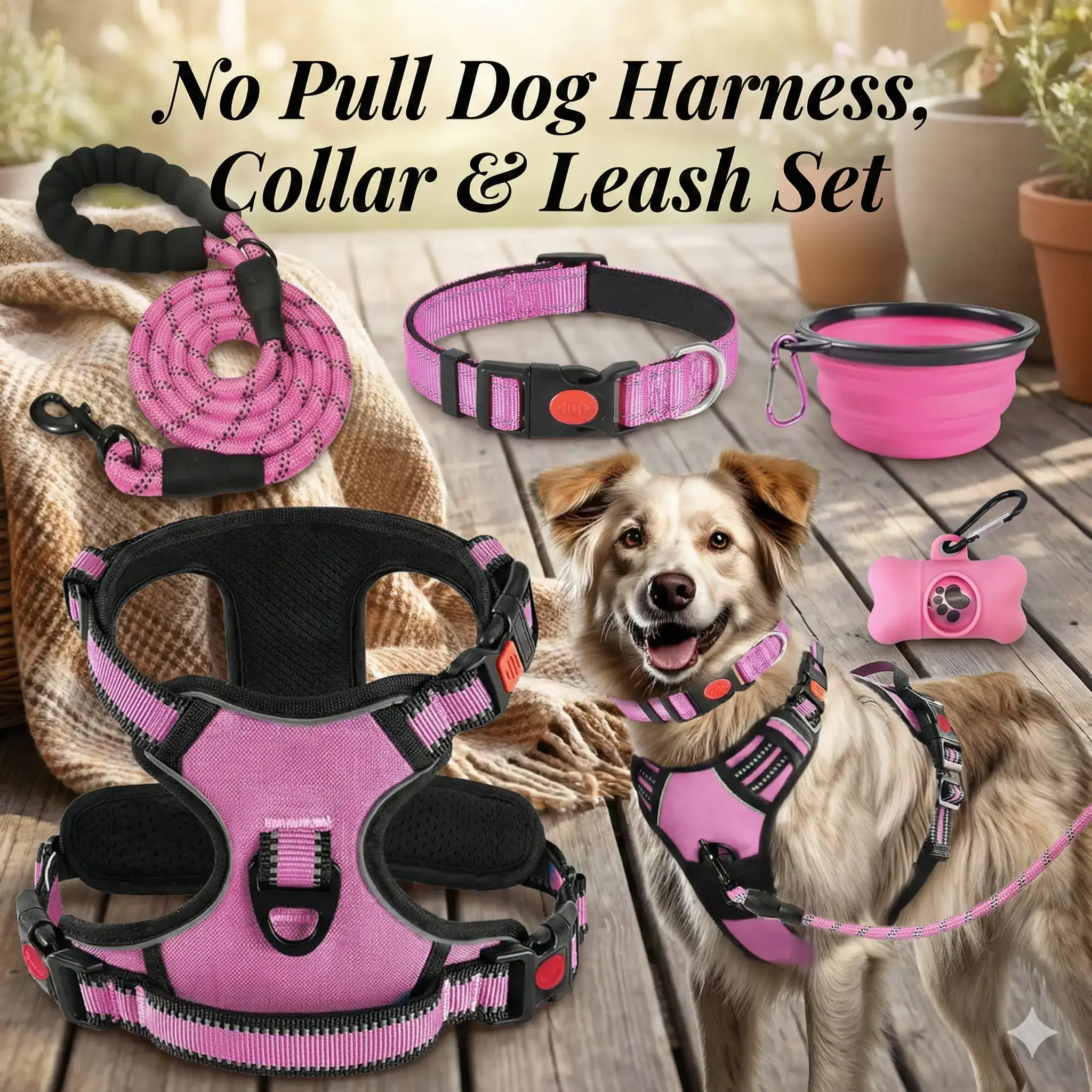
No Pull Dog Harness Set
Use for: Managing strong, enthusiastic pullers that drag owners on walks. A front-clip harness redirects the forward momentum of a muscular chest, helping owners maintain physical control while teaching polite leash walking.
View on AmazonComparison
Understanding how the Rottweiler stacks up against other large guardian breeds helps clarify exactly what ownership entails. The three breeds people actually compare the Rottweiler against in search are the Doberman Pinscher, the Cane Corso, and the American Pit Bull Terrier, because all four share working-dog ancestry and face similar public perception challenges. A quick contrast with the Labrador Retriever clarifies where the Rottweiler fits on the family-dog spectrum.
| Attribute | Rottweiler | Doberman Pinscher | Cane Corso | Labrador Retriever |
|---|---|---|---|---|
| Weight | 80-135 lb (36-61 kg) | 60-100 lb (27-45 kg) | 88-120 lb (40-54 kg) | 55-80 lb (25-36 kg) |
| Original Purpose | Drover / Guardian | Personal Protection | Estate Guardian | Water Retrieving |
| Stranger Tolerance | Aloof / Evaluates | Alert / Suspicious | Reserved / Wary | High / Welcoming |
| Trainability | High (Needs Leadership) | Very High (Biddable) | Moderate (Independent) | Very High (Biddable) |
| Energy Level | Moderate-High | High | Moderate | High |
| First-Time Owner? | Not Recommended | Not Recommended | Strongly Discouraged | Yes |
| Annual Vet Budget (2026) | $1,200-$2,500 | $1,500-$3,000 | $1,500-$3,500 | $800-$1,800 |
| Living Space | Yard required | Yard preferred | Large yard required | Flexible |
The Rottweiler occupies a specific position in this group: more biddable and handler-focused than the independent Cane Corso, more physically imposing than the leaner Doberman Pinscher, and far more protective than the universally friendly Labrador Retriever. Where the Doberman brings speed and sharper reactivity, the Rottweiler brings mass and steadier temperament. Where the Cane Corso defaults to autonomous guardianship, the Rottweiler looks to its owner for direction. If you want a steady, medium-energy guardian that responds well to structured training, the Rottweiler wins this group. If you want a guardian dog that makes most of its own decisions, the Cane Corso is a better fit. If you want the same working-dog intelligence without the public-liability baggage, the Labrador is the honest answer.
Common Questions about the Rottweiler
Are Rottweilers naturally aggressive?
Direct Answer: No, they are not inherently aggressive, but they possess a powerful protective instinct that can turn into aggression if poorly managed.
Context: A well-bred, socialized Rottweiler evaluates threats calmly. Aggression in this breed usually stems from fear, lack of socialization, or owners who intentionally encourage defensive behavior.
Management: Intense socialization during puppyhood and consistent, reward-based obedience training are critical for producing a safe adult.
Can a Rottweiler live in an apartment?
Direct Answer: It is highly challenging and usually not ideal for this breed to live in an apartment.
Context: Their substantial size and booming bark make them difficult neighbors. While they are relatively calm indoors when mature, they require significant daily exercise. Denying them physical outlets in a confined space leads to severe behavioral issues.
Management: If attempted, the owner must commit to multiple long walks and vigorous training sessions outside the apartment every single day, rain or shine.
How much exercise do they need?
Direct Answer: They typically need 60 to 90 minutes of structured activity plus mental work every day.
Context: A slow walk around the block is rarely enough for this breed. They were bred to haul heavy carts and drive cattle all day. They need a job to do.
Management: Incorporate obedience drills, agility training, or weight-pulling exercises into their routine to exhaust them mentally as well as physically.
Are Rottweilers good family pets and good with children?
Direct Answer: Yes, a well-socialized Rottweiler can be an excellent family pet and is typically excellent with children in their own home when raised with them properly.
Context: They are deeply affectionate and protective of “their” kids. However, their sheer size means they can easily knock over a toddler by accident. They may also misinterpret roughhousing between their children and visiting friends as a threat.
Management: Never leave large guardian breeds unsupervised with young children. Teach the children to respect the dog’s resting space.
What is the “Rottie rumble”?
Direct Answer: It is a low, guttural vocalization that many Rottweilers make when they are happy or receiving affection.
Context: To the uninitiated, this sound is terrifying because it sounds exactly like a deep warning growl. The difference is in the body language: a rumbling dog is relaxed, leaning into you, and loose.
Management: Learn to read the dog’s entire body language (ears, tension, eyes) rather than relying solely on vocalizations to gauge their mood.
Do Rottweilers shed a lot?
Direct Answer: Yes, they shed moderately year-round and heavily twice a year during seasonal changes.
Context: They have a double coat consisting of a harsh outer layer and a soft undercoat. When they “blow” their undercoat in the spring and fall, the amount of loose fur is substantial.
Management: Weekly brushing is sufficient for most of the year, but daily brushing with a deshedding tool is necessary during the heavy shedding seasons.
How long do Rottweilers live?
Direct Answer: The average lifespan of a Rottweiler is 9 to 10 years, which is typical for a dog of their substantial size.
Context: Their lifespan is often cut short by aggressive cancers like osteosarcoma or cardiac issues like subaortic stenosis. Keeping them lean can help extend their comfortable years.
Management: Regular veterinary screenings, particularly cardiac exams and senior blood panels, are essential for catching diseases early.
Are Rottweilers banned or restricted anywhere?
Direct Answer: They are not federally banned in the United States, but they face breed-specific legislation in many local jurisdictions and are outright banned in several countries.
Context: Rottweilers commonly appear on homeowner insurance exclusion lists and rental property restriction lists. At the country level, breed bans or heavy restrictions exist in places including Ireland, Romania, Poland, Singapore, and parts of the UK. Many cities in the United States also restrict ownership or require special permits and liability insurance.
Management: Before adopting or buying, check your city ordinances, confirm your homeowner or renter insurance will cover the breed, and verify your landlord permits Rottweilers if you rent.
Can a first-time owner handle a Rottweiler?
Direct Answer: Most experts advise against this breed for beginner owners.
Context: Training mistakes with a Golden Retriever result in a dog that jumps on guests. Training mistakes with a Rottweiler result in a dog that is a danger to the public. They require confident, consistent leadership that first-time owners rarely possess.
Management: If a novice insists on the breed, they must enroll in professional obedience training before the puppy even arrives and commit to lifelong education.
Finding a Dog
Because the Rottweiler ranks No. 8 on the AKC’s most recent Most Popular Breeds list, and because the severe consequences of poor genetics are well-documented, selecting a source for a Rottweiler requires intense scrutiny. A practical tip: the price of a puppy from a health-screened, ethical litter reflects the testing and time invested, while cut-rate puppies for sale through backyard advertisements almost always skip the screening steps that matter most.
You must also consider line differences. Working-line Rottweilers retain high drive and intensity requiring a dedicated job. Show lines are typically bred for a slightly softer temperament that is often easier for active families to manage.
Before buying a Rottweiler puppy, run this 4-step check: (1) Can you afford $10,000 to $15,000 in emergency medical reserves for the first five years? (2) Do you work from home or have reliable pet-care coverage for the first 18 months? (3) Have you met at least three adult Rottweilers in person to confirm the temperament matches your expectations? (4) Have you read the breed’s health database on OFA? If any answer is no, reconsider the breed.
🏠 Ethical Breeders
A reputable breeder will gladly provide proof of OFA certifications for hips and elbows, along with cardiac clearances from a veterinary cardiologist. They prioritize stable temperaments over raw bulk. Good breeders will interview you extensively to ensure you understand the commitment required for a guardian breed. Expect to wait several months for a puppy from a responsible program.
🐾 Rescue Organizations
Rottweilers are regularly found in breed-specific rescues because owners frequently underestimate the time, training, and socialization required to manage them. Adopting an adult allows you to bypass the challenging puppy phase and see the dog’s mature temperament. Look for breed-specific rescues that thoroughly temperament-test their dogs before placing them in new homes.
🚩 Red Flags to Watch For
- No verifiable OFA or PennHIP joint scores for both parents.
- No board-certified cardiac screening documentation.
- Advertising “oversized,” “Roman,” or “giant” Rottweilers.
- Puppies available immediately with no application or screening process.
- Breeding specifically for extreme protection or aggressive traits.
Personal Observation
💭 Personal Observation
Moti, one of my rescued street dogs, once attacked another dog that walked into the compound uninvited. No warning bark, no gradual escalation. The other dog crossed what Moti had silently decided was the line, and he acted. Correcting that behavior afterward worked because Moti weighs roughly 25 kg (55 lb). I could physically intervene when needed, firmly reinforce boundary rules in the moment, and keep rehearsing the correction until he learned to bark at intruders but stand down when told. A Rottweiler takes that option off the table entirely. A dense 50+ kg (110+ lb) adult Rottweiler is not coming off a target through brute strength. The leash, the collar, and the verbal command become the only tools left. That is why the training work must be fully installed long before the dog reaches its adult size. With a medium rescue, you have margin to correct mistakes physically. With a Rottweiler, you do not.
Conclusion
The Rottweiler is an incredibly capable working dog that offers profound loyalty to a structured family. When raised with extensive socialization and confident leadership, they are steady, affectionate, and magnificent companions.
They are not a part-time pet. Weigh the pros and cons honestly before committing, because they require serious commitments to training, exercise, and veterinary care to manage their joint and cardiac health. The biggest pro is unmatched loyalty paired with serious working capability. The biggest con is the demanding ownership workload and the public liability that comes with a powerful guardian. For the right owner who understands canine psychology, the Rottweiler is unmatched. For anyone seeking an easygoing yard dog, they are the wrong fit entirely.


