

If you are comparing a Weimaraner vs Vizsla, you are weighing two athletic continental pointing breeds whose appearance is similar enough in outline to confuse buyers, yet which differ sharply in almost everything that affects daily life.
The Weimaraner is a German gun dog developed at the court of Weimar to track and pursue large game, and it carries a silver-grey coat that earned it the Gray Ghost nickname. The Vizsla is a Hungarian pointer and retriever with an ancient Magyar lineage and a solid golden rust coat.
They overlap where it matters least and diverge where it matters most. Each is a velcro athlete that needs serious daily work and struggles with long days alone. The clearest differences are size, coat colour, typical social style, hunting background, health-screening recommendations, and published lifespan estimates.
This guide compares them across the areas that decide the match, from telling them apart to exercise, separation tolerance, health testing, and cost. Each section ends with a clear round verdict so you can see which breed fits your stated use case.
Read it as a decision tool for weighing the real-life trade-offs between these two pointers. By the final verdict you should know which size, which screening paperwork, and which energy profile suits your household.
Affiliate Disclosure: K9Sphere is a participant in the Amazon Services LLC Associates Program. As an Amazon Associate, K9Sphere earns from qualifying purchases made through links in this article at no additional cost to you. Product recommendations are based on independent research and editorial judgment, not paid placement.
Quick Answer and Who Each Round Favors
⚡ The 30-Second Answer
Choose the Weimaraner if you want the larger, more imposing dog with a reserved edge toward strangers, and you value the deeper health screening panel its parent club requires. Choose the Vizsla if you want a smaller, lighter athlete that is friendlier with strangers and generally lives longer.
Each is a velcro pointer needing one to two hours of real daily work, and neither suits a house that is empty all day. The real decision is scale, screening, and how much dog you want to manage.
| Category | Favors |
|---|---|
| Telling them apart | Coat colour decides it |
| Temperament | Depends on preference |
| Exercise demand | Roughly even, both high |
| Separation tolerance | Limited in both |
| Trainability | Roughly even |
| Family fit | Roughly even |
| Grooming workload | Roughly even, both minimal |
| Breed-specific DNA testing | More extensive in Weimaraner |
| Lifespan | Longer for the Vizsla |
| First-time owners | Vizsla (slightly) |
Weimaraner vs Vizsla at a Glance
Whether you search for Weimaraner vs Vizsla or Vizsla vs Weimaraner, this comparison table lays out the core differences in size, colour, health screening, and lifestyle fit. Scan the rows that matter most to you, then read the detailed sections below.
| Attribute | Weimaraner | Vizsla |
|---|---|---|
| Height (male) | 25–27 in (63–69 cm) | 22–24 in (56–61 cm) |
| Weight (male) | 70–90 lb (32–41 kg) | 55–60 lb (25–27 kg) |
| Lifespan | 10–13 years | 12–14 years |
| Origin | Germany | Hungary |
| Breed group | Sporting (AKC 1943) | Sporting (AKC 1960) |
| Coat colour | Silver-grey to mouse-grey | Solid golden rust |
| Eye colour | Amber or blue-grey | Blends with the coat |
| Original purpose | Tracking and large game | Pointing and retrieving birds |
| With strangers | Alert, reserved | Friendly, rarely aloof |
| Exercise | One to two hours daily | 60 to 90 minutes daily |
| Coat care | Weekly wipe, low shed | Weekly brush, sheds lightly |
| Signature health risks | Bloat, thyroid, eye and DNA conditions | Hip dysplasia, epilepsy, eye disorders |
| Club health screening | Hips, thyroid, eyes plus three DNA tests | Hips, thyroid, eyes plus optional screens |
| First-time owner? | Challenging | Possible with commitment |
📜 A Quick Origin Story
The two breeds were built for different quarry. The Weimaraner took shape in the early 1800s at the court of Weimar, where German nobles led by Grand Duke Karl August wanted an all-purpose field dog with the scenting ability, courage, and durability to pursue large game including boar and deer.
A club for the silver-grey pointing dog formed at Erfurt in 1897, and German fanciers guarded their stock closely, requiring working field tests before certifying any dog for breeding. Howard Knight brought the breed to America and founded the Weimaraner Club of America in 1929, and the AKC recognized it in 1943.
The Vizsla is older and lighter in purpose. Its ancestors travelled with the Magyar tribes into the Carpathian Basin, and Hungarian nobility later refined them for falconry and netting, wanting a dog fast enough to pursue game yet soft enough to point and retrieve birds without crushing them.
The breed nearly died out around the Second World War before dogs taken out of Hungary preserved the line, and the AKC recognized it in 1960.
Who Should Choose the Weimaraner
🐕 The Weimaraner is the right pick if:
- You want the larger dog with a watchful, reserved edge toward strangers.
- You value a CHIC framework that adds three breed-specific DNA disease tests.
- You can commit to one to two hours of vigorous daily work.
- You want the striking silver coat and amber or blue-grey eyes.
- You can physically manage a lean athlete of 70 to 90 pounds.
Who Should Choose the Vizsla
🐕 The Vizsla is the right pick if:
- You prefer a lighter, more manageable dog at 44 to 60 pounds.
- You want a friendlier default toward visitors and strangers.
- You value the longer published lifespan of 12 to 14 years.
- You want a sensitive dog that thrives on reward-based training.
- You accept a coat with no undercoat that struggles in hard cold.
Colour and Telling Them Apart
Coat colour settles this instantly, and it is the only tell you need. The Weimaraner wears a smooth silver-grey coat ranging from mouse-grey to pale silver, usually lighter on the head and ears. The Vizsla wears a solid golden rust coat with no significant white markings.
There is no overlap between them. Grey or silver is not a recognized Vizsla coat colour, and searches for silver or grey Vizslas usually turn out to be describing a Weimaraner or a mix. A dog advertised as a rare silver or grey Vizsla deserves closer questions about pedigree, registration, and parentage.
Eyes and size confirm it. The Weimaraner has striking amber or blue-grey eyes that contrast against the coat, while the Vizsla’s eyes, nose, and nails blend with its rust colouring for a uniform look. The Weimaraner is also the taller and heavier dog by a clear margin in both sexes.
Build tells a subtler story. Each is lean and deep-chested, but the Weimaraner was bred to pursue boar and deer and carries more substance, while the Vizsla is built for endurance over ground rather than raw power.
🎯 Verdict: Colour decides this round outright, since the two breeds share no overlapping shades. Judge by coat first, then confirm with eye colour and size.
Temperament and Personality
These two are alike in devotion and differ in edge. Each bonds intensely with its household, seeks physical proximity, and engages enthusiastically with whatever the family is doing. Neither is an independent dog that entertains itself in the yard.
The Weimaraner carries a watchful, reserved streak toward unfamiliar people, which owners often read as a protective quality. It is also exceptionally sharp, documented opening doors and unlatching gates, and a bored one will find its own projects.
The Vizsla is the friendlier default, rarely aloof and generally welcoming to visitors. It is also more sensitive, shutting down rather than pushing back when handling turns harsh, and it earns its clingy velcro nickname by shadowing people through every indoor room in the house.
🎯 Verdict: This depends on the personality you want rather than which is better. The Weimaraner suits a home that values a reserved, watchful companion, while the Vizsla suits one that wants an openly social dog.
Exercise and Energy Needs
These two are working athletes, and this round is close. Both need substantial daily physical exercise plus mental stimulation, and the exact amount varies with age, health, conditioning, individual drive, and whether the dog is doing field or sport work.
As commonly quoted guidelines, the Weimaraner is placed at one to two hours of vigorous daily activity and the Vizsla at 60 to 90 minutes. Treat those as starting points rather than fixed quotas.
Physical effort alone does not settle either breed. A long hike satisfies the body but not the mind, so each needs structured mental work through scent games, training sessions, and puzzle feeders to reach a rested state, and an under-exercised dog of either type turns destructive, redirecting that energy into chewing, barking, and fence-testing.
Each carries live hunting instinct, so off-leash access outside secure areas is a genuine risk. Each will point at birds and chase small moving animals, and recall can fail under field conditions. Avoid repetitive, high-impact distance running while the dog is still growing, and ask your veterinarian when sustained running is appropriate for that individual dog.
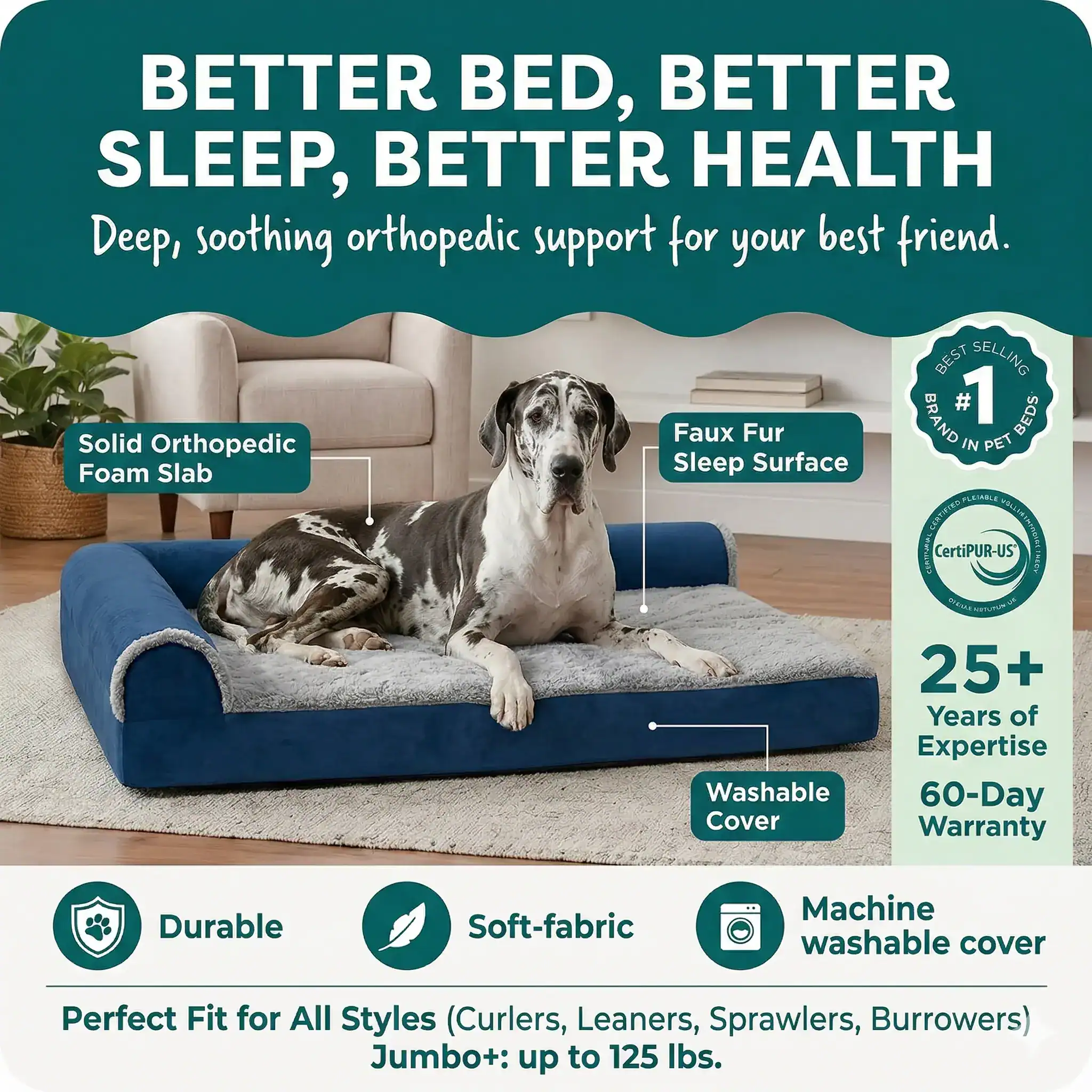
FurHaven Orthopedic Dog Bed for Large Dogs
Use for: Pressure relief in sporting dogs carrying hip dysplasia risk. The egg-crate orthopedic foam supports joints and helps a hard-working adult rest properly after long sessions. Check the sizing chart, since the jumbo suits the larger Weimaraner best.
Check price on Amazon🎯 Verdict: Roughly even, with the Weimaraner asking for slightly more at the top end. Both need substantial daily physical and mental work, and neither is an ideal choice for a sedentary household.
Separation Tolerance and Time Alone
This is one of the most underestimated factors with either breed, because both can struggle when left alone for extended periods. Both were developed as close-working hunting dogs expected to stay within range of the handler all day, and that wiring carries over into home life.
Separation-related problems are well documented in Weimaraners, where a dog in acute distress may howl, destroy furniture, or injure itself trying to escape, and Vizslas are also noted for social anxiety when left alone for extended periods. The breed’s own parent-club guidance stresses deliberate independence work from day one rather than after a problem appears.
Vizslas are also notably people-oriented and can struggle when left alone for extended periods. Individual tolerance varies considerably, so owners should build independence gradually rather than treating a particular number of hours as a universal threshold.
The prevention is identical and it is a scheduling question rather than a training one. Practise brief, calm departures from the first week even when you are home, build duration gradually, and arrange a midday walker or daycare if your working day runs long.
🎯 Verdict: Both are highly people-oriented and can struggle with prolonged time alone. Neither suits a household that is empty from morning to evening, and both need independence work built in from the first week.
Trainability
Both learn fast and both punish inconsistency, so this round is close to even. Each is bright enough to pick up bad habits as quickly as good ones, and each responds far better to reward-based methods than to correction.
The Weimaraner adds a testing streak. It learns rapidly, bores quickly, and will probe any loophole in the rules, which means short varied sessions work better than repetitive drilling. A handler who applies structure inconsistently produces an increasingly difficult adolescent.
The Vizsla is the softer of the two under pressure. Harsh handling tends to shut it down rather than sharpen it, and confidence can take time to rebuild. Both breeds do well in agility, tracking, scent work, and field events, which double as genuine energy outlets.
🎯 Verdict: Call it even on aptitude. Both are highly trainable through positive reinforcement, and both suffer under heavy correction. The Weimaraner demands more variety, while the Vizsla demands a gentler hand.
Family Fit
Each can be an excellent family dog in an active household, and each is generally affectionate with the children it lives with. The caution is the same for both, since a young pointer moving at speed can knock over a toddler without any aggressive intent.
The Weimaraner’s size makes that physical caution more pressing. Both breeds retain strong hunting instincts, and neither is reliably safe with cats, rabbits, or small pets unless introductions were handled carefully from an early age.
The Vizsla carries the same hunting instinct in a lighter frame and is generally described as gentle with its own children. Each is a sensitive breed that needs children taught respectful handling, and both benefit from a retreat space the kids cannot access during rest.
🎯 Verdict: Roughly even for active families. Both can form strong bonds with children in the household when properly socialized, and both need supervision around toddlers. The Vizsla’s smaller size makes accidental collisions less consequential.
Grooming and Coat Care
This is the easiest round in the comparison, because both coats are about as low-maintenance as working dogs get. Neither mats, neither needs trimming, and neither blows a dense seasonal undercoat the way a northern breed does.
The Weimaraner’s smooth, dense coat needs little more than a weekly wipe-down with a rubber brush to lift loose hair and keep the sheen, and you only need to bathe either breed when it is genuinely dirty.
The Vizsla sheds lightly but continuously year-round, and those short hairs weave into fabric, so a weekly pass with a rubber curry comb or grooming glove is the routine. A deshedding tool designed for undercoats is the wrong choice for either of these smooth coats.
Ears are the real maintenance item for both. Each carries pendulous drop ears with limited airflow, and recurring ear trouble can stem from moisture or from underlying skin allergy, so regular ear inspection matters more than anything done to the coat. Clean only when needed or as advised by your veterinarian. Trim nails every three to four weeks, since overgrowth alters gait in breeds already carrying joint risk.
One climate note separates them. The Vizsla has no undercoat, so it struggles in hard cold and often needs a coat for winter work, while the Weimaraner’s denser short coat offers a little more protection. In hot weather both do better with exercise shifted to the cooler parts of the day.
🎯 Verdict: Roughly even, and both are genuinely low-effort. The Vizsla sheds slightly more noticeably into fabric, while the Weimaraner handles cold a little better. Ear care matters more than coat care for either.
Health and Screening Panels
The lifespan figures differ, with the Vizsla commonly given as 12 to 14 years and the Weimaraner as 10 to 13. Both share hip dysplasia and inherited eye conditions, so OFA or PennHIP evaluation and eye clearance on both parents matter whichever breed you choose.
The Weimaraner’s defining risk is gastric dilatation volvulus, where the stomach distends and then twists, and that torsion cuts off blood supply. Its deep chest places it among the higher-risk breeds and the issue can turn fatal within hours, so owners can discuss GDV prevention, including whether prophylactic gastropexy is appropriate, with their veterinarian. Autoimmune thyroiditis is also documented in the breed and typically emerges between four and eight years.
Where they genuinely separate is breed-specific DNA testing. The Weimaraner CHIC framework includes hip evaluation, OFA thyroid testing, annual eye certification, and three breed-specific DNA disease tests, namely hyperuricosuria, hypomyelination, and spinal dysraphism.
The Vizsla Club of America recommends hip evaluation, autoimmune thyroiditis testing, and annual eye certification for breeding stock, with additional optional screening for elbows, cardiac disease, and certain genetic conditions. Both clubs therefore require hips, thyroid, and eyes.
Epilepsy is the Vizsla’s notable neurological concern, and there is no simple DNA screening test that clears breeding stock for it, so pedigree and family health history remain important alongside broader breeding evaluation.
A shorter official list does not mean a shorter risk list. It means more of the work falls on the questions you ask, so request the certificates themselves rather than accepting that the parents were checked.
Veterinary Disclaimer: This article is for educational purposes only and is not a substitute for professional veterinary advice, diagnosis, or treatment. K9Sphere’s authors are experienced dog owners, not licensed veterinarians. Always consult a qualified DVM regarding any health concerns about your dog.
Always consult your licensed DVM for personalized medical advice.
Because hip dysplasia appears in both breeds and each spends years loading those joints at speed, keeping the dog lean matters more than anything bought in a bottle. Owners of ageing dogs often raise hip and joint supplements at the annual exam.
Health Information Sources. Data compiled from the following references.
- American Kennel Club Weimaraner breed reference
- American Kennel Club Vizsla breed reference
- Weimaraner Club of America CHIC required testing protocols
- Vizsla Club of America CHIC screening requirements
- OFA CHIC Program recommended screening protocols
Always consult your licensed DVM for personalized medical advice.
🎯 Verdict: Both clubs recommend hip, thyroid, and eye screening. The Weimaraner framework adds three breed-specific DNA disease tests, while the Vizsla’s longer published lifespan is a genuine point in its favour. Neither is straightforwardly the healthier breed.
Cost and Ownership
Purchase prices vary substantially by breeder, pedigree, location, and demand, and they do not track size in the way buyers expect. Quoted ranges shift across the US, UK, Canada, and Australia, so verify current pricing with breeders in your own country.
Running costs follow the usual pattern. The Weimaraner eats more, needs weight-based medication in larger doses, and carries the higher emergency exposure, since bloat surgery ranks among the more expensive canine operations and the breed sits in the higher-risk group for it.
Both need budget beyond food. Joint supplements, training classes, sport entry fees, and genetic screening all add up, and pet insurance is worth arranging before the first veterinary visit rather than after a diagnosis makes a condition uninsurable.
Very low prices warrant closer questions about health testing and what is included in the sale, and breed-specific rescue adoption is a sensible route that lets you assess an adult’s real energy level first.
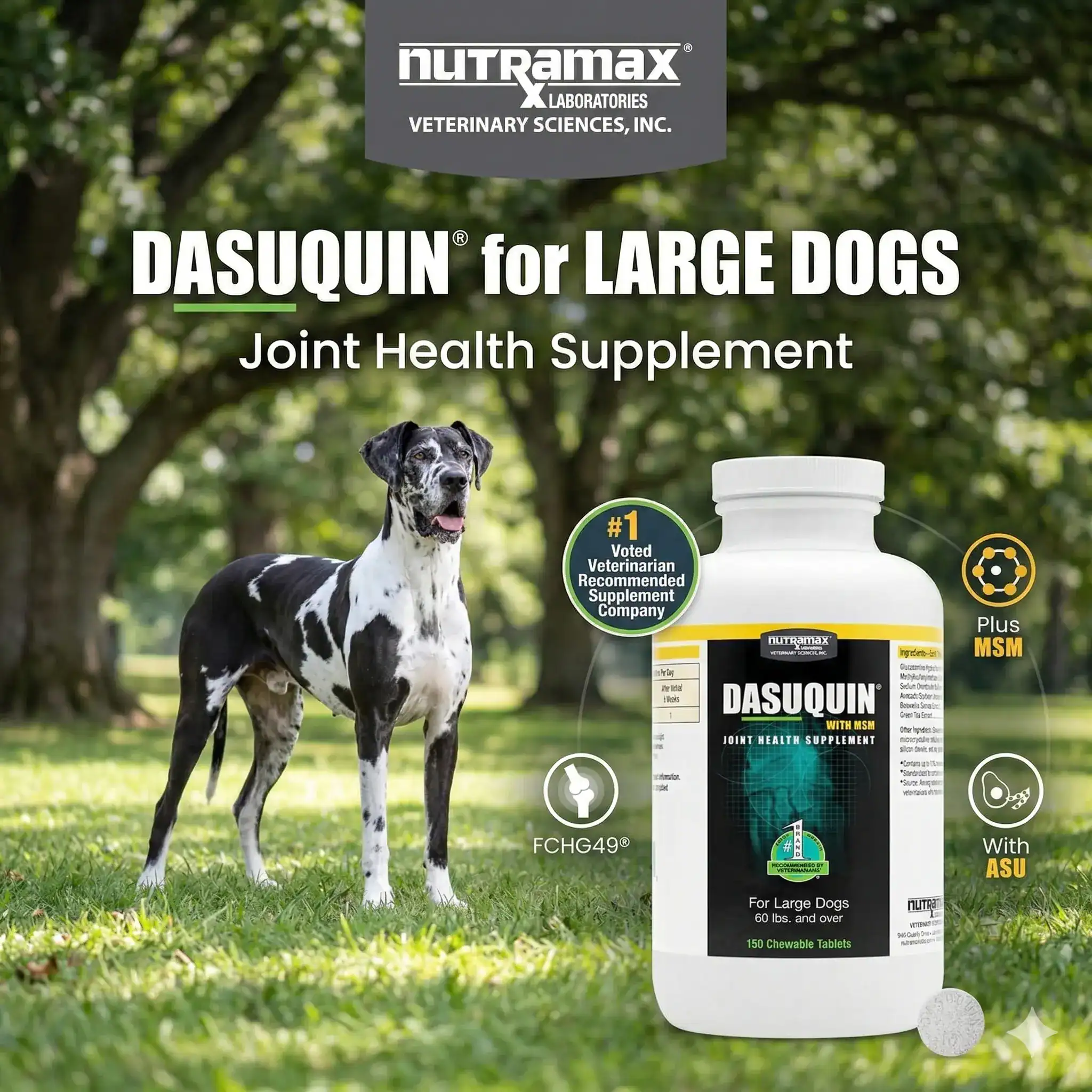
Nutramax Dasuquin with MSM Soft Chews for Dogs
Use for: Joint support is a recurring cost worth budgeting for, since hip dysplasia appears in both breeds and each loads its joints hard through years of running and field work.
Check price on Amazon🎯 Verdict: Purchase prices vary substantially by breeder, pedigree, location, and demand. The larger Weimaraner’s food and some weight-based veterinary expenses may be higher, but actual ownership costs depend heavily on the individual dog and the local veterinary market.
First-Time Owners
Neither is among the easiest choices for a first dog, though a prepared beginner can succeed with either. Both need substantial daily exercise, secure fencing, independence conditioning from week one, and an owner who keeps structure in place long after the puppy phase ends.
The Weimaraner is typically more demanding to physically manage, because of its larger size and intense problem-solving drive. Its size, sharp problem-solving, persistent adolescent testing, and documented isolation sensitivity mean handling mistakes carry more weight, and professional training is worth arranging before the puppy arrives rather than after problems appear.
The Vizsla asks for a similar commitment in a lighter, more physically manageable package. Its sensitivity rewards a gentle beginner, and its smaller size keeps physical management easier, though the exercise requirement and the need for company are every bit as real.
🎯 Verdict: The Vizsla’s smaller size is a practical advantage for some inexperienced owners, while the Weimaraner’s greater strength is the clearest disadvantage for a newcomer. Neither breed should be approached as an easy first dog.
Head-to-Head Scorecard
Ratings are K9Sphere’s editorial comparison based on the breed characteristics discussed in this guide, scored from 1 to 5 stars for a typical active home. A high Grooming Ease score means less coat work, and a high Physical Manageability score means the dog is easier to handle, transport, and control on lead.
Weimaraner
Vizsla
Reading the scores: Both max out on Exercise Demand and Grooming Ease, which captures the shape of owning either one. The Vizsla leads on Friendliness to Strangers and Physical Manageability, reflecting its lighter frame. Low Tolerance of Time Alone on both sides is the shared constraint that decides most placements.
Common Questions about Weimaraner vs Vizsla
These are the frequently asked questions buyers raise when comparing the two pointers.
What is the difference between a Weimaraner and a Vizsla?
Direct Answer: Colour and size. The Weimaraner is silver-grey and larger at 70 to 90 pounds, while the Vizsla is solid golden rust and lighter at 55 to 60 pounds.
Context: These two are continental pointing breeds in the AKC Sporting Group with similar outlines, velcro temperaments, and high exercise needs. The Weimaraner came from the German court of Weimar for large game, while the Vizsla is a Hungarian bird dog.
Management: Judge by coat colour first, since the two share no overlapping shades, then confirm with eye colour and size.
Are there silver or grey Vizslas?
Direct Answer: Grey and silver are not recognized Vizsla coat colours.
Context: The breed standard calls for a shaded golden rust coat. A genuinely silver dog is far more likely to be a Weimaraner or a mix, and searches for silver Vizslas usually reflect confusion between the two breeds.
Management: Ask closer questions about pedigree, registration, and parentage before going further with any advertisement for a rare silver Vizsla.
Which breed is bigger?
Direct Answer: The Weimaraner, by a clear margin in both sexes.
Context: Males run 25 to 27 inches and 70 to 90 pounds against the Vizsla’s 22 to 24 inches and 55 to 60 pounds. These two are lean and deep-chested, but the Weimaraner carries noticeably more substance.
Management: Factor the size difference into walking equipment, car space, boarding costs, and whether you can physically manage the dog on lead.
Which one lives longer?
Direct Answer: Published estimates generally run longer for the Vizsla.
Context: The Vizsla is commonly given as 12 to 14 years and the Weimaraner as 10 to 13. Breed-level figures are estimates rather than a prediction for any individual dog, and screening and body condition matter more than the label.
Management: Keep either dog lean, buy from breeders who screen the parents, and schedule senior veterinary monitoring from around age seven, since cancer and organ disease become more likely in any breed with age.
Which breed has more health testing?
Direct Answer: The Weimaraner, whose parent-club panel is noticeably broader.
Context: The Weimaraner Club of America CHIC protocol requires hip evaluation, thyroid testing, annual eye certification, and DNA tests for hyperuricosuria, hypomyelination, and spinal dysraphism. The Vizsla Club of America framework includes hip evaluation, autoimmune thyroiditis testing, and annual eye certification, with additional optional screens.
Management: Ask for the certificates themselves with either breed, since a shorter official list means more of the work falls on the questions you ask.
Do Weimaraners and Vizslas get separation anxiety?
Direct Answer: Each is a people-focused breed that can struggle with long periods alone, and separation-related problems are well documented in both.
Context: Each was developed to work closely alongside a handler all day, and that wiring persists indoors. A Weimaraner in acute distress may howl, destroy furniture, or injure itself trying to escape, and Vizslas are also notably people-oriented. Individual tolerance varies considerably rather than following a fixed number of hours.
Management: Practise brief calm departures from the first week, build duration gradually, and arrange a midday walker or daycare if your working day is long.
Which breed sheds more?
Direct Answer: Each sheds lightly, and neither is high-maintenance.
Context: The Weimaraner’s smooth coat sheds modestly and needs little more than a weekly wipe. The Vizsla sheds continuously year-round without a seasonal blowout, and its short hairs tend to weave into fabric.
Management: Use a rubber curry comb or grooming glove weekly on either breed rather than an undercoat rake, and pay more attention to the drop ears than to the coat itself.
How much exercise does each breed need?
Direct Answer: Both need substantial daily work, roughly one to two hours for the Weimaraner and 60 to 90 minutes for the Vizsla.
Context: Treat those as practical guidelines rather than minimums, since drive varies by individual and line. Physical effort alone does not settle either breed without mental work alongside it.
Management: Combine running, swimming, or retrieving with scent games and short training sessions, and avoid repetitive high-impact distance running while the dog is still growing and ask your veterinarian when it is appropriate.
Can either breed live in an apartment?
Direct Answer: Either can with a genuinely committed owner, but neither is an easy apartment dog.
Context: The constraint is not floor space but daily output and vocal tendency when bored or stressed. Each does better with a securely fenced yard, and both can disturb neighbours if under-exercised.
Management: Commit to daily vigorous outdoor work, build alone-time tolerance gradually, and use a walker or daycare during long absences.
Which is better with strangers?
Direct Answer: The Vizsla, which is friendlier by default.
Context: The Weimaraner is alert and reserved with unfamiliar people, a quality many owners value as watchfulness. The Vizsla is rarely aloof and generally greets visitors warmly, though it will still bark to announce them.
Management: Socialize either breed broadly from puppyhood, since early exposure determines whether natural caution becomes confidence or wariness.
Which breed costs more?
Direct Answer: Costs vary more by breeder and local market than by breed.
Context: Quoted breeder prices for the two overlap and shift with pedigree, location, and demand. A working dog’s diet is a real line item, the larger Weimaraner has the higher daily calorie requirement, and some weight-based veterinary expenses scale with it too.
Management: Budget for insurance with either breed, and treat a bargain price as a prompt to ask closer questions about health testing.
Are they good with cats and small pets?
Direct Answer: Neither is a safe default, since both retain strong hunting instincts.
Context: Individual prey drive varies, and either breed may be challenging around cats or other small animals. Both will point at birds and chase small moving animals, and socialization, training, and management matter more than the breed label.
Management: Introduce slowly and supervise closely, and keep either breed leashed or inside secure fencing where small animals are around.
Which is right for a first-time owner?
Direct Answer: The Vizsla, though neither is genuinely beginner-friendly.
Context: The Vizsla’s smaller size and softer temperament make mistakes more recoverable. The Weimaraner’s size, sharp problem-solving, and documented isolation sensitivity raise the stakes on every handling decision.
Management: Be honest about your daily schedule and exercise capacity, and arrange training support before either puppy arrives.
The Quick Decision Shortcut
Deciding between a Weimaraner and a Vizsla comes down to a few honest questions, so use this self-check before the full verdict. Each has one big pro and one obvious con.
🐕 Choose the Weimaraner if
- You want the larger dog with a watchful, reserved edge.
- You value the three breed-specific DNA disease tests in its framework.
- You can manage a lean athlete of 70 to 90 pounds.
- You want the silver coat and amber or blue-grey eyes.
🐕 Choose the Vizsla if
- You prefer a lighter dog that is easier to handle.
- You want a friendlier default toward visitors.
- You value the longer published lifespan.
- You will train gently with a sensitive dog.
Final Verdict
There is no universal winner here, because these two share the shape of a working pointer and split on the details that decide daily life. These two are velcro athletes that need real work, secure fencing, and company through most of the day.
The underlying decision is scale and paperwork. The Weimaraner gives you a bigger, more watchful dog with the reassurance of a screening panel that includes three DNA tests, and asks for more physical management and a harder look at bloat risk.
The Vizsla gives you a lighter, friendlier athlete with a longer published lifespan, and asks for a gentler training hand and closer questions at the point of purchase. Match the breed to the size you can handle and the screening you want behind your puppy.
🏆 Bottom line: The Weimaraner is the larger, more reserved sporting breed, with a CHIC framework that adds three breed-specific DNA disease tests. The Vizsla is the smaller, generally more socially outgoing one, with its own multi-part screening recommendations and a longer published lifespan. Both need substantial exercise, training, and companionship.
Personal Observation
💭 From my own experience
My rescue Rambo needs a full hour of hard running every day before he will settle down inside. He is not even a hunting breed. Both of these dogs need more than he does.
On a breed page, “one to two hours a day” looks easy to read. It is much harder to actually do. You have to do it before work, on cold mornings, and on days when you really do not feel like it.
So ask yourself two simple questions. Will someone be home for most of the day? And will you still walk the dog when it is raining? If you can say yes to both, either breed can work. If not, pick a calmer breed.
Read More. For the full individual guides, see our Weimaraner guide and our Vizsla guide.
If you are weighing other pointing breeds, our German Shorthaired Pointer guide and Pointer guide cover the closest alternatives, and the Labrador Retriever guide covers the more forgiving end of the Sporting Group.
Both breeds here benefit from our roundup of the best brushes for shedding dogs, and a marine lipid supplement can help a short-coated dog through dry winter months.
Editorial Disclaimer: This article is for informational and educational purposes only. It does not constitute veterinary advice, medical diagnosis, or treatment recommendations. Always consult a licensed veterinarian before making health-related decisions for your pet.
Accuracy Notice: While every effort has been made to ensure the information presented here is accurate and current, breed information evolves and individual dogs vary. If you spot a factual error or have updated information from a verified source, please contact us so we can review and update.
Product Disclosure: Product recommendations are based on independent research and editorial judgment. Individual results may vary. K9Sphere participates in the Amazon Services LLC Associates Program and other affiliate programs, and earns from qualifying purchases at no additional cost to you.
Last reviewed: September 2026. Article reviewed for accuracy on the date shown above.


