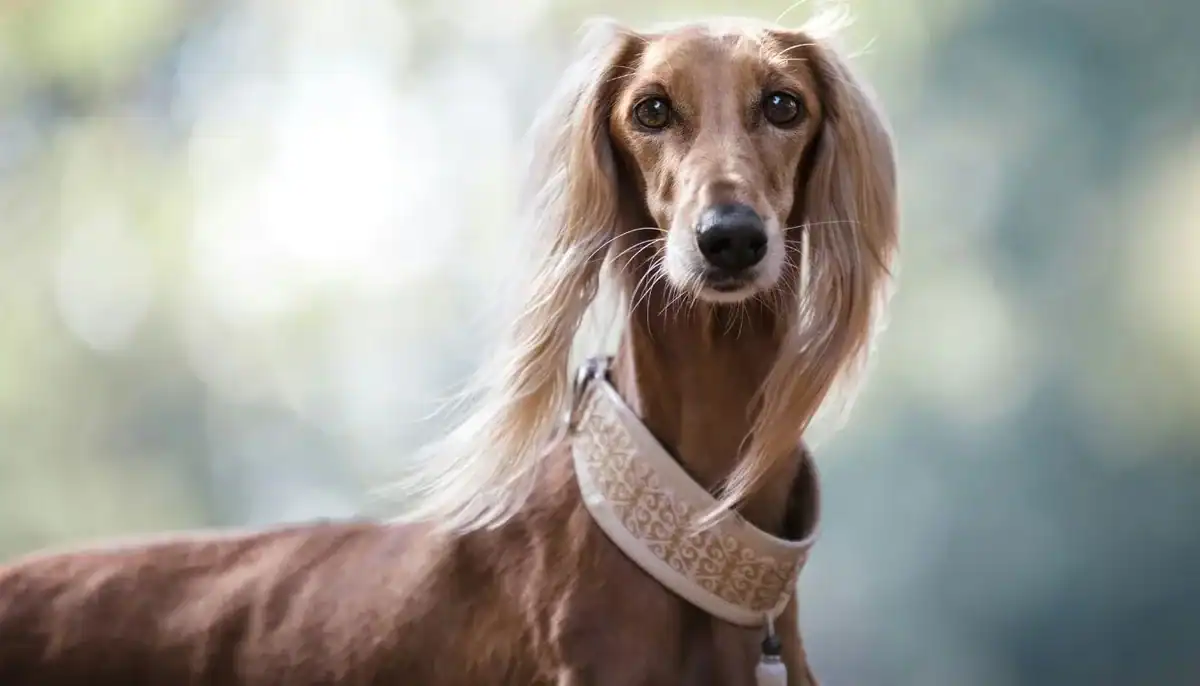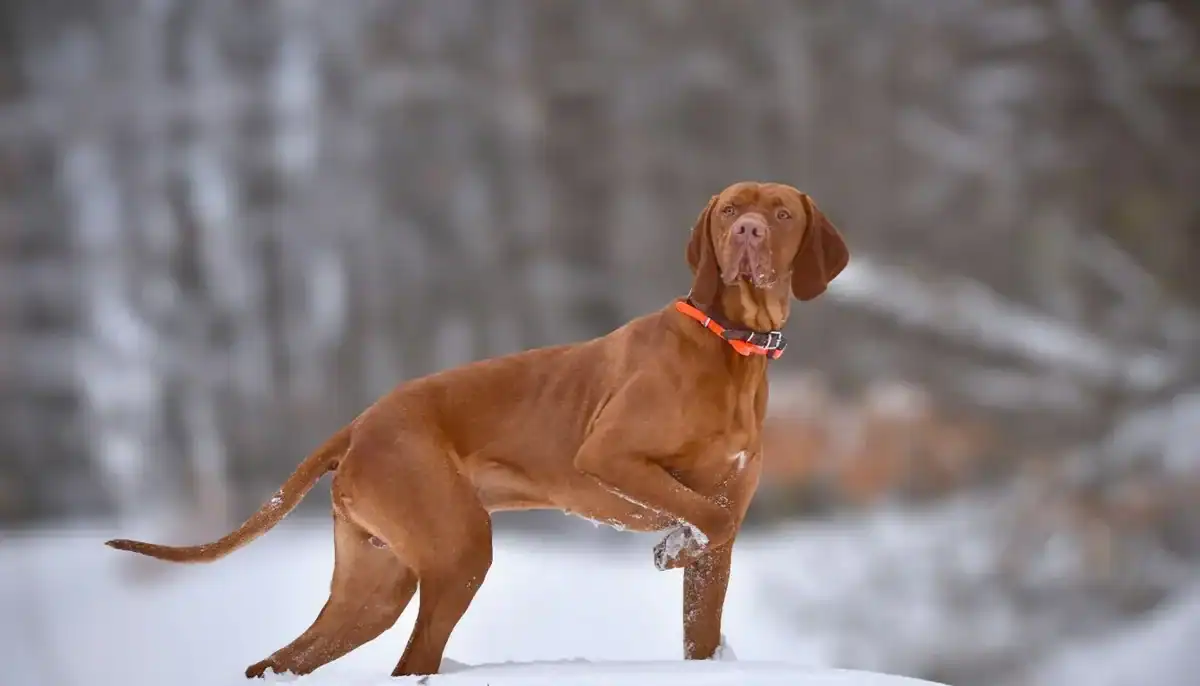
The Vizsla is a Hungarian sporting dog bred to point and retrieve game, and to do it while rarely leaving its handler’s side.
Known for its solid golden rust coat, it pairs serious athletic stamina with a people-focused streak that sets it apart from more independent gundogs.
This vizsla breed guide draws on health data from the Vizsla Club of America, CHIC testing requirements, and veterinary literature to outline exactly what ownership involves.
Active owners who enjoy structured outdoor work tend to get along best with this breed.
Households expecting an independent pet that settles quietly after a brief walk should review the daily demands honestly before deciding.
Affiliate Disclosure: K9Sphere is a participant in the Amazon Services LLC Associates Program. As an Amazon Associate, K9Sphere earns from qualifying purchases made through links in this article at no additional cost to you. Product recommendations are based on independent research and editorial judgment, not paid placement.
Breed Snapshot
📊 Vitals and Lifespan
Height
Males: 22–24 in (56–61 cm)
Females: 21–23 in (53–58 cm)
Weight
Males: 55–60 lb (25–27 kg)
Females: 44–55 lb (20–25 kg)
Lifespan
12–14 years
Breed Group
Sporting Group
Origin
Hungary
🇭🇺
⭐ Personality Traits
Ratings (1 to 5). This hunting companion balances high trainability against extreme energy and a strongly people-oriented personality.
History and Origin
The Vizsla has an ancient lineage rooted in the Carpathian Basin. Its story is intertwined with the history of the Hungarian state and the hunters who shaped the landscape over many centuries.
📌 800s: The Magyar Tribes
The Magyar tribes brought early hunting dogs into central Europe. These swift, agile dogs are considered ancestors of what would eventually become the magyar vizsla we know today. They hunted alongside riders on horseback.
📌 1800s: Refining the Pointer
Hungarian nobility and landowners refined the ancestors of the modern vizsla for falconry and netting. They needed a dog fast enough to pursue game but capable of pointing and retrieving without crushing the birds.
📌 1940s: Survival After the War
The breed nearly faced extinction during and after World War II. A handful of dedicated owners moved vizslas out of Hungary to preserve the lineage, and those dogs formed part of the foundation stock for populations outside Europe.
📌 1960: AKC Recognition
The American Kennel Club officially recognized the breed in 1960. Today the vizsla remains a strong competitor in field trials, and many working lines are tested through the North American Versatile Hunting Dog Association.
Physical Characteristics
The vizsla is lean and athletic, built for covering ground all day rather than raw power. Everything about its frame points to speed and stamina in the field.
🎨 The Golden Rust Coat
The coat is a defining feature. It is a solid golden rust color without major white markings. Short, dense, and lying close to the skin, it offers minimal insulation, so a quick daily brush keeps it healthy. The lack of an undercoat means they struggle in extreme cold.
🏗️ Elegant Build
This shorthaired pointer moves with elegant speed rather than bulk. The body is lean and muscular, with a deep chest for lung capacity. The eyes, nose, and nails naturally blend with the coat color, creating a striking uniform appearance.
Character and Personality
The vizsla is an energetic, affectionate breed, and understanding its temperament is an important factor in deciding whether it fits your home. They are not independent dogs that entertain themselves in the backyard.
🧲 The Velcro Dog
These dogs earn their velcro nickname and a reputation for being clingy, preferring to be in whatever room you are in. That devotion makes them a true household companion and family dog, but it also means long days alone do not suit them.
🧠 Sensitive Trainability
This is a highly intelligent breed that learns quickly, though it does not take hard corrections well. They thrive on positive reinforcement and clear boundaries. That intelligence cuts both ways, since they pick up bad habits as fast as good ones.
🔥 Intense Energy
A high energy level defines the breed. Without an adequate physical outlet, they tend to redirect that energy into destructive habits around the house.
🦅 Versatile Drive
The hunting instinct remains fully intact. They will point at birds in the yard and chase small moving objects. While they lack the sharp intensity of a terrier, their drive means off-leash work in open areas requires excellent recall training.
Screening and Conditions
Veterinary Disclaimer: The information in this article is for educational purposes only and is not a substitute for professional veterinary advice, diagnosis, or treatment. K9Sphere’s authors are experienced dog owners, not licensed veterinarians. Always consult a qualified DVM regarding any health concerns about your pet. Never disregard professional veterinary advice or delay seeking it because of something you have read on this site.
Health Information Sources: Data compiled from:
- Vizsla Club of America CHIC-required screening protocols
- American Kennel Club breed reference and standard
- Orthopedic Foundation for Animals (OFA) joint and eye evaluations
Always consult your licensed DVM for personalized medical advice.
This breed generally enjoys robust health, but it is prone to several inherited conditions. A reputable breeder will provide documentation of health clearances for both parents before a puppy goes home.
Common Health Risks
🔴 Hip Dysplasia
What to watch for: Limping, reluctance to jump or climb stairs, and stiffness when rising after rest. This joint problem can seriously affect an active dog.
Screening: Reputable breeders provide OFA or PennHIP joint evaluations for both parents. Keeping the dog lean and discussing joint care with your veterinarian as it enters adulthood both help protect the joints.
🟡 Epilepsy
What to watch for: Unexplained seizures, which typically begin between two and five years of age. Epilepsy is a neurological condition that varies in severity.
Management: Consult your vet promptly if a seizure occurs. Medication controls seizures well in many affected dogs, allowing them to lead normal lives.
🟡 Eye Disorders
What to watch for: Progressive retinal atrophy (PRA) and entropion, an inward rolling of the eyelid. Signs include night blindness or constant eye irritation.
Screening: An annual exam by a veterinary ophthalmologist supports early detection, and breeding stock should hold OFA eye clearance.
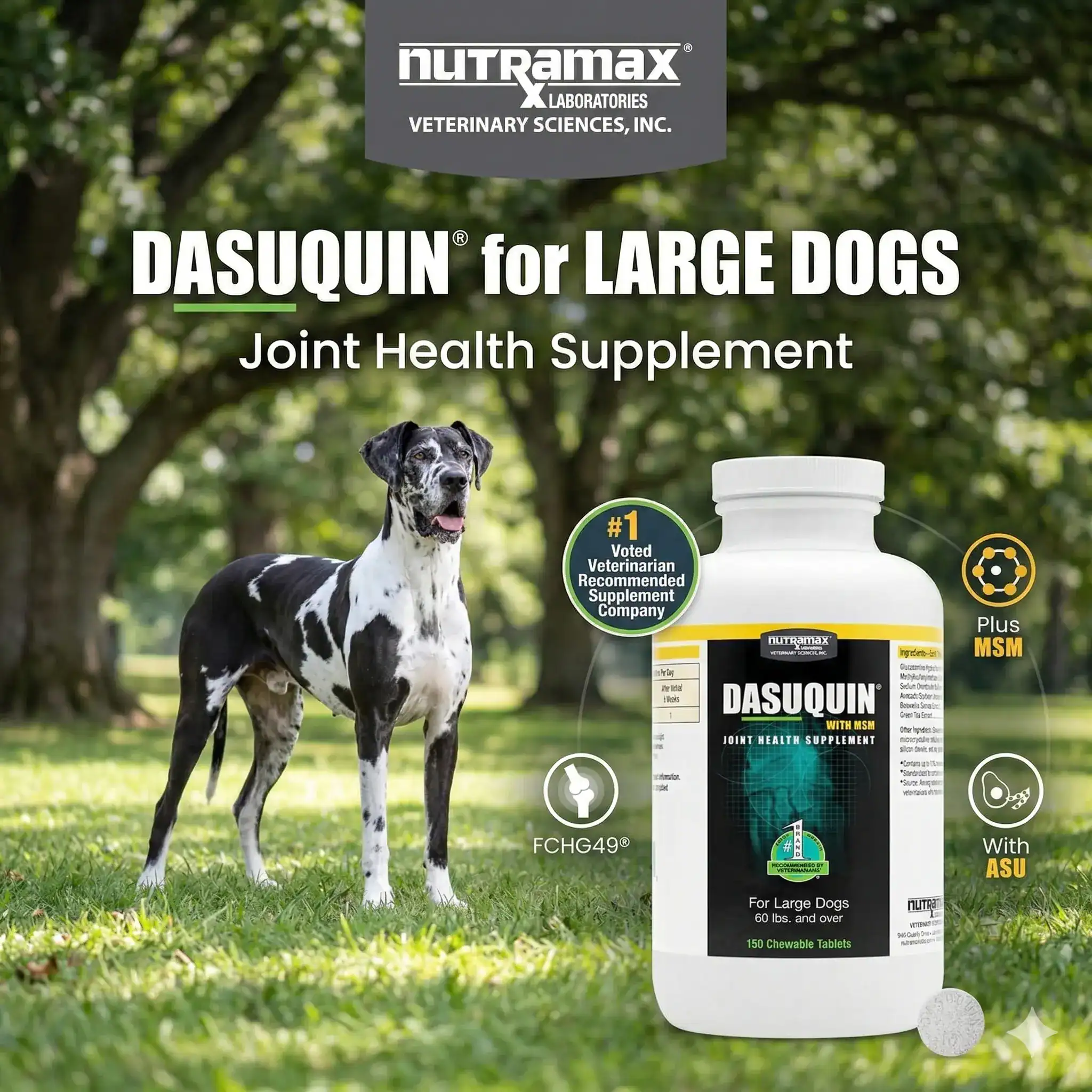
Nutramax Dasuquin with MSM Soft Chews
Use for: Joint support in active sporting breeds prone to hip issues. Combines glucosamine, chondroitin, and MSM to support cartilage integrity from early adulthood onward.
Check price on AmazonGrooming and Coat Care
The coat is exceptionally easy to manage. They shed lightly but continuously year-round. A weekly brush with a rubber curry comb or grooming glove removes dead hair and distributes skin oils, and they do not carry a strong dog odor.
You rarely need to bathe them unless they roll in something unpleasant outdoors. Wiping them down with a damp cloth after a field run is usually enough. Keep the nails trimmed short to prevent paw discomfort, and clean the drop ears weekly to prevent infections.
For dogs that get dry skin during the winter months, adding a quality marine lipid to the diet can help. We cover good options in our guide to Zesty Paws Salmon Oil.
Exercise and Living Needs
Most vizsla owners plan on significant physical and mental activity every day, since a short walk around the block will not be enough. They need 60 to 90 minutes of vigorous activity, ideally involving off-leash running, swimming, or retrieving.
A house with a securely fenced yard is the best environment. Apartment living is highly challenging because of their exercise needs and their tendency to vocalize when bored, and it demands a major commitment to outdoor activity.
Mental enrichment matters as much as physical exercise. Puzzle feeders, scent games, and short training sessions all help a restless vizsla settle, and owners who work away from home often pair this with a way to check in on the dog during the day.
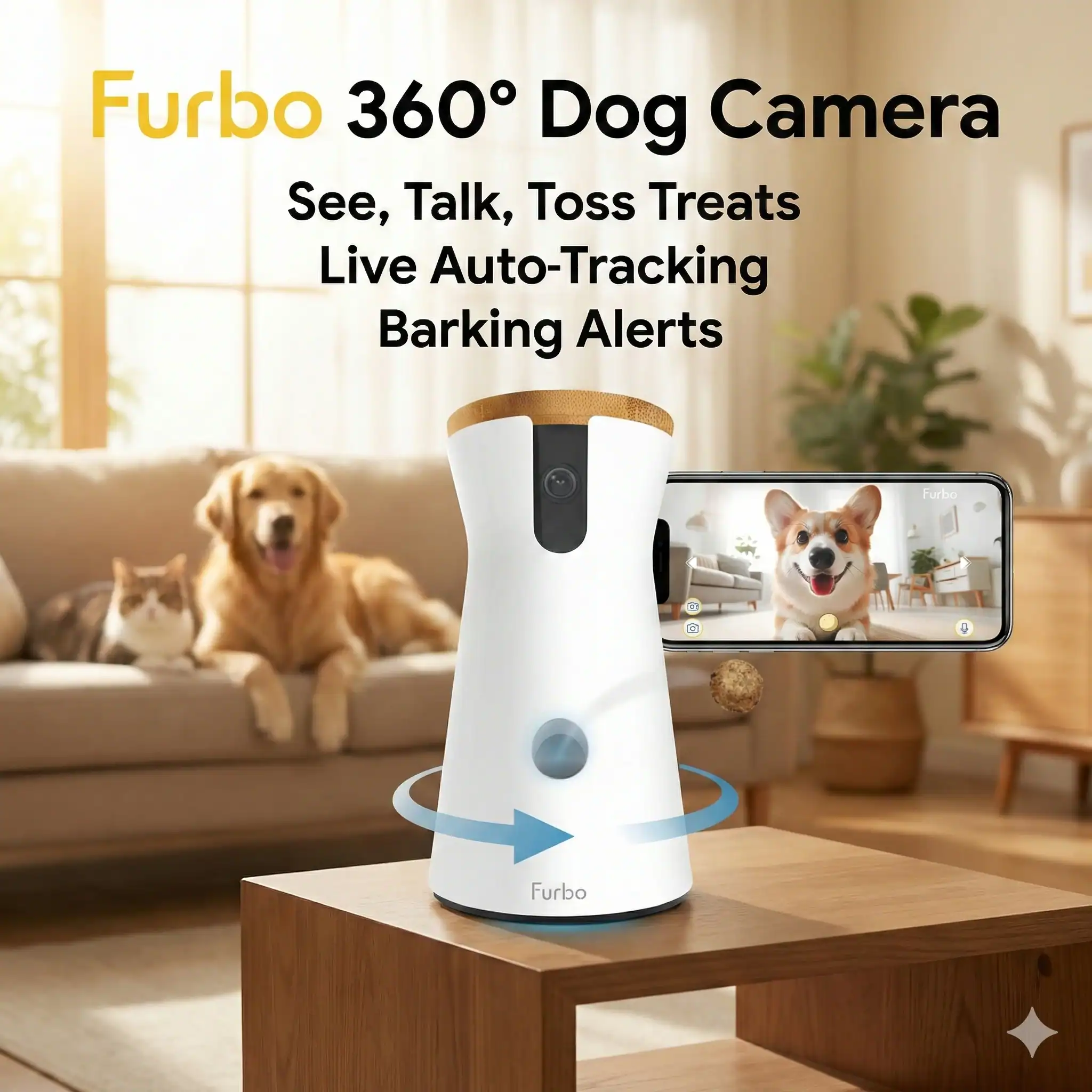
Furbo 360° Dog Camera
Use for: Monitoring a people-oriented, vocal breed like the vizsla when you must leave the house. The two-way audio interrupts alert barking early, and the 360-degree pan helps catch separation pacing or boredom behavior before it escalates.
Check price on AmazonNutrition & Diet
A highly active sporting dog needs high-quality dog food built around animal protein. Puppies should eat a designated puppy formula to support controlled growth. Avoid overfeeding, since excess weight places severe strain on the joints.
Adult feeding portions should scale with activity level. On days they hunt or run for hours, they burn more calories than on rest days. Feed two measured meals daily rather than leaving food out, which also helps reduce the risk of gastric dilatation-volvulus (bloat).
Training
Training should begin the day the puppy arrives. Early socialization with various people, environments, and other animals builds confidence, and basic obedience is the foundation for a well-behaved adult.
Because they are sensitive, harsh corrections will shut them down. Use positive reinforcement, treats, and enthusiastic praise. Crate training is highly recommended to give them a safe space and to help them cope when you leave the house.
Vizsla vs Weimaraner vs German Shorthaired Pointer vs Pointer
Prospective owners comparing sporting breeds often weigh the Weimaraner, the German Shorthaired Pointer, and the Pointer against the vizsla. Each offers distinct traits in the field and at home.
| Attribute | Vizsla | Weimaraner | German Shorthaired Pointer | Pointer |
|---|---|---|---|---|
| Weight | 44–60 lb (20–27 kg) | 55–90 lb (25–41 kg) | 45–70 lb (20–32 kg) | 45–75 lb (20–34 kg) |
| Original Purpose | Pointing and retrieving | Big-game hunting | Versatile hunting | Upland bird pointing |
| Energy Type | Extreme endurance | High, intense | High, sustained | High, field endurance |
| Trainability | Eager, sensitive | Smart, stubborn | Eager, focused | Independent worker |
| Grooming | Minimal, short coat | Minimal, short coat | Minimal, dense coat | Minimal, short coat |
| Reaction to Strangers | Alert barker | Protective | Alert barker | Friendly or aloof |
| First-Time Owner? | If active | Requires firm handling | If active | Requires field work |
| Common Health Risks | Hip dysplasia, epilepsy, eye disorders | Bloat, hip dysplasia, thyroid issues | Hip dysplasia, eye disorders, bloat | Hip dysplasia, thyroid issues, entropion |
| Living Space | House with yard | House with large yard | House with yard | House with yard |
One pro of the vizsla is its softer, deeply affectionate nature inside the home. A notable con is that it copes less well with being left alone than the more independent Pointer. Choose the vizsla if you want a constant shadow, or the Weimaraner if you prefer a larger, more protective dog.
Common Questions about the Vizsla
What is a Vizsla dog?
Direct Answer: The vizsla is a medium-sized Hungarian sporting breed bred to point and retrieve game.
Context: Often called the Hungarian Vizsla or Hungarian pointer, it is known for a solid golden rust coat, high endurance, and a strong attachment to its people. It belongs to the AKC Sporting Group.
Management: Treat it as an active hunting companion rather than a low-maintenance pet, and plan for daily vigorous exercise.
How do you pronounce Vizsla?
Direct Answer: It is most commonly pronounced VEESH-luh in English.
Context: The name is Hungarian, and the “zs” makes a soft “zh” sound, so you will also hear VEEZH-luh. Both are widely understood among owners.
Management: Either pronunciation is fine in everyday conversation. The plural is usually written vizslas.
How fast can a Vizsla run?
Direct Answer: A fit adult vizsla can reach roughly 30 to 40 miles per hour in short bursts.
Context: Built for endurance as much as speed, they can also sustain a steady running pace far longer than most companion breeds, which is why they make excellent jogging and trail partners.
Management: Wait until growth plates close, usually around 18 months, before high-impact distance running, and build mileage gradually.
Are Vizslas good with children?
Direct Answer: Yes, they are generally excellent and tend to be gentle with children in their own family.
Context: Their high energy means a young dog might accidentally knock over a toddler during play. They are sturdy but sensitive, so children must be taught respectful handling.
Management: Always supervise interactions between toddlers and dogs, and teach each kid to play structured games like fetch rather than roughhousing.
How long can a Vizsla be left alone?
Direct Answer: Most adults manage about four to six hours once they are trained for it, but they are not suited to long daily absences.
Context: This is a people-focused breed, so a vizsla left alone too long without an outlet may bark, pace, or chew. Puppies need far shorter stretches.
Management: Build alone-time gradually from puppyhood, use a crate as a safe space, and tire the dog out before you leave. A midday walk or dog walker helps for full workdays.
Do Vizslas shed a lot?
Direct Answer: No, but they do shed continuously.
Context: They have no thick undercoat to blow out seasonally. Instead they drop small, short hairs year-round that can weave into fabrics.
Management: A weekly brushing session with a rubber curry comb minimizes loose hair around the home.
How much does a Vizsla puppy cost?
Direct Answer: Expect USD 1,500 to USD 3,000 for a puppy from a reputable breeder. Pricing varies by country, with UK, Canada, and Australia rates differing.
Context: Rescue dogs typically cost USD 300 to USD 500. Lifetime costs include high-quality food, joint supplements, and veterinary care, which can average USD 1,500 to USD 2,500 a year.
Management: Budget for the upfront price and consider pet insurance early to help cover emergencies or inherited conditions.
How much exercise does a Vizsla need?
Direct Answer: At least 60 to 90 minutes of vigorous activity every day.
Context: This is a working athlete, so a walk around the block is not enough. They need to run, retrieve, or take part in active sports.
Management: Schedule off-leash running in safe areas, trail running, or fetch sessions daily, and add mental training to help burn energy.
What are common Vizsla health problems?
Direct Answer: Hip dysplasia, epilepsy, and eye disorders are the most documented issues.
Context: While generally robust, these genetic conditions appear in the breed, and cancer is also a concern in the senior years.
Management: Source puppies from breeders who provide OFA clearance for hips and eyes, and keep up regular vet checkups.
Are there silver or gray Vizslas?
Direct Answer: No, silver or gray is not a recognized vizsla color, and searches for it usually reflect confusion with the Weimaraner.
Context: The breed standard calls for solid golden rust. A genuinely silver dog is most likely a Weimaraner or a mix, not a purebred vizsla.
Management: If a breeder advertises rare silver vizslas, treat it as a red flag and ask for full pedigree and parent health clearances.
Finding a Puppy
Sourcing a healthy puppy takes patience. For reliable dog breed information and a breeder directory, start with the Vizsla Club of America, which lists breeders who follow strict health-testing protocols. A responsible breeder will ask about your lifestyle and setup to be sure this active dog is the right fit.
Avoid buying from unverified online sale ads in the USA, where unscrupulous sellers skip essential joint and eye screening and leave you with large veterinary bills later. If you would rather adopt, search for a breed-specific rescue near you, since many dogs enter rescue simply because their previous owners underestimated the exercise commitment.
Personal Observation
💭 Personal Observation
My own Labrador, Bruno, greeted everyone with casual warmth, and the vizsla seems to want that same connection but at a much higher intensity. Rambo, one of my rescues, needs a solid hour of running to settle indoors, which closely matches the physical outlet this Hungarian pointer needs to avoid destructive habits. The thing I have learned over the years is that trying to force an independent lifestyle onto such a people-oriented dog creates stress for everyone involved. If you want a dog that lives in your personal space and matches your running pace, the fit is excellent.
Conclusion
The vizsla offers active handlers a striking, deeply loyal partner capable of immense physical output. Its intelligence and affectionate nature make it a wonderful companion for people who can build a dog into every part of daily life.
The trade-off is the high need for daily activity and the struggle with long periods alone. This is a dog that needs to be part of your daily routine, not an occasional companion. For households wanting a calmer large dog, the Labrador Retriever offers a more forgiving energy level.
📋 Before bringing one home, run this 4-step pre-buying check
- Exercise commitment. Can you guarantee 60 to 90 minutes of vigorous running every day?
- Isolation tolerance. Is someone home often enough to prevent separation anxiety?
- Training patience. Are you prepared to use positive, gentle training rather than harsh correction?
- Living space. Do you have a securely fenced area for safe off-leash running?
If any answer is no, reconsider the breed.
Editorial Disclaimer: This article is for informational and educational purposes only. It does not constitute veterinary advice, medical diagnosis, or treatment recommendations. Always consult a licensed veterinarian before making health-related decisions for your pet.
Accuracy Notice: While every effort has been made to ensure the information presented here is accurate and current, breed information evolves and individual dogs vary. If you spot a factual error or have updated information from a verified source, please contact us so we can review and update.
Product Disclosure: Product recommendations are based on independent research and editorial judgment. Individual results may vary. As an Amazon Associate, K9Sphere earns from qualifying purchases at no additional cost to you.
Last reviewed: May 2026. Article reviewed for accuracy on the date shown above.