
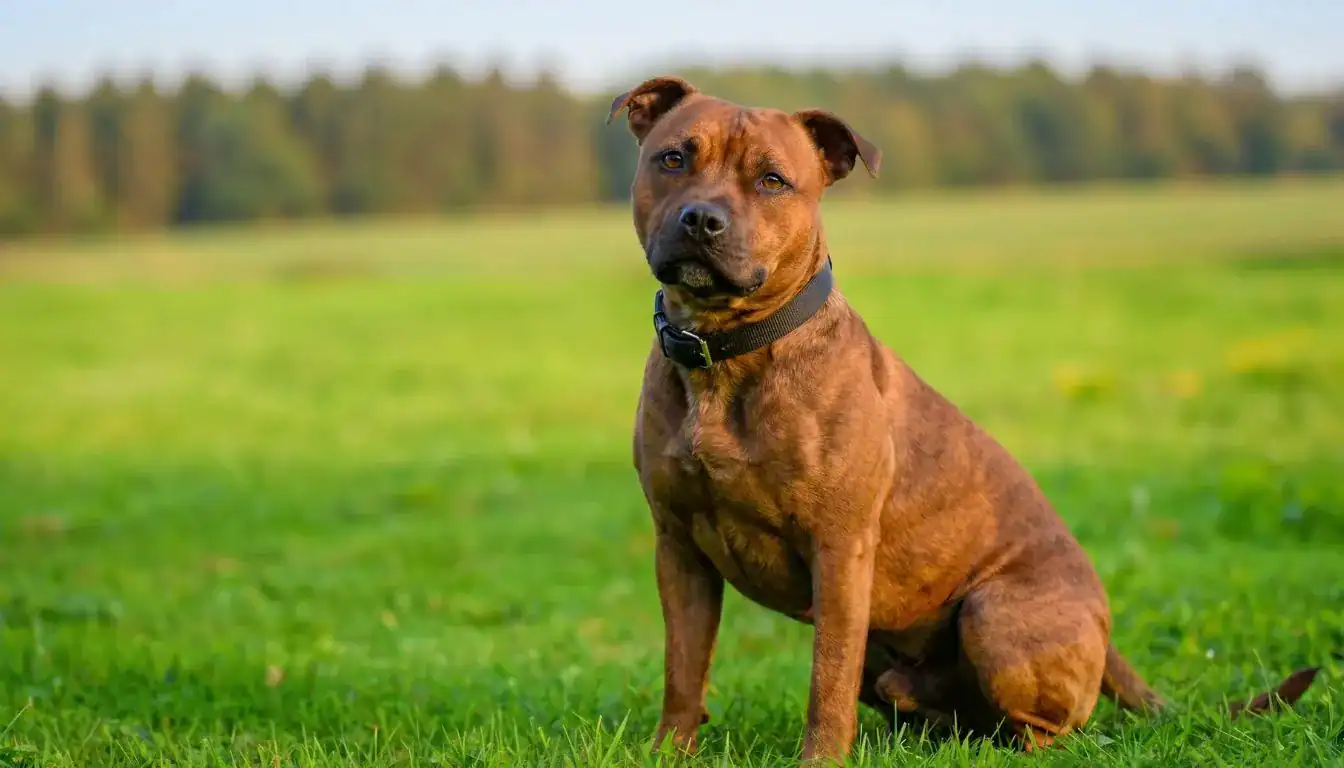
The Staffordshire Bull Terrier is a small-to-medium British dog breed developed in the 19th-century Midlands as a bull-and-terrier cross, now kept almost exclusively as a fiercely loyal family companion. These two contrasting aspects, a blocky head and heavily muscled frame alongside an affectionate indoor nature, often project an intimidating presence to strangers, though their actual personality is famously soft and deeply attached to their household.
This striking contrast between physical power and emotional sensitivity leads to frequent misunderstandings. The Staffordshire Bull Terrier breed is recognized by the American Kennel Club in the medium-sized Terrier Group, and is widely regarded as an exceptional short-coated companion for active families. However, their ingrained prey drive and intense energy demands become a real problem for passive handlers. Much of their behavior depends on consistent, confident handling from day one.
The pro side of this breed is profound loyalty; the major con is that these dogs do not thrive when left alone in a yard for long hours. In the UK and USA alike, the Staffordshire Bull Terrier requires indoor living, constant human interaction, and a structured outlet for their formidable jaw strength and physical drive.
While their undeniable devotion makes them a wonderful addition to the right home, their care requirements are often underestimated. Chronic allergies, the need for positive early socialization, and a strong chewing drive that can overwhelm standard toys are realities every handler should face proactively.
This guide draws on AKC and UK Kennel Club breed standards, OFA screening protocols for hip dysplasia, and veterinary research into L-2-Hydroxyglutaric Aciduria and canine atopic dermatitis to provide realistic terrier dog breed information for handlers considering this powerful companion in a modern home. The content covers 12-to-14-year lifespan expectations, joint supplement protocols, and the breed’s historical relationship with the American Pit Bull Terrier and related bull-and-terrier types.
Affiliate Disclosure: K9Sphere is a participant in the Amazon Services LLC Associates Program. As an Amazon Associate, K9Sphere earns from qualifying purchases made through links in this article at no extra cost to you.
Breed Snapshot
📊 Vitals and Lifespan
Height
Males: 14-16 inches (36-41 cm)
Females: 14-16 inches (36-41 cm)
Weight
Males: 28-38 lb (13-17 kg)
Females: 24-34 lb (11-15 kg)
Lifespan
12-14 years
Breed Group
Terrier (AKC)
Terrier (UKC)
Origin
United Kingdom
🇬🇧
⭐ Personality Traits
Ratings (1 to 5). This breed packs immense physical power and intense prey drive into a compact frame, balanced by an extraordinary affection for their human family.
History and Origin
The origins of this breed are rooted in a harsh historical reality. To understand their modern personality, one must understand the environment that shaped their specific genetic traits.
📌 19th Century: The Foundation
Working-class men in the British Midlands crossed old-style Bulldogs with local terriers. The goal was to create a faster, more agile dog that retained immense jaw strength. These early “bull and terrier” crosses were historically used for blood sports.
📌 1835: Cruelty to Animals Act
The Cruelty to Animals Act banned bull-baiting in the UK. While dog fighting remained active underground for years, responsible breeders eventually transitioned their focus away from combat and toward companionship, selecting exclusively for human-friendly traits.
📌 1935: UK Kennel Club Recognition
The breed was officially recognized by the Kennel Club in the UK. This marked a definitive shift, establishing them firmly as a respectable show dog and loyal household companion rather than a combatant.
📌 1974-1975: American Recognition
The American Kennel Club formally recognized the breed in 1974, placing it in the Terrier Group, followed by the United Kennel Club in 1975. They quickly gained a dedicated following in the US for their courageous but deeply affectionate nature.
📌 Modern Era: Household Companion
Today, the breed thrives globally as an indoor companion. They are celebrated for their remarkable patience with children in their own household, entirely shedding their historical sporting role while retaining their muscular athleticism.
Modern breeders focus heavily on preserving the breed’s stable disposition around humans, ensuring the “Staffy” remains a trustworthy and enthusiastic household companion. With an average Staffordshire Bull Terrier lifespan of 12 to 14 years, responsible lines focus on maintaining health and stable temperament across multiple generations. Staffordshire Bull Terriers also retain moderate athletic drive from their working past, which is why proper exercise outlets remain important even in today’s companion-focused lines.
Physical Characteristics
Their physical structure is defined by raw power packed into a relatively small space. They are agile and surprisingly fast, capable of explosive bursts of speed. An adult Staffordshire Bull Terrier stands 14 to 16 inches tall and weighs 24 to 38 pounds, with males at the heavier end of that weight range.
🏗️ Muscular Density
A healthy Staffordshire Bull Terrier is incredibly dense. They weigh significantly more than their height suggests, with a broad chest, a thick neck, and a low center of gravity that makes them difficult to move if they decide to brace themselves.
🎨 The Smooth Coat
Their fur is smooth, close-lying, and minimal in length. It offers very little protection against extreme weather, leaving them vulnerable to both intense sun and cold temperatures. Common colors include red, fawn, white, black, or blue, often combined with white patches.
Character and Temperament
This is a dog of emotional extremes. They love their human households with an intensity that borders on clinginess, yet they possess a terrier’s unwavering stubbornness.
🧠 The Nanny Myth
They are famously gentle with children in their own home, leading to the nickname “nanny dog.” However, their sheer physical strength means they can easily knock over a toddler in a moment of enthusiasm, and a startled dog may bite reflexively even when it has no intent to harm. Adult supervision during any interaction between a dog and a young kid is always critically important.
🛡️ Dog Reactivity
While human-aggression is completely against the breed standard, dog-reactivity is a known risk with a strong genetic component. Many are perfectly fine as single dogs but may struggle to tolerate unfamiliar dogs challenging them. Early, positive socialization helps mitigate this terrier trait.
👨👩👧 Velcro Bonding
They crave physical contact. This breed does not just want to be in the same room as you; they want to be touching you. This deep attachment makes them wonderful companions but prone to panic behavior if left alone frequently.
⛔ High Arousal
They transition from sleep to full-speed excitement in seconds. When the doorbell rings or a squirrel crosses the yard, their drive kicks in immediately. Handlers must teach them how to calm down and regulate their own intensity.
Screening and Conditions
Veterinary Disclaimer: The information provided in this article is for educational purposes only and is not intended as a substitute for professional veterinary advice, diagnosis, or treatment. Always consult a licensed veterinarian for any health concerns about your pet.
Health Information Sources: Health data compiled from:
- OFA (Orthopedic Foundation for Animals): Required genetic screening protocols
- AKC Canine Health Foundation: Research on L2HGA and dermatological issues
Always consult your licensed DVM for personalized medical advice.
While generally robust, the breed is susceptible to specific genetic disorders and chronic dermatological conditions. Responsible breeders test for these before breeding.
Common Inherited Conditions
🔴 L-2-Hydroxyglutaric Aciduria (L2HGA)
What to watch for: A metabolic disorder affecting the central nervous system. Symptoms include epileptic seizures, “wobbly” gait, limb stiffness, and altered behavior. Onset varies widely, with a typical range from around 6 months to 2 to 3 years of age; in some affected dogs, symptoms may not appear until 4 to 7 years old.
Screening: A reliable DNA test is available. Never purchase a young dog without seeing clear results for both parents.
🔴 Hereditary Cataracts (HC)
What to watch for: An inherited condition causing progressive opacity in the lens of the eye. It remains a primary screening target because it can lead to total blindness at a young age if untreated.
Screening: Both a DNA test for the specific HC gene mutation and an annual examination by a veterinary ophthalmologist are standard for responsible breeding pairs.
🔴 Hip and Elbow Dysplasia
What to watch for: Malformation of the hip or elbow joints leading to pain, limping, and eventual arthritis. The breed’s dense, low-slung build places significant stress on their relatively compact legs.
Screening: OFA or PennHIP evaluation of both parents before breeding. Maintain a lean weight and provide a supportive orthopedic dog bed to reduce joint stress as the dog ages.
🟡 Atopic Dermatitis
What to watch for: Chronic itching, red inflamed paws, recurring ear infections, and hair loss. Their minimal fur provides little barrier against environmental allergens.
Management: Often managed through specialized diets, antihistamine medications, frequent bathing with hypoallergenic shampoos, and targeted supplementation such as Omega-3 salmon oil to support the dermal barrier.
Grooming and Coat Care
Their grooming routine is low-maintenance regarding haircuts, but their irritation-prone fur requires careful attention. They shed moderately year-round.

Vet’s Best Hypo-Allergenic Dog Shampoo for Sensitive Skin
Use for: Bathing dogs with irritated or itchy coats without triggering flare-ups. Ideal for the smooth Staffordshire Bull Terrier when environmental triggers cause discomfort.
Check price on AmazonRegular brushing with an appropriate grooming tool helps remove dead hair and reduces the amount of shedding inside the home. Smooth-coated breeds like this one benefit from tools designed specifically for sleek hair rather than standard pin brushes.
Wiping them down with a damp cloth after walks helps remove pollen and dust, significantly reducing the likelihood of allergic reactions.
Exercise and Living Needs
Despite their compact size, they are powerful athletes. A brief stroll around the block is rarely enough to burn off their stored drive and impulse to chase.

Benebone Wishbone Durable Dog Chew Toy
Use for: Satisfying the intense chewing drive of powerful-jawed breeds. Provides a safe outlet for a Staffordshire Bull Terrier’s jaw strength, redirecting destructive behavior away from furniture.
Check price on AmazonThey need vigorous activities like fetch, agility training, or brisk hikes each day. Because their dense muscle mass and intense activity levels generate significant internal heat, they are especially susceptible to heatstroke. During warm humid seasons, exercise typically requires restriction to early mornings or late evenings.
They can adapt to apartment living if their exercise needs are met off-property, but they should be kept engaged. A bored dog left alone for long hours is likely to redirect that formidable jaw strength toward furniture or drywall.
Nutrition & Diet
Maintaining a lean body weight is critically important. Extra pounds place severe stress on their relatively compact legs and heavily muscled frames.
🐶 Puppy Stage
Feed a balanced puppy formula from a trusted brand to support steady growth. Avoid overfeeding, as rapid weight gain during developmental months can negatively impact joint formation.
🐕 Adult Stage
Portion control during feeding is highly recommended. Because they are prone to environmental flares on a daily basis, many handlers find success with limited-ingredient diets or novel protein sources to minimize reactions. Monitor their waistline closely; you should be able to feel, but not see, their ribs.
🐕🦺 Senior Stage
As their metabolism slows, transition to a lower-calorie diet to prevent obesity. Integrating a reliable hip and joint supplement can help maintain mobility and comfort as natural wear affects their dense frame.
Training
They are intelligent and eager to please, making them capable students. However, their terrier stubbornness means they will quickly take advantage of a permissive handler.
🛑 Socialization Priorities
Exposure to unfamiliar dogs, sounds, and environments should begin immediately. Because they carry intense prey drive and can be reactive toward other dogs, early positive encounters are essential to build a confident, neutral adult.
👑 Leadership Through Trust
They respond beautifully to positive reinforcement and enthusiastic praise. Harsh physical corrections damage their trust and often provoke a stubborn, dug-in response. They benefit from rules enforced calmly and consistently.
🎯 Focus and Precision Drills
Teaching an “off” or “leave it” command is critically important for a breed with this jaw strength. Incorporate impulse-control games and obedience drills into every session to help them practice self-regulation when they become fully aroused.
Staffordshire Bull Terrier vs American Staffordshire Terrier vs Boxer
Prospective handlers frequently confuse the Staffordshire Bull Terrier with similar muscular breeds. While they share common ancestry, their size, stamina requirements, and temperaments differ significantly in everyday practice.
| Attribute | Staffordshire Bull Terrier | American Staffordshire Terrier | Boxer | Labrador Retriever |
|---|---|---|---|---|
| Weight | 24-38 lb (11-17 kg) | 40-70 lb (18-32 kg) | 50-80 lb (23-36 kg) | 55-80 lb (25-36 kg) |
| Original Purpose | Bull-baiting / ratting | Farm work / catch dog | Large game holding | Water retrieving |
| Energy Type | Dense, explosive bursts | Steady, durable stamina | Bouncy, playful | Steady, biddable |
| Trainability | Capable but stubborn | Eager to please | Moderate, easily distracted | Very responsive |
| Grooming | Minimal brushing | Minimal brushing | Minimal brushing | Heavy seasonal shedding |
| Threat Response | Vocal alert, fearless | Confident deterrent | Vigilant, protective | Friendly alarm bark |
| First-Time Owner? | Not ideal | Not ideal | Manageable | Yes |
| Vet Cost Burden | Moderate (Allergies) | Moderate-High (Joints / Dermatology) | Elevated (Cardiac / Cancer) | Low-Moderate |
| Living Space | Flexible if exercised | Yard strongly preferred | Yard preferred | Flexible |
The Staffordshire Bull Terrier is noticeably smaller and more compact than the AmStaff, though both share similar terrier tenacity. Where the Boxer offers goofy, bouncy play in a larger frame, the Staffordshire Bull Terrier delivers dense, low-to-the-ground power. Prospective handlers often weigh the Staffy against the larger, leaner American Pit Bull Terrier, which shares the same 19th-century bull-and-terrier ancestry but carries higher exercise demands and a markedly stronger prey drive. Handlers considering a similarly British but short-faced companion sometimes compare the breed to the French Bulldog, though the Staffy has dramatically higher exercise needs. Fellow British working terriers such as the Plummer Terrier share the same earth-dog prey drive in a smaller package. Compared to the universally friendly Labrador Retriever, this breed generally requires significantly more management around unfamiliar animals due to their ingrained terrier drive.
Common Questions about the Staffordshire Bull Terrier
Are Staffordshire Bull Terriers dangerous?
Direct Answer: No, they are not inherently dangerous to humans, but their strength requires responsible handling.
Context: They were historically bred to be aggressive toward other animals but completely submissive to human handlers. A stable, well-bred Staffordshire Bull Terrier loves people unconditionally.
Management: Handlers should manage their environment carefully, ensuring the dog is properly leashed and socialized to prevent incidents with unfamiliar dogs.
Why are they prone to allergy flare-ups?
Direct Answer: Their thin fur and genetic predispositions make them highly sensitive to environmental triggers.
Context: Dust mites, pollen, and certain food proteins frequently cause severe itching and inflammation in this breed.
Management: Work with your vet to identify the trigger. Frequent baths with hypoallergenic shampoo and limited-ingredient diets are often necessary.
Can they live in an apartment?
Direct Answer: Yes, but only if the handler is committed to vigorous exercise outside the home every day.
Context: They are relatively quiet indoors and love sleeping on the couch, provided their physical and mental stamina has been drained first.
Management: Plan for at least an hour of structured walking or play each day. Do not rely on indoor space to tire them out.
How much does a Staffordshire Bull Terrier cost?
Direct Answer: From reputable breeders, a Staffordshire Bull Terrier puppy typically costs £800-£1,500 in the UK, with rescue adoption fees ranging from £150-£300.
Context: Health-tested puppies from breeders who DNA-test both parents for L2HGA and Hereditary Cataracts cost more upfront, but save significantly on veterinary bills over the dog’s 12-to-14-year lifespan.
Management: Budget an additional £800-£1,500 per year for food, routine veterinary care, allergy management, and pet insurance. Be cautious of any puppy listed below market rates, as low prices usually signal skipped health screening.
Are Staffordshire Bull Terriers good house dogs?
Direct Answer: Yes, they are excellent indoor companions who bond deeply with their human family.
Context: Their short coat and moderate size suit indoor living, and they actively want to be on the couch, in bed, or underfoot with their people. They are famously intolerant of being left alone in a backyard for long hours.
Management: Plan for them to live inside the home with access to every room. Provide mental stimulation and physical exercise to prevent boredom-driven destruction.
Are Staffordshire Terrier and Pit Bull the same?
Direct Answer: No, they are not the same breed, but they share the same bulldog-and-terrier ancestry developed in the 19th century.
Context: The term “Pit Bull” is an umbrella category that often includes the Staffordshire Bull Terrier, the AmStaff, and the American Pit Bull Terrier. Each has its own breed standard and registry history.
Management: Be aware of local breed-specific legislation (BSL), as laws restricting “pit bull types” often apply to the Staffordshire Bull Terrier alongside other muscular breeds such as the Rottweiler in some jurisdictions.
Do they get along with cats?
Direct Answer: It depends entirely on early socialization, but their intense prey drive makes it risky.
Context: A terrier’s instinct is to chase small, fast-moving animals. Some Staffies raised with cats from puppyhood do fine, while others never unlearn the instinct to chase.
Management: Never leave them unsupervised with a cat until you are absolutely certain of their reliability, and always provide the cat with safe escape routes.
How bad is their separation anxiety?
Direct Answer: It can be severe. They are known as “Velcro dogs” for a reason.
Context: They bond intensely with their handlers and panic when isolated. This panic often translates into destructive chewing, tearing up furniture or doors.
Management: Crate train them early so they view the crate as a safe den, and practice leaving them alone for brief, gradually increasing intervals.
Do they bark a lot?
Direct Answer: Generally, no. They are not known as nuisance barkers.
Context: They will alert you to someone at the door, but they do not typically bark out of boredom the way some hounds or herding breeds do.
Management: If they are vocalizing constantly, it is usually a sign of distress, isolation panic, or lack of exercise.
Are they good for first-time owners?
Direct Answer: They are challenging and usually not ideal for complete beginners.
Context: While their affection is easy to manage, their strength, stubbornness, and potential for dog reactivity require a confident handler who understands canine body language.
Management: If you are a beginner drawn to the breed, commit to working with a professional positive-reinforcement trainer from day one.
Finding a Puppy
Staffordshire Bull Terriers also sit within the broader “bully” family of breeds, which means any listing for sale near you should be scrutinized with extra care. Finding a structurally sound and stable young dog can be hard work, but it pays off across the entire lifespan.
Before buying a Staffordshire Bull Terrier puppy, run this 4-step check: (1) Can you commit to 60 to 90 minutes of structured physical exertion every single day? (2) Is your budget prepared for dermatology tests and lifelong management of chronic itching? (3) Are you capable of managing potential dog reactivity with firm, positive leadership? (4) Have you met at least three adult Staffordshire Bull Terriers in person to understand their sheer physical density? If any answer is no, reconsider the breed.
🏠 Responsible Source
Seek breeders who prioritize stable disposition above all else. They must provide clear DNA test results for L2HGA and HC for both parents. A reputable breeder will interrogate your living situation and experience level to ensure you can handle a determined terrier safely.
🐾 Rescue Organizations
Staffies and their mixes are commonly seen in shelter facilities worldwide, often surrendered due to housing restrictions or unmanaged drive. Adopting an adult allows you to accurately assess their dog-tolerance and bypass the destructive chewing phases of puppyhood.
🚩 Red Flags to Watch For
- Inability to provide genetic health clearances for L2HGA and HC.
- Marketing puppies based on “guarding ability” or aggression.
- Litters available immediately without any waitlist or handler screening.
- Breeding for extreme, exaggerated muscularity that impairs mobility.
- Parents exhibiting fear, pacing, or unprovoked reactivity toward humans.
Personal Observation
💭 Personal Observation
Moti, one of my rescues, attacked another dog that entered our enclosed yard years ago. That incident forced me to step up as a leader with firm correction in the moment and consistent rules about respecting smaller animals. Over months, he learned boundary control. The Staffordshire Bull Terrier faces that same challenge, amplified by generations of terrier genetics. While they are famously affectionate with humans, allowing them to make their own decisions around unfamiliar dogs increases the risk of reactivity incidents. They benefit from a handler who dictates the terms of every social interaction before the dog has a chance to react.
Conclusion
The Staffordshire Bull Terrier offers an unmatched combination of athletic power and profound household loyalty. For the right handler, a well-raised dog is among the nicest family companions you will ever share a home with, bringing endless affection and a surprising sensitivity into the homes of those who understand them.
However, that loyalty requires a serious investment of time and leadership. Handlers should be prepared to manage their intense terrier drive, provide heavy-duty outlets for their jaw strength, and remain vigilant against chronic dermatological issues. For the dedicated handler willing to provide clear boundaries, the reward is a courageous, endlessly devoted companion.


