
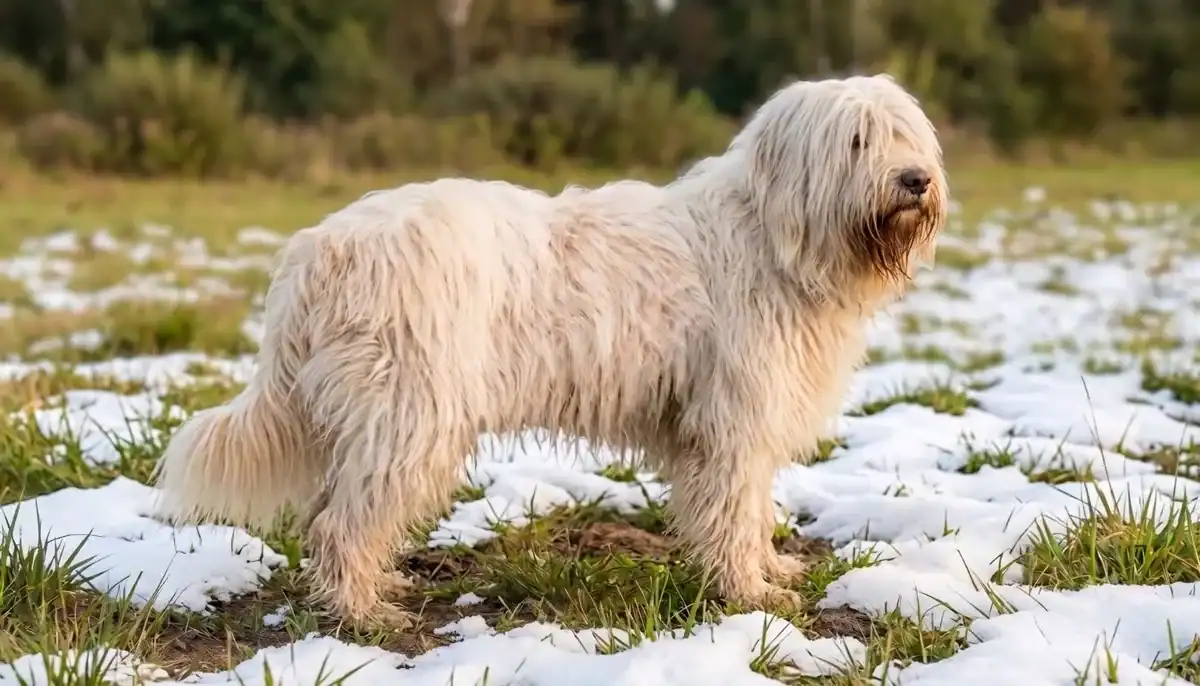
The South Russian Ovcharka, also written as the South Russian Ovtcharka and sometimes called the South Russian Sheepdog or South Russian Shepherd Dog, is a large livestock guardian dog developed on the Russian steppes to protect flocks of sheep from wolves and other predators.
What makes this rugged dog unique is its unmatched dedication to protecting its territory and herd. Known as an independent thinker, it pairs that intelligence with a tendency to act on its own judgment, often making quick decisions when it perceives a threat rather than looking to its handler.
This guide relies on kennel club breed standards, documentation on the history of the South Russian Ovcharka, and established working-dog profiles to provide accurate facts about the ovcharka breed and clear breed information.
Households that provide firm boundaries, extensive early socialization, and a secure environment will find a fiercely loyal partner. They bond deeply with a single household and take their protective duties seriously.
Anyone expecting an easy companion, or without experience handling highly defensive shepherd dogs, should weigh the demands honestly before deciding. This is a serious worker that takes intense daily commitment to stay manageable.
Affiliate Disclosure: K9Sphere participates in the Amazon Services LLC Associates Program and other affiliate programs. K9Sphere earns from qualifying purchases made through links in this article at no additional cost to you. Product recommendations are based on independent research and editorial judgment, not paid placement.
Breed Snapshot
📊 Vitals and Lifespan
Height
Males: 25.5+ in (65+ cm)
Females: 24.5+ in (62+ cm)
Weight
Males: 106+ lb (48+ kg)
Females: 88+ lb (40+ kg)
Lifespan
9 to 11 years
Breed Group
Herding (FCI Group 1); AKC FSS
Origin
Russia/Ukraine
🇷🇺 🇺🇦
⭐ Personality Traits
Ratings (1 to 5). This robust breed combines fierce property defense with deep suspicion of unfamiliar people. A low friendliness score reflects selection for guarding, not a flaw.
History and Origin
The development of the South Russian Ovcharka centers on the vast agricultural demands of the southern plains. Landowners required a massive, intimidating dog capable of surviving brutal winters while driving off the predators that threatened their herds.
📌 Late 1700s: Spanish Flocks Arrive
Around 1797, Merino sheep were imported from Spain to the southern plains and the Crimean peninsula, along with the long-coated shepherd dogs that managed them. Those smaller dogs struggled against local wolves, and breeders saw the need for a far larger, more powerful animal capable of lethal defense.
📌 1800s: Local Crossbreeding
Early breeders are thought to have crossed the imported sheepdogs with local flock guardians and steppe sighthounds. That sighthound influence is often credited with making this an unusually agile dog under a heavy coat, able to chase down predators across the open Russian steppes. It is also known by several regional names, including the Ukrainian Shepherd Dog and the South Ukrainian Ovcharka, depending on the area and registry.
📌 Early 1900s: Military Adaptation
In the early twentieth century, the Soviet state recognized the breed’s uncompromising protective instincts and drafted these dogs to watch over military and state installations. That shift away from farm life reduced the wider population over time.
📌 Modern Era: A Rare Guardian
The breed’s numbers fell sharply through the upheaval of the World Wars, and dedicated enthusiasts later rebuilt them. Today the South Russian Ovcharka remains a highly specialized working animal rarely seen outside its native region or specialist guardian circles.
Physical Characteristics
The South Russian Ovcharka is a large, powerful animal enveloped in a coarse, weather-resistant coat. That covering lets it blend in among the sheep and offers protection against cold weather and the injuries it might take while defending the flock.
🌪️ The Characteristic Coat
The signature feature is the long, dense coat that covers the entire body, including the face and eyes. A thick layer beneath provides serious thermal insulation. Most are pure white, though white with yellowish or grayish tones also appears. The hair is coarse, slightly wavy, and mats quickly without regular maintenance.
🏗️ Agile Structure
Unlike heavier mastiff-type guardians, South Russian Ovcharkas carry sighthound genetics that keep the frame surprisingly light and fast for their height. They move with an explosive, elastic gait. That agility lets these ovcharkas pursue predators over distance rather than merely holding ground near the herd.
Character and Temperament
A South Russian Ovcharka is not an outgoing companion animal. These dogs are bred specifically for suspicion and property defense, and that instinct dominates their behavior.
🛡️ Severe Territoriality
They establish a clear perimeter and defend it vigorously. Unfamiliar people or animals entering that space meet an immediate, intense response. This is not a dog that welcomes houseguests naturally; every visitor requires a careful introduction.
🧠 Independent Working Mind
Because they historically worked far from any shepherd, they are self-reliant and often act on their own read of a situation rather than waiting for a command. Training them takes earning their respect rather than forcing compliance.
🔥 Reactivity Risks
An unsocialized South Russian Ovcharka can easily become a problem dog, since its default reaction to the unknown is defensive. Early, intensive socialization is essential to teach the difference between normal environmental changes and genuine threats. They have little patience for unfamiliar dogs on their turf.
💪 Single-Family Devotion
Within their trusted circle they are deeply affectionate and protective, bonding intensely with one person or a small household. They usually tolerate their own household children well when raised together, though visits from other kids take strict oversight in case the dog misreads rough play as a threat.
Screening and Conditions
Veterinary Disclaimer: The information in this article is for educational purposes only and is not a substitute for professional veterinary advice, diagnosis, or treatment. K9Sphere’s authors are experienced dog owners, not licensed veterinarians. Always consult a qualified DVM regarding any health concerns about your pet. Never disregard professional veterinary advice or delay seeking it because of something you have read on this site.
Health and Breed Information Sources:
- Fédération Cynologique Internationale (FCI) for the official breed standard (No. 326, Group 1 Sheepdogs)
- United Kennel Club (UKC) for the breed standard and Herding Dog Group classification
- Orthopedic Foundation for Animals (OFA) for joint-screening recommendations for large guardian breeds
Always consult your licensed DVM for personalized medical advice.
The South Russian Ovcharka is generally a healthy breed, shaped by strict natural selection, since dogs that suffered physical weakness rarely survived the harsh plains. Even so, its size brings specific structural vulnerabilities worth screening for.
Common Health Risks
🔴 Hip and Elbow Dysplasia
What to watch for: Reluctance to stand, bunny-hopping while running, or visible stiffness after rest. This malformation of the joint structures causes progressive arthritis.
Screening: Reputable breeders provide OFA or PennHIP scores for both parents. Keeping the dog lean through the critical puppy growth window significantly reduces the severity of joint issues. A quality hip and joint supplement can help support cartilage early.
🔴 Gastric Dilatation-Volvulus (Bloat)
What to watch for: A swollen or hard abdomen, unproductive pacing, excessive drooling, and attempts to vomit without bringing anything up. This is immediately life-threatening and needs emergency surgery.
Management: Feed two smaller meals daily rather than one massive bowl, and avoid vigorous exercise for an hour before and after meals.
🟡 Entropion and Eye Issues
What to watch for: Excessive tearing, squinting, or rubbing the face against furniture. Entropion occurs when the eyelid rolls inward, causing the lashes to scrape the cornea.
Screening: Minor surgical correction permanently resolves it. Regular eye checks by a veterinarian catch the problem before corneal ulcers develop.
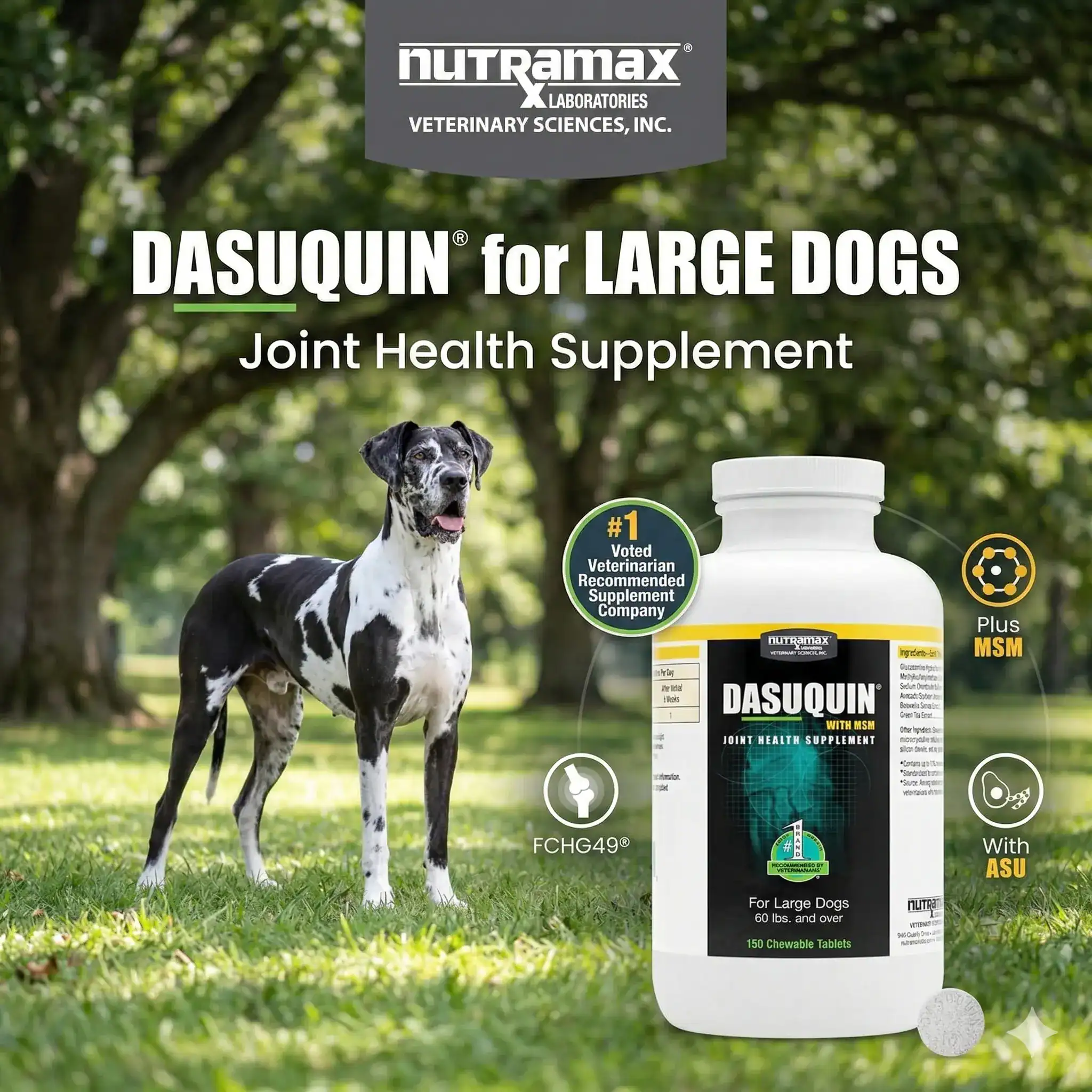
Nutramax Dasuquin with MSM Soft Chews for Large Dogs
Use for: Joint support in a heavy breed vulnerable to dysplasia. Glucosamine, chondroitin, and MSM supply cartilage building blocks that help support the joints over a long, active life. Consult your veterinarian before starting any supplement.
Check price on AmazonGrooming and Coat Care
Managing the coat of a South Russian Ovcharka takes serious effort. They shed heavily, blowing the dense underlayer in massive clumps twice a year. Skipping coat care results in thick, painful mats that pull on the skin and trap dirt.
Plan on working through the coat with a heavy-duty rake at least twice or three times weekly. During seasonal sheds, daily brushing keeps the house from filling with white hair. The hair over the eyes protects against glare and weather, so it is usually left long, though some handlers trim it slightly for visibility. Monthly nail trimming prevents the gait issues common in heavy dogs.
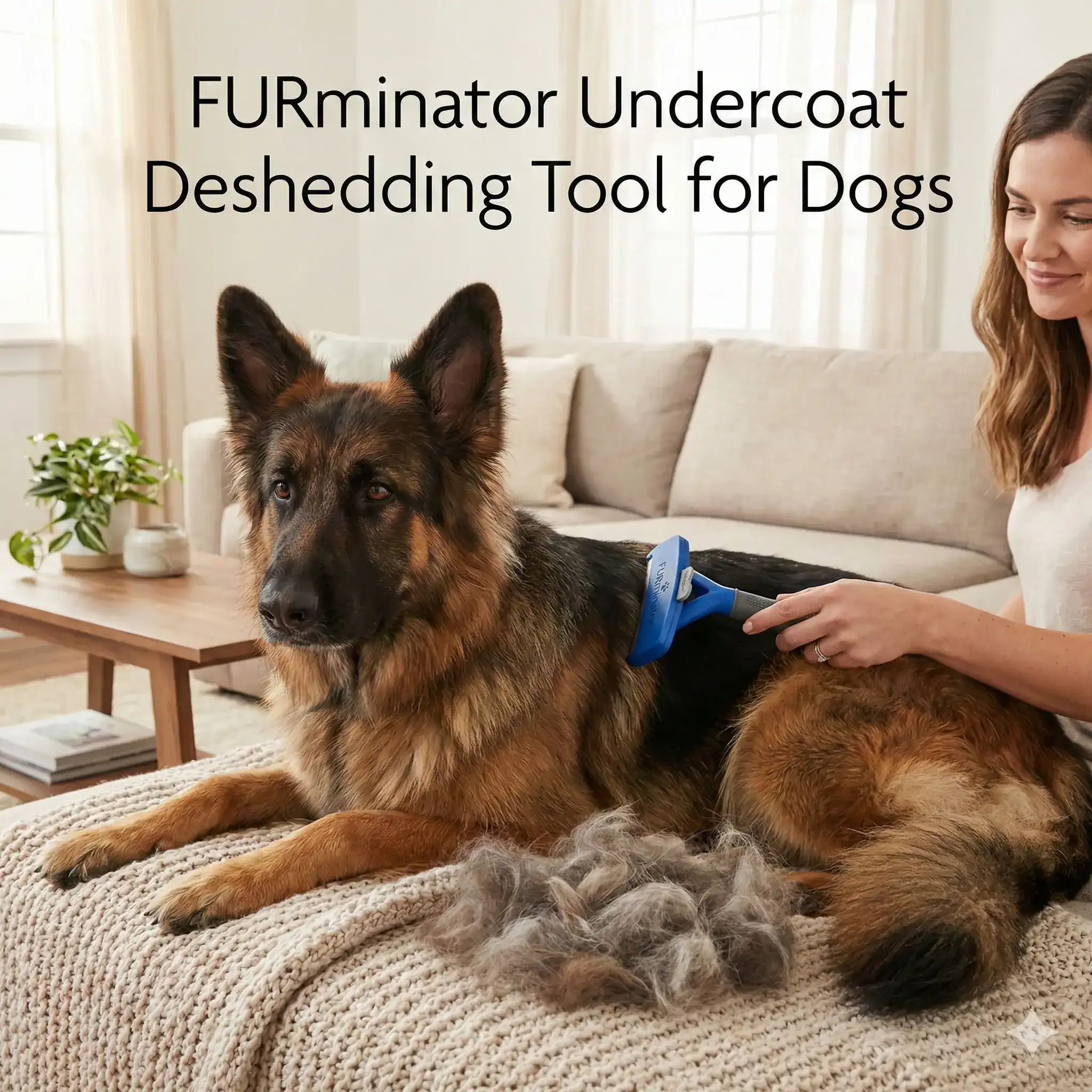
FURminator Undercoat Deshedding Tool for Dogs
Use for: Pulling loose hair from a dense double coat before it covers the house. Built for heavy-shedding breeds, it reaches through the coarse topcoat to lift the soft layer beneath during seasonal blowouts without damaging the guard hairs.
Check price on AmazonPairing that deshedding routine with one of the best brushes for shedding dogs keeps the coat clean between blowouts and helps catch mats before they tighten against the skin.
Exercise and Living Needs
This dog does best on a large, securely fenced property. It is a poor fit for apartment living or dense urban neighborhoods, where constant foot traffic keeps the guard drive switched on continuously.
They are moderately active during the day, often picking a high vantage point to watch over the yard or farm. They still benefit from daily structured walks to keep their muscles conditioned and to reinforce leash manners, ideally mixed with mental challenges. Patrolling a perimeter satisfies their drive to work far better than repetitive fetch.
Nutrition & Diet
Feeding a giant ovcharka takes precision. A large-breed puppy formula is important during the first eighteen months. Rapid growth puts extreme pressure on developing joints, and formulas designed for big-breed puppies intentionally restrict calcium to slow bone development safely.
Adults do well on a high-quality, protein-rich diet split into two daily meals to lower bloat risk. Despite their size, they often eat less than owners expect, because their metabolism is efficient. Adjust portions by waistline rather than the bag’s recommendation; you should be able to feel the ribs under the thick coat without pressing hard.
Training
Training a South Russian Ovcharka comes down to mutual respect. They are intelligent enough to learn commands quickly, but self-directed enough to ignore them if they see no practical reason to comply. They are not a good match for a first-time handler.
Socialization should begin as soon as your puppy arrives home. Exposing them to many different people, dogs, and environments teaches them that the world is not inherently dangerous. Without that exposure, the guard instinct can curdle into fear-based reactivity. Keep sessions brief, firm, and consistent, and avoid harsh physical corrections, which backfire and damage trust.
South Russian Ovcharka vs Caucasian Shepherd vs Central Asian Shepherd vs Komondor
Choosing a livestock protector this size means understanding subtle differences in temperament and style. While these Russian shepherds share core traits with the Caucasian Shepherd and the Central Asian Shepherd, the South Russian’s sighthound ancestry sets it apart. The Komondor and the Maremma offer a similar white, profuse-coated look but different regional roots; the Komondor in particular carries a corded coat.
| Attribute | South Russian Ovcharka | Caucasian Shepherd | Central Asian Shepherd | Komondor |
|---|---|---|---|---|
| Weight | 106+ lb (48+ kg) | 100 to 170 lb (45 to 77 kg) | 88 to 170 lb (40 to 77 kg) | 100+ lb (45+ kg) |
| Original Purpose | Flock guardian | Flock and property guardian | Flock and property guardian | Flock guardian |
| Energy Type | Bursts of speed | Low, steady | Low to moderate | Moderate |
| Trainability | Highly independent | Highly independent | Independent | Independent, stubborn |
| Grooming | Intense brushing | Heavy brushing | Moderate brushing | Cord maintenance |
| Threat Response | Fast, defensive | Tends to confront physically | Alert, decisive if pushed | Defensive, holds ground |
| First-Time Owner? | No, experienced only | No, expert handlers only | No, needs experience | No, needs experience |
| Common Health Risks | Hip dysplasia, bloat, entropion | Hip/elbow dysplasia, bloat | Hip dysplasia, bloat | Hip dysplasia, bloat, eye issues |
| Living Space | Secure property needed | Secure acreage needed | Secure acreage needed | Secure property needed |
It is faster and more explosive over a sprint than the heavier Caucasian and Central Asian shepherds. If you want a perimeter dog that can cover ground quickly, this breed shines. If you prefer a more massive, stationary deterrent, the Caucasian Shepherd fits better, while the Komondor brings a similar coat-heavy look with its own corded grooming demands.
Common Questions about the South Russian Ovcharka
Is the South Russian Ovcharka a good family dog?
Direct Answer: Only for highly experienced households with older children and a secure property.
Context: They are deeply affectionate with their own people but have little tolerance for strangers, and they may read boisterous play from visiting children as a threat to the kids they live with.
Management: Never leave them unsupervised with guests or unfamiliar children, and set strict introduction routines for anyone entering the home.
How much does a South Russian Ovcharka cost?
Direct Answer: Expect roughly USD 1,500 to 3,000 from a reputable source.
Context: The purchase price is only the beginning. Heavy food bills, sturdy gear, and giant-breed veterinary care add up significantly over a decade. Costs vary by country, with UK, Canada, and Australia rates differing.
Management: Consider insurance early to help offset potential orthopedic surgery bills later in life.
Are they aggressive with strangers?
Direct Answer: They are highly territorial and naturally suspicious of strangers by design.
Context: An unsocialized dog can react sharply to perceived trespassers and does not naturally accept unfamiliar people entering its yard.
Management: Socialize extensively during the critical puppy window. Good training teaches the dog to accept guests once the owner signals that all is well.
Do they shed a lot?
Direct Answer: Yes. They tend to shed heavily through the year and typically blow their dense undercoat about twice a year.
Context: The white hair sticks to everything, and keeping the coat free of mats is a serious weekly commitment that cannot be skipped.
Management: Invest in quality undercoat rakes and a high-velocity dryer to clear loose hair during shedding season.
How hard is it to train one?
Direct Answer: They are challenging to train because of their independent nature.
Context: They are smart enough to learn commands fast but stubborn enough to ignore them when they disagree, so they do best with a confident handler who has earned that respect.
Management: Use firm, fair, consistent boundaries. Avoid harsh physical corrections, which these dogs tend to remember and which break trust.
What is the difference between a South Russian and a South Ukrainian Shepherd?
Direct Answer: They are the same dog.
Context: The breed developed in the steppes north of the Black Sea and around the Crimean peninsula, a region historically tied to both Russia and Ukraine. The names are used interchangeably depending on the registry and translation.
Management: Look for a breeder registered under recognized kennel-club rules regardless of the local name they use.
How long is their lifespan?
Direct Answer: They typically live 9 to 11 years.
Context: That is a standard life expectancy for a giant working dog. Keeping them lean noticeably improves quality of life in their senior years.
Management: Provide joint support early and keep up regular veterinary checkups to monitor heart and joint health.
Do they need a lot of exercise?
Direct Answer: They do best with moderate, steady daily activity rather than intense running.
Context: Though capable of sprinting after predators, they prefer to spend hours slowly patrolling a perimeter, so a large yard is a real asset.
Management: Provide a solid daily walk for conditioning and mental stimulation outside their guarded territory.
Can South Russian Ovcharkas live in hot climates?
Direct Answer: They struggle in hot, humid weather and clearly prefer cooler conditions.
Context: That dense double coat was built for freezing winters. While the coat offers some insulation against heat, high temperatures raise the risk of heatstroke.
Management: Provide shade and access to air conditioning, and limit summer activity to the coolest hours of early morning or late evening.
Are they recognized by major kennel clubs?
Direct Answer: Yes. They are recognized internationally by the FCI and recorded in the AKC Foundation Stock Service.
Context: The FCI places them in Group 1 (Sheepdogs and Cattledogs), and the UKC lists the breed in its Herding Dog Group rather than a guardian dog group. Full AKC recognition is pending population growth.
Management: When searching for a litter, verify the parent club or FCI affiliation so health-testing protocols are followed.
Finding a Puppy
Finding reliable information about the South Russian Ovtcharka dog breed, let alone an actual litter, is difficult, because breeders are scarce outside Eastern Europe. Expect a long waitlist, and expect to be vetted carefully so the seller knows you understand the responsibility of owning a serious guardian dog.
🏠 Responsible Breeders
Demand health records showing OFA joint clearances for both parents. A responsible seller will interview you about your fence height, handling experience, and neighborhood density. Steer clear of anyone marketing them as easygoing family companions, or who cannot show screening paperwork.
🐾 Rescue and Adoption
Rescue networks occasionally take in adults surrendered by overwhelmed homes. Adopting a grown dog lets you assess settled behavior directly. One with foundational manners can be a safer bet than an unpredictable pup for someone new to the breed, ideally with a professional behavioral assessment first.
Personal Observation
💭 Personal Observation
My senior rescue Rusty, around twelve now, watches our perimeter with a quiet, steady intensity, and the South Russian Ovcharka scales that same guarding instinct up to a massive level. My younger rescue Rambo is confident and watchful too, and even at his manageable size it took consistent daily work to teach him to settle when someone unfamiliar arrived.
Living with naturally watchful dogs teaches you that not every animal wants to be coddled. A breed like this is built to work alone and decide without much human input. Managing one that size would demand real confidence and daily structure. If you want a dog that defers to you constantly, this is the wrong choice. If you want a devoted property guardian, few breeds match its dedication.
Conclusion
As a native Russian breed shaped by the steppes, the South Russian Ovcharka delivers serious property defense for rural landowners willing to put in the work. The South Russian Ovcharka breed combines explosive agility with a heavy protective coat, making it a formidable guardian.
The trade-off is real. You have to manage its deep suspicion of strangers daily, keep up secure fencing, and commit hours to coat care. For a home after a softer companion, a Labrador Retriever is a far easier fit.
📋 Before bringing one home, run this 4-step pre-buying check
- Secure containment. Do you have a tall, reinforced fence to hold a heavy guard dog?
- Handler experience. Have you successfully managed highly territorial working breeds before?
- Grooming reality. Are you ready to work through a dense, mat-prone white coat several times a week?
- Socialization time. Can you commit to hundreds of positive exposure events during the first year?
If any answer is no, reconsider the breed.
Editorial Disclaimer: This article is for informational and educational purposes only. It does not constitute veterinary advice, medical diagnosis, or treatment recommendations. Always consult a licensed veterinarian before making health-related decisions for your pet.
Accuracy Notice: While every effort has been made to ensure the information presented here is accurate and current, breed information evolves and individual dogs vary. If you spot a factual error or have updated information from a verified source, please contact us so we can review and update.
Product Disclosure: Product recommendations are based on independent research and editorial judgment. Individual results may vary. K9Sphere participates in the Amazon Services LLC Associates Program and other affiliate programs, and earns from qualifying purchases at no additional cost to you.
Last reviewed: June 2026. Article reviewed for accuracy on the date shown above.


