

If you are comparing a Shiba Inu vs Akita, you are looking at the two most famous native Japanese dog breeds, and their similar appearance makes the confusion understandable. Each is a spitz-type dog with a fox-like face, curled tail, plush double coat, and a famously independent streak.
The resemblance is real, but the differences in size, guarding seriousness, and handling stakes are substantial. The Shiba Inu is the smallest of Japan’s six native spitz breeds traditionally recognized as the Nihon Ken, a small to medium cat-like companion of 17 to 23 pounds, originally bred to flush birds and small game from brushwood.
The Akita is the largest of the Japanese breeds traditionally counted among the Nihon Ken, a powerful guardian that can reach 130 pounds, developed to hunt boar, elk, and bear in the snowy mountains of northern Japan.
In many ways they share the same mind at two very different scales. Both are clean, quiet, and reserved with strangers, but the Shiba expresses that independence as a smaller, more lightly held attitude while the Akita carries it with far more guarding seriousness.
The key differences come down to whether you want a small, manageable companion or a large, protective guardian that demands more space, experience, and physical control.
This guide compares them across the areas that actually decide the match, from temperament and size to guarding, family fit, health, grooming, and cost. Each section ends with a clear round verdict so the reader can see which breed fits the stated use case.
Read it as a decision tool for weighing the real-life trade-offs between these two Japanese breeds. By the final verdict you should have a clear sense of which one fits your home, your experience, and the kind of companion you actually want.
Affiliate Disclosure: K9Sphere is a participant in the Amazon Services LLC Associates Program. As an Amazon Associate, K9Sphere earns from qualifying purchases made through links in this article at no additional cost to you. Product recommendations are based on independent research and editorial judgment, not paid placement.
Quick Answer and Who Each Round Favors
⚡ The 30-Second Answer
Choose the Shiba Inu if you want the independent Japanese spitz temperament in a small, apartment-friendly, long-lived package that a dedicated first-time owner can manage. Choose the Akita if you want a powerful, dignified guardian and you bring the experience, space, and physical capability that a 100-plus-pound protective dog demands.
These two share the same aloof, clean, quiet, strong-willed nature. The real decision is scale. They share an independent Japanese spitz temperament, but their size, working history, and guarding tendencies create very different management requirements.
| Category | Favors |
|---|---|
| Temperament | Depends on goals |
| Apartment and small-space living | Shiba Inu |
| Guarding ability | Akita |
| Exercise demand | Roughly even (both moderate) |
| Family fit | Depends on household |
| Grooming and shedding | Roughly even |
| Health and longevity | Longer lifespan for the Shiba |
| Cost of ownership | Size raises Akita expenses |
| First-time owners | Shiba Inu (with dedication) |
Shiba Inu vs Akita at a Glance
Whether you search for Shiba Inu vs Akita dog comparisons or Akita vs Shiba Inu, this table lays out the core differences in size, purpose, temperament, and lifestyle fit. Scan the rows that matter most to you, then read the detailed sections below.
| Attribute | Shiba Inu | Akita |
|---|---|---|
| Height (male) | 14.5–16.5 in (37–42 cm) | 26–28 in (66–71 cm) |
| Weight (male) | About 23 lb (10 kg) | Typically 100–115 lb, up to 130 |
| Lifespan | 13–16 years | 10–13 years |
| Origin | Japan (mountain brushwood) | Japan (Akita prefecture) |
| Breed group | Non-Sporting (AKC) | Working (AKC) |
| Original purpose | Flushing birds and small game | Hunting boar, elk, and bear |
| Temperament | Independent, cat-like, alert | Dignified, loyal, protective |
| With strangers | Aloof, reserved | Reserved, watchful guardian |
| Guarding instinct | Alert watchdog | Strong natural guardian |
| Apartment fit | Good with daily walks | Possible but more demanding |
| Coat | Plush double coat, heavy blows | Dense double coat, heavy blows |
| Main health risks | Patellar luxation, allergies | Bloat, hip dysplasia |
| First-time owner? | Possible with dedication | Not recommended |
📜 A Quick Origin Story
Both breeds are ancient Japanese hunters, but they worked at opposite ends of the game scale. The modern Shiba likely traces part of its ancestry to ancient dogs associated with early populations of Japan, refined into a compact flusher of birds and small game in mountain brushwood.
Japan declared it a national monument in 1936, and after near extinction in World War II, it reached America in 1954 and gained AKC recognition in 1992.
The Akita comes from the snowy Odate region of Akita prefecture, where Matagi hunters used it against wild boar, elk, and the Yezo bear. It too is a Japanese national monument, and the most famous Akita, Hachiko, waited years at a Tokyo train station for his late owner, cementing its reputation for loyalty.
Helen Keller is credited with bringing the first of these dogs to the United States in 1937, and the AKC recognized it in 1973 in the Working group. Postwar breeding developed into two distinct types, the American Akita and the Japanese Akita Inu, which major kennel organizations now treat separately.
The Japanese Akita Inu and the Shiba Inu are both counted among the six Nihon Ken, and Japanese Akita Inus are registered separately from the Akita covered in this guide. This guide refers to the Akita as recognized by the American Kennel Club, not the Japanese Akita Inu.
Who Should Choose the Shiba Inu
🐕 The Shiba Inu is the right pick if:
- You live in an apartment or smaller home and want a clean, quiet companion.
- You want the independent Japanese spitz personality at a manageable size.
- You value a long-lived dog, often reaching the mid teens.
- You accept cat-like independence, a strong prey drive, and unreliable recall.
- You are a dedicated first-time owner willing to work with a stubborn streak.
Who Should Choose the Akita
🐕 The Akita is the right pick if:
- You want a serious, dignified guardian that is deeply devoted to its family.
- You have a securely fenced home with real space, not an apartment.
- You have experience with large, strong-willed, protective breeds.
- You can physically manage a dog that may exceed 100 pounds.
- You are prepared for careful introductions with other dogs and visitors.
Temperament and Personality
This is the round where the two are most alike on the surface, but their independence shows up in different ways. The Akita and the Shiba Inu are often described as primitive breeds that keep ancient instincts close to the surface, and each is famously independent, clean to the point of being cat-like, and quiet indoors.
Neither is an eager-to-please retriever type, and each decides for itself whether a command is worth obeying.
The smaller dog wears that independence lightly. It is alert, spirited, and often amusingly dramatic, famous for the piercing shiba scream when it objects to something. The Shiba Inu is often compared to a cat for good reason, since it grooms itself constantly, and many Shibas are fastidious enough to be relatively straightforward to house-train. The Shiba Inu tends to grant affection on its own schedule rather than on demand.
The Akita carries the same self-possessed nature with far more gravity. It is calm, dignified, and deeply loyal to its household, watchful rather than playful with outsiders. Where the Shiba’s stubbornness is mostly an inconvenience, the Akita’s independence comes with far greater physical strength, so consistent handling matters much more.
🎯 Verdict: Call it a draw on personality, since the Akita and the Shiba Inu share the same independent, clean, quiet spitz nature. One expresses it as a spirited small companion, the other as a serious guardian. Pick the intensity level that matches your life.
Size and Living Space
The size difference is the single biggest gap between them, and it shapes everything else. A male Shiba Inu stands around 15 inches and weighs about 23 pounds, a dog you can pick up, bathe in a sink, and comfortably keep in an apartment with daily walks.
A male Akita stands 26 to 28 inches and typically weighs around 100 to 115 pounds, with some individuals reaching 130.
That makes the Akita a far larger dog than the Shiba in every dimension. The practical difference between the Akita and the much smaller Shiba Inu is several times the weight, with the strength to match. Walking equipment, food bills, vet handling, car space, and fencing all scale accordingly, and secure fencing appropriate for a large, powerful dog matters more than the yard’s size.
Living space follows the same split. The smaller dog adapts well to city living thanks to its size, cleanliness, and quiet nature.
Apartment living is possible for an Akita but more challenging, because its size, strength, guarding instincts, and wariness of strangers all make shared hallways and elevators harder to manage. The bigger one benefits from secure containment and room to move, and its combination of size and stranger wariness makes dense apartment life harder to manage.
🎯 Verdict: The Shiba Inu wins this round for most modern households. It offers the same spitz character in a fraction of the space, while its giant counterpart demands a fenced property, a capable handler, and a budget sized to match.
Guarding and Watchdog Ability
Both breeds are naturally watchful, but they play very different security roles. The Shiba Inu is an alert watchdog that will notice and announce anything unusual, yet at 23 pounds it is a doorbell, not a deterrent. Its aloofness with strangers rarely escalates beyond keeping a cool distance.
The Akita has a strong natural guarding and protective instinct. Bred to face large, dangerous game, it protects its family and territory with quiet confidence rather than constant barking, and its sheer presence deters intruders. It typically needs no protection training to take the job seriously.
That seriousness cuts both ways. Its guarding instinct demands early, broad socialization, and an Akita owner must manage visitors carefully, since an Akita may not distinguish between a welcome guest and an intruder without guidance. Neither breed should ever be encouraged toward aggression, and a well-socialized dog remains the goal in every home.
🎯 Verdict: The Akita wins decisively if you want genuine guarding ability, offering natural protection with calm confidence. The smaller dog is a fine alert watchdog but no deterrent. If security is not a priority, the Shiba’s lighter instinct is simpler to live with.
Exercise Needs
Neither is a marathon athlete, which often surprises buyers who assume spitz breeds are more demanding than they are. Both generally have moderate exercise needs, though individual requirements vary with age, health, and temperament.
As a practical example, many Shiba owners find around 45 minutes of daily walking plus play works well, and its strong prey drive means it should stay leashed outside secure areas, since recall is famously unreliable when a squirrel appears.
The Akita’s requirement is described by its parent club as medium, and a good daily walk or jog suits most adults, ideally with free time in a securely fenced area. It was bred for strength and endurance in short bursts rather than all-day running, and many adults are surprisingly calm indoors between outings.
For each of them, mental engagement matters as much as mileage, since a bored, independent spitz invents its own entertainment. Puzzle feeders, scent games, and training sessions in short, interesting bursts work far better than repetitive drilling, and joint protection matters during growth for the heavier Akita especially.
🎯 Verdict: Roughly even, and refreshingly moderate on both sides. Each needs daily walks and mental engagement rather than hours of running. The Shiba’s prey drive demands a leash, while the Akita’s size makes leash manners non-negotiable.
Family Fit
Neither is a classic children’s playmate in the retriever mold, but each can thrive in the right family. The Shiba Inu generally does best with older, respectful children who understand it is not a cuddle toy, since it dislikes rough handling and will simply remove itself from chaos.
Akitas can be deeply devoted family dogs and may be gentle with children they know well, though the breed is not unusually tolerant and its size and guarding instincts make supervision especially important. Its size and guarding instinct raise the stakes though, since visiting children, loud play, and unfamiliar adults all need calm, structured management.
With other pets, Akitas and Shiba Inus each bring challenges. Shibas carry a strong prey drive toward small animals and can be selective with unfamiliar dogs, while Akitas are widely known for intolerance of same-sex dogs. Careful introductions and close supervision whenever either dog interacts with young children remain essential.
🎯 Verdict: This depends on your household. The Shiba suits calmer families with older kids in smaller spaces, while the Akita offers legendary devotion to families that can manage a powerful guardian around visitors. Neither is the easy multi-pet choice.
Grooming and Shedding
Here Shiba Inu and Akita dogs are separated by volume rather than kind. Akita and Shiba Inu coats work the same way, since each carries a plush spitz double coat that sheds steadily year-round and blows out spectacularly twice a year, filling the home with drifts of undercoat for several weeks at a time.
Famously fastidious, the Shiba Inu grooms itself like a cat, stays nearly odor-free, and is often relatively straightforward to house-train. Weekly brushing suffices outside coat-blow season, when daily sessions with an undercoat tool become the reality.
The Akita follows the same basic shedding cycle but produces substantially more loose coat, because of its much larger body and dense coat. Weekly brushing, daily during seasonal blows, keeps the dense coat healthy, while its heavier body also makes nail care and ear checks easier to manage with early handling practice. Neither needs professional styling or clipping.
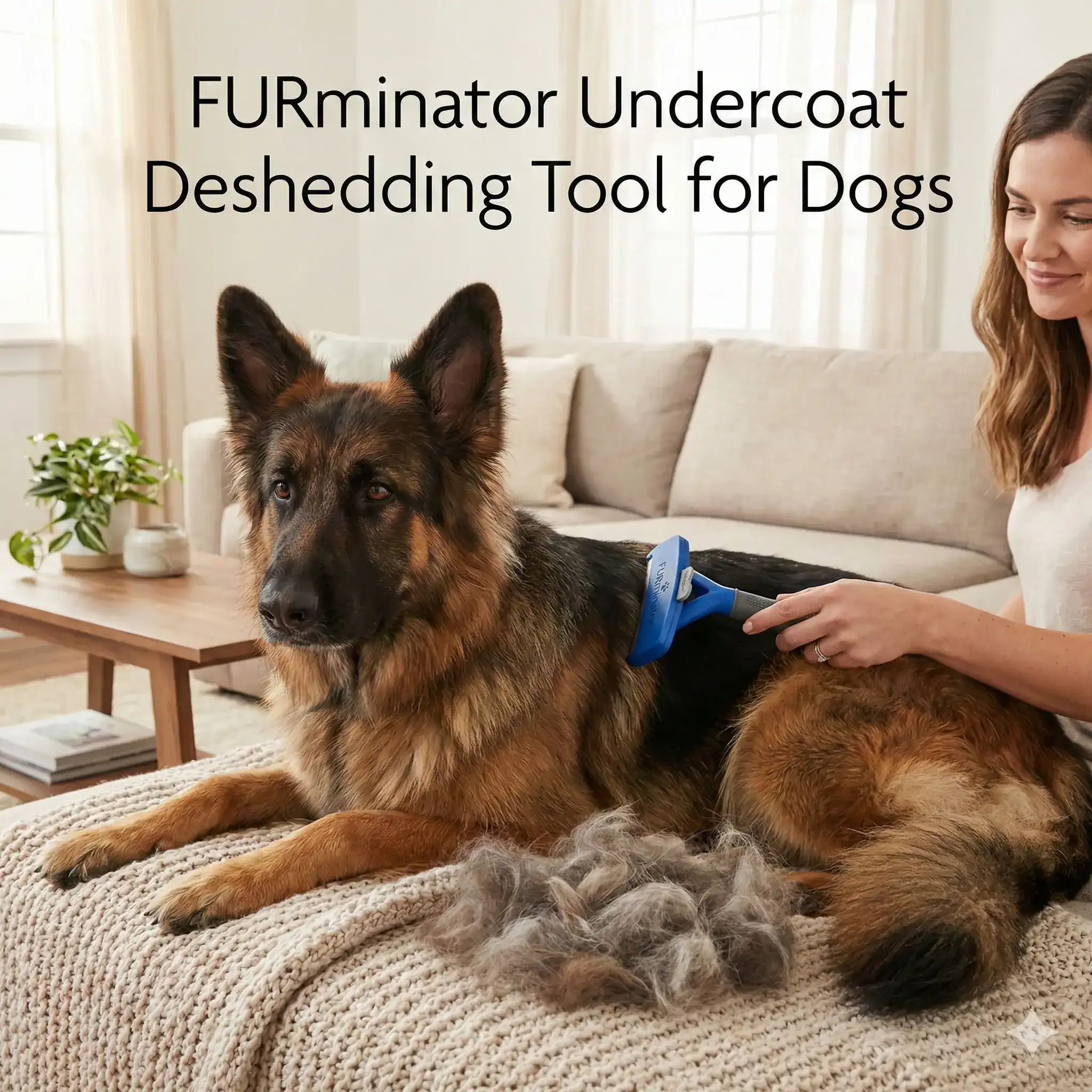
FURminator Undercoat Deshedding Tool for Dogs
Use for: Pulling loose undercoat from either dog’s plush double coat during the heavy twice-yearly blows, before it ends up on every surface in your home.
Check price on Amazon🎯 Verdict: Roughly even in routine, with the Akita producing far more sheer volume. Each is a clean, low-odor dog with twice-yearly coat explosions, so an undercoat tool and a good vacuum serve either choice.
Health and Longevity
The Shiba Inu and the Akita carry very different health risk profiles. Published breed references commonly place the Shiba Inu’s lifespan in the low to mid teens. Its main concerns are patellar luxation, hip dysplasia, eye conditions such as glaucoma and cataracts, and allergic skin disease, which is common in the breed and shows up as itching and chronic ear trouble.
The Akita typically lives 10 to 13 years, a strong number for its size, but it carries the usual giant-breed concerns, especially bloat and joint stress. Gastric dilatation volvulus is the most urgent threat, since it can occur in large breeds, alongside hip dysplasia, hypothyroidism, and sebaceous adenitis, a skin condition it is known for.
For either dog, buying from a breeder who screens the parents is the most important health step, along with keeping the dog lean. The National Shiba Club panel covers patella, hip, and ophthalmologist evaluations.
For Akita breeding stock, the Akita Club of America recommends hip or PennHIP evaluation, ophthalmologist evaluation, and thyroid testing with TgAA, with elbow and patella evaluations listed as optional. Ask for the certificates themselves rather than accepting that the parents were checked. Because gastric dilatation volvulus is a potentially life-threatening emergency, discuss feeding practices and other risk-reduction measures with your veterinarian, and learn to recognise the emergency signs early.
Veterinary Disclaimer: This article is for educational purposes only and is not a substitute for professional veterinary advice, diagnosis, or treatment. K9Sphere’s authors are experienced dog owners, not licensed veterinarians. Always consult a qualified DVM regarding any health concerns about your dog.
Always consult your licensed DVM for personalized medical advice.
Because joint issues appear in both breeds and the Akita’s weight puts real pressure on aging joints, a supportive sleeping surface helps. See our guide to the FurHaven orthopedic dog bed for a mattress that distributes weight evenly.
Health Information Sources. Data compiled from the following references.
- American Kennel Club Shiba Inu reference
- American Kennel Club Akita reference
- OFA CHIC Program recommended screening protocols
- Akita Club of America recommended health testing for breeding stock
Always consult your licensed DVM for personalized medical advice.
🎯 Verdict: Published lifespan estimates are generally longer for the Shiba, while the Akita carries a different risk profile and its larger size makes some medical interventions more resource-intensive. Neither is straightforwardly the healthier breed.
Cost and Ownership
Purchase prices are surprisingly similar. A well-bred Shiba Inu puppy or Akita puppy from a health-testing breeder typically runs 1,500 to 3,000 US dollars, with show lines and imported Japanese bloodlines commanding more. Very low prices warrant closer questions about health testing, breeding practices, and what is included in the sale.
Ongoing costs diverge sharply with size. Compared to the Shiba Inu, the Akita eats several times more, and everything from preventives and medications to boarding and surgery is priced by weight. The Shiba’s longer life spreads its costs over more years, but at a far lower annual rate.
Insurance and liability deserve attention on the Akita side, since powerful guardian breeds can appear on insurer and housing restriction lists that vary by company and jurisdiction. Checking your policy and local rules before committing is a sensible step. Restrictions vary by insurer, landlord, and jurisdiction and should be checked before purchase either way.
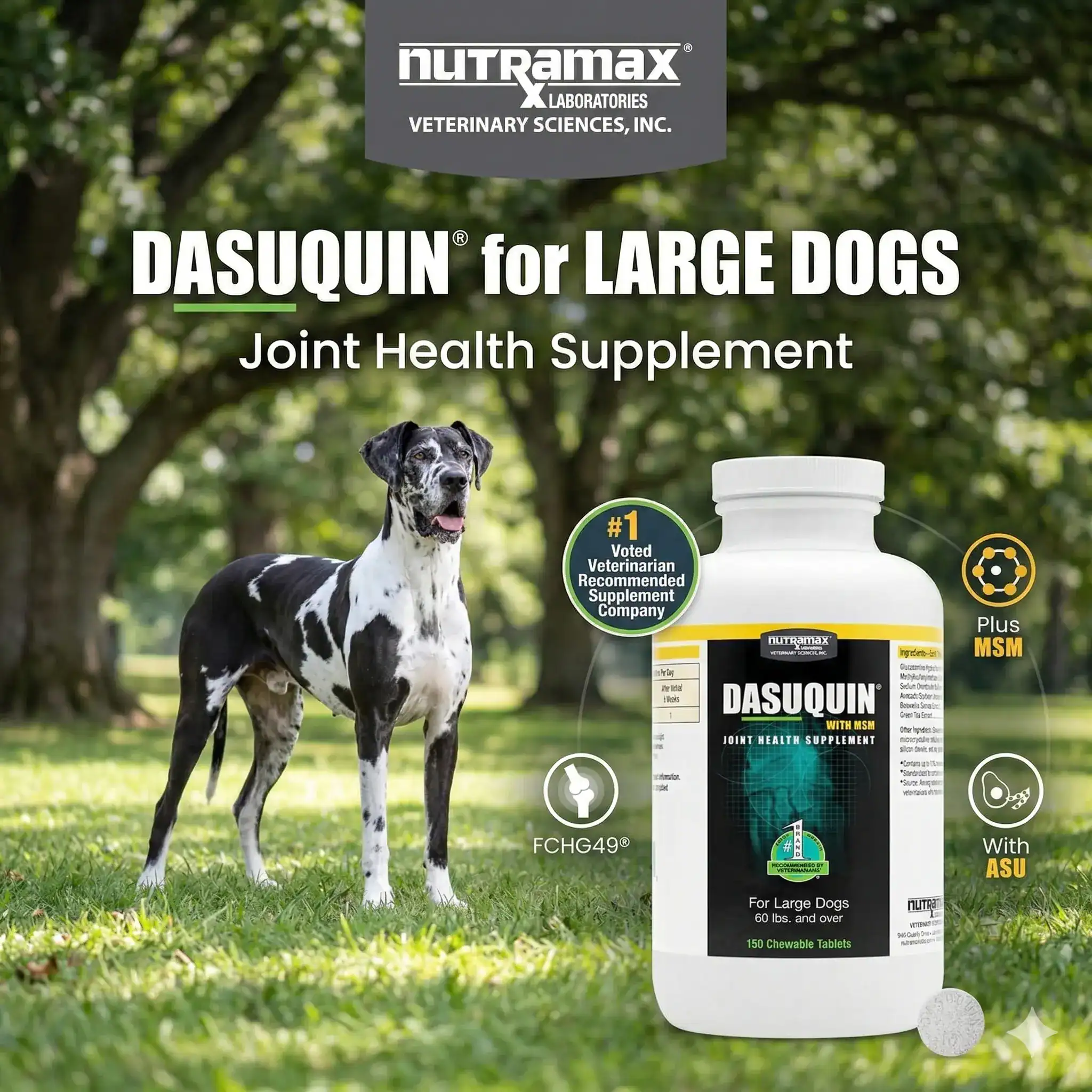
Nutramax Dasuquin with MSM Soft Chews for Dogs
Use for: Joint support is a recurring cost worth budgeting for, since hip dysplasia appears in each breed and the Shiba adds patellar luxation risk. Glucosamine, chondroitin, and MSM are commonly used to support cartilage in ageing dogs.
Check price on Amazon🎯 Verdict: The Shiba Inu is the cheaper dog to own by a wide margin once size-scaled food, vet care, and potential insurance considerations are counted, even though purchase prices overlap almost completely.
First-Time Owners
Neither is the classic beginner’s choice, but the gap between them is wide. The Shiba Inu is workable as a first dog for a dedicated owner who does the homework first, accepts unreliable recall and a stubborn streak, and commits to early socialization. A dedicated first-timer can succeed with one, though its independence and unreliable recall still demand preparation and consistent training.
The Akita requires experienced handling and is generally considered a challenging first dog, because its size, guarding instinct, independence, and physical strength all increase the consequences of training mistakes. Its combination of physical power, guarding instinct, and independent judgment means handling errors carry real consequences, and it may be unsafe in inexperienced hands without professional training support.
The honest framing is stakes, not intelligence. Each will test an owner’s consistency, but a Shiba that ignores you is a frustration, while an Akita that ignores you is a serious management problem. Experience, structure, and professional guidance close that gap for committed owners.
🎯 Verdict: The Shiba Inu takes this round clearly. It is a challenging but forgiving first choice for a dedicated owner, while the other belongs with experienced handlers who understand powerful guardian breeds.
Head-to-Head Scorecard
Ratings are K9Sphere’s editorial comparison based on the breed characteristics discussed in this guide, scored from 1 to 5 stars for a typical home. A high Guarding Instinct score is an asset if you want a protector, while a high Physical Manageability score means the dog is easier to physically handle, transport, and house.
Shiba Inu
Akita
Reading the scores: Both score maximum on Independence, the defining Japanese spitz trait. The Shiba leads on Apartment Fit and Physical Manageability, while the Akita dominates Guarding Instinct. Its low First-Timer score reflects the stakes of handling a powerful guardian, not a flaw in the dog.
Common Questions about Shiba Inu vs Akita
These are the frequently asked questions buyers raise when comparing the two breeds.
Is an Akita just a bigger Shiba Inu?
Direct Answer: No. They are separate breeds with different histories and jobs, despite the strong family resemblance.
Context: Both are ancient Japanese spitz breeds with similar looks and independent temperaments, but one was bred to flush small game while the other was developed to hunt boar, elk, and bear, and to guard.
Management: Treat them as distinct breeds when researching. Size, guarding instinct, and handling stakes differ enormously, so experience with one does not fully prepare you for the other.
What is the main difference between a Shiba Inu and an Akita?
Direct Answer: Size and guarding seriousness. One is a small alert companion, the other a powerful natural guardian.
Context: A male Shiba weighs about 23 pounds against the Akita’s 100 to 130 pounds, and that scale gap is the defining difference between the two breeds. Both share the independent, clean, aloof spitz temperament, but the Akita adds strong protective instincts and far higher physical demands.
Management: Choose based on your space, experience, and whether you want a watchful companion or a serious guardian.
Which breed is better for families with children?
Direct Answer: Each can work in the right family, with different cautions.
Context: The Akita is famously devoted and often gentle with its own children, but its size and guarding instinct demand management around visitors. The smaller dog tolerates respectful older kids but dislikes rough handling and will remove itself from chaos.
Management: Supervise young children closely with either dog, teach respectful interaction, and manage the bigger dog’s introductions to visiting playmates carefully.
Are Akitas dangerous?
Direct Answer: Neither breed should be assumed to be dangerous solely because of its breed label. Temperament is influenced by genetics, breeding quality, socialization, training, environment, and individual personality.
Context: The Akita is a powerful guardian with strong protective instincts, which raises the stakes of poor socialization or handling. A well-bred, well-socialized individual is typically calm, dignified, and reliable with its family.
Management: Prioritize early, broad socialization, buy from breeders who prize stable temperament, and bring in professional training support, especially for your first guardian.
Which breed is easier to train?
Direct Answer: Neither is easy, but the Shiba’s mistakes cost less.
Context: Each is an independent thinker that ignores commands it finds pointless, so conventional trainability is modest, and neither suits owners expecting retriever-style obedience. Recall is famously unreliable in Shibas, while an untrained Akita is a serious physical management problem.
Management: Use short, rewarding, food-motivated sessions with either dog, start socialization early, and keep a Shiba leashed outside secure areas for life.
Which breed sheds more?
Direct Answer: The Akita produces far more fur by sheer volume, though both shed the same way.
Context: Each has a plush double coat that sheds year-round and blows out heavily twice a year. A 120-pound Akita simply carries several times the coat of a 23-pound Shiba.
Management: Brush weekly year-round and daily during seasonal blows with an undercoat tool for either coat, and expect a few intense weeks each spring and fall.
Can a Shiba Inu or Akita live in an apartment?
Direct Answer: The Shiba adapts well to apartments. The Akita generally does not.
Context: The Shiba’s small size, cleanliness, and quiet nature make it one of the better apartment spitz breeds with daily walks. The Akita’s size, strength, and wariness of strangers make dense shared spaces harder to manage.
Management: Apartment Shiba owners should commit to daily walks and enrichment. Akita owners should provide secure containment appropriate for a large, powerful dog whenever it is outdoors unsupervised.
Are Shiba Inus and Akitas related?
Direct Answer: They are both native Japanese spitz breeds, but they are distinct breeds, not size varieties of one another.
Context: Japan’s native dogs share deep common ancestry and similar spitz features, which is why the resemblance is so strong. The breeds were developed separately for different work in different regions.
Management: Enjoy the family resemblance, but research each on its own merits before choosing.
Which breed is physically stronger?
Direct Answer: The Akita, by an enormous margin, simply due to size and build.
Context: A 100-plus-pound big-game hunter outmuscles a 23-pound companion in every measure. There is no scientifically verified bite-force comparison worth citing, and strength matters far less than temperament, training, and control in daily life.
Management: Whichever you choose, leash manners and impulse control training matter, and they are non-negotiable at the Akita’s size.
Which breed lives longer?
Direct Answer: Published estimates generally run longer for the Shiba Inu.
Context: Shibas are commonly given as 13 to 16 years and Akitas as 10 to 13, though breed-level figures are estimates rather than a prediction for any individual dog.
Management: Keep either dog lean, screen for its known conditions, and learn the emergency signs of bloat if you choose the Akita.
Do Shiba Inus and Akitas bark a lot?
Direct Answer: No. Both are notably quiet breeds, with occasional dramatic exceptions.
Context: Each barks mainly with purpose, announcing genuine events rather than chattering. The smaller of the two is famous for its piercing shiba scream when it objects to handling, which is startling but rare.
Management: Reward calm behavior, meet exercise and enrichment needs, and neither should become a noise problem for neighbors.
Can either breed be trusted off leash?
Direct Answer: No. Neither breed is generally considered a reliable off-leash choice in unsecured areas.
Context: Each is an independent hunter with a strong prey drive that will chase first and consider recall later. The little hunter is notorious for ignoring recall entirely, and a loose Akita presents a substantially greater physical-management challenge because of its size and strength.
Management: Keep either dog leashed or inside secure fencing for life, and treat recall training as damage insurance rather than a guarantee.
Which breed costs more to own?
Direct Answer: The Akita, by a wide margin over its lifetime.
Context: Purchase prices overlap at 1,500 to 3,000 US dollars, but the Akita’s food, medication, boarding, and surgical costs all scale with its size, and it can face insurer or housing restrictions in some jurisdictions.
Management: Budget for size-scaled costs and check insurance and housing rules before committing to an Akita. The Shiba’s costs stay modest, spread over a longer life.
The Quick Decision Shortcut
If you want the fast version before the full verdict, use this self-check to decide whether an Akita or Shiba Inu fits your household. Pick the column that sounds more like you.
🐕 Choose the Shiba Inu if
- You live in an apartment or want a small, clean, quiet dog.
- You want the spitz personality at a manageable, forgiving size.
- You value a long lifespan and lower lifetime costs.
- You are a dedicated first-timer ready for a stubborn streak.
🐕 Choose the Akita if
- You want a serious natural guardian devoted to your family.
- You have a securely fenced home with real space.
- You bring experience with large, strong-willed breeds.
- You can physically and financially manage a 100-plus-pound dog.
Final Verdict
There is no universal winner here, because these two share the same remarkable Japanese spitz character and simply deliver it at different scales. Independence, cleanliness, quiet dignity, and loyalty run through both. The decision is less about personality and more about size, stakes, and what you need the dog to be.
The underlying decision is simple. The Shiba asks for patience with a stubborn small companion and rewards you with a long-lived, apartment-friendly character study. The Akita asks for experience, space, and physical capability, and rewards a prepared owner with a deeply devoted natural guardian. Match the scale to your life, and either becomes an unforgettable companion.
🏆 Bottom line: The Shiba Inu is the manageable, long-lived, apartment-friendly expression of the Japanese spitz mind; the Akita is its powerful guardian expression with far higher demands. Match the dog to your space, experience, and need for protection.
Personal Observation
💭 From my own experience
My senior rescue Rusty is the most independent dog I have known. He sleeps outside by choice, watches the yard on his own schedule, and accepts affection only when it suits him. He is not less loyal for it. He simply shows loyalty in his own quiet way.
Both of these breeds live exactly like that. You get dignity and calm devotion instead of eager obedience, and you slowly earn their cooperation rather than expect it.
So when I picture Rusty’s stubborn streak in a 23-pound dog, I see a Shiba, charming and forgiving of mistakes. When I picture the same streak in a 120-pound guardian, I understand exactly why the Akita needs an experienced owner. That is really the whole decision.
Read More. For the full individual guides, see our full Shiba Inu guide and our full Akita guide. If the aloof, independent spitz type appeals to you, our Chow Chow guide covers another dignified guardian in that mold, and both breeds here benefit from our roundup of the best brushes for shedding dogs.
Editorial Disclaimer: This article is for informational and educational purposes only. It does not constitute veterinary advice, medical diagnosis, or treatment recommendations. Always consult a licensed veterinarian before making health-related decisions for your pet.
Accuracy Notice: While every effort has been made to ensure the information presented here is accurate and current, breed information evolves and individual dogs vary. If you spot a factual error or have updated information from a verified source, please contact us so we can review and update.
Product Disclosure: Product recommendations are based on independent research and editorial judgment. Individual results may vary. K9Sphere participates in the Amazon Services LLC Associates Program and other affiliate programs, and earns from qualifying purchases at no additional cost to you.
Last reviewed: September 2026. Article reviewed for accuracy on the date shown above.


