
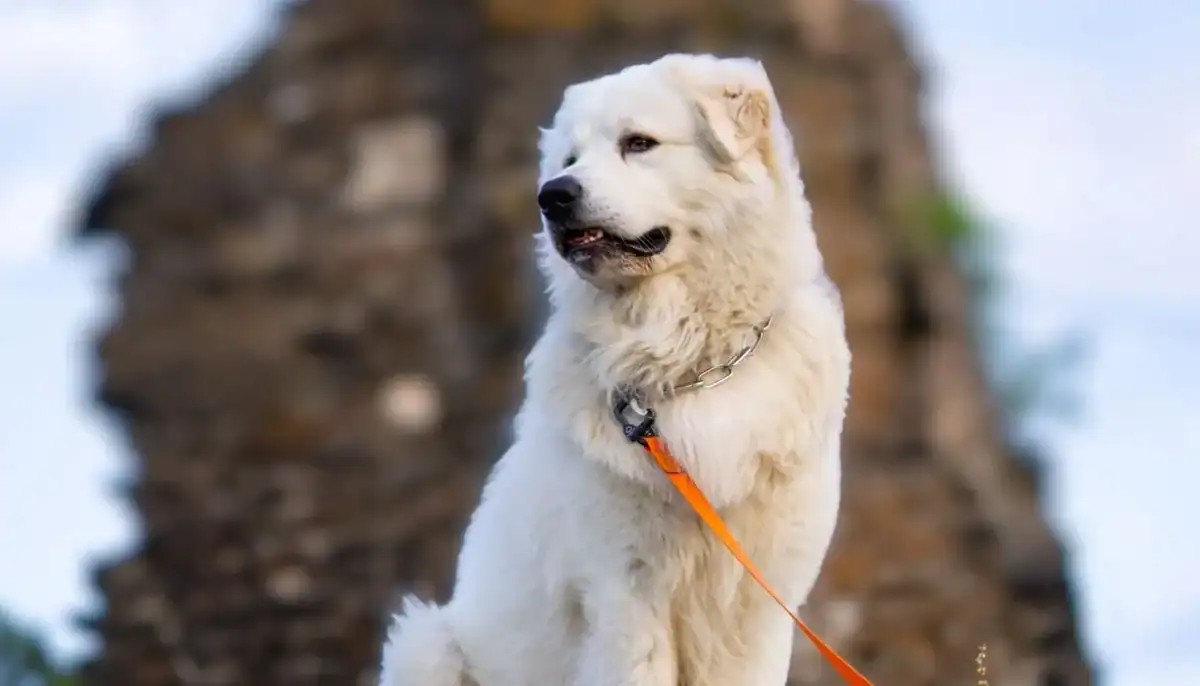
The Kuvasz is a Hungarian working flock-guarding dog bred centuries ago to protect livestock across open terrain. It is a large dog with a commanding physical presence and a deeply independent nature.
What makes this dog unique is the combination of intense loyalty and a striking white double coat. A properly socialized adult Kuvasz becomes a devoted family protector that handles threats on its own. They observe their surroundings carefully and take action without waiting for human direction.
This guide draws on the American Kennel Club standard and the Kuvasz Club of America care protocols to outline what owning this giant actually demands. These dogs require capable leadership and ample physical space.
Daily commitments include structured obedience routines, careful grooming, and providing a securely fenced space for exercise. Households that invest the time are rewarded with an exceptionally capable partner.
The Kuvasz is a large-breed dog with uncompromising protective instincts. Households without a secure yard or experience handling big dogs should review the demands honestly before deciding. A dog bred to defend livestock against predators needs a handler who can set firm boundaries.
Affiliate Disclosure: K9Sphere participates in the Amazon Services LLC Associates Program and other affiliate programs. K9Sphere earns from qualifying purchases made through links in this article at no additional cost to you. Product recommendations are based on independent research and editorial judgment, not paid placement.
Breed Snapshot
📊 Vitals and Lifespan
Height
Males: 28 to 30 in (71 to 76 cm)
Females: 26 to 28 in (66 to 71 cm)
Weight
Males: 100 to 115 lb (45 to 52 kg)
Females: 70 to 90 lb (32 to 41 kg)
Lifespan
10 to 12 years
Breed Group
Working (AKC); FCI Group 1
Origin
Hungary
🇭🇺
⭐ Personality Traits
Ratings (1 to 5). This breed is fiercely loyal to its own household but needs consistent leadership and space to patrol. A low trainability score reflects an independent, decision-making mind rather than low intelligence, and a low friendliness score reflects its guarding nature, not a flaw.
History and Origin
The origins of the Kuvasz trace back to nomadic tribes who settled in the Carpathian Basin. Shepherds relied on this massive dog to defend their flocks from wolves and bears. The history of the Kuvasz includes a notable period as a royal guard dog during the 15th century. The plural of Kuvasz is Kuvaszok in its native language.
📌 1400s: Royal Guardians
King Matthias Corvinus, who reigned from 1458 to 1490, trusted these pale dogs to guard his royal court. They served as personal protection for the monarch during a time of constant political unrest, and a Kuvasz from the royal kennels was a prized gift to favored nobles.
📌 1885: The First Standard
The first written Hungarian standard was created in 1885, formalizing centuries of pastoral tradition. As aristocratic estates declined, the dogs returned mainly to farm work, guarding livestock in rural areas much as they always had.
📌 1931: American Kennel Club Recognition
The AKC recognized the Kuvasz in 1931, six years before it recognized the Komondor in 1937. World War II later devastated the breed in Hungary, leaving only a few dozen dogs, and dedicated enthusiasts rebuilt the population slowly over the following decades.
Physical Characteristics
The Kuvasz dog breed has a dense, fluffy double coat that provides heavy insulation against harsh weather. This white layer sheds a lot throughout the year.
🎨 The White Double Coat
The breed standard calls for a solid white coat, sometimes with a slightly ivory cast, a color that let shepherds tell their dogs apart from dark-colored wolves during a night attack. The texture ranges from slightly wavy to straight, and it naturally repels water and dirt.
🏗️ Muscular Build
A mature male often weighs over 100 pounds. The head is large with a slight stop, and the ears fold forward neatly. They carry themselves with an agile grace that surprises people who expect a heavy, plodding animal.
Character and Temperament
The Kuvasz temperament centers on uncompromising protection. They are highly driven to monitor their territory and assess every sound. This breed thinks independently and acts decisively.
🛡️ Fierce Guardian
They are devoted to their own people but tend to be reserved with unfamiliar faces. A well-socialized Kuvasz may position itself between its family and a perceived threat.
🔥 Independent Thinker
Inexperienced handlers often struggle with this breed, since the dogs may test boundaries when training is inconsistent. They assess situations and make their own decisions, so they do best with calm, consistent leadership.
💪 Low Separation Anxiety
Separation anxiety is uncommon because shepherds bred them to work alone for long stretches. They are content to patrol a yard or watch the property boundaries while their family is away.
🧠 Notable Prey Drive
Their prey instinct means they may chase moving targets if not secured properly. Careful socialization helps them coexist peacefully with smaller household pets.
Screening and Conditions
Veterinary Disclaimer: The information in this article is for educational purposes only and is not a substitute for professional veterinary advice, diagnosis, or treatment. K9Sphere’s authors are experienced dog owners, not licensed veterinarians. Always consult a qualified DVM regarding any health concerns about your pet. Never disregard professional veterinary advice or delay seeking it because of something you have read on this site.
Health and Breed Information Sources:
- American Kennel Club for the official breed standard and Working Group classification
- Kuvasz Club of America for parent-club health protocols and breeder guidance
- Orthopedic Foundation for Animals (OFA) for CHIC hip, eye, and thyroid testing recommendations
Always consult your licensed DVM for personalized medical advice.
The Kuvasz is prone to specific conditions related to its large size. Responsible breeding programs screen for joint and metabolic risks carefully.
Common Inherited Conditions
🔴 Gastric Dilatation-Volvulus (Bloat)
What to watch for: A swollen abdomen and unproductive retching. The condition cuts off blood flow and is a life-threatening emergency. The dog may pace and drool excessively.
Screening: Preventive care involves feeding two smaller meals daily instead of one large bowl. Keep activity low for an hour after feeding, and seek emergency care immediately if symptoms appear.
🔴 Hip Dysplasia
What to watch for: Stiffness rising from rest or reluctance to climb stairs. This genetic malformation causes the joint socket to wear down prematurely, leading to arthritis.
Screening: OFA joint evaluation of both parents is strongly recommended. Adding a quality joint supplement supports cartilage as the dog enters adulthood.
🟡 Progressive Retinal Atrophy (PRA)
What to watch for: Night blindness or reluctance to enter dark rooms. This condition causes the retina to deteriorate over time, leading to vision loss.
Screening: DNA testing identifies genetic carriers before they enter the breeding pool.
🟡 Hypothyroidism
What to watch for: Unexplained weight gain, lethargy, or thinning hair. The thyroid gland fails to produce adequate hormones.
Screening: Annual blood panels detect thyroid issues early. Daily medication manages the condition effectively.

Nutramax Dasuquin with MSM Soft Chews for Large Dogs
Use for: Joint support in heavy working breeds prone to joint malformation. Combines glucosamine, chondroitin, and MSM to support mobility in heavy dogs carrying significant weight. Consult your veterinarian before starting any supplement.
Check price on AmazonGrooming and Coat Care
This breed needs regular brushing. The coat drops a lot of hair continuously and blows out heavily in the spring and fall. A quality slicker brush and an undercoat rake help clear loose fur.
Our guide on the best brushes for shedding dogs covers the heavy-duty tools required for a thick double layer. Bathe them only occasionally, since the fur repels mud naturally once it dries. If skin issues arise, a mild dog shampoo for itchy skin provides relief.
Grooming sessions take time and patience. Early sessions train the puppy to accept handling calmly. Trim their nails monthly to prevent gait problems.
Exercise and Living Needs
This breed wants significant daily activity to stay balanced. A short daily walk alone is usually not enough. They thrive with room to move and a job to do.
They do best with a securely fenced yard to patrol safely. An electronic fence is often a poor fit for a breed with this much strong drive and territorial instinct. Without enough physical activity and mental stimulation, destructive behavior can develop.
Though content to patrol alone, they prefer to stay near their family when off duty. A supportive orthopedic bed gives this heavy breed a healthier place to rest after a day of patrolling. Older dogs in particular benefit from joint-friendly support.

FurHaven Orthopedic Dog Bed (Jumbo)
Use for: Heavy-duty joint relief for big dogs. The medical-grade foam supports the weight of a 100-pound adult and helps protect aging joints and prevent elbow calluses.
Check price on AmazonNutrition & Diet
Proper feeding regulates their rapid growth. A quality dog food made for large breeds prevents skeletal stress during puppyhood. Keep the dog lean to protect their hips.
High protein kibble maintains their muscular build. Divide their daily ration into two meals rather than one massive portion to lower the risk of bloat. Adding hip and joint supplements for dogs provides long-term cartilage support.
Training
You must train an independent thinker with extreme patience. A single puppy needs constant guidance to learn household boundaries. They understand commands quickly but may decide whether compliance fits their own read of the situation.
Socializing your Kuvasz early prevents fear-based reactivity. Introduce them to dozens of new people, animals, and environments before sixteen weeks of age. Consistency solves behavioral testing better than harsh corrections. If they respect your leadership, they comply.
Kuvasz vs Great Pyrenees vs Komondor vs Maremma Sheepdog
Prospective owners considering dogs like the Kuvasz often weigh it against other livestock guardians. Comparing the Kuvasz and the Great Pyrenees reveals differences in barking frequency and intensity. The Great Pyrenees is generally more mellow but barks heavily, and it offers a softer temperament for suburban life.
| Attribute | Kuvasz | Great Pyrenees | Komondor | Maremma Sheepdog |
|---|---|---|---|---|
| Weight | 70 to 115 lb | 85 to 100+ lb | 80 to 100+ lb | 66 to 100 lb |
| Original Purpose | Flock guarding | Flock guarding | Flock guarding | Flock guarding |
| Energy Type | Moderate, patrolling | Low, patrolling | Low-moderate, burst speed | Moderate, patrolling |
| Trainability | Independent, sensitive | Independent thinker | Independent, stubborn | Independent thinker |
| Grooming | Heavy shedding, weekly brush | Heavy shedding, weekly brush | Cords need splitting, high effort | Heavy shedding, weekly brush |
| Threat Response | Barking, confronts threats | Barking, physical blocking | Confronts and defends | Barking, physical blocking |
| First-Time Owner? | No | No | No | No |
| Common Health Risks | Hip dysplasia, bloat, PRA | Hip dysplasia, bloat, patellar luxation | Hip dysplasia, bloat, entropion | Hip dysplasia, eye issues |
| Living Space | Large fenced yard or farm | Large fenced yard or farm | Large fenced yard or farm | Large fenced yard or farm |
The Komondor wears a corded coat and is slightly more intense in its guarding style. The Maremma Sheepdog is slightly smaller but shares the same white guarding heritage. This comparison highlights why the Kuvasz breed demands a capable handler with secure space.
Common Questions about the Kuvasz
Are Kuvasz dogs good family pets?
Direct Answer: They are deeply devoted to their own family and protect children fiercely, but they need strict supervision around any visiting child.
Context: This breed may read rough play among children as a threat and step in to protect their own child, which creates a risky situation for guests.
Management: As a precaution, do not assume safe unsupervised interaction between this dog and a young kid; supervise closely and manage introductions carefully. Provide a quiet, secure space when hosting busy playdates.
How much does a Kuvasz cost?
Direct Answer: As an approximate, time-sensitive guide, the price often ranges from about USD 1,500 to 3,500 or more in the USA, depending on breeder, pedigree, and location. Pricing varies by country, with UK, Canada, and Australia rates differing.
Context: The cost of a Kuvasz does not end at the purchase price; that is only the initial step. Giant dogs incur high bills for food, parasite prevention, and routine veterinary care.
Management: Budget for large-breed food and pet insurance from day one. Giant-breed surgeries routinely cost thousands of dollars.
Do Kuvasz dogs shed much?
Direct Answer: Yes. The double coat drops hair continuously.
Context: You will find white hair on your furniture, clothes, and floors. They blow their undercoat seasonally, creating massive tufts of loose fur.
Management: Commit to weekly brushing sessions. Invest in a heavy-duty vacuum cleaner.
Are they hard to train?
Direct Answer: They are challenging. They test authority and need a confident handler.
Context: They understand commands but decide whether to obey based on their own assessment. They do not respond well to repetitive drills. This reflects independence, not low intelligence.
Management: Keep training sessions short. Use positive reinforcement and establish consistent boundaries.
Can they live in an apartment?
Direct Answer: Apartment living is generally not recommended for this breed.
Context: They are highly territorial and will bark at noises in adjacent apartments or hallways. They need physical room to stretch their legs and patrol.
Management: Only consider this breed if you have a securely fenced yard or rural acreage.
What is their lifespan?
Direct Answer: They generally live 10 to 12 years.
Context: For a giant breed, this is a relatively strong lifespan. Weight management plays a critical role in extending their healthy years.
Management: Keep them lean to reduce joint stress and schedule annual senior wellness exams.
Do they need a crate?
Direct Answer: Crate training helps, because early routines help them settle.
Context: A crate provides a secure den and simplifies travel or vet visits. It also prevents destructive chewing during the puppy phase.
Management: Introduce the crate positively with treats. Never use it as a punishment.
Do they require a lot of vet care?
Direct Answer: Giant dogs carry higher medical expenses than smaller breeds.
Context: Medications, flea prevention, and anesthesia are dosed by weight, so everything costs more for a 100-pound dog.
Management: Secure comprehensive pet insurance early to help cover unexpected emergencies like bloat surgery.
Are they aggressive?
Direct Answer: They are deeply protective rather than aggressive by default, but poor socialization can let that protectiveness tip into reactivity.
Context: They were bred to defend livestock against predators, and that instinct remains active. A poorly socialized dog is far more likely to misread normal situations around strangers.
Management: Early socialization is non-negotiable. Expose them to varied environments to build a stable temperament.
Why does my Kuvasz dig, and how do I stop it?
Direct Answer: Boredom usually drives the digging and other destructive behavior.
Context: A working dog left alone in a yard will invent its own jobs, which often include digging large craters or barking at the fence.
Management: Increase their physical exercise and mental stimulation. Provide structured patrol tasks.
Finding a Puppy
Finding Kuvasz puppies takes patience because the breed remains rare. The puppy phase requires real work, so begin training early, socialize from the first week home, and avoid any sale without proper testing documentation.
🏠 Responsible Breeders
A reputable breeder provides OFA hip and elbow certificates for both parents. They will interview you extensively about your fencing and your experience with working breeds. Look for breeders active in the national club who raise litters indoors with constant human interaction.
🐾 Rescue and Adoption
You can also adopt through a breed-specific network. Adult dogs often need rehoming because owners underestimated the grooming or the guarding instinct. An adult lets you bypass the chewing phase and see the fully formed temperament.
🚩 Red Flags to Watch For
- Red Flag 1: Breeders offering puppies without OFA health testing results.
- Red Flag 2: Anyone marketing the dogs as “perfect for any family.”
- Red Flag 3: Parents exhibiting extreme shyness or unprovoked reactivity.
- Red Flag 4: Breeders who refuse to let you see the whelping environment.
Personal Observation
💭 Personal Observation
The clearest lesson from years with territorial dogs is how early you have to set the rules. My young male Rambo will position himself between a newcomer and the household until he reads the situation as safe, but because we built that habit early, I can redirect him with a word. Scale that instinct up to a hundred-pound guardian, and you see why these dogs overwhelm an unprepared owner.
A guardian that makes its own calls is not being stubborn; it is doing the job it was shaped for. My senior rescue Rusty shows that same self-directed streak, settling outside to watch the yard rather than waiting for instructions. If you are not ready for that mindset, and for a heavy double coat that sheds year-round, this is not the breed to start with.
Conclusion
The Kuvasz offers steady protection and deep loyalty to handlers who understand its nature. In our view, the main draw is a naturally protective companion that takes to guarding with little prompting.
The con is managing a large dog that tests boundaries continuously and sheds heavily year-round. This is a serious guardian built for wide open spaces. If you want a powerful guardian with a softer, more social temperament, the Great Pyrenees may suit you better, though it still needs secure fencing of its own.
📋 Before bringing one home, run this 4-step pre-buying check
- Secure containment. Do you have a tall, solid fence to safely contain a territorial dog?
- Grooming reality. Are you willing to brush a heavily shedding white coat every week?
- Handler experience. Have you successfully trained independent, strong-willed guardian dogs before?
- Living space fit. Can you accept that this dog will bark at perceived threats and is a poor fit for apartment life?
If any answer is no, reconsider the breed.
Editorial Disclaimer: This article is for informational and educational purposes only. It does not constitute veterinary advice, medical diagnosis, or treatment recommendations. Always consult a licensed veterinarian before making health-related decisions for your pet.
Accuracy Notice: While every effort has been made to ensure the information presented here is accurate and current, breed information evolves and individual dogs vary. If you spot a factual error or have updated information from a verified source, please contact us so we can review and update.
Product Disclosure: Product recommendations are based on independent research and editorial judgment. Individual results may vary. K9Sphere participates in the Amazon Services LLC Associates Program and other affiliate programs, and earns from qualifying purchases at no additional cost to you.
Last reviewed: June 2026. Article reviewed for accuracy on the date shown above.


