
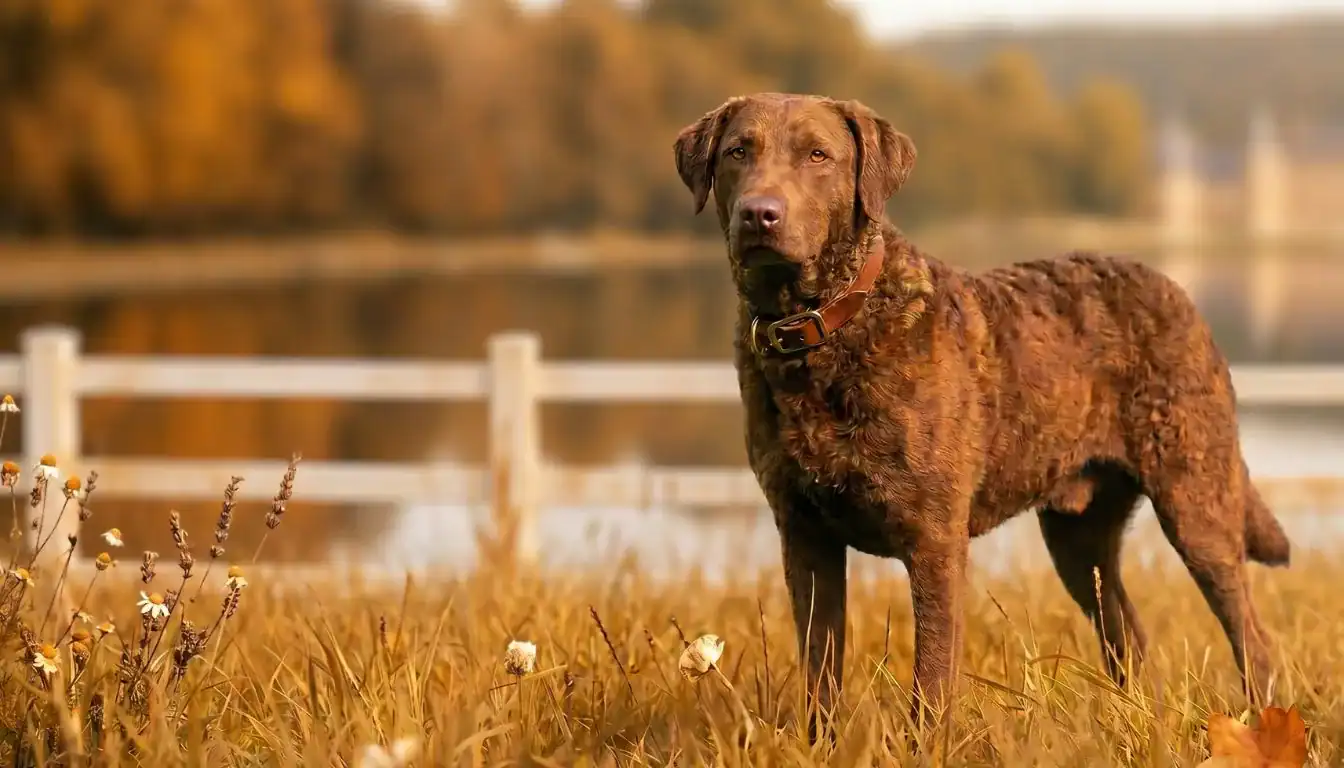
The Chesapeake Bay Retriever looks like a typical retriever but behaves very differently. Unlike the friendly, outgoing Labrador Retriever, this American gun dog breed is independent, protective, and built for serious waterfowl work along the Maryland coast. For the right owner, they are one of the most loyal and capable dogs you can own. For the wrong one, they quickly become overwhelming.
This breed earned its reputation in the icy currents of the Chesapeake Bay, where dogs regularly swam miles through brutal cold weather to retrieve ducks for market hunters. That history of isolated, demanding hunting shaped a dog that thinks for itself, guards its territory, and bonds intensely with its household. For experienced owners, the Chesapeake Bay Retriever offers a level of loyalty, toughness, and working ability that few breeds can match.
This guide combines practical ownership experience with AKC breed standards and field trial records. The Chesapeake Bay Retriever is best suited for active, experienced owners who can match the breed’s intensity. Their exercise requirement, behavioral suitability concerns, and leadership demands are consistently underestimated by families wanting a simple backyard pet.
While their retrieving drive makes them extraordinary hunting companions, their care demands are significantly higher than most people anticipate.
Reality Check
The Chessie is not a Labrador-type family dog. They are independent, protective, and require experienced handling. If you are looking for a universally friendly retriever that greets every stranger with a wagging tail, this is not the right breed. If you want a tough, devoted working partner that bonds deeply with one household, keep reading.
Affiliate Disclosure: K9Sphere is a participant in the Amazon Services LLC Associates Program. As an Amazon Associate, K9Sphere earns from qualifying purchases made through links in this article at no extra cost to you.
Breed Snapshot
📊 Vitals and Lifespan
Height
Males: 23-26 in (58-66 cm)
Females: 21-24 in (53-61 cm)
Weight
Males: 65-80 lb (29-36 kg)
Females: 55-70 lb (25-32 kg)
Lifespan
10-13 years
AKC Group
Sporting Group
Origin
United States (USA)
🇺🇸
⭐ Personality Traits
Ratings (1 to 5). This driven athlete balances fierce dedication to work with a notoriously stubborn streak. Suitability is limited to dedicated homes ready for structured leadership.
History and Origin
The breed traces its origin to the early 19th century along the Maryland coast, where the brutal conditions of the Chesapeake Bay demanded a retriever unlike anything that existed in American or British sporting circles.
📌 The Shipwreck (1807)
Two Newfoundland puppies were rescued from the British brig Canton, which wrecked off the Maryland coast. These dogs, named Sailor and Canton, were crossed with local dogs, hounds, and possibly the Irish Spaniel. The development of the Chesapeake Bay Retriever began from these foundation crosses.
📌 Market Hunting Era (Mid-1800s)
During the 19th century, commercial duck hunters along the bay needed dogs that could retrieve hundreds of waterfowl per day in freezing, choppy water. The breed was refined for raw endurance, a waterproof coat, and the independent drive needed to operate in isolated duck blinds without constant handler direction.
📌 AKC Recognition (1878)
The Chessie was among the first breeds registered by the American Kennel Club and became the official state dog of Maryland. Their reputation as the toughest retriever in American field work was firmly established by this point.
📌 Modern Working and Companion Roles
Today the breed serves as both a competitive trial competitor and a devoted companion for seasoned handlers. While commercial market hunting has ended, the Chessie retains every ounce of the drive, protectiveness, and stamina that defined its early development in the bay region.
The history of isolated bay hunting shaped every aspect of the modern Chessie. Their self-directed decision-making, territorial guarding instinct, and relentless swimming drive are not behavioral problems. They are the exact traits that made this breed indispensable to the waterfowl hunters of Maryland.
Physical Characteristics
The Chessie is a muscular, medium to large dog built for power through aquatic environments rather than speed on land. Their size and structure reflect centuries of selection for swimming endurance in brutal conditions.
🌊 Dense Oily Coat
The defining feature is their dense, oily coat. A harsh, wavy outer layer and a fine, wooly undercoat contain natural oils that repel water so effectively that the dog dries significantly faster than most breeds after shaking off. This coat is functional armor, not cosmetic, and should never be stripped by frequent bathing with harsh shampoos.
💪 Build and Structure
A deep, broad chest allows them to break through ice when swimming. They are slightly longer than tall, giving them a distinct, driving gait on land and exceptional power when swimming. Their clear yellow or amber eyes and deadgrass-to-dark-brown coat colors provide natural camouflage in outdoor hunting environments.
Because of their dense insulation, the Chessie struggles in hot weather and is very susceptible to overheating if heavily exercised in warm conditions. Those in southern states near warmer climates must manage outdoor timing carefully to avoid heat-related complications.
Temperament
The name is misleading. While the Chessie shares an intense love for water and retrieving with the Labrador Retriever, their core personality is vastly different. They are serious, reserved, and intensely loyal to their household.
✅ Strengths
Unwavering loyalty to their family. Watchful without being hostile when properly socialized. Exceptional problem-solving intelligence and problem-solving ability. Thrives with a job to do, whether retrieving, tracking, or advanced obedience. Their bond with their primary handler is among the strongest in the sporting group.
⚠️ Challenges
Naturally suspicious of strangers and requires extensive early socialization. Stubborn and independent, often testing boundaries to see what they can manage on their own. Intense drive that turns destructive without sufficient daily demands. Their prey drive toward small animals, birds, and duck-like targets is high and difficult to override without a rock-solid recall command.
When well-bred and thoroughly socialized, a Chessie should be stable, confident, and controllable. That instinct is not a flaw. It is a deliberate trait bred into them over generations of protecting the day’s catch and the hunter’s gear in isolated Maryland blinds.
Health
The Chessie is generally a robust breed capable of intense physical exertion. Their heavy build and demanding lifestyle do predispose them to specific orthopedic and genetic issue areas that responsible owners must monitor throughout the dog’s lifespan of 10 to 13 years.
🔴 Hip and Elbow Dysplasia
What to watch for: Their solid frame places significant stress on their frame, especially during heavy-impact retrieving. Dysplasia occurs when the joint forms improperly, causing painful friction that leads to severe arthritis over time.
Screening: Both parent dogs must have OFA or PennHIP clearance before breeding. Providing an orthopedic dog bed helps relieve pressure on aging limbs. For active retrievers, nutritional support through a quality hip and mobility supplement can delay the onset of structural wear.
🔴 Gastric Dilatation-Volvulus (Bloat)
What to watch for: Like many deep-chested breeds, they are very susceptible to bloat. The stomach fills with gas and twists, cutting off blood supply within minutes. Symptoms include pacing, a distended abdomen, drooling, and unproductive retching.
Screening: Discuss prophylactic gastropexy with your veterinarian. Feed multiple smaller meals daily and enforce rest periods after eating.
🟡 Progressive Retinal Atrophy (PRA)
What to watch for: This degenerative genetic condition causes gradual deterioration of the retina, eventually leading to blindness. The first sign is typically night blindness, where the dog hesitates in low-light conditions.
Screening: A DNA test is available and mandatory for reputable lines. Ask any source for proof of PRA clearance.
🟡 Degenerative Myelopathy
What to watch for: Degenerative myelopathy is a progressive disease of the spinal cord that causes gradual loss of coordination in the hind legs. Early signs include dragging of the rear paws and difficulty rising from a resting position.
Screening: DNA testing identifies carriers and affected dogs. Responsible breeders screen for this condition before producing litters.
Consult your veterinarian before starting any supplement regimen for your dog.

Nutramax Cosequin for Dogs Joint Health Supplement
Use for: Supporting structural integrity in powerful, driven sporting breeds prone to hip and elbow dysplasia. Contains glucosamine and chondroitin to help maintain cartilage function during heavy retrieving and swimming sessions.
View on AmazonGrooming
Their dense, oily coat requires specific care to maintain its repellent qualities. Frequent bathing strips the natural oils that protect them in frigid conditions, so unless they have rolled in something foul, a simple rinse with clean water is typically sufficient. That distinct musky odor is a breed hallmark, not a sign of poor hygiene.
They drop coat heavily. During the spring coat blow, they drop an astonishing amount of dense undercoat. Weekly brushing is required year-round, scaling up to daily sessions during coat-blow season. Regular brushing with an appropriate grooming tool designed for double-coated breeds helps maintain the skin and coat effectively, reaching the dense underlayer rather than just the surface.

Dog Ear Cleaning Finger Wipes with Aloe Vera and Eucalyptus Oil
Use for: Weekly ear cleaning for swimming-oriented retrievers with drop ears that trap moisture after each session. Regular wiping removes debris and prevents the bacterial and fungal infections common in breeds that spend a lot of time swimming.
View on AmazonActivity
A quick walk around the neighborhood is rarely enough for this breed. The Chessie requires vigorous daily effort to maintain both physical and mental balance. A bored Chessie with unspent energy will rapidly become a destructive one.
🌊 Ideal Exercise
Swimming is their best and preferred outlet. Providing safe access to swimming for retrieving games burns stamina efficiently while reducing impact stress on their joints. If swimming access is not available near your location, long hikes, dummy retrieving drills, and agility work are excellent substitutes for this outdoor-oriented breed.
🧠 Mental Stimulation
They need mental activity as much as physical exertion. Advanced obedience training, scent work, or structured drills keep their intelligent minds occupied. Without a job to do, the willfulness that defines this breed escalates into destructive frustration.
Nutrition
Feeding a sporting dog requires matching caloric intake directly to their daily demands. The diet of a dog swimming for hours in cold water looks vastly different from a companion living mostly indoors.
🐶 Puppy Stage
Controlled growth is critically important. A growth-controlled formula helps regulate calcium and phosphorus levels, preventing rapid bone development that contributes to future skeletal concerns. Monitor their weight closely and keep them lean to protect developing skeletal structures.
🐕 Adult Stage
Active adults require premium protein from quality food to support their significant muscle mass. Adjust feeding portions seasonally. They will need much more calories during cold-weather swimming sessions and fewer during periods of lower output to prevent obesity. A performance-oriented nutrition plan works best for dogs in regular field or hunting work.
🐕🦺 Senior Stage
As their metabolism slows, transition to a senior diet rich in omega-3 fatty acids and omega-3 supplement ingredients. Splitting meals into two smaller portions helps reduce the ongoing risk of bloat while easing digestion.
Training
Training a Chessie is an exercise in mutual respect. They are not eager-to-please pushovers. If you use overly harsh methods, they will shut down completely. If you are too soft, they will ignore you and manage the situation themselves.
👑 Firm Leadership
They require a confident handler who sets clear, consistent boundaries from day one. The Chesapeake must understand that the handler controls resources and territory. Once that respect is established through positive, structured training methods, they become incredibly loyal and responsive partners.
🛑 Early Socialization
Because they are naturally wary, intensive socialization is mandatory during the critical socialization window. Introduce them to a wide variety of people, environments, and other animals. They must learn the difference between a normal visitor and a genuine threat. A poorly socialized Chessie can become difficult to manage without proper training. Reliable recall training must begin early and continue throughout their life, as their prey drive toward waterfowl, birds, and small animals is intense.
Breed Comparison
How does the Chessie compare to other popular retrieving breeds? The comparison reveals significant differences in temperament, working style, and lifestyle suitability vs the more commonly owned retrievers.
| Attribute | Chesapeake Bay Retriever | Labrador Retriever | Nova Scotia Duck Tolling Retriever |
|---|---|---|---|
| Weight | 55-80 lb (25-36 kg) | 55-80 lb (25-36 kg) | 35-50 lb (16-23 kg) |
| Temperament | Serious, reserved, willful | Friendly, outgoing, eager | Alert, high-energy, vocal |
| Coat Type | Oily, harsh, wavy | Dense, short, straight | Medium length, water-repellent |
| Stranger Reaction | Reserved, suspicious | Highly welcoming | Reserved but not hostile |
| Training Style | Requires steady, fair leadership | Highly eager to please | Requires constant engagement |
| Ideal Owner | Experienced, active leaders | First-time owners, families | Active sports competitors |
The Chesapeake is the toughest of the sporting retriever group. The Labrador and Golden Retriever are universally friendly and eager to please, making them the best choice for first-time owners. The Toller is smaller and more handler-focused but shares the Chessie’s intense drive. The Flat-Coated offers a more cheerful alternative for those who want retriever athleticism without the guarding edge. If you want a dog that loves every stranger it meets, the Chessie is not the right breed.
FAQ
Are Chesapeake Bay Retrievers good family dogs?
Direct Answer: Yes, but they are best suited for households with older children who understand dog boundaries.
Context: They form intense, loyal bonds with their household members and can be affectionate indoors. However, their powerful build, intense drive, and reserved nature mean they are not the easygoing lifestyle match often associated with other retrievers. They require a child-aware household.
Approach: Never leave big dogs unsupervised with toddlers. Teach children to respect the dog’s resting space and avoid rough play that triggers prey drive.
Do they shed a lot?
Direct Answer: Yes. They drop coat moderately year-round and blow their coat heavily twice a year.
Context: Their dense double coat is designed to protect them in freezing water, which means there is a lot of hair to lose. During the spring and fall transitions, the coat loss is significant and noticeable on floors and furniture.
Approach: Daily brushing during coat-blow season with an undercoat rake is mandatory to control the dead hair.
Are they aggressive?
Direct Answer: They are not inherently hostile, but they are highly guarded and naturally suspicious of strangers.
Context: Unlike a Labrador that assumes everyone is a friend, a Chessie assumes an unknown person is a potential threat until the handler signals otherwise. If unsocialized, this guarding instinct can escalate into dangerous guarding behavior.
Approach: Extensive, positive socialization early in life is required to teach them how to safely assess new situations.
Can they live in an apartment?
Direct Answer: A Chessie is rarely a good fit for apartment living, unless the owner is extremely committed to meeting their intense physical and training needs daily.
Context: They are large, sporting dogs that require significant daily demands. Without a secure yard or immediate access to open spaces for running and retrieving, they will become intensely frustrated and destructive indoors.
Approach: They require a home with a spacious, securely fenced yard and someone committed to vigorous daily outdoor output.
How much exercise do they really need?
Direct Answer: Expect to provide 1 to 2 hours of intense exertion every single day, including retrieving, swimming, or structured drills.
Context: A slow walk on a leash is insufficient. They must run, swim, and retrieve. Their stamina was developed for full days of hunting in harsh conditions, so their reserves are massive.
Approach: Incorporate water retrieving, long off-leash hikes in secure areas, and focused training drills to burn off both physical and mental stamina.
Are they easy to train?
Direct Answer: They are very intelligent but can be remarkably headstrong, requiring an skilled handler with firm, fair methods.
Context: They learn quickly but will often test boundaries. They do not respond well to repetitive, boring drills or harsh corrections, which cause them to shut down completely. Positive reinforcement with varied, challenging sessions works best.
Approach: Keep training sessions short, varied, and engaging. Use premium rewards and avoid confrontational methods that trigger their autonomous nature.
Why does their coat smell different?
Direct Answer: The distinct musky odor comes from the natural oils in their coat that provide waterproofing, and it becomes more noticeable when wet.
Context: This oily texture is a breed hallmark, not a sign of poor hygiene. Bathing them with harsh shampoos to remove the smell actually damages the coat’s functional ability to repel icy conditions.
Approach: Accept the natural scent. Only bathe them when absolutely necessary, using a mild, breed-appropriate shampoo.
Are they suitable for first-time dog owners?
Direct Answer: Generally, no. The Chessie requires someone with background handling strong-willed, protective breeds.
Context: The combination of intense drive, self-directed thinking, guarding instincts, and a need for firm leadership can overwhelm a novice owner. Their willfulness is not defiance; it is bred-in autonomy that requires skilled handling to manage properly.
Approach: First-time owners committed to the breed must work closely with a professional trainer who has direct background in sporting and gun dog breeds.
Finding a Puppy
Responsible Breeder
A responsible source will proudly show you CHIC certification and OFA clearance for hips, elbows, and eyes. They will interview you extensively to ensure you understand the breed’s intense conditioning and leadership standards. Expect to join a waitlist, as ethical sources produce limited litters each year. Dogs from proven competition or champion bloodlines are rarely available for immediate sale.
Rescue and Adoption
Chesapeake Bay Retrievers are occasionally found in rescues due to mismatched ownership expectations. Owners often surrender them when they hit adolescence and their stubbornness and intensity levels become overwhelming. If breeders near you have no puppies for sale, choosing to adopt an adult allows you to bypass the chaotic adolescent phase and assess their mature character firsthand, which is often the best path for seasoned handlers.
🚩 Red Flags to Watch For
- No OFA clearance documentation for hips or elbows on parent dogs
- Puppies available immediately with no interview, application, or waitlist
- Sources advertising “rare” colors or massive size over working ability and health screening
- Sellers who claim the breed requires minimal effort or is suitable for apartment living
- No questions asked about your fencing situation, lifestyle, or background with sporting breeds
Personal Observation
💭 Personal Observation
My rescue Moti taught me exactly what happens when a naturally suspicious dog is not properly socialized early. Moti is selectively dog-aggressive, and handling him around unfamiliar dogs requires constant vigilance, leash control, and reading his body language before situations escalate. He decides within seconds whether another dog is acceptable, and once that decision is made, changing his mind is nearly impossible. The Chessie operates on a similar wiring, except their suspicion extends to unfamiliar people, not just dogs. If you skip the critical socialization window, you will spend years controlling a 75-pound dog that has already decided every stranger is a threat. That is not aggression. It is a guarding instinct that was never given proper boundaries. Invest the time early in life, or you will pay for it in ongoing cost and stress for the rest of the dog’s life.
Conclusion
The Chessie is an extraordinary American athlete built for the harshest conditions on the eastern seaboard. For the prepared handler who offers firm leadership, ample daily exercise, access to lakes or rivers, and a job to do, they are an unrivaled partner with unwavering loyalty and incredible intelligence.
For those seeking an easygoing, universally friendly dog, the con side of Chessie ownership is clear: their guarding instincts, willful streak, and intense physical demands mean they are best suited for experienced, dedicated handlers. The search should continue with a Labrador or Golden Retriever instead. The pro of choosing a Chesapeake is that no other breed will match their toughness, devotion, or capability in demanding harsh conditions.
Disclaimer: This article is intended for informational purposes only. It does not replace professional veterinary advice. Always consult a qualified veterinarian for health-related decisions about your dog.


