

If you are comparing a Caucasian Shepherd vs Tibetan Mastiff, you are weighing two of the largest and most ancient livestock guardian breeds on earth, both built over centuries to face predators in freezing mountains. Each is a giant breed and a serious guard dog, fiercely loyal and deeply territorial, that demands an experienced owner.
The Caucasian Shepherd is a guardian of the Caucasus mountains, bred to confront wolves and bears head-on. The Tibetan Mastiff is a Himalayan guardian that watched over nomadic camps and monasteries, relying more on an intimidating presence and a booming bark than on physical confrontation.
These two are cold-climate specialists with massive double coats, independent minds, and a guarding instinct that peaks at night. This breed comparison focuses on the key differences that matter, namely how each one responds to a threat, how much it reacts, and the day-to-day demands of grooming, space, and management. Most experts consider neither a good first dog.
This guide compares them across the areas that actually decide the match, from temperament and guarding style to exercise, family fit, health, grooming, and cost. Every section ends with a clear take on who that round favors.
Read it as a decision tool for choosing between a Caucasian Shepherd and a Tibetan Mastiff. Each offers the same fierce loyalty, so by the final verdict you should have a clear sense of which giant guardian fits your home, your experience, and the kind of protector you actually want.
Affiliate Disclosure: K9Sphere is a participant in the Amazon Services LLC Associates Program. As an Amazon Associate, K9Sphere earns from qualifying purchases made through links in this article at no additional cost to you. Product recommendations are based on independent research and editorial judgment, not paid placement.
Quick Answer and Who Each Round Favors
⚡ The 30-Second Answer
Choose the Caucasian Shepherd if you want the heavier, more confrontational guardian that meets threats with physical conviction and has very low tolerance for strangers. Choose the Tibetan Mastiff if you want a guardian that leans more on an intimidating bark and presence, tends to engage physically only as a last resort, and is generally a touch more aloof than reactive.
These two guard dog breeds may look similar at a glance, but each needs an experienced owner, intense early socialization, secure fencing, and lifelong management. Neither suits a first-time or casual owner.
| Category | Favors |
|---|---|
| Temperament | Depends on experience |
| Guarding style | Depends on needs |
| Lower reactivity | Tibetan Mastiff |
| Physical deterrence | Caucasian Shepherd |
| Family fit | Roughly even |
| Grooming and shedding | Tibetan Mastiff (slightly) |
| Health and longevity | Roughly even |
| Noise and neighbors | Caucasian Shepherd (slightly) |
| First-time owners | Neither, ideally |
Caucasian Shepherd vs Tibetan Mastiff at a Glance
Whether you search Caucasian Shepherd vs Tibetan Mastiff or Tibetan Mastiff vs Caucasian Shepherd, this table lays out the core differences in size, appearance, purpose, temperament, and lifestyle fit. Scan the rows that matter most to you for a quick view of the similarities and differences, then read the detailed sections below.
| Attribute | Caucasian Shepherd | Tibetan Mastiff |
|---|---|---|
| Height (male) | 26–30 in (66–76 cm) | 26+ in (66+ cm) |
| Weight (male) | 100–170 lb (45–77 kg) | 90–150 lb (41–68 kg) |
| Lifespan | 10–12 years | 10–12 years |
| Origin | Caucasus region | Tibet and the Himalayas |
| Breed group | Foundation Stock Service | Working (AKC) |
| Original purpose | Flock and estate guardian | Camp and monastery guardian |
| Energy type | Low, explosive bursts | Low to moderate, patrolling |
| Threat response | Confronts and defends | Bark first, engage last |
| Stranger tolerance | Very low | Low, aloof |
| Coat | Thick double coat, heavy shed | Thick double coat with mane |
| Climate preference | Cold mountain | Cold, high altitude |
| Main health risks | Hip dysplasia, bloat, cardiac | Hip dysplasia, bloat, thyroid |
| First-time owner? | Not recommended | Not recommended |
📜 A Quick Origin Story
These two breeds are ancient guardians shaped by harsh mountain life, but on different continents. The Caucasian Shepherd, also known as the Caucasian Ovcharka, developed over more than two thousand years across the Caucasus mountain range, in what is now Georgia, Armenia, Azerbaijan, and southern Russia.
There, shepherds bred it to fight off wolves and bears. The FCI recognized the breed in 1984, and the AKC lists it in the Foundation Stock Service.
The Tibetan Mastiff comes from the Himalayas, where nomadic herders and monks used it to guard isolated camps and monasteries from snow leopards and wolves. Centuries of geographic isolation preserved one of the oldest dog lineages, and it guarded by night while smaller dogs handled daytime duties. The AKC recognized the breed in 2006.
Who Should Choose the Caucasian Shepherd
🐕 The Caucasian Shepherd is the right pick if:
- You want the heavier, more physically confrontational of the two guardians.
- You have a secure, rural property and can lead a dog with very low stranger tolerance.
- You live in a cold climate that suits a dense, weather-resistant coat.
- You can commit to lifelong socialization and confident, consistent leadership.
- You want a defensive guardian that will escalate to physical action against a genuine threat.
Who Should Choose the Tibetan Mastiff
🐕 The Tibetan Mastiff is the right pick if:
- You want a guardian that relies more on presence and a deep bark than physical engagement.
- You prefer a slightly more aloof, less reactive temperament than the Caucasian.
- You can tolerate significant nighttime barking and have understanding neighbors.
- You live in a cold climate and have a tall, secure fence for a territorial patroller.
- You can manage a strong-willed, independent thinker with calm, firm boundaries.
Temperament and Personality
The Caucasian Shepherd and Tibetan Mastiff are each serious guardians that bond intensely with their own family and view strangers with deep suspicion, but the intensity differs. The Caucasian Shepherd is widely regarded as having exceptionally low stranger tolerance, wired over centuries to treat anyone outside the family as a potential threat to be monitored.
The Tibetan Mastiff is also aloof with strangers but tends to run a little less reactive, often choosing to observe and warn rather than immediately confront. It is a famously independent thinker that understands a command quickly, then decides whether it agrees, which can read as stubbornness to owners expecting instant obedience.
With their own people, each breed shows a surprisingly gentle, devoted side, and both can be affectionate with children they are raised with. The practical difference is the management ceiling. The Caucasian’s sharper reactivity raises the bar for handling, while the Tibetan Mastiff’s aloof independence asks for patience rather than constant threat management.
🎯 Verdict: This round depends on your experience. The Caucasian Shepherd suits a seasoned guardian owner who can manage very low stranger tolerance, while the Tibetan Mastiff suits someone who wants a slightly less reactive but equally independent protector. Each is devoted to its own family.
Guarding Style
This is the heart of the comparison. For all their similarities, the differences in how the two breeds guard are what really set them apart. The Caucasian Shepherd is a confrontational guardian. It prefers to warn a threat off with a deep, resonating bark, but it is more willing than most to escalate to physical action when it decides a threat is genuine.
The Tibetan Mastiff leans on deterrence first. Its instinct is to patrol the perimeter, position its considerable bulk between the threat and its home, and use an intimidating bark to warn off anything unfamiliar, engaging physically only as a last resort. Both make their own tactical decisions rather than waiting for a handler’s command.
Neither breed should be acquired as a weapon, and each is safest when its protective instincts are shaped by professional training and intense, lifelong socialization. A stable guardian of either breed learns to tell a normal visitor from a real threat, which only structured exposure from puppyhood can teach.
🎯 Verdict: Depends on the deterrence you want. The Caucasian Shepherd offers more physical conviction against a genuine threat, while the Tibetan Mastiff offers powerful presence and a bark-first style that engages physically only as a last resort. Both are formidable when properly raised.
Exercise and Climate Needs
Neither breed is a high-energy athlete, and their exercise needs are similar and moderate. The Caucasian Shepherd operates in bursts of vigilance, conserving energy until it needs to patrol or respond, and a daily walk plus secure time to roam its territory is typically enough. The Tibetan Mastiff is much the same, content with a steady daily walk of around 45 minutes and time to patrol a secure yard.
Climate is where these two are nearly identical and equally demanding. Each is a cold-weather specialist with a dense double coat built for freezing mountains, and both struggle in heat. The Caucasian is at real risk above roughly 80 degrees Fahrenheit, and the Tibetan Mastiff needs deep shade and cool indoor space through summer. In warm regions, reliable cooling, shade, and climate management are essential for either breed.
For each breed a tall, solid fence is non-negotiable, and an electronic or invisible fence is often a poor fit, since a determined guardian of either breed may push through the correction toward a perceived threat. Apartment living does not suit either, as confinement without patrol access leads to behavioral decline.
🎯 Verdict: Call it even, with a shared warning. Each has moderate exercise needs but is a true cold-climate specialist that suffer in heat and require secure, solid fencing. Neither belongs in a hot climate or an apartment without serious accommodation.
Family Fit
Tibetan Mastiffs and Caucasian Shepherd dogs can each be devoted family guardians in an experienced home, and both bond closely with their own people, often positioning themselves between a child of the household and any perceived threat. The Caucasian Shepherd is described as surprisingly gentle and affectionate with its own family despite its intensity outdoors.
The Tibetan Mastiff is equally devoted to its household but is often a poor fit around visiting children unless closely supervised, since it may read rough play or shouting among kids as a threat and step in. The Caucasian shares this exact risk, and each can misjudge a chaotic playdate, so structured introductions and supervision are essential.
For each breed, the deciding factors are the same. Each needs a calm household, clear routines for securing the dog when unfamiliar guests arrive, and an owner who keeps close supervision whenever a giant guardian breed interacts with young children. Neither is a casual family pet, but each can thrive in a prepared, experienced home.

Nutramax Dasuquin with MSM Soft Chews for Dogs
Use for: Both breeds are giant, heavy-boned guardians prone to hip and elbow dysplasia. Glucosamine, chondroitin, and MSM help support cartilage and cushion the joints carrying these massive frames.
Check price on Amazon🎯 Verdict: Roughly even. Each is devoted to its own family, including children it is raised with, and both can misread visiting children without supervision. Each demands a prepared household, and neither should be left unsupervised with young kids.
Grooming and Shedding
These dogs carry thick double coats that demand real commitment, so this round is close. The Caucasian Shepherd sheds steadily year-round and blows its undercoat heavily twice a year, in spring and fall, when clumps of dense fur come out in handfuls and daily brushing becomes mandatory.
The Tibetan Mastiff sheds moderately through the year and typically blows its undercoat in one massive annual shed, usually in spring, rather than the Caucasian’s two seasonal blowouts. Its coat forms a distinctive lion-like mane around the neck, and line-brushing down to the skin is the best way to clear the dead undercoat during shedding season.
Neither breed needs frequent bathing, since both coats repel dirt naturally, and both should be brushed with an undercoat rake and a sturdy deshedding tool rather than a surface brush. The Tibetan Mastiff’s single major annual blow can be marginally easier to plan around than the Caucasian’s twice-yearly events, but each is a heavy-shedding giant.
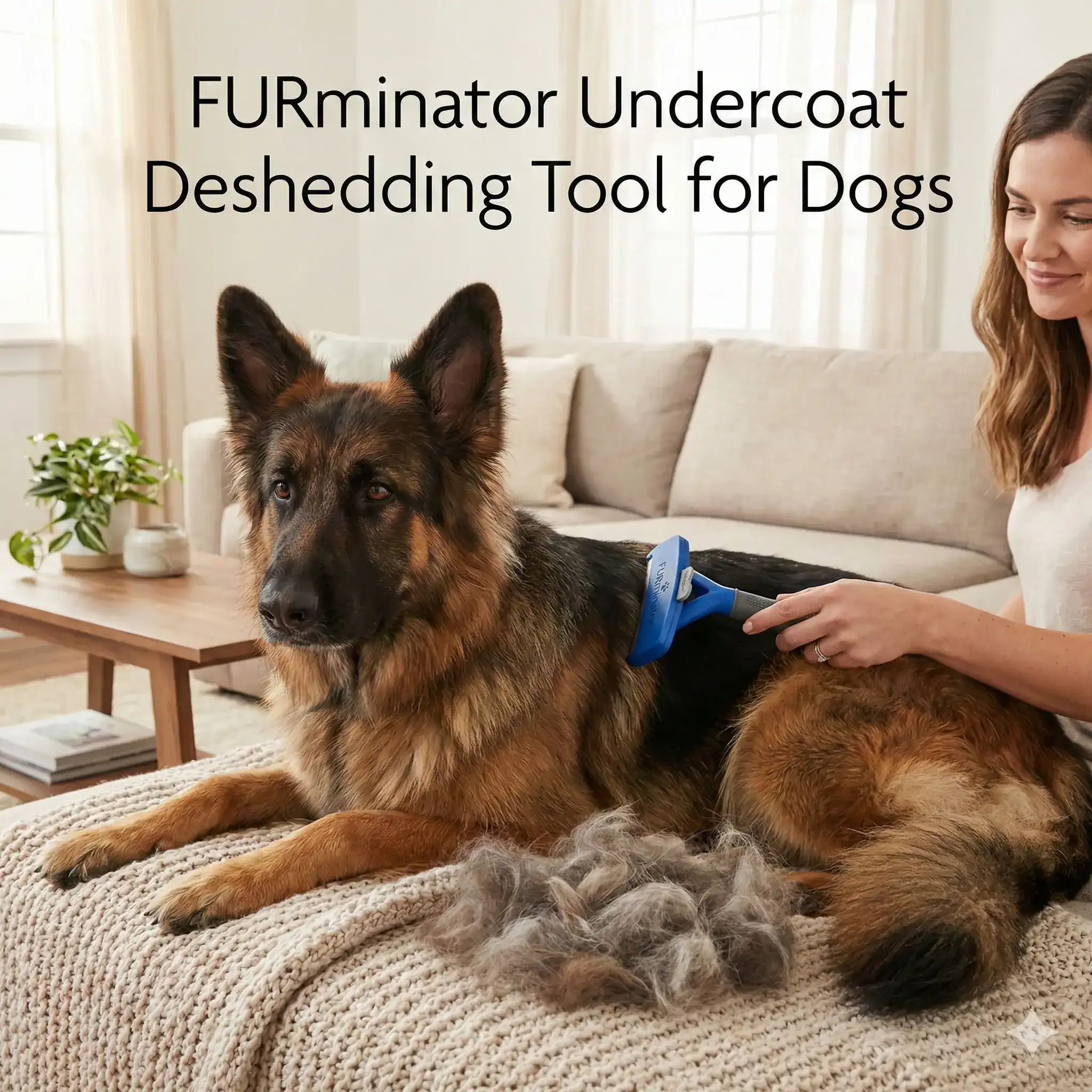
FURminator Undercoat Deshedding Tool for Dogs
Use for: Reaching through the dense topcoat of either breed to pull loose undercoat during seasonal blows. A deshedding tool clears the wooly underlayer that a standard surface brush leaves behind.
Check price on Amazon🎯 Verdict: A slight edge to the Tibetan Mastiff. These are heavy-shedding double-coated giants, but the Tibetan Mastiff’s single big annual blow can be easier to manage than the Caucasian’s twice-yearly blowouts. Either way, expect serious fur and a real grooming routine.
Health and Longevity
These dogs average 10 to 12 years, a respectable span for giants, and both share the orthopedic burden that comes with great size. Hip and elbow dysplasia and bloat are primary concerns for each, so OFA or equivalent screening of both parents is non-negotiable, and feeding two smaller meals a day rather than one large one helps lower bloat risk.
The Caucasian Shepherd’s specific watch points include obesity and the cardiac stress that giant frames place on the heart, which makes strict weight management essential. The Tibetan Mastiff adds hypothyroidism, manageable with daily medication once diagnosed, plus entropion and ectropion, eyelid conditions that are surgically correctable.
For each breed, keeping the dog lean is the single most effective way to protect aging joints and the heart. Neither is reliably healthier than the other, but a well-screened dog of either breed, fed carefully and kept at a healthy weight, has a good chance of living out its full giant-breed lifespan in sound condition.
Veterinary Disclaimer: This article is for educational purposes only and is not a substitute for professional veterinary advice, diagnosis, or treatment. K9Sphere’s authors are experienced dog owners, not licensed veterinarians. Always consult a qualified DVM regarding any health concerns about your dog.
Always consult your licensed DVM for personalized medical advice.
Because each carries so much weight on vulnerable joints, a supportive sleeping surface matters as they age. See our guide to the FurHaven orthopedic dog bed for a frame that distributes weight evenly and eases pressure on aging joints.
Health Information Sources. Data compiled from the following references.
- American Kennel Club Caucasian Shepherd Dog breed reference
- American Kennel Club Tibetan Mastiff breed standard reference
- OFA CHIC Program recommended screening protocols
Always consult your licensed DVM for personalized medical advice.
🎯 Verdict: Roughly even, with different watch points. The Caucasian leans toward cardiac stress and obesity risk, while the Tibetan Mastiff adds thyroid and eyelid issues. Both demand parental health screening, lean weight, and bloat precautions. A well-bred dog of either breed can be sound.
Cost and Legal Realities
Pricing differs in availability more than in headline cost. The Tibetan Mastiff from a reputable breeder often runs roughly 2,000 to 5,000 US dollars or more, while the Caucasian Shepherd’s price varies widely by region and pedigree and can be harder to source, since screened litters are scarce outside Eastern Europe. Pricing varies by country, with UK, Canada, and Australia rates differing.
Ongoing costs are high for both, driven by giant-breed food, larger veterinary fees, and the looming expense of emergency care. Bloat surgery is a major expense for either deep-chested breed, varying widely by clinic and region, and joint care for a dog over 100 pounds adds up over a lifetime.
On the legal side, both breeds can appear on breed-specific legislation lists and homeowner insurance exclusion lists because of their size and guarding instincts. Rules vary by city, state, province, insurer, and housing provider, so always verify the current rules in your area before committing to either breed.
🎯 Verdict: Roughly even, with availability the bigger hurdle for the Caucasian. Upkeep costs are similar and high for both, and each can trigger insurance and housing restrictions. Confirm local rules and budget for giant-breed care before choosing either.
Noise and Neighbors
This is a genuine point of difference and an underrated one. These dogs guard most intensely at night, but the Tibetan Mastiff is especially known as a nighttime barker, instinctively patrolling the perimeter after dark and using a deep, booming bark to warn off anything unfamiliar. In a quiet rural setting this is an asset, but in a suburban or semi-rural area it can create serious friction with neighbors.
The Caucasian Shepherd is also far more vigilant and vocal after sunset, and neighbors tend to hear every alert. Its bark is part of its early-warning system before any physical response. Neither breed is a quiet suburban companion, and both can generate noise complaints in close quarters, so honest assessment of your living situation matters.
For each breed, the realistic answer is space and distance from close neighbors rather than trying to train the barking away entirely, since night alertness is hardwired. A large rural property suits each one far better than a tight residential lot where a booming guardian bark at 2 a.m. becomes everyone’s problem.
🎯 Verdict: A slight edge to the Caucasian Shepherd only because the Tibetan Mastiff’s reputation as a dedicated nighttime barker is so pronounced. In truth these are vocal night guardians better suited to rural space than close suburban living. Plan for the noise either way.
First-Time Owners
Most breed experts strongly advise against either breed as a first dog, and neither is a sensible first-time dog, since both regularly end up in rescue when owners underestimate them. Each is a breed of dog shaped to work alone, not to please a handler. That independent, self-directed judgment is exactly what makes them so demanding for a newcomer.
The Caucasian Shepherd is arguably the harder of the two for a novice, given its very low stranger tolerance and greater willingness to escalate physically. A training mistake with a friendly breed creates a bad habit, but a training mistake with a 150-pound confrontational guardian can create a genuine public-safety problem.
The Tibetan Mastiff is no beginner’s dog either, since its independent, strong-willed mind tests inconsistent owners and its nighttime barking and heavy coat add to the workload. For either breed, the honest path for a newcomer is to build experience with a more manageable large breed first, and to work with a professional trainer from day one.
🎯 Verdict: Neither, realistically, for a true beginner. Each is a powerful, independent guardian that punishes inconsistency, with the Caucasian’s reactivity making it the tougher first guardian. Build experience with an easier breed first, or work with a professional trainer from the start.
Head-to-Head Scorecard
Ratings are from 1 to 5 stars and reflect suitability for an experienced home, not raw working ability. A higher Reactivity Level means the dog is quicker to escalate, which is a deterrent for some owners and a management burden for others.
Caucasian Shepherd
Tibetan Mastiff
Reading the scores: Both breeds score low on First-Timer Fit and Trainability by design, reflecting independent guardian minds rather than low intelligence. The Caucasian rates higher on Reactivity Level, meaning it is quicker to escalate, while the Tibetan Mastiff is marginally more measured.
Common Questions about Caucasian Shepherd vs Tibetan Mastiff
Is a Caucasian Shepherd or Tibetan Mastiff better for protection?
Direct Answer: Each is a formidable guardian, so this comes down to style rather than one being simply better.
Context: The Caucasian Shepherd is more confrontational and willing to escalate physically, while the Tibetan Mastiff leans on presence and an intimidating bark, engaging physically only as a last resort. Each is highly effective.
Management: Match the style to your needs and experience, and shape either breed’s instincts with professional training rather than encouraging aggression.
Which breed is bigger or stronger?
Direct Answer: The Caucasian Shepherd is generally the heavier and more powerfully built of the two.
Context: Male Caucasians range from 100 to 170 pounds, with exceptional individuals exceeding 180, while male Tibetan Mastiffs typically run 90 to 150 pounds. These are immensely strong giants with thick double coats that add to their apparent bulk.
Management: Plan for giant-breed handling either way, and train leash manners early while the dog is still a manageable size.
Which is easier to train?
Direct Answer: Neither is easy, since each is an independent guardian, but the difference is small.
Context: Each breed understands commands quickly but decides whether to comply based on its own read of a situation. The Caucasian’s sharper reactivity can make it harder to manage, while the Tibetan Mastiff is stubborn but slightly less reactive.
Management: Use calm, firm, consistent leadership and positive reinforcement for both, and start professional training and socialization early.
Which breed is more aggressive?
Direct Answer: Neither breed should be assumed to be dangerous solely because of its breed label.
Context: Temperament is influenced by genetics, breeding quality, socialization, training, environment, and individual personality. The Caucasian tends to be more reactive and confrontational, while the Tibetan Mastiff is more aloof, but both were bred as guardians rather than indiscriminate attackers.
Management: Choose temperament-tested lines, prioritize intense lifelong socialization, and never tolerate human-directed aggression in either breed.
Are they good with children?
Direct Answer: Each can be devoted to children in its own family, but both require strict supervision.
Context: These dogs often position themselves protectively around their own children, yet each may misread rough play between kids and visiting friends as a threat. Their giant size also makes accidental knockdowns a risk.
Management: Supervise all interactions with young children, manage visiting playmates carefully, and give the dog a quiet, secure retreat space.
Which breed has a stronger bite?
Direct Answer: Both breeds have extremely powerful jaws, but there is no scientifically verified test proving one consistently exceeds the other.
Context: Bite-force figures circulated online for giant guardians are largely estimates rather than controlled measurements, so they should not be treated as hard facts. In real life, temperament, training, and control matter far more than any bite-force number.
Management: Focus on early socialization, reliable obedience, and bite-inhibition training rather than comparing jaw strength, since a well-raised dog of either breed should never use its bite on a person.
Which is physically more powerful?
Direct Answer: The Caucasian Shepherd is generally heavier and more willing to engage physically, while the Tibetan Mastiff relies more on presence.
Context: Conflict between giant guardian dogs is unpredictable and dangerous, so physical comparisons are not a useful way to choose a breed. Responsible ownership focuses on preventing confrontation rather than measuring one dog against another.
Management: Whichever breed you choose, prioritize flawless leash control, secure containment, and lifelong socialization so raw physical power never becomes a problem.
Which breed barks more at night?
Direct Answer: The Tibetan Mastiff is especially known as a dedicated nighttime barker, though the Caucasian is also very vocal after dark.
Context: These dogs guard most intensely at night and use a deep, booming bark as an early-warning system. The Tibetan Mastiff’s nighttime barking is one of the most common reasons owners surrender the breed.
Management: Plan for rural space and distance from close neighbors rather than trying to train the barking away, since night alertness is hardwired in both breeds.
Can either breed handle hot weather?
Direct Answer: No, each is a cold-climate specialist that struggles significantly in heat.
Context: Each carries a dense double coat built for freezing mountains, so summer temperatures pose a real overheating risk. The Caucasian is at risk above roughly 80 degrees Fahrenheit, and the Tibetan Mastiff needs deep shade and cool indoor space.
Management: Provide air-conditioned indoor space in summer for either breed, and restrict activity to early morning or late evening in warm weather.
Which costs more to own?
Direct Answer: Costs are broadly similar and high for both, though the Caucasian can be harder to source.
Context: Both have comparable upkeep driven by giant-breed food and veterinary care, with the Tibetan Mastiff often priced around 2,000 to 5,000 dollars and the Caucasian varying widely by region. Screened Caucasian litters are scarce outside Eastern Europe. Pricing varies by country, with UK, Canada, and Australia rates differing.
Management: Budget for giant-breed ownership either way, including an emergency reserve, and confirm insurance and local legality before committing.
Are these breeds legal to own?
Direct Answer: Each is legal in many places but can face breed-specific restrictions in some jurisdictions.
Context: Each breed may appear on breed-specific legislation lists and insurance or housing exclusion lists because of its size and guarding instincts. Rules differ at national, state, and local levels.
Management: Verify local breed-specific legislation, housing rules, and insurance before committing, since restrictions vary widely by location.
Which is better for a first-time owner?
Direct Answer: Neither is suitable for a true beginner, though the Tibetan Mastiff is marginally less reactive.
Context: The Caucasian’s very low stranger tolerance and confrontational style make it especially demanding, while the Tibetan Mastiff’s independence and nighttime barking still challenge novices. Both are powerful guardians that punish inconsistency.
Management: If you are new to guardian breeds, work with a professional trainer from day one, or build experience with an easier large breed first.
What is the main difference between a Caucasian Shepherd and a Tibetan Mastiff?
Direct Answer: The Caucasian Shepherd is a heavier, more confrontational guardian, while the Tibetan Mastiff is a more aloof, bark-first protector.
Context: These are ancient cold-climate giant guardians with independent minds, but the Caucasian is more reactive and willing to escalate physically, while the Tibetan Mastiff relies more on presence and is the more dedicated nighttime barker.
Management: Decide based on your experience and setting. The Caucasian suits a seasoned guardian owner with rural space, while the Tibetan Mastiff suits someone wanting a slightly less reactive giant.
The Quick Decision Shortcut
If you want the fast version before the full verdict, use this self-check. Pick the column that sounds more like you and your household.
🐕 Choose the Caucasian Shepherd if
- You want the heavier, more confrontational guardian.
- You have rural space and prior large-guardian experience.
- You can lead a dog with very low stranger tolerance.
- You want a protector that will escalate against a real threat.
🐕 Choose the Tibetan Mastiff if
- You want a guardian that relies on presence and bark.
- You prefer a slightly more aloof, less reactive temperament.
- You can tolerate heavy nighttime barking.
- You have a cold climate and a tall, secure fence.
Final Verdict
There is no universal winner here, because these are two magnificent ancient guardians separated mainly by how they meet a threat. The Caucasian Shepherd and the Tibetan Mastiff share enormous size, deep family devotion, cold-climate coats, and a workload that overwhelms casual owners. The right one depends on the kind of protector you actually want.
Choose the Caucasian Shepherd if you want the heavier, more confrontational guardian that meets a genuine threat with physical conviction. It rewards a seasoned owner with rural space who can lead a dog of very low stranger tolerance and sharp reactivity.
Choose the Tibetan Mastiff if you want a guardian that leans on presence and a booming bark, engaging physically only as a last resort, with a slightly more aloof and measured temperament. Its dedicated nighttime barking and once-a-year coat blow are the main tradeoffs to plan for.
The honest throughline is this. Each breed demands an experienced owner, intense lifelong socialization, secure solid fencing, a cold-friendly climate, and serious grooming. Get those right and either becomes an extraordinary guardian. Get them wrong and either becomes far more dog than a casual owner can safely manage.
🏆 Bottom line: The Caucasian Shepherd is the heavier, more confrontational guardian; the Tibetan Mastiff is the more aloof, bark-first one. Both are ancient cold-climate giants for experienced owners. Match the breed to your experience, your climate, and the guarding style you actually want.
Personal Observation
💭 From my own experience
My senior rescue Rusty has a quiet guarding streak. He likes to sit outside and watch the yard, deciding on his own who belongs. Both of these breeds do that same job, just far bigger and far stronger.
That is the real difference between them. The Caucasian acts on its own judgment more quickly and more physically, while the Tibetan Mastiff is more likely to hold its ground and warn first.
My rescue Chun Chun barks at anything new near the gate, and scaling that alert up to a 150-pound dog is why fencing, space, and calm, steady rules matter so much with either breed.
Read More. For the full single-breed guides, see our Caucasian Shepherd Dog breed guide and our Tibetan Mastiff breed guide. If you are weighing other giant guardians, our Kangal Shepherd Dog guide covers a faster, wide-ranging flock protector, and both breeds benefit from our roundup of the best brushes for shedding dogs.
Editorial Disclaimer: This article is for informational and educational purposes only. It does not constitute veterinary advice, medical diagnosis, or treatment recommendations. Always consult a licensed veterinarian before making health-related decisions for your pet.
Accuracy Notice: While every effort has been made to ensure the information presented here is accurate and current, breed information evolves and individual dogs vary. If you spot a factual error or have updated information from a verified source, please contact us so we can review and update.
Product Disclosure: Product recommendations are based on independent research and editorial judgment. Individual results may vary. K9Sphere participates in the Amazon Services LLC Associates Program and other affiliate programs, and earns from qualifying purchases at no additional cost to you.
Last reviewed: June 2026. Article reviewed for accuracy on the date shown above.


