
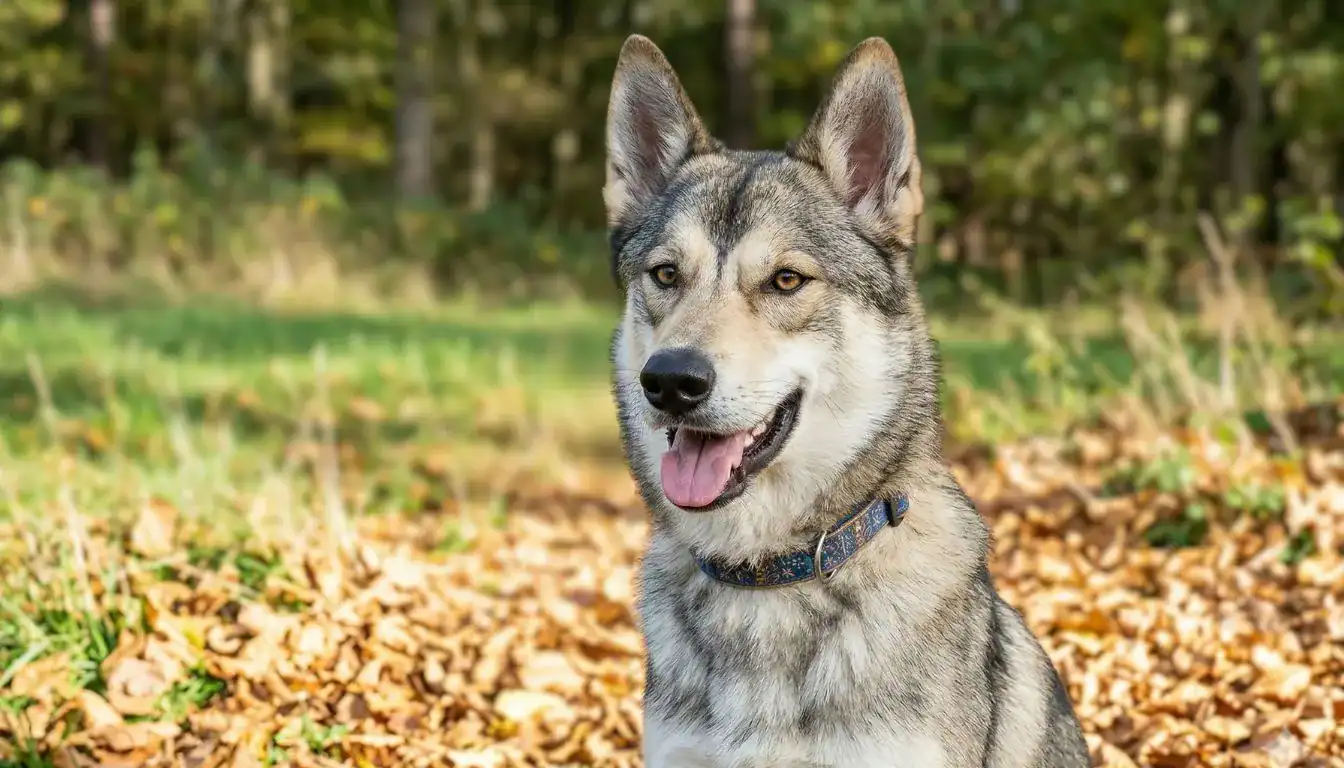
The Tamaskan Dog is a large UK-developed working dog breed created from 2006 onwards using Siberian Husky, Alaskan Malamute, and German Shepherd foundation stock, with additional Finnish sled-dog outcross bloodlines to refine appearance and endurance. The origin story is more modern than most owners realize, and the dog you take home today comes from a carefully managed registry rather than ancient working lines.
The resemblance to a wild canid is so precise that animal control officers in multiple countries have been called to investigate reports of “loose predators” that turned out to be one of these dogs lounging in a suburban backyard. Every part of that wolf-alike appearance was engineered on purpose. Modern registered dogs are bred as fully domestic animals, though some foundation lines carry distant wolf ancestry in their historical pedigrees.
This guide combines working-dog experience with TDR breeding protocols, OFA orthopedic screening data, and genetic testing requirements from the International Tamaskan Register to outline the reality of owning this developing working dog breed.
The breed remains rare worldwide, with TDR-registered programs running waitlists that often stretch past twelve months. A realistic timeline from application to bringing a puppy home sits near 18 to 24 months. This is not a breed you adopt on impulse or find in a pet store. The entire acquisition process assumes a serious, committed owner.
The wolf-like looks draw people in. Living with one means managing severe separation anxiety, heavy seasonal coat blowouts, high exercise needs, and a pack-oriented social drive that does not come with an off switch. Temperament and suitability assessment matter more than curb appeal.
Affiliate Disclosure: K9Sphere is a participant in the Amazon Services LLC Associates Program. As an Amazon Associate, K9Sphere earns from qualifying purchases made through links in this article at no extra cost to you.
Breed Snapshot
📊 Vitals and Lifespan
Height
24-28 inches (61-71 cm)
Weight
55-99 lb (25-45 kg)
Lifespan
14-15 years
Registry
TDR / UKC / ARBA
(Not AKC)
Origin
United Kingdom
🇬🇧
⭐ Personality Traits
Ratings (1 to 5). A highly intelligent dog built for endurance work, with intense pack bonding and a demanding high-maintenance temperament.
History and Origin
This is a relatively recent breed compared to ancient arctic working lines. The project roots trace back to the United Kingdom in the 1980s, where enthusiasts wanted to create a household dog that closely resembled a wild canid but behaved reliably like a domestic pet. The formal registered breed emerged in 2006.
📌 1980s: UK Foundation Crosses
Early enthusiasts in the United Kingdom began crossing Alaskan Malamutes, Siberians, and German Shepherds to produce wolf-alike household dogs. These initial crosses eventually led to the Utonagan and Northern Inuit Dog breeds.
📌 Early 2000s: Finnish Outcross
Disagreements over bloodline diversity prompted a breakaway group to source working sled-dog outcross stock from Finland. Integrating these dogs with the existing UK lines stabilized the physical traits and improved athletic performance.
📌 February 2006: Registry Established
The Tamaskan Dog Register (TDR) was formally founded to maintain strict DNA profiling, orthopedic clearances, and ophthalmic screening for all registered breeding stock.
📌 May 2006: First Registered Litter
The first generation of TDR-registered puppies was born at Alba in Scotland, combining the English foundation bloodlines with the Finnish outcross additions. This moment is treated as the official birthdate of the breed.
📌 2010s-Present: Global Recognition
Approved programs now operate across Europe, North America, and Australia. The breed gained recognition from ARBA (2013), UKC, KCUSA, IABCA, and ICKC. It remains unrecognized by the AKC and FCI.
The primary goal of the breed program remains clear: preserving the striking lupine appearance while eliminating the unpredictable behaviors associated with recent hybrids. Every currently registered animal must trace its lineage back to approved foundation stock.
Physical Characteristics
At first glance, a well-bred specimen is virtually indistinguishable from a wild canid to the untrained eye. These are big, athletic dogs standing 24 to 28 inches (61-71 cm) tall. Males typically weigh between 65 and 99 pounds (29-45 kg), while females are proportionally smaller but still substantial.
🏗️ Size and Build
The build is lithe and graceful, moving with an effortless, ground-covering stride typical of endurance sled dogs. Unlike the heavy-boned Alaskan Malamute, this breed maintains a slender, agile frame built for stamina rather than heavy freighting. The TDR standard calls this a slow-maturing breed, reaching full physical maturity between three and four years of age.
🎨 Coat and Color
The coat is thick and straight, presenting in specific lupine colors: wolf grey, red grey, and black grey. The eyes are almond-shaped, ranging from yellow through amber to brown. Blue eyes are a disqualifying fault in the breed standard because wild canids do not carry blue eyes. The grey palette is the single strongest visual signature of the breed.
Temperament and Traits
Despite the fierce appearance, the temperament is highly social and affectionate. These dogs thrive in a family environment and usually bond deeply with their entire household. This intense group bonding, however, comes with specific behavioral challenges that define the owner experience.
🐕 The Velcro Pack Dog
The pack instinct drives severe attachment to the owner’s household. Many suffer from intense separation anxiety if left alone for long hours, which makes this breed a poor fit for owners working long shifts outside the home.
🧠 Highly Intelligent
They inherit the intelligent problem-solving wiring of their German Shepherd ancestors. They learn commands rapidly but require consistent mental stimulation to prevent destructive boredom behaviors from taking root in the daily routine.
🗣️ Vocal Communicators
Like their spitz ancestors, they rarely bark but are highly vocal. They will howl, grumble, and “talk” to express excitement, frustration, or a desire for attention. The sound carries far enough to be a genuine issue in attached housing.
🛡️ Poor Guard Dogs
Despite appearing intimidating, they generally serve poorly as guard animals. They are typically far too friendly and curious, often greeting strangers with enthusiastic tail wags rather than any useful suspicion or territorial response.
Puzzle feeders, scent-tracking games, and structured obedience drills give them a productive outlet. A Tamaskan Dog with a regular task list is a calm household dog. One without a job will choose its own projects, and those projects rarely involve behavior the owner considers acceptable.
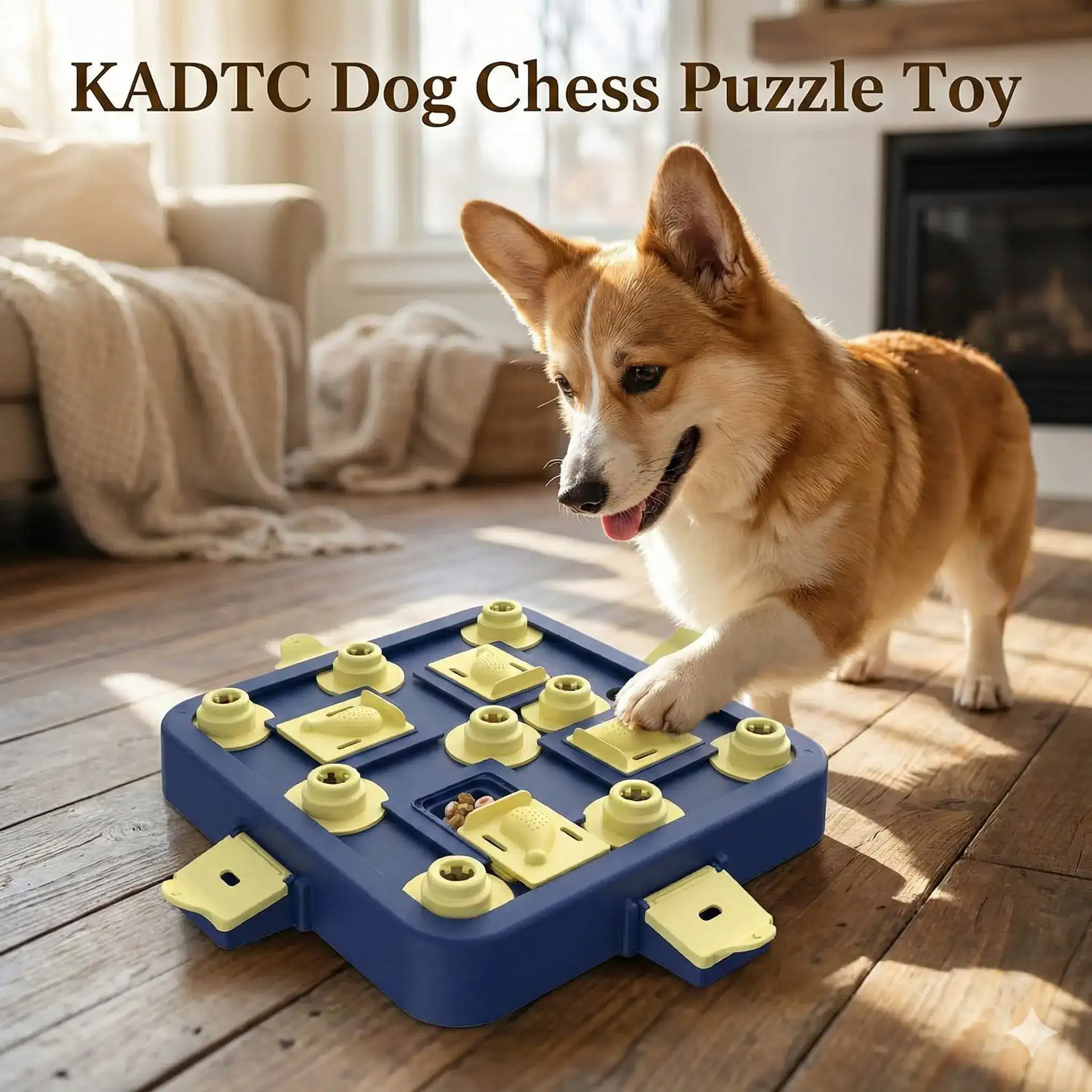
KADTC Dog Chess Puzzle Toy
Use for: Providing mental stimulation to a high-intelligence working dog breed. Ideal for redirecting a sharp, problem-solving mind away from destructive chewing, easing separation-related stress, and keeping active dogs engaged when physical output alone is not enough to drain them.
Check price on AmazonScreening and Conditions
Veterinary Disclaimer: The information provided in this article is for educational purposes only and is not intended as a substitute for professional veterinary advice, diagnosis, or treatment. Always consult a licensed veterinarian for any concerns about your dog.
Medical Information Sources: Data compiled from:
- OFA: Breed-specific joint dysplasia screening protocols
- Tamaskan Dog Register: Mandatory genetic testing guidelines for registered breeding stock
Always consult your licensed DVM for personalized medical advice.
Because this is a developing breed, the TDR mandates stringent screening requirements to prevent the spread of inherited diseases. The diverse foundation stock provides a degree of hybrid vigor, but inherited vulnerabilities still exist. Conscientious breeders follow these protocols strictly, and buyers should demand evidence of full health clearances before committing.
🔴 Hip Dysplasia
What to watch for: Like many larger breeds, this dog is susceptible to hip dysplasia, a condition where the joint forms improperly and eventually leads to painful arthritis. Surgical correction such as total hip replacement is among the most expensive orthopedic procedures in veterinary care.
Screening: Strict OFA evaluation or PennHIP screening of both parent dogs before breeding is the most effective way to reduce the risk in offspring. The TDR has maintained a good breed average hip score of 8.1 through mandatory pre-breeding evaluations.
🟡 Degenerative Myelopathy (DM)
What to watch for: This progressive spinal cord disease leads to hind-limb paralysis in older dogs. It is carried through the German Shepherd influence in the foundation lines.
Screening: A simple DNA test can identify carriers. Responsible programs ensure that two carriers are never mated together.
🟡 Epilepsy and Eye Conditions
What to watch for: Epilepsy has been documented in roughly one in every hundred registered Tamaskan Dogs worldwide. Eye conditions including cataracts and progressive retinal atrophy can also develop with age.
Screening: Annual veterinary ophthalmologist examinations are recommended for breeding stock. Epilepsy screening is based on family history reported through TDR records.
🟡 Cryptorchidism
What to watch for: Roughly 10% of males are reported to have undescended testicles, where one or both remain hidden in the abdominal cavity rather than descending into the scrotum.
Screening: Undescended testicles carry a cancer risk if left in place and should be surgically removed. Affected males should not be used for breeding. Ask breeders about the history of this issue in their lines.
Because these are active dogs carrying significant weight on their joints, providing a supportive orthopedic dog bed from an early age helps alleviate pressure on developing joints and supports recovery after intense sessions. Starting a proven hip and joint supplement early can also help maintain cartilage health before visible symptoms appear.
Grooming and Care
The Tamaskan Dog features a dense double coat built to withstand freezing temperatures. That means they are prolific coat-blowers. They drop fur year-round but experience a massive “blowout” of their undercoat twice a year as seasons change. Weekly brushing becomes daily brushing during those transition weeks.
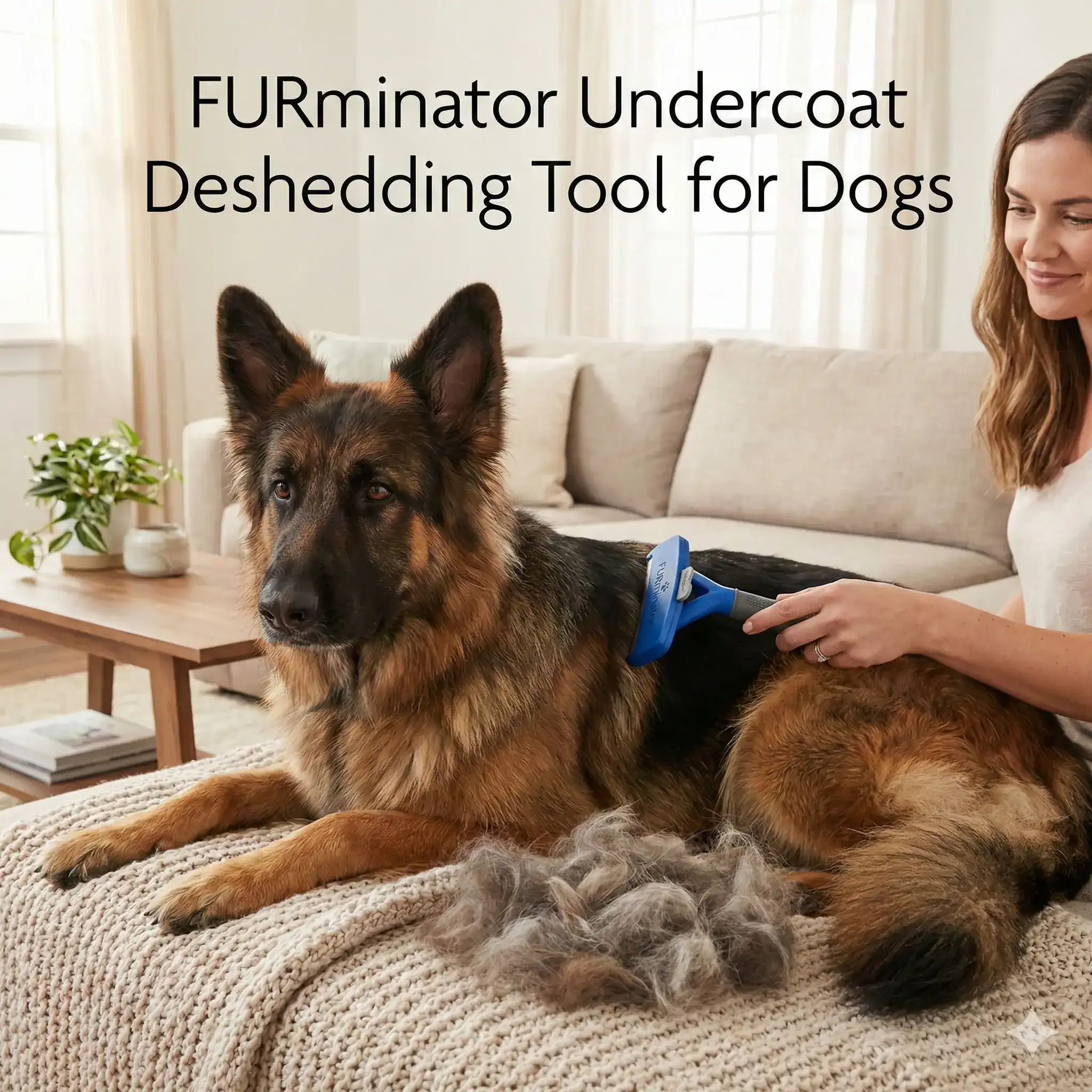
FURminator Undercoat Deshedding Tool for Dogs
Use for: Removing loose undercoat and dead hair before it covers your furniture and clothes. Helps reduce loose fur by up to 90% and keeps double-coated breeds comfortable during heavy blowout seasons. Designed to reach through the topcoat and remove pet hair from the dense undercoat without cutting or damaging the guard hairs.
Check price on AmazonRegular brushing with an appropriate grooming tool helps remove dead hair and reduces the amount of loose fur inside the home. Double-coated breeds benefit from tools designed specifically for dense undercoats rather than standard bristle brushes.
They should generally not be shaved. The coat provides natural insulation against both cold and heat, and shaving destroys the guard hairs, increasing the risk of sunburn and permanent coat damage. Bathing should be reserved for when they are genuinely dirty, because over-bathing strips the protective oils that keep the coat functional.
Exercise and Living Needs
A short daily walk around the neighborhood is rarely enough for this breed. These are endurance athletes built to pull sleds over long distances. They typically need at least 60 to 90 minutes of vigorous cardiovascular output every single day, split between morning and evening sessions where possible.
Many owners successfully engage them in dog sports such as canicross, bikejoring, or urban mushing. Allowing them to pull safely in a harness channels their working instincts into a positive outlet. Primitive sled-type breeds share a similar drive for structured harness work, and people familiar with those lines report the same need for regular job assignments to prevent destructive boredom.
Those who skip the daily exercise routine quickly learn that the dog will self-manage its energy budget. Digging, fence-testing, and chewing through household materials are common reports from under-exercised dogs. This is why a rural or semi-rural home with secure fencing is the ideal setup, though determined owners can make it work in suburban settings with sufficient effort.
Nutrition & Diet
The diet must match athletic output. Because they burn through calories during structured sessions, they need nutrient-dense food, but overfeeding quickly leads to weight gain that stresses their joints. Monitoring body condition across the seasons matters more than following a fixed portion guide.
🐶 Puppy Stage
Growth must be carefully managed. Feeding a size-appropriate large-breed puppy formula helps regulate calcium intake, preventing bone growth abnormalities during the rapid development phase. Free-feeding is not recommended for this breed. Kids in the home should be taught not to offer table scraps, since even occasional treats from multiple hands add up fast.
🐕 Adult Stage
Monitor weight by checking ribs. You should be able to feel them easily beneath the thick fur. Dogs engaged in heavy winter sports may need performance diets with higher fat content, while standard house dogs do well on protein-rich formulas with moderate fat levels.
🐕🦺 Senior Stage
As they age past 8 to 9 years, consider transitioning to a senior formula with joint-support ingredients including glucosamine and chondroitin. Reduce portion sizes slightly to account for decreased activity levels, and schedule more frequent veterinary checkups to catch organ or joint decline early. Split meals into smaller, more frequent portions to ease digestion as the metabolism slows.
Training and Socialization
Training demands patience and consistency. They are highly trainable and pick up commands fast, but they also carry the stubborn, independent streak common to sled-pulling ancestors. The breed rewards calm, methodical handlers and frustrates anyone hoping for instant obedience.
🎓 The Recall Challenge
Many carry a strong prey drive from the sled-dog heritage. Because of this instinct, reliable off-leash recall is notoriously difficult to achieve. Most seasoned handlers advise against letting them off-leash in unsecured, open areas where small animals might trigger a chase response. A long line in fenced areas is the safer compromise.
🤝 Early Socialization
Early socialization is important. Exposing them to a wide variety of people, environments, and other dogs during the critical socialization window prevents the development of fearful or overly reactive behaviors. They generally excel in multi-dog households due to their pack-oriented nature, which is one of the rare traits where their pack instinct becomes an asset.
🛑 Managing the Pack Drive
The attachment to the household is an asset and a liability at the same time. Crate training from day one builds a positive association with alone time. Gradually extend the duration your dog is left unattended, starting with short five-minute absences and working up slowly over weeks. Leaving puzzle feeders and frozen enrichment toys transforms a stressful departure into a productive project.
Tamaskan vs Husky vs Malamute vs Northern Inuit
The Tamaskan Dog looks so similar to several other breeds that it is frequently confused with the Siberian Husky, the Alaskan Malamute, and the Northern Inuit Dog. All four share sled-dog or arctic ancestry, but their breeding goals, physical structure, and temperament differ in important ways that matter for daily ownership.
| Attribute | Tamaskan Dog | Siberian Husky | Alaskan Malamute | Northern Inuit |
|---|---|---|---|---|
| Weight | 55-99 lb (25-45 kg) | 35-60 lb (16-27 kg) | 75-100 lb (34-45 kg) | 55-110 lb (25-50 kg) |
| Original Purpose | Wolf-alike pet and sled work | Racing sled dog | Freight sled dog | Wolf-alike pet |
| Build | Lithe endurance athlete | Light, agile runner | Heavy freighter, stocky | Tall, wolf-like frame |
| Trainability | Moderate-High (independent) | Moderate (very independent) | Moderate (stubborn) | Moderate (reserved) |
| Separation Anxiety | Severe in many dogs | Moderate | Moderate | Severe in many dogs |
| Guard Instinct | Very low | Very low | Very low | Low to moderate |
| First-Time Owner? | Not Recommended | Challenging | Challenging | Not Recommended |
| Vet Cost Burden | Moderate-High | Low-Moderate | Moderate | Moderate-High |
| Living Space | Secure 6ft fenced yard | Yard strongly preferred | Yard strongly preferred | Secure yard required |
The Siberian is considerably smaller and has a longer, more established breeding history with full AKC recognition. The Alaskan Malamute is heavier-boned and built for freighting rather than speed. The Northern Inuit shares this breed’s lupine appearance and separation-anxiety tendencies, but its breeding program has historically been less standardized. For owners weighing all four, the Siberian is the most accessible and the easiest to find a qualified trainer for. The other three require seasoned handlers comfortable with spitz-type independence.
Common Questions about the Tamaskan Dog
Are Tamaskan Dogs part wolf?
Direct Answer: Modern registered dogs are bred as fully domestic animals, though some foundation lines carry distant wolf ancestry in their historical pedigrees.
Context: The breed was intentionally developed using Nordic sled dogs and the German Shepherd as foundation stock to produce a wolf-alike appearance. Responsible TDR-registered breeders do not introduce recent wild genetics into the bloodline, and the breed standard treats such crosses as a disqualification.
Management: Before buying, confirm with the breeder that all parent dogs are TDR-registered and carry no recent wolf content. Check your local laws, because some jurisdictions define wolfdog by any wolf ancestry rather than recent crosses only.
Are Tamaskan Dogs suitable as apartment dogs?
Direct Answer: No, keeping them in an apartment is challenging and usually not ideal for their suitability profile.
Context: They are large, vocal, and prone to howling. Combined with their tendency for separation anxiety, they often generate noise complaints from close neighbors. Destructive chewing is also common when they do not get enough daily physical output.
Management: They do best in rural or suburban homes with securely fenced yards (6-foot minimum height). If you get one, make sure they can safely stretch their legs and burn off real energy.
Are Tamaskan Dogs aggressive toward strangers?
Direct Answer: No, they are generally very friendly and sociable with new people.
Context: The intimidating appearance often leads people to assume they are fierce protectors. In reality, they are usually highly welcoming and lack the territorial suspicion required for guard work.
Management: Rely on their appearance as a visual deterrent, but do not expect them to physically defend your property. They are generally gentle around kids when raised with them, though their size and howling can overwhelm very young children.
How much does a Tamaskan Dog shed?
Direct Answer: They shed moderately all year and heavily twice a year.
Context: Because of their cold-weather heritage, their double coat cycles out massive amounts of dead hair during seasonal transitions. You will find “tumbleweeds” of grey fur drifting across your floors. This is the single most-reported grooming issue from owners.
Management: Invest in a good-quality vacuum cleaner and commit to deep brushing sessions several times a week during blowout seasons.
Can Tamaskan Dogs live with cats?
Direct Answer: It depends heavily on early socialization, but caution is required.
Context: The breed carries a notable prey drive from the sled-dog heritage. While many can live peacefully with indoor cats if raised alongside them from a young age, a fleeing outdoor cat may instantly trigger the chase instinct.
Management: Never leave a new one unsupervised with smaller household members until a solid, tested relationship has been established over months of careful introduction.
What is the price of a Tamaskan Dog?
Direct Answer: They are among the more expensive rare breeds due to limited litters, extensive orthopedic and DNA screening, and long import waitlists.
Context: The premium reflects the breed’s scarcity, the expense of importing diverse bloodlines, and the orthopedic and DNA screening required by the TDR. Contact TDR-registered breeders directly for current pricing.
Management: Budget carefully and expect to be placed on an approved waitlist for 12 to 24 months before a puppy becomes available.
Do Tamaskan Dogs tolerate hot weather?
Direct Answer: They struggle significantly in hot, humid climates.
Context: The dense double coat is designed to trap body heat to survive freezing snow. In temperatures above 80°F (27°C), the risk of overheating rises sharply. Heat tolerance is the single biggest climate issue for this breed.
Management: Keep them in air-conditioned environments during summer months and limit strenuous movement to the coolest early morning or late evening hours.
What is the typical Tamaskan Dog lifespan?
Direct Answer: The typical lifespan runs 14 to 15 years, which is long for a large breed.
Context: The diverse foundation stock appears to give this breed genuine hybrid vigor, resulting in a notably long lifespan relative to its size. Large breeds typically average 10 to 12 years, so the Tamaskan’s 14-to-15-year span is a real advantage.
Management: Protect that long lifespan with strict OFA hip screening at acquisition, DNA testing for DM carrier status, lean body condition throughout adulthood, and consistent exercise well into the senior years.
Finding a Puppy
Because of the exotic appearance, the market is unfortunately full of backyard sellers, kennel mills, and scammers selling lookalike mixes or actual wolfdog hybrids under this breed’s name. Securing an authentic, healthy dog requires careful research and a willingness to wait. Owners who rush the process almost always regret it.
Before buying a Tamaskan Dog puppy, run this 4-step check: (1) Can you commit to 60 to 90 minutes of structured physical and mental exercise every day for the next 14 to 15 years? (2) Is your budget prepared for extensive import fees, waitlist deposits, and potential orthopedic or DNA health reserves? (3) Does your household include someone home for most of the day, or can you hire a dog walker to prevent severe separation anxiety? (4) Have you contacted the TDR or a national Tamaskan club to discuss the breed’s true temperament with current owners? If any answer is no, reconsider the breed.
🏠 Responsible Breeder
The only reliable way to secure a healthy, authentic puppy is through the Tamaskan Dog Register (TDR). The TDR maintains a strict list of approved breeders who mandate DNA profiling, OFA joint scoring, and eye certifications before any breeding takes place. Expect to fill out a detailed application, undergo a home interview, and wait over a year for an available litter.
🐾 Adopt from Rescue
Breed-specific rescues are uncommon due to the small population, but owners who want to adopt have options. Breed-specific Facebook groups and the TDR occasionally list dogs needing rehoming. Spitz-type rescues that handle Siberian and Malamute surrenders may also have similar mixes or lookalikes available.
🚩 Red Flags to Watch For
- Websites advertising “lookalike wolfdogs” for sale with no screening documentation
- Breeders who cannot provide TDR registration numbers or DNA profiling results
- Puppies priced suspiciously low with no screening documentation
- No joint or eye screening documentation for parent dogs
- Breeders who advertise recent wild ancestry as a selling point rather than a disqualification
Personal Observation
💭 Personal Observation
Over two decades of sharing my home with dogs, I have watched attachment-anxiety play out across many breeds, and the pattern is always the same. A dog that cannot physically see or touch its person will vocalize, pace, and eventually destroy whatever stands between the two of them. Even easygoing breeds show this pattern when the bond runs deep enough. The Tamaskan Dog amplifies that instinct because two of its foundation breeds evolved as pack sled dogs where constant group proximity was the default, and the third (German Shepherd) was selected for intense handler bonding. A household that leaves the dog alone for eight or more hours a day, or that wants an independent breed happy to do its own thing, is not a match this dog will tolerate quietly. The right home is one where someone is nearly always present, and where the dog is expected to participate in the household’s daily rhythm rather than wait for attention.
Conclusion
This breed delivers exactly what it was designed to be: a loyal household dog wearing a predator’s coat. The biggest pro is the deep loyalty and striking presence. The biggest con is the near-constant demand for structured output and human contact.
The ideal candidate jogs, hikes, or bikes daily, works from home or has a flexible schedule, and has prior familiarity with cold-weather or primitive working dog breed lines. Households that check all three boxes will find a fiercely loyal companion. Those missing even one should look elsewhere. There is no honest shortcut around the workload.


