
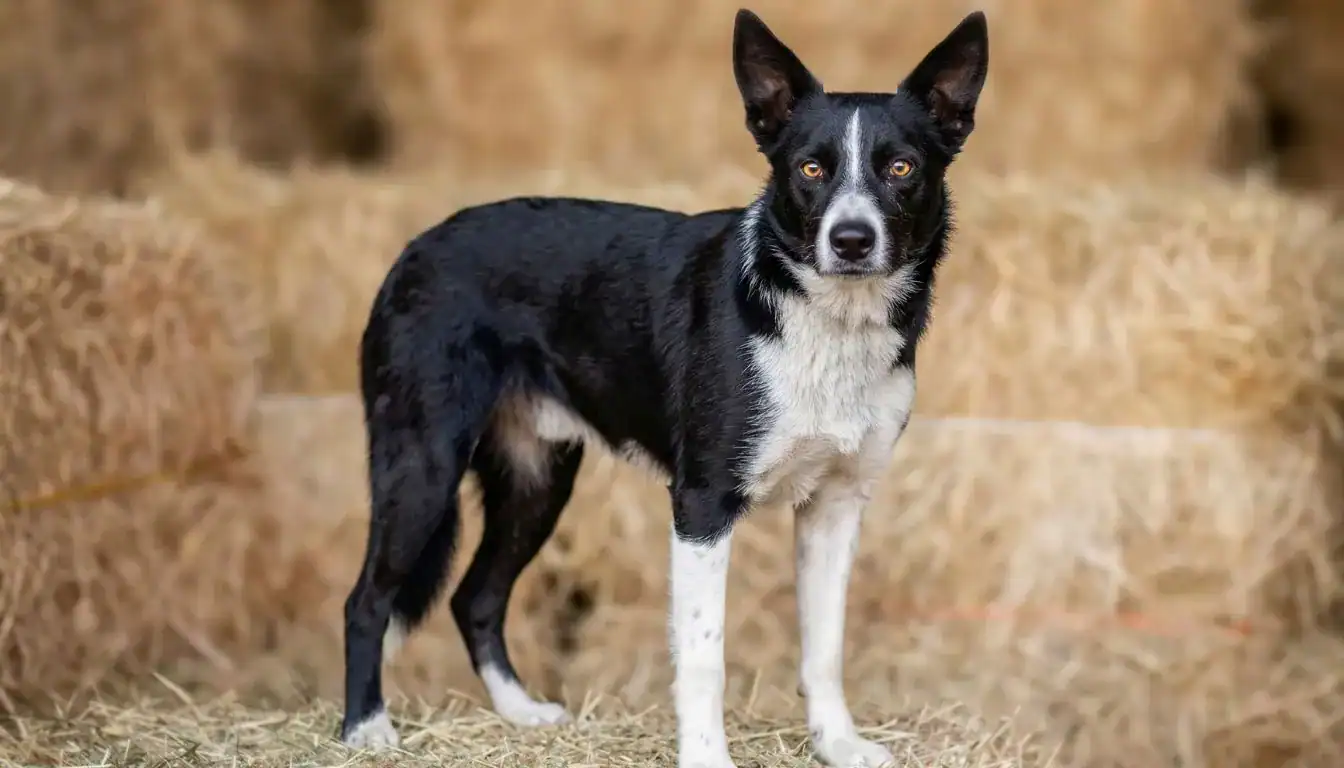
The McNab dog is an American working breed developed in Northern California in the late 19th century to herd cattle and sheep across the steep, heat-baked hills of Mendocino County.
What makes this California creation genuinely compelling is the combination of a tight, heat-tolerant short coat, exceptional stamina, and the kind of independent problem-solving ability that comes from generations of working rough country without constant handler direction. McNabs are medium-sized athletes built to think on their feet, read stock, and respond faster than most handlers can give commands. Properly worked and consistently trained McNabs become intensely devoted partners capable of serious ranch work and top-tier performance in competitive dog sports.
This guide draws on the McNab Shepherd registry, the Wisdom Panel breed reference, Washington State University veterinary data on the MDR1 genetic mutation, and breeder health documentation from Vanir McNab Shepherds to present an accurate picture of what ownership actually involves.
Daily commitments include at least 90 minutes of vigorous physical activity, structured obedience and mental stimulation from week one, consistent socialization with strangers and other dogs throughout puppyhood, and DNA testing for the MDR1 drug sensitivity mutation before any veterinary treatment begins. Households that match these needs are rewarded with a brilliant, loyal partner that adapts across roles from ranch work to agility competition.
For handlers ready to meet the energy demands and provide genuine leadership, this breed delivers fierce loyalty and up to 15 years of devoted working companionship. Households without a securely fenced property, an active lifestyle, or prior experience with high-drive herding dogs should review the daily requirements honestly before committing. The McNab rewards handlers who match its needs.
Affiliate Disclosure: K9Sphere is a participant in the Amazon Services LLC Associates Program. As an Amazon Associate, K9Sphere earns from qualifying purchases made through links in this article at no additional cost to you. Product recommendations are based on independent research and editorial judgment, not paid placement.
Breed Snapshot
📊 Vitals and Lifespan
Height
18–25 in (45–63 cm)
Weight
35–65 lb (16–29 kg)
Lifespan
13–15 years
Breed Group
Herding (Unrecognized by AKC)
Origin
United States
🇺🇸
⭐ Personality Traits
Ratings (1 to 5). This is a highly driven, intense working breed built for sustained ranch labor and competitive dog sports.
History and Origins
The origins of the McNab dog trace directly to one Scotsman, one California ranch, and one practical problem that Scottish imports could not solve. Alexander McNab arrived in Mendocino County in 1868 and settled a vast sheep and cattle operation in what is now Hopland, California. The heavy-coated Scottish Collies he brought from his homeland struggled with the brutal summer heat and the dense, burr-filled brush of the coastal hills.
To build a dog suited to that specific landscape, he crossed his imported collies with tough, short-coated dogs belonging to the Basque sheepherders he encountered near his ranch. The resulting offspring combined the working intelligence of the Scottish lines with the stamina, heat tolerance, and tight coat of Basque herding dogs. Over successive generations on the McNab ranch and neighboring operations, the type stabilized into what ranchers now recognize as the McNab dog. John McNab, Alexander’s son, later imported additional working dogs from the Grampian Hills of Scotland in the early 1900s, including a red dog named Ready who is responsible for the occasional red-and-white coloring still appearing in litters today.
📌 1868: Alexander McNab Arrives
Alexander McNab left Scotland and established a large sheep and cattle ranch in Mendocino County. His imported Scottish Collies could not handle the California heat, triggering the systematic cross that created the breed.
📌 Late 1800s: The Founding Cross
McNab crossed his working collies with the heat-tolerant, short-coated dogs of Basque sheepherders near his ranch. The offspring proved dramatically better suited to the steep, hot terrain of Northern California than the original Scottish imports.
📌 Early 1900s: John McNab’s Importations
John McNab, Alexander’s son, made additional importations from the Grampian Hills of Scotland, including a red dog called Ready. These additions reinforced working ability and introduced the red-and-white coloring still found in the breed today.
📌 Modern Era: Sport and Search and Rescue
While still actively used on working ranches across the Western United States, McNabs now compete at elite levels in agility, disc dog, and herding trials. Search and rescue organizations have adopted the breed for evidence search and missing persons work, where the dog’s stamina outlasts most handler shifts.
Physical Characteristics
The McNab is a medium-sized, off-square dog built for quick acceleration, tight turns, and sustained effort across rough ground. Every structural feature reflects the demands of moving stubborn cattle and sheep through steep, brush-covered terrain without tiring. The body is slightly longer than tall, with a deep chest for endurance, strong hindquarters for explosive movement, and a distinctive set of cat-like feet that provide superior grip on rocky hillsides.
🎨 Coat and Color
The coat is short, tight, and weather-resistant, with a short protective undercoat beneath a smooth, dense topcoat. Black and white is the most common combination, typically featuring a white blaze, white chest, and white-tipped tail. Red and white variants appear in lines that trace back to the dog Ready. The tight coat offers minimal insulation but maximum heat tolerance, which is the core reason the breed was created in the first place.
🏗️ Build and Distinctions
McNabs are noticeably leaner and lighter-boned than most other herding breeds of comparable height. A distinctive trait is the absence of dewclaws on the rear feet, which is common in Border Collies but absent in the McNab. Eyes are typically brown or copper, though blue eyes appear occasionally. The overall impression is of a compact, efficient athlete rather than a heavy working dog.
The Border Collie Comparison
Many people mistake McNabs for short-haired Border Collies. The breeds share common ancestors and look similar at a distance, but they work differently. McNabs use a looser eye when moving stock and work in a more upright posture than the crouching, intense-eye style of the Border Collie. They are also generally more physical on cattle, making them the preferred choice on ranches where stubborn beef cattle rather than sheep are the primary stock. The absence of rear dewclaws is one reliable physical marker that distinguishes them from purebred Border Collies.
Character and Temperament
McNab temperament was shaped by generations of independent work on large ranches where the dog often operated far from handler sight. These dogs were bred to make decisions, not to wait for instructions. That independence is an asset on a working ranch and a management challenge in a suburban home with no outlet for the drive.
🧠 The Need for Work
McNabs are not dogs that rest comfortably when there is nothing to do. Without adequate physical output and mental challenge daily, they invent jobs for themselves. Those self-assigned jobs typically involve destructive chewing, persistent barking, and escape attempts. The drive is not something that can be managed with a longer walk. It requires structured activity that engages both body and mind.
⚡ Athletic Versatility
Beyond ranch work, McNabs excel at agility, disc dog, barn hunt, nose work, and obedience competition. Their combination of speed, agility, and trainability makes them competitive at elite levels in multiple disciplines. Owners who channel the drive into structured sport find that the same intensity that would otherwise cause problems becomes a genuine competitive advantage.
🌿 Herding Instinct
The impulse to control movement is genetic, not trained. McNabs will attempt to herd running children, bicycles, other pets, and moving vehicles if not given a proper outlet and trained out of misdirected herding behavior early. This instinct is manageable with consistent redirection and firm early training, but it never fully disappears and must be accounted for in every household setup.
📢 Handler Bond and Aloofness
McNabs tend to bond intensely to a single primary handler rather than spreading affection broadly across the household. They are genuinely devoted to that person and often become clingy enough to develop separation anxiety without proper independence training. With strangers, they are naturally reserved rather than outwardly friendly, which makes early and sustained socialization non-negotiable for a dog that will encounter new people regularly.
Screening and Conditions
Veterinary Disclaimer: The information in this article is for educational purposes only and is not a substitute for professional veterinary advice, diagnosis, or treatment. K9Sphere’s authors are experienced dog owners, not licensed veterinarians. Always consult a qualified DVM regarding any health concerns about your pet. Never disregard professional veterinary advice or delay seeking it because of something you have read on this site.
Health Information Sources: Data compiled from:
- Washington State University Veterinary Clinical Pharmacology Lab: MDR1 gene mutation data, affected drug list, and DNA testing protocols for herding breeds
- Vanir McNab Shepherds: Health Documentation: Breed-specific epilepsy tracking, DCM2 clarification, and pedigree health screening practices
- Wisdom Panel McNab Breed Reference: Genetic background, breed-specific conditions, and general care data
Always consult your licensed DVM for personalized medical advice.
The McNab is considered a hardy working breed, selected almost entirely for functional ability rather than conformation standards. That working-selection pressure has produced generally robust animals with fewer conformation-driven health problems than many show-bred alternatives. However, specific inherited vulnerabilities tied to collie ancestry require proactive screening and informed veterinary management throughout the dog’s life.
Common Inherited Conditions
🔴 MDR1 Gene Mutation (Drug Sensitivity)
What it is: The Multi-Drug Resistance 1 (MDR1) mutation is a genetic variant present in many collie-type herding breeds, including the McNab. It causes certain common veterinary drugs to cross the blood-brain barrier at toxic concentrations, producing severe neurological reactions including seizures, respiratory failure, and death. Common trigger drugs include ivermectin (found in many heartworm preventatives), certain anti-nausea medications, and specific anesthetics.
Screening: A simple DNA cheek swab submitted to Washington State University’s Veterinary Clinical Pharmacology Lab confirms whether the dog carries the mutation. This test must be done before any veterinary drug treatment begins. Every McNab should be tested.
Management: Inform your veterinarian immediately that your dog is a McNab or collie mix. Provide the DNA test result at every appointment. Your DVM will select alternative medications that are safe for MDR1-affected dogs. Never allow ivermectin-based heartworm products to be used without confirmed test results.
🔴 Idiopathic Epilepsy
What to watch for: Recurrent unprovoked seizures ranging from brief focal episodes to generalized tonic-clonic events. Responsible McNab breeders actively track epilepsy across pedigrees because the condition has a documented genetic component in Border Collie and related collie-type lines. Seizures that last longer than five minutes, or three or more seizures within 24 hours, require immediate emergency veterinary attention due to the risk of permanent brain damage.
Management: Diagnosis requires elimination of structural, metabolic, and infectious causes before an idiopathic classification is confirmed. Long-term medication with levetiracetam, phenobarbital, or potassium bromide effectively controls most cases. Keeping a seizure journal documenting timing, duration, and preceding triggers helps your DVM optimize treatment. Only acquire from breeders who openly disclose epilepsy history in their lines and avoid repeating affected pedigrees.
🟡 Hip Dysplasia
What to watch for: Malformation of the hip joint causes progressive cartilage wear and painful arthritis. In active working dogs, symptoms often appear during the growth phase but may not become clinically obvious until two to three years of age. Early signs include reluctance to jump, a bunny-hopping gait at speed, and stiffness after rest.
Screening and management: Both parents should carry OFA orthopedic clearances prior to breeding. Keeping the dog lean throughout growth significantly reduces dysplasia risk. Adding a quality hip and joint supplement supports cartilage integrity as the dog enters adulthood and the senior years of high mileage ranch or sport work.
🟡 Entropion
What to watch for: Entropion is an inherited eyelid condition where the lid margin rolls inward, causing the eyelashes to contact the cornea continuously. Affected dogs show persistent eye discharge, squinting, pawing at the eye, and in untreated cases, progressive corneal scarring that threatens vision. It is reported in the McNab alongside other collie-descendant breeds.
Management: Mild cases in puppies are sometimes managed with temporary tacking sutures while the face matures. Persistent or severe entropion requires surgical correction to permanently reposition the eyelid margin. Early diagnosis before corneal damage occurs produces the best long-term outcomes. Report any eye discharge or squinting in puppies to your DVM promptly rather than monitoring at home.
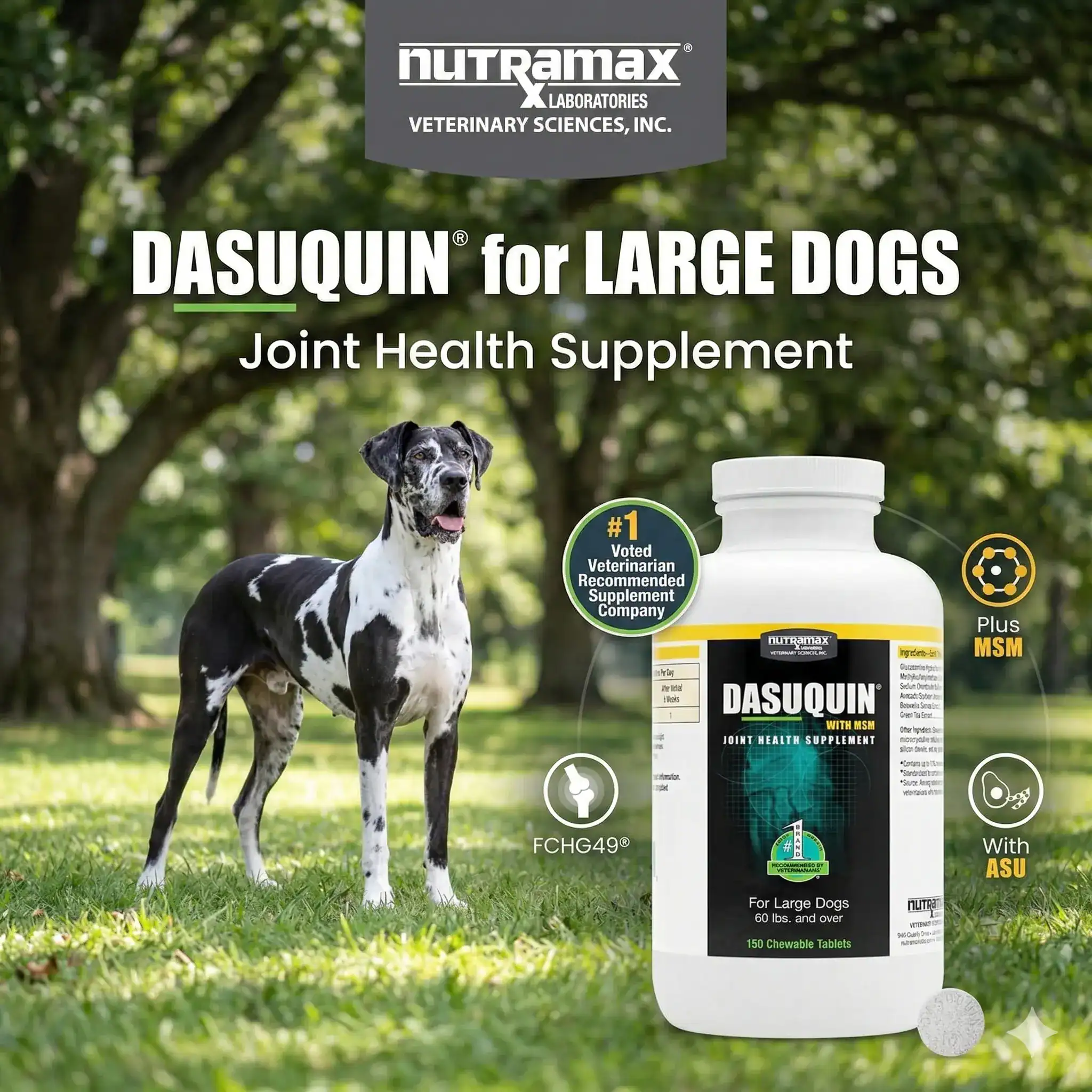
Nutramax Dasuquin with MSM Soft Chews for Large Dogs
Use for: Joint support in active working dogs covering hard ground daily. Combines glucosamine, chondroitin, and MSM to support cartilage integrity across a long working life.
Check price on AmazonGrooming and Coat Care
The McNab’s short, tight, weather-resistant coat is one of the most practical grooming profiles among working herding breeds. There is no long coat to tangle in brush, no dense undercoat that blows seasonally in large volumes, and no specialist trimming required to maintain the breed’s working appearance. The trade-off is minimal insulation against cold and no coat protection from UV exposure on the nose and ear tips during extended outdoor work in bright sun.
Weekly brushing with a rubber mitt or soft-bristle brush removes loose hair and distributes coat oils. During heavier shedding periods, the right brush makes a real difference; our guide to the best brushes for shedding dogs covers options suited to short, dense coats. Bathing every four to six weeks, or after particularly dirty outings, is sufficient for most dogs. Use a mild, pH-balanced shampoo without artificial fragrance. For dogs showing recurrent skin reactions or itchiness, switching to a dog shampoo for itchy skin provides additional relief between veterinary visits.
Nail trimming every three to four weeks prevents overgrowth that alters gait mechanics and accelerates joint stress, which is a meaningful concern in a dog that runs hard on rough terrain daily. Weekly ear checks catch debris and moisture buildup before infections develop. Teeth brushing at least three times per week rounds out a grooming routine that keeps a McNab healthy with minimal time investment compared to long-coated herding alternatives.
Exercise and Living Needs
This is a breed built to work from sunrise to sunset across open country. A 20-minute leash walk does not come close to meeting the daily demand. Plan on at minimum 90 minutes of vigorous outdoor activity daily, split between brisk walks, off-leash running in a securely fenced area, swimming, structured fetch, and training sessions that engage the mind alongside the body.
A securely fenced yard is essential. McNabs focus intensely on movement and will pursue livestock, wildlife, cyclists, and vehicles without hesitation once the herding drive activates. A minimum six-foot fence with no footholds and a dig-proof base is the standard recommendation from experienced handlers. Off-leash work in unfenced public areas is a genuine safety hazard with this breed.
Apartment living is not appropriate for most McNabs. The energy output, the herding tendencies, and the need for real outdoor running make confined shared-housing environments extremely difficult to manage even with dedicated owners. A home with a large, securely fenced yard and access to open land is the setup where this breed genuinely thrives. For working owners, a dog camera that allows remote monitoring and two-way audio can help manage a high-energy dog during separation periods.

Furbo 360° Dog Camera
Use for: Monitoring a high-drive, handler-bonded dog during separation periods. Two-way audio lets you redirect early signs of anxiety or destruction before they escalate, while 360-degree coverage tracks movement across the full space.
Check price on AmazonNutrition & Diet
A breed that runs hard daily requires a diet calibrated to that output. McNabs on light activity days need fewer calories than the same dog covering five miles of rough terrain behind stock. Monitoring body condition rather than relying on bag guidelines is the most reliable way to keep a working McNab in optimal shape across the changing demands of ranch seasons and sport competition schedules.
🐶 Puppy Stage
Feed a high-quality puppy formula appropriate for the dog’s projected adult size. Controlled calcium and phosphorus ratios prevent the accelerated bone development that stresses growth plates in athletic breeds. Three measured meals daily through six months maintains stable energy and supports even skeletal development. Keep puppies lean. A lean puppy grows healthier joints than an overweight one, and joint health is particularly important in a dog that will spend a decade or more working hard ground.
🐕 Adult Stage
Active adults perform best on high-quality formulas with real animal protein as the first ingredient and adequate fat content to sustain energy across long working days. Performance kibble formulated for active breeds is well suited to dogs in regular ranch work or competitive sport. Feed two measured meals daily rather than one large feeding to reduce the risk of gastric dilatation. A visible waist and easily felt ribs are the correct body condition targets.
🐕🦺 Senior Stage
From age eight onward, transition to a senior formula with reduced caloric density, added joint-supporting ingredients, and elevated omega-3 content. This is the life stage when hip arthritis, thyroid changes, and any accumulated joint wear from active working years become most apparent. Annual blood panels from age six onward catch emerging conditions early. Dietary adjustments made proactively in the senior phase significantly slow joint degeneration and extend quality of life. Adding Zesty Paws Salmon Oil provides EPA and DHA at therapeutic ratios that support coat quality, joint health, and inflammatory response in older working dogs.
Training
Training a McNab is fast-paced and genuinely rewarding for handlers with the consistency to match the dog’s intelligence. These dogs process information quickly, master commands after a handful of correct repetitions, and read handler body language with precision. The same intelligence that makes them exceptional working partners also means they learn bad habits just as rapidly as good ones when training is inconsistent.
🛑 Early Socialization Is Non-Negotiable
McNabs are naturally reserved with strangers, a trait that protected livestock from unfamiliar people approaching the flock. Without broad, positive socialization during the critical window before sixteen weeks, that reserve hardens into reactivity. Exposing puppies to children, strangers, other dogs, vehicles, loud environments, and varied surfaces during this period shapes an adult that processes novelty with confidence rather than suspicion. A poorly socialized McNab of this size and drive is genuinely difficult to manage in a public setting.
👑 Obedience as the Foundation
Core commands covering sit, stay, down, heel, and a reliable recall must be established before the dog reaches adolescence at around six to eight months. Recall training inside a fenced area is the only safe approach given the herding pursuit drive. Short, high-value sessions with food rewards produce faster progress than long repetitive drills, which cause McNabs to disengage. Harsh physical corrections undermine trust and create a dog that complies from fear rather than partnership, producing unpredictable behavior in novel situations.
🎯 Managing the Herding Impulse
The instinct to control movement must be redirected rather than suppressed. Teaching a solid “leave it” and a reliable recall gives handlers tools to interrupt herding behavior before it escalates. Enrolling in structured dog sports provides a legal outlet for the same drive that would otherwise be directed at children, cyclists, and other pets. McNabs that have a legitimate working job or competitive sport are dramatically easier to live with than those without any sanctioned outlet for the herding genetics.
McNab Dog vs Border Collie vs Australian Shepherd vs Australian Kelpie
Prospective handlers who want a serious working or sport herding dog often compare the McNab to genetically related alternatives before deciding. Understanding how the McNab differs from breeds like the Border Collie and Australian Shepherd clarifies which profile fits each handler’s specific situation. All four breeds in this comparison share herding heritage but differ meaningfully in coat, working style, recognition status, and management demands.
| Attribute | McNab Dog | Border Collie | Australian Shepherd | Australian Kelpie |
|---|---|---|---|---|
| Weight | 35–65 lb (16–29 kg) | 30–55 lb (14–25 kg) | 40–65 lb (18–29 kg) | 25–45 lb (11–20 kg) |
| Original Purpose | Cattle and sheep, California terrain | Sheep herding, border country | All-stock herding, Western US | Sheep and cattle, Australian outback |
| Energy Type | Extremely high, all-day stamina | Extremely high, intense focus | Very high, sustained and versatile | Extremely high, heat-tolerant |
| Trainability | Excellent, independent thinker | Exceptional, handler-focused | Excellent, eager to please | Excellent, self-directed |
| Grooming | Minimal, short tight coat | Weekly to frequent, rough or smooth | Weekly brushing, moderate shed | Minimal, short dense coat |
| Threat Response | Alert, reserved with strangers | Alert, typically non-aggressive | Alert, protective of household | Alert, reserved with strangers |
| First-Time Owner? | No, experienced handlers only | No, experienced handlers strongly preferred | With dedication and active lifestyle | No, experienced handlers only |
| Common Health Risks | MDR1 drug sensitivity, epilepsy, hip dysplasia, entropion | Hip dysplasia, epilepsy, Collie Eye Anomaly, MDR1 | Hip dysplasia, epilepsy, MDR1, eye anomalies | Hip dysplasia, Progressive Retinal Atrophy, cerebellar abiotrophy |
| Living Space | Ranch or acreage required | Large yard minimum, farm preferred | Large yard, active suburban possible | Ranch or large property preferred |
The McNab is the only breed in this comparison created specifically for California’s challenging terrain and heat. That origin matters because the working style is more physical and independent than the Border Collie, which was developed for precision sheep work in close handler proximity. The Border Collie is the better choice when trainability and handler-focused obedience are the top priorities. The Australian Shepherd offers broader family adaptability and AKC recognition for those who value conformation competition alongside herding ability. Choose the McNab when heat tolerance, cattle-herding physical presence, and a breed deliberately kept outside show-ring selection pressure are specifically what a working ranch operation requires.
Common Questions about the McNab Dog
Are McNab dogs good family dogs?
Direct Answer: Yes for active families with older children who understand large-dog interactions and can provide genuine daily exercise. McNabs are not appropriate for sedentary households or families with very young children who cannot be supervised around a dog with strong herding instincts.
Context: McNabs bond intensely and are deeply affectionate with their primary household. The challenge is that the herding instinct will be directed at running children if not consistently managed, and the energy demands require daily commitment that many family schedules cannot reliably meet.
Management: Expose puppies to children early and teach herding-redirect commands from day one. Always supervise interactions between the dog and children under twelve. Provide a quiet retreat space the dog can access independently.
What is the difference between a McNab and a Border Collie?
Direct Answer: They are related but distinct breeds with different working styles, coat types, and physical traits including the absence of rear dewclaws in the McNab.
Context: Border Collies use a low, crouching posture and intense eye contact to control sheep. McNabs work more upright and are generally more physical on stubborn cattle. The McNab’s short, tight coat is better suited to heat and dense brush. Border Collies are recognized by the AKC; McNabs are not, and breed-focused registries actively maintain that separation to protect working ability from show-ring selection pressure.
Management: Both breeds require the same level of daily commitment to exercise, training, and mental engagement to remain manageable in a home setting.
How much does a McNab dog cost?
Direct Answer: Expect to pay USD 500 to USD 1,500 from a working-line breeder with health testing documentation, and USD 50 to USD 300 through breed-specific rescue. Pricing varies by country, with UK, Canada, and Australia rates differing.
Context: McNabs are bred almost exclusively by working ranchers rather than show breeders, which keeps prices lower than many AKC-recognized herding breeds. Ongoing costs are significant. Quality kibble runs USD 60 to USD 100 monthly for an active adult, pet insurance averages USD 40 to USD 70 monthly, and any orthopedic or neurological intervention can reach USD 3,000 to USD 6,000 depending on the condition and region.
Management: Budget for DNA testing (MDR1 and other herding-breed panels) as a fixed cost from the day the puppy arrives. Secure pet insurance before any diagnosis occurs. Factor veterinary dental care and annual blood panels into your planning from year one.
What are the common health problems in McNab dogs?
Direct Answer: The most critical conditions are MDR1 drug sensitivity, idiopathic epilepsy, hip dysplasia, and entropion.
Context: MDR1 is the most urgent because it affects every veterinary appointment and drug choice for the dog’s entire life. Epilepsy has a documented genetic component in collie-type herding breeds, and responsible McNab breeders actively track it across pedigrees. Hip dysplasia is driven by both genetics and management during growth. Entropion is an eyelid condition that causes corneal damage if not treated promptly.
Management: DNA test for MDR1 before the first veterinary appointment. Only purchase from breeders who disclose epilepsy history in their lines and provide OFA joint documentation for both parents. Schedule annual exams and flag any eye discharge or neurological symptoms immediately.
How much exercise does a McNab dog need?
Direct Answer: Plan on a minimum of 90 minutes of vigorous daily exercise, significantly more than most companion breeds and comparable to high-drive working lines of Border Collie.
Context: This is a breed built to work from sunrise to sunset across open terrain. Short or slow walks do not meet the demand. A McNab that does not receive adequate physical output and mental engagement will redirect that energy into destructive behavior, persistent barking, and escape attempts.
Management: Combine brisk leash walks with securely fenced off-leash running, swimming if available, and structured training sessions. Enroll in a dog sport such as agility or disc dog to provide both physical and mental fatigue simultaneously.
Can a McNab dog live in an apartment?
Direct Answer: It is strongly discouraged. These are high-drive athletic dogs that require space, fencing, and genuine outdoor running that apartment living cannot provide.
Context: Confinement combined with insufficient exercise almost always produces destructive behavior in McNabs. The herding instinct, the energy output, and the tendency to bond so tightly to a single person that separation anxiety develops make apartment living a poor match for the breed’s core needs.
Management: If apartment living is unavoidable, daily exercise must include a minimum of 90 vigorous minutes outdoors, structured training sessions, and puzzle-based mental enrichment. Even then, the setup is likely to fall short of what the breed requires to remain behaviorally stable long-term.
Are McNab dogs recognized by the AKC?
Direct Answer: No. The McNab is not recognized by the American Kennel Club, and breed enthusiasts have deliberately avoided pursuing that recognition.
Context: Working ranchers and dedicated McNab breeders have resisted AKC recognition because the show-ring selection pressure that follows formal recognition consistently shifts breeding priorities away from working ability and toward conformation appearance. Breed enthusiasts prefer to maintain the McNab as a functional working animal registered through stock dog registries and working dog organizations.
Management: Prospective owners should contact working stock dog registries and breed-specific networks rather than AKC marketplace listings to find authentic working-line McNabs.
Do McNab dogs get along with other dogs?
Direct Answer: Generally yes, especially with dogs raised alongside them from puppyhood, but the herding instinct means they may attempt to control or nip at other dogs during play in group settings.
Context: McNabs have historically worked alongside other dogs on large ranches. However, their in-your-face, high-energy social style can overwhelm dogs with calmer temperaments, and the herding impulse can manifest as bullying behavior in an unstructured dog park environment with unknown dogs.
Management: Introduce new dogs on neutral ground and monitor body language carefully during initial meetings. Supervise all interactions in multi-dog households until reliable social patterns are established. Teach a reliable interrupt command to redirect herding behavior toward other dogs before it becomes problematic.
Are McNab dogs aggressive?
Direct Answer: Well-bred, properly socialized McNabs are not inherently aggressive toward people. Reserve with strangers is a documented breed trait, but unprovoked aggression toward people is not characteristic of the breed when genetics and socialization have been properly managed.
Context: The working heritage produced dogs that are confident and self-assured rather than fearful. Fear-based reactivity can emerge in dogs that missed early socialization or were bred from lines with unstable temperament. The herding nip, directed at the heels of moving targets, is instinctive rather than aggressive but must be trained out early.
Management: Source from breeders who prioritize stable temperament alongside working ability. Socialize broadly and consistently from eight weeks onward and maintain ongoing training that keeps the handler as the dog’s trusted authority figure.
What is the lifespan of a McNab dog?
Direct Answer: The McNab typically lives 13 to 15 years, which is notably longer than most breeds of comparable size and working intensity.
Context: The longevity reflects the functional selection pressure of working-line breeding. Sick or structurally compromised dogs did not work and were not bred. This natural selection for durability produces a generally robust animal. However, the MDR1 mutation, epilepsy, and joint wear from active working lives mean that proactive veterinary management significantly influences whether a McNab reaches the upper end of that range in good health.
Management: Annual veterinary examinations, appropriate joint supplementation from middle age onward, weight management throughout life, and prompt attention to any neurological symptoms are the most reliable factors in supporting a long and active working life.
Finding a Puppy
Finding a responsible McNab breeder requires connecting with the ranching and working dog community rather than searching general pet marketplaces. Because the breed is maintained outside AKC registration systems, there are no conformation breeder directories to consult. The ranching network, stock dog registries, and breed-specific rescue organizations are the reliable entry points.
🏠 Responsible Breeders
Seek breeders affiliated with working stock dog registries who can provide DNA test results for the MDR1 mutation for every puppy individually, not a blanket statement about parent testing. OFA orthopedic clearances for both parents and open disclosure of any epilepsy history in the pedigree are non-negotiable requirements. Responsible breeders will interview you extensively about your lifestyle, acreage, activity level, and prior herding-breed experience. Any breeder who does not ask whether you can provide 90 minutes of vigorous daily exercise is not selecting buyers responsibly.
🐾 Rescue and Adoption
Herding-breed rescue organizations and McNab-specific networks regularly have adult dogs available. Many entered rescue because previous owners underestimated the daily exercise and management demands rather than because of behavioral problems in the dog itself. Adopting an adult allows you to assess actual temperament, energy level, and social behavior directly before committing. For experienced handlers new to the McNab specifically, an adult dog that has already completed basic training is often a more manageable entry point than a high-drive puppy.
🚩 Red Flags When Sourcing a McNab
- No individual MDR1 DNA test result for your specific puppy. A blanket statement that parents are tested is not equivalent and is insufficient before any veterinary treatment begins.
- No OFA orthopedic screening documentation for both parents.
- No disclosure of epilepsy history in the pedigree. Responsible breeders track this actively and discuss it openly.
- Prices significantly below USD 500 with no health documentation. Responsible genetic testing and litter care require investment.
- Breeder ships puppies anywhere with no buyer lifestyle screening and no questions about your exercise capacity or available property.
- Parents or other dogs on the property showing unprovoked fear responses, extreme shyness, or reactivity toward visitors.
- Litters raised in outdoor kennel runs without consistent human handling, household sounds, and social exposure from birth.
Before bringing home a McNab, run this 4-step pre-buying check: (1) Can you commit to 90 or more minutes of vigorous daily exercise, consistent training, and active mental engagement for the next 13 to 15 years? (2) Is your property secured with a minimum 6-foot fence with no footholds and a dig-proof base? (3) Have you had your veterinarian briefed on the MDR1 mutation and confirmed they will adjust drug choices accordingly? (4) Have you met adult working McNabs directly and confirmed that the energy level, independence, and herding drive match what your household can realistically manage? If any answer is no, reconsider the breed.
Personal Observation
💭 Personal Observation
I keep five rescued dogs at home, all Indie mixes, and even managing that group takes real daily planning around exercise, feeding, and structure. Now picture doing the same thing with a dog that was purpose-built for 12-hour ranch workdays. My 45 kg Labrador Bruno, who lived with us from 2012 to 2021, taught me one enduring lesson about bigger, more demanding dogs: every shortcut shows up fast. A missed training session costs more ground than it would with a smaller or calmer dog. A week without structure, and Bruno’s pulling on the leash would get noticeably harder to manage. With a McNab, that principle operates at a different scale entirely. Experienced handlers report consistently that the dogs which struggle most are the ones placed with households that admired the working-dog intensity without honestly accounting for the daily labor that intensity requires. A McNab with 90 minutes of hard outdoor work, structured training, and a handler who sets and enforces clear rules is one of the most capable and devoted partners in the herding world. The same dog with a bored afternoon and no direction writes its own schedule, and that schedule is rarely what the household wanted. Breed-rescue networks confirm this pattern repeatedly in surrender interviews. The decision to bring one home should be made with full eyes open to what the daily reality involves.
Conclusion
The McNab dog is a purpose-built California ranch breed that offers experienced handlers a combination of remarkable athletic ability, fierce loyalty, and genuine working versatility across herding, sport competition, and search and rescue roles. Few breeds deliver the same breadth of working capability in a package as heat-tolerant and low-maintenance on the grooming front.
On the pro side, experienced handlers who match the energy commitment get a deeply devoted working partner capable of sustained field performance and genuine affection within the household. On the con side, every year of that partnership demands 90-plus minutes of vigorous daily activity, ongoing training, proactive MDR1 management with every veterinarian, and a handler prepared to stay ahead of a highly intelligent, independently minded dog. The best outcomes happen in households with the acreage, the activity level, and the handler experience to meet those demands consistently. For households wanting a versatile herding dog with broader first-owner suitability, the Australian Shepherd or Border Collie will produce a more manageable experience while still delivering serious herding capability.
Editorial Disclaimer: This article is for informational and educational purposes only. It does not constitute veterinary advice, medical diagnosis, or treatment recommendations. Always consult a licensed veterinarian before making health-related decisions for your pet.
Accuracy Notice: While every effort has been made to ensure the information presented here is accurate and current, breed information evolves and individual dogs vary. If you spot a factual error or have updated information from a verified source, please contact us so we can review and update.
Product Disclosure: Product recommendations are based on independent research and editorial judgment. Individual results may vary. As an Amazon Associate, K9Sphere earns from qualifying purchases at no additional cost to you.
Last reviewed: May 2026. Article reviewed for accuracy on the date shown above.


