

If you are comparing a Dogo Argentino vs Cane Corso, you are weighing two powerful working breeds that look similar on paper but were built for very different jobs. The Cane Corso and Dogo Argentino are both large, loyal, strong-willed dogs, but the Corso is a mastiff-type guardian while the Dogo is a mastiff-type hunting breed. Each demands an experienced owner.
The Dogo Argentino was bred in Argentina as a white, athletic big-game hunter to chase wild boar and puma across open country. The Cane Corso is a large Italian estate guardian, heavier and bulkier, bred to patrol property and protect the home through sheer territorial presence.
That difference in purpose, hunter versus guardian, drives this entire comparison, shaping almost everything from prey drive and exercise to how each one treats strangers. Neither is a casual pet, and most experts consider neither a good first dog.
This guide compares them across the areas that actually decide the match, from temperament and guarding style to prey drive, exercise, family fit, health, grooming, and cost. Every section ends with a clear take on who that round favors.
Read it as a decision tool for anyone choosing between a Cane Corso or Dogo Argentino. By the final verdict you should have a clear sense of which powerful working breed fits your home, your experience, and the role you actually need filled.
Affiliate Disclosure: K9Sphere is a participant in the Amazon Services LLC Associates Program. As an Amazon Associate, K9Sphere earns from qualifying purchases made through links in this article at no additional cost to you. Product recommendations are based on independent research and editorial judgment, not paid placement.
Quick Answer and Who Each Round Favors
⚡ The 30-Second Answer
Choose the Dogo Argentino if you want an athletic, high-stamina hunting partner with a striking white coat, you can meet its intense exercise and prey-drive management needs, and you have a securely fenced property. Choose the Cane Corso if you want a calmer, more handler-focused estate guardian with a lower prey drive and a stronger natural off-switch indoors.
Each is a powerful working breed that needs an experienced owner, early socialization, and serious commitment. Neither suits a first-time or casual owner without real preparation.
| Category | Favors |
|---|---|
| Temperament | Depends on goals |
| Guarding presence | Cane Corso |
| Prey drive management | Cane Corso (easier) |
| Athletic stamina | Dogo Argentino |
| Family fit | Roughly even |
| Grooming and shedding | Roughly even |
| Health and longevity | Depends on screening |
| Cost and legal ease | Cane Corso |
| First-time owners | Neither, ideally |
Dogo Argentino vs Cane Corso at a Glance
Whether you search Cane Corso vs Dogo Argentino or the reverse, this table lays out the core differences in size, purpose, temperament, and lifestyle fit. Scan the rows that matter most to you, then read the detailed sections below.
| Attribute | Dogo Argentino | Cane Corso |
|---|---|---|
| Height (male) | 24–26.5 in (61–67 cm) | 25–27.5 in (64–70 cm) |
| Weight (male) | 88–100 lb (40–45 kg) | 99–110 lb (45–50 kg) |
| Lifespan | 9–12 years | 9–12 years |
| Origin | Argentina | Italy |
| Breed group | Working (AKC) | Working (AKC) |
| Original purpose | Big-game pack hunting | Estate guardian and drover |
| Energy type | High, sustained athletic | Moderate, strong bursts |
| Prey drive | Very high | Moderate |
| Threat response | Guardian alert, prey-driven | Territorial guardian |
| Coat | Short, all-white, low shed | Short, light undercoat, moderate shed |
| Main health risks | Deafness, hip dysplasia, laryngeal paralysis | Hip dysplasia, bloat, epilepsy |
| First-time owner? | Not recommended | Not recommended |
| Living space | Secure fenced yard essential | House with yard preferred |
📜 A Quick Origin Story
These breeds were created on different continents for different work. Start with a quick Cane Corso overview. It is the older line, an Italian molosser whose ancestry is widely traced to the heavy war dogs of Rome. After nearly dying out in the twentieth century, it was revived by dedicated fanciers in southern Italy and earned full AKC recognition in 2010.
The Dogo Argentino overview is different, a deliberate modern creation. In 1928, Argentine physician Dr. Antonio Nores Martinez set out to build the ideal big-game hunter, blending the extinct Cordoba fighting dog with breeds like the Pointer, Great Dane, and Great Pyrenees for tracking, size, and a steadier temperament. It became the first Argentine breed recognized by the FCI, and the AKC granted full recognition in 2020.
Who Should Choose the Dogo Argentino
🐕 The Dogo Argentino is the right pick if:
- You want an athletic, high-stamina partner for hiking, running, or hunting work.
- You can meet what Dogo Argentinos need daily, which is 60 to 90 minutes of vigorous exercise plus mental work.
- You have a securely fenced yard that can contain a determined, prey-driven dog.
- You can manage a strong prey drive around small animals and unfamiliar dogs.
- You have confirmed the breed is legal where you live, since it faces bans in several countries.
Who Should Choose the Cane Corso
🐕 The Cane Corso is the right pick if:
- You want a calmer, more handler-focused guardian with a strong indoor off-switch.
- You prefer a territorial protector over a high-drive hunting athlete.
- You can provide confident, consistent leadership from puppyhood.
- You have a home with a yard and room for a heavy, imposing dog.
- You want a lower prey drive that makes coexistence with other pets more workable.
Temperament and Personality
Each breed is fiercely loyal to its family, but their default wiring differs. The Dogo Argentino was built as a pack hunter, so it pairs deep affection at home with a confident, high-energy drive that wants an outlet. Well-socialized Dogo Argentinos are playful, people-oriented, and highly affectionate family companions that actively seek inclusion in daily life.
The Cane Corso often reads calmer and more reserved, though temperament varies by lineage and upbringing. It tends to assess situations quietly before reacting, and it typically carries a stoic, watchful presence rather than restless energy. With its own family it is deeply affectionate, but it stays aloof and observant with strangers entering its territory.
Each is strong-willed and will test an inconsistent handler, especially through adolescence, so trainability depends heavily on the person. The Dogo brings more raw drive and persistence, while the Cane Corso tends to bring more handler focus and a stronger natural off-switch indoors. Each needs early, broad socialization to channel its instincts safely.
🎯 Verdict: This round depends on the personality you want to live with. The Dogo suits an active owner who wants a driven, playful athlete, while the Corso suits someone who prefers a calmer, more watchful guardian. Each is devoted once bonded.
Guarding and Protection
Each breed guards, but the Cane Corso is the more natural property protector. It was bred specifically for estate guarding, and its instinct is to patrol territory, assess quietly, and deter intruders through sheer presence, often without a single bark. That territorial focus makes it a steady, discriminating guardian.
The Dogo Argentino guards as well, but protection is a secondary trait layered onto a hunting foundation. It is alert and confident, and it will defend its family, but its threat-detection is colored by a hunter’s drive rather than a guardian’s patient territorial patrol.
Neither breed should be acquired as a weapon, and each is safest when its protective instincts are shaped by professional training and early socialization. A stable dog of either breed learns to tell a normal visitor from a genuine threat, which only structured exposure can teach.
🎯 Verdict: The Cane Corso takes this round as the more purpose-built guardian, with a calmer, more discriminating territorial instinct. The Dogo is a capable protector too, but guarding sits on top of its hunting wiring rather than at its core.
Prey Drive and Other Animals
This is the clearest split between them, and it comes straight from their histories. The Dogo Argentino has unique hunting wiring, engineered to pursue boar and puma, so its prey drive is very high, and the Dogo Argentino is also relentless once a chase begins.
An activated Dogo will chase wildlife with intense focus, so most experienced owners treat off-leash work outside a fenced area as a serious risk to manage rather than a casual option.
That drive also shapes life with other animals. Coexistence with small pets is difficult without intensive early conditioning, and dog-to-dog reactivity, particularly between same-sex adults, is a documented breed characteristic that needs lifelong management.
The Cane Corso is known for a more moderate prey drive on average, though some lines remain highly reactive or dog-selective. It is territorial rather than hunt-driven, which generally makes coexistence with other household pets more workable, though a Cane Corso may still need careful introductions and supervision. Its reactivity tends to be about defending territory rather than pursuing prey.
🎯 Verdict: A clear practical edge to the Cane Corso for multi-pet homes. Its moderate prey drive is easier to manage around small animals than the Dogo’s intense hunting instinct. If you keep other pets, this category matters more than almost any other.
Exercise Needs
These dogs both need real daily exercise, but the Dogo Argentino is the more demanding of the two. Built to run for hours pursuing dangerous game, it needs 60 to 90 minutes of vigorous daily activity split between brisk walks, securely fenced off-leash running, swimming, and structured play that taxes body and mind together.
The Cane Corso needs substantial exercise too, but somewhat less in raw volume. It thrives on brisk daily walks paired with focused mental tasks, and an under-exercised Corso turns boredom into destruction quickly. Its energy comes in strong bursts rather than the Dogo’s sustained athletic engine.
For both breeds, a securely fenced yard is strongly recommended. Forced running on hard surfaces should wait until the growth plates close, which is why Dogo Argentino puppies in particular need low-impact play while they grow. Each needs a job to stay balanced, whether that is scent work, structured obedience, or canine sports.
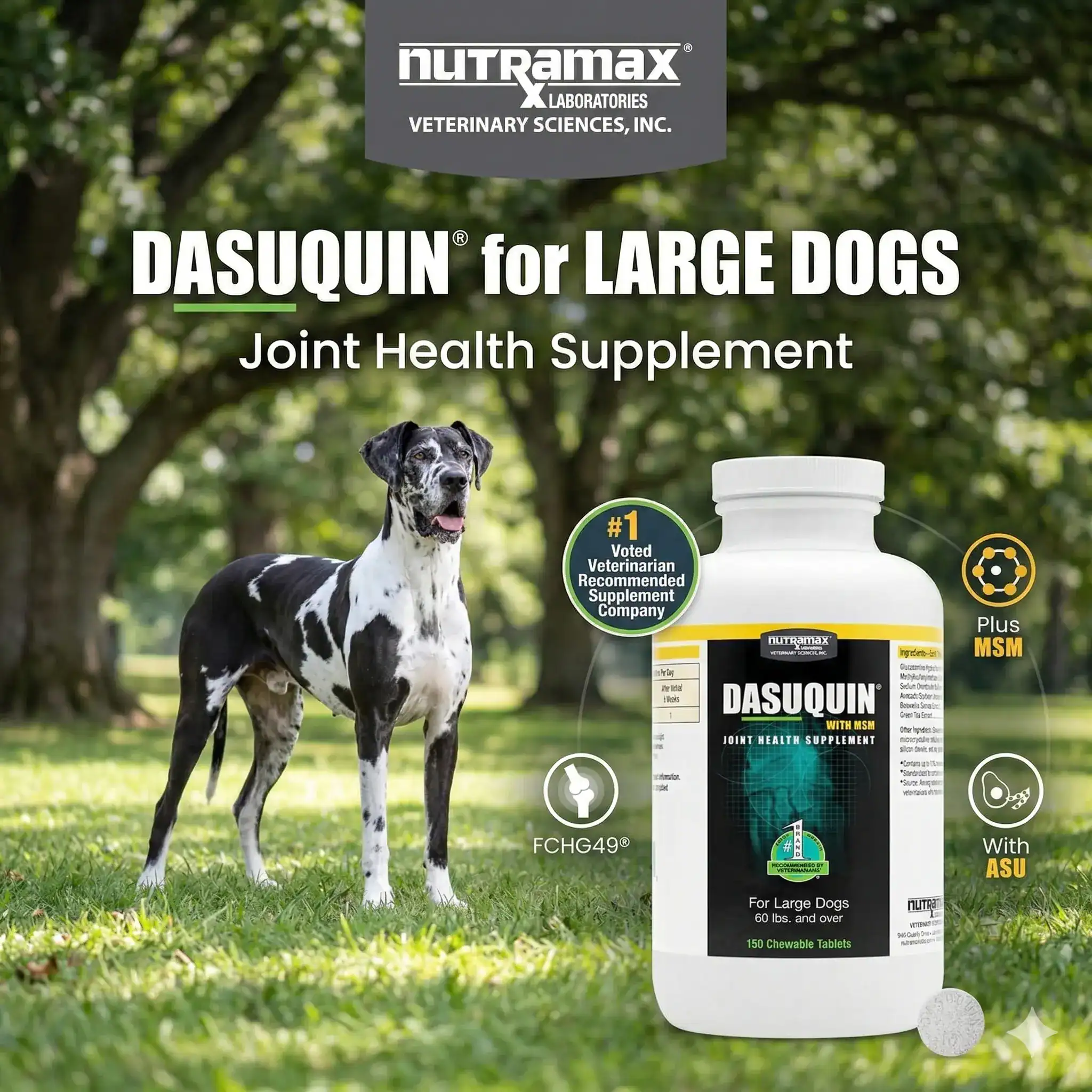
Nutramax Dasuquin with MSM Soft Chews for Dogs
Use for: Both breeds are large, powerful, and prone to hip and elbow dysplasia. Glucosamine, chondroitin, and MSM help support cartilage and cushion joints under the load these athletic working dogs carry.
Check price on Amazon🎯 Verdict: A slight edge in practicality to the Cane Corso, since its daily exercise needs are a touch lower than the Dogo’s relentless athletic requirement. Both demand a committed, active owner, and both Dogos and Cane Corsos benefit from a daily job to stay balanced. Neither tolerates a sedentary household.
Family Fit
Each breed can be an excellent family dog in an experienced home, and each bonds intensely with its people. A well-socialized Dogo Argentino is affectionate and playful, often forming a deep attachment to the whole household, though its size and prey drive demand close supervision around young children and small pets.
Cane Corsos are famously devoted to family, with a soft side reserved exclusively for the inner circle. Their calmer temperament can make them a steadier presence indoors, but their protective instinct creates one predictable problem, since they may misread rough play between children as a threat.
For both breeds, supervision around young children is essential, and both need a calm household with clear boundaries. The Dogo brings more energy and prey drive into the home, while the Corso brings a more territorial watchfulness, so the right fit depends on which you are better equipped to manage.
🎯 Verdict: Roughly even, with different cautions. The Dogo’s energy and prey drive need managing, while the Corso’s territorial instinct around visitors does. Each is a devoted family guardian when well-raised and never left unsupervised with young children.
Grooming and Shedding
These dogs are both low-maintenance groomers, which makes this round close. Dogo Argentinos carry a short, smooth, all-white coat with no undercoat to blow seasonally. Weekly brushing with a rubber mitt or soft brush removes loose hair, though the white coat shows dirt and leaves fine hair on furniture.
The Cane Corso has a short coat with a light undercoat that thickens seasonally, so it sheds moderately year-round with a heavier spring blow. A weekly brush with a firm bristle tool handles most of the year, with more frequent sessions during the seasonal shed.
Neither breed needs professional grooming. The Dogo’s white coat does demand sun protection on the nose and ears in bright climates, since its minimal pigmentation makes it vulnerable to UV damage, a maintenance point the darker-coated Corso does not share.

FURminator Undercoat Deshedding Tool for Dogs
Use for: Managing the Cane Corso’s seasonal undercoat blow and keeping the Dogo Argentino’s fine white hair off your furniture. A deshedding tool lifts loose coat that a surface brush leaves behind.
Check price on Amazon🎯 Verdict: Call it roughly even. The Dogo sheds slightly less but needs sun protection and shows dirt on its white coat, while the Corso sheds a bit more seasonally. Each is far easier to groom than long-coated breeds, so neither is a deciding factor.
Health and Longevity
Each breed averages 9 to 12 years, so longevity is similar. The difference is the risk profile, and that is where screening becomes critical. On health, Dogo Argentinos have unique vulnerabilities among large breeds, all tied to the white coat.
The single biggest concern is congenital deafness, linked to the white pigmentation gene. One peer-reviewed study of a tested American Dogo population found roughly one in four dogs affected in one or both ears, which is why BAER testing matters so much.
That makes individual BAER hearing testing of every Dogo puppy non-negotiable. Beyond deafness, the Dogo faces hip dysplasia, laryngeal paralysis in older dogs, hypothyroidism, and skin or sun sensitivity from its minimal pigmentation. Responsible breeders screen hips, hearing, and cardiac health.
The Cane Corso shares the hip dysplasia risk and adds bloat, the deep-chested stomach-twisting emergency, plus idiopathic epilepsy and entropion, an inward-rolling eyelid that is surgically correctable. Both breeds require OFA or PennHIP clearances on parents, and bloat awareness matters for the deeper-chested Corso in particular.
Veterinary Disclaimer: This article is for educational purposes only and is not a substitute for professional veterinary advice, diagnosis, or treatment. K9Sphere’s authors are experienced dog owners, not licensed veterinarians. Always consult a qualified DVM regarding any health concerns about your dog.
Always consult your licensed DVM for personalized medical advice.
Health Information Sources. Data compiled from the following references.
- American Kennel Club Dogo Argentino breed reference
- American Kennel Club Cane Corso breed reference
- OFA CHIC Program recommended screening protocols
Always consult your licensed DVM for personalized medical advice.
🎯 Verdict: This round comes down to screening rather than a clear winner, and neither is simply healthier than the other. The Dogo’s deafness risk makes BAER testing essential, while the Cane Corso isn’t free of its own concerns, with bloat and epilepsy demanding vigilance. A well-screened dog of either breed can be a sound, healthy companion.
Cost and Legal Realities
Purchase prices overlap closely. A Dogo Argentino from a responsible breeder with BAER and OFA documentation typically runs 1,000 to 4,000 US dollars, while a well-bred Cane Corso usually falls between 1,500 and 4,000. For each breed, deeply discounted puppies are a red flag for skipped health screening.
Whether you choose a Cane Corso or Dogo, ongoing costs are high, driven by large-breed food, higher veterinary fees, and the looming expense of emergency care that most owners would underestimate. Bloat surgery for the Corso and orthopedic procedures for either breed can each be a major expense that varies widely by clinic and region. Pricing varies by country, with UK, Canada, and Australia rates differing.
Legal realities favor the Cane Corso. Like other powerful guardians such as the Presa Canario, the Dogo Argentino faces outright bans in several countries, including the United Kingdom and Australia, and breed-specific legislation in some US municipalities. The Dogo Argentino faces restrictions more frequently than many other working breeds, including the Rottweiler, so owners should verify local regulations before acquiring one.
The Corso faces fewer breed-specific bans, though both can trigger insurance and housing restrictions. Rules vary by city, state, province, insurer, and housing provider, so always verify the current rules in your area.
🎯 Verdict: The Cane Corso takes this round on legal ease, since the Dogo faces outright bans in more places. Purchase and upkeep costs are otherwise similar. Check local laws and insurance for either breed before committing, especially for the Dogo.
First-Time Owners
Most experts advise against either breed as a first dog, and both regularly end up in rescue when owners underestimate them. They challenge beginners in different ways, so being honest about which challenge you can manage matters more than the breed name.
The Dogo Argentino overwhelms novices through drive and prey instinct. It is intelligent and trainable, but that same intelligence lets it exploit gaps in an inconsistent handler, and its relentless exercise needs and willful adolescence demand someone who can stay ahead of a powerful, persistent athlete. A bored, under-led Dogo becomes destructive and hard to contain.
Owning a Cane Corso overwhelms many novices through size and territorial intensity. A 100-plus-pound guardian that has learned it can ignore its owner is a serious liability, and its protective instinct toward strangers raises the stakes of any training gap. Each rewards experience and punishes casual ownership.
🎯 Verdict: Neither, honestly, for a true beginner. If the working-dog profile appeals to you, build experience with a more forgiving large breed first, then return to these two with the handling skills the job actually requires.
Head-to-Head Scorecard
Ratings are from 1 to 5 stars and reflect suitability for a typical experienced home, not raw working ability. A high Prey Drive score is a cost, not a perk, since it means more management around other animals.
Dogo Argentino
Cane Corso
Reading the scores: Neither breed needs to win on every line to be right for you. Both score low on First-Timer Fit by design, since each is a powerful working dog that demands experience. The Dogo’s high Prey Drive score is its defining management challenge, while a male Cane Corso’s size and guarding intensity shape daily life with visitors.
Common Questions about Dogo Argentino vs Cane Corso
Is a Dogo Argentino or Cane Corso better for protection?
Direct Answer: The Cane Corso is the more natural property guardian, while the Dogo is a capable protector built primarily for hunting.
Context: The Corso was bred specifically to patrol and defend an estate, deterring intruders through territorial presence. The Dogo will defend its family, but protection sits on top of a hunting foundation rather than at its core.
Management: For a dedicated property guardian, the Corso fits more naturally. Shape either breed’s instincts with professional training, never by encouraging aggression.
Which breed is bigger?
Direct Answer: The Cane Corso is generally heavier, while heights overlap closely.
Context: The Cane Corso and Dogo Argentino are both large dogs, and both are muscular, but the Corso is a large dog with a noticeably bulkier, more thickset frame. It is bulkier than the Dogo, with males typically weighing 99 to 110 pounds, while male Dogos weigh 88 to 100 pounds on a leaner, more athletic build.
Management: Plan for giant-breed costs with either. The Corso’s extra mass means somewhat higher food and handling demands.
Which breed has the higher prey drive?
Direct Answer: The Dogo Argentino, by a wide margin.
Context: It was bred to hunt boar and puma, so its pursuit instinct is intense and easily triggered. The Cane Corso has a more moderate, territorial drive that is generally easier to manage around other animals.
Management: Keep a Dogo leashed or in secure fencing outdoors, and manage either breed carefully around small pets and unfamiliar dogs.
Which is easier to train?
Direct Answer: The Cane Corso is usually the more straightforward of the two to train, while the Dogo is equally bright but harder to channel.
Context: The Cane Corso is highly responsive because it was bred to take direction from a handler, so it tends to cooperate readily. The Dogo’s hunting independence means its focus can shift to the environment, which makes proofing commands around distractions the real work.
Management: Use positive reinforcement and start before adolescence, when both breeds test boundaries. For the Dogo, prioritize reliable recall and impulse control around prey-type triggers.
Are they good with other pets?
Direct Answer: The Cane Corso is generally the more workable choice in a multi-pet home.
Context: The Dogo’s strong prey drive makes coexistence with small animals difficult, and same-sex dog aggression is a documented tendency. The Corso’s moderate prey drive makes shared households more manageable, though still not automatic.
Management: Socialize early, introduce new animals slowly on neutral ground, and supervise closely. Avoid dog parks with either breed.
Which breed is more aggressive?
Direct Answer: Neither breed should be assumed to be dangerous solely because of its breed label.
Context: No dog breed is dangerous by default. Temperament is influenced by genetics, breeding quality, socialization, training, environment, and individual personality. A powerful guardian like the Cane Corso, and a driven hunter like the Dogo, were each bred to work, not to attack indiscriminately, though both demand experienced handling.
Management: Choose temperament-tested lines, prioritize early socialization, and never tolerate human-directed aggression in either breed.
How much exercise does each need?
Direct Answer: The Dogo needs 60 to 90 minutes of vigorous daily activity; the Cane Corso needs somewhat less.
Context: The Dogo’s hunting heritage demands sustained athletic output plus mental work, while the Corso needs brisk daily walks and focused tasks but operates in shorter bursts of energy.
Management: Plan structured exercise and mental work for both, and avoid forced running on hard surfaces before the growth plates close.
Can either breed live in an apartment?
Direct Answer: Both can in theory, but neither is well suited to apartment life.
Context: The Dogo’s stamina and prey drive and the Corso’s size and territorial instinct both make tight quarters difficult. A securely fenced yard is a much better fit for either breed.
Management: If you attempt apartment living, commit to long daily outings and structured exercise, and check breed restrictions in your building and area first.
Which costs more to own?
Direct Answer: Costs are broadly similar, with the bigger difference being legal and insurance hurdles for the Dogo.
Context: Both have comparable purchase and upkeep ranges. The Dogo’s breed bans and insurance restrictions in some regions can add cost and complication that the Corso faces less often. Pricing varies by country, with UK, Canada, and Australia rates differing.
Management: Budget for large-breed food, health screening, and emergency reserves, and confirm insurance and local legality before committing, especially for the Dogo.
Are these breeds legal to own?
Direct Answer: The Cane Corso faces fewer restrictions, while the Dogo Argentino is banned outright in several countries.
Context: The Dogo is prohibited in places including the United Kingdom and Australia and restricted in some US municipalities. The Corso is more widely legal, though both can appear on insurance and housing exclusion lists.
Management: Verify local breed-specific legislation, housing rules, and insurance before committing, and pay particular attention to Dogo bans in your jurisdiction.
Which is better for a first-time owner?
Direct Answer: Neither is ideal, though the Cane Corso’s handler focus may be slightly more forgiving.
Context: The Dogo challenges novices with drive and prey instinct, while the Corso challenges them with size and territorial intensity. Each is a powerful working breed that punishes inconsistent handling.
Management: If you are new to powerful breeds, work with a professional trainer from day one, or build experience with an easier breed first.
What is the main difference between a Dogo Argentino and a Cane Corso?
Direct Answer: The Corso and the Dogo Argentino differ most in purpose, since the Dogo is an athletic big-game hunter while the Cane Corso is a territorial estate guardian.
Context: The Dogo is leaner, faster, higher in prey drive, and more exercise-hungry, whereas the Corso is heavier, calmer indoors, more naturally protective, and lower in prey drive. Both are powerful working breeds with serious demands.
Management: Decide which role you need filled. The two are not interchangeable, so match the breed to your experience, your property, and your other pets.
The Quick Decision Shortcut
If you want the fast version before the full verdict, use this self-check. Pick the column that sounds more like you and your household.
🐕 Choose the Dogo Argentino if
- You want an athletic partner for hiking, running, or hunting.
- You can meet intense daily exercise and enrichment needs.
- You have secure fencing and few small pets to manage.
- You have confirmed the breed is legal where you live.
🐕 Choose the Cane Corso if
- You want a calmer, territorial estate guardian.
- You prefer a lower prey drive around other pets.
- You value a strong indoor off-switch and handler focus.
- You want a more widely legal large guardian breed.
Final Verdict
There is no universal winner here, because these are two exceptional working breeds built for different jobs. The Cane Corso and the Dogo Argentino share serious power, deep loyalty, and a workload that defeats casual owners. The right one depends on the role you actually need filled.
Choose the Dogo Argentino if you want an athletic, high-stamina hunting partner that thrives on vigorous activity and bonds intensely with an active household. It rewards an experienced, energetic owner who can manage its prey drive and confirm it is legal to own where they live.
Choose the Cane Corso if you want a calmer, more naturally protective estate guardian with a lower prey drive and a stronger off-switch indoors. It rewards confident, consistent leadership with quiet devotion and a steady territorial presence.
The honest throughline is this. Each breed demands an experienced owner, early socialization, secure space, and a real commitment of time and energy. Get those right and either dog becomes an extraordinary companion. Get them wrong and either becomes more than a casual owner can safely handle.
🏆 Bottom line: The Dogo Argentino is the athletic hunter; the Cane Corso is the territorial guardian. Both are powerful working breeds for experienced owners. Match the breed to your activity level, your other pets, and the legal rules where you live.
Personal Observation
💭 From my own experience
Years with large, powerful dogs taught me that the breed on the paperwork matters far less than the honesty of the person signing it. Both of these dogs punish wishful thinking. A skipped training week, a weak fence, a missed socialization window, all of it scales with the size and drive of the dog in front of you.
What separates these two in practice is the kind of work they pull you into. A hunting-bred athlete asks for an outlet every single day, and without one it finds its own, usually destructively. A territorial guardian asks for clear leadership and a plan for visitors, because its instinct is to decide for itself who belongs.
So the real question is not which breed is better. It is which job you are equipped to take on for the next decade. Be honest about your energy, your property, and your experience, and the right choice between these two usually answers itself.
Read More. For the full single-breed guides, see our Dogo Argentino breed guide and our Cane Corso breed guide. Both breeds are large and joint-sensitive, so it is worth reading our guide to hip and joint supplements for dogs, our roundup of the best brushes for shedding dogs, and, for the allergy-prone Dogo, our review of Zesty Paws salmon oil.
Editorial Disclaimer: This article is for informational and educational purposes only. It does not constitute veterinary advice, medical diagnosis, or treatment recommendations. Always consult a licensed veterinarian before making health-related decisions for your pet.
Accuracy Notice: While every effort has been made to ensure the information presented here is accurate and current, breed information evolves and individual dogs vary. If you spot a factual error or have updated information from a verified source, please contact us so we can review and update.
Product Disclosure: Product recommendations are based on independent research and editorial judgment. Individual results may vary. K9Sphere participates in the Amazon Services LLC Associates Program and other affiliate programs, and earns from qualifying purchases at no additional cost to you.
Last reviewed: June 2026. Article reviewed for accuracy on the date shown above.


