

If you are comparing a Caucasian Shepherd vs Kangal, you are weighing two of the most formidable livestock guardian breeds ever developed. Each has handled livestock protection against wolves and bears since ancient times, and each remains a serious working animal respected by shepherds worldwide.
The Caucasian Shepherd is a heavy, muscular guardian from the freezing Caucasus mountains, built to confront predators directly. The Kangal is a leaner, more athletic protector from the hot Anatolian plateau of Turkey, built to patrol, intimidate, and engage only as a last resort.
The Kangal and Caucasian Shepherd share the core traits of livestock guardian breeds, including independence, strong territorial instincts, and deep loyalty to family. Most experienced handlers consider neither a first dog, and neither suits a typical suburban home. Each can be a devoted protector in the right hands.
This guide walks through their similarities and differences across the areas that actually decide the match, from guarding style and climate tolerance to family fit, health, grooming, cost, and availability. Every section ends with a clear take on who that round favors.
Read it as a decision tool for choosing between a Caucasian Shepherd and a Kangal. By the final verdict you should have a clear sense of which ancient guardian fits your property, your climate, and your experience level.
Affiliate Disclosure: K9Sphere is a participant in the Amazon Services LLC Associates Program. As an Amazon Associate, K9Sphere earns from qualifying purchases made through links in this article at no additional cost to you. Product recommendations are based on independent research and editorial judgment, not paid placement.
Quick Answer and Who Each Round Favors
⚡ The 30-Second Answer
Choose the Caucasian Shepherd if you live in a cold or temperate climate, want the heaviest possible deterrent, and can manage an intensely territorial guardian with a massive coat. Choose the Kangal if you live in a hot or variable climate, prefer a more measured, athletic guardian with easier grooming and a longer average lifespan, and can meet its patrol-space needs.
These are serious working guardians, not conventional pets. Each demands acreage, secure fencing, an experienced handler, and tolerance for heavy nocturnal barking.
| Category | Favors |
|---|---|
| Temperament | Depends on goals |
| Guarding style | Depends on property |
| Climate flexibility | Kangal |
| Exercise and space | Roughly even |
| Family gentleness | Roughly even |
| Grooming and shedding | Kangal |
| Health and longevity | Kangal |
| Cost and availability | Depends on location |
| First-time owners | Neither, ideally |
Caucasian Shepherd vs Kangal at a Glance
Whether you search for Kangal vs Caucasian Shepherd or the reverse, the comparison is the same. This table lays out the core differences in size, purpose, climate, and lifestyle fit. Scan the rows that matter most to you, then read the detailed sections below.
| Attribute | Caucasian Shepherd | Kangal |
|---|---|---|
| Height | 26–30 in (66–76 cm) | 28–32 in (71–81 cm), males |
| Weight | 100–170 lb (45–77 kg) | 90–145 lb (41–66 kg) |
| Lifespan | 10–12 years | 12–15 years |
| Origin | Caucasus (Georgia, Russia) | Turkey (Sivas province) |
| Recognition | AKC Foundation Stock Service, FCI | UKC, Turkish national breed |
| Original purpose | Flock guard vs wolves, bears | Flock guard vs wolves, jackals |
| Build type | Heavy, muscular | Lean, athletic interceptor |
| Threat response | Confrontational, physical | Patrol, intimidate, engage last |
| Stranger tolerance | Very low | Low to moderate |
| Climate preference | Cold mountain | Hot continental, adaptable |
| Coat and shedding | Massive double coat, heavy | Short-to-medium, manageable |
| Exercise type | Moderate patrol, low cardio | Moderate patrol, low cardio |
| Main health risks | Hip dysplasia, bloat, cardiac strain | Hip dysplasia, bloat, entropion |
| First-time owner? | No | No |
| Living space | Acreage, 6-ft solid fence | Acreage, 6-ft agricultural fence |
📜 A Quick Origin Story
These dogs originate from two of the world’s oldest guardian traditions. The Caucasian Shepherd, also called the Caucasian Ovcharka or Russian bear dog, traces back over 2,000 years to the broader Caucasus region, spanning modern-day Georgia, Armenia, Azerbaijan, and southern Russia, where it fought off wolves and bears in freezing terrain.
The Soviet military later used the breed for border patrol and sentry work, and the FCI recognized it in 1984.
The Kangal developed over a similar span in relative isolation in central Turkey, specifically the Sivas region, producing a remarkably consistent type with a pale dun or light tan coat and black mask. Turkey regards it as a national treasure, the UKC recognizes it as distinct, and its working range keeps expanding, from African conservation programs protecting goats from cheetahs to North American ranches guarding flocks against the coyote.
Who Should Choose the Caucasian Shepherd
🐕 The Caucasian Shepherd is the right pick if:
- You live in a cold or temperate climate where its massive coat is an asset, not a danger.
- You want the heaviest, most imposing deterrent presence available.
- You have a secure property with a 6-foot solid fence and few unfamiliar visitors.
- You can commit to heavy, year-round grooming and seasonal coat blowouts.
- You have real experience handling large, independent, territorial breeds.
Who Should Choose the Kangal
🐕 The Kangal is the right pick if:
- You live in a hot or variable climate where a heavy mountain coat would suffer.
- You prefer a measured guardian that warns and intimidates before engaging.
- You have acreage or livestock and need a proven, athletic patrol dog.
- You want easier grooming and a longer average lifespan in a guardian breed of this size.
- You can tolerate heavy nocturnal barking and provide indestructible fencing.
Temperament and Personality
These dogs were cut from the same working cloth. Each was bred to live with a flock, assess threats independently, and act without waiting for human input. That independence is their defining trait, their greatest working asset, and their biggest domestic challenge.
Neither looks to its owner for instructions the way a herding breed does. Conventional trainability is modest in each breed as a result, a product of that independence rather than any lack of intelligence.
The Caucasian Shepherd runs more suspicious by default. It is deeply wary of strangers, and it naturally treats anyone outside the core family as a subject for monitoring. With its own people it can be surprisingly gentle and affectionate, often bonding closely with the household’s children.
The Kangal carries the same loyalty with a somewhat softer edge toward outsiders. Its stranger tolerance is low to moderate, and it tends to stay calm, watching and assessing longer before deciding someone is a problem. Like the Caucasian, it is famously patient and gentle with its own family.
🎯 Verdict: This round depends on what you want. The Caucasian offers the harder default suspicion for isolated properties, while the Kangal offers a slightly more workable temperament where occasional visitors are a fact of life. Each is devoted to its own people.
Guarding Style
This is the clearest behavioral split between them, and it comes straight from their working histories. The Caucasian Shepherd tends to be the more immediately defensive guardian. Bred to grapple with wolves and bears at close range, it is often more willing to escalate to physical contact early when it judges a threat to be genuine.
The Kangal is typically described as working through a measured escalation protocol. A patrolling Kangal generally announces itself with a booming alert, positions itself between the flock and the threat, charges with a roar if the predator advances, and engages physically only as a last resort. It is often credited with one of the strongest bite force figures in the dog world, though many circulating numbers are exaggerated.
Neither set of protective instincts is better in the abstract. The Caucasian’s directness suits an isolated property where any intruder is unmistakably unwelcome. The Kangal’s graduated response gives a handler more margin in environments where false alarms, like delivery drivers or wandering hikers, are possible.
🎯 Verdict: Pick the style that matches your property. For maximum confrontational deterrence on an isolated holding, the Caucasian fits. For a measured guardian that warns and intimidates before engaging, the Kangal has the edge. Each must have its innate instincts shaped by early socialization and structured exposure from puppyhood.
Climate Tolerance
Climate is the most underrated deciding factor in this comparison, and it splits the two breeds cleanly. The Caucasian Shepherd is a cold-weather specialist. Its dense double coat was built for freezing mountain terrain, and the same coat traps body heat dangerously in warm weather.
Owners are commonly advised to limit the Caucasian’s outdoor exposure once temperatures climb toward 80°F (27°C), since its insulating coat raises overheating risk. In warm regions it needs cool indoor space through summer and activity restricted to early morning and late evening.
The Kangal was shaped by the Anatolian plateau, where summers bake and winters freeze. Its shorter, dense coat insulates in both directions, giving it a rare ability to adapt to various environments and making it the far more flexible choice across hot and variable climates.
🎯 Verdict: A clear win for the Kangal on flexibility. It tolerates heat that would endanger a Caucasian Shepherd while still managing cold winters. If you live somewhere hot or humid, this single category may settle the entire comparison for you.
Exercise and Space Requirements
Here the two breeds are more alike than different. Neither is a high-cardio athlete in the herding-dog sense. They operate in bursts of vigilance, conserving energy between patrols, a rhythm developed through centuries of guarding sheep that still defines them on any working farm. A moderate daily walk plus secure time to roam their territory typically covers their physical needs.
What neither can compromise on is space and containment. For the Caucasian, a minimum 6-foot solid fence is the widely recommended standard, and Kangal owners are advised to use deep-set agricultural fencing that a 140-pound dog cannot go over, under, or through. Electronic or invisible fencing will not reliably stop either breed.
Apartment living is not viable for either dog. Each needs a secure outdoor territory to patrol, and confinement without that outlet triggers serious behavioral deterioration. Forced running on hard surfaces should also wait until growth plates close, to protect their giant frames.
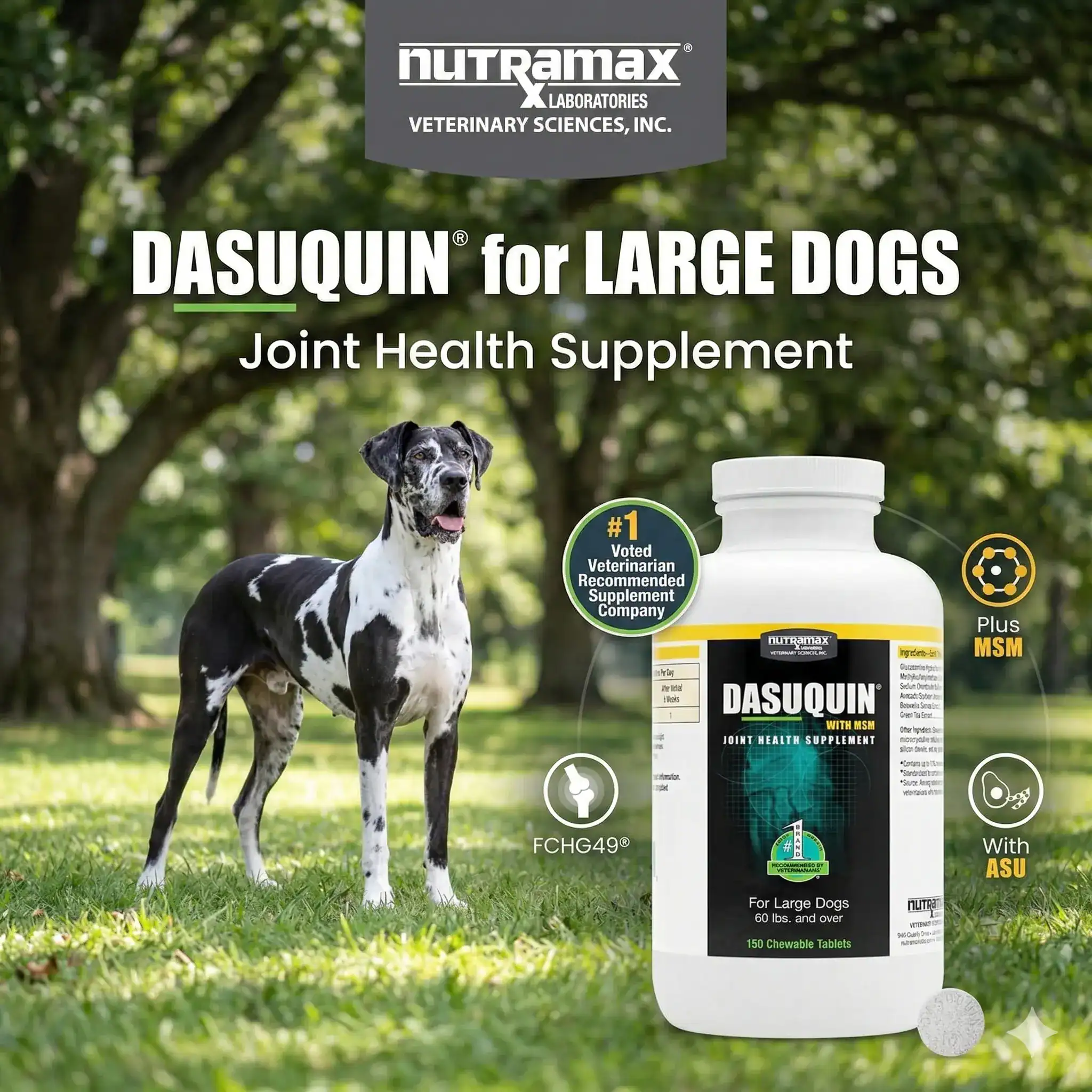
Nutramax Dasuquin with MSM Soft Chews for Dogs
Use for: Each breed carries 100-plus pounds on dysplasia-prone joints. Glucosamine, chondroitin, and MSM help support cartilage and cushion joints under the structural load these working guardians carry on patrol.
Check price on Amazon🎯 Verdict: Call it even. The two breeds share the same patrol-based exercise pattern, the same non-negotiable fencing standard, and the same need for acreage. Whichever you choose, the property requirements are essentially identical.
Family Fit
Each breed is famously gentle with its own family, and that is not marketing. Livestock guardians treat the household’s children as the highest-priority members of the flock, often positioning themselves between a child and anything unfamiliar.
The complications come from outside the family. A giant guardian may misread roughhousing between your child and a visiting friend as an attack that requires intervention. Visitors of any age need proper, handler-led introductions, and the dog should be secured when unfamiliar guests are present.
Sheer size is the other constant caution. A 100-plus-pound dog can knock over a toddler entirely by accident, even during calm playtime, so supervision around young children is essential with either breed, no matter how gentle the individual dog has proven itself.
🎯 Verdict: Roughly even, and conditional for each. With their own family, these are devoted, gentle protectors. With visiting children and guests, each needs the same careful management. Neither suits a busy, high-traffic social household.
Grooming and Shedding
This round is not close. The Caucasian Shepherd carries one of the heaviest coats in the dog world, in colors ranging from gray and fawn to brindle and piebald, shedding steadily year-round and blowing out massive amounts of undercoat twice annually. It needs brushing at least twice a week, and daily sessions become mandatory during blowout season to prevent matting.
The Kangal is far easier to maintain. Its short-to-medium coat naturally repels dirt, and a thorough weekly brush handles most of the year. It still blows its undercoat twice a year, when daily brushing helps, but the total volume is a fraction of the Caucasian’s.
For either breed, a proper undercoat tool earns its keep during seasonal transitions, and weekly ear checks matter since heavy fur around the head can trap moisture.
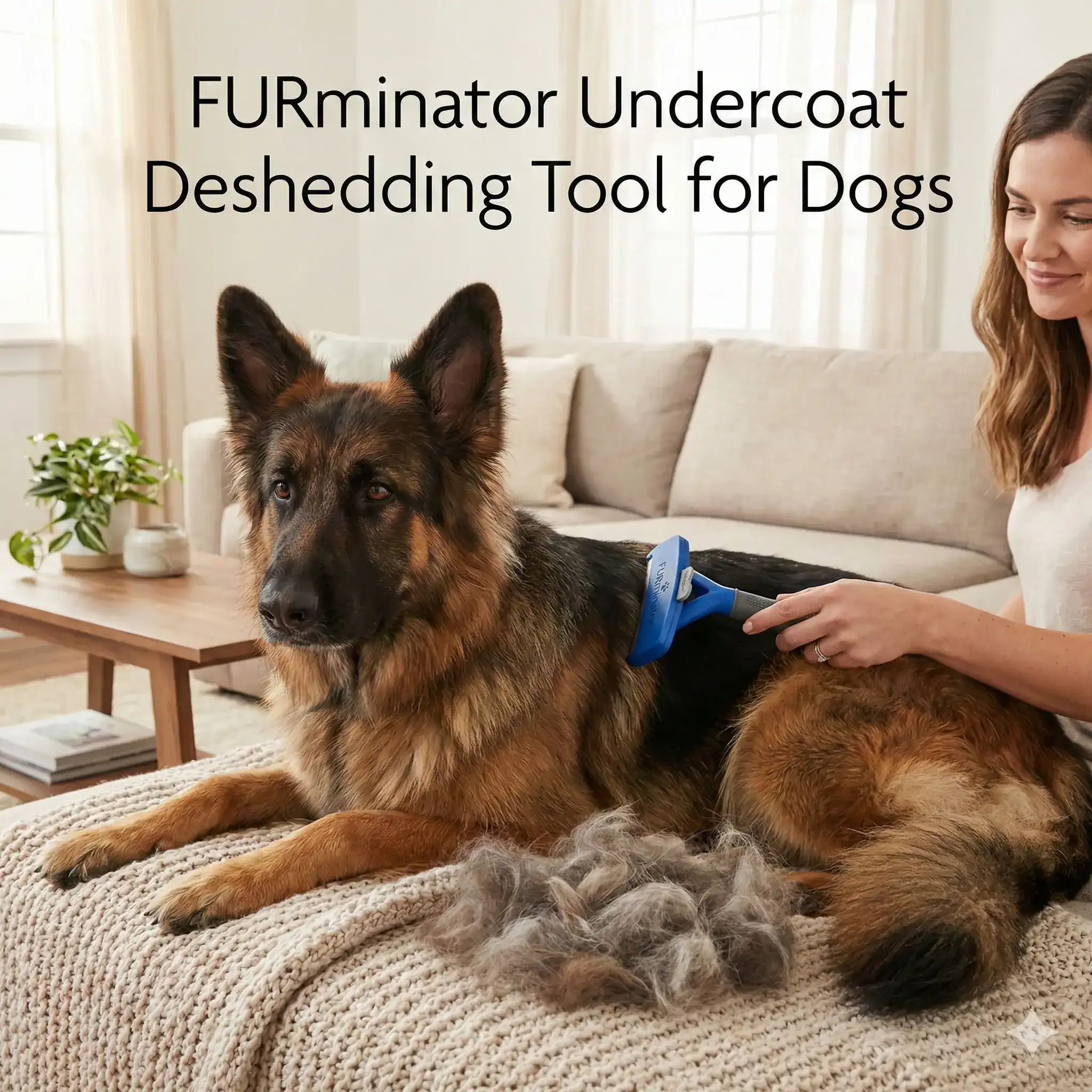
FURminator Undercoat Deshedding Tool for Dogs
Use for: Managing the Caucasian Shepherd’s massive seasonal blowouts and the Kangal’s twice-yearly undercoat drop. Reaches through the topcoat to lift dense undercoat before it covers every surface in your home.
Check price on Amazon🎯 Verdict: A clear win for the Kangal. Its manageable coat asks for a fraction of the Caucasian’s grooming time and leaves far less hair in your home. If grooming workload matters to you, this category is decisive.
Health and Longevity
This round leans clearly to the Kangal. Its landrace origins, largely free of show-ring exaggeration, give it a structural soundness many giant breeds lack, and a typical lifespan of 12 to 15 years is remarkable for a dog regularly exceeding 100 pounds.
The Caucasian Shepherd averages 10 to 12 years, with its great mass adding cardiac strain on top of the usual giant-breed concerns. Moving a 150-pound frame places immense load on the skeleton, which makes strict weight management non-negotiable.
The risk profiles overlap heavily. Hip and elbow dysplasia and bloat, the deep-chested stomach-twisting emergency, threaten each breed, so OFA or PennHIP clearances on both parents are essential. Some Kangal lines may also show a predisposition to entropion, an inward-rolling eyelid that is screenable and correctable.
Veterinary Disclaimer: This article is for educational purposes only and is not a substitute for professional veterinary advice, diagnosis, or treatment. K9Sphere’s authors are experienced dog owners, not licensed veterinarians. Always consult a qualified DVM regarding any health concerns about your dog.
Always consult your licensed DVM for personalized medical advice.
Health Information Sources. Data compiled from the following references.
- Orthopedic Foundation for Animals screening protocols for giant breeds
- FCI Caucasian Shepherd Dog breed standard
- United Kennel Club Kangal Dog breed standard
Always consult your licensed DVM for personalized medical advice.
🎯 Verdict: The Kangal takes this round on lifespan and overall landrace soundness, living several years longer on average. Each breed still demands rigorous orthopedic screening, bloat awareness, and strict weight control from any responsible owner.
Cost, Availability and Legal Realities
Neither breed is easy to find, and that shapes the cost picture more than sticker price. Screened, health-tested litters are scarce in Western markets for each breed. Expect detailed applications, home assessments, and waitlists that can stretch to a year, with pricing that varies widely by region and pedigree.
The sourcing challenges differ slightly. The Caucasian Shepherd sits in the AKC Foundation Stock Service, so verified screening takes extra diligence. Export restrictions have historically limited the genuine Kangal’s availability outside Turkey, and the breed is often confused with the broader Anatolian Shepherd type, so verified UKC Kangal registration matters.
Ongoing costs run high for each, driven by giant-breed food volumes, large-dog veterinary fees, and the looming expense of emergency bloat surgery, which varies widely by clinic and region. Each breed can also appear on breed-specific legislation and insurance exclusion lists. Restrictions vary by city, state, province, insurer, and housing provider, so always verify the current rules in your area.
🎯 Verdict: No clean winner. Each breed is rare, waitlisted, and expensive to source responsibly, and each can face insurance or legal restrictions depending on where you live. Budget for giant-breed costs either way, and verify local rules before committing.
First-Time Owners
Most experts advise against either breed as a first dog, and the sources behind each breed say so plainly. These are not dogs where training mistakes produce bad habits. At this size and independence level, mistakes produce genuine liabilities.
The margin for error is the core problem. You cannot physically control a 130-pound guardian that has learned to ignore you, so psychological authority must be established in puppyhood and maintained through consistent training for life. The most sensitive socialization period falls in the first weeks and months of a puppy’s life, which makes that early window crucial, and novices almost always miss it.
There is also the daily weight of their specific needs, which never ends. Heavy nocturnal barking, lifelong visitor protocols, fencing maintenance, and the legal exposure of owning a giant guardian all demand an owner who knows exactly what they signed up for. Experience with a more forgiving large breed first is the honest path.
🎯 Verdict: Neither, full stop, for a true beginner. If the livestock guardian temperament appeals to you, build experience with a more manageable large breed first, then come back to these two with the skills the job actually requires.
Head-to-Head Scorecard
Ratings are from 1 to 5 stars and reflect suitability for an experienced rural home, not raw guarding skills. A high Guarding Intensity score is only a benefit if you genuinely need that level of protection.
Caucasian Shepherd
Kangal
Reading the scores: Each breed scores 1 on First-Timer Fit by design, since these are working guardians that demand experience. The Caucasian’s low Heat Tolerance score is its defining practical limitation, just as grooming workload is its second.
Common Questions about Caucasian Shepherd vs Kangal
Is a Caucasian Shepherd or Kangal better for protection?
Direct Answer: Each is an elite guardian, but they protect in different styles rather than one being simply better.
Context: Their guarding abilities are equally proven. The Caucasian confronts threats directly and physically, while the Kangal follows a measured protocol of alerting, positioning, and intimidating before engaging as a last resort.
Management: Match the style to your property. The ability to protect is innate in each, so shape it with structured exposure from puppyhood, never by encouraging aggression.
Which breed is bigger?
Direct Answer: The Caucasian Shepherd is generally heavier, while the Kangal is often taller.
Context: Each brings impressive size and strength. Caucasians weigh 100 to 170 pounds on a heavy, muscular frame, while male Kangals stand 28 to 32 inches and carry a leaner 110 to 145 pounds built for speed. Neither is simply stronger across the board.
Management: Plan for giant-breed costs with either. The Caucasian’s extra mass means somewhat higher food volumes and heavier physical handling demands.
Which breed lives longer?
Direct Answer: The Kangal, by a clear margin for a giant breed.
Context: Kangals typically live 12 to 15 years, helped by sound landrace structure, while Caucasian Shepherds average 10 to 12 years with extra cardiac strain from their greater mass.
Management: Keep either breed lean, insist on orthopedic screening, and schedule regular veterinary checks to reach the top of the range.
Which breed handles heat better?
Direct Answer: The Kangal, decisively.
Context: Its short, dense coat was shaped by hot Anatolian summers, while the Caucasian’s massive mountain coat traps heat, and owners are commonly advised to restrict its outdoor time in hot weather.
Management: In hot climates, choose the Kangal or commit to air-conditioned indoor space and dawn-and-dusk activity for a Caucasian.
Are they good with children?
Direct Answer: Each is famously gentle and protective with children in its own household.
Context: Livestock guardians treat the family’s kids as top-priority flock members. The risks are accidental knockdowns from sheer size and misreading rough play with visiting friends as a threat.
Management: Supervise all interactions with young children, manage introductions to visiting playmates, and never leave a dog of this size unsupervised with kids.
Which breed is more aggressive?
Direct Answer: Neither breed should be assumed to be dangerous solely because of its breed label.
Context: Temperament is influenced by genetics, breeding quality, socialization, training, environment, and individual personality. Each breed escalates in defense of territory rather than seeking confrontation, though the Caucasian typically escalates sooner.
Management: Choose temperament-tested lines, commit to lifelong socialization, and secure the dog when guests are present.
Do they get along with other dogs?
Direct Answer: Same-sex aggression is common in each breed, and unfamiliar dogs entering their territory are typically treated as intruders.
Context: Each can coexist with animals it is raised alongside, but introducing new adult dogs requires weeks of careful, supervised management.
Management: Avoid dog parks entirely, supervise all introductions, and consider opposite-sex pairings if you keep multiple dogs.
Can either breed live in an apartment?
Direct Answer: No. Apartment living is not viable for either breed.
Context: Each needs a secure outdoor territory to patrol, and confinement without that outlet triggers severe behavioral deterioration. Their booming nocturnal barking also makes dense housing untenable.
Management: Only consider these breeds with securely fenced acreage or a working rural property.
Which costs more to own?
Direct Answer: Costs are broadly similar and high for each, with sourcing being the bigger hurdle than purchase price.
Context: Each breed is rare in Western markets, with long waitlists and import complications. Giant-breed food, veterinary care, and potential bloat surgery drive ongoing costs for either. Pricing varies by country, with UK, Canada, and Australia rates differing.
Management: Budget for giant-breed ownership either way, and prioritize health-tested lines over bargain puppies.
Are these breeds legal to own?
Direct Answer: Each can face restrictions depending on where you live.
Context: Giant guardian breeds appear on some breed-specific legislation and insurance exclusion lists, and restrictions vary by country, region, municipality, housing provider, and insurer.
Management: Verify local ordinances and confirm coverage with your insurance provider before committing to either breed.
Which is better for a first-time owner?
Direct Answer: Neither. Most experts advise strongly against either breed for novice handlers.
Context: Training mistakes with a giant, independent guardian produce liabilities, not just bad habits, and the critical socialization window closes before most novices recognize it.
Management: Build experience with a more forgiving large breed first, and work with a professional experienced in livestock guardians if you proceed.
What is the main difference between a Caucasian Shepherd and a Kangal?
Direct Answer: The Caucasian is a heavier, more confrontational cold-climate guardian, while the Kangal is a leaner, more measured guardian built for heat.
Context: They share the same foundation of independence, territorial drive, and family loyalty. The differences are build, climate adaptation, escalation style, grooming load, and lifespan.
Management: Decide based on your climate, property, and tolerance for grooming. The two overlap heavily in temperament but diverge sharply in practical upkeep.
The Quick Decision Shortcut
If you want the fast version before the full verdict, use this self-check. Pick the column that sounds more like you and your property.
🐕 Choose the Caucasian Shepherd if
- You live in a cold or temperate climate.
- You want maximum mass and deterrent presence.
- You can commit to heavy, year-round grooming.
- Your property is isolated with few visitors.
🐕 Choose the Kangal if
- You live in a hot or variable climate.
- You prefer a measured, warn-first guardian.
- You want easier grooming and a longer lifespan.
- You run livestock or need a proven patrol dog.
Final Verdict
There is no universal winner here, because these are two exceptional guardians, separated mainly by climate, coat, and style. The Caucasian Shepherd and the Kangal grew from the same flock-guarding tradition, and each demands the same rare type of owner.
Choose the Caucasian Shepherd if you live in a cold or temperate region, want the heaviest possible deterrent, and can shoulder a serious grooming workload. On an isolated, secure property with an experienced handler, it is a devoted and formidable protector.
Choose the Kangal if your climate runs hot or variable, you prefer a measured guardian that warns before it engages, or you want the longer lifespan and lighter grooming load. For working livestock properties especially, its proven patrol style is hard to beat.
The honest throughline is this. Each breed demands acreage, fortress fencing, lifelong socialization, and an owner with genuine guardian-breed experience. Get those right and either dog will protect your home with everything it has. Get them wrong and either becomes a liability no fence can contain.
🏆 Bottom line: The Caucasian Shepherd is the heavy cold-climate confronter; the Kangal is the athletic hot-climate sentinel. Match the breed to your climate, property, and experience, because at this size there is no room for a mismatch.
Personal Observation
💭 From my own experience
Rusty, one of my rescues and a natural guardian since the day he arrived, taught me what livestock guardian wiring looks like in miniature. Nobody trained him to patrol or to decide who belongs. He simply does it, every day, on his own judgment, and no command of mine fully overrides that instinct.
That self-direction is exactly what you are buying with either of these breeds, multiplied by three or four times the body weight. The instinct itself is not the hard part. The hard part is that the dog acts on its own assessment, and your only real influence is the groundwork you laid in its first months.
So before choosing between these two, be honest about the question that matters more than breed. Can you live with a dog that thinks for itself at 130 pounds? If yes, climate and coat will point you to the right one. If no, neither belongs in your home.
Read More. For the full single-breed guides, see our Caucasian Shepherd Dog breed guide and our Kangal Shepherd Dog breed guide. Giant guardians put serious load on their joints, so it is worth reading our guide to hip and joint supplements for dogs and our roundup of the best brushes for shedding dogs.
Editorial Disclaimer: This article is for informational and educational purposes only. It does not constitute veterinary advice, medical diagnosis, or treatment recommendations. Always consult a licensed veterinarian before making health-related decisions for your pet.
Accuracy Notice: While every effort has been made to ensure the information presented here is accurate and current, breed information evolves and individual dogs vary. If you spot a factual error or have updated information from a verified source, please contact us so we can review and update.
Product Disclosure: Product recommendations are based on independent research and editorial judgment. Individual results may vary. K9Sphere participates in the Amazon Services LLC Associates Program and other affiliate programs, and earns from qualifying purchases at no additional cost to you.
Last reviewed: June 2026. Article reviewed for accuracy on the date shown above.


