
The Boxer dog is a German working breed developed in the late nineteenth century as a versatile hunting dog and capable farm guardian.
What makes this muscular companion compelling is the combination of intense loyalty to its household and a famously goofy personality. Properly raised Boxer puppies become confident partners capable of deep affection and serious protection work.
This guide draws its dog breed information from American Kennel Club data, American Boxer Club health screening protocols, and peer-reviewed veterinary cardiology research to present an accurate picture of what ownership involves.
Daily commitments include structured leash walking, broad socialization, and careful management of their high energy levels. Households that provide this structure are rewarded with an energetic family dog that adapts well to active routines.
Households expecting a low-maintenance pet should review the demands honestly before deciding. This breed rewards owners who match its needs and challenges those who expect a sedentary companion.
Affiliate Disclosure: K9Sphere participates in the Amazon Services LLC Associates Program and other affiliate programs. K9Sphere earns from qualifying purchases made through links in this article at no additional cost to you. Product recommendations are based on independent research and editorial judgment, not paid placement.
Breed Snapshot
📊 Vitals and Lifespan
Height
21.5 to 25 in (55 to 64 cm)
Weight
50 to 80 lb (23 to 36 kg)
Lifespan
10 to 12 years
Breed Group
Working Group
Origin
Germany
🇩🇪
⭐ Personality Traits
Ratings (1 to 5). This energetic companion requires daily training and consistent leadership to thrive.
History and Origin
The history of the Boxer begins in late nineteenth-century Germany. Breeders systematically crossed the native Bullenbeisser with the English Bulldog to create a more agile hunting dog, and the result became one of the best known working dog breeds in the world.
📌 1895: First Breed Standard
Enthusiasts worked to refine the standard for a versatile working companion. The first Boxer breed club formed in Munich to protect these early guidelines and guide the breed’s development.
📌 1904: American Kennel Club Recognition
The American Kennel Club recognized the Boxer in 1904. This established the foundation for the breed in the United States and generated early interest among dog show competitors.
📌 1914 to 1945: Wartime Service
Boxers served as messenger dogs and police dogs during both World Wars. Returning soldiers brought them home to the United States, which pushed the breed sharply up the popularity rankings.
📌 Modern Era: Beloved Companion
By the mid-twentieth century the American Boxer Club had shaped the modern dog. Today the Boxer excels in obedience work and sits among the most popular dog breeds in the USA year after year.
Physical Characteristics
The Boxer is a medium to large working dog. The Boxer dog breed standard published by the AKC describes a square build with strong, straight limbs that allow for smooth movement and real speed over short distances.
🎨 Coat and Colors
The short, tight coat needs very little maintenance. It comes in fawn or brindle, often with white markings. Dogs that are more than one third white, sometimes sold as “white Boxers,” are not eligible for the show ring and carry an elevated risk of congenital deafness linked to the same pigment genetics.
🏗️ Distinct Head Shape
They have a broad, blunt muzzle with an undershot jaw, where the lower jaw extends beyond the upper. That structure originally let the dog hold large game. It is also why the breed is moderately brachycephalic, which matters for heat tolerance.
Character and Temperament
The Boxer standard calls for a stable, confident dog, and the temperament balances protective instinct with playful affection. They bond tightly with their people and do not tolerate isolation well, which makes them poor candidates for households where nobody is home all day.
🛡️ Protective Nature
They have a genuine protective instinct and make an effective guard dog that alerts quickly to strangers. Unlike some guardian breeds they are rarely suspicious once a visitor is welcomed in, but they take the alerting job seriously.
🔥 Energetic Play
They stay puppy-like far longer than most large breeds, often into their third year, and they jump when excited. That hyper streak needs an owner who will commit real time to burning the energy off constructively.
🐕 Prey Drive
Their prey drive is lower than a terrier’s but still present, a legacy of the hunting work the breed was built for. Early socialization is what allows them to live peacefully with cats and smaller pets.
🧠 Eager Intelligence
They are smart but can be stubborn. They learn obedience readily when sessions stay short, varied, and fun. Drilling the same exercise repeatedly bores them, and a bored Boxer stops cooperating rather than trying harder.
Screening and Conditions
Veterinary Disclaimer: The information in this article is for educational purposes only and is not a substitute for professional veterinary advice, diagnosis, or treatment. K9Sphere’s authors are experienced dog owners, not licensed veterinarians. Always consult a qualified DVM regarding any health concerns about your pet. Never disregard professional veterinary advice or delay seeking it because of something you have read on this site.
Health Information Sources: Data compiled from:
- American Kennel Club: breed standard and parent-club guidance
- Orthopedic Foundation for Animals (OFA): CHIC testing requirements for the breed
- NC State Veterinary Cardiac Genetics Laboratory: ARVC research and Holter protocols
Always consult your licensed DVM for personalized medical advice.
Boxers are a high-risk breed for several serious conditions, and buying from a breeder who screens properly is the single most useful thing a prospective owner can do. Cardiac disease and cancer are the two that shorten lives most often.
Common Health Risks
🔴 Arrhythmogenic Right Ventricular Cardiomyopathy (ARVC)
What to watch for: Fainting or collapse, exercise intolerance, or sudden death with no prior warning. Once called Boxer cardiomyopathy, ARVC replaces heart muscle with fatty and fibrous tissue and triggers dangerous ventricular arrhythmias. The Boxer is the breed most commonly reported with this disease, and average onset is around six years of age.
Screening: A 24-hour Holter monitor remains the best test, and NC State recommends starting at three years old and repeating annually. A DNA test exists for a deletion in the striatin gene, inherited as autosomal dominant with incomplete penetrance. In roughly 2,000 Boxers tested at NC State, 41 percent carried one copy and 6 percent carried two, with homozygous dogs carrying the worse prognosis. Note that a dog testing clear can still develop ARVC, so the DNA test supplements Holter monitoring rather than replacing it.
🔴 Cancer
What to watch for: New lumps on or under the skin, unexplained weight loss, or lethargy. Boxers have a well-documented predisposition to mast cell tumors and lymphoma, and cancer is a leading cause of death in the breed.
Management: Run your hands over the whole dog monthly and have any new lump aspirated rather than watched. Early detection changes outcomes substantially with mast cell tumors.
🟡 Degenerative Myelopathy
What to watch for: Progressive weakness in the hind limbs, scuffed nails from dragging paws, and loss of coordination in an older dog. It is painless but progressive.
Screening: A DNA test is available, and the American Boxer Club includes it alongside the cardiac tests in its health screening recommendations for breeding dogs. Ask breeders for the result on both parents.
🟡 Hip Dysplasia
What to watch for: Stiffness after rest, a bunny-hopping gait, or reluctance to climb stairs. The malformed joint accelerates arthritis in an active dog.
Screening: Ask whether parent dogs were evaluated through OFA or PennHIP and request the documentation. Keep your dog lean throughout life to reduce joint loading.
🟡 Bloat and Heat Sensitivity
What to watch for: A distended abdomen, unproductive retching, and restlessness. Gastric dilatation-volvulus is a surgical emergency in deep-chested breeds. Separately, the shortened muzzle makes cooling less efficient in hot weather.
Management: Feed two or three measured meals rather than one large one, avoid vigorous exercise right after eating, and exercise in the cooler parts of the day.
Grooming and Coat Care
Grooming is one of the easiest parts of Boxer ownership. Brush weekly with a rubber curry or bristle brush to remove dead hair and spread skin oils. A suitable grooming brush makes short work of a coat that sheds steadily year-round.
Bathe only when the dog is genuinely dirty. Wipe the facial wrinkles and the folds around the muzzle regularly, since trapped moisture causes irritation quickly. Trim nails every three to four weeks and brush teeth several times a week, as the undershot jaw makes tartar buildup more likely.
Exercise and Living Needs
The Boxer dog needs substantial daily exercise to stay balanced. Plan for at least an hour of activity split across two sessions, combining brisk walks with off-leash running in a securely fenced area. An under-exercised Boxer becomes destructive rather than simply restless.
Be aware that Boxers appear on some insurance and rental restricted-breed lists, and short-coated, square-headed dogs are sometimes mistaken for pitbull types by people unfamiliar with either breed. Confirm your lease and insurance in writing before committing.
Mental work matters as much as physical output. Training sessions, scent games, and puzzle feeders absorb the problem-solving energy that otherwise goes into chewing furniture. They are indoor dogs by necessity as well as preference, since the short coat offers little protection from cold and the shortened muzzle limits cooling in heat.
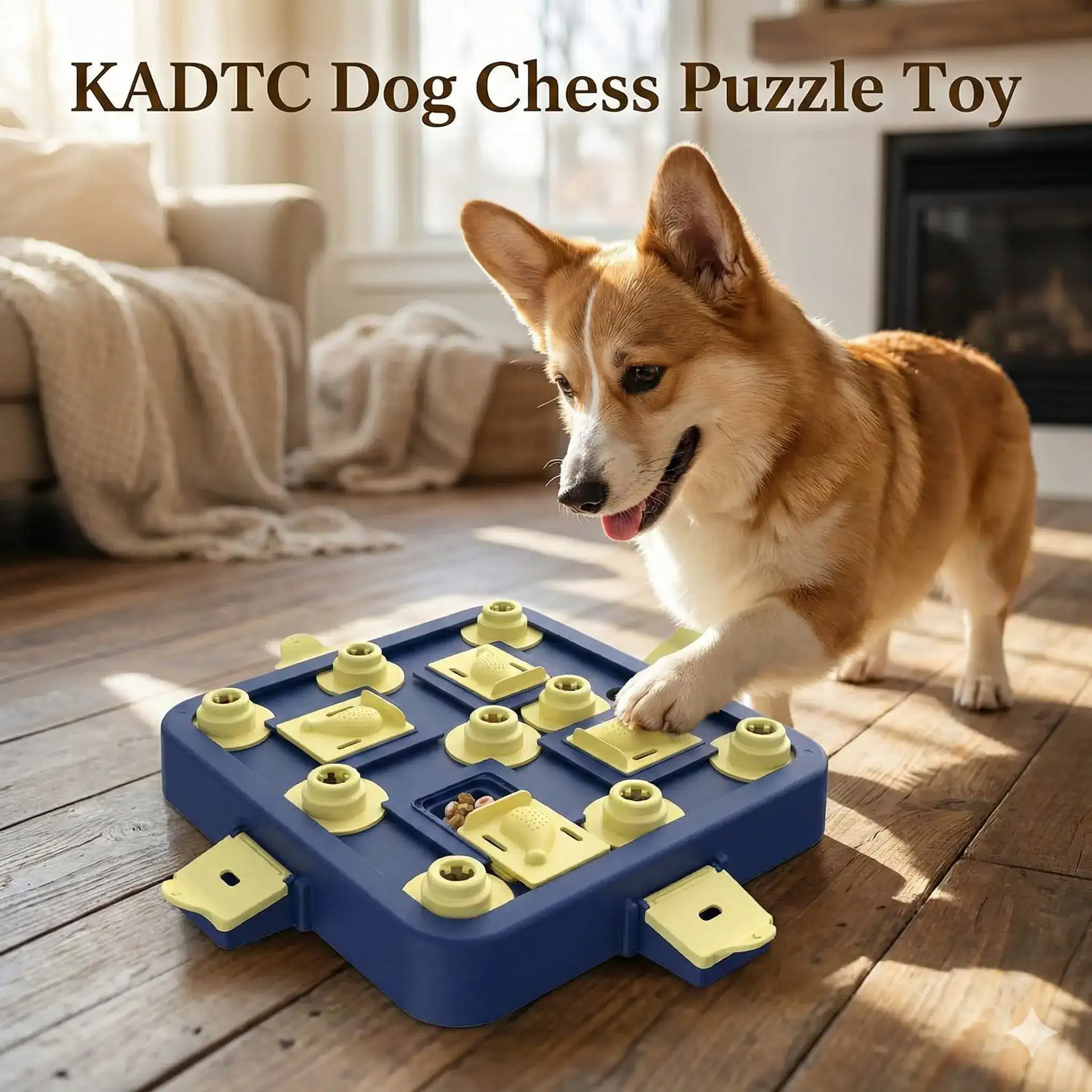
KADTC Dog Chess Puzzle Toy
Use for: Occupying a clever, high-energy dog during the indoor hours between walks. Rotating puzzle games absorb the problem-solving drive that otherwise turns into chewing.
Check price on AmazonNutrition & Diet
Feed a high-quality diet formulated for active large breeds, built on a named animal protein. Boxers are prone to food sensitivities and skin reactions, so a limited-ingredient formula sometimes helps dogs with recurring irritation.
Split the daily ration into two or three measured meals rather than one, which reduces bloat risk in a deep-chested breed. Avoid vigorous exercise for an hour either side of feeding. Adjust portions to body condition rather than to the bag chart, since a lean Boxer carries less strain on both heart and joints.
Puppies should be raised on a large-breed puppy formula so growth stays steady rather than rapid. Many owners of active large dogs also add a daily hip and joint supplement after discussing dosage with their veterinarian.

Nutramax Dasuquin with MSM Soft Chews
Use for: A commonly used joint supplement for active large dogs. Supplements do not replace weight management, appropriate exercise, or veterinary diagnosis of lameness, so discuss use and dosage with your vet.
Check price on AmazonTraining
Start training the day the puppy arrives. Boxers are intelligent and eager but stubborn enough that inconsistency shows quickly. Keep sessions short and varied, since repetitive drilling bores them and a bored Boxer disengages rather than trying harder.
Use positive reinforcement with high-value rewards. Harsh correction damages the bond with a sensitive breed and produces avoidance rather than compliance. Prioritize loose-leash walking and a solid recall, because an 80-pound dog that pulls is genuinely difficult to manage.
Socialize broadly before sixteen weeks, since exposure to varied people, sounds, surfaces, and stable adult dogs turns natural protectiveness into confidence rather than reactivity. Crate training gives a busy puppy a structured rest space and prevents damage when you cannot supervise.
Work on impulse control early. Jumping up is the habit most owners regret ignoring, so address it long before the puppy has the weight to knock over kids or older visitors.
Boxer vs Bulldog vs Rottweiler vs Labrador Retriever
Prospective owners weighing a powerful family dog often compare the Boxer against the Bulldog, the Rottweiler, and the Labrador Retriever. The differences in energy and handling requirements are larger than the shared muscular build suggests.
| Attribute | Boxer | Bulldog | Rottweiler | Labrador Retriever |
|---|---|---|---|---|
| Weight | 50 to 80 lb | 40 to 50 lb | 80 to 135 lb | 55 to 80 lb |
| Original Purpose | Hunting and guarding | Companion, formerly bull-baiting | Cattle driving and guarding | Retriever and waterfowl dog |
| Energy Type | Very high, sustained play | Low, short bursts | Moderate-high, steady | Moderate-high, adaptable |
| Trainability | Eager but stubborn | Stubborn, food-motivated | Highly trainable | Highly trainable |
| Grooming | Weekly brush | Weekly brush, fold care | Weekly brush | Weekly brush, seasonal shed |
| Threat Response | Alert, protective | Low guard drive | Strongly protective | Friendly alert |
| First-Time Owner? | Yes, if active | Yes | No, needs experience | Yes, most forgiving |
| Common Health Risks | ARVC, cancer, hip dysplasia | Breathing issues, skin folds | Hip dysplasia, bone cancer | Hip and elbow dysplasia, obesity |
| Living Space | House with yard | Flexible, apartment friendly | House with secure yard | Flexible with exercise |
The Boxer is far more energetic than a Bulldog and less physically demanding to handle than a Rottweiler. The Labrador is the most forgiving of the four for an inexperienced owner. Choose the Boxer when you want a protective, playful dog and can genuinely commit to the daily exercise it needs.
Common Questions about the Boxer
How much does a Boxer puppy cost?
Direct Answer: As an approximate, time-sensitive guide (as of 2026), expect roughly USD 1,200 to 3,000 from a reputable breeder.
Context: Prices vary by breeder, location, and pedigree. Breeders who run Holter monitoring and DNA testing on their dogs charge more, and that cost reflects real work.
Management: Budget for lifetime care, and secure pet insurance early given the breed’s cardiac and cancer risk.
Are Boxers good family dogs?
Direct Answer: Yes, they are among the most reliable family companions in the working group.
Context: They are patient and playful with children and bond intensely with their households. Their exuberance can knock over a toddler through enthusiasm rather than aggression.
Management: Supervise around very young children and exercise the dog before family time so the energy is already spent.
Are Boxers good for first-time owners?
Direct Answer: Yes, provided the owner is active and ready to train consistently from day one.
Context: The temperament is forgiving and they genuinely want to please, which helps a novice. The difficulty is the energy level and the prolonged adolescence, which tests patience.
Management: Enroll in a puppy class early and commit to the daily exercise before committing to the dog.
Do Boxers bark a lot?
Direct Answer: They are moderate barkers that alert to genuine changes rather than barking idly.
Context: They will announce a visitor clearly, but sustained nuisance barking usually signals boredom or too little exercise rather than a breed trait.
Management: Increase daily activity and mental work before treating the barking itself as the problem.
How long do Boxers live?
Direct Answer: The typical lifespan is 10 to 12 years.
Context: Cardiac disease and cancer are the two conditions that most often shorten it, which is why screened breeding lines matter so much in this breed.
Management: Buy from health-tested parents, keep the dog lean, and book annual veterinary exams including cardiac assessment.
Are Boxers aggressive?
Direct Answer: No. Well-bred, well-socialized Boxers are protective but not aggressive toward people.
Context: The breed standard calls for a stable, confident temperament. Reactivity usually traces back to inadequate socialization or poor breeding rather than the breed itself.
Management: Socialize broadly before sixteen weeks and continue exposure through adolescence.
Do Boxers shed a lot?
Direct Answer: They shed moderately year-round despite the very short coat.
Context: The hairs are short and stiff, so they work into fabric even though the volume is lower than a double-coated breed.
Management: Brush weekly with a rubber curry to lift dead hair before it reaches the furniture.
Can Boxers live in an apartment?
Direct Answer: Yes, if the owner reliably delivers the daily exercise outside the home.
Context: They are calm indoors once tired and are not prone to idle barking. The problem in an apartment is never the space itself, it is a shortfall in daily output.
Management: Commit to two solid outings a day, and confirm any breed or weight restrictions in your lease.
Why do Boxers need a Holter monitor?
Direct Answer: Because ARVC often produces no warning signs before a collapse or sudden death.
Context: A 24-hour Holter records the ventricular arrhythmias that a brief clinic listen will usually miss. NC State recommends starting at three years of age and repeating annually.
Management: Ask any breeder for recent Holter results on both parents, not just a stethoscope check.
Are white Boxers deaf?
Direct Answer: Some are. Dogs with extensive white markings carry an elevated risk of congenital deafness.
Context: The same pigment genetics that produce the white coat can affect the pigment cells needed for hearing. Many white Boxers hear normally, and white is not a disease in itself.
Management: Ask for a BAER hearing result on any predominantly white puppy rather than assuming either way.
Do Boxers get along with other dogs?
Direct Answer: Usually yes with good socialization, though some adults are selective with unfamiliar dogs of the same sex.
Context: They are playful and often boisterous, which smaller or more reserved dogs can find overwhelming even when the intent is friendly.
Management: Introduce on neutral ground and keep socialization going through adulthood rather than stopping after puppy class.
Finding a Puppy
Because cardiac disease runs through this breed, finding the right breeder near you matters more for a Boxer than for most dogs. The right questions are specific, and a good breeder will welcome them.
🏠 Responsible Breeders
Ask for recent Holter monitor results on both parents, DNA results for ARVC and degenerative myelopathy, OFA hip evaluation, and a thyroid panel. A breeder who runs this full panel will have the paperwork ready. One who deflects the question is telling you something important.
🐾 Rescue and Adoption
Boxer-specific rescue networks operate across the USA and Europe. Many dogs arrive because owners underestimated the energy level rather than through any fault of the dog. An adult with a known temperament suits a first-time owner well.
🚩 Red Flags to Watch For
- No Holter results, or a claim that a stethoscope check is sufficient.
- No OFA hip documentation for either parent.
- White puppies sold at a premium as “rare” with no BAER hearing result.
- Parents that will not be shown to you, or a whelping area you cannot inspect.
- Puppies advertised for immediate sale with no health paperwork.
Personal Observation
💭 Personal Observation
Rambo, the youngest of the five street dogs I rescued, is the one who shows me what this energy level actually costs. He is high-drive and needs serious running, often alongside my bicycle, before he is any use indoors. A Boxer asks for that same output and keeps asking well into its third year, long after most large breeds have calmed down.
Mun Mun, the velcro dog of the pack, shows me the other half. She shadows me room to room and unravels when left alone too long. Boxers are described exactly the same way, and it is the reason they do so badly in households where nobody is home.
Put those two together and you have the honest picture of the breed. It wants a job and it wants company, and a home that cannot supply both will get a bored, destructive dog rather than a bad one.
Conclusion
The Boxer dog is an exceptional family companion that offers active households loyalty, protection, and a genuinely comic personality. Few breeds combine working capability with this much affection for their people.
The pro side is a devoted, protective dog that stays playful for life. The con side is the daily exercise commitment and a health profile that demands screened breeding lines and attentive veterinary care. Owners who accept both build a remarkable partnership. Those who underestimate the energy will struggle.
📋 Before bringing one home, run this 4-step pre-buying check
- Exercise commitment. Can you provide at least an hour of real activity every day for the next decade?
- Health verification. Have you seen Holter results, ARVC and DM DNA results, and OFA hips for both parents?
- Company at home. Is someone around for most of the day, given how poorly this breed handles isolation?
- Climate and housing. Can you keep a short-coated, flat-faced dog comfortable in your local weather?
If any answer is no, reconsider the breed.
Editorial Disclaimer: This article is for informational and educational purposes only. It does not constitute veterinary advice, medical diagnosis, or treatment recommendations. Always consult a licensed veterinarian before making health-related decisions for your pet.
Accuracy Notice: While every effort has been made to ensure the information presented here is accurate and current, breed information evolves and individual dogs vary. If you spot a factual error or have updated information from a verified source, please contact us so we can review and update.
Product Disclosure: Product recommendations are based on independent research and editorial judgment. Individual results may vary. K9Sphere participates in the Amazon Services LLC Associates Program and other affiliate programs, and earns from qualifying purchases at no additional cost to you.
Last reviewed: September 2026. Article reviewed for accuracy on the date shown above.