
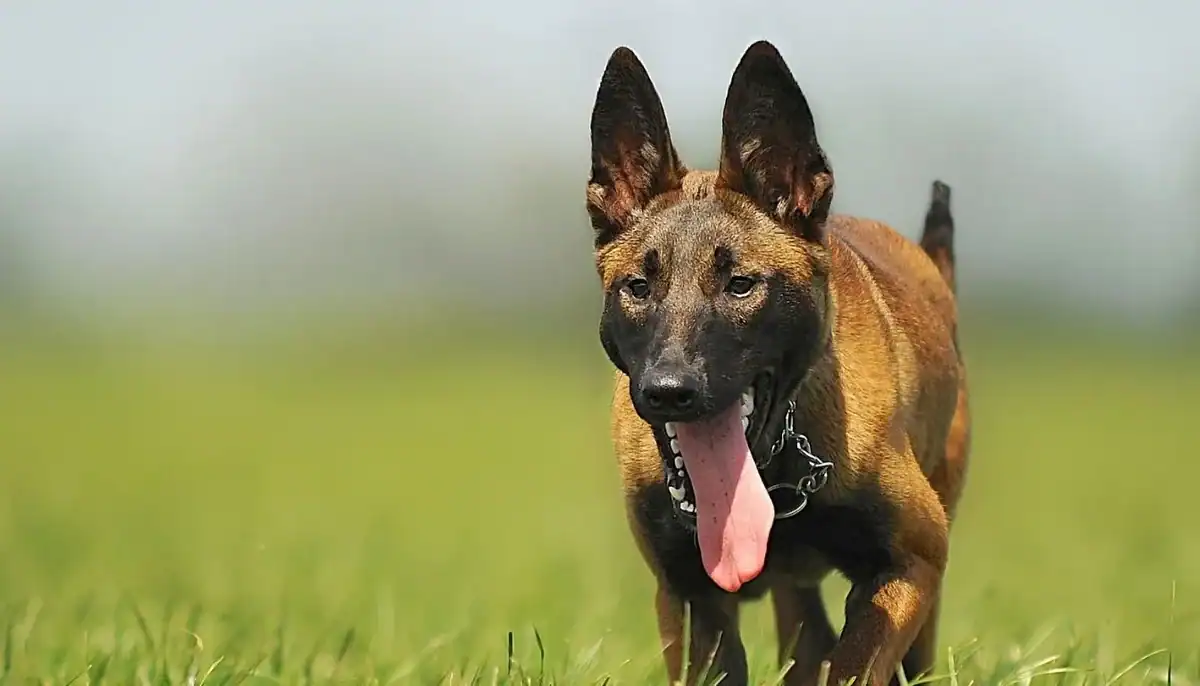
The Belgian Malinois is an elite working dog developed in Belgium in the late 1800s to herd livestock, before going on to become the world’s premier military and police K9. It is a medium-sized herding breed built for speed, stamina, and relentless focus.
What makes this breed compelling is its extreme energy and unmatched work ethic. They thrive on advanced obedience tasks, complex scent work, and rigorous physical challenges. Their intelligence and protective instincts have made them a top choice for elite military operations and protection roles around the world.
This guide draws on data from the American Kennel Club, the American Belgian Malinois Club, OFA joint testing standards, and peer-reviewed veterinary literature to present an accurate picture of what ownership actually involves.
They reward handlers who give them a constant job to do. Households that invest heavily in structured training, vigorous exercise, and serious mental stimulation get a deeply loyal, capable partner that excels at almost any task it is given.
If you want an easygoing pet, this is probably not the breed for you. This is not a dog you can leave alone in a yard. It rewards homes that match its needs and frustrates the ones that do not.
Affiliate Disclosure: K9Sphere participates in the Amazon Services LLC Associates Program and other affiliate programs. K9Sphere earns from qualifying purchases made through links in this article at no additional cost to you. Product recommendations are based on independent research and editorial judgment, not paid placement.
Breed Snapshot
📊 Vitals and Lifespan
Height
Males: 24–26 in (61–66 cm)
Females: 22–24 in (56–61 cm)
Weight
Males: 60–80 lb (27–36 kg)
Females: 40–60 lb (18–27 kg)
Lifespan
14–16 years
Breed Group
Herding Group
Origin
Belgium
🇧🇪
⭐ Personality Traits
Ratings (1 to 5). This demanding breed needs serious handler commitment, extensive obedience training, and vigorous work to thrive.
History and Origin
The Belgian Malinois is one of four related herding varieties developed in Belgium. Named after the city of Malines, this dog was bred purely for function rather than show appearance. Farmers needed an agile, tireless herder capable of moving stock all day and guarding the flock and the property at night.
📌 1891: The Belgian Shepherd Dog Club
Professor Adolphe Reul formed the Club du Chien de Berger Belge to classify the herding sheepdogs of the region. He categorized them into four varieties based on coat type and color. The short-haired fawn variety became known as the Malinois.
📌 Early 1900s: Transition to Police Work
As the need for sheepdogs declined, the breed found a new role in police and military work. Its intelligence and natural protective instincts made it useful for early European security forces, well before other breeds came to dominate the field.
📌 1911: Arrival in America
The first Malinois dogs arrived in the United States. They gained some popularity, but the two World Wars interrupted European breeding and import programs. The breed saw a strong resurgence from the 1960s onward as military programs recognized its edge in detection and patrol work.
📌 1959: A Breed in Its Own Right
The American Kennel Club recognized the breed in 1959, separating it from the other Belgian shepherd varieties. Today it is among the most sought-after working dogs on earth, valued because it is lighter, faster, and more agile than many traditional choices. It has become one of the most widely used breeds on US Navy SEAL teams and across elite military and police units in the USA.
That working heritage is the key to understanding the modern dog. The Belgian Malinois was never bred to be a relaxed companion. It was shaped over generations to think fast, move faster, and stay locked onto a task. Every trait a new owner has to manage today, the drive, the intensity, the need for a job, traces directly back to the Belgian farm and the police field.
Physical Characteristics
This is an elegant, well-muscled dog built for speed and endurance. Unlike heavier guardian breeds, it has a lighter bone structure that allows for explosive acceleration and remarkable jumping ability. They carry themselves with pride and a constant, switched-on alertness that rarely fully relaxes.
🎨 The Fawn Coat
The coat ranges from rich fawn to mahogany. The individual hairs often have black tips, creating an overlaid appearance. The signature feature is a solid black mask covering the muzzle, along with black ears. The short, straight coat has a dense undercoat that provides genuine weather resistance for outdoor work.
🏗️ Agile Structure
The body forms a square outline, standing as tall as it is long. The chest is deep rather than broad, supporting efficient lung capacity for sustained work. Their upright, triangular ears and dark, almond-shaped eyes give them a sharp, questioning expression at all times.
🐕 Malinois or German Shepherd? Telling Them Apart
People often confuse the two, but the differences are clear once you know them. The Malinois is squarely built and stands with a relatively level back, where the German Shepherd is longer in body and often shows a more sloping topline. It is also finer-boned and lighter on its feet, built like a sprinter rather than a powerhouse.
The two are historically distinct rather than close relatives. The Malinois carries its weight up and tight for agility, which is why elite units favor it for fast, vertical, obstacle-heavy work. If a dog looks like a lean, fawn shepherd with a black mask and an almost wired-up intensity, you are very likely looking at one.
Character and Temperament
This is an intense dog, and that word matters more than any other in describing it. The Malinois bonds tightly to its handler and demands to be involved in everything the person does, from a trip to the mailbox to a session in the yard. They are not independent loungers content to nap the day away while you work. They expect constant engagement, read your moods and routines closely, and will quickly become problematic if left to entertain themselves in a backyard with no outlet for that focus.
🛡️ Strong Guardian
They carry a natural guard instinct. They can be reserved or indifferent with strangers and will watch their territory closely, which makes early and continuous socialization vital. A good one learns to tell the difference between ordinary visitor activity and a genuine concern rather than reacting to everything.
🔥 Strong Prey Drive
The herding background translates into a powerful prey drive. They are wired to chase and control anything that moves, including bicycles, cars, joggers, and smaller animals. Managing this drive takes strict obedience and secure fencing, and it is the single biggest reason off-leash freedom has to be earned carefully.
💪 Handler Focus
They are extraordinarily responsive to their primary person. That intense bond is a gift in training but means they can struggle with separation anxiety when isolated for long hours. They want to work with you, not simply live near you, which makes them brilliant sport dogs and demanding house pets.
🧠 Mental Needs
Physical exhaustion alone is not enough. They need mental fatigue to settle in the house. Without a clear job, they invent one of their own, and the results are rarely convenient: pacing, obsessive behaviors, and destructive chewing. Complex problem-solving is not a luxury here, it is a requirement.
Screening and Conditions
Veterinary Disclaimer: The information in this article is for educational purposes only and is not a substitute for professional veterinary advice, diagnosis, or treatment. K9Sphere’s authors are experienced dog owners, not licensed veterinarians. Always consult a qualified DVM regarding any health concerns about your pet. Never disregard professional veterinary advice or delay seeking it because of something you have read on this site.
Health Information Sources: Data compiled from:
- American Belgian Malinois Club (ABMC): CHIC-required screening protocols for hips, elbows, and eyes
- Orthopedic Foundation for Animals (OFA): Joint and eye evaluation databases
- American Kennel Club: Breed reference and health statements
Always consult your licensed DVM for personalized medical advice.
The Belgian Malinois is generally a very healthy and robust breed, which is part of why it holds up to such demanding work for so many years. Responsible breeders screen their breeding stock carefully to protect that reputation. The American Belgian Malinois Club expects screening for hips, elbows, and eyes through the CHIC program, and also recommends screening for epilepsy and cancer. Even so, like all active breeds, the Malinois has a few inherited vulnerabilities every owner should understand.
Common Inherited Conditions
🔴 Hip Dysplasia
What to watch for: Stiffness when standing up, reluctance to jump or run, and a noticeable change in gait. Because this breed will push through pain to keep working, the early signs are often subtle and easy to miss.
Screening: Ensure the breeder provides OFA or PennHIP clearances for both parents. Keeping your dog lean and avoiding forced running on tough surfaces during puppyhood protects developing joints. A quality joint supplement can support long-term mobility in an athletic dog.
🟡 Elbow Dysplasia
What to watch for: Forelimb lameness or limping that worsens after exercise. This joint condition affects the front legs and can end a dog’s athletic career if it goes unmanaged.
Screening: OFA elbow clearance is part of responsible breeding. Treatment ranges from medical management with anti-inflammatories and weight control to surgical intervention, depending on severity. Early diagnosis gives the best outcome.
🟡 Progressive Retinal Atrophy (PRA)
What to watch for: The first sign is usually night blindness, where the dog hesitates in dim light or bumps into objects in dark rooms. It gradually progresses toward full vision loss.
Screening: Annual exams by a veterinary ophthalmologist and DNA testing of the parents catch the issue before breeding. There is no cure, but blind dogs adapt remarkably well when their home environment is kept stable and familiar.
🟡 Epilepsy and Cancer
What to watch for: With epilepsy, watch for sudden collapse, paddling, or loss of awareness during a seizure. For cancer, the breed club specifically flags hemangiosarcoma, where signs can include sudden weakness, pale gums, or unexplained collapse.
Screening: The American Belgian Malinois Club recommends screening lines for both. Choose a breeder who is open about the health history across their dogs, and report any seizure activity or unexplained decline to your vet promptly, since early veterinary care matters in both conditions.
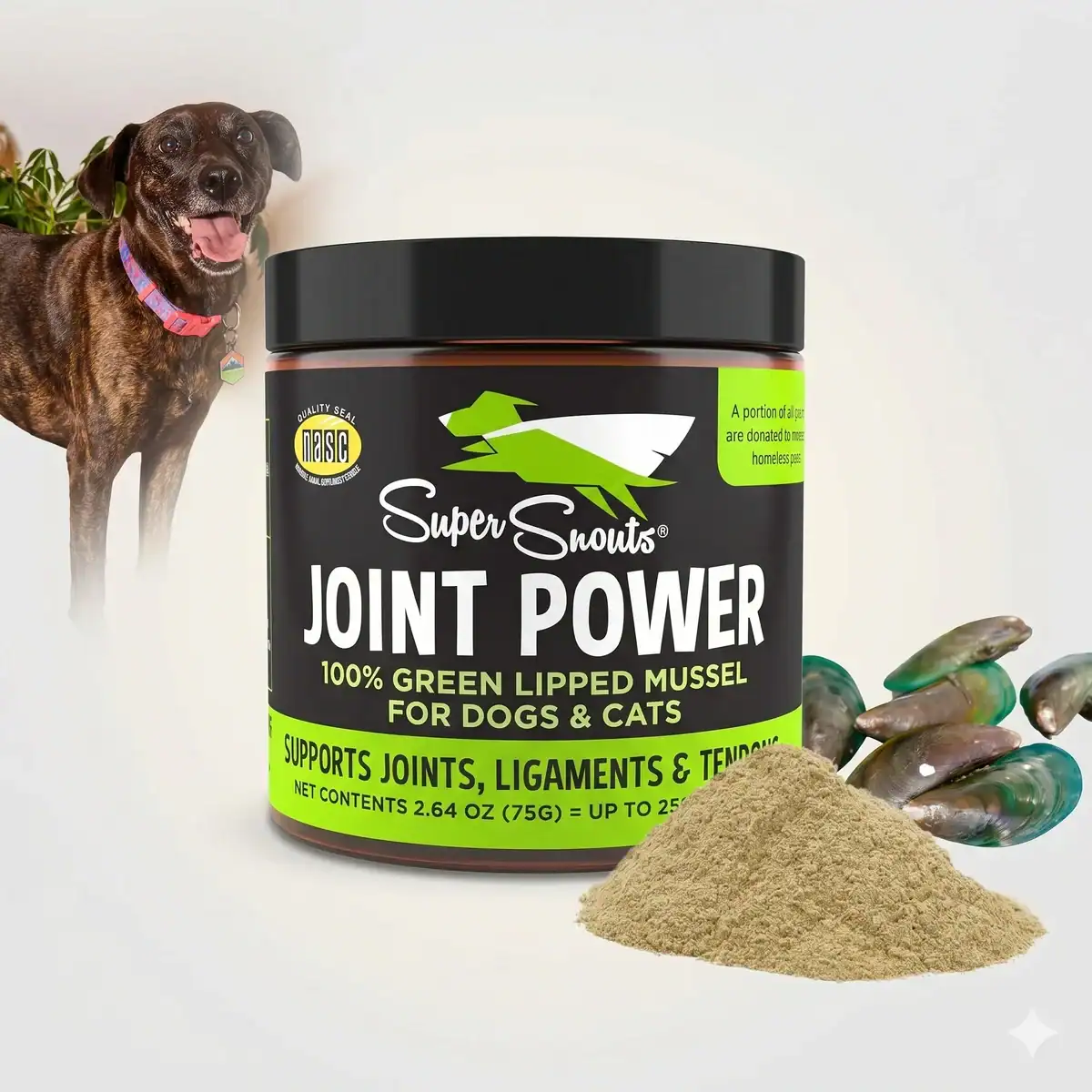
Super Snouts Joint Power Green-Lipped Mussel Supplement
Use for: Supporting the hips and elbows of a hard-charging athlete. Green-lipped mussel is a natural source of glucosamine, chondroitin, and omega-3s that help maintain cartilage and cushion the joints against the wear of demanding activity.
Check price on AmazonGrooming and Coat Care
Grooming is refreshingly straightforward. They have a short, dense, weather-resistant coat that needs minimal upkeep compared with long-haired breeds. They are naturally clean dogs and only need a bath when they get into something truly smelly or muddy. Over-bathing strips out the protective oils, so resist the urge to do it often.
They do shed, which surprises owners who assume a short coat means a clean home. Expect a light, steady shed year-round, with a heavy “blow” of the undercoat twice a year during seasonal changes. Brushing once or twice a week with a medium-bristle brush or a rubber grooming mitt keeps loose hair under control and spreads healthy skin oils. In the heavy weeks, switching to an undercoat rake and grooming outdoors keeps most of the fallout off your furniture.
Nail care matters more here than in most breeds. Because they are so active and push off forcefully when they move, overgrown nails can change the foot structure and cause real joint pain over time. Trim every few weeks if they do not wear down naturally on rough ground. Round out the routine with regular tooth brushing to prevent the dental disease that quietly shortens so many dogs’ lives, plus a weekly check of the ears for moisture or debris.
Exercise and Living Needs
The exercise requirement is massive, and this is the single point most new owners underestimate. A casual walk around the block barely counts as a warm-up. They need 90 minutes to two hours of focused activity every single day. Once their growth plates close at around 18 months, they make superb running, cycling, and hiking partners who will happily go until you stop.
A house with a securely fenced yard is close to mandatory. They are too alert and too driven for apartment life in most cases. Even with a yard, they will not exercise themselves in any meaningful way. You have to go out and engage with them. Structured fetch, agility, flirt-pole work, and protection sports like IGP are excellent outlets that satisfy body and mind at once.
They are notoriously difficult to tire out physically, which surprises owners who assume a single run will be enough. Many discover that a five-mile hike just produces a fitter dog, not a tired one. Mental fatigue is the real key. Folding obedience into play, teaching complex trick chains, and running nose-work search games will drain them far faster than distance alone ever could. A dog that has had to think settles; one that has only run is often just getting started.
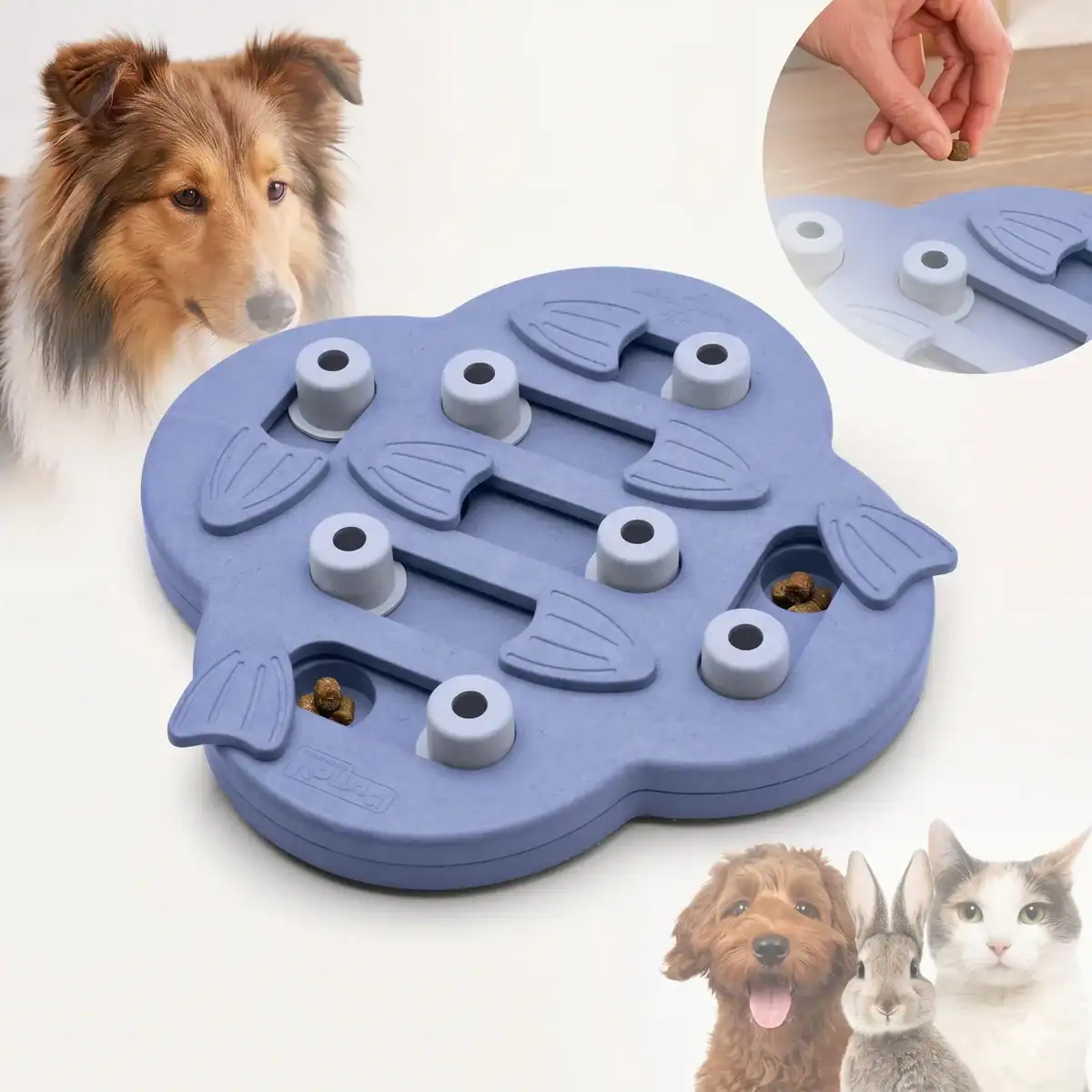
Outward Hound Nina Ottosson Dog Puzzle Toy
Use for: Draining the mental energy this breed never seems to run out of. The food puzzle makes a dog problem-solve to earn rewards, delivering the kind of brain work that settles them far more effectively than physical exercise alone.
Check price on AmazonNutrition & Diet
Because they are true athletes, the diet has to reflect their energy output. A quality food rich in animal protein supports their lean, muscular build and constant activity. Look for formulas with real, named meat as the first ingredient, and treat marketing buzzwords on the bag with healthy skepticism.
🐶 Puppy Stage
Puppies grow rapidly and should be fed a large-breed formula so their joints develop at a safe, controlled pace. Overfeeding at this age is seriously risky, since rapid growth and excess weight both raise the chance of hip and elbow trouble. Keep them lean, feed measured meals on a strict schedule rather than leaving food out, and resist the urge to bulk up a growing pup.
🐕 Adult Stage
Switch to an adult formula at around 12 to 14 months. Most adults do well on two measured meals a day. One that is actively competing in sports, herding, or doing a real job will burn far more calories than a typical pet and may need a performance diet to hold condition. Always feed to the dog in front of you, adjusting portions up on heavy days and down on rest days.
🐕🦺 Senior Stage
They stay active deep into old age, but their calorie needs still drop as the years add up. Move to a senior diet with controlled calories and maintained protein to protect aging muscle, and talk to your vet about joint support as arthritis creeps in. Throughout life the body-condition test is the same: you should be able to feel the ribs easily without pressing firmly, and see a clear waistline from above.
Training
Training one is both a joy and a serious challenge. They are remarkably smart and pick up commands after only a few repetitions. But they are also sensitive, and they will shut down or grow anxious under harsh handling. A positive-reinforcement approach paired with firm, consistent rules is the only method that reliably brings out the best in them.
🛑 Early Socialization
Socialization is non-negotiable and time-sensitive. From the day a puppy comes home, and especially between 8 and 16 weeks, expose it to a wide range of people, surfaces, sounds, and calm environments. This is what grows a confident adult that reads new situations sensibly instead of treating every stranger or noise as a threat to its handler.
👑 Channeling the Drive
Basic obedience is only the starting line. They need advanced work to channel that enormous focus into something productive, whether competitive obedience, tracking, agility, or protection sport. A bored one does not switch off; it redirects all that energy into behavior you will not enjoy. Give the focus a real job and you get an exceptionally capable partner.
🦷 Managing the Mouth
This breed is hardwired to use its mouth, so teach bite inhibition early and address mouthing calmly. Keep an appropriate toy within reach at all times and redirect the dog onto it the instant teeth find skin, then let play continue. If teeth touch skin again, play stops immediately. Consistency from day one prevents puppy mouthiness from hardening into a genuine problem as the dog grows stronger and faster.
Belgian Malinois vs German Shepherd vs Dutch Shepherd vs Rottweiler
Choosing a protective working breed comes down to subtle differences in temperament and build. Comparing it against the German Shepherd, the Dutch Shepherd, and the Rottweiler makes the demands of each much clearer.
| Attribute | Belgian Malinois | German Shepherd | Dutch Shepherd | Rottweiler |
|---|---|---|---|---|
| Weight | 40–80 lb (18–36 kg) | 50–90 lb (23–41 kg) | 42–75 lb (19–34 kg) | 80–135 lb (36–61 kg) |
| Original Purpose | Herding and protection | Herding and guarding | Versatile farm dog | Cattle drover and guardian |
| Energy Type | Intense, tireless | High, steady | High, athletic | Moderate, strong bursts |
| Trainability | Exceptional, fast learner | High, eager to please | High, independent streak | High, but stubborn |
| Grooming | Weekly brush, short coat | Frequent brush, heavy shed | Weekly brush, varied coat | Weekly brush, short coat |
| Threat Response | Quick, reactive guardian | Calculated guardian | Alert, responsive | Confident, physical guard |
| First-Time Owner? | No | Challenging, needs help | No | Challenging, needs help |
| Common Health Risks | Hip and elbow dysplasia, PRA | Hip dysplasia, DM, bloat | Hip dysplasia, goniodysplasia | Hip dysplasia, bloat, cancer |
| Living Space | Home with yard | Home with yard | Home with yard | Home with yard |
The Malinois is lighter, faster, and more intensely driven than the German Shepherd. While the shepherd is more forgiving of handler mistakes, it reacts instantly and remembers everything, good habits and bad alike. The Dutch Shepherd is very similar but slightly more independent, with a distinctive brindle coat. The Rottweiler is far heavier and slower, protecting through sheer physical presence rather than agile pursuit. Choose this breed only if you really want an elite canine athlete and have the lifestyle to keep it busy.
Common Questions about the Belgian Malinois
Are Belgian Malinois dangerous?
Direct Answer: They are not inherently dangerous, but their drive, speed, and bite strength make them a serious liability if untrained or unsocialized.
Context: These dogs are bred to bite and hold in police and military scenarios, which means the raw equipment for serious behavior is built in. Without a knowledgeable handler to channel that instinct, a bored or frustrated one can become destructive and reactive toward strangers or other dogs. The danger is almost never the breed itself; it is the mismatch between a driven dog and an owner who cannot meet it.
Management: Commit to professional obedience training from puppyhood. They must have clear boundaries and a confident leader, and they should never be encouraged into aggressive play.
Belgian Malinois vs German Shepherd: which is better?
Direct Answer: Neither is universally better. The German Shepherd is generally a better fit for active families, while the Malinois suits elite dog sports and professional roles.
Context: The Malinois has more energy and sharper focus, and it needs more mental stimulation than a shepherd. The German Shepherd is larger, sheds more, and is slightly less reactive to sudden movement.
Management: Assess your realistic daily activity level honestly. If you cannot reliably provide two hours of demanding work every day, this is not the right choice.
How much does a Belgian Malinois cost?
Direct Answer: A puppy from a reputable breeder typically costs between USD 1,500 and USD 3,000. Pricing varies by country, with UK, Canada, and Australia rates differing.
Context: Fully trained protection dogs can run from USD 15,000 well into the tens of thousands. Beyond the purchase price, budget for quality food, durable chew toys, professional training classes, and routine vet care across a long lifespan.
Management: Weigh the pro of a lower sticker price against the con that bargain puppies usually come from poor genetic lines with unstable temperaments or hidden medical problems that cost far more later. Do not shop on price alone.
Do Belgian Malinois make good family dogs?
Direct Answer: They can be excellent family dogs in an experienced, extremely active household, but they are not recommended for typical pet homes.
Context: Their prey drive and herding instinct can lead them to chase and herd fast-moving children, and they play rough enough to knock a small kid over by accident. They bond fiercely with their family but have little patience for teasing or chaos.
Management: Teach children how to interact calmly with the dog, supervise every interaction, and always give the dog a quiet place to retreat when the house gets loud.
Are Belgian Malinois aggressive?
Direct Answer: A well-bred, well-socialized Malinois is confident and alert, not unpredictably aggressive.
Context: Aggression usually traces back to poor breeding, missed socialization, or sheer frustration from being confined without a job. Their natural protectiveness can look like aggression to a stranger, but in a trained dog it is controlled, deliberate behavior.
Management: Socialize heavily between 8 and 16 weeks of age. Expose the puppy to many people and new situations so it learns, early and deeply, that the world is safe.
How long do Belgian Malinois live?
Direct Answer: The typical lifespan is 14 to 16 years.
Context: For a dog of their size and athleticism, that is an impressively long life. They stay active and demanding well into their senior years, so you are committing to a decade and a half of full-on engagement, not a few easy years.
Management: Keep them lean, since obesity wrecks joints and shortens lives. Stay on top of regular vet checkups as they move into their double-digit years.
Can a beginner handle a Belgian Malinois?
Direct Answer: Not as a first dog. This breed is not recommended for first-time owners.
Context: Their speed, intelligence, and focus can overwhelm an inexperienced handler within weeks, and mistakes made early are very hard to undo. The gap between this dog’s needs and a beginner’s skills is simply too wide.
Management: If you love the look but lack experience, build skills first with an easier breed, train under a professional, and consider whether a calmer guardian fits your life better right now.
Do Belgian Malinois shed a lot?
Direct Answer: Yes, they shed steadily year-round, with two heavier shedding periods during seasonal changes.
Context: Despite the short hair, they carry a double coat, so you will find fawn and black hairs on clothes and furniture daily. The grooming is easy, but the shedding is real and constant.
Management: Brush a few times a week to lift dead hair before it lands on the couch, and switch to an undercoat rake during the heavy shedding weeks.
What is the best food for a Belgian Malinois?
Direct Answer: A protein-rich, nutrient-dense diet formulated for active or sporting dogs.
Context: Because they burn so much energy, basic grocery-store kibble often lacks the caloric density and quality protein they need to hold muscle. The right food shows up directly in their condition, coat, and stamina.
Management: Choose foods with named meat as the first ingredient, and adjust portions to daily activity so the dog does not gain weight on rest days.
How do I stop a Belgian Malinois puppy from biting?
Direct Answer: Redirect the mouth onto an acceptable toy every single time, and enforce calm bite-inhibition rules from day one.
Context: The pups are famously mouthy because they are bred to grip. If you allow play-biting on hands now, it escalates into a real management problem once the dog is bigger and stronger.
Management: Keep a toy nearby at all times. The moment teeth touch skin, play stops, then resumes once the dog is calm. Consistency, not punishment, is what fixes this.
Finding a Puppy
Finding one is easy. Finding a stable, healthy, well-bred one takes real effort. Because of their fame in film and on social media, backyard breeders mass-produce them for sale at a profit, and the result is too often an unstable dog with serious temperament and health flaws. Patience at this stage protects you from a decade of difficulty.
🏠 Responsible Breeders
Start with the American Belgian Malinois Club to find a reputable breeder. A good one will interview you closely about your training plans, experience, and living situation, and may turn you away if the fit is wrong. They will show OFA clearances for hips, elbows, and eyes, and let you meet the dam. Be cautious of anyone pushing extreme “protection” or “guard” lines if you simply want an active companion.
🐾 Rescue and Adoption
If you have the experience, consider adoption. Breed-specific rescues are full of adolescents whose owners badly underestimated the exercise and training load. Adopting a young adult lets you see a personality that is already formed, so you can match the dog’s temperament to your real lifestyle rather than gambling on a puppy.
🚩 Red Flags to Watch For
- Breeders advertising bargain-priced puppies, which usually signals a puppy mill or careless backyard operation.
- No documented OFA clearances for hips, elbows, and eyes on both parents.
- Selling puppies before eight weeks of age.
- Refusing to let you meet the mother or see where the puppies are raised.
- Marketing dogs purely on extreme “maximum drive” or “attack” lines to pet buyers.
📋 Before bringing one home, run this 4-step pre-buying check
- Time and training. Can you commit to two hours of demanding physical and mental work every day?
- Handler experience. Do you have real experience training driven, protective breeds?
- Secure containment. Do you have a house with a securely fenced yard rather than an apartment?
- Children and household. Is your household calm enough, and your children old enough, to follow firm rules around the dog?
If any answer is no, reconsider the breed.
Personal Observation
💭 Personal Observation
Rambo, one of my rescues, is a high-energy four-year-old. If he misses a walk, I see it by evening: restlessness, pacing, and usually a chewed-up shoe. This breed runs on the same need for exercise, just turned up much higher.
So the takeaway is simple. This is not a dog you fit around a busy life. Give it the daily exercise and training it needs and you get a capable companion. Skip that, and the same energy can turn into real behavior problems.
Conclusion
This is a highly specialized breed, built for handlers who want an elite partner. They excel at obedience, protection, and scent work, with a sharp intelligence few others can match. In the right hands, they can be trained to a remarkable standard across a wide range of advanced tasks.
The honest bottom line is that this is a commitment, not a companion you can switch off. Their demand for structure, training, and serious physical work never takes a day off, and the same focus that makes them extraordinary will turn destructive the moment it goes unmet. Take one on only if you are ready to be as dedicated as it is. If you want a more forgiving guardian that tolerates the occasional off day, a German Shepherd is the wiser starting point.
Editorial Disclaimer: This article is for informational and educational purposes only. It does not constitute veterinary advice, medical diagnosis, or treatment recommendations. Always consult a licensed veterinarian before making health-related decisions for your pet.
Accuracy Notice: While every effort has been made to ensure the information presented here is accurate and current, breed information evolves and individual dogs vary. If you spot a factual error or have updated information from a verified source, please contact us so we can review and update.
Product Disclosure: Product recommendations are based on independent research and editorial judgment. Individual results may vary. K9Sphere participates in the Amazon Services LLC Associates Program and other affiliate programs, and earns from qualifying purchases at no additional cost to you.
Last reviewed: June 2026. Article reviewed for accuracy on the date shown above.


