

If you are weighing a Belgian Malinois vs German Shepherd, you have already narrowed it to two of the most capable working dogs on earth. Each one is a herding dog at heart, and the German Shepherd Dog and the Belgian Malinois both turned from farm work into elite police and military partners. Both are brilliant, driven, and intensely loyal.
Here is the honest framing most German Shepherd vs Belgian Malinois comparisons get wrong. Neither breed is better, and neither is simply smarter than the other. They are built for different owners. The Malinois is a lighter, faster, more relentless specialist. The German Shepherd is a larger, more versatile generalist that bends a little more to family life.
That difference decides everything. The right question is not which dog wins, but which dog fits the life you actually live, the hours you can give, and the experience you bring to handling a powerful, high-drive animal.
This guide compares them across the nine areas that genuinely separate them, from drive intensity and trainability to health risks, cost, and how each copes with a normal household. Whether a German Shepherd or Belgian Malinois is right for you comes down to those details, and each section ends with a clear take on who that round favors.
Read it as a decision tool. By the final verdict you should know, with no hand-waving, which of these two remarkable dogs belongs in your home and which one would quietly make your life harder.
Affiliate Disclosure: K9Sphere participates in the Amazon Services LLC Associates Program and other affiliate programs. K9Sphere earns from qualifying purchases made through links in this article at no additional cost to you. Product recommendations are based on independent research and editorial judgment, not paid placement.
Quick Answer and Who Each Round Favors
⚡ The 30-Second Answer
Choose the German Shepherd if you want one dog that can do a bit of everything, guard the home, train for sport, and still settle as a devoted family companion with an experienced owner. Choose the Belgian Malinois if you are an active, knowledgeable handler who wants an elite athlete for serious daily work or dog sport, and you can give it a job every single day.
Both demand far more time, training, and exercise than the average dog. Neither is a casual pet, and getting that part wrong is what fills rescues with both breeds.
| Category | Favors |
|---|---|
| Temperament and drive | Depends on goals |
| Trainability | Tie (both elite) |
| Exercise practicality | German Shepherd |
| Family fit | German Shepherd |
| Guarding and protection | Depends on type |
| Grooming and shedding | Belgian Malinois |
| Health and longevity | Belgian Malinois |
| Cost | Roughly even |
| First-time owners | German Shepherd (with help) |
Belgian Malinois vs German Shepherd at a Glance
The table below lays out the core German Shepherd vs Belgian Malinois differences in size, weight, drive, health, and lifestyle fit. On weight, male German Shepherds run heavier than male Malinois, so the German Shepherd is generally a little larger than Belgian Malinois of the same height. Scan the rows that matter most to you, then read the detailed sections below.
| Attribute | Belgian Malinois | German Shepherd |
|---|---|---|
| Height (male) | 24–26 in (61–66 cm) | 24–26 in (61–66 cm) |
| Weight (male) | 60–80 lb (27–36 kg) | 65–90 lb (29–41 kg) |
| Lifespan | 14–16 years | 9–13 years |
| Origin | Belgium | Germany |
| Breed group | Herding | Herding |
| Build | Light, square, sprinter | Larger, longer, powerhouse |
| Energy type | Intense, tireless | High, steady |
| Drive intensity | Extreme | High |
| Trainability | Exceptional | Excellent |
| Shedding | Light, steady + 2 blows | Heavy (“German Shedder”) |
| Exercise need | 90 min–2 hr daily | Up to 2 hr daily |
| Reaction to strangers | Quick, reactive guardian | Assess, then engage |
| Main health risks | Hip/elbow dysplasia, PRA, epilepsy | Hip/elbow dysplasia, bloat, DM |
| First-time owner? | No | Challenging, needs help |
| Living space | Home with secure yard | Home with yard (apt. hard) |
📜 A Quick Origin Story
The German Shepherd was originally bred in Germany for herding and flock guarding. Captain Max von Stephanitz developed the German Shepherd from regional farm dogs in 1899, and the breed later gained its American home when the German Shepherd Dog Club of America formed in 1913. German Shepherds are also known for the versatility that quickly carried them from pasture work into police, military, and service roles.
The Belgian Malinois is one of the four varieties of the Belgian Shepherd, alongside the Tervuren, Laekenois, and Groenendael, which differ mainly in coat type and color. Its short coat suited high-energy herding work in the region around Malines, Belgium, from which it takes its name.
So while these two breeds look alike and share a herding past, the German Shepherd and the Belgian Malinois were developed in different countries by different breeders.
Who Should Choose the Belgian Malinois
🐕 The Malinois is the right pick if:
- You are an experienced handler who has lived with a high-drive breed before.
- You want a serious sport, protection, or working partner, not a companion that switches off.
- You can deliver 90 minutes to two hours of hard physical and mental work every day, no exceptions.
- You have a securely fenced yard and an active, structured lifestyle.
- You want the longer-lived, lighter, more agile of the two.
Who Should Choose the German Shepherd
🐕 The German Shepherd is the right pick if:
- You want one versatile dog that guards, trains, and lives as a family companion.
- You are committed but want a breed that forgives the occasional off day a little more.
- You can handle heavy year-round shedding and a larger, stronger dog in the home.
- You are a dedicated first-time owner of a powerful breed, working with a trainer.
- You value a deep one-person bond and a steady, watchful guardian temperament.
Temperament and Drive
Both breeds bond hard and want a job, but the intensity differs. Belgian Malinois are known for being the more extreme of the two, and Malinois dogs demand to be involved in everything, read your every move, and rarely fully switch off. Left without an outlet, that focus curdles into pacing, obsessive habits, and destruction.
The German Shepherd carries the same working heritage with a slightly steadier dial. German Shepherds are known as the scholars of the working world, learning fast, bonding intensely to one person, and guarding with a calmer assess-then-act style. The breed still needs a job, but it tolerates downtime a little better than the Malinois.
Both are naturally watchful with strangers and need heavy early socialization. The practical gap is recovery, since German Shepherds tend to settle indoors after work, while the Malinois often stays switched on and looking for the next task. German Shepherds often read a situation before reacting, which makes daily life with them a little calmer.
🎯 Verdict: If you want raw, relentless drive for sport or professional work, the Malinois delivers more of it. If you want high capability that still downshifts into family life, the German Shepherd is the easier temperament to live with. This round comes down to your goals, not a clear winner.
Trainability
This is the closest round in the comparison. Both breeds sit at the very top of canine trainability, learning commands in only a few repetitions and excelling at obedience, tracking, agility, and protection sport. Neither struggles to learn. The difference is in handling style.
The Malinois is so quick and so sensitive that it punishes hesitation. It learns good habits and bad ones at blistering speed, so an inconsistent handler creates problems fast. It rewards precise, experienced training and can overwhelm a novice within weeks.
German Shepherds are highly trainable and eager to please, but a touch more forgiving of a learning handler. German Shepherds excel in obedience, tracking, and protection work, and they still remember everything, good and bad, yet give you marginally more room to correct course. Both respond best to positive reinforcement and shut down under harsh, coercive methods.
🎯 Verdict: It is a genuine tie on raw trainability. Both are elite. The Malinois demands a more skilled hand to reach its ceiling, while the Shepherd is slightly more forgiving of mistakes during the learning curve.
Exercise Needs
Neither breed is close to a low-maintenance pet here. The Belgian Malinois needs 90 minutes to two hours of focused activity every single day, and it is famously hard to tire. A long run often just produces a fitter dog, not a calmer one. Mental fatigue, not distance, is what finally settles it.
The German Shepherd is in the same territory, needing up to two hours of vigorous daily exercise plus real cognitive work. Scent games, structured fetch, and agility satisfy the herding brain. Skip it and both breeds slide into frustration-driven behavior that lands many in rescue.
The practical edge goes to the Shepherd only slightly: it is marginally easier to satisfy and a bit more willing to rest afterward. The Malinois treats exercise as a starting point and keeps asking for more.
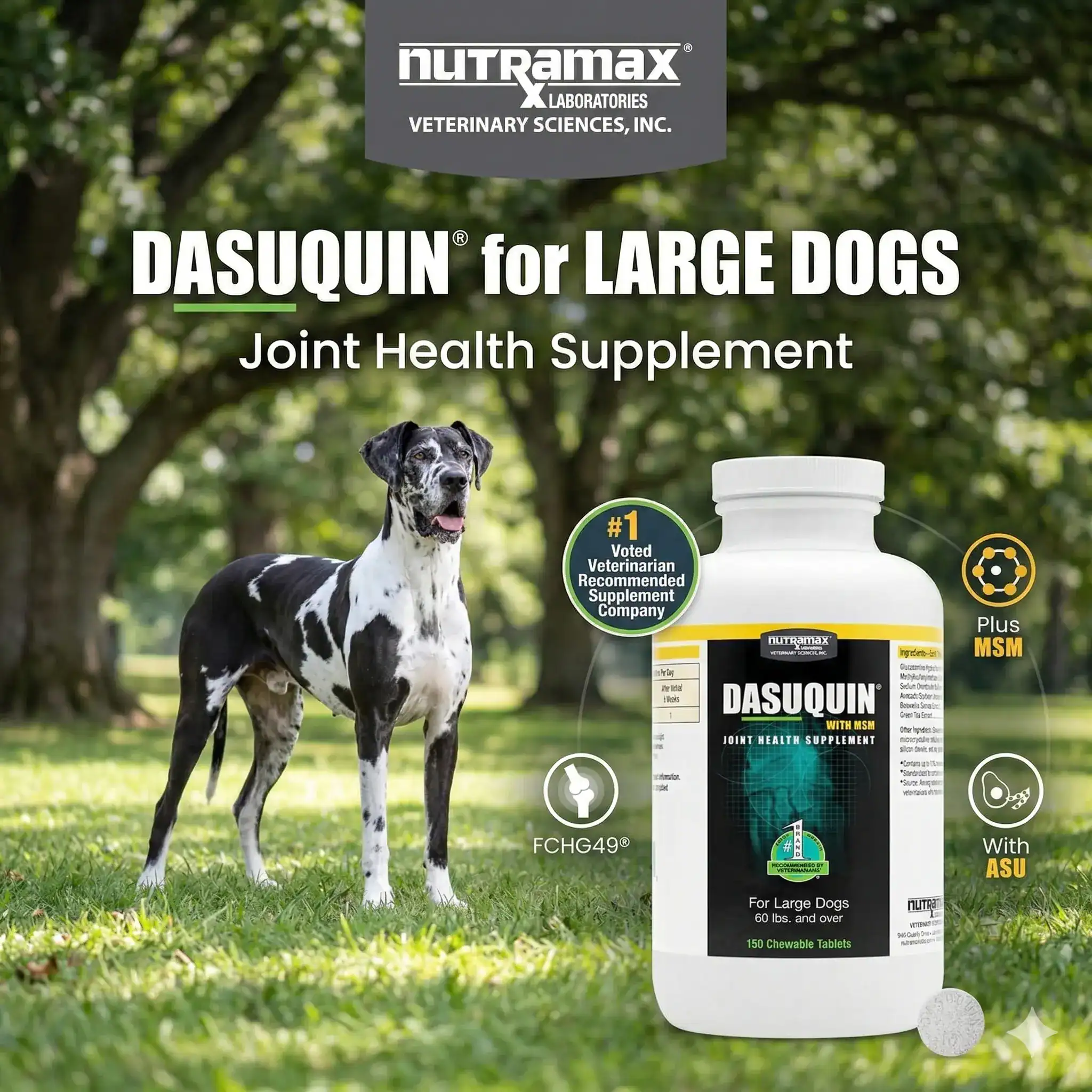
Nutramax Dasuquin with MSM Soft Chews for Dogs
Use for: Both breeds are dysplasia-prone, hard-charging athletes. Glucosamine, chondroitin, and MSM help support cartilage and joint integrity through years of demanding daily activity.
Check price on Amazon🎯 Verdict: Both need a committed, active owner whose daily routine already includes hard physical activity. The German Shepherd is fractionally more practical to tire out, but if a casual walk is your idea of exercise, neither breed is for you.
Family Fit
Both breeds can be devoted family dogs in the right home, but the German Shepherd adapts to household life more readily. German Shepherds are often considered the safer family choice of the two, and for an experienced, active household you can rarely go wrong with a German Shepherd.
It bonds intensely with the whole family, often acting as a watchful supervisor. Its size and herding instinct mean it may nip at running toddlers and needs supervision around young kids.
The Belgian Malinois is the harder fit for a typical family. Its prey drive and herding instinct can push it to chase and herd fast-moving children, and it plays rough enough to knock a small child over by accident. It bonds fiercely but has little patience for teasing or household chaos.
For both, the rules are the same: supervise every interaction with young children, teach kids to interact calmly, and give the dog a quiet retreat. The Shepherd simply arrives at easygoing family life with less friction.
🎯 Verdict: For most family homes, the German Shepherd is the more realistic companion. The Malinois can thrive in an experienced, extremely active family, but it is not built for the average busy household with young children.
Guarding and Protection
Both breeds are world-class protectors, which is exactly why police and military units rely on them. The difference is style. The Malinois reacts fast and explosively, built for quick, agile, obstacle-heavy work. It is the sharper, more reactive guardian and the lighter, faster apprehension dog.
The German Shepherd guards with a more measured approach, the classic assess, warn, then engage pattern. It brings more physical mass and an intimidating presence. For a home, that calmer evaluation before acting is often the safer default temperament.
Both require professional training to channel protectiveness safely. An untrained dog of either breed is a liability, not a guardian. The right choice depends on whether you want explosive sport and apprehension work or steady home protection.
🎯 Verdict: For fast, intense sport and professional apprehension work, the Malinois has the edge. For balanced home protection that assesses before acting, the German Shepherd is the more manageable guardian. The better pick depends on the kind of protection you actually need.
Grooming and Shedding
This is the clearest practical win in the comparison, and it goes to the Malinois. The short, dense coat of the Malinois is often described as the waterproof coat of the Malinois, though weather-resistant is the more accurate term, and it needs only a weekly brush. It sheds steadily year-round with two heavier seasonal blows, but the daily volume is modest and cleanup is easy.
The German Shepherd earned the nickname German Shedder honestly. Its dense double coat sheds moderately all year and blows out massively twice a year, dropping a staggering volume of fur on floors, furniture, and clothing. Expect two to three thorough brushings a week, more during the blow.
German Shepherds are generally clean dogs too, and both German Shepherds and Malinois need only occasional baths to preserve coat oils. Nail and dental care matter for both. But on sheer hair management, the two are not close.

FURminator Undercoat Deshedding Tool for Dogs
Use for: Controlling the German Shepherd’s notorious seasonal coat blow and tidying the Malinois during its twice-yearly sheds. Reaches the dense undercoat that surface brushes miss to lift loose hair before it covers your home.
Check price on Amazon🎯 Verdict: The Belgian Malinois clearly wins on grooming and shedding. Both shed, but the Shepherd’s heavy double-coat blowouts mean far more vacuuming, brushing, and fur on everything you own.
Health and Longevity
This round favors the Malinois, mostly on longevity. It typically lives 14 to 16 years, an impressively long life for a dog of its athleticism. The German Shepherd averages 9 to 13 years, a meaningfully shorter window that its larger size and decades of widespread breeding likely contribute to.
Both share orthopedic risks: hip and elbow dysplasia are concerns in each, so OFA or PennHIP clearances on both parents are essential whichever you choose. The Malinois also carries risks such as progressive retinal atrophy, epilepsy, and certain cancers, though it is generally considered a robust, hardy breed.
The German Shepherd carries two serious extra risks the Malinois does not emphasize: bloat (gastric dilatation-volvulus), a deep-chested emergency that is among the most expensive canine operations, and degenerative myelopathy, a progressive spinal disease. Those raise both the risk profile and the likely vet costs.
🎯 Verdict: The Belgian Malinois wins on health and longevity, living several years longer on average and carrying a lighter risk profile. Both need rigorous hip and elbow screening, but the Shepherd’s added bloat and degenerative myelopathy risks tilt this clearly.
Cost
Purchase prices land in a similar range. A well-bred Malinois usually runs USD 1,500 to 3,000, while a German Shepherd typically runs USD 1,500 to 3,500, with titled European working lines climbing to USD 2,500 to 5,000 or more. Fully trained protection dogs of either breed reach five figures.
Ongoing costs are where the Shepherd can pull ahead in spending. Its shorter lifespan, bloat risk, and dysplasia tendency can mean higher lifetime veterinary outlay, and emergency bloat surgery alone is a major expense. The longer-lived Malinois spreads its costs over more years but asks for more of them.
For both, skip the bargain puppy. Cheap listings almost always signal poor genetics, unstable temperament, or missing health screening that costs far more later. Budget for quality food, training, and a real emergency reserve regardless of which you choose. Pricing varies by country, with UK, Canada, and Australia rates differing.
🎯 Verdict: Cost is roughly even at purchase. The German Shepherd may carry higher lifetime vet costs due to bloat and dysplasia risk, while the longer-lived Malinois spreads expenses across more years. Neither is a budget breed.
First-Time Owners
Neither breed is a beginner’s dog, but the German Shepherd is the more realistic option for a dedicated newcomer. With professional training, a serious time commitment, and honest self-assessment, a committed first-time owner can succeed with a Shepherd. It is more forgiving of the inevitable early mistakes.
The Belgian Malinois is not recommended as a first dog, full stop. Its speed, intelligence, and relentless focus can overwhelm an inexperienced handler within weeks, and early mistakes are very hard to undo. The gap between this dog’s needs and a beginner’s skills is simply too wide.
If you love the Malinois look but lack experience, the honest path is to build skills first with an easier breed or to start with a Shepherd under a professional trainer. Both reward leadership, but only one tolerates a learning curve.
🎯 Verdict: For a first-time owner of a powerful breed, the German Shepherd is the only defensible choice of the two, and only with a trainer and real commitment. The Malinois demands experience most newcomers simply do not have yet.
Head-to-Head Scorecard
Ratings are from 1 to 5 stars and reflect suitability for a typical active home, not working or sport potential. Both breeds would score at the ceiling on raw working ability.
Belgian Malinois
German Shepherd
Reading the scores: A low Family or First-Timer score is not a knock on the breed. It reflects how demanding the dog is for an average household, not its quality as a working partner.
Common Questions about Belgian Malinois vs German Shepherd
Is a Belgian Malinois or German Shepherd better for protection?
Direct Answer: Both are elite protectors; the Malinois is faster and more reactive, the Shepherd steadier and more imposing.
Context: The Malinois excels at quick, agile apprehension work favored by elite units, while the Shepherd typically assesses before engaging and brings more size and physical presence.
Management: Whichever you choose, invest in professional protection training. An untrained guard dog of either breed is a liability rather than a deterrent.
Which breed sheds more?
Direct Answer: The German Shepherd sheds far more than the Malinois.
Context: Both carry double coats, but the Shepherd is nicknamed the German Shedder for its heavy year-round shedding and massive twice-yearly blowouts. The Malinois sheds lightly with two seasonal peaks.
Management: Brush the Shepherd two to three times weekly and use an undercoat tool during blows. The Malinois needs only a weekly brush most of the year.
Which lives longer, a Malinois or a German Shepherd?
Direct Answer: The Belgian Malinois, by a clear margin.
Context: Malinois typically live 14 to 16 years, while German Shepherds average 9 to 13. The Shepherd’s larger size and decades of widespread breeding likely contribute to its shorter average lifespan.
Management: For either breed, keep the dog lean, screen breeding lines for inherited disease, and stay current on veterinary care to reach the top of the range.
Is a Malinois harder to train than a German Shepherd?
Direct Answer: Both are elite learners; the Malinois simply demands a more skilled handler.
Context: Each learns in just a few repetitions, but the Malinois is faster and more sensitive, so it picks up bad habits as quickly as good ones. The Shepherd is marginally more forgiving of handler error.
Management: Use positive reinforcement and firm consistency with both. Neither responds well to harsh, coercive methods, which fracture trust and cause shutdown.
Which is better for a family with kids?
Direct Answer: The German Shepherd is the more realistic family dog of the two.
Context: Both bond deeply and can guard a household, but the Malinois has a stronger drive to chase and herd running children and plays rougher. The Shepherd settles into family life with less friction.
Management: Supervise all interactions with young children, teach kids to stay calm around the dog, and give either breed a quiet retreat from household chaos.
Which breed is more aggressive?
Direct Answer: Neither breed is naturally more aggressive than the other when responsibly bred and properly trained.
Context: Both were developed as working dogs, not attack dogs, and neither dog breed is wired for unprovoked aggression. A poorly socialized Malinois may become reactive, and a Belgian Malinois might also guard too readily, but the same is true of a German Shepherd. Most reactivity traces back to poor breeding, inadequate socialization, or inconsistent handling rather than the breed itself.
Management: Choose a temperament-tested breeder and prioritize early, thorough socialization over breed stereotypes. Both breeds need a confident, consistent owner.
Can either breed live in an apartment?
Direct Answer: It is very difficult for both and not ideal for either.
Context: The Shepherd can technically manage an apartment with intense daily outdoor exercise, while the Malinois is generally too driven and alert for apartment life and is happiest with a securely fenced yard.
Management: Only attempt apartment living with immediate access to large parks and a firm commitment to hours of off-property exercise and training every day.
Which breed is healthier overall?
Direct Answer: The Malinois has the lighter overall risk profile.
Context: Both face hip and elbow dysplasia, but the Shepherd adds bloat and degenerative myelopathy, two serious conditions. The Malinois adds PRA plus breed-flagged epilepsy and cancer, yet is broadly robust.
Management: Demand OFA or PennHIP clearances on both parents for either breed. For the Shepherd, also learn the signs of bloat, which is a life-threatening emergency.
How much does each breed cost?
Direct Answer: Both run roughly USD 1,500 to 3,000-plus from reputable breeders.
Context: German Shepherd working lines from titled European parents can reach USD 2,500 to 5,000 or more. Fully trained protection dogs of either breed climb well into five figures. Pricing varies by country, with UK, Canada, and Australia rates differing.
Management: Avoid bargain puppies, which usually signal poor genetics or missing health screening. Budget for quality food, training, and an emergency vet reserve.
Which is better for a first-time dog owner?
Direct Answer: The German Shepherd, and only with professional help; the Malinois is not recommended for beginners.
Context: A dedicated newcomer can succeed with a Shepherd under a trainer because it forgives early mistakes a little more. The Malinois can overwhelm an inexperienced handler within weeks.
Management: If you lack experience, start with a trainer from day one, or build skills with an easier breed before taking on either of these powerful working dogs.
Are Belgian Malinois and German Shepherds related?
Direct Answer: They are historically distinct breeds, not close relatives, despite a similar look.
Context: Both are herding-group dogs that share a working role, but the Malinois descends from Belgian herding varieties and the Shepherd from a standardized German lineage founded around 1899. The Malinois is squarer and finer-boned; the Shepherd is longer and heavier.
Management: Treat them as separate breeds with distinct temperaments and working styles. Their shared herding ancestry explains the resemblance, but they were developed in different countries for different goals.
Which breed is used more by military and police?
Direct Answer: Both are heavily used, but many modern military and police units increasingly favor the Belgian Malinois.
Context: The Malinois’s lighter build, agility, and heat tolerance suit demanding high-speed work, which is why elite units often choose it. The German Shepherd remains widely deployed and is still the most globally recognized police breed.
Management: For a pet home, this preference matters less than fit. Pick the breed whose energy and handling needs match your life, not the one with more service headlines.
Final Verdict
There is no universal winner here, and anyone who tells you otherwise is oversimplifying. The Belgian Malinois and the German Shepherd are both exceptional working dogs. The right one is decided by your experience, your daily schedule, and what you actually want the dog to do.
Choose the German Shepherd if you want one versatile dog that guards, trains, and lives as a devoted family companion, and you can accept heavy shedding and a shorter average lifespan. It is the more forgiving of the two and the better starting point for a committed owner who is newer to powerful breeds.
Choose the Belgian Malinois if you are an experienced, highly active handler who wants an elite athlete for sport or professional work, can provide relentless daily exercise and mental work, and values its longer lifespan and lighter grooming. It is a specialist that rewards skill and punishes neglect.
The honest throughline is this. The German Shepherd and Belgian Malinois both demand far more than the average dog, both fill rescues when owners underestimate them, and both become extraordinary partners in the right hands. German Shepherds are often the safer default, but match the dog to your real life, not the life you imagine, and either one can be the best dog you ever own.
🏆 Bottom line: The German Shepherd is the more versatile, family-flexible all-rounder. The Belgian Malinois is the longer-lived, lighter-shedding specialist for experienced working homes. Pick the one that fits the hours and experience you can honestly offer.
Personal Observation
💭 From my own experience
Rambo, one of my rescues, is a high-energy four-year-old, and he taught me the single lesson that matters most with breeds like these. On the days he gets a real workout, he is calm and easy by evening. On the days he does not, the energy goes somewhere, usually into pacing and a chewed-up shoe.
Both of these breeds run on that same equation, just dialed far higher. The owners I have watched struggle never had a bad dog. They had a driven dog and a schedule that could not feed the drive. Whichever of these two you pick, the work is the price of admission, not an optional extra.
Health Information Sources. Data compiled from the following references.
- American Kennel Club breed references for the Belgian Malinois and German Shepherd
- Orthopedic Foundation for Animals joint and eye screening databases
- American Belgian Malinois Club CHIC screening protocols
For the full single-breed guides, see our Belgian Malinois breed guide and our German Shepherd breed guide. Both breeds are prone to joint issues, so it is worth reading up on hip and joint supplements for dogs and, for the heavy-shedding Shepherd, the best brushes for shedding dogs.
Veterinary Disclaimer: The information in this article is for educational purposes only and is not a substitute for professional veterinary advice, diagnosis, or treatment. K9Sphere’s authors are experienced dog owners, not licensed veterinarians. Always consult a qualified DVM regarding any health concerns about your pet.
Always consult your licensed DVM for personalized medical advice.
Editorial Disclaimer: This article is for informational and educational purposes only. It does not constitute veterinary advice, medical diagnosis, or treatment recommendations. Always consult a licensed veterinarian before making health-related decisions for your pet.
Accuracy Notice: While every effort has been made to ensure the information presented here is accurate and current, breed information evolves and individual dogs vary. If you spot a factual error or have updated information from a verified source, please contact us so we can review and update.
Product Disclosure: Product recommendations are based on independent research and editorial judgment. Individual results may vary. K9Sphere participates in the Amazon Services LLC Associates Program and other affiliate programs, and earns from qualifying purchases at no additional cost to you.
Last reviewed: June 2026. Article reviewed for accuracy on the date shown above.


