

Most people miss one twist in any Basque Shepherd vs Australian Shepherd comparison. These two herding dogs are family.
The Australian Shepherd is widely believed to share ancestry with the herding dogs used by Basque shepherds, including dogs similar to today’s Basque Shepherd Dog. The Basque people carried them west when they emigrated from the Basque region of Spain to the American frontier.
Same roots, but a century of breeding for different jobs pulled them apart. American ranchers selected the Aussie for biddable, trainable herding, while the Basque dogs back home stayed closer to their original working type. The result is two dogs that feel very different to live with today, one common across American ranches, the other still rare even in its homeland.
The short version is simple. For most homes, the Australian Shepherd is the better pick. It is easier to train, far easier to find, more adaptable, and arguably the smarter dog breed for the average owner, backed by decades of health screening.
The Basque Shepherd is a high-drive working dog with a relatively small global population. It is best suited to experienced or rural owners who specifically want a vocal herding dog and can actually track one down.
But “better for most homes” is not the same as “better for yours.” So what’s the right call for your situation? The Quick Answer box below gives you the fast take, then we break down all nine categories that actually decide which dog belongs in your house.
Affiliate Disclosure: K9Sphere is a participant in the Amazon Services LLC Associates Program. As an Amazon Associate, K9Sphere earns from qualifying purchases made through links in this article at no additional cost to you. Product recommendations are based on independent research and editorial judgment, not paid placement.
📜 A Shared History Worth Knowing
The history of the Australian Shepherd starts far from Australia. Its ancestors were the herding dogs of the Basque people, including the Basque Shepherd Dog and its close relative the Pyrenean Shepherd, both of which descend from the ancient sheepdog population of the Pyrenees.
The Euskal Artzain Txakurra, or Basque Shepherd Dog, is one of the traditional landrace herders of the region, though it is not the oldest dog breed in the world by any strict measure.
In the 1800s, Basque immigrants left the Basque autonomous community in northern Spain to graze sheep in the New World. Many were routed through Australia, where their dogs mixed with local Australian sheep stock before reaching the American West, and ranchers there refined them into the breed we know today.
That is why the Australian Shepherd is one of the few breeds with a misleading name, since it was shaped in America, not Australia. The Basque Shepherd Dog, by contrast, stayed home and remains a regional shepherd dog breed only recently brought into formal breed-club recognition.
A few quick shepherd facts to keep in mind as you read: the Basque Shepherd is a medium-sized working dog built for endurance, while the modern Aussie was selected as much for biddability as for stamina.
Quick Answer and Category Winners
🏆 The 30-Second Verdict
If you want a dog you can realistically live with, train, and find, the Australian Shepherd wins overall. The Basque Shepherd only pulls ahead for experienced owners who want a rare, rural working dog. Here is who takes each category.
| Category | Winner | Why |
|---|---|---|
| Family Friendliness | Australian Shepherd | Sociable and child-friendly when socialized; the Basque is reserved and wary of strangers |
| Trainability | Australian Shepherd | One of the smartest, most handler-focused breeds; the Basque is sharp but independent |
| Exercise Needs | Tie | Both demand serious daily work; neither suits a sedentary home |
| Grooming | Tie | Both shed seasonally and need routine brushing, not professional clipping |
| First-Time Owners | Australian Shepherd | Forgiving and widely supported; the Basque is a poor first dog |
| Availability | Australian Shepherd | Common with established breeders and rescues; the Basque is rare outside Spain |
| Overall Recommendation | Australian Shepherd | The right call for the vast majority of active pet homes |
Basque Shepherd vs Australian Shepherd at a Glance
The table below lays out size, temperament, and the other details that separate one breed of dog from the other. Scan the rows that matter most to you if you are trying to choose between a Basque Shepherd and an Australian Shepherd, then dig into the detailed sections below.
| Attribute | Basque Shepherd | Australian Shepherd |
|---|---|---|
| Origin | Basque Country, Spain | United States (Basque roots) |
| Height | 18.5–25 in (47–63 cm) | 18–23 in (46–58 cm) |
| Weight | 37–79 lb (17–36 kg) | 30–65 lb (14–29 kg) |
| Lifespan | 11–15 years | 12–15 years |
| Temperament | High-drive, vocal, wary of strangers | Smart, energetic, sociable |
| Trainability | Sharp but independent | Exceptional, handler-focused |
| Exercise | Very high, working-level | Very high, 1–2 hrs daily |
| Good with Kids | With socialization, supervised | Yes, when socialized |
| Coat | Smooth (Gorbeiakoa) or wiry (Iletsua) | Medium double coat |
| Grooming | Moderate, seasonal shed | Moderate, heavy seasonal shed |
| Recognition | Royal Canine Society of Spain | AKC Herding Group |
| Availability | Rare outside Spain | Common, well established |
| First-Time Owner? | No, experienced homes | Yes, with commitment |
Who Should Choose the Basque Shepherd
✅ The Basque Shepherd is right for you if you can check most of these
- You have owned high-drive working dogs before and know what you are signing up for.
- You live rurally or run a farm with a genuine flock, acreage, or a working stock dog role for the dog.
- You want a natural watchdog and are fine with a vocal dog that announces everything.
- You have no close neighbors who will object to alert barking.
- You are prepared to import or wait a long time, since the breed is rare outside Spain.
- You want a dog that bonds intensely to one family and is naturally reserved with outsiders.
- You can provide structured daily work, not just walks, to channel the dog’s intelligence.
Who Should Choose the Australian Shepherd
✅ The Australian Shepherd is right for you if you can check most of these
- You want a brilliant, trainable herding breed that thrives on learning and dog sports.
- You have an active lifestyle with 1 to 2 hours a day for exercise and training.
- You want a sociable family companion that is good with children when raised well.
- You are a committed first-time owner willing to put in the work.
- You want a breed with established breeders, rescues, and health screening behind it.
- You can provide mental stimulation daily, since boredom drives problem behavior.
- You live anywhere from an active apartment to a ranch and can meet the exercise bar.
Temperament, Reserved Guardian vs Social Worker
This is where the two breeds split hardest. Both are intelligent and deeply bonded to their people, but they point that intelligence in opposite directions.
The Basque Shepherd is a high-drive working dog, naturally cautious with strangers and territorial about its turf. Often mistaken at a glance for a smaller German Shepherd, it was bred to move flocks of sheep, not to greet guests.
Barking is part of the job description, a livestock-management tool, so it announces every delivery driver and every dog walking past the fence. Picture a dog that treats the mail carrier as a daily security event. That same intensity flips inward with family, where it bonds fiercely and stays loyal while keeping its guard up with everyone else until properly introduced.
The Australian Shepherd is far more outgoing. It is energetic, eager to engage, and generally friendly once socialized, though it carries a strong herding instinct that can show up as nipping at heels or trying to round up children and other pets. It wants to be in the middle of family life rather than guarding its edges.
🎯 Verdict: Want a dog that greets life with you rather than guarding you from it? Go Australian Shepherd. The Basque is the stronger watchdog, but its reserve and constant alerting make it a specialist breed, not an all-purpose companion.
Trainability, Both Smart but One Far Easier
Those temperament differences show up the moment you start training. Both breeds are highly intelligent, so neither struggles to learn. The gap is willingness.
The Australian Shepherd is consistently ranked among the smartest, most trainable breeds in the world, and pound for pound it is the smarter choice for owners who want a dog that works with them. It is intensely handler-focused, reads its owner closely, and excels at obedience, agility, herding trials, and search work. With positive reinforcement, it learns fast and wants to keep working.
The Basque Shepherd is highly intelligent but more independent. It was bred to make calls alone on a hillside, so it will happily decide your “come” command is optional today. Give it a confident, consistent handler and it shines; let the rules wobble and it stops listening faster than an Aussie would.
🎯 Verdict: This one is not close. Both breeds are smart, but the Aussie’s eagerness to work with you makes it far easier to train, especially if you have never raised a working dog before. The edge goes to the Australian Shepherd.
Exercise Needs and Why Both Are Serious Athletes
Smart dogs need an outlet, and that brings us to the daily reality of exercise. Neither of these is a couch companion. Both descend from herders bred to cover ground all day across rough terrain.
The Australian Shepherd needs at least 1 to 2 hours of vigorous daily exercise plus mental stimulation, and that requirement is non-negotiable regardless of where it lives. Running, hiking, fetch, agility, and training games all help burn its energy.
The Basque Shepherd is a serious stock dog, bred for long days on rough ground rather than casual suburban walks. It needs space to run hard and a real job to do. Without a structured outlet, its intelligence turns against the household in the form of destruction and nuisance behavior.
🎯 Verdict: Dead heat, and not in a good way. Both demand an owner whose daily routine already includes hard physical activity. Picture a rainy week with no long walks, and both dogs will turn that pent-up energy on your furniture. If you cannot promise daily hard exercise plus mental work, skip both.
Consult your veterinarian before starting any supplement regimen.

Nutramax Dasuquin with MSM Soft Chews for Dogs
Use for: Both breeds are athletic herders prone to hip and elbow dysplasia. Glucosamine, chondroitin, and MSM help support cartilage and joint integrity through years of hard running.
Check price on AmazonFamily Friendliness, Social Butterfly vs Reserved Loyalist
Energy needs are one thing, but how the dog fits into a busy household is another. Both breeds bond hard to their own people. The difference is how they treat everyone else.
The Australian Shepherd is generally good with children and other pets when socialized early, and it actively enjoys being part of a busy household. The main caution is its herding instinct, which can lead it to nip at running children or try to herd them. Supervision and training manage this easily.
The Basque Shepherd can be a devoted family dog, but it is naturally reserved and protective. It needs careful socialization to be comfortable with visitors, and its alert-barking and wariness make it less of a casual, come-one-come-all family pet. Around young children it should always be supervised.
🎯 Verdict: For a busy household with kids and a revolving door of visitors, the Australian Shepherd is the easier fit. The Basque can be a devoted family dog, but its reserve means more management around guests.
Grooming and Shedding Are Closer Than You Think
After all that exercise talk, grooming is the easy part for both. Neither needs the professional clipping a Poodle or Schnauzer demands, though both will leave hair around the house.
The Australian Shepherd has a medium double coat that needs brushing a few times a week and sheds heavily during seasonal coat blows, when daily brushing helps. The Basque Shepherd comes in two coat types, the smooth Gorbeiakoa and the wiry Iletsua, and both shed seasonally and need routine brushing, with the wiry coat needing a little extra attention around the ears and legs.
For both breeds, a good deshedding tool during the spring and fall coat transitions does most of the heavy lifting and keeps loose hair off your floors.
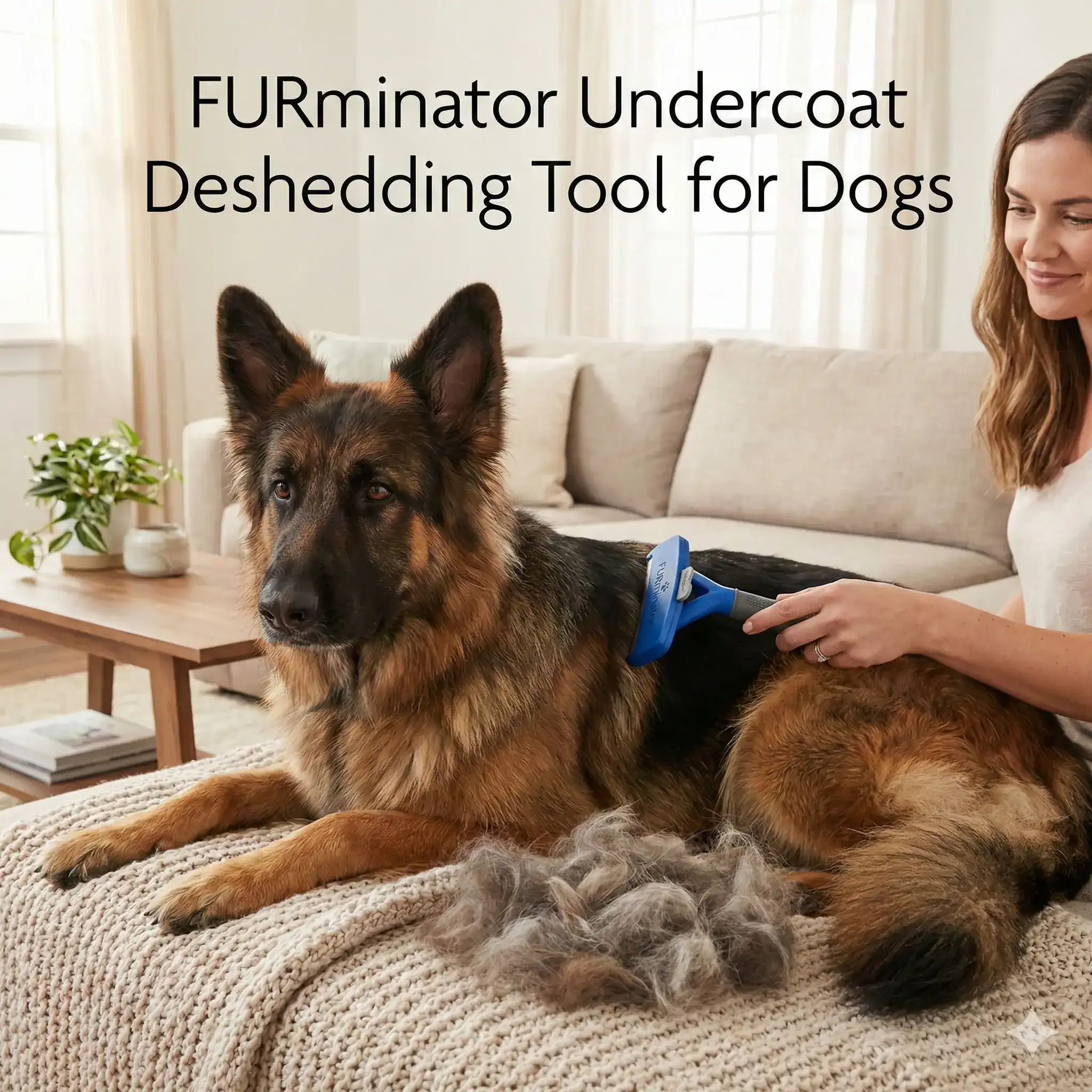
FURminator Undercoat Deshedding Tool for Dogs
Use for: Both breeds blow their undercoat seasonally. This tool reaches the dense underlayer that surface brushes miss, cutting loose hair around the home during spring and fall transitions.
Check price on AmazonFor a deeper look at tools that handle double coats, see our guide to the best brushes for shedding dogs.
🎯 Verdict: Call it even. Both ask for routine brushing and a heavier hand during seasonal sheds, and neither needs a pricey grooming appointment. Whichever you choose, keep a deshedding tool by the door.
Health and Why One Breed Is Far Better Documented
Veterinary Disclaimer: This article is for educational purposes only and is not a substitute for professional veterinary advice, diagnosis, or treatment. K9Sphere’s authors are experienced dog owners, not licensed veterinarians. Always consult a qualified DVM regarding any health concerns about your dog.
Health Information Sources. Data compiled from the following references.
- American Kennel Club Australian Shepherd breed reference
- PetMD clinical guidance on herding-breed health
- OFA CHIC Program recommended screening protocols
Always consult your licensed DVM for personalized medical advice.
Coat care is easy. Health is where the two breeds genuinely diverge. Both are athletic herders with shared orthopedic risks, but the amount we actually know about each differs enormously.
The Australian Shepherd has several well-documented inherited risks. These include hip and elbow dysplasia, eye conditions such as cataracts, collie eye anomaly, and progressive retinal atrophy, idiopathic epilepsy, and the MDR1 gene mutation that makes some dogs dangerously sensitive to specific medications such as certain antiparasitics and sedatives. The upside is that responsible breeders screen for these, and the screening tests exist.
The Basque Shepherd is generally a hardy landrace breed, which is a genuine strength, but its rarity means far less formal health data and a smaller pool of screened breeding stock. Hip dysplasia remains the main orthopedic concern, and both parents should be evaluated.
🔎 The MDR1 factor
If you choose an Australian Shepherd, ask the breeder about MDR1 testing. A simple cheek-swab test tells your vet which medications to avoid. This single issue is one of the most important differences in day-to-day medical care between the two breeds.
For ongoing joint support in either breed, see our guide to hip and joint supplements for dogs.
🎯 Verdict: A split decision. The Basque’s landrace background gives it a slight hardiness edge, but the Aussie comes out ahead on practical care, since its risks are mapped and testable. For most buyers, knowing exactly what to screen for beats a vague reputation for toughness.
Cost and Why Rarity Has a Price
Then there is the cost of actually getting one. Purchase price is only the start, and it is where these two split sharply.
The Australian Shepherd is widely bred and ranks among the most popular dog breeds in the United States, so puppies are reasonably available and priced within normal ranges for a popular purebred. For most people weighing dog ownership, that accessibility matters. Rescues are common too, often young adults surrendered by families who underestimated the breed.
Ongoing costs include several known health risks. Hip dysplasia surgery can run several thousand dollars per hip, epilepsy management is an annual expense, and MDR1-related drug reactions can be costly if not avoided.
The Basque Shepherd remains rare outside Spain, so simply finding one usually means importing plus travel and logistics. That sourcing cost is the real expense, and it dwarfs the routine costs of ownership.
🎯 Verdict: If budget and availability matter, the Australian Shepherd is the more practical choice. The Basque’s small global population usually means importing and a long wait, which dwarfs the routine costs of ownership. Pricing varies by country, with UK, Canada, and Australia rates differing.
Living Environment, Flexibility vs Acreage
Where you live matters just as much as what you can spend. Both are working dogs, but one adapts far better to modern homes.
The Australian Shepherd is more adaptable than its reputation suggests. It can live anywhere from an active apartment to a ranch, provided its exercise and mental-stimulation needs are met every day. The dog’s environment matters less than the owner’s commitment.
The Basque Shepherd is happiest with space, a job, and ideally a rural setting. Its territorial instinct and functional barking can make suburban or close-quarters living more challenging, and noise-sensitive neighbors are worth thinking about.
🎯 Verdict: For modern, non-rural living, the Australian Shepherd copes far better with noise and close quarters. The Basque is built for rural and working life and is less comfortable in tight suburban spaces, where its barking can become a neighbor issue.
First-Time Owners and an Easy Call
All of this lands hardest on one group, the first-time owners. For a first dog, the gap between these two is wide.
The Australian Shepherd, while demanding on exercise, is forgiving, eager to please, and supported by an enormous community of trainers, clubs, and resources. A committed first-time owner can absolutely succeed with one.
The Basque Shepherd is a poor first dog. Its independence, wariness, vocal nature, and rarity all stack the deck against a novice. It rewards experience and punishes inconsistency. That is why trainers often say the Basque Shepherd is a poor first dog, while the Australian Shepherd can work for a dedicated beginner.
🎯 Verdict: If this is your first dog, the answer is the Australian Shepherd, full stop. Save the Basque for owners who have already lived with a demanding working breed and know what they are taking on.
Head-to-Head Scorecard
Ratings are from 1 to 5 stars and reflect suitability for a typical active pet home.
Basque Shepherd
Australian Shepherd
A note on exercise demand. Both breeds score 5 stars here, but high demand is a cost, not a perk. A 5 means “needs a great deal of daily exercise,” so it counts against you unless you are a highly active owner.
Common Questions about Basque vs Australian Shepherd
Are the Basque Shepherd and Australian Shepherd related?
Direct Answer: Most likely, yes. The Australian Shepherd is widely believed to share ancestry with the herding dogs used by Basque shepherds, including dogs similar to today’s Basque Shepherd.
Context: The exact lineage is debated, but the breed was developed in the American West, not Australia, which is why the name is misleading.
Management: Despite the shared ancestry, treat them as distinct breeds today, because their temperaments and availability differ sharply.
Which breed is better for a family with kids?
Direct Answer: The Australian Shepherd is the better family dog for most homes.
Context: Aussies are sociable and good with children when socialized, while the Basque Shepherd is more reserved and protective. Both should be supervised around young kids because of herding instincts.
Management: Socialize either breed early and teach children to respect the dog. Redirect herding nips into structured play and training.
Which breed is easier to train?
Direct Answer: The Australian Shepherd, by a wide margin.
Context: Both are intelligent, but the Aussie is intensely handler-focused and ranks among the most trainable breeds, while the Basque is more independent and willing to ignore commands it sees no point in.
Management: Use positive reinforcement and keep sessions varied for both. The Basque needs a more experienced, consistent handler.
Do both breeds bark a lot?
Direct Answer: The Basque Shepherd is significantly more vocal.
Context: Barking is a functional livestock tool for the Basque, so it announces visitors and changes loudly. The Aussie can be vocal too but is generally more manageable in this respect.
Management: Teach a quiet cue early for either breed, but accept that you cannot fully eliminate the Basque’s alert response.
How much exercise do they need?
Direct Answer: Both need roughly 1 to 2 hours of vigorous daily activity plus mental work.
Context: The requirement is nearly identical, so exercise is rarely the deciding factor between these two. It is the floor for both, not a tiebreaker.
Management: If your honest weekly schedule cannot hit that bar, choose a lower-energy breed entirely rather than either of these.
Which breed is healthier?
Direct Answer: The Basque is a hardy landrace, but the Aussie’s health risks are better understood and screenable.
Context: Aussies have well-mapped risks like hip dysplasia, eye conditions, epilepsy, and MDR1 drug sensitivity. The Basque has less formal data given its rarity, with hip dysplasia the main concern.
Management: For an Aussie, insist on MDR1 and eye testing. For a Basque, require hip evaluations on both parents.
Why is the Australian Shepherd so much easier to find?
Direct Answer: The Aussie is a popular, well-established AKC breed, while the Basque Shepherd remains rare outside Spain.
Context: Finding a Basque usually means importing from Spain. Aussies have abundant breeders and active rescue networks across most regions.
Management: If you want a Basque, prepare for a long search and import logistics. For an Aussie, vet breeders carefully and consider rescue.
Can either breed live in an apartment?
Direct Answer: The Australian Shepherd can, with enough daily exercise; the Basque Shepherd is a poor apartment fit.
Context: Aussies are adaptable when their needs are met. The Basque’s territorial nature and functional barking make close-quarters living difficult.
Management: For an apartment Aussie, commit to long daily outings and mental work. The Basque is better suited to rural or working homes.
Which breed is better for a first-time owner?
Direct Answer: The Australian Shepherd, without question.
Context: It is forgiving, eager to please, and supported by a huge training community. The Basque’s independence, wariness, and rarity make it a poor beginner dog.
Management: First-timers should choose the Aussie and invest in early training classes and consistent daily routine.
Which breed sheds less?
Direct Answer: Neither has a real advantage; both are seasonal shedders with similar coat upkeep.
Context: If low shedding is your priority, the honest answer is that you are looking at the wrong two breeds.
Management: Accept the seasonal coat blow as part of the deal, or consider a genuinely low-shedding breed instead.
Final Verdict, Australian Shepherd for Most Homes
Taking a clear position, for the vast majority of people reading this the Australian Shepherd is the better choice. It is more trainable, more sociable, more adaptable, easier to find, and backed by health screening that lets you manage risks proactively. A committed active owner, including a first-timer, can build a brilliant partnership with one.
The Basque Shepherd is the right dog for a very specific type of owner, someone experienced, ideally rural, who wants a rare, vocal, intensely loyal working dog and is prepared to import one and channel its drive into real work. In that home, it is exceptional. In a typical suburban family home, it is a mismatch.
So this is not an “it depends” cop-out. If you are choosing between these two for an active family or as your first serious dog, get the Australian Shepherd. Choose the Basque Shepherd only if you genuinely fit the working-owner profile above. Either way, read our full guides on the Australian Shepherd and the Basque Shepherd before you commit.
Editorial Disclaimer: This article is for informational and educational purposes only. It does not constitute veterinary advice, medical diagnosis, or treatment recommendations. Always consult a licensed veterinarian before making health-related decisions for your pet.
Accuracy Notice: While every effort has been made to ensure the information presented here is accurate and current, breed information evolves and individual dogs vary. If you spot a factual error or have updated information from a verified source, please contact us so we can review and update.
Product Disclosure: Product recommendations are based on independent research and editorial judgment. Individual results may vary. As an Amazon Associate, K9Sphere earns from qualifying purchases at no additional cost to you.
Last reviewed: June 2026. Article reviewed for accuracy on the date shown above.


