
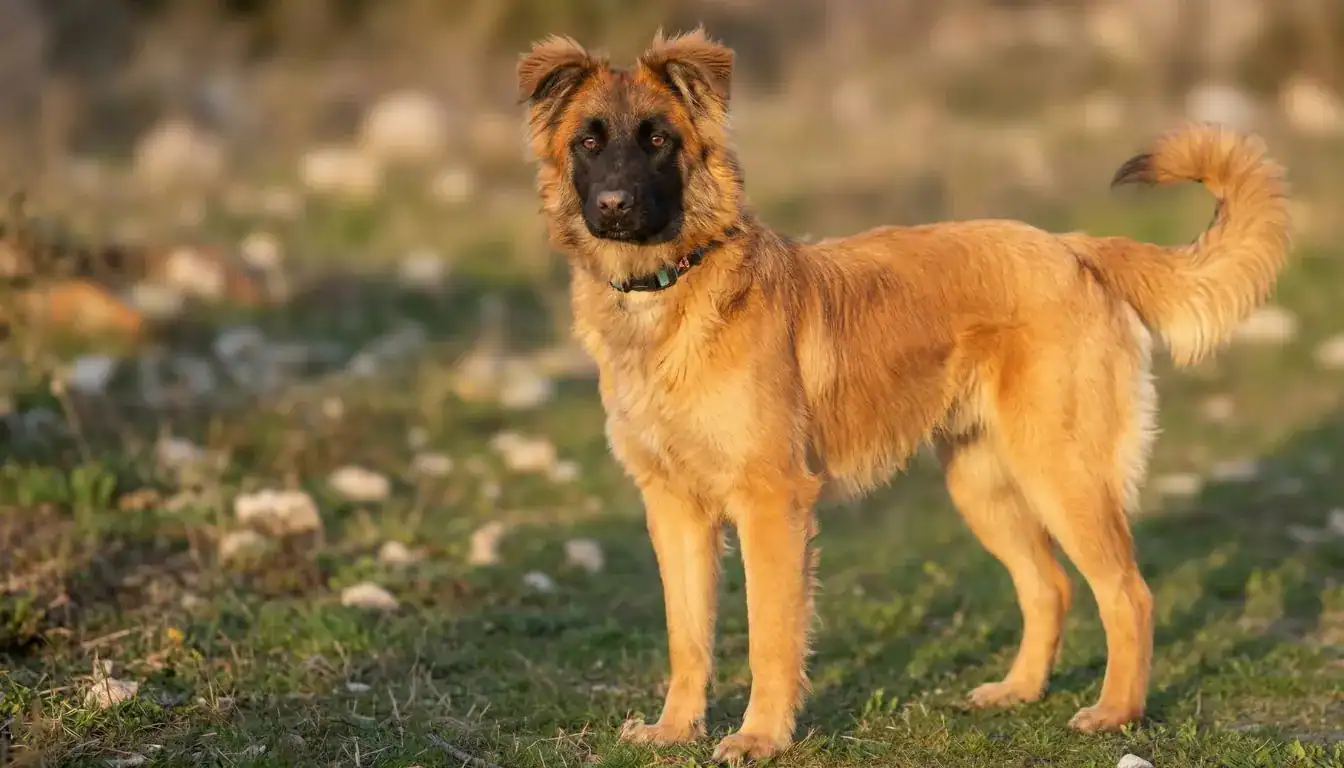
This mountain sheepdog requires a job. You cannot place an ancient herding landrace in a standard suburban home and expect a calm family pet. The Basque Shepherd Dog was shaped almost entirely by the daily demands of mountain shepherds, not by kennel clubs or show rings.
Known natively as the Euskal Artzain Txakurra, this breed is native to the Basque Country and inextricably linked to the Basque people and their pastoral way of life. It is one of five Basque breeds of dog, and many local historians consider it one of the oldest dog types still actively working flocks in the region, with bone fragments resembling these dogs found in Neolithic caves.
Many people spot their striking fawn coats and mistakenly assume they are a local variation of the Australian Shepherd. The reality is quite different. Migrating Basque farmers who traveled to Australia and the American West brought their native dogs with them, making this landrace the likely ancestor of the modern Aussie.
This breed of dog was recognized by the Royal Canine Society of Spain, the Real Sociedad Canina de España (RSCE), in January 1996, and later by the national government of Spain in 2001. The AKC lists the breed in its Foundation Stock Service.
Because this landrace breed was shaped by work rather than appearance standards, their care requirements center on one non-negotiable reality: without structured physical and mental output every single day, they become destructive, highly stressed, and very difficult to manage.
Affiliate Disclosure: K9Sphere is a participant in the Amazon Services LLC Associates Program. As an Amazon Associate, K9Sphere earns from qualifying purchases made through links in this article at no extra cost to you.
Breed Snapshot
📊 Vitals and Lifespan
Height
Males: 20-24 inches (52-61 cm)
Females: 18-22 inches (46-56 cm)
Weight
Males: 55-80 lb (25-36 kg)
Females: 37-55 lb (17-25 kg)
Lifespan
12-15 years
Registry
RSCE / AKC FSS / FCI Group 1
Origin
Basque Country (Spain)
🇪🇸
⭐ Personality Traits
Ratings (1 to 5). An intense, high-drive herding landrace that bonds deeply to its handler and requires structured daily output to remain stable.
History and Origins
The Basque Shepherd Dog emerged in the historic Basque Country, the Basque region of Spain spanning today’s Basque Autonomous Community and neighboring rural zones of the north. For centuries, these herding and guard dogs served as the primary tool for moving and protecting flocks of sheep across steep mountain pastures.
📌 Neolithic Origins
Canine remains found in caves across the Basque region mirror the bone structure of modern Basque Shepherds, placing this ancient breed among the oldest pastoral dog lineages in Europe. These dogs predate formal breed registries by thousands of years.
📌 Sixteenth Century Records
Frescoes and paintings in Basque churches from the 1500s onward frequently depict the Perro de Pastor Vasco guarding flocks in the Pyrenees. By this period, the breed’s role as a mountain stock-mover was firmly established in Basque farming culture.
📌 Global Migration (1800s-1900s)
Basque shepherds emigrating to Australia and the American West brought their native dogs with them. These imported working dogs are widely considered the genetic foundation of the modern Australian Shepherd, making the Basque Shepherd the likely ancestor of one of America’s most popular herding breeds.
📌 Modern Recognition (1996)
The Royal Canine Society of Spain officially recognized the Basque Shepherd Dog in January 1996, only after breeders demonstrated that it was distinct from breeds like the Pyrenean Shepherd. Conservation efforts stabilized the population, but the breed remains uncommon outside of Spain and France.
Because this landrace was shaped by working ability rather than conformation shows, structural variation between individual dogs is wider than in most standardized breeds. What remains consistent is the relentless herding instinct, the territorial awareness, and the deep bond with their primary handler.
Physical Characteristics
The Basque Shepherd is a medium-sized breed, a rugged mountain dog with a rectangular outline and powerful legs designed for climbing and sharp directional changes on steep hillsides.
🏗️ Size and Build
As a medium-sized dog, males stand 20 to 24 inches (52-61 cm) and weigh 55 to 80 pounds (25-36 kg), noticeably lighter than a German Shepherd. Females are slightly smaller at 18 to 22 inches (46-56 cm) and 37 to 55 pounds (17-25 kg). Their ears are traditionally either pendant or folded, falling neatly beside a strong, moderately wide head. The overall frame is built for endurance and agility rather than raw power.
🎨 Two Distinct Varieties
The breed comes in two varieties. The Gorbeiakoa variety has a soft, smooth coat of moderate length, often striking red or fawn. The Iletsua variety has a rougher, wirier coat, typically a lighter fawn color. Both varieties share the same working temperament and structural requirements. Typical eye shades are brown or amber, matching the warm tones of their coats.
Temperament
Basque Shepherds are working animals first and household companions second. They constantly scan for movement and potential jobs even when they appear relaxed. If they do not have a designated task, they will quickly invent one, which usually involves herding your children or destroying furniture.
🧠 Intense Focus
Designed to manage livestock all day across mountain terrain, they require constant mental engagement. Their intelligence is operational and problem-solving oriented. Without structured outlets, that intelligence turns against your household.
⚡ Protective Instincts
They bond deeply to their families but are naturally suspicious of strangers. Without heavy, continuous exposure to new people from puppyhood, they can become overly protective of their home territory and reactive toward visitors.
🐕 Chase and Nip Drive
Their instinct to control movement drives them to chase and nip at anything that moves quickly, including children, cats, and cyclists. You cannot train this instinct out. You can only redirect it onto appropriate outlets like structured herding games, fetch, and agility work.
📢 Vocal Communication
Like most working collies, they use their voice to control livestock and alert their handler. Expect significant alert barking whenever someone approaches the property line. You can train a “quiet” command, but you cannot train a stock dog to be silent.
Screening and Conditions
Veterinary Disclaimer: The information provided in this article is for educational purposes only and is not intended as a substitute for professional veterinary advice, diagnosis, or treatment. Always consult a licensed veterinarian for any health concerns about your pet.
Health Information Sources: Health data compiled from:
- OFA: Hip dysplasia screening standards for herding breeds
- UC Davis VGL: MDR1 mutation testing for herding breeds
Always consult your licensed DVM for personalized medical advice.
Because this landrace developed primarily through natural selection and rigorous working demands, the Basque Shepherd is generally very healthy. Their lifespan frequently reaches 12 to 15 years. However, like all medium-to-large active herding dogs, they carry a few genetic vulnerabilities, including joint and eye problems, that responsible owners must screen for.
🔴 Hip and Elbow Dysplasia
What to watch for: A genetic malformation of the joint sockets that leads to painful arthritis and lameness. Working dogs constantly turning at high speeds on uneven terrain are especially vulnerable to joint wear. Watch for stiffness after rest, reluctance to climb, and bunny-hopping gait.
Screening: Responsible breeders must provide OFA or PennHIP clearance scores for both parent dogs before breeding. Keeping an active herding dog lean and following your veterinarian’s joint-support recommendations helps protect the hips and elbows over time.
🟡 MDR1 Gene Mutation
What to watch for: Like many herding breeds with collie-type ancestry, the Basque Shepherd may carry the MDR1 gene mutation, making them dangerously sensitive to certain veterinary drugs including ivermectin. Symptoms of a reaction include tremors, disorientation, blindness, and seizures.
Screening: A simple DNA test through institutions like UC Davis VGL confirms MDR1 status. Every herding breed owner should test before administering any medication. Inform your veterinarian of the results before any procedure.
🟡 Progressive Retinal Atrophy (PRA)
What to watch for: An inherited eye disease that causes gradual vision loss, eventually leading to complete blindness. Watch for bumping into objects in dim light, reluctance to navigate stairs at night, and cloudy or bluish appearance to the eye lens.
Screening: Ensure breeders have conducted DNA testing for PRA and hold recent eye clearances from a veterinary ophthalmologist. Annual eye exams catch early-stage changes before they progress.
🟡 Gastric Dilatation-Volvulus (Bloat)
What to watch for: Deep-chested herding breeds carry bloat risk. Symptoms include a swollen abdomen, pacing, excessive drooling, and unproductive retching. This is an emergency. Seek veterinary care immediately if you observe these signs.
Screening: Feed two to three smaller meals per day instead of one large meal. Avoid vigorous activity immediately before and after eating. Discuss preventive gastropexy with your veterinarian.
Grooming and Coat Care
Regardless of which variety you own, their coats are designed to repel dirt and harsh mountain weather. They do not require professional clipping. Brush two to three times per week to remove loose hair and prevent mats from forming behind the ears and under the legs. Because their ears can fold and trap moisture, check and wipe them regularly to prevent ear infections.
During the spring and fall shedding seasons, the volume of hair they drop increases significantly. A dedicated deshedding tool helps manage the volume efficiently without damaging the protective topcoat.

FURminator Undercoat Deshedding Tool for Dogs
Use for: Pulling out dead undercoat hair safely during seasonal coat blows. Regular use keeps the Basque Shepherd’s dense working coat healthy and stops loose hair from covering every surface in your home.
Check price on AmazonExercise and Working Needs
A Basque Shepherd without structured daily output will destroy your home and your patience. This dog needs a genuine combination of exercise and mental stimulation every day; a well-exercised, mentally stimulated Basque Shepherd is a balanced dog, while a bored one turns destructive. They need at least 60 to 90 minutes of intense physical activity daily, and that means running, advanced agility work, or actual stock management. A casual neighborhood walk does not register as meaningful output for a dog bred to cover mountain terrain all day.
Off-leash activity must be restricted to securely fenced areas until recall is absolutely reliable. Their chase instinct is powerful enough to override training when a squirrel, cyclist, or running child triggers the herding response. Given the joint strain that sustained agility and directional changes place on working herders, providing a supportive sleeping surface aids recovery. Active herding breeds benefit from an orthopedic dog bed that cushions pressure points after long working sessions.
Nutrition & Diet
A working mountain dog burns thousands of calories patrolling a property or running an agility course. You must feed them a high-quality, meat-based diet formulated for highly active breeds and adjust portions based on actual daily output.
🐶 Puppy Stage
Fast growth damages developing joints. Feed a controlled-growth puppy formula to ensure their bones mature slowly and safely. Avoid over-supplementing calcium, which can trigger orthopedic problems later in life. Divide meals into three feedings daily until six months, then reduce to two.
🐕 Adult Stage
Adjust food intake based on actual activity level. A dog that worked outside all day needs significantly more fuel than a dog that stayed indoors due to rain. Keep them visibly lean; you should easily feel their ribs without pressing hard. Divide meals into two daily feedings to reduce bloat risk.
🐕🦺 Senior Stage
As their working drive begins to slow around age 10, reduce calories immediately to prevent obesity. Introduce joint-support compounds including glucosamine and omega-3 fatty acids, and a quality hip and joint supplement can help, after discussing options and dosage with your veterinarian. Increase veterinary checkups to twice yearly to catch age-related decline early.
Training
Basque Shepherds are highly intelligent, but they are independent thinkers bred to make decisions in the field without waiting for commands. They learn quickly and will cooperate willingly, but only if they respect the handler.
🎯 Managing the Chase Instinct
You cannot train the herding instinct out of this dog. If you have small children, the dog will attempt to herd them by circling and nipping at their heels. Provide firm redirection and channel this energy onto appropriate outlets like structured fetch, tug games, and formal agility courses.
🛡️ Socialization is Mandatory
Because they are naturally wary of strangers, extensive early socialization is critical. Expose puppies to hundreds of different people, environments, and sounds before 16 weeks. If you fail to do this, their natural caution hardens into reactive aggression that becomes extremely difficult to reverse.
🧩 Positive Methods Only
They are sensitive dogs that shut down completely if treated harshly. Positive reinforcement and short, varied sessions produce the best results. Earn their respect through consistency and fair leadership. Repetitive, boring drills will cause them to disengage entirely.
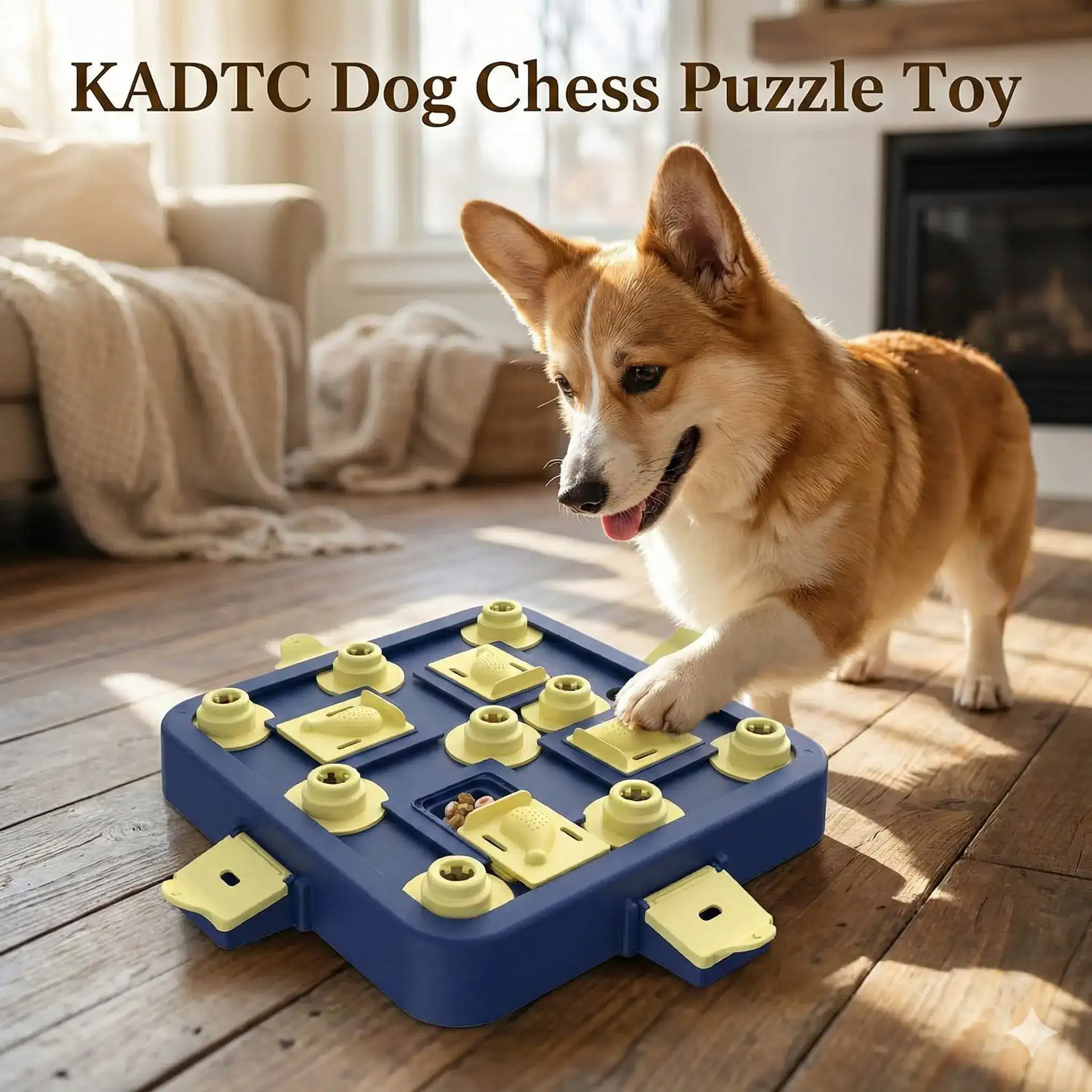
KADTC Dog Chess Puzzle Toy
Use for: Delivering mental stimulation to a high-drive herding dog on days when physical exercise alone is not enough. Rotating puzzle games help burn the mental energy that would otherwise turn into destructive behavior.
Check price on AmazonBasque Shepherd vs Australian Shepherd vs Border Collie
All three are intense herding dogs built for sustained outdoor work. The Basque Shepherd is the likely genetic ancestor of the Australian Shepherd, and all three share the same core wiring: movement obsession, handler focus, and operational intelligence. The differences lie in availability, temperament intensity, and stranger tolerance.
| Feature | Basque Shepherd | Australian Shepherd | Border Collie |
|---|---|---|---|
| Weight Range | 37-80 lb (17-36 kg) | 40-65 lb (18-29 kg) | 30-55 lb (14-25 kg) |
| Temperament | Protective, handler-focused | Versatile, social | Intense, obsessive worker |
| Stranger Tolerance | Low to moderate | Moderate to high | Moderate |
| Herding Style | Gathering, vocal | Gathering, loose-eyed | Gathering, strong-eyed |
| Alert Barking | Very high | Moderate | Moderate |
| MDR1 Risk | Yes | Yes | Yes |
| Availability | Extremely rare | Widely available | Widely available |
| Grooming Needs | Moderate, weekly brushing | Moderate to high | Moderate |
| First-Timer Suitable | No | With guidance | No |
FAQ
Are Basque Shepherds related to Australian Shepherds?
Direct Answer: Yes. The Basque Shepherd is widely considered the genetic ancestor of the modern Australian Shepherd.
Context: Basque farmers migrating to Australia and the American West brought their native herding dogs. Those imported dogs formed the foundation stock for what eventually became the Aussie. The two breeds share similar size, herding style, and working temperament.
Management: If you admire the Australian Shepherd but want the original landrace lineage, the Basque Shepherd is the source breed.
Can a Basque Shepherd live in an apartment?
Direct Answer: No. A Basque Shepherd cannot live in an apartment.
Context: Confining a high-drive herding dog to a small indoor space leads directly to severe behavioral problems, destruction, and excessive barking. They need open space and daily structured output that apartment life cannot provide.
Management: Only consider this breed if you have a securely fenced yard and access to large open areas for daily running and working exercises.
What is the difference between the Gorbeiakoa and Iletsua?
Direct Answer: The primary difference is coat texture and color.
Context: The Gorbeiakoa has a soft, smooth coat of moderate length, often reddish or fawn. The Iletsua has a rougher, wirier coat, typically lighter fawn or blonde. Both varieties share the same high-drive working temperament and exercise requirements.
Management: Both require similar grooming routines. The Iletsua’s wiry coat may need slightly more attention to prevent matting around the ears and legs.
Do they bark a lot?
Direct Answer: Yes. They are naturally vocal dogs.
Context: Barking is a primary tool for controlling livestock and alerting their handler to changes in the environment. They will loudly announce anyone approaching the property. This is functional behavior, not a flaw.
Management: You can train a “quiet” command, but you cannot eliminate the alert response entirely. Suburban neighbors may not appreciate the volume.
Are they aggressive toward strangers?
Direct Answer: They are not inherently aggressive, but they are highly protective and naturally cautious around unfamiliar people.
Context: Without thorough early socialization, their natural wariness can harden into reactive behavior. A well-socialized Basque Shepherd will assess visitors calmly before accepting them.
Management: Extensive socialization before 16 weeks is non-negotiable. Expose puppies to hundreds of different people, environments, and sounds during the critical developmental window.
Are they good with children?
Direct Answer: They bond deeply with family children but will attempt to herd them.
Context: Their herding instinct drives them to circle and nip at the heels of running children. This is not aggression. It is stock-moving behavior applied to the wrong target. Older children who understand dog body language coexist well with the breed.
Management: Never leave them unsupervised with young children. Redirect nipping behavior onto toys immediately and consistently.
How rare is the Basque Shepherd Dog?
Direct Answer: Extremely rare, particularly outside of Spain and France.
Context: At one point, the breed was facing severe decline due to crossbreeding with more common herding types. Conservation efforts by the RSCE stabilized the population, but they remain uncommon internationally. The AKC lists them in the Foundation Stock Service.
Management: Expect a very long waiting list if you intend to import a puppy from a reputable European breeder. Finding one in North America requires significant networking.
Can a first-time owner handle a Basque Shepherd?
Direct Answer: No. This breed is strongly unsuitable for novice dog owners.
Context: Their independent thinking, chase instinct, stranger wariness, and high energy demands require experienced handling. Training mistakes with a herding breed result in a reactive, anxious dog that nips, barks excessively, and becomes unmanageable in public.
Management: Gain significant experience with other active herding breeds first. The Australian Shepherd is a more accessible starting point for handlers interested in this working style.
How much exercise does a Basque Shepherd need?
Direct Answer: At least 60 to 90 minutes of intense physical and mental activity every day.
Context: A casual neighborhood walk does not register as meaningful output for a dog bred to cover mountain terrain all day. They need running, advanced agility, or actual stock work to stay balanced.
Management: Build the daily routine around structured output, and keep off-leash running to securely fenced areas until recall is fully reliable.
How long do Basque Shepherds live?
Direct Answer: They typically live 12 to 15 years.
Context: Shaped by natural selection and hard work rather than conformation breeding, this landrace is generally robust, though it still carries a few screenable genetic risks.
Management: Buy from parents screened for hip dysplasia, the MDR1 mutation, and PRA, keep the dog lean, and feed smaller meals to reduce bloat risk.
Do Basque Shepherds shed a lot?
Direct Answer: They shed moderately year-round with heavier seasonal coat blows in spring and fall.
Context: Their weather-resistant working coat does not need professional clipping, but loose hair increases sharply during shedding season.
Management: Brush two to three times per week, and use a deshedding tool during seasonal blows to manage the volume without damaging the protective topcoat.
Finding a Puppy
Finding a Basque Shepherd outside of Spain or France is exceptionally difficult. You will likely need to import from a European breeder and navigate extensive waiting lists. Basque Shepherd Dog puppies are almost never available through general channels.
🏠 Responsible Source
A legitimate breeder of this uncommon landrace will rigorously screen potential buyers. They prioritize preserving working ability and structural health over mass production. Demand OFA clearance for hips and elbows, MDR1 DNA test results, and PRA eye screening on both parents. A responsible source will ask detailed questions about your property, fencing, activity plan, and experience with high-drive herding breeds.
🐾 Rescue and Adoption
Finding a purebred Basque Shepherd in rescue is nearly impossible due to the breed’s rarity. However, many similar high-drive herding mixes end up in shelters because owners underestimate their exercise needs. Working-dog rescues can match you with an equally capable herding-type dog if you admire the breed’s intelligence and athleticism.
🚩 Red Flags to Watch For
- Breeder claims to have puppies constantly available
- No verifiable OFA or PennHIP joint screening for parents
- No MDR1 or PRA DNA testing documentation
- Breeder sells them as “calm family pets for any home”
- Inability to trace the dog’s lineage back to Spanish registries
Personal Observation
💭 Personal Observation
Of all my rescued street dogs, Chun Chun hears everything first. A gate latch two houses down, a stranger’s footstep, a car slowing at an odd hour, she flags it all with sharp, urgent barking until she knows I have noticed. It is not aggression. It is a working dog doing its job, telling its human that something moved.
A Basque Shepherd takes that same alertness and adds real suspicion of strangers. If a simple watchdog like Chun Chun already sets the tempo of a home, picture a dog bred for centuries to guard flocks. You end up planning visitors, deliveries, and even open doorways around a dog that watches every new face until it is proven safe.
💭 Real-World Owner Experience
Because the breed is so rare outside the Basque region, most real-home stories come from a few owners online. In one r/Dogtraining thread, the owner of a three-year-old Basque Shepherd mix describes a dog that is calm off leash but tense and defensive on leash and at the front door. They cross the street to make space, use a soothing voice to head off lunging, and still shut the dog away when guests arrive because they never quite know what to expect.
Keep in mind this is a mix, not a purebred, so it shows only a slice of the breed. Even so, the pattern fits. A dog built to guard mountain flocks can be deeply wary of strangers, and a purpose-bred one even more so. Without early socialization, firm structure, and often a professional trainer, that wariness makes the breed a risky pick for first-time or low-effort homes.
Conclusion
The Basque Shepherd Dog is a beautiful dog and a stunning piece of canine history, one of the oldest working herding lineages still active in Europe. They are fiercely intelligent, profoundly loyal, and visually striking.
For the active handler who lives on a large property, competes in dog sports, or runs miles every day, the Basque Shepherd is the most dedicated partner you could ask for. The biggest pro is their extraordinary working intelligence and deep handler bond. The biggest con is their relentless chase instinct, stranger wariness, and vocal alert barking that make them completely incompatible with sedentary suburban life. If you prefer quiet evenings on the couch without a daily 90-minute workout preceding them, look elsewhere.
📋 Before bringing one home, run this 4-step pre-buying check
- Activity honesty. Can you genuinely provide 60 to 90 minutes of intense physical and mental output every single day?
- Space and containment. Do you have a securely fenced yard and access to open areas for daily running and working exercises?
- Handler experience. Have you already managed a high-drive herding breed, given this dog is unsuitable for novices?
- Socialization commitment. Can you invest in heavy early socialization before 16 weeks to soften their natural wariness of strangers?
If any answer is no, reconsider the breed.
Editorial Disclaimer: This article is for informational and educational purposes only. It does not constitute veterinary advice, medical diagnosis, or treatment recommendations. Always consult a licensed veterinarian before making health-related decisions for your pet.
Accuracy Notice: While every effort has been made to ensure the information presented here is accurate and current, breed information evolves and individual dogs vary. If you spot a factual error or have updated information from a verified source, please contact us so we can review and update.
Product Disclosure: Product recommendations are based on independent research and editorial judgment. Individual results may vary. K9Sphere participates in the Amazon Services LLC Associates Program and other affiliate programs, and earns from qualifying purchases at no additional cost to you.
Last reviewed: July 2026. Article reviewed for accuracy on the date shown above.


