
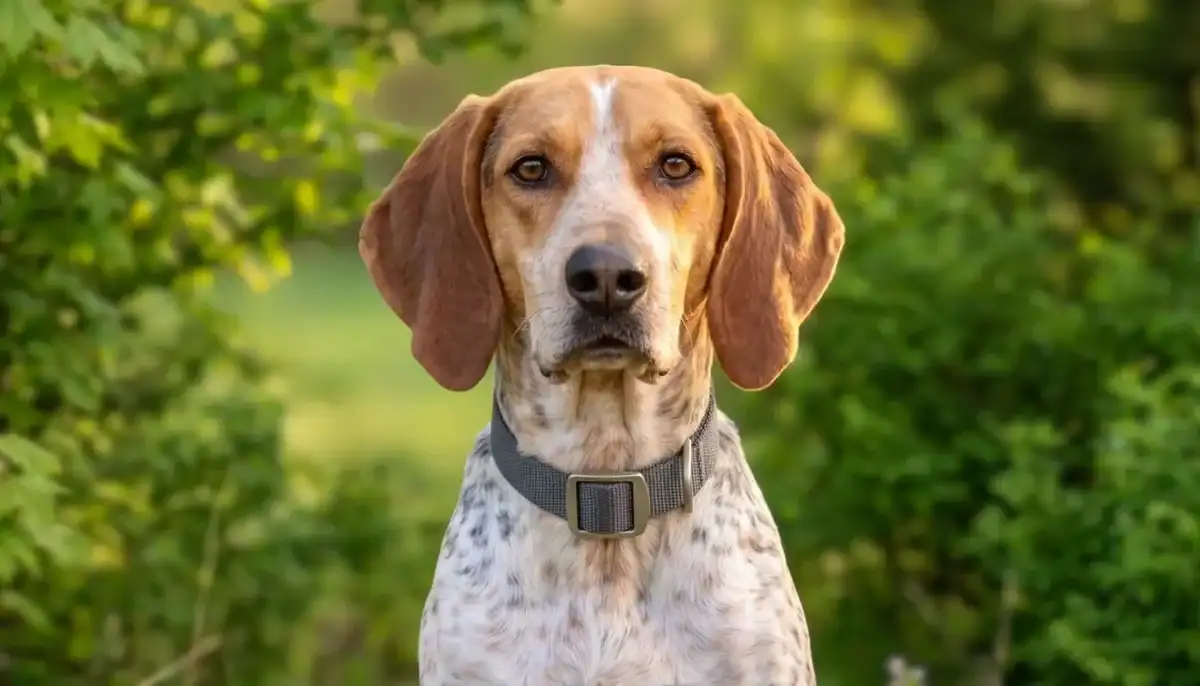
The American English Coonhound is a medium-sized tracking dog breed from the southern USA, descended from English Foxhounds brought across the Atlantic by colonial settlers in the 17th and 18th centuries and refined over generations to chase and corner raccoons through rough terrain. Once known as the Virginia Hound and later the English Fox and Coonhound, this American working dog is widely regarded as among the fastest and most enduring of the coonhound family.
Most prospective families see only the sleek athletic frame and friendly tail-wagging demeanor, expecting a relaxed pack companion. The reality rewards households who embrace the working drive that still defines the breed at its best. American English Coonhounds are known for remarkable endurance, devoted family bonds, and an intelligence that thrives when their nose has a job to do.
This guide draws on AKC, UKC, and National American English Coonhound Association (NAECA) breed references, OFA orthopedic and eye screening protocols, and AVMA clinical guidance on hound-specific otitis prevention to map exactly what daily life with this active dog looks like.
Daily commitments reward households who plan well. The routine includes 60 to 90 minutes of focused walks, weekly coat care, regular canal inspections, and consistent recall practice that channels the strong chase instinct into purposeful outlets. Households that respect the breed’s heritage usually see the dog settle into a calm, affectionate companion at home.
For active families ready to commit to daily movement and nose enrichment, this American breed offers more than a decade of devoted, melodious companionship and works well as a family dog around respectful older children who need a sturdy partner. Know going in that this is NOT the right pick for sedentary households, flats without secure exercise plans, or homes with outdoor cats and small animals. The signature loud baying voice can carry over considerable distances, off-leash reliability remains a multi-month teaching journey, and the best preparation is honest expectation-setting from day one.
Affiliate Disclosure: K9Sphere is a participant in the Amazon Services LLC Associates Program. As an Amazon Associate, K9Sphere earns from qualifying purchases made through links in this article at no additional charge to you.
Breed Snapshot
📊 Vitals and Lifespan
Height
Males: 24-26 inches (61-66 cm)
Females: 23-25 inches (58-64 cm)
Weight
Males: 55-75 lb (25-34 kg)
Females: 45-65 lb (20-29 kg)
Lifespan
11-12 years
Breed Group
Hound Group (AKC 2011)
Origin
United States
🇺🇸
⭐ Personality Traits
Ratings (1 to 5). This energetic dog balances genuine pack-friendly affection with intense nose-driven chase instinct, sharp baying voice, and an independent streak typical of coonhounds.
History and Origin
The roots of this scent-driven American breed reach back to British foxhounds shipped across the Atlantic by colonial landowners in the 17th and 18th centuries. The American English Coonhound was bred from these English foxhound imports crossed with locally adapted tracking dogs, and the resulting coonhound breed proved well-suited to the rougher terrain of Virginia. Notable settlers including Robert Brooke, Thomas Walker, and George Washington imported foundation lines that prompted decades of selective crossing.
📌 1700s: The Virginia Hound Foundation
British foxhounds imported to colonial America were crossed with locally adapted tracking dogs to handle the rougher Southern terrain. The resulting type, known as the Virginia Hound, was used to hunt the American red fox by day and raccoons by night, establishing the hunting profile that defines the modern descendant.
📌 1905: First UKC Recognition
The United Kennel Club formally recognized the breed as the “English Fox and Coonhound.” This name held for decades and reflected the dual hunting role that early American hunters valued in their working pack dogs.
📌 1940s: Coonhound Family Splits
What had been one broad type fractured into several distinct, separately recognized breeds. The Treeing Walker Coonhound was recognized separately by the UKC in 1945, and the Bluetick Coonhound also became a distinct breed during this era. Selection within the original line continued to favor speed, hot-trail tracking, and pack hunting ability.
📌 2011: AKC Recognition
The American Kennel Club fully recognized the breed in the Hound Group as the 171st AKC-registered breed. The AKC inserted “American” into the official name to clarify the breed’s origin in the southern United States, distinguishing it from English-bred hound lines and acknowledging its extended evolution on American soil.
Physical Characteristics
This is a medium-sized tracking dog built for speed and endurance over rough country. The AKC standard describes a strong but racy frame with a deep chest, broad loin, well-defined musculature, and balanced angulation that supports an all-night hunt. Length should be equal to or slightly longer than height at the withers, producing a build that is “slightly off square” rather than compact.
🎨 The Ticked Coat
The dense, protective short coat is the visual signature of the breed. Three primary patterns appear in the standard. Redtick is a white base heavily overlaid with red ticking, the most common variant and the source of the “Redtick Coonhound” nickname. Bluetick and tri-colored with ticking are also accepted. Solid colors with less than 10 percent ticking are a disqualifying fault under the AKC standard.
🏗️ Functional Athletic Build
The deep chest provides ample lung capacity for sustained pursuit, while powerful, well-angulated hindquarters drive sweeping strides over difficult ground. Pendant ears hang low against the cheeks, and when extended forward they typically reach the tip of the nose. The saber-like tail rises proudly when the dog is alert or working a trail.
The Color Variation Question
Litter siblings can show striking color variation, reflecting the broad genetic diversity within the breed. Redtick is the most common pattern, but bluetick and tri-colored ticking both qualify under the standard. The AKC standard disqualifies tri-colored dogs that do not have ticking, drawing a clear line between this dog and the closely related Treeing Walker Coonhound, where unticked white markings are preferred. Lemon-and-white occurs but is considered a dilute color and is less favored in the show ring.
Character and Temperament
The temperament profile reads like a study in contrasts. English Coonhounds usually settle into a mellow, affectionate, sociable home companion that thrives on pack-style companionship and gets along well with other dogs. The moment a strong odor appears, however, the hunter takes over and the same dog becomes intensely focused, vocal, and difficult to redirect. Breeds like the American English share this dual nature with other tracking dogs.
🔊 The Signature Bay
The breed is famous for a melodious, drawn-out bay paired with sharp explosive chops when game is cornered. This vocal style can carry over considerable distances by design and is truly beautiful in the woods. In a residential neighborhood the same voice can become a real challenge, especially during nighttime hours when the hunting instinct peaks. Consistent “quiet” command teaching and proactive trigger management are essential.
🛡️ Strong Prey Drive
Generations of selective breeding for cornering raccoons, foxes, and even larger game produced a dog that pursues moving small animals with relentless focus. Cats, squirrels, and rabbits are all potential triggers. Off-leash work in unfenced areas is realistically risky because once the nose locks onto a trail, recall reliability drops sharply until extensive practice is in place.
👨👩👧 Pack-Oriented Family Bond
Bred to work alongside other dogs and human partners, this energetic companion craves involvement in family life. Extended stretches of solitary confinement produce restlessness, vocal protest, and destructive boredom behaviors that resemble separation anxiety. They generally do well with children who handle them respectfully and live amiably with other animals in multi-dog households. Crate-conditioning from a young age gives the dog a secure indoor retreat. Like the American English Coonhound, most pack-bred breeds settle better when household routines are predictable.
🧠 Independent Intelligence
This is a smart dog that learns commands quickly when motivated, but the work-style intelligence is built around independent problem-solving on a trail rather than reflexive command-following. They evaluate every cue against their own priorities, and a powerful odor will outweigh a verbal recall almost every time without months of consistent proofing. Patient, consistent handling brings the best results.
Screening and Conditions
Veterinary Disclaimer: The information provided in this article is for educational purposes only and is not intended as a substitute for professional veterinary advice, diagnosis, or treatment. Always consult a licensed veterinarian for any health concerns about your pet.
Health Information Sources: Data compiled from:
- OFA (Orthopedic Foundation for Animals): Hip, elbow, and eye screening protocols for the American English Coonhound
- American Kennel Club: Breed health monograph and NAECA parent-club guidance
- AVMA: Clinical research on coonhound-specific otitis externa and orthopedic medicine
Always consult your licensed DVM for personalized medical advice.
Considered a generally healthy breed that ages well for its energy level, this American tracking dog nevertheless carries a defined set of conditions that prospective households should understand. Strict parental screening through OFA-approved tests and CAER eye certification is the primary defense against the inherited issues most documented in the breed.
Common Inherited Conditions
🔴 Hip Dysplasia
What to watch for: Abnormal development of the joint causes progressive instability, pain, and arthritis over time. Common signs include limping, stiffness after rest, reluctance to climb stairs or jump, and a noticeable “bunny-hop” gait when running. Energetic dogs with heavy daily workloads are particularly vulnerable to early-onset symptoms.
Screening: OFA hip evaluation of both parents is mandatory before breeding. Maintaining a lean body condition throughout life and adding a quality hip and joint supplement supports cartilage maintenance, especially through the energetic middle years.
🔴 Chronic Ear Infections (Otitis Externa)
What to watch for: The pendant ear set restricts airflow into the canal, trapping moisture and debris. This anatomy creates an environment where bacteria and yeast thrive. Signs include head shaking, scratching, yellow or brown discharge, and a distinct foul odor. Recurrent otitis episodes are among the most common veterinary visits in the breed.
Management: Weekly inspection paired with vet-recommended cleaning solution prevents most episodes. Drying the canal thoroughly after every bath, swim, or rainy walk is critical. Persistent cases require veterinary culture to identify the specific organism and rule out underlying allergies.
🟡 Progressive Retinal Atrophy (PRA)
What to watch for: Degeneration of retinal photoreceptor cells progressively reduces vision, beginning with night blindness and progressing toward total blindness. Early signs include reluctance to move in dim light and bumping into furniture at dusk.
Screening: Annual OFA CAER eye examination by a veterinary ophthalmologist is recommended for breeding stock, and a DNA test for prcd-PRA is available. Responsible programs test both parents and disclose results openly to prospective buyers.
🟡 Bloat (Gastric Dilatation-Volvulus)
What to watch for: Deep-chested breeds carry an elevated risk of gastric dilatation-volvulus, a life-threatening emergency where the stomach distends with gas and rotates on its axis. Symptoms include unproductive retching, a visibly distended belly, restlessness, and weakness. GDV can become fatal within hours without surgical intervention.
Management: Feed two or three smaller meals daily rather than one big meal, avoid vigorous exercise within an hour before or after feeding, and discuss prophylactic gastropexy at the time of spay or neuter with your veterinarian.
🟡 Lysosomal Storage Disease
What to watch for: A rare but documented inherited metabolic disorder reported in some coonhound lines, where deficient enzymes allow harmful substances to accumulate inside cells. Affected youngsters typically show progressive neurological signs including ataxia, behavioral changes, and decline in coordination during the first two years of life.
Screening: Discuss family history with the breeder and request documentation of any breed-specific genetic tests offered through veterinary genetic laboratories. Avoid sellers unwilling to share lineage health records.

Nutramax Dasuquin for Large Dogs
Use for: Daily joint support for active medium-to-large dogs with documented hip dysplasia risk. Combines glucosamine, chondroitin, and ASU to support cartilage maintenance through the working years and into senior age.
Check price on AmazonGrooming and Coat Care
The short, dense, protective coat is one of the easiest aspects of ownership and is best maintained on a simple weekly schedule. Weekly grooming with a hound mitt or rubber curry brush removes dead hair, distributes natural skin oils, and keeps shedding under control. Although the breed does shed seasonally, most loose hair lifts cleanly with a quick groom. Twice-weekly sessions through spring and fall help capture loose hair before it ends up on the furniture.
Bathing is needed only when the dog is dirty from a muddy adventure rather than on a fixed schedule. Frequent bathing strips the protective oils that keep the coat weather-resistant and the skin healthy, so only bathe the dog when the coat shows visible mud or odor. Use a quality dog shampoo, rinse thoroughly, and dry the pendant ears completely afterwards to prevent otitis from trapped moisture. A regular grooming session with an appropriate brush for shedding dogs takes only ten to fifteen minutes per week.
Otitis prevention is the single most important grooming task for this breed. Inspect both sides once a week, clean visible debris with a vet-approved canine cleaning solution, and dry the canal thoroughly. Nail trimming every three to four weeks prevents discomfort during walks, and routine dental care including weekly tooth cleaning and an annual veterinary scaling protects the bite and overall systemic well-being throughout adult life.
How Much Exercise Does an American English Coonhound Really Need?
Do not let the relaxed indoor demeanor fool you. This is a deep-stamina dog bred to hunt dusk to dawn over rough country, and modern household companions carry the same energy packed into the same athletic frame. A short walk around the block is nowhere near enough to satisfy the daily workout requirement.
Plan on 60 to 90 minutes of focused movement every day, split between two organized walking or running sessions and at least one mental enrichment outlet such as nose work, puzzle feeders, or controlled tracking games. Hiking, jogging, and cycling all suit the breed’s endurance, and pursuits that engage the nose wear them out faster than purely physical work. A securely fenced yard is strongly preferred because invisible fences cannot reliably contain a dog locked onto an interesting trail.
Flat-dwelling is possible but legitimately challenging. Households in shared-wall housing must commit to extensive daily walks, consistent “quiet” command teaching, and trigger management around hallway sounds and neighboring animals. Suburban or rural homes with secure fenced yards suit this breed much better than dense urban living, and a single under-stimulated dog can quickly become a serious noise issue for a building.

Furbo 360 Dog Camera
Use for: Monitoring vocal pack-oriented dogs prone to separation vocalizing when left alone. Two-way audio and treat-toss features help interrupt distress baying during work hours, especially helpful for shared-housing situations.
Check price on AmazonWhat Should an American English Coonhound Eat?
Nutrition for an energetic medium-sized dog revolves around supporting sustained energy without driving weight gain that compromises joint health. The deep-chested frame also calls for meal habits that reduce bloat risk. Two or three smaller meals per day are strongly preferred over one big daily feeding.
🐶 Puppy Stage
Feed a top-quality bigger-breed formula for young dogs with controlled calcium and phosphorus levels to support steady, paced bone development. Rapid growth in energetic juveniles stresses developing joints. Three to four measured meals daily through six months of age, transitioning to three meals from six to twelve months, supports stable energy without overloading the digestive system.
🐕 Adult Stage
Adults thrive on a top-quality medium-to-bigger breed formula fed in two or three measured meals per day. Look for animal-based protein as the leading ingredient, moderate fat levels to fuel sustained energy, and controlled calorie density to maintain a lean body condition. Visible waist and easily-felt ribs are the everyday benchmarks. Limit calorie-dense treats and substitute small pieces of training kibble or plain vegetables during practice sessions.
🐕🦺 Senior Stage
From age 8 onward, the risk of arthritis, cataracts, and reduced muscle mass rises. Transition to a senior formula with joint-support ingredients and slightly reduced calorie density. This is also the optimal stage to integrate or continue a quality joint supplement to support ongoing cartilage function. Pairing dietary support with a supportive sleeping surface such as a quality orthopedic dog bed helps cushion aging joints overnight. Annual veterinary blood panels become important for catching kidney, liver, and thyroid issues early as the dog ages.
Are American English Coonhounds Hard to Train?
Training requires patience, consistency, and a deep respect for how a tracking dog actually thinks. To work this breed well, the handler must accept that the nose leads first and the brain follows the nose. Successful homes learn to channel the dog’s instincts through the obedience program rather than fighting against it. The strongest results come from short, varied, reward-based sessions.
🛑 Socialization Priorities
Expose the young dog to varied surfaces, household sounds, friendly adults, and respectful human visitors before sixteen weeks of age. Pack-bred breeds generally socialize well with other dogs, but unfamiliar small animals including cats and rabbits should be introduced slowly and with the chase instinct in mind. Group puppy classes that include exposure to varied dogs support stable adult behavior.
👑 Positive Reinforcement Approach
Harsh corrections damage the trust relationship and shut these dogs down quickly. Use top-tier food rewards, keep sessions short and varied, and always end on a successful repetition. Drilling the same command for ten minutes results in a dog that disengages and walks away. Five-minute sessions repeated three or four times daily produce dramatically better progress than extended disciplined drills.
🎯 Recall Practice and Lead-Line Work
A reliable recall is the single most important skill for any tracking dog, and it is also the most difficult to build. Begin in low-distraction environments, progress through lead-line practice across increasingly challenging settings, and accept that off-leash reliability in odor-rich areas may always remain limited. A heavy-duty six-foot leash and a securely fenced yard remain non-negotiable for the entire energetic life of the dog, regardless of training progress.
🔇 Managing the Bay
Teaching a reliable “quiet” command from puppyhood prevents the hereditary loud baying voice from becoming a nuisance behavior. Reward silence the moment the dog stops vocalizing, never reward continued vocalization with attention, and identify trigger patterns (windows, doorbell, wildlife sightings) so they can be managed proactively. Mental work in the form of nose games exhausts the dog far faster than physical movement alone.
American English Coonhound vs Bluetick Coonhound vs Treeing Walker Coonhound vs English Foxhound
Understanding how this breed compares against its closest genetic relatives clarifies what ownership actually entails. Many families also evaluate the calmer Golden Retriever as an energetic alternative or the steadier Labrador Retriever for first-time owners, though both occupy a different niche than the tracking-dog profile.
| Attribute | American English Coonhound | Bluetick Coonhound | Treeing Walker Coonhound | English Foxhound |
|---|---|---|---|---|
| Weight | 45-75 lb (20-34 kg) | 45-80 lb (20-36 kg) | 50-70 lb (23-32 kg) | 60-75 lb (27-34 kg) |
| Original Purpose | Hot-trail raccoon and fox hunting | Cold-trail raccoon and bigger game | Treeing raccoons at speed | Pack fox hunting in England |
| Energy Type | High, sustained, nose-driven | High, sustained, methodical | High, fast, intense | Very high, pack-bound |
| Trainability | Smart but stubborn on a trail | Independent thinker | Quick learner with patience | Pack-oriented, less biddable |
| Grooming | Weekly brushing, easy | Weekly brushing, easy | Weekly brushing, easy | Weekly brushing, easy |
| Threat Response | Loud melodious bay | Distinctive low bawl | Bay with chopping bark | Pack baying, less alert at home |
| First-Time Owner? | With dedication | With dedication | With dedication | Not recommended |
| Common Health Risks | Hip dysplasia, ear infections, PRA, bloat | Hip dysplasia, otitis, bloat | Hip dysplasia, otitis, eye issues | Hip dysplasia, kidney disease, otitis |
| Living Space | Fenced yard preferred | Fenced yard preferred | Fenced yard preferred | Rural pack environment ideal |
The American English Coonhound offers the best balance of speed, hot-trail tracking, and adaptability to home life among these four closely related breeds. The Bluetick Coonhound carries heavier bone and excels on cold trails and larger game. The Treeing Walker Coonhound was selectively bred for pure speed and is even more intense on the trail. The English Foxhound remains a true pack dog that struggles in standard pet homes. Choose this American breed for a versatile companion who is deeply affectionate with their people, settles well at home, and makes a wonderful trail partner for energetic families, provided the daily movement and nose enrichment commitments are met.
Common Questions about the American English Coonhound
What are the exercise needs of the American English Coonhound?
Direct Answer: Plan on 60 to 90 minutes of focused activity daily, split between two organized walking or running sessions and at least one mental enrichment outlet.
Context: Bred to hunt dusk to dawn over rough country, this energetic breed has the stamina of a true hunting partner. A casual stroll fails to satisfy the daily requirement, and under-stimulated dogs usually develop destructive chewing, persistent baying, and fence-line patrolling habits within weeks.
Management: Combine outdoor walks with nose-based mental work. Puzzle feeders, hidden treat searches, and lead-line tracking games tire the breed faster than purely physical play. A securely fenced yard supports daily walks and protects against odor-driven escape attempts.
What are the common health problems of the American English Coonhound?
Direct Answer: The most documented conditions are hip dysplasia, chronic ear infections, progressive retinal atrophy, bloat (gastric dilatation-volvulus), and lysosomal storage disease.
Context: The deep-chested athletic build predisposes the breed to orthopedic stress and bloat risk, while the pendant ear shape traps moisture and creates the conditions for recurrent otitis externa. Inherited eye conditions including PRA and cataracts are also documented in some lines.
Management: Purchase only from sellers who provide OFA hip and CAER eye certifications for both parents, inspect the canals weekly, feed two or three smaller meals daily to reduce bloat risk, and schedule annual veterinary exams with bloodwork later in life.
Are American English Coonhounds good pets?
Direct Answer: Yes for energetic families ready to commit to daily movement, nose enrichment, and consistent training, but a poor fit for sedentary households or homes with small animals.
Context: American English Coonhounds are generally good-natured, sociable with people and other dogs, and form strong bonds with the household. The strong prey response complicates households with cats, rabbits, or other small animals unless the dog is raised with them from puppyhood.
Management: Match the breed to a lifestyle that includes regular outdoor walks, secure fenced space, and nose-based games. Novice handlers can succeed with experienced trainer support and realistic expectations about recall reliability.
How much does an American English Coonhound puppy cost?
Direct Answer: Expect to pay USD 800 to USD 2,000 for a puppy from a reputable breeder in the US, with show or working lines reaching the higher end. Pricing varies by country, with UK, Canada, and Australia rates differing.
Context: Adoption from coonhound networks typically runs USD 200 to USD 500 and includes initial vet checks plus spay or neuter. Lifetime ownership runs in line with other medium-sized energetic breeds, though hip dysplasia surgery and chronic otitis treatment can elevate veterinary expenses. Total spend over the dog’s lifetime typically falls between USD 18,000 and USD 25,000.
Management: Secure pet insurance early to offset hip surgery and recurring otitis expenses, budget for a fenced yard if one is not already in place, and allocate funds for a lead line and reliable nose-work resources.
How to train an American English Coonhound?
Direct Answer: Use short, varied positive-reinforcement sessions with top-tier treats, prioritize recall on a lead line, and build mental engagement through nose work to channel the hereditary instincts.
Context: Training an American English Coonhound resembles working with a Terrier in some respects. The intelligence is independent rather than owner-focused, and a powerful odor will outweigh verbal cues without months of consistent proofing. Harsh corrections damage trust and shut these dogs down quickly. The most effective approach makes the work feel like a partnership rather than a drill.
Management: Keep sessions to five minutes, repeated several times throughout the day. Always end on success. Begin recall work in low-distraction environments and progress gradually using a lead line. Channel the chase instinct into organized nose games rather than fighting against it.
How long do American English Coonhounds live?
Direct Answer: The average lifespan is 11 to 12 years, with well-cared-for individuals occasionally reaching 14 or more.
Context: Lifespan in this breed is comparable to other medium-sized energetic dogs. Maintaining a lean body condition, providing consistent movement without overworking developing joints, and addressing otitis and joint issues early all support a longer healthier life.
Management: Schedule semi-annual veterinary visits later in life from age 8 onward, transition to a senior diet, and continue moderate walks even as the body slows.
Do American English Coonhounds bark a lot?
Direct Answer: Yes, the breed is notably vocal with a melodious carrying bay paired with sharp chopping barks when excited or alert.
Context: Vocal expression is baked into the dog’s heritage and cannot be eliminated entirely. The signature bay was selectively bred to carry across woods so a hunter could locate the pack. In a residential setting, the same voice creates real challenges if not actively managed through teaching and trigger control.
Management: Begin “quiet” command teaching the day the puppy comes home. Reward silence generously, never reward continued vocalization with attention, and proactively manage triggers including windows, doorbells, and outdoor wildlife exposure.
Can American English Coonhounds live in an apartment?
Direct Answer: Possible but realistically difficult, and not recommended without exceptional commitment to daily walks and noise management.
Context: The medium-sized footprint physically suits flats, but the loud bay carries through shared walls, and the strong chase instinct makes balcony life and elevator encounters with small animals stressful. Suburban or rural homes with secure fenced yards are far better suited to this breed.
Management: If flat-dwelling is the only option, invest heavily in daily movement, consistent quiet-command teaching, and white noise or sound-dampening curtains during work hours. Choose a ground-floor unit when possible to reduce hallway encounters.
Are American English Coonhounds good with kids?
Direct Answer: Generally yes, with respectful older children and consistent supervision.
Context: American English Coonhounds are typically affectionate and patient with household members, including children who handle them gently. The medium-sized build is sturdy enough to tolerate normal childhood enthusiasm, but the strong chase instinct means careful management is essential during outdoor play with toys that mimic running animals.
Management: Teach children gentle handling rules from day one, never allow rough wrestling that might trigger overstimulation, and provide the dog with a quiet retreat space where children cannot follow.
What is the difference between an American English Coonhound and a Bluetick Coonhound?
Direct Answer: American English Coonhounds are typically lighter-boned, faster, and bred for hot-trail tracking, while Bluetick Coonhounds carry heavier bone and excel on cold trails and larger quarry.
Context: The two share common ancestry and were once registered together before the Bluetick Coonhound became a distinct breed in the 1940s. The American English Coonhound’s standard accepts redtick, bluetick, and tri-colored ticking, while the Bluetick Coonhound requires a heavily blue-mottled body coat with more blue ticking than white.
Management: Choose this faster American breed for raccoon hunting on hot trails or as a versatile family companion. Choose the Bluetick Coonhound for cold-trail tracking or for hunters pursuing bear and bigger game.
Finding a Puppy
American English Coonhound puppies are bred predominantly through dedicated hunting kennels and the National American English Coonhound Association (NAECA) network of registered programs. Many adoption candidates come into specialty networks because their substantial movement needs and vocal habits overwhelm novice families. Households who choose to adopt an adult dog rather than start with a young puppy from scratch often find well-prepared homes can match adults ready to settle into household life with the right structure.
🏠 Responsible Breeders
Seek programs that prioritize OFA hip evaluations and CAER eye certifications on both parents. Reputable kennels interview prospective buyers extensively about exercise plans, fencing, and prior experience with tracking dogs. Litters should be raised inside the home or in clean kennel runs with consistent human handling and exposure to varied stimuli from the early weeks of life.
🐾 Rescue and Adoption
Adopting an adult coonhound through breed-specific networks lets you bypass the chaotic young-adult phase and accurately assess personality before committing. Many candidates enter the adoption system through hunter retirement or household overwhelm rather than behavioral problems, and they often settle quickly into well-prepared homes.
🚩 Red Flags to Watch For
- Inability to provide official OFA hip and CAER eye screening documents for both parents.
- Sale rates significantly below the regional USD 800 to USD 2,000 average, frequently a sign of unscreened parents or commercial puppy operations.
- Parents exhibiting extreme fear, unprovoked aggression, or chronic otitis externa during your visit.
- Litters raised in outdoor pens without exposure to household sounds and human traffic.
- Refusal to allow you to see the environment where the litter was raised or to meet the mother.
- Sellers marketing pups as “miniature” or “toy” coonhounds, which is not a recognized variation of the breed.
Before bringing home an American English Coonhound puppy, run this 4-step pre-buying check: (1) Can you commit to 60 to 90 minutes of focused movement plus weekly otitis prevention for the next 11 to 12 years? (2) Is your home set up with a securely fenced yard or a clear plan for lead-line outdoor time? (3) Are you prepared to manage the loud baying voice through consistent quiet-command teaching in your living situation? (4) Have you confirmed your household members are aligned on managing the strong chase instinct around small animals and wildlife? If any answer is no, reconsider the breed.
Personal Observation
💭 Personal Observation
My rescue Chun Chun, who weighs roughly 17 kg (38 lb), shows a clear prey response to cats and unfamiliar dogs encountered on the road. The trigger is consistent and instinctive, and it taught us something that applies directly to anyone considering this nose-driven American breed. Even a calm, well-trained companion at home can carry deeply ingrained prey response patterns that surface the moment the right trigger appears. The American English Coonhound carries that same instinctive wiring, refined over generations of selective breeding for cornering game through rough country. If you live anywhere with neighborhood cats, backyard wildlife, or unfenced trails, secure leash management and proactive trigger awareness are not optional safety extras. Lead-line work and secure fencing are the structural foundation that makes life with this breed work, and the strength of the prey response is the single biggest argument for treating off-leash reliability as an extended teaching journey rather than a starting point.
Conclusion
The American English Coonhound dog breed is a true American tracking dog that brings more than a decade of devoted, melodious companionship to energetic families ready to honor the hunting heritage. Sleek, athletic, remarkably loyal with people and other dogs, and untiring on the trail, this nose-driven breed rewards households who treat physical work and nose enrichment as daily commitments rather than weekend afterthoughts. Households that need a quiet, low-energy companion will be best served by a different breed.
On the pro side, this breed offers a deeply affectionate household pet at home, exceptional endurance, easy short-coat grooming, and a sociable pack-oriented nature that fits multi-dog households well. On the con side, the loud bay, intense chase instinct, and limited off-leash reliability all demand structure and patience. For households ready to provide that structure, the result is one of America’s most distinctive partners. Families who need a quiet flat companion or an off-leash hiking buddy without months of recall practice, or a smaller-frame dog for a younger child, will find that a Labrador Retriever or Golden Retriever leads to a happier outcome for everyone involved.
Disclaimer: This article is for informational and educational purposes only. It does not constitute veterinary advice, medical diagnosis, or treatment recommendations. Always consult a licensed veterinarian before making health-related decisions for your pet. While every effort has been made to ensure accuracy, breed information evolves and individual dogs vary. If you spot a factual error, please reach out so we can review and update. Product recommendations are based on independent research, and individual results may vary. As an Amazon Associate, K9Sphere earns from qualifying purchases at no additional charge to you.


