
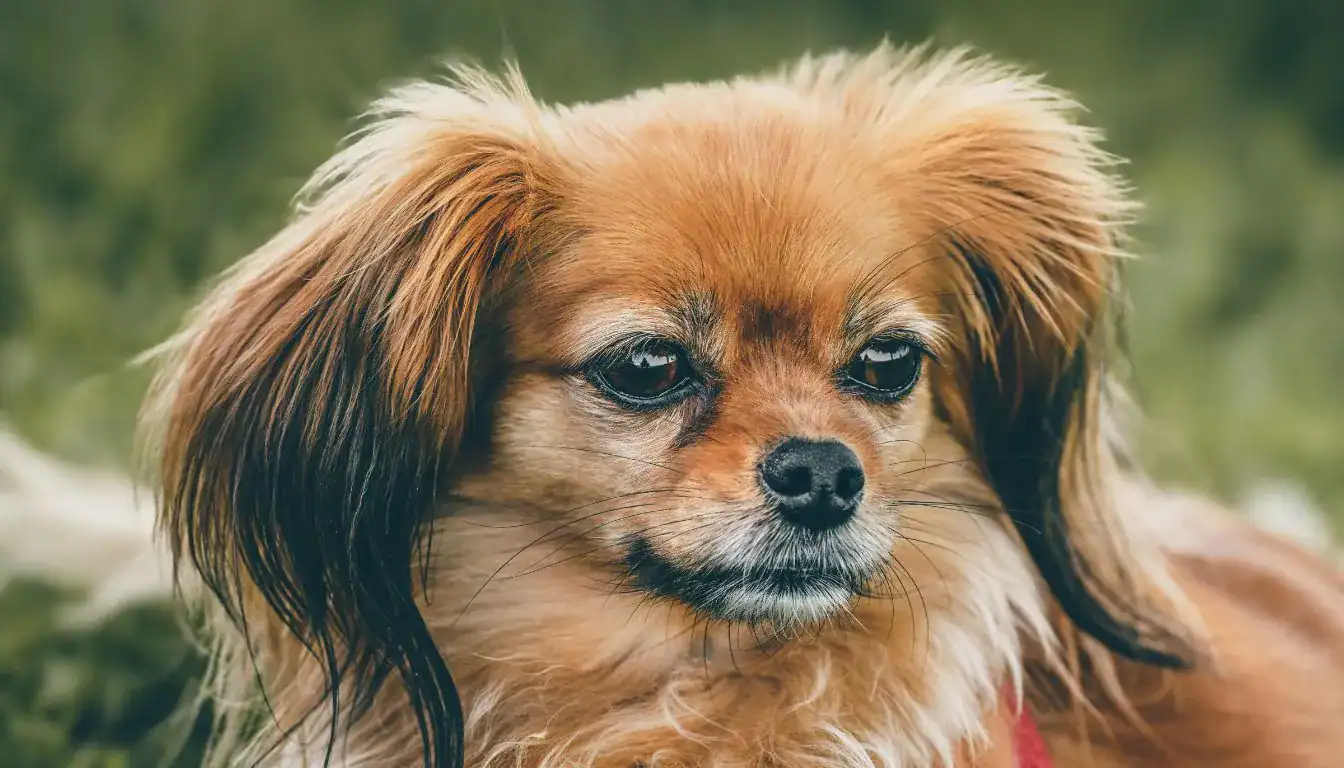
The Papillon is a small French and Belgian toy dog breed developed from the Continental Toy Spaniel to serve as an elegant companion to European nobility. The breed name means “butterfly” in French, a nod to the large, fringed, erect ears that flare outward like wings beside the dainty face.
Most prospective owners see only the elegant butterfly ears and silky white-and-color coat and assume these are quiet lap dogs. The reality is one of the smartest dog breeds in the AKC Toy Group, packed into a 5-to-10-pound frame with sustained energy, sharp alert vocalization, and an active mind that demands daily mental work to prevent boredom-driven misbehavior.
This guide draws on AKC and parent-club references, OFA orthopedic and cardiac screening protocols, and AVMA oral and ophthalmic medicine to lay out exactly what living with this Papillon dog breed demands from day one.
Daily commitments include 30 to 60 minutes of focused exercise plus mental enrichment, regular brushing of the silky coat to prevent tangles, daily tooth brushing to fight aggressive periodontal disease, and consistent training work to channel their famous intelligence. Households that ignore the mental side typically end up with a noisy, anxious, or destructive small dog within months.
For active singles, families with respectful kids, and seniors who want a portable companion with brains, the Papillon offers 14 to 16 years of devoted, agile, surprisingly athletic partnership. For owners expecting a passive cuddle pet that wants nothing but to nap, a different toy breed will be a happier match for everyone involved.
Affiliate Disclosure: K9Sphere is a participant in the Amazon Services LLC Associates Program. As an Amazon Associate, K9Sphere earns from qualifying purchases made through links in this article at no extra cost to you.
Breed Snapshot
📊 Vitals and Lifespan
Height
Males: 8-11 inches (20-28 cm)
Females: 8-11 inches (20-28 cm)
Weight
Males: 5-10 lb (2.3-4.5 kg)
Females: 5-10 lb (2.3-4.5 kg)
Lifespan
14-16 years
Breed Group
Toy Group
Origin
France & Belgium
🇫🇷 🇧🇪
⭐ Personality Traits
Ratings (1 to 5). The Papillon balances exceptional intelligence and trainability with sharp watchdog vocalization, modest coat-care demands, and a real need for daily mental engagement.
History and Origin
The Papillon is one of the oldest toy breeds in Europe, with an artistic history stretching back nearly 700 years. Its ancestor, the Continental Toy Spaniel (Dwarf Spaniel), appears in Renaissance paintings by Titian, Mignard, Watteau, Rubens, and Fragonard, often nestled on the laps of noblewomen.
📌 1500s: Continental Toy Spaniel Emerges
Early ancestors appear in Italian and Spanish Renaissance paintings, with their characteristic dropped leather. These small spaniels become a fashionable companion across the courts of Spain, France, Italy, and the Low Countries, refined further by Belgian and French breeders into a distinct toy type.
📌 17th-18th Century: Royal Favorite
By the reign of Louis XIV, French and Belgian breeders had perfected the toy spaniel type. Madame de Pompadour and Marie Antoinette of France, Queen Sophia Dorothea of Germany, and Queen Anne of Austria all owned these little dogs. Legend has it that Marie Antoinette’s Papillon Coco survived her, was raised by the Tourzel family, and reached the age of 22.
📌 Late 1800s: The Erect Ear Mutation
Throughout most of their history, these dogs carried dropped leather, like the modern Phalène (“moth”). Toward the end of the 19th century, a mutation produced an erect, butterfly-shaped carriage. The look caught on so strongly that the new term Papillon became the name for the entire breed in many countries.
📌 1915 and 1935: AKC Recognition
The American Kennel Club first recognized the Papillon in 1915. The Papillon Club of America was formed in 1935, becoming the official AKC parent club. The PCA holds the breed standard, and in the AKC the Papillon and Phalène are registered as a single breed represented by its own breed parent club.
Physical Characteristics
The Papillon is built fine-boned and dainty, but with athletic, springy proportions that hint at the breed’s surprising agility ability. The body is slightly longer than tall, the topline straight, and the gait quick and light.
🎨 The Butterfly Ears and Silky Coat
The signature trait is the large, rounded, fringed leather set high on the head. In the Papillon variety, it stands erect and oblique, mimicking butterfly wings. In the drop-eared Phalène variety, named for the moth, it hangs down. Both carriage types can appear in the same litter and are equally correct under the breed standard.
🏗️ Refined, Athletic Build
The single-layer silky coat is long, fine, and flowing on the neck, chest, fringed leather, backs of the legs, and plumed tail. There is no woolly undercoat, which makes coat care simpler than people expect for a long-haired toy. Adult dogs typically reach 8 to 11 inches at the shoulder and 5 to 10 pounds.
The Coat Color Question
Under the AKC breed standard, the coat must be parti-colored or white with patches of any color. Common combinations include white and black, white and red, white and sable, white and lemon, and tri-color (white, black, and tan). The face requires white running up the muzzle to a blaze, with color on the head extending past pure white. A solid-colored Papillon is a disqualification in the show ring, although solid-colored dogs do still appear and make perfectly fine pets.
Character and Temperament
The official parent-club breed temperament description is “happy, alert, and friendly.” That covers the surface, but the practical day-to-day temperament is more specific: this is a busy, intelligent toy with a strong opinion about everything happening within sight or earshot.
🧠 Among the Smartest Dog Breeds
Papillons rank consistently in the top tier of canine intelligence assessments. They learn new commands quickly, retain training across long gaps, and excel in dog sports including agility, rally, and trick competition. The flip side is that under-stimulated Papillons invent their own jobs, which usually means alert noise, digging, or shredding household items.
🔊 Vocal Alertness
They are notably alert and like to vocalize feelings. A passing courier, an unfamiliar footstep, a squirrel beyond the window, or a doorbell will all trigger sharp warning calls until the handler acknowledges the trigger. With consistent training the voice can be kept under control, but expect more noise than from a Cavalier King Charles Spaniel or Bichon Frise.
👨👩👧 Friendly but Velcro
Papillons love every person they meet when properly socialized, and are exceptional with respectful older children. They form deep attachments to their primary handler and prefer to stay in the same room. Separation anxiety is well documented in the breed and must be conditioned against from puppyhood with structured alone-time training.
🛡️ Surprisingly Bold
Despite the size, this is a confident, curious dog that often does not realize it is small. That confidence becomes a problem off-leash near larger dogs. They will challenge bigger animals and provoke unsafe interactions with untrained dogs. Always keep them leashed in mixed-size environments.
Screening and Conditions
Veterinary Disclaimer: The information provided in this article is for educational purposes only and is not intended as a substitute for professional veterinary advice, diagnosis, or treatment. Always consult a licensed veterinarian for any health concerns about your pet.
Health Information Sources: Data compiled from:
- OFA (Orthopedic Foundation for Animals): Required CHIC orthopedic, cardiac, and ophthalmic testing for the Papillon
- American Kennel Club: Breed health monograph and parent-club guidance
- AVMA: Clinical research on small-dog dental, ophthalmic, and cardiac medicine
Always consult your licensed DVM for personalized medical advice.
The Papillon is widely considered a healthy breed for a toy dog, and a 2024 UK longevity study placed life expectancy at roughly 14.5 years, well above the purebred average. Even so, the compact frame carries a defined set of vulnerabilities. Strict parental health screening through OFA-approved tests is the primary defense.
Common Inherited Conditions
🔴 Patellar Luxation
What to watch for: The kneecap slips out of its trochlear groove, causing the dog to suddenly hop or skip on a hind leg before the joint pops back. Repeated dislocation accelerates cartilage wear and leads to early-onset arthritis. Bilateral involvement is common, and signs may appear as early as 5 to 6 months of age.
Screening: OFA patella evaluation of both parents at 12 months minimum is required by the PCA CHIC program. Adding a quality hip and joint supplement supports cartilage health, especially as the dog ages.
🔴 Severe Periodontal Disease
What to watch for: Tightly packed jaws crowd teeth together, trapping plaque and bacteria along the gum line. Without daily intervention, this leads to early-onset periodontal disease, tooth loss, jaw bone erosion, and systemic infections that affect the heart and kidneys. Some breed surveys place dental disease prevalence above 80% by middle age.
Management: Daily toothbrushing with enzymatic dog toothpaste is essential for this breed. Most veterinarians recommend professional scaling under anesthesia annually starting at age two or three.
🟡 Progressive Retinal Atrophy (PRA)
What to watch for: A degenerative eye disorder caused in this breed by mutations including CNGB1, leading to gradual loss of photoreceptor cells and eventual blindness. Affected dogs adapt remarkably well and live full, happy lives, but the condition is irreversible.
Screening: Reputable breeders perform annual OFA CAER ophthalmic exams by a board-certified ACVO veterinary ophthalmologist, plus PRA1 (CNGB1) DNA testing on breeding dogs to identify carriers and affected individuals before breeding.
🟡 Heart Conditions
What to watch for: Mitral valve disease and congenital heart problems can appear in this breed. Signs include exercise intolerance, persistent coughing (especially at night), and rapid breathing at rest in older dogs. Early detection significantly improves outcomes.
Screening: OFA cardiac evaluation by a board-certified veterinary cardiologist at 12 months of age is part of the PCA CHIC requirements.
🟡 Neuroaxonal Dystrophy (NAD) and Other Genetic Conditions
What to watch for: NAD is a fatal neurological disorder unique among toy breeds for being well-documented in Papillons. Affected pups show progressive coordination loss starting around 2 to 4 months of age. Other recognized conditions include von Willebrand disease type 1 (vWD1), Factor VII deficiency, open fontanel, and cataracts.
Management: DNA testing for NAD, vWD1, PRA1, and Factor VII is now routine for responsible breeders. Always ask to see test results in writing for both parents.

Oxyfresh Premium Pet Dental Care Solution Pet Water Additive
Use for: Daily oral care for toy breeds prone to early-onset periodontal disease. Helps reduce plaque buildup and targets bacteria in tightly crowded jaws between professional veterinary cleanings.
Check price on AmazonGrooming and Coat Care
Despite the dramatic length of the silky coat, the Papillon is genuinely lower-effort than most owners expect. Because there is no woolly undercoat, the hair sheds modestly and rarely forms the dense felted mats common in double-coated breeds. Most pet Papillons need only two or three brush sessions per week.
Use a pin brush to lift the coat, followed by a fine-toothed metal comb in friction zones (behind the head, in the armpits, around the chest plume, and along the trousers and tail). Combs must reach down to the body rather than smoothing only the top layer. Bath every three to four weeks with a quality dog shampoo. Owners with dogs prone to itching can rotate in a soothing dog shampoo for itchy skin during allergy seasons.
The large, fringed ears need close weekly inspection. The thick hair fringe traps debris and moisture against the canal opening, raising the risk of yeast and bacterial infections. Wipe the inside with a vet-approved cleaner, and watch for head shaking, scratching, or odor as early signs that veterinary attention is needed. Nail trims every three to four weeks complete the basic routine, alongside the daily toothbrushing already discussed in the health section.
Exercise and Living Needs
Do not let the lap-pet appearance fool you. The Papillon is one of the more athletic toy breeds and consistently dominates small-dog agility podiums at events including the Westminster Kennel Club Dog Show and the AKC National Agility Championship. They thrive on real, sustained activity and need daily outlets to stay happy.
Plan on 30 to 60 minutes of focused exercise daily, split between two brisk walks and indoor games that engage their problem-solving brain. Puzzle feeders, snuffle mats, and short training drills tire them out faster than physical running alone. Off-leash time should only happen in securely fenced areas with size-appropriate playmates, never at unfenced dog parks where a single high-drive larger dog can cause serious injury in seconds.
The Papillon’s compact footprint suits apartments well, and most adapt happily to indoor living. Their vocal nature does create friction with neighbors when not actively managed, so apartment households must commit to consistent quiet-command training and provide ample mental stimulation indoors.
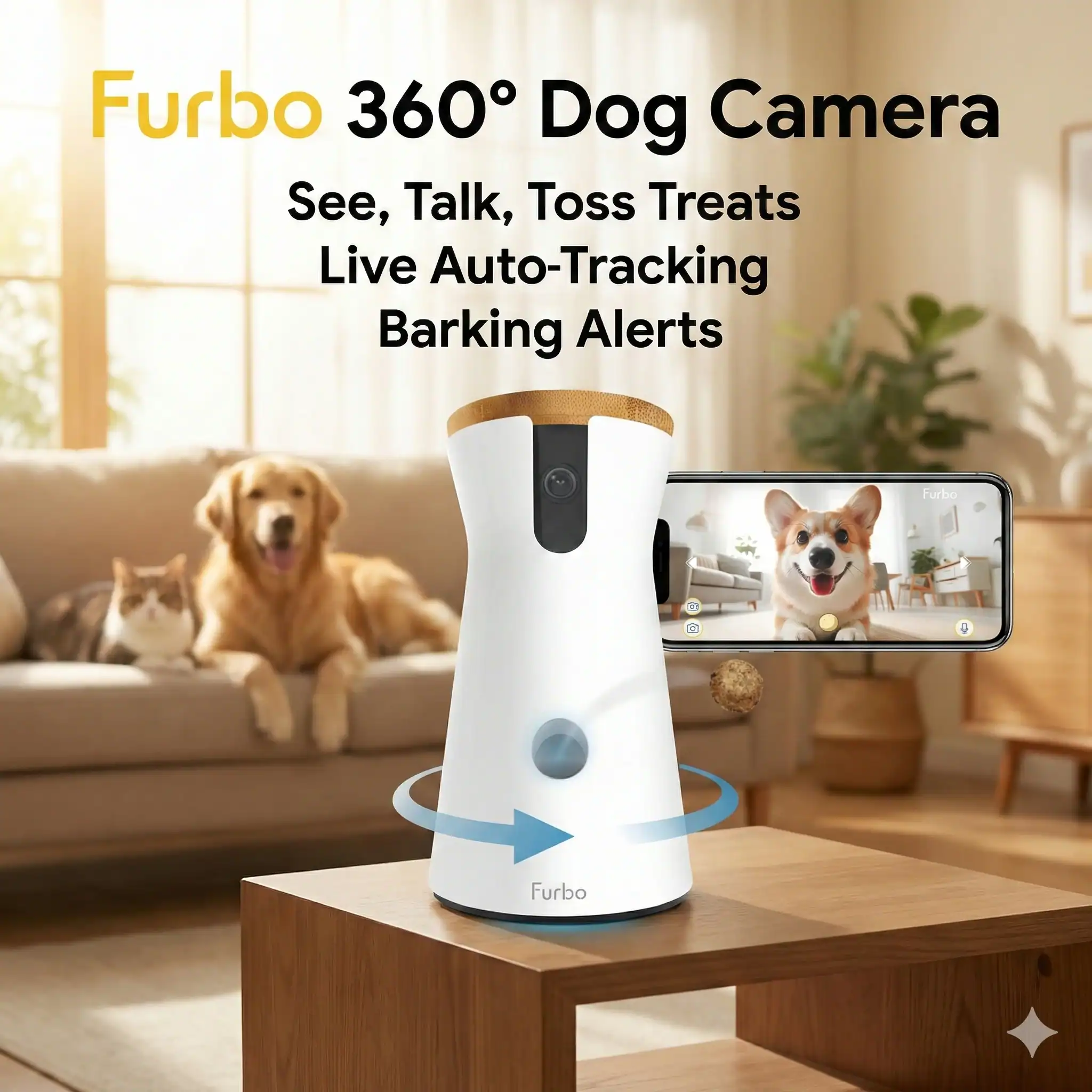
Furbo 360 Dog Camera
Use for: Monitoring velcro-type companions prone to separation anxiety and vocalization when left alone. Two-way audio and treat-toss features help interrupt distress calls in apartment settings during work hours.
Check price on AmazonNutrition & Diet
Precise portion control is critical for this small-dog breed. Even a few ounces of excess body fat strain the joints and worsen kneecap and cardiac problems. The visible waist and easily-felt ribs are the working benchmarks for a healthy adult Papillon.
🐶 Puppy Stage
Feed a high-quality small-breed or toy-breed puppy formula matched to their fast metabolism and tiny jaw size. The kibble should be engineered into smaller pieces to prevent choking and encourage chewing. Three to four measured meals daily through six months of age helps prevent juvenile hypoglycemia, which toy puppies are especially prone to. Keep nutritive dog food gel or honey on hand for emergencies during the first months.
🐕 Adult Stage
Adults thrive on a high-quality small-breed dog food formula fed in two measured meals per day. The recommended daily amount typically falls between a quarter cup and half cup, but exact portion size should be calibrated to the dog’s energy and body condition. Limit high-calorie treats and substitute pieces of plain vegetables or training kibble during reward sessions. Crunchy kibble offers minor mechanical cleaning, but does not replace daily brushing.
🐕🦺 Senior Stage
From age 9 or 10 onward, the risk of cardiac disease, dental loss, and weight gain rises. Transition to a senior small-breed formula with joint-support ingredients and reduced calories. This is the optimal stage to add a quality joint supplement and to begin annual veterinary blood panels to catch heart, liver, and kidney issues early. Soft food may help dogs that have lost teeth maintain adequate intake.
Training
Training a Papillon is one of the genuine joys of owning the breed. They are highly intelligent, eager to engage, and read handler body language quickly. The risk is the opposite of most toy breeds: bad habits set in just as easily as good ones. Consistency matters more than session length.
🛑 Socialization Priorities
Expose puppies to varied surfaces, household appliances, calm larger dogs, and diverse human visitors before sixteen weeks of age. Poorly socialized Papillons can become reactive toward strangers and other dogs. Group puppy classes that include controlled exposure to medium-sized breeds are particularly valuable for building lifelong confidence around bigger animals.
👑 Positive Reinforcement and Mental Work
Papillons respond best to positive reinforcement using high-value treats, clear marker words, and short five-to-ten-minute sessions. Harsh corrections damage the trust relationship and shut down willingness to offer behavior. Build the basics (sit, down, stay, recall, leash manners), then layer in tricks, scent games, and entry-level dog sports such as obedience, rally, and trick competition.
🎯 The Quiet Command and Alone-Time Conditioning
Two training jobs deserve dedicated effort beyond standard cue work. First, teach a reliable quiet command from day one, rewarding silence after one or two alert calls. Second, condition alone-time tolerance from week one with structured short absences. Crate training paired with food puzzles helps build relaxed independence and prevents the separation anxiety this breed is known for.
🏆 Dog Sports and Performance
Few toy breeds match Papillons in dog sports. They are routinely top finishers in agility, rally, and trick competitions. In 2019, a Papillon called Dylan won Best in Show at Crufts, and in 1999 a Papillon named Kirby took Best in Show at Westminster. Even casual handlers benefit from beginner agility or rally classes. The structured mental work transforms ordinary household behavior.
Papillon vs Phalène vs Pomeranian vs Chihuahua
Understanding how the Papillon compares to its drop-eared sibling and the most popular toy alternatives clarifies what ownership of this Papillon dog breed actually entails. Many families also look at the French Bulldog for a calmer alternative or the Cavapoo for a softer mixed companion, but the Papillon occupies its own niche as one of the smartest dog breeds in the toy category.
| Attribute | Papillon | Phalène | Pomeranian | Chihuahua |
|---|---|---|---|---|
| Weight | 5-10 lb (2.3-4.5 kg) | 5-10 lb (2.3-4.5 kg) | 3-7 lb (1.4-3.2 kg) | 2-6 lb (0.9-2.7 kg) |
| Original Purpose | Royal companion / lapdog | Royal companion / lapdog | Sled dog descendant turned companion | Companion / ancient ritual dog |
| Energy Type | Sustained, athletic | Sustained, slightly calmer | Spirited bursts | Bursts, varies by lineage |
| Trainability | Exceptional | Exceptional | Smart but stubborn | Smart but willful |
| Grooming | 2-3x weekly brush | 2-3x weekly brush | Daily brushing of dense double coat | Weekly (smooth) or 2-3x weekly (long) |
| Threat Response | Sharp alert vocalization | Sharp alert vocalization | Persistent alert vocalization | Fierce alert vocalization |
| First-Time Owner? | Yes | Yes | With dedication | With dedication |
| Common Health Risks | Kneecap dislocation, periodontal disease, PRA, mitral valve disease, NAD | Kneecap dislocation, periodontal disease, PRA, mitral valve disease | Kneecap dislocation, tracheal collapse, dental disease, alopecia X | Kneecap dislocation, hydrocephalus, dental disease, hypoglycemia, heart murmurs |
| Living Space | Apartment friendly | Apartment friendly | Apartment friendly (vocal) | Apartment friendly (vocal) |
The Phalène is genetically identical to the Papillon, differing only in the drop carriage, and is registered as the same breed in the AKC. Pomeranians offer a fluffier, more compact silhouette but trade trainability for stubborn independence and add tracheal collapse risk. Chihuahuas sit at the smallest end of the toy spectrum with a famously fierce big-personality temperament, but tend to be less reliably trainable than the Papillon. Choose the Papillon when you want a smart, athletic, agility-capable companion that can travel anywhere. Choose the Pomeranian for a denser, more decorative coat, or the Chihuahua for the smallest possible footprint and an even bolder voice.
Common Questions about the Papillon
Are Papillons high maintenance dogs?
Direct Answer: Mentally yes, physically no. The coat-care load is moderate (2 to 3 brush sessions weekly), but the daily mental stimulation requirement is considerably above average for a toy breed.
Context: Many owners are surprised that the dramatic silky coat needs less work than a Pomeranian’s double coat. Where the Papillon becomes demanding is in the brain. An under-stimulated Papillon vocalizes, chews, and develops separation anxiety. They need real engagement, puzzle feeders, and ideally a low-stakes dog sport like rally or trick training.
Management: Build mental work into the daily routine: short training drills, a puzzle feeder for one meal, and a 30-minute walk twice daily. Coat care stays manageable with a pin brush and metal comb every two to three days.
What dog is known as the heartbreak breed?
Direct Answer: The “heartbreak breed” nickname is most commonly given to the Cavalier King Charles Spaniel, not the Papillon, because of the high prevalence of mitral valve disease in that breed. Papillons are sometimes confused with Cavaliers because both descend from European toy spaniels.
Context: Papillons share the same broader Continental Toy Spaniel ancestry as the Cavalier and do face mitral valve disease at elevated rates compared to most breeds, but the Papillon’s life expectancy of 14 to 16 years is far better than the Cavalier’s 10 to 12 years. The heartbreak label is genuinely earned by the Cavalier.
Management: If you are choosing between the two on heart health grounds, the Papillon is the safer pick. Confirm OFA cardiac clearances on both parents and schedule annual cardiac auscultation from age seven onward.
Do Papillons bark a lot?
Direct Answer: Yes. Papillons are notably vocal and bark sharply at unfamiliar visitors, passing wildlife, hallway sounds, and any change in household routine.
Context: Alert vocalization is hardwired into their watchdog heritage and cannot be eliminated entirely. Structured quiet-command training, mental enrichment, and reduced trigger exposure (closed blinds, white noise) keep noise at manageable levels. Apartment owners absolutely must invest in this from day one.
Management: Begin quiet command training the day they arrive. Reward silence heavily, never reward continued barking with attention, and identify the specific triggers (windows, doorbell, post slot) so you can manage them proactively.
Are Papillons a one-person dog?
Direct Answer: Not strictly one-person, but they typically form a strongest bond with one primary handler while remaining friendly with the rest of the household.
Context: Properly socialized Papillons are friendly with everyone they meet, but they tend to choose a favorite human and follow that person from room to room. Households where multiple people share daily care responsibilities (feeding, walking, training) produce more evenly bonded dogs.
Management: If you want a dog that bonds with the whole family equally, rotate primary care duties among adults from puppyhood. Each person should run training sessions and walks at least a few times per week.
How much does a papillon dog cost?
Direct Answer: Expect to pay USD 800 to USD 3,000 for a puppy from a reputable breeder in the United States, with championship-line dogs occasionally reaching USD 4,000. Adoption from a rescue typically runs USD 100 to USD 500. Pricing varies by country; UK, Canada, and Australia rates differ.
Context: Lifetime ownership across 14 to 16 years typically falls between USD 18,000 and USD 28,000. Major recurring costs include high-quality small-breed dog food (USD 20 to USD 40 monthly), professional coat care (USD 35 to USD 95 every 6 to 8 weeks), and routine teeth cleanings under anesthesia (USD 400 to USD 1,000 annually).
Management: Secure pet insurance early to offset potential kneecap surgery and cardiac care costs. Budget for coat care and dental work as fixed line items rather than occasional surprises.
What are the common health problems of butterfly dogs?
Direct Answer: The most documented conditions in this breed are kneecap dislocation, severe periodontal disease, progressive retinal atrophy (PRA), mitral valve disease, and neuroaxonal dystrophy.
Context: Tightly packed jaws cause aggressive dental disease, the compact frame predisposes to orthopedic issues, and inherited mutations create real risk for PRA and NAD. Open fontanel, von Willebrand disease type 1, and Factor VII deficiency also appear at rates higher than the canine average.
Management: Schedule annual veterinary exams with cardiac auscultation, brush teeth daily, and only purchase from breeders who provide OFA CHIC certifications (patella, cardiac, ophthalmic) plus DNA panels for both parents.
What is the lifespan of a butterfly dog?
Direct Answer: Papillons typically live 14 to 16 years, with a 2024 UK longevity study placing breed life expectancy at roughly 14.5 years compared to a 12.7-year purebred average.
Context: The Papillon is one of the longest-lived toy breeds when sourced from health-tested parents. Lifespan is most affected by dental health (untreated periodontal disease shortens life through cardiac infection) and weight management. Lean body condition is the single most powerful longevity lever.
Management: Daily brushing, annual professional dental cleanings, weight monitoring at every vet visit, and ongoing cardiac and ophthalmic checkups from age seven onward.
What are the grooming requirements for a butterfly dog?
Direct Answer: Two to three brush-and-comb sessions weekly with a pin brush and fine-toothed metal comb, baths every three to four weeks, daily tooth brushing, and weekly leather inspection.
Context: Because there is no woolly undercoat, the Papillon is genuinely lower-effort than people expect. Mats form mostly in friction zones (behind the head, in the armpits, around the chest plume). Professional coat care every 6 to 8 weeks is optional, mainly for a sanitary trim around the paw pads and rear.
Management: Combine quick daily brushing every 2 to 3 days with one thorough session weekly. Wipe the leather with a vet-approved cleaner each week. Use a quality pin brush from a guide to the best brushes for shedding dogs as part of a regular brushing kit.
What are the training considerations for a butterfly dog?
Direct Answer: Use short positive-reinforcement sessions (5 to 10 minutes), high-value treats, varied games rather than repetitive drills, and a strong focus on the quiet command plus alone-time conditioning from puppyhood.
Context: Papillons rank among the smartest dog breeds in canine working-intelligence studies. They learn fast, but they also pick up bad habits fast. Inconsistent rules across household members produce a confused, demanding small dog. Harsh corrections damage trust and shut down willingness to offer behavior.
Management: Pick three to five core rules for the household and apply them identically across every adult. Enroll in a puppy class by 12 weeks, then a foundation manners or rally class. Beginner agility classes are excellent outlets for the breed’s mental energy.
Are Papillons good family dogs and good with kids?
Direct Answer: Yes for families with respectful older children (around eight and up) who handle small dogs gently. Not the right pick for households with rough toddlers.
Context: Their fragile size means rough handling, accidental drops, or being squeezed during hugs can cause serious injury and provoke defensive nipping. With older kids who follow gentle-handling rules, Papillons form devoted bonds and are excellent active family companions.
Management: Always supervise interactions, teach children specific gentle-handling rules, never allow the dog to be carried by young children, and provide a safe retreat space (covered crate or elevated bed) the dog can access without being followed.
Finding a Puppy
Papillons are bred predominantly through dedicated kennels and the parent-club network of registered breeders. Adopting through specialty rescue is also a strong option, particularly for owners who want to skip the chaotic puppy phase and read a dog’s adult personality before committing.
🏠 Responsible Breeders
Seek breeders enrolled in the AKC Bred with H.E.A.R.T program or members of the breed parent club. They should provide OFA CHIC certifications (patella, cardiac, ophthalmic) and DNA test results (PRA1, NAD, vWD1, Factor VII) for both parents. Expect them to interview you about your daily schedule, training plans, and prior toy-breed experience. Litters should be raised inside the home with consistent handling.
🐾 Rescue and Adoption
Adopting an adult Papillon through breed-specific rescue lets you skip the chaotic young-adult phase and assess personality before committing. Many adoption candidates enter the system through divorce, handler illness, or owner overwhelm rather than behavioral problems, and they typically settle quickly into well-prepared homes. Adoption fees usually fall between USD 100 and USD 500.
🚩 Red Flags to Watch For
- Inability to provide official OFA patella, cardiac, and ophthalmic screening for both parents.
- Refusal to share PRA1, NAD, vWD1, or Factor VII DNA results in writing.
- Marketing pups as “teacup” Papillons, which guarantees severe physical defects and shortened lifespan.
- Sale prices significantly below the regional USD 800 to USD 3,000 average, frequently a sign of unscreened parents or commercial operations.
- Parents exhibiting extreme fear, unprovoked snapping, or visible coordination problems during your visit.
- Litters raised in outdoor kennel runs without exposure to household sounds and human traffic.
- Refusal to allow you to see the environment where the litter was raised or to meet the mother.
Before bringing home a Papillon puppy, run this 4-step pre-buying check: (1) Can you commit to 30 to 60 minutes of focused exercise plus daily mental work for the next 14 to 16 years? (2) Is your budget prepared for daily tooth brushing, annual dental cleanings under anesthesia, and pet insurance to cover potential cardiac or orthopedic care? (3) Are you prepared to manage sharp alert vocalization through consistent quiet-command training in your living situation? (4) Have you spent time with adult Papillons to confirm their busy, vocal, velcro nature matches what you want from a companion? If any answer is no, reconsider the breed.
Personal Observation
💭 Personal Observation
My rescue Chun Chun, who weighs roughly 17 kg (38 lb), taught us something that applies directly to anyone considering a Papillon in a shared-living environment: an alert dog’s vocal patrolling requires active management from day one, not passive tolerance. She greets every passing sound at the gate, every unfamiliar footstep, and every visitor approaching the door with sharp persistent calls. Once that pattern sets in, redirecting it is far harder than preventing it. The Papillon faces the same instinctive watchdog drive packed into a 5-to-10-pound frame, amplified by exceptional intelligence that learns trigger associations within days. If you live in an apartment, you must teach a quiet command from the first week, reward silence heavily, and proactively reduce trigger exposure through closed blinds and white noise. Without that structure, the natural early-warning system quickly becomes a serious neighborhood nuisance.
Conclusion
The Papillon is one of the smartest, most agile, and longest-lived toy breeds available, with 700 years of refinement behind a small frame that genuinely earns its place in the modern home. They offer 14 to 16 years of devoted, athletic, sport-capable companionship for handlers willing to meet their structural needs.
On the pro side, the breed delivers exceptional trainability, low shedding, modest coat-care load, apartment-friendly size, and a long healthy lifespan. On the con side, that intelligence comes with strict daily mental-work commitments, sharp alert calls, separation anxiety risk, and aggressive periodontal disease that demands daily tooth brushing for life. For active singles, families with respectful older children, and seniors who want a portable, devoted partner with brains, the Papillon is one of the best small dog choices on the market. For households expecting a passive cuddle pet, a Cavalier King Charles Spaniel or Bichon Frise will lead to a happier outcome.


