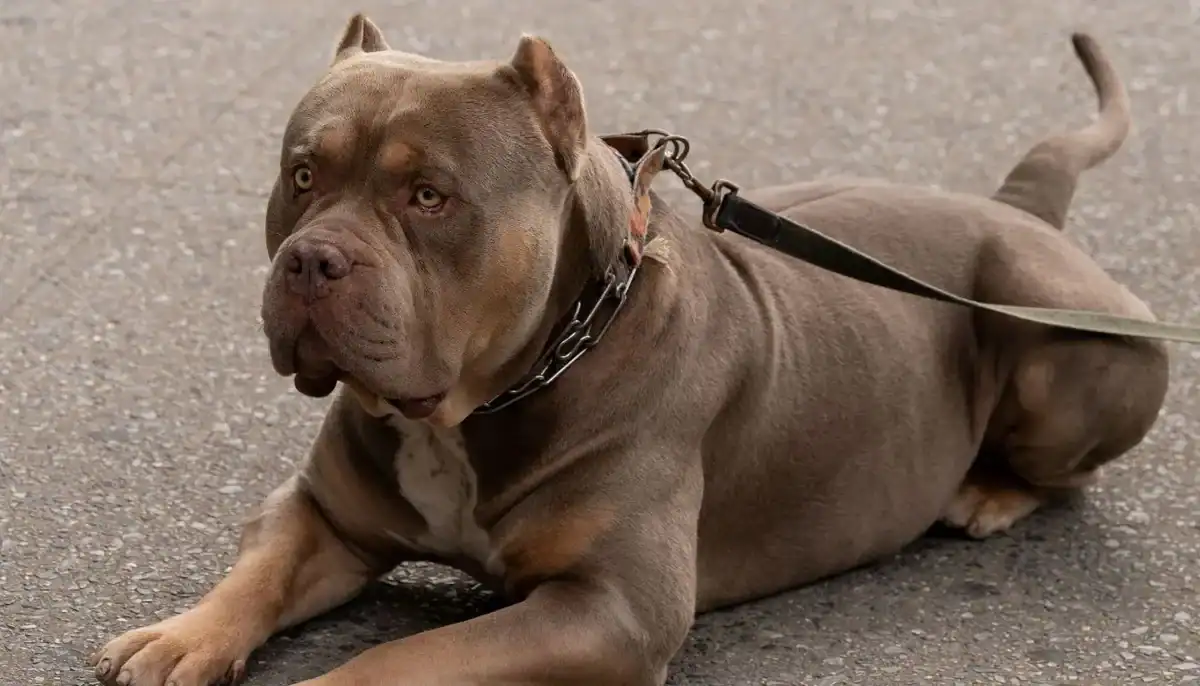
The American Bully is a companion dog developed in the United States during the 1990s as a family-friendly alternative within the broader bully breed category.
What makes these dogs genuinely compelling is the contrast between their intimidating muscular build and their remarkably gentle temperament. Properly socialized American Bullies excel as deeply loyal, confident household members that bond closely with their people.
This American Bully guide draws its dog breed information from United Kennel Club and American Bully Kennel Club breed-standard data, UK government guidance on breed-specific legislation, and established veterinary literature to present an accurate picture of what ownership actually involves.
Daily commitments include firm obedience training, careful weight management, and handling the logistics of a stocky, powerful dog. Households that provide clear structure and early socialization are rewarded with a highly affectionate partner.
Households without experience managing heavy, strong-willed dogs, or without a clear understanding of the breed-specific legislation covering their country, should review the demands honestly before deciding. This breed rewards owners who match its needs and challenges those who expect a passive pet.
Affiliate Disclosure: K9Sphere participates in the Amazon Services LLC Associates Program and other affiliate programs. K9Sphere earns from qualifying purchases made through links in this article at no additional cost to you. Product recommendations are based on independent research and editorial judgment, not paid placement.
Breed Snapshot
📊 Vitals and Lifespan
Height
13 to 23 in (33 to 58 cm)
Weight
40 to 130 lb (18 to 59 kg)
Lifespan
10 to 12 years
Breed Group
Companion Dog
Origin
United States
🇺🇸
⭐ Personality Traits
Ratings (1 to 5). This heavily muscled dog breed is surprisingly gentle and deeply attached to its family.
History and Origin
The American Bully is a distinct breed created in the 1990s by crossing American Pit Bull Terriers with the American Staffordshire Terrier and various bulldog breeds. Breeders wanted a dog that retained the physical substance of the terrier lines while removing the fighting drive entirely.
📌 1990s: Foundation Crosses
Breeders in the United States began selecting specifically for a lower, wider, and more muscular build. By incorporating English Bulldog and American Bulldog bloodlines, they mellowed the temperament to create a reliable companion dog.
📌 2004: Breed Registry
The American Bully Kennel Club was founded to protect and standardize the breed. This registry established the size categories and focused on promoting stable, family-friendly temperaments over extreme physical traits.
📌 2013: UKC Recognition
The United Kennel Club recognized the breed on 15 July 2013, initially placing it in the Terrier Group, then moving it to the Companion Dog Group on 1 October 2013 after consulting breed fanciers. That reclassification is the clearest official statement of what the breed is for. It is not recognized by the American Kennel Club at all, which is why the breed never appears in AKC listings.
📌 2023 Onward: Legislation
The rise of breeders chasing extreme “exotic” size caused significant health problems, and a series of serious incidents led the UK to add XL Bully dogs to the Dangerous Dogs Act. Ownership rules there changed permanently, and other jurisdictions have since reviewed their own positions.
Physical Characteristics
The ideal American Bully combines heavy bone density with a broad, powerful chest. They appear much heavier than their height suggests, carrying substantial muscle mass across their shoulders and hindquarters.
🏗️ The Four Types
The ABKC recognizes four types: Pocket, Standard, Classic, and XL. The UKC lists three sizes, treating Classic as a lighter-framed variation of the Standard rather than a separate size. The Standard American Bully stands 17 to 20 inches tall under the UKC breed standard, and the Classic matches that height on a lighter frame. Pocket bullies are shorter. Bully XLs exceed 20 inches, and the American Bully XL is the type carrying both the most weight and the most legal restriction. Type matters legally as well as physically: UK legislation is written around height, setting the XL threshold at 51 cm for adult males and 48 cm for females at the withers.
🎨 Coat and Color
The short, stiff coat sits close to the body and feels smooth to the touch. They appear in almost every color and pattern. Blue, fawn, and brindle are popular, while merle is treated as a fault by reputable registries because breeding two merles together carries serious deafness and eye defect risks.
Character and Temperament
An American Bully dog thrives inside the home. Despite the intimidating appearance, they are bred to be soft, people-oriented companions rather than guard dogs, and the breed standard treats human aggression as a serious fault.
🛡️ Gentle Companionship
They are famously good with kids who respect their space, tolerate handling well, and form deep bonds with their people. They seek out physical contact and will lean their full weight against you on the sofa, which is charming at 40 pounds and considerable at 100.
🐕 Dog Interactions
The breeding goal was to remove dog aggression, but terrier heritage remains in the background. Early socialization is mandatory. Without it, a confident bully dog can become reactive toward unfamiliar dogs, particularly others of the same sex.
🧠 Eager to Please
They pair a moderate working intelligence with a strong desire to make their handler happy, which makes training straightforward with positive reinforcement. Heavy-handed corrections cause them to shut down and become stubborn rather than compliant.
🔊 Low Guard Instinct
They will bark to announce a visitor but generally lack the suspicion of a true guardian breed. Once a guest is welcomed inside, the dog usually expects immediate petting rather than maintaining any distance.
Screening and Conditions
Veterinary Disclaimer: The information in this article is for educational purposes only and is not a substitute for professional veterinary advice, diagnosis, or treatment. K9Sphere’s authors are experienced dog owners, not licensed veterinarians. Always consult a qualified DVM regarding any health concerns about your pet. Never disregard professional veterinary advice or delay seeking it because of something you have read on this site.
Health Information Sources: Data compiled from:
- American Bully Kennel Club (ABKC): breed standard and registry guidance
- Orthopedic Foundation for Animals (OFA): hip, elbow and cardiac screening protocols
- Veterinary literature on brachycephalic and heavy-set conformation: joint loading and heat tolerance
Always consult your licensed DVM for personalized medical advice.
Heavy muscle mass on a medium frame creates specific physical vulnerabilities. Classic and Standard types are generally sound, but extreme Pocket and XL variants bred for exaggerated width and bulk carry markedly higher structural risk. The type you choose matters more here than in most breeds.
Common Health Risks
🔴 Hip and Elbow Dysplasia
What to watch for: Stiffness after resting, a bunny-hopping gait, or outward rotation of the front paws. The density of the dog places heavy stress on joints, leading to early arthritis.
Screening: Ask whether parent dogs were evaluated through OFA or PennHIP and request the documentation. Keep the dog lean throughout life, since every extra kilogram is carried by the same joints.
🔴 Cardiac Disease
What to watch for: Exercise intolerance, coughing after exertion, or sudden collapse. Congenital defects including aortic stenosis appear more often in heavily modified bully lines than in the foundation breeds.
Screening: Breeding stock should be screened by a veterinary cardiologist using echocardiography, not just a stethoscope check. Ask for the report.
🟡 Skin Allergies and Demodectic Mange
What to watch for: Chronic scratching, red inflamed patches on the belly, and hair loss around the eyes or muzzle. The short coat offers little protection against environmental irritants, and demodex flares often signal an immune system under strain.
Veterinary care: Persistent flare-ups need a proper work-up rather than repeated shampoo changes, since food and environmental allergy require different treatment.
🟡 Breathing and Heat Tolerance
What to watch for: Noisy breathing at rest, laboured recovery after light exercise, or distress in warm weather. Lines bred for a very short muzzle and wide chest lose the ability to cool themselves efficiently.
Management: Exercise in the cool part of the day, never leave the dog in a warm car or conservatory, and treat noisy breathing as a veterinary question rather than a breed quirk.
Grooming and Coat Care
Maintaining the short coat is effortless. They shed moderately year-round and need only a weekly brush with a rubber curry comb to remove dead hair and spread natural skin oils. A suitable grooming brush makes the job faster on a dense, stiff coat.
Bathe only when the dog is visibly dirty, since frequent washing strips natural oils and worsens sensitive skin. Dogs with recurring irritation may do better on a gentler shampoo, though persistent problems need a vet. Check the skin folds around the face and neck on heavier types, since moisture trapped in a fold becomes a hot spot quickly.
Trim the heavy nails every few weeks. Overgrown nails force the toes apart and alter the walking gait, adding strain to joints that are already carrying a great deal of weight.
Exercise and Living Needs
They need moderate daily exercise to stay fit and prevent obesity. A 45-minute structured walk with a short play session is usually enough. They are strong but lack the cardiovascular endurance for distance running or long fetch sessions, and pushing them into that work is counterproductive.
XL types need particularly careful weight management, since excess weight damages their joints quickly. Avoid exercising in the heat of the day, because the heavy build and shortened muzzle of many lines make overheating a genuine risk rather than a theoretical one.
Indoors they are calm and low-demand, which is part of the appeal. A supportive bed matters more for this breed than for most, because a heavy dog sleeping on a hard floor loads the same joints that are already under strain.

FurHaven Orthopedic Dog Bed
Use for: Supporting a heavy, densely built dog during the long hours it spends resting indoors. Orthopedic foam distributes weight away from hips and elbows that are already carrying a lot of muscle.
Check price on AmazonNutrition & Diet
Feeding a heavily muscled dog takes good-quality protein to maintain condition. Measure portions strictly, because this breed has a strong food drive and puts on fat quickly when fed by eye rather than by scale.
Puppies should be raised on a large-breed formula so bone growth stays slow and steady. Rapid weight gain during growth is one of the more avoidable contributors to joint malformation in a breed already predisposed to it. Be cautious with the mass-gainer supplements marketed at bully owners, such as Bully Max, since a balanced diet and appropriate exercise build a healthier dog than forced bulk.
Adults do well on two measured meals a day, adjusted to body condition rather than to the bag chart. Many owners of heavy-set dogs also add a daily hip and joint supplement after discussing dosage with their veterinarian.

Nutramax Dasuquin with MSM Soft Chews
Use for: A commonly used joint supplement for heavy, stocky dogs. Supplements do not replace weight management, appropriate exercise, or veterinary diagnosis of lameness, so discuss use and dosage with your vet.
Check price on AmazonTraining
Early socialization is the most important element of raising this breed. Expose puppies to varied people, sounds, surfaces, and stable adult dogs before sixteen weeks. This is what keeps natural confidence from turning into reactivity later.
They respond very well to positive reinforcement with high-value rewards, and badly to force. Establish firm, consistent boundaries early, because an untrained 80-pound dog that pulls on the leash is genuinely unmanageable for most handlers. Loose-leash walking and a reliable recall are the two priorities.
Owners in the UK should note that exempted dogs must be muzzled and leashed in public by law, which makes early, positive muzzle conditioning a welfare issue rather than an optional extra. A dog taught to associate the muzzle with good things wears one comfortably for life.
American Bully vs American Pit Bull Terrier vs Staffordshire Bull Terrier vs American Bulldog
Prospective owners often confuse the American Bully with its foundation breeds. Comparing it against the American Pit Bull Terrier, often written American Pitbull Terrier, the Staffordshire Bull Terrier, and the American Bulldog clarifies the specific demands of each.
| Attribute | American Bully | American Pit Bull Terrier | Staffordshire Bull Terrier | American Bulldog |
|---|---|---|---|---|
| Weight | 40 to 130 lb | 30 to 60 lb | 24 to 38 lb | 60 to 100 lb |
| Original Purpose | Companion dog | Farm work and fighting | Companion and fighting | Catch dog and farm utility |
| Energy Type | Moderate bursts | High, tireless athlete | High energy bursts | High, strong endurance |
| Trainability | Eager, sometimes stubborn | Highly trainable, eager | Smart, eager | Willful, independent |
| Grooming | Weekly brush | Weekly brush | Weekly brush | Weekly brush |
| Threat Response | Friendly alert bark | Confident alert | Friendly greeting | Protective, territorial |
| First-Time Owner? | Yes, capable handler | If highly active | Yes, capable handler | No, capable handlers |
| Common Health Risks | Hip dysplasia, cardiac, allergies | Hip dysplasia, allergies | Cataracts, hip dysplasia | Hip dysplasia, bone cancer |
| Living Space | House with yard | House with secure yard | House with yard | House with secure yard |
The American Bully offers a stockier, less intense alternative to the athletic American Pit Bull Terrier. The Staffordshire Bull Terrier is much smaller and more energetic, and is worth noting as it is not covered by the UK ban. The American Bulldog is taller with a more serious working profile. Choose the Bully if you want a heavily built dog with a lower exercise requirement and a softer temperament.
Common Questions about the American Bully
How much does an American Bully cost?
Direct Answer: As an approximate, time-sensitive guide (as of 2026), expect roughly USD 2,000 to 5,000 for a well-bred puppy.
Context: Prices vary by breeder, location, and pedigree. Exotic lines and rare colors sell for far more, though those extremes carry the highest health risk.
Management: Budget for quality food, routine veterinary care, and possible joint or skin treatment later.
Are American Bullies dangerous dogs?
Direct Answer: Properly bred and socialized, they are not inherently dangerous to people, and the breed standard treats human aggression as a serious fault.
Context: Size and strength mean a poorly bred or unsocialized individual presents a real liability, which is the reasoning behind the UK legislation.
Management: Commit to early socialization, ongoing training, and everyday management of the dog’s environment.
What is the difference between an American Bully and a Pitbull?
Direct Answer: The Bully is a distinct breed created by crossing American Pit Bull Terriers with bulldog breeds for a wider frame and lower drive.
Context: The Pit Bull Terrier is a high-energy athletic working dog. The Bully is heavier, slower, and bred for companionship rather than endurance.
Management: Do not expect a Bully to match a terrier athletically. Less exercise, far more weight management.
Is the XL Bully banned in the UK?
Direct Answer: Yes. Owning an XL Bully in the UK without a Certificate of Exemption is a criminal offense.
Context: Rules took effect in England and Wales on 1 February 2024, Scotland on 1 August 2024, and Northern Ireland on 1 January 2025. The definition is based on physical appearance rather than pedigree.
Management: Check current GOV.UK guidance before acquiring any bully-type dog. Application windows have closed and new exemptions arise only through a court.
Are American Bullies good family dogs?
Direct Answer: Yes in most of the world, though UK owners of exempted dogs face legal conditions around children.
Context: They are affectionate, patient, and strongly bonded to their households. From 1 November 2026 in the UK, a child under 12 must not be left in close contact with a banned-type dog in a private place without adult supervision.
Management: Teach children to interact respectfully, and follow the exemption conditions if you are in the UK.
Are American Bullies good for first-time owners?
Direct Answer: Only for first-time owners who are physically capable and committed to structured training from day one.
Context: The temperament is forgiving and the exercise demand moderate. The difficulty is physical management of a very strong dog and, in some countries, the legal framework.
Management: Enroll in a training class before problems appear, and confirm local laws before committing.
Do American Bullies shed a lot?
Direct Answer: They are moderate shedders that drop short, stiff hairs year-round.
Context: They need no professional grooming, but hair accumulates on furniture if the coat is not maintained.
Management: Use a rubber curry brush weekly to pull dead hair before it reaches the sofa.
What is the difference between a Pocket and a Standard Bully?
Direct Answer: Height. Pocket bullies stand under 17 inches for males and 16 inches for females.
Context: The Standard is taller, but both share the same blocky head, heavy muscle, and temperament. Neither is a separate breed.
Management: Both need the same training and feeding routine, though a Pocket is far easier to lift.
Can American Bullies live in an apartment?
Direct Answer: Pocket and Standard types can, provided the owner delivers the daily walk.
Context: They are calm indoors and rarely bark without cause. An XL is usually too large for apartment living, and many buildings apply breed or weight restrictions.
Management: Confirm housing rules in writing first, since breed restrictions are common in rental agreements.
Are American Bullies aggressive toward other dogs?
Direct Answer: Some individuals show dog-selectivity inherited from their terrier ancestry, despite the breeding goal of removing it.
Context: This is most common between intact dogs of the same sex. Do not assume friendliness at an off-leash park just because the dog is gentle with people.
Management: Introduce new dogs on neutral ground and keep socialization going for life, not just puppyhood.
How long do American Bullies live?
Direct Answer: The average lifespan is 10 to 12 years.
Context: Moderate dogs generally outlive extreme exotic and XL variants, which suffer earlier joint and cardiac failure. Conformation is the strongest predictor of longevity here.
Management: Choose a moderate build from health-tested parents, keep it lean, and book annual exams.
Finding a Puppy
Finding a reputable American Bully breeder takes time. The surge in popularity created a large number of backyard breeders chasing extreme size or rare colors, and the health consequences fall on the dog and the buyer.
🏠 Responsible Breeders
A responsible breeder provides OFA documentation for hips, elbows, and cardiac health on both parents, and breeds for moderate structure rather than exaggerated width. They will question you about your lifestyle, your experience with strong dogs, and your local legislation before agreeing to a sale.
🐾 Rescue and Adoption
Many young adults enter rescue when owners realize they cannot physically manage the dog. An adult with a known temperament is often a better first bully than a puppy. Note that UK rescues cannot rehome XL Bully type dogs under current law, so options differ sharply by country.
🚩 Red Flags to Watch For
- Breeders marketing “micro” or “exotic” bullies, where the exaggeration itself causes lifelong pain.
- No OFA hip, elbow, or cardiac documentation for either parent.
- Merle puppies advertised as rare and premium priced, given the associated defect risk.
- Parents that cannot move freely or that breathe noisily at rest.
- Any seller who will not discuss the legal status of the breed in your country.
- Puppies advertised for immediate sale with no health paperwork.
Personal Observation
💭 Personal Observation
Mun Mun, one of the five street dogs I rescued, is the one this breed reminds me of most. She shadows me room to room and shows real separation distress when left alone. That deep attachment to people is exactly what American Bully owners describe, and it is the part that makes them such good housemates and such poor kennel dogs.
Moti, one of my two seniors, gives me the harder half of the picture. He is fine with his own pack but selectively dog-aggressive with certain other dogs, and no amount of good intent from me changes that. A bully with the same selectivity carries far more physical weight behind it, which is why honest management matters more than optimism.
A dog this strong and this soft needs an owner who trains early and manages the dog-to-dog side of life realiztically, rather than assuming friendliness will cover it.
Conclusion
The American Bully is a deeply affectionate, loyal companion in an imposing frame. For the right household it offers a stable, lower-energy alternative to the working terriers it descends from, with a striking appearance and a genuinely soft temperament.
The trade-off is real. Early training, strict weight management, honest handling of dog-to-dog selectivity, and a clear understanding of breed-specific legislation are all required rather than optional. Owners who provide that will build an exceptional bond. Those unprepared for the physical strength or the legal complexity will find it stressful.
📋 Before bringing one home, run this 4-step pre-buying check
- Legal reality. Have you checked your country’s breed-specific legislation, plus your municipality and housing provider?
- Handler strength. Can you physically manage a stocky, dense dog on a leash on its worst day, not its best?
- Health budget. Are you prepared to fund joint, cardiac, or skin treatment later in life?
- Time and training. Will you commit to early, consistent socialization to build a stable adult?
If any answer is no, reconsider the breed.
Editorial Disclaimer: This article is for informational and educational purposes only. It does not constitute veterinary advice, medical diagnosis, or treatment recommendations. Always consult a licensed veterinarian before making health-related decisions for your pet.
Legal Notice: Breed-specific legislation changes and varies by country and locality. The legal information here reflects UK government guidance current at the date shown below and is not legal advice. Always check the official guidance for your own jurisdiction before acquiring or transporting a bully-type dog.
Accuracy Notice: While every effort has been made to ensure the information presented here is accurate and current, breed information evolves and individual dogs vary. If you spot a factual error or have updated information from a verified source, please contact us so we can review and update.
Product Disclosure: Product recommendations are based on independent research and editorial judgment. Individual results may vary. K9Sphere participates in the Amazon Services LLC Associates Program and other affiliate programs, and earns from qualifying purchases at no additional cost to you.
Last reviewed: September 2026. Article reviewed for accuracy on the date shown above.